Skip to Content

Category Archives: Blog

2 Inch 4140 Steel – Properties, Hardness & Industrial Supply Guide

2 Inch 4140 Steel – Properties, Hardness & Industrial Supply Guide2 Inch 4140 Steel – Properties, Hardness & Industrial Supply Guide

The 2 inch 4140 steel is a commonly used medium carbon, chromium-molybdenum alloy steel. Its combination of high strength, toughness, and machinability makes it a reliable material for critical mechanical components. Engineers prefer this diameter because it balances manufacturability and mechanical performance, especially for shafts, gears, bolts, and hydraulic parts. With proper heat treatment, 2 inch 4140 steel provides excellent fatigue resistance, wear resistance, and impact strength, making it suitable for demanding industrial applications.

Procurement teams often search for 2 inch 4140 steel round bar suppliers or 2 inch 4140 alloy steel for machining when delivery speed and quality control are key. This size is particularly popular in automotive, oil & gas, and heavy machinery industries. Engineers look for consistent chemical composition and mechanical properties to ensure reliable performance under cyclic loads.

Additional long-tail keywords such as 4140 steel tensile strength 2 inch, 4140 steel hardness after quenching, and 2 inch 4140 steel machining guide reflect practical industrial concerns regarding material selection and supply.

🔵 Overview of 2 Inch 4140 Steel

The 2 inch 4140 steel refers to the diameter of AISI 4140, a chromium-molybdenum alloy steel that offers a superior balance of strength, ductility, and toughness. Engineers select this material for high-stress components that must resist bending, torsion, and fatigue. Compared to plain carbon steels, 4140 provides higher hardenability, uniform mechanical properties, and superior wear resistance, especially after quenching and tempering.

Manufacturers often supply 2 inch 4140 steel in round bar, plate, or forged forms. Round bars are commonly used for shafts, spindles, and heavy-duty pins. Forged forms provide additional strength for gear blanks or hydraulic components. Plates allow precise machining of custom parts requiring high fatigue resistance and dimensional stability.

🟢 Chemical Composition of 4140 Steel

Element Content (%) Role
Carbon (C) 0.38 – 0.43 Provides core hardness and strength
Chromium (Cr) 0.80 – 1.10 Improves hardness, wear resistance
Molybdenum (Mo) 0.15 – 0.25 Enhances strength at high temperature, toughness
Manganese (Mn) 0.75 – 1.00 Supports hardenability and strength
Silicon (Si) 0.15 – 0.30 Increases strength, resists deformation
Phosphorus (P) <0.035 Impurity control
Sulfur (S) <0.04 Impurity control, machinability

This composition ensures the 2 inch 4140 steel responds well to quenching and tempering. Engineers can adjust tempering temperature to optimize the balance of surface hardness, core toughness, and fatigue resistance.

🟠 Mechanical Properties of 4140 Steel

Property Typical Value Remarks
Tensile Strength 655 – 950 MPa Varies with heat treatment
Yield Strength 415 – 655 MPa Depends on quenching and tempering
Hardness (QT) 28 – 32 HRC Annealed/normalized condition
Hardness (Hardened) 50 – 55 HRC Quenched & tempered
Elongation 12 – 20% Good ductility for machining
Impact Toughness ≥40 J Measured at room temperature

Mechanical properties confirm that 2 inch 4140 steel is suitable for rotating shafts, high-stress pins, and hydraulic cylinders. Its combination of tensile strength and hardness allows it to withstand repetitive loads while reducing wear.

🟣 Heat Treatment Guidelines for 4140 Steel

Heat treatment significantly improves the performance of 2 inch 4140 steel. The typical process involves austenitizing at 840–870°C, followed by oil quenching and tempering at 400–600°C depending on the desired hardness and toughness.

For parts exposed to heavy cyclic stress, engineers temper at a higher temperature to enhance core ductility. For wear-resistant surfaces, tempering at lower temperature preserves high hardness. Uniform hardness across the 2 inch diameter is achieved due to 4140’s deep hardenability.

Search terms such as 2 inch 4140 steel quenching parameters and 4140 steel tempering guide are frequently used by process engineers to optimize production for durability and dimensional stability.

🔷 Applications of 4140 Steel

Industries utilize 4140 steel in components that demand high strength, toughness, and wear resistance.

  • Automotive shafts, axles, and pins 🚗
  • Hydraulic cylinders, rods, and pressure components ⚙️
  • Oil & gas drill collars and drilling equipment 🛢️
  • Heavy-duty spindles, machine tool components 🏭
  • High-load mechanical connectors and fasteners 🛠️

The combination of high hardness, tensile strength, and fatigue resistance makes this steel a first-choice material for components exposed to repeated loads and rotational stress.

🏭 Company Advantages – Otai Special Steel

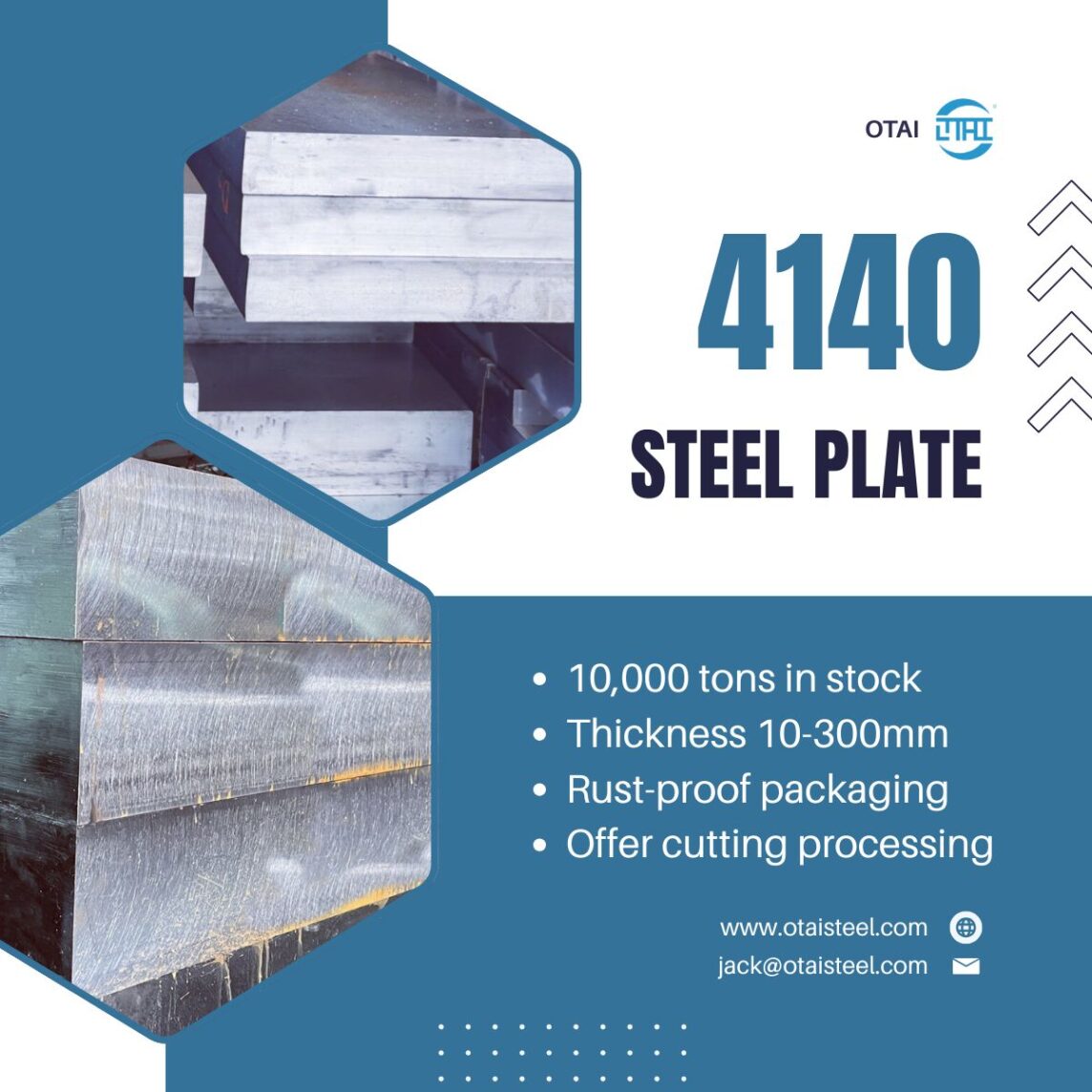
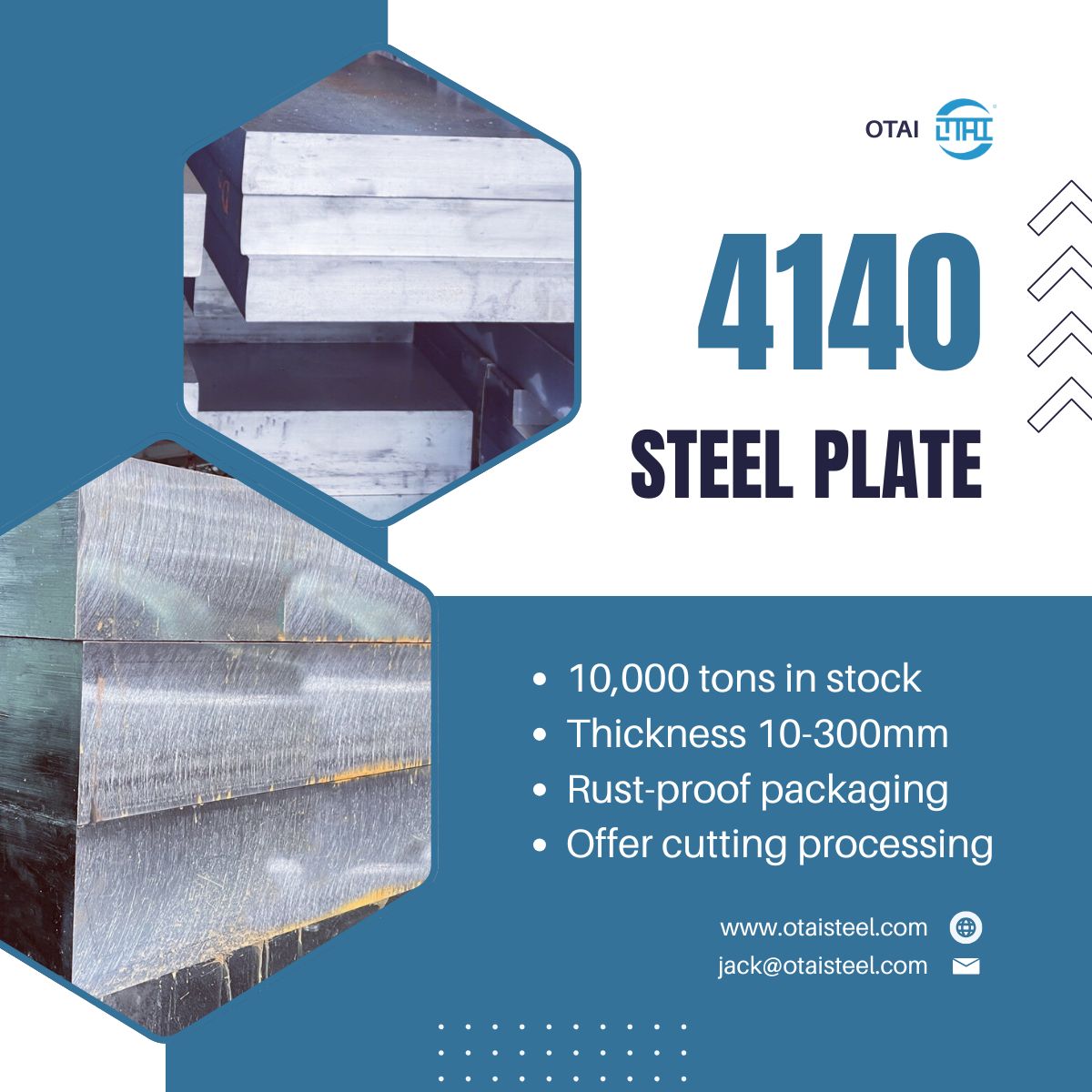
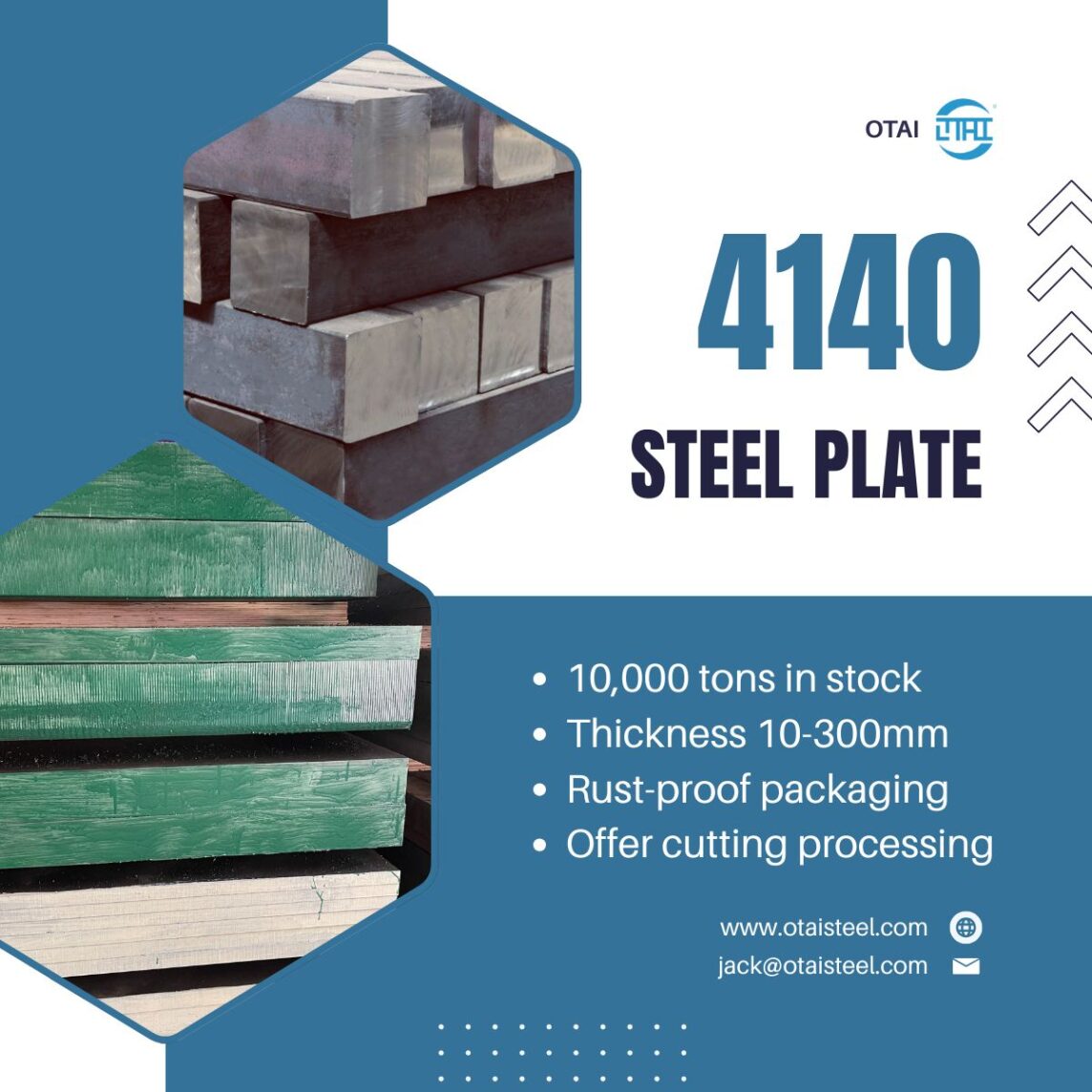
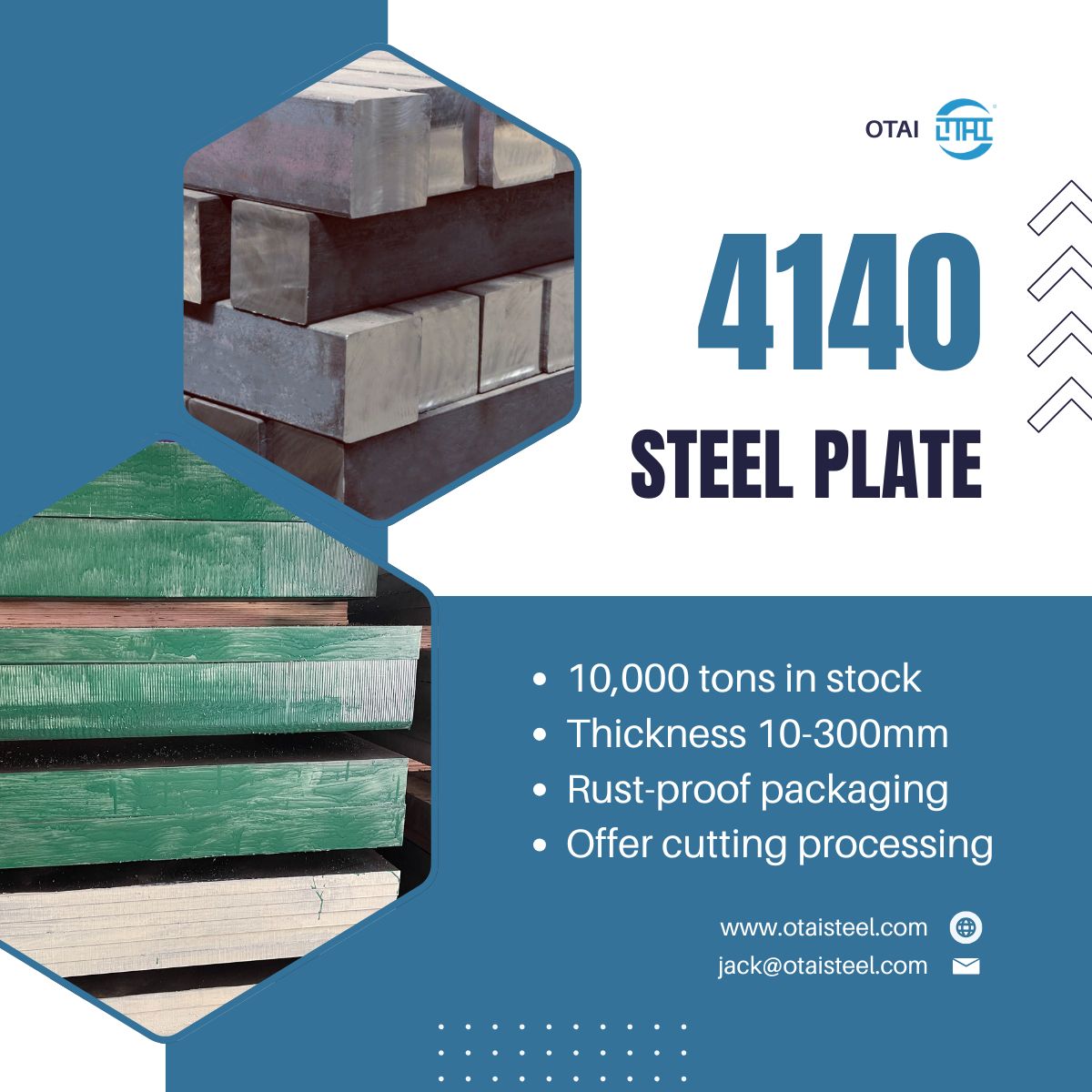
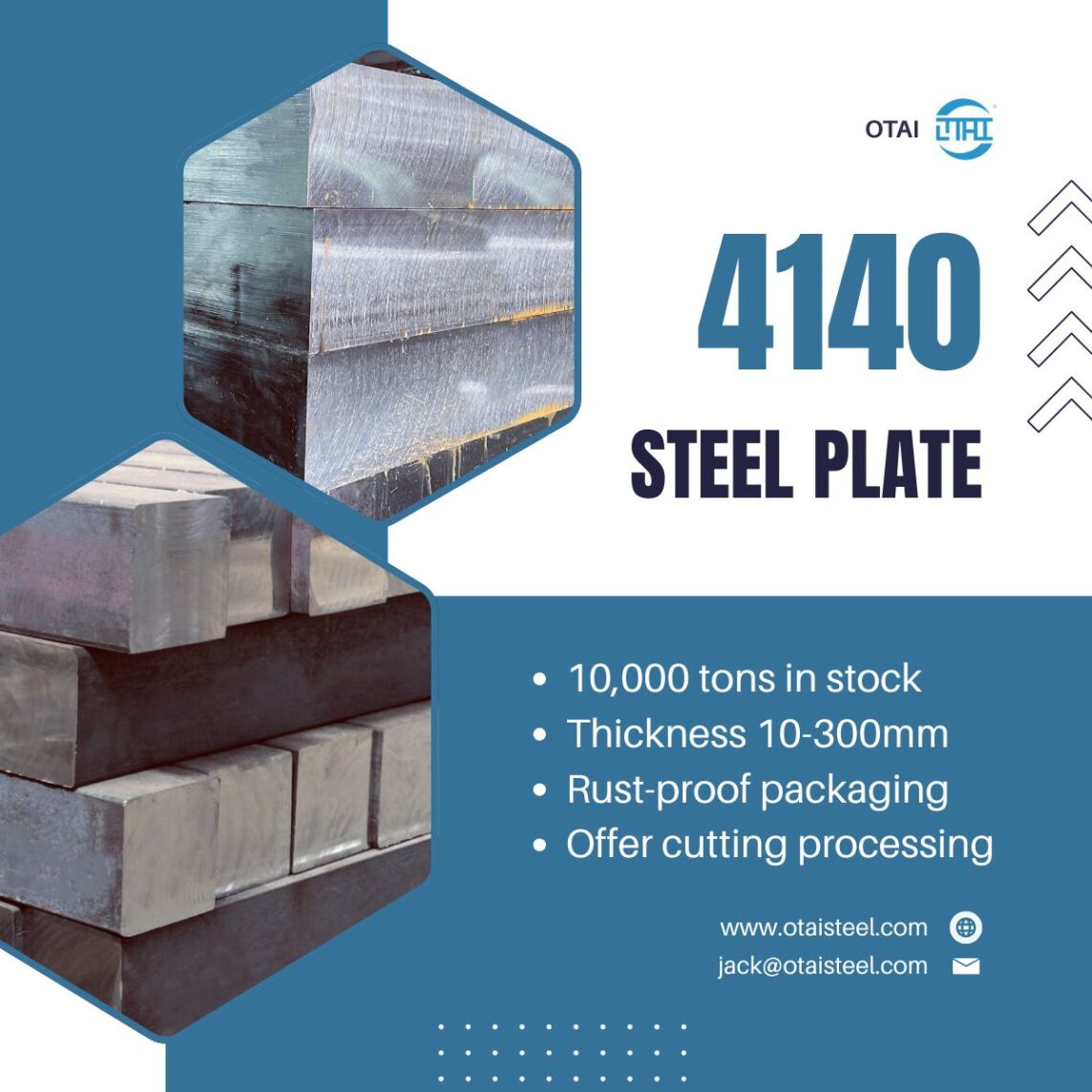
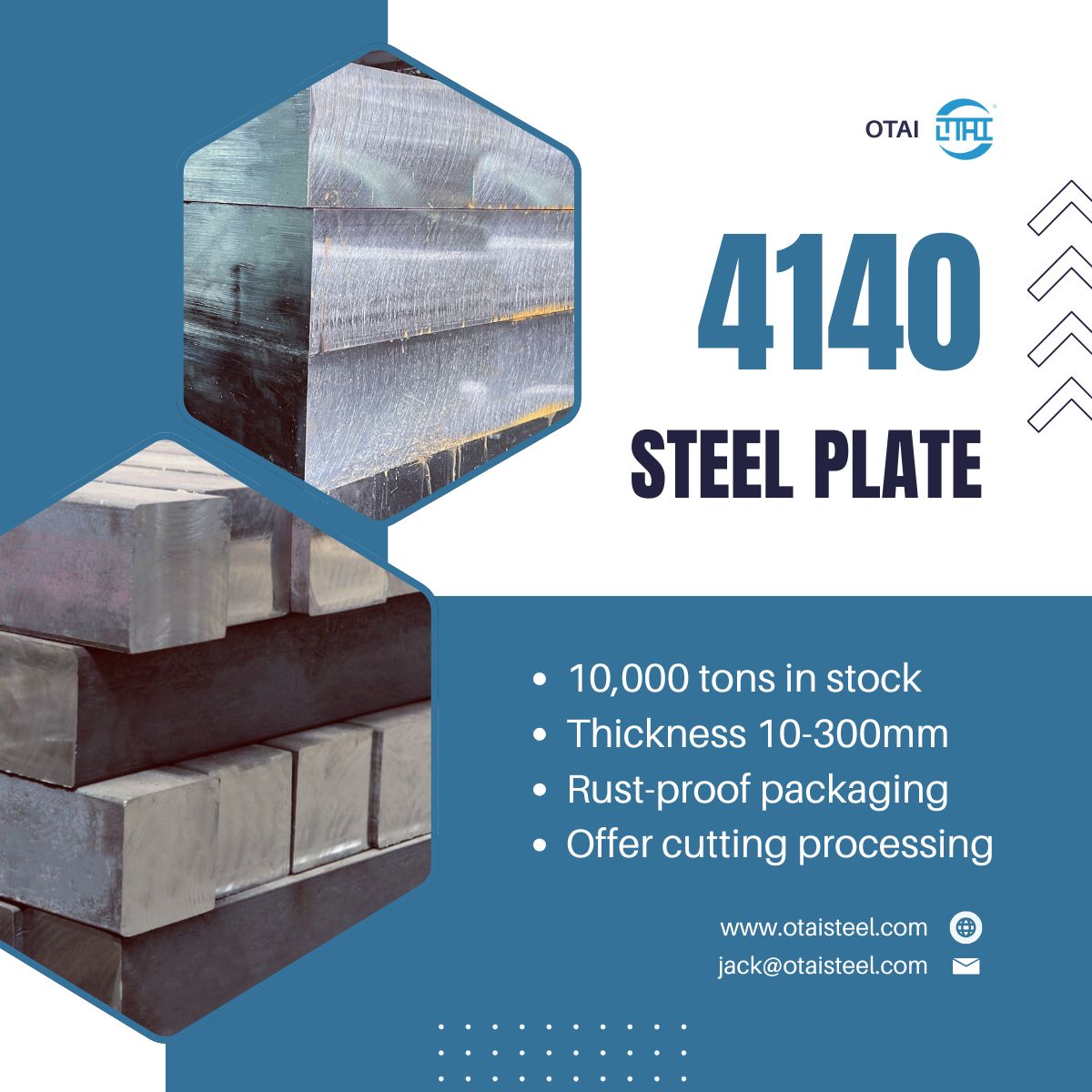
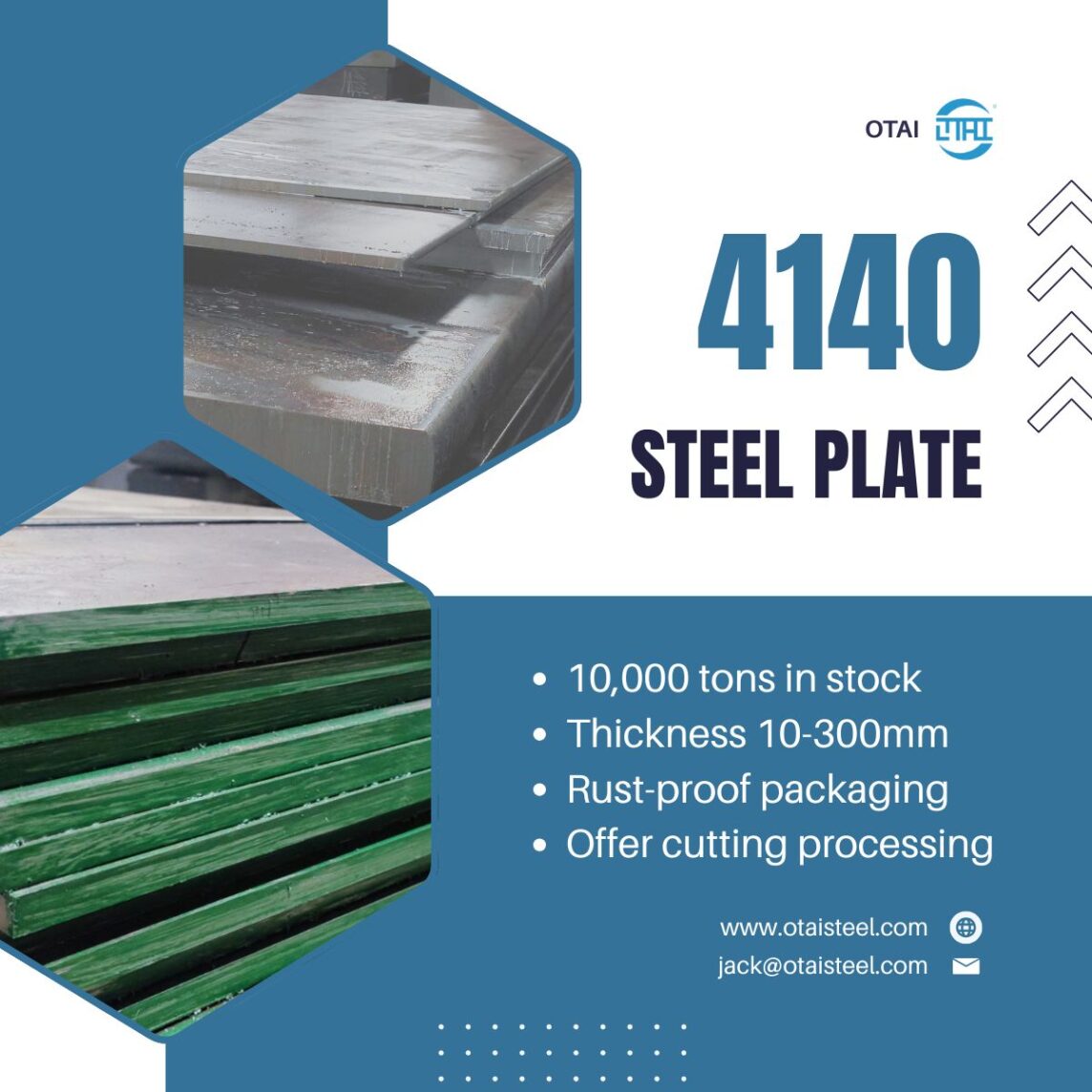
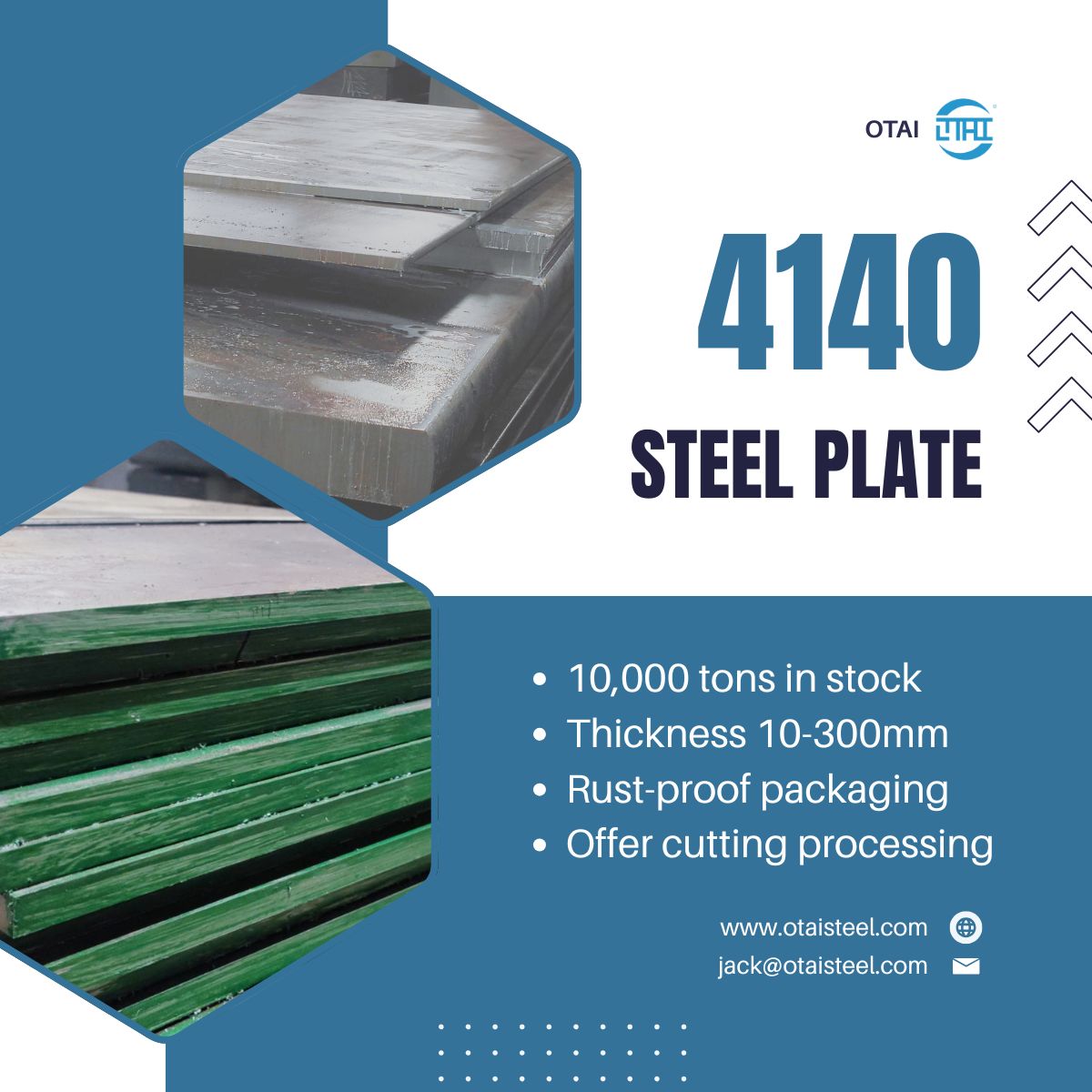
  • 📦 Over 10,000 tons of 4140 steel in various diameters and forms in stock
  • 📏 4140 steel available in round bars, plates, and forged components
  • ✂️ Cutting, machining, and heat treatment services offered
  • 🔬 UT testing and chemical composition inspection for quality assurance
  • 🌍 Supplying global industries including automotive, oil & gas, and machinery

Otai Special Steel ensures stable inventory and reliable delivery for 2 inch 4140 steel. All materials undergo strict quality inspection including chemical composition and ultrasonic testing to guarantee consistent performance.

❓ FAQ

Q1: What is 2 inch 4140 steel mainly used for?

Engineers use 2 inch 4140 steel for shafts, axles, hydraulic rods, and mechanical transmission components that require high strength and fatigue resistance under continuous load conditions.

Q2: Can 2 inch 4140 steel be heat treated?

Yes. Manufacturers commonly apply quenching and tempering to improve hardness, tensile strength, and wear resistance while maintaining good toughness.

Q3: What hardness can 2 inch 4140 steel reach?

After proper heat treatment, it can reach up to 50–55 HRC, depending on tempering temperature and cooling method.

Q4: Is 2 inch 4140 steel easy to machine?

Yes. In annealed condition, it offers good machinability, which allows manufacturers to produce complex parts before final heat treatment.

Q5: Why do industries prefer 2 inch 4140 steel?

Industries choose it because it provides an excellent balance of strength, toughness, and cost efficiency compared to higher alloy steels.

🏁 Conclusion

The inch 4140 steel remains one of the most reliable alloy steel options for high-stress mechanical applications. Its excellent combination of tensile strength, fatigue resistance, and heat treatment flexibility makes it widely used in automotive, oil & gas, and heavy machinery industries.

With proper processing, engineers can fully utilize the performance advantages of inch 4140 steel to extend component life, improve reliability, and reduce maintenance costs in demanding operating environments.

0 0 Continue Reading →

16MnCr5 Standard – EN 10084 Requirements and International Equivalents

16MnCr5 Standard – EN 10084 Requirements and International Equivalents16MnCr5 Standard – EN 10084 Requirements and International Equivalents

Engineers and manufacturers rely on the 16MnCr5 Standard as one of the most widely used carburizing steels in mechanical transmission systems. This steel grade delivers a unique combination of a hardened wear-resistant surface and a tough ductile core after proper heat treatment. Because of this dual performance, industries such as automotive engineering, heavy machinery production, and power transmission system design continue to select the 16MnCr5 Standard for critical components.

Unlike general carbon steels, the 16MnCr5 Standard provides controlled hardenability due to its manganese and chromium content. These alloying elements allow engineers to achieve predictable carburized case depth and stable mechanical performance. Procurement teams also prefer this grade because it provides a cost-efficient alternative to higher-alloy carburizing steels while still maintaining reliable fatigue resistance and wear performance under cyclic loading conditions.

In modern manufacturing environments, the 16MnCr5 Standard plays an important role in reducing production cost while maintaining mechanical integrity. It supports mass production of gears and shafts where dimensional stability and long service life are required.

🔵 What is 16MnCr5 Standard?

The 16MnCr5 Standard belongs to the group of low-carbon alloy steels designed specifically for carburizing and case hardening processes. EN 10084 defines this steel grade and classifies it under case hardening steels used in mechanical engineering applications.

Engineers design the 16MnCr5 Standard to allow carbon diffusion into the surface layer during carburizing while preserving a low-carbon core. This structure ensures that the outer layer becomes extremely hard after quenching, while the inner core retains toughness and impact resistance.

The balance between hardness and toughness makes this steel suitable for dynamic mechanical environments. Gear systems, for example, require surfaces that resist wear but also absorb shock loads without cracking. The 16MnCr5 Standard fulfills this requirement efficiently.

🟢 Chemical Composition of 16MnCr5 Standard

Element Content (%)
Carbon (C) 0.14 – 0.19
Manganese (Mn) 1.00 – 1.30
Chromium (Cr) 0.80 – 1.10
Silicon (Si) ≤ 0.40
Phosphorus (P) ≤ 0.035

The chemical composition of the 16MnCr5 Standard directly influences its carburizing behavior. Manganese improves hardenability and ensures deeper case penetration during heat treatment. Chromium enhances wear resistance and improves the stability of the hardened layer. Silicon contributes to strength and oxidation resistance during processing.

This controlled alloy system allows manufacturers to achieve consistent case depth and mechanical properties across different production batches, which is essential in large-scale industrial manufacturing.

🟠 Mechanical Properties of 16MnCr5 Standard

Property Value
Tensile Strength 600 – 850 MPa
Yield Strength ≈ 360 MPa
Elongation 10 – 12%
Core Hardness 28 – 40 HRC
Surface Hardness 58 – 62 HRC

Mechanical engineers evaluate the 16MnCr5 Standard based on its ability to maintain strength under repeated loading conditions. After carburizing and quenching, the surface layer resists abrasion while the core absorbs mechanical stress.

This combination significantly reduces failure risk in rotating components such as gears and shafts. In automotive systems, this performance directly improves transmission efficiency and service life.

🟣 Heat Treatment Process of 16MnCr5 Standard

🧪 Carburizing, Quenching & Tempering Process

Manufacturers process the 16MnCr5 Standard through carburizing at 880–950°C. During this stage, carbon atoms diffuse into the surface layer and form a carbon-enriched zone. The depth of this layer depends on temperature, time, and carbon potential in the furnace atmosphere.

After carburizing, engineers apply quenching to rapidly cool the material. This step transforms the surface into martensite, which significantly increases hardness. However, quenching also introduces internal stress, so tempering becomes necessary to improve toughness and reduce brittleness.

This heat treatment route allows the 16MnCr5 Standard to achieve a surface hardness of up to 62 HRC while maintaining a ductile core structure. The result is a material that performs reliably under both impact and friction conditions.

Compared with untreated steels, the 16MnCr5 Standard shows improved fatigue strength and longer operational life. Manufacturers also benefit from reduced distortion during heat treatment, which improves dimensional accuracy in precision components.

🔷 Industrial Applications of 16MnCr5 Standard

Industries apply the 16MnCr5 Standard in multiple mechanical systems where wear resistance and toughness are essential. Automotive engineers use it extensively in drivetrain components because it handles continuous torque and rotational stress effectively.

  • Automotive transmission gears 🚗
  • Drive shafts and pinions ⚙️
  • Industrial gearboxes 🏭
  • Mechanical coupling systems 🛠️
  • Agricultural machinery components 🚜

In gear manufacturing, engineers select the 16MnCr5 Standard because it reduces surface wear and extends service life under high-cycle operation. In heavy machinery, it helps maintain stable performance under shock loading and vibration conditions.

The increasing demand for efficient mechanical systems continues to drive global usage of this steel grade, especially in automotive electrification and high-efficiency gearbox design.

🏭 Company Advantages – Otai Special Steel

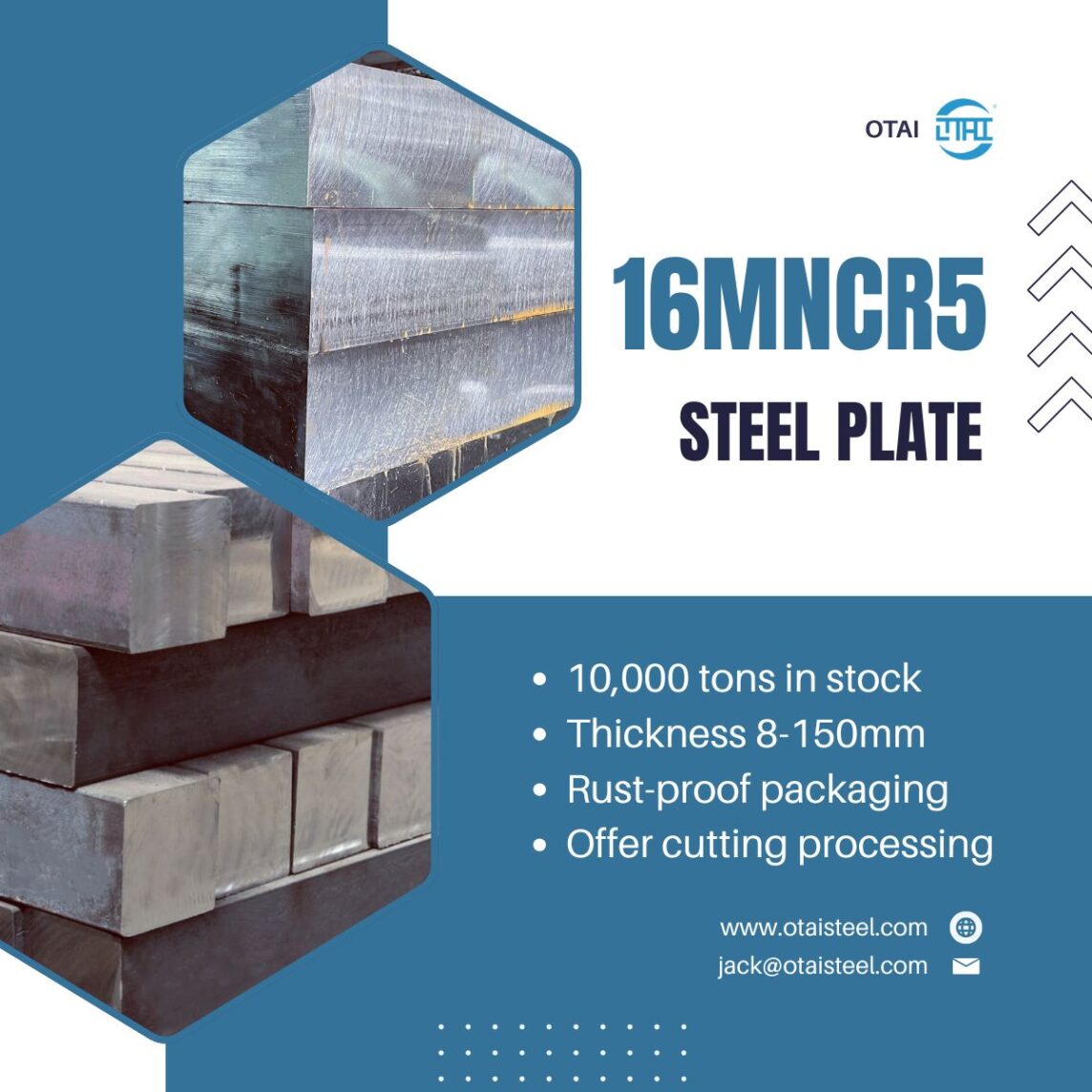
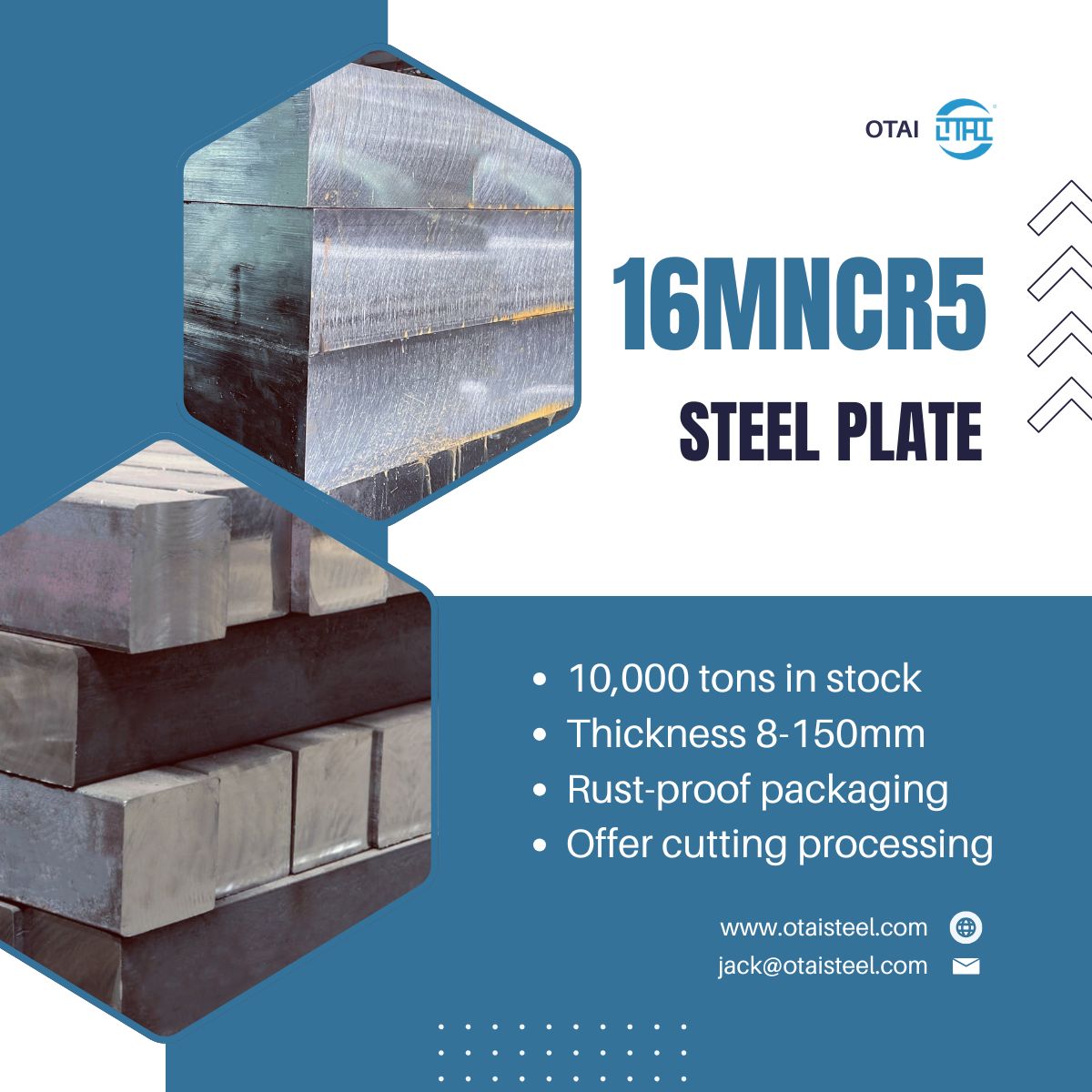
  • 📦 Over 10,000+ tons of steel inventory available
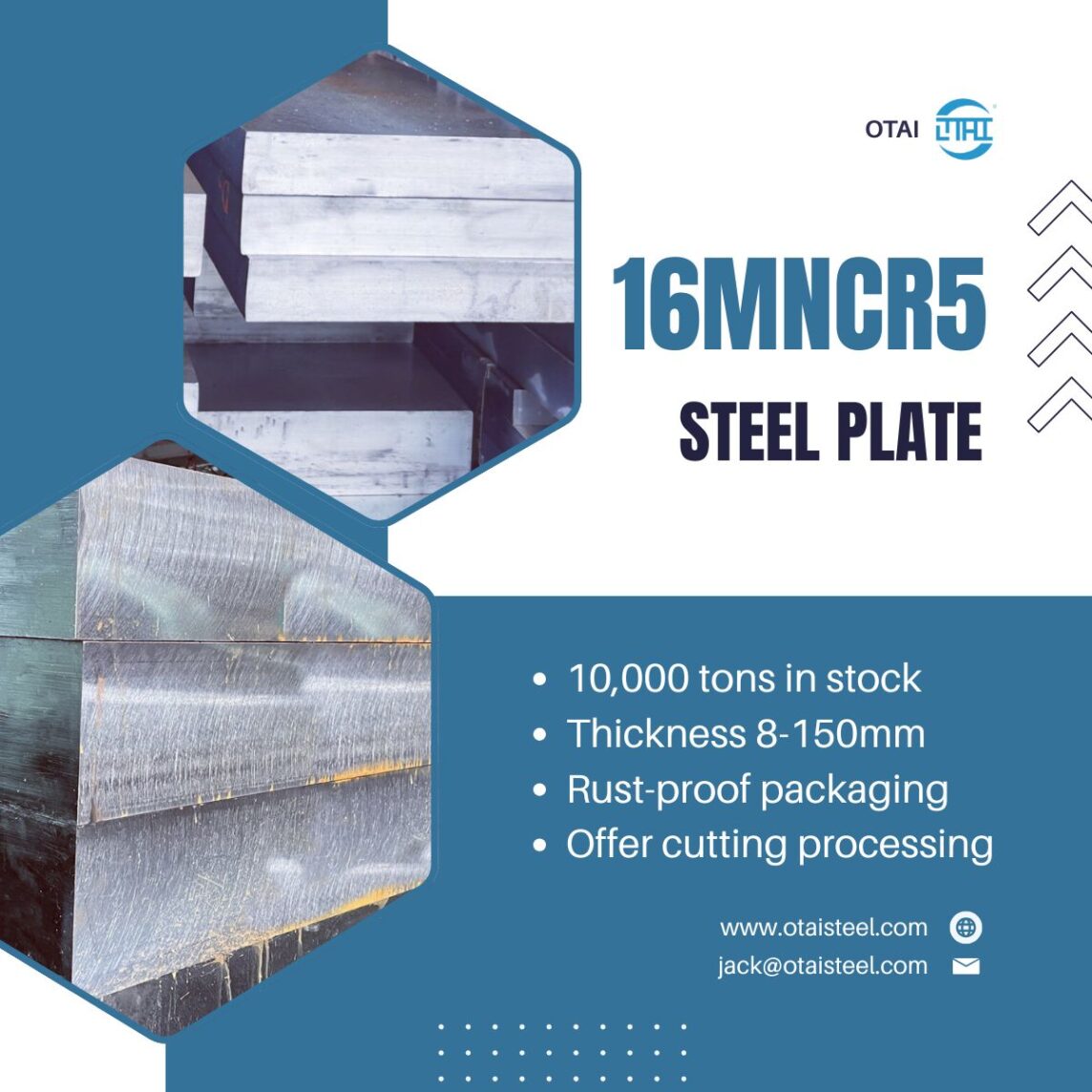
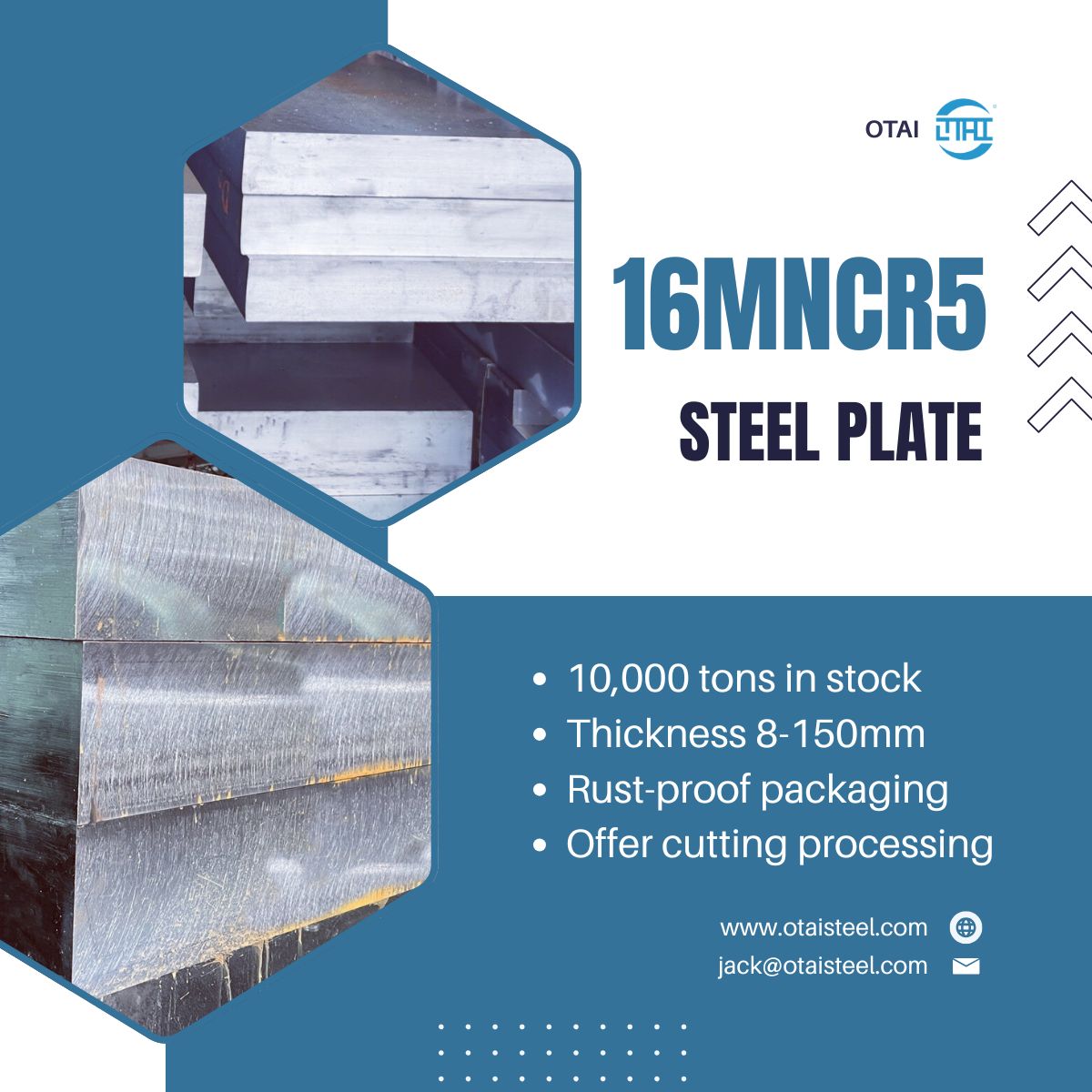
  • 📏 16MnCr5 Standard thickness range: 8–150mm in stock
  • ✂️ Cutting, machining, and heat treatment services
  • 🔬 Ultrasonic testing (UT) and chemical composition analysis
  • 🌍 Supply experience in automotive and industrial sectors

Otai Special Steel supplies the 16MnCr5 Standard with strict quality control systems. Each production batch undergoes ultrasonic testing and chemical verification to ensure compliance with EN standards. The company also supports customized processing to reduce customer lead time and improve production efficiency.

❓ FAQ – 16MnCr5 Standard

Q1: What applications use 16MnCr5 Standard?

Engineers use it in gears, shafts, and transmission systems that require wear resistance and core toughness.

Q2: How is 16MnCr5 heat treated?

Manufacturers carburize, quench, and temper the steel to achieve a hardened surface and tough core structure.

Q3: What hardness can it reach?

The surface hardness can reach up to 62 HRC after carburizing and quenching.

Q4: Why do industries prefer 16MnCr5?

Industries prefer it because it balances cost, machinability, and mechanical performance effectively.

Q5: What makes it suitable for gears?

Its carburized surface resists wear while the core absorbs impact loads, making it ideal for gear systems.

The 16MnCr5 Standard remains a critical engineering steel in modern manufacturing. Its optimized chemical composition, reliable heat treatment response, and balanced mechanical properties make it a preferred choice for high-performance mechanical systems across global industries.

0 0 Continue Reading →

16MnCr5 Microstructure: Microscopic Analysis of 16MnCr5 Steel

16MnCr5 Microstructure: Microscopic Analysis of 16MnCr5 Steel16MnCr5 Microstructure: Microscopic Analysis of 16MnCr5 Steel

The 16MnCr5 microstructure plays a critical role in determining the steel’s mechanical performance, wear resistance, fatigue strength, and service life. Engineers widely use 16MnCr5 steel in gears, shafts, pinions, and transmission components because its microstructure can achieve an outstanding balance between surface hardness and core toughness after carburizing and heat treatment.

As a low-carbon chromium alloy carburizing steel, 16MnCr5 develops different microstructural phases depending on the heat treatment process. These phases directly affect hardness, toughness, dimensional stability, and fatigue behavior.

Manufacturers select this steel for demanding mechanical systems because it provides:

  • Excellent carburizing response
  • High surface hardness
  • Strong core toughness
  • Outstanding wear resistance
  • Reliable fatigue performance

Understanding the microstructure helps engineers optimize heat treatment parameters and improve component reliability in industrial applications.

🧪 Chemical Composition and Microstructural Behavior

The alloy chemistry of 16MnCr5 strongly influences phase transformation and hardenability during heat treatment.

Element Content (%) Effect on Microstructure
Carbon (C) 0.14 – 0.19 Supports martensite formation
Manganese (Mn) 1.00 – 1.30 Improves hardenability
Chromium (Cr) 0.80 – 1.10 Enhances wear resistance
Silicon (Si) 0.17 – 0.37 Strengthens ferrite structure

Chromium and manganese improve hardenability and help form a stable martensitic surface after quenching. The relatively low carbon content keeps the core ductile and resistant to brittle fracture.

🏗️ Microstructure in the Annealed Condition

In the annealed condition, 16MnCr5 steel usually contains a ferrite-pearlite microstructure. This condition provides lower hardness and better machinability before carburizing and final heat treatment.

The annealed microstructure offers several manufacturing advantages:

  • Improved machinability
  • Reduced internal stress
  • Better dimensional stability
  • Easier forming and machining
Microstructural Phase Main Characteristic
Ferrite Soft and ductile
Pearlite Moderate strength and hardness

Manufacturers often machine gears and shafts in this condition before applying carburizing treatment.

🔥 Carburized and Quenched Microstructure

After carburizing and quenching, the microstructure changes dramatically. Carbon diffuses into the surface layer during carburizing, increasing the carbon concentration near the surface.

Quenching then transforms the carburized layer into hard martensite.

The final structure usually contains:

  • Martensitic surface layer
  • Tough low-carbon core
  • Small amounts of retained austenite
  • Possible bainitic regions depending on cooling rate
Region Typical Microstructure Main Benefit
Surface Layer Martensite Extreme hardness and wear resistance
Transition Zone Mixed martensite/bainite Improved stress distribution
Core Ferrite and bainite Shock resistance and toughness

This dual-property microstructure explains why 16MnCr5 performs exceptionally well in transmission gears and rotating mechanical systems.

⚙️ Effect of Tempering on Microstructure

Tempering reduces brittleness and stabilizes the martensitic structure after quenching. During tempering, some residual stresses relax, improving toughness without significantly reducing surface hardness.

Proper tempering helps:

  • Reduce cracking risk
  • Improve dimensional stability
  • Increase impact toughness
  • Enhance fatigue resistance
  • Stabilize retained austenite

Most manufacturers temper 16MnCr5 at relatively low temperatures to preserve carburized surface hardness while improving mechanical reliability.

📊 Relationship Between Microstructure and Mechanical Properties

The microstructure directly determines the final mechanical properties of 16MnCr5 steel. Different phase distributions influence hardness, fatigue strength, wear resistance, and impact toughness.

A properly controlled carburizing and quenching process creates an optimized balance between a hard surface and a ductile core.

Microstructural Feature Mechanical Effect
Martensitic Surface Improves wear resistance
Tough Core Absorbs impact energy
Fine Grain Structure Enhances fatigue strength
Retained Austenite Improves crack resistance

The steel’s excellent fatigue performance makes it highly suitable for gears, shafts, and power transmission systems operating under repeated cyclic stress.

🔬 Microscopic Analysis of 16MnCr5 Steel

Metallurgical laboratories often examine 16MnCr5 microstructures using optical microscopy and scanning electron microscopy (SEM). These analyses help verify carburizing depth, phase distribution, and heat treatment quality.

Typical microscopic observations include:

  • Fine martensitic needles near the surface
  • Transition zones between carburized and core regions
  • Ferrite-bainite structures in the core
  • Grain boundary conditions
  • Distribution of retained austenite

Engineers use these observations to optimize heat treatment processes and improve component performance.

Analysis Method Purpose
Optical Microscopy General phase observation
SEM Analysis Detailed phase examination
Hardness Testing Verifies carburized layer performance

🚗 Why Microstructure Matters in Gear Applications

Gear systems operate under continuous rolling contact stress and repeated mechanical loading. Poor microstructural control can lead to premature wear, tooth cracking, or fatigue failure.

The optimized 16MnCr5 microstructure provides:

  • High contact fatigue resistance
  • Reduced surface wear
  • Improved crack resistance
  • Better shock absorption
  • Longer operational service life

Because of these advantages, automotive manufacturers widely use 16MnCr5 for transmission gears, differential gears, and pinion systems.

Gear Requirement Microstructural Benefit
Wear Resistance Martensitic surface layer
Impact Resistance Ductile core structure
Fatigue Strength Fine grain distribution

🌍 International Equivalent Grades

Several international carburizing steels offer microstructural behavior similar to 16MnCr5.

Standard Equivalent Grade
AISI / SAE SAE 5115
JIS SCM420
GB 20CrMnTi
ISO 18CrMo4

Although these steels share similar carburizing behavior, slight alloy differences may influence grain refinement, hardenability, and retained austenite formation.

🏭 Company Advantages

Otai Special Steel supplies high-quality 16MnCr5 steel materials for gears, shafts, transmission systems, and heavy engineering applications.

  • Large inventory and stable year-round supply
  • 8–150mm thickness plates available in stock
  • Custom cutting and heat treatment services
  • Ultrasonic testing (UT) support
  • Chemical composition verification
  • Third-party inspection support including SGS
  • Professional export packaging and logistics services
  • Technical support for heat treatment and material selection

We support customers worldwide with reliable material quality and fast delivery for demanding industrial projects.

❓ FAQ

Q1: What is the main microstructure of carburized 16MnCr5 steel?

A1: The carburized surface mainly contains martensite, while the core usually contains ferrite and bainitic structures for toughness.

Q2: Why is martensite important in 16MnCr5 steel?

A2: Martensite provides very high surface hardness and excellent wear resistance after quenching.

Q3: Does tempering affect the microstructure?

A3: Yes. Tempering reduces brittleness, stabilizes the structure, and improves toughness and fatigue resistance.

Q4: Why does 16MnCr5 perform well in gears?

A4: The steel combines a hard wear-resistant surface with a strong and ductile core, making it ideal for cyclic loading conditions.

Q5: Which industries commonly use 16MnCr5 steel?

A5: Automotive, industrial machinery, agricultural equipment, and heavy engineering industries widely use this material.

0 0 Continue Reading →

AISI 4140 Steel Properties: What type of steel is AISI 4140?

AISI 4140 Steel Properties: What type of steel is AISI 4140?AISI 4140 Steel Properties: What type of steel is AISI 4140?

The AISI 4140 steel properties make this alloy steel one of the most widely used engineering materials in the global manufacturing industry. Engineers prefer AISI 4140 because it provides an excellent combination of strength, toughness, wear resistance, fatigue performance, and heat treatment capability.

AISI 4140 belongs to the chromium-molybdenum alloy steel family and is commonly supplied in annealed, normalized, pre-hardened, or quenched and tempered conditions. The material performs exceptionally well in demanding mechanical applications where components experience high stress, repeated loading, and severe wear conditions.

Manufacturers widely use AISI 4140 steel for:

  • Gears and pinions
  • Shafts and axles
  • Oil and gas components
  • Heavy-duty bolts
  • Hydraulic machinery parts
  • Aircraft and aerospace components
  • Industrial tooling systems

The outstanding versatility of this alloy steel allows engineers to balance hardness, machinability, toughness, and strength according to different application requirements.

🧪 Chemical Composition of AISI 4140 Steel

The chemical composition of AISI 4140 steel directly influences its mechanical strength, hardenability, and wear resistance.

The chromium and molybdenum additions significantly improve heat treatment response and high-strength performance compared with plain carbon steels.

Element Typical Content (%) Function
Carbon (C) 0.38 – 0.43 Improves strength and hardness
Chromium (Cr) 0.80 – 1.10 Enhances wear resistance and hardenability
Molybdenum (Mo) 0.15 – 0.25 Improves toughness and heat resistance
Manganese (Mn) 0.75 – 1.00 Increases strength and hardenability
Silicon (Si) 0.15 – 0.35 Improves structural stability

This balanced alloy composition allows AISI 4140 steel to achieve excellent mechanical performance after heat treatment.

📊 Mechanical Properties of AISI 4140 Steel

AISI 4140 steel provides high tensile strength, good impact resistance, and excellent fatigue performance.

The exact mechanical properties depend on the heat treatment condition and section thickness.

Property Typical Value
Tensile Strength 655 – 1080 MPa
Yield Strength 415 – 930 MPa
Hardness 197 – 320 HB
Elongation 20 – 25%
Impact Toughness Excellent

The material maintains an excellent balance between strength and toughness, making it highly suitable for heavily loaded rotating components.

🔥 Heat Treatment Characteristics

One of the most important AISI 4140 steel properties is its excellent response to heat treatment.

The material can be quenched and tempered to achieve different hardness and strength levels depending on application requirements.

Common heat treatment processes include:

  • Annealing
  • Normalizing
  • Quenching
  • Tempering
  • Induction hardening
Heat Treatment Process Typical Temperature
Annealing 815 – 870°C
Normalizing 870 – 925°C
Hardening 830 – 870°C
Tempering 200 – 700°C

Proper tempering significantly improves toughness while maintaining high mechanical strength.

⚙️ Machinability and Weldability

AISI 4140 steel offers good machinability in the annealed or normalized condition.

Manufacturers commonly machine the material before final hardening to reduce tool wear and improve machining efficiency.

Fabrication Property Performance
Machinability Good
Weldability Moderate
Formability Moderate
Grinding Performance Good

Preheating is usually recommended before welding to minimize cracking risk and residual stress formation.

🏭 Industrial Applications of AISI 4140 Steel

AISI 4140 steel is widely used in industries requiring high strength, excellent fatigue resistance, and reliable wear performance.

The material performs especially well in dynamic mechanical systems subjected to repeated stress and heavy loading conditions.

Industry Typical Components
Oil and Gas Drill collars, tool joints, shafts
Automotive Axles, gears, crankshafts
Aerospace Landing gear components, structural parts
Heavy Machinery Hydraulic shafts and rollers
Industrial Equipment Bolts, couplings, spindles

Its excellent toughness and hardenability make AISI 4140 one of the most versatile engineering alloy steels available today.

🔬 Microstructure and Performance Advantages

The microstructure of AISI 4140 steel changes significantly depending on the heat treatment condition.

Annealed material typically contains ferrite and pearlite, while quenched and tempered material develops tempered martensite, which greatly improves hardness and strength.

Heat Treatment Condition Typical Microstructure Performance Benefit
Annealed Ferrite + Pearlite Improved machinability
Normalized Fine Pearlite Balanced strength and toughness
Quenched and Tempered Tempered Martensite High strength and wear resistance

The tempered martensitic structure is particularly valuable for shafts, gears, and heavily loaded rotating machinery parts.

🌍 International Equivalent Grades

AISI 4140 steel has several international equivalent grades used across different standards worldwide.

Standard Equivalent Grade
DIN / EN 42CrMo4 / 1.7225
JIS SCM440
GB 42CrMo
BS 708M40

Although equivalent grades are similar, slight differences in chemical composition and heat treatment practices may affect final mechanical properties.

⚠️ Common Processing Challenges and Solutions

Manufacturers must carefully control machining and heat treatment parameters to achieve the best AISI 4140 steel properties.

Common processing challenges include:

  • Distortion after quenching
  • Surface cracking
  • Excessive hardness variation
  • Welding stress cracking
  • Tool wear during machining
Problem Possible Cause Recommended Solution
Distortion Uneven quenching Optimize cooling process
Cracking Excessive internal stress Use proper tempering
Tool Wear High material hardness Use coated carbide tooling
Weld Cracking Lack of preheating Apply preheat and PWHT

Careful process control significantly improves final component quality, durability, and service life.

🏢 Company Advantages

Otai Special Steel supplies premium-quality AISI 4140 alloy steel for industrial machinery, oil and gas equipment, aerospace systems, and heavy engineering applications.

  • Large inventory and stable year-round supply
  • Wide size range for plates, bars, and forged blocks
  • Custom cutting and machining services
  • Heat treatment support including quenching and tempering
  • Ultrasonic testing (UT) support
  • Chemical composition verification
  • Third-party inspection support including SGS
  • Professional export packaging and global logistics support

We provide reliable material quality, competitive pricing, and fast delivery for customers worldwide.

❓ FAQ

Q1: What type of steel is AISI 4140?

A1: AISI 4140 is a chromium-molybdenum alloy steel known for high strength, toughness, and excellent heat treatment capability.

Q2: Can AISI 4140 steel be heat treated?

A2: Yes. The material responds very well to quenching and tempering processes.

Q3: What hardness can AISI 4140 achieve?

A3: Depending on heat treatment, hardness can exceed 50 HRC in hardened conditions.

Q4: Is AISI 4140 suitable for gears and shafts?

A4: Yes. The material is widely used for high-strength gears, shafts, and rotating machinery components.

Q5: Is AISI 4140 easy to weld?

A5: The material has moderate weldability and usually requires preheating and post-weld heat treatment.

0 0 Continue Reading →

16MnCr5 Steel Usage: Where This Case Hardening Steel Performs Best

16MnCr5 Steel Usage: Where This Case Hardening Steel Performs Best16MnCr5 Steel Usage: Where This Case Hardening Steel Performs Best

The wide range of 16MnCr5 steel usage makes this alloy one of the most important carburizing steels in modern manufacturing and heavy engineering industries. Engineers select 16MnCr5 because it delivers an outstanding combination of surface hardness, core toughness, fatigue resistance, and wear performance after heat treatment.

Manufacturers around the world use this steel for components that operate under continuous friction, heavy cyclic loading, and high contact stress. Its excellent carburizing response allows engineers to produce parts with a very hard outer layer while maintaining a shock-resistant and ductile core.

Because of these advantages, 16MnCr5 steel has become a preferred material for:

  • Automotive transmission systems
  • Industrial gearbox components
  • Heavy-duty shafts
  • Power transmission equipment
  • Agricultural machinery
  • Construction equipment
  • Mechanical drive systems

🔍 What is 16MnCr5 Steel?

16MnCr5 is a low-carbon chromium-manganese alloy steel produced according to EN/DIN standards. The steel belongs to the family of case hardening steels, meaning manufacturers typically carburize the surface to improve hardness and wear resistance.

After carburizing and quenching, the steel develops:

  • A hard martensitic surface
  • A strong and ductile core
  • Excellent fatigue resistance
  • Outstanding wear performance
  • Reliable dimensional stability

This dual-property structure makes the material highly suitable for heavily loaded mechanical systems.

Property Performance
Surface Hardness Excellent
Wear Resistance Excellent
Core Toughness Very Good
Fatigue Resistance Excellent

⚗️ Chemical Composition and Industrial Performance

The alloy composition directly affects the engineering performance and application range of 16MnCr5 steel.

Element Content (%) Main Benefit
Carbon (C) 0.14 – 0.19 Supports carburized hardness
Manganese (Mn) 1.00 – 1.30 Improves hardenability
Chromium (Cr) 0.80 – 1.10 Enhances wear resistance
Silicon (Si) 0.17 – 0.37 Improves strength

The combination of chromium and manganese gives 16MnCr5 excellent hardenability and mechanical reliability in demanding industrial environments.

🚗 Automotive Industry Uses

The automotive industry represents one of the largest application sectors for 16MnCr5 steel. Modern vehicles require transmission components capable of handling continuous rotational stress and repeated torque loading.

Manufacturers commonly use 16MnCr5 for:

  • Transmission gears
  • Differential gears
  • Synchronizer hubs
  • Drive shafts
  • Pinion gears
  • Clutch components

The carburized surface improves wear resistance, while the tough core prevents sudden failure during shock loading conditions.

Automotive Component Main Requirement
Gear Teeth Wear resistance
Drive Shafts Fatigue strength
Differential Parts Shock resistance

🏭 Industrial Machinery Applications

Industrial machinery operates under demanding mechanical conditions involving continuous motion, high loads, and repetitive contact stress. 16MnCr5 performs exceptionally well in these environments because of its balanced hardness and toughness.

Common industrial uses include:

  • Gearboxes
  • Reducers
  • Industrial rollers
  • Power transmission shafts
  • Heavy-duty couplings
  • Mining equipment gears

The steel helps reduce maintenance frequency and improve equipment reliability in long-term industrial operation.

🌾 Agricultural and Construction Equipment Usage

Agricultural and construction machinery often operates in dusty, muddy, and high-impact environments. Components in these systems experience continuous friction, vibration, and heavy loading.

16MnCr5 steel performs extremely well in these applications because the carburized surface resists abrasive wear while the strong core absorbs impact energy.

Manufacturers commonly use the steel for:

  • Tractor transmission gears
  • Axle shafts
  • Drive couplings
  • Hydraulic transmission components
  • Excavator drive systems
  • Loader gearbox components

The material helps improve service life and reduce unexpected mechanical failures in heavy-duty field operation.

Equipment Type Typical Components
Agricultural Machinery Transmission gears and shafts
Excavators Drive systems and couplings
Construction Equipment Gearbox components

🔥 Why 16MnCr5 Steel Performs Well in Mechanical Systems

The success of 16MnCr5 steel comes from its ability to combine multiple important engineering properties in one material.

After carburizing and quenching, the steel develops:

  • High surface hardness
  • Excellent fatigue strength
  • Strong impact resistance
  • Reliable dimensional stability
  • Outstanding wear performance

This unique structure allows mechanical systems to operate efficiently under repeated cyclic loading and severe friction conditions.

Performance Factor Benefit
Hard Surface Layer Improves wear resistance
Ductile Core Prevents brittle fracture
Fatigue Strength Extends component life
Hardenability Improves heat treatment response

⚙️ Heat Treatment and Performance Optimization

Heat treatment plays a critical role in maximizing the performance of 16MnCr5 steel. Engineers carefully control carburizing depth, quenching temperature, and tempering conditions to achieve the desired mechanical properties.

Heat Treatment Process Typical Temperature
Carburizing 880 – 980°C
Quenching 780 – 850°C
Tempering 150 – 200°C

Proper heat treatment improves:

  • Surface hardness
  • Fatigue performance
  • Wear resistance
  • Dimensional stability
  • Impact toughness

Many high-performance transmission systems depend on optimized carburizing treatment to ensure long-term operational reliability.

🌍 International Equivalent Grades

Several international standards provide steels with similar carburizing performance and mechanical characteristics to 16MnCr5.

Standard Equivalent Grade
AISI / SAE SAE 5115
JIS SCM420
GB 20CrMnTi
ISO 18CrMo4

Although these steels offer similar application performance, slight differences in chemical composition may affect hardenability and fatigue behavior.

🏭 Company Advantages

Otai Special Steel supplies high-quality 16MnCr5 steel materials for automotive, industrial machinery, agricultural equipment, and heavy engineering applications.

  • Large inventory and stable year-round supply
  • 8–150mm thickness plates available in stock
  • Custom cutting services based on customer drawings
  • Professional heat treatment support
  • Ultrasonic testing (UT) and chemical composition verification
  • Third-party inspection support including SGS
  • Export packaging and global logistics support
  • Fast response for urgent material requirements

Our team supports customers with reliable material quality, technical assistance, and stable delivery performance for demanding engineering projects.

❓ FAQ

Q1: What are the main uses of 16MnCr5 steel?

A1: Manufacturers commonly use 16MnCr5 steel for gears, shafts, pinions, couplings, and transmission components that require high wear resistance and strong core toughness.

Q2: Why is 16MnCr5 suitable for gears?

A2: The steel develops a hard carburized surface and a shock-resistant core after heat treatment, making it ideal for heavily loaded gear systems.

Q3: Which industries commonly use 16MnCr5 steel?

A3: Automotive, industrial machinery, agricultural equipment, mining, and construction industries widely use this material.

Q4: Can 16MnCr5 steel resist wear effectively?

A4: Yes. After carburizing and quenching, the steel achieves excellent wear resistance and fatigue performance.

Q5: What is the typical hardness of carburized 16MnCr5?

A5: Proper heat treatment can achieve approximately 58–62 HRC surface hardness.

0 0 Continue Reading →

16MnCr5 Physical Properties – Density, Thermal Conductivity and Expansion

16MnCr5 Physical Properties – Density, Thermal Conductivity and Expansion16MnCr5 Physical Properties – Density, Thermal Conductivity and Expansion

When engineers select a steel grade for gears, shafts, bearings, and transmission components, they often focus on hardness, strength, and wear resistance. However, the 16MnCr5 physical properties are equally important because they influence machining behavior, heat treatment response, thermal stability, dimensional accuracy, and long-term performance in service.

16MnCr5 is one of the most widely used carburizing steels in Europe and many international markets. Known for its excellent case-hardening capability, this low-alloy chromium-manganese steel combines a hard wear-resistant surface with a tough and durable core. Beyond its mechanical performance, its physical properties play a critical role in determining how components behave during manufacturing and operation.

This article provides a detailed overview of 16MnCr5 material properties, including density, thermal conductivity, thermal expansion coefficient, elastic modulus, specific heat capacity, and electrical resistivity. It also explains how these characteristics affect real industrial applications.

📘 What Are Physical Properties of 16MnCr5?

Physical properties describe how a material behaves under thermal, electrical, magnetic, and environmental conditions. Unlike mechanical properties such as tensile strength and hardness, physical properties generally remain independent of load-bearing performance.

For manufacturers, understanding physical properties helps optimize machining parameters, heat treatment cycles, dimensional tolerances, and product reliability.

In the case of 16MnCr5, these properties make the steel particularly suitable for precision gears, transmission shafts, sprockets, and heavily loaded rotating components.

⚙️ Overview of 16MnCr5 Physical Properties

Property Typical Value
Density 7.85 g/cm³
Elastic Modulus 210 GPa
Thermal Conductivity 42–46 W/m·K
Thermal Expansion Coefficient 11.5–12.5 ×10⁻⁶/K
Specific Heat Capacity 460 J/kg·K
Electrical Resistivity 0.20–0.25 μΩ·m

These values may vary slightly depending on the exact chemical composition, manufacturing process, and heat treatment condition.

⚖️ Density of 16MnCr5 Steel

The 16MnCr5 density is approximately 7.85 g/cm³, which is similar to most alloy steels used in mechanical engineering.

Density directly influences component weight, rotational inertia, and transportation costs. Designers use density calculations when developing gears, shafts, couplings, and other rotating components.

Unit Value
g/cm³ 7.85
kg/m³ 7850
lb/in³ 0.284

For large gearboxes and industrial transmission systems, accurate density values are essential when calculating total assembly weight and dynamic loads.

📏 Elastic Modulus of 16MnCr5

The 16MnCr5 elastic modulus is approximately 210 GPa.

Elastic modulus measures the stiffness of a material and indicates how much it will deform under load.

A high modulus of elasticity provides several advantages:

  • Reduced shaft deflection.
  • Improved gear tooth alignment.
  • Enhanced dimensional stability.
  • Better vibration control.
  • Higher precision in power transmission systems.

In gear manufacturing, stiffness is particularly important because excessive deformation can lead to uneven tooth loading, increased wear, and premature failure.

🔥 Thermal Conductivity of 16MnCr5

The 16MnCr5 thermal conductivity typically ranges between 42 and 46 W/m·K.

Thermal conductivity determines how effectively heat moves through the material.

This property is important during:

  • Heat treatment operations.
  • Carburizing processes.
  • High-speed machining.
  • Grinding operations.
  • High-temperature industrial service.

During carburizing, heat must distribute evenly throughout the component to achieve a uniform case depth. The moderate thermal conductivity of 16MnCr5 helps support consistent heat treatment results.

For machining operations, efficient heat dissipation can reduce tool wear and improve surface quality.

🌡️ Thermal Expansion Coefficient

The 16MnCr5 thermal expansion coefficient is approximately 11.5–12.5 ×10⁻⁶/K.

This value indicates how much the material expands when exposed to increasing temperatures.

Temperature Range Expansion Coefficient
20–100°C 11.5 ×10⁻⁶/K
20–200°C 12.0 ×10⁻⁶/K
20–300°C 12.5 ×10⁻⁶/K

This characteristic is critical when manufacturing precision gears and transmission components because thermal expansion directly affects dimensional accuracy and operating clearances.

“`html id=”16mncr5pp2″

🔥 Specific Heat Capacity of 16MnCr5

The specific heat capacity of 16MnCr5 is approximately 460 J/kg·K. This property describes the amount of heat energy required to raise the temperature of one kilogram of material by one degree Kelvin.

Although this parameter may appear less important than hardness or strength, it plays a major role during heat treatment and thermal processing.

During carburizing, quenching, and tempering, engineers rely on specific heat capacity data to calculate heating times, furnace efficiency, and cooling rates. Accurate control of these factors helps ensure uniform microstructure and consistent mechanical properties throughout the component.

For large gears and shafts, understanding heat absorption behavior is especially important because uneven heating can create internal stresses, distortion, or dimensional inaccuracies.

Property Typical Value
Specific Heat Capacity 460 J/kg·K
Heat Treatment Relevance High
Influence on Distortion Control Significant

⚡ Electrical Resistivity of 16MnCr5

The electrical resistivity of 16MnCr5 generally falls between 0.20 and 0.25 μΩ·m.

Although 16MnCr5 is not normally selected for electrical applications, resistivity data becomes useful in several manufacturing processes.

For example, induction hardening systems rely on electromagnetic fields to generate heat within steel components. Electrical resistivity influences heating efficiency and process control.

Manufacturers producing gears, splines, and shafts often use induction heating to harden localized areas while minimizing distortion in the rest of the component.

Property Typical Value
Electrical Resistivity 0.20–0.25 μΩ·m
Electrical Conductivity Moderate
Suitability for Induction Heating Excellent

📊 Physical Properties vs Mechanical Properties

Many buyers confuse physical properties with mechanical properties. While both are important, they describe different aspects of material performance.

Physical Properties Mechanical Properties
Density Yield Strength
Thermal Conductivity Tensile Strength
Thermal Expansion Hardness
Specific Heat Capacity Impact Toughness
Electrical Resistivity Fatigue Strength

When evaluating 16MnCr5 steel characteristics, engineers must consider both categories. Physical properties affect manufacturing and thermal behavior, while mechanical properties determine load-carrying performance.

⚙️ How Physical Properties Affect Gear Manufacturing

One of the most common applications for 16MnCr5 is gear production. The physical properties of the material directly influence manufacturing efficiency and product quality.

For example, thermal expansion affects dimensional stability during heat treatment. If expansion is not properly controlled, gear teeth may distort, requiring additional grinding operations.

Thermal conductivity impacts how quickly heat spreads during carburizing and quenching. Uniform heat distribution helps achieve consistent case depth and hardness across all gear teeth.

Density influences rotational inertia, which becomes important in high-speed transmissions where balancing and dynamic performance are critical.

Elastic modulus determines how much gear teeth deflect under load. Higher stiffness improves load distribution and reduces localized stress concentrations.

As a result, understanding 16MnCr5 engineering properties allows manufacturers to optimize both production processes and component performance.

🏭 Real Industrial Applications

The combination of physical and mechanical properties makes 16MnCr5 suitable for a wide range of industrial applications.

Industry Typical Components Property Benefit
Automotive Transmission gears Wear resistance and stiffness
Industrial Gearboxes Gear wheels and shafts Fatigue resistance and dimensional stability
Agricultural Machinery Drive systems Durability under cyclic loads
Mining Equipment Heavy-duty gears High surface hardness
Machine Building Pinions and couplings Reliable heat treatment response

These applications demonstrate why 16MnCr5 remains one of the most trusted case-hardening steels in global engineering industries.

🏆 Company Advantages – Otai Special Steel

  • Professional supplier of 16MnCr5 steel plates, round bars, and forged blocks.
  • Sufficient inventory with 8–150 mm thickness plates available in stock.
  • More than 10,000 tons of steel inventory available year-round.
  • Custom cutting services according to customer drawings and dimensions.
  • Heat treatment support including annealing, carburizing, quenching, and tempering.
  • Ultrasonic testing (UT) available for internal quality verification.
  • Chemical composition and mechanical property testing.
  • Third-party inspections such as SGS available upon request.
  • Stable export supply chain serving customers worldwide.
  • Fast delivery and competitive pricing.

📌 FAQ

Q1: What is the density of 16MnCr5?
A: The density of 16MnCr5 is approximately 7.85 g/cm³ or 7850 kg/m³.

Q2: What is the thermal conductivity of 16MnCr5?
A: It typically ranges between 42 and 46 W/m·K.

Q3: What is the elastic modulus of 16MnCr5?
A: The elastic modulus is approximately 210 GPa.

Q4: Why is thermal expansion important for gears?
A: Thermal expansion affects dimensional accuracy, gear tooth alignment, and heat treatment distortion control.

Q5: Are physical properties affected by carburizing?
A: Physical properties such as density and elastic modulus remain relatively stable, while mechanical properties like hardness and strength change significantly after carburizing and heat treatment.

0 0 Continue Reading →

Density of 4140 Steel lb/in³ – Weight Calculations and Physical Properties

Density of 4140 Steel lb/in³ – Weight Calculations and Physical PropertiesDensity of 4140 Steel lb/in³ – Weight Calculations and Physical Properties

The keyword density of 4140 steel lb/in³ is commonly searched by engineers, steel buyers, machinists, designers, and manufacturing companies that need accurate weight calculations for steel components. Whether you are designing shafts, gears, oilfield tools, machine components, or structural parts, understanding material density is essential for estimating weight, transportation costs, machining allowances, and mechanical performance.

AISI 4140 steel is one of the most widely used chromium-molybdenum alloy steels in the world. It offers an excellent balance of strength, toughness, wear resistance, and heat treatment capability. In addition to its mechanical properties, the density of 4140 steel plays a significant role in engineering calculations and material selection.

This article explains the 4140 steel density lb per cubic inch, provides density conversion tables, demonstrates weight calculation methods, and explores how density influences industrial applications.

📘 What Is the Density of 4140 Steel in lb/in³?

The standard density of 4140 steel lb/in³ is approximately:

Unit Density Value
lb/in³ 0.284
g/cm³ 7.85
kg/m³ 7850
lb/ft³ 489

These values are generally accepted throughout the steel industry and are used in engineering handbooks, CAD software, finite element analysis (FEA), and manufacturing calculations.

The density remains essentially the same regardless of whether the material is supplied in the annealed, normalized, quenched, or tempered condition.

🔬 Why Density Matters in Engineering Design

Many engineers focus on tensile strength and hardness, but density is equally important because it directly affects component weight.

Accurate density values help engineers determine:

  • Total component weight.
  • Transportation and shipping costs.
  • Machine load requirements.
  • Rotational inertia.
  • Structural load calculations.
  • Material purchasing quantities.
  • Production cost estimates.

For large forgings, shafts, and heavy industrial equipment, even small calculation errors can lead to significant cost differences.

This is why design teams routinely use the AISI 4140 density value during the early stages of product development.

⚖️ Density Conversion Table for 4140 Steel

Different industries and countries use different measurement systems. The following conversion table helps engineers quickly convert between units.

Measurement Unit Equivalent Density
0.284 lb/in³ 7.85 g/cm³
0.284 lb/in³ 7850 kg/m³
0.284 lb/in³ 489 lb/ft³
7.85 g/cm³ 7850 kg/m³

These conversion values are particularly useful when working with international customers, engineering drawings, and material specifications from different countries.

📏 How to Calculate the Weight of 4140 Steel

One of the most common reasons engineers search for the density of 4140 steel is to calculate component weight.

The basic formula is:

Weight = Volume × Density

Using the density value of 0.284 lb/in³ allows weight calculations directly in imperial units.

Example 1: Rectangular Plate

Dimension Value
Length 20 in
Width 10 in
Thickness 2 in

Volume = 20 × 10 × 2 = 400 in³

Weight = 400 × 0.284 = 113.6 lb

The plate weighs approximately 113.6 pounds.

Example 2: Round Bar

For round bars:

Volume = π × r² × Length

Suppose a bar has:

  • Diameter = 4 inches
  • Radius = 2 inches
  • Length = 40 inches

Volume = 3.1416 × 2² × 40

Volume ≈ 502.65 in³

Weight = 502.65 × 0.284

Weight ≈ 142.75 lb

These calculations are frequently used when estimating raw material requirements for machining operations.

⚙️ Physical Properties of 4140 Steel

Although density is often the focus, engineers typically evaluate multiple physical properties when selecting materials.

Property Typical Value
Density 0.284 lb/in³
Elastic Modulus 205–210 GPa
Thermal Conductivity 42–46 W/m·K
Specific Heat Capacity 460 J/kg·K
Thermal Expansion 12.3 ×10⁻⁶/K

Together, these physical characteristics contribute to the excellent performance of 4140 alloy steel density calculations and engineering design work.

“`html id=”4140density02″

📊 4140 Steel Weight Chart for Plates

When purchasing steel plates, buyers often need a quick reference instead of performing manual calculations every time. The following table shows approximate weights based on the standard 4140 steel density lb per cubic inch value of 0.284.

Plate Size (in) Volume (in³) Approx. Weight (lb)
12 × 12 × 1 144 40.9
24 × 24 × 1 576 163.6
24 × 24 × 2 1152 327.2
40 × 20 × 2 1600 454.4
60 × 30 × 3 5400 1533.6

These values are commonly used when estimating transportation costs, crane capacity requirements, and machining allowances.

🔩 4140 Steel Weight Chart for Round Bars

Round bars are among the most common forms of AISI 4140 steel. The following examples demonstrate typical weights.

Diameter Length Approx. Weight
2 in 40 in 35.7 lb
4 in 40 in 142.7 lb
6 in 40 in 321.1 lb
8 in 40 in 570.8 lb

Large-diameter 4140 bars are frequently used in oilfield equipment, heavy machinery shafts, hydraulic cylinders, and forging applications where accurate weight estimation is critical.

⚖️ Density Comparison: 4140 vs Other Engineering Steels

Many engineers wonder whether 4140 differs significantly from other alloy steels in terms of density.

Steel Grade Density (lb/in³) Density (g/cm³)
4140 0.284 7.85
4340 0.283–0.284 7.84–7.85
1045 0.284 7.85
8620 0.284 7.85

The comparison shows that density differences between common alloy steels are relatively small. Therefore, material selection is usually based on strength, toughness, wear resistance, and heat treatment capability rather than density alone.

🚚 How Density Affects Machining and Transportation Costs

The density of steel has a direct impact on manufacturing and logistics costs.

For example, a forging weighing 5,000 pounds requires significantly different handling equipment than a 500-pound component. Accurate density calculations help manufacturers:

  • Estimate raw material costs.
  • Determine machining stock requirements.
  • Calculate shipping and freight charges.
  • Select appropriate lifting equipment.
  • Plan warehouse storage capacity.
  • Optimize production schedules.

In large projects involving hundreds of steel components, accurate weight calculations can save thousands of dollars in transportation and material procurement expenses.

🏭 Real Industrial Applications of 4140 Steel

The combination of density, strength, toughness, and heat treatment capability makes 4140 one of the most versatile engineering steels available today.

Industry Typical Components
Oil & Gas Drill collars, tool joints, mandrels
Automotive Axles, crankshafts, transmission shafts
Mining Heavy-duty shafts and wear components
Construction Equipment Pins, hydraulic cylinder rods
General Engineering Gears, couplings, machine parts

In these applications, engineers rely on the predictable density and mechanical performance of 4140 steel to design safe, durable, and cost-effective components.

🏆 Company Advantages – Otai Special Steel

  • Professional supplier of AISI 4140 alloy steel plates, round bars, and forged blocks.
  • More than 10,000 tons of inventory available throughout the year.
  • Plate thickness range from 6 mm to 300 mm in stock.
  • Custom cutting services according to customer requirements.
  • Heat treatment support including annealing, normalizing, quenching, and tempering.
  • Ultrasonic testing (UT) available for internal quality inspection.
  • Chemical composition and mechanical property testing provided.
  • Third-party inspections such as SGS available upon request.
  • Stable supply chain serving global manufacturers and trading companies.
  • Competitive pricing and fast delivery.

📌 FAQ

Q1: What is the density of 4140 steel in lb/in³?
A: The standard density of 4140 steel is approximately 0.284 lb/in³.

Q2: What is the density of 4140 steel in kg/m³?
A: Approximately 7850 kg/m³.

Q3: Does heat treatment change the density of 4140 steel?
A: No. Heat treatment may change hardness and strength, but density remains essentially unchanged.

Q4: Why is density important when buying steel?
A: Density is used to calculate component weight, material requirements, transportation costs, and engineering loads.

Q5: Is 4140 heavier than carbon steel?
A: No. Its density is very similar to most carbon and low-alloy engineering steels, typically around 0.284 lb/in³.

0 0 Continue Reading →

16MnCr5 Meaning – Understanding the Steel Grade and Composition

16MnCr5 Meaning – Understanding the Steel Grade and Composition16MnCr5 Meaning – Understanding the Steel Grade and Composition

The keyword 16MnCr5 meaning is frequently searched by engineers, purchasing managers, steel distributors, and manufacturing companies that work with carburizing steels. While many users recognize 16MnCr5 as a popular gear steel, fewer understand what the designation actually means and how it helps identify the material’s chemical composition, heat treatment capability, and intended applications.

Understanding the meaning behind a steel grade is important when selecting materials for gears, shafts, pinions, sprockets, and transmission components. The designation provides valuable information about the steel’s carbon content, alloying elements, and expected performance.

This article explains the 16MnCr5 steel meaning, breaks down each part of the designation, examines the chemical composition and mechanical properties, and shows why this steel has become one of the most widely used case-hardening materials in Europe and around the world.

📘 What Does 16MnCr5 Mean?

The designation 16MnCr5 follows the European steel naming system and provides information about the steel’s composition.

Designation Part Meaning
16 Approximately 0.16% carbon content
Mn Manganese alloying element
Cr Chromium alloying element
5 Approximate chromium content classification in the EN system

In simple terms, 16MnCr5 is a low-carbon chromium-manganese alloy steel specifically developed for carburizing and case-hardening applications.

Because the base carbon content is relatively low, the material maintains excellent toughness and machinability before heat treatment. After carburizing and quenching, the surface becomes extremely hard while the core remains strong and resistant to impact.

🔬 Why the Number 16 Is Important

Many buyers ask what does 16MnCr5 mean and are particularly interested in the number at the beginning of the designation.

The number “16” indicates a nominal carbon content of approximately 0.16%.

This relatively low carbon content offers several advantages:

  • Good machinability before heat treatment
  • Excellent toughness in the core
  • Reduced risk of cracking during heat treatment
  • Good weldability compared with higher-carbon steels
  • Excellent response to carburizing processes

If the carbon content were significantly higher, the steel would become harder but less suitable for case-hardening applications where a tough core is essential.

⚙️ The Role of Manganese (Mn)

Manganese is one of the most important alloying elements in 16MnCr5.

Typical manganese content ranges from approximately 1.00% to 1.30%.

Manganese contributes to:

  • Improved hardenability
  • Higher strength
  • Better wear resistance
  • Enhanced fatigue performance
  • Improved heat treatment response

Without manganese, achieving the desired combination of surface hardness and core strength would be much more difficult.

This is one reason why 16MnCr5 carburizing steel performs so well in heavily loaded transmission systems.

🛡️ The Role of Chromium (Cr)

The “Cr” in the steel designation represents chromium, another critical alloying element.

Chromium typically ranges from 0.80% to 1.10% in 16MnCr5 steel.

Its benefits include:

Chromium Benefit Effect on Performance
Hardenability Improves heat treatment effectiveness
Wear Resistance Increases component life
Fatigue Strength Supports cyclic loading
Core Strength Maintains load-bearing capability

These characteristics make 16MnCr5 particularly suitable for gears, where both wear resistance and fatigue resistance are critical.

🧪 16MnCr5 Chemical Composition

To fully understand the 16MnCr5 steel grade meaning, it is helpful to examine the standard chemical composition.

Element Typical Content (%)
Carbon (C) 0.14–0.19
Silicon (Si) ≤0.40
Manganese (Mn) 1.00–1.30
Chromium (Cr) 0.80–1.10
Phosphorus (P) ≤0.025
Sulfur (S) ≤0.035

The balanced combination of carbon, manganese, and chromium creates a steel that offers excellent carburizing performance and reliable mechanical properties after heat treatment.

“`html

⚙️ 16MnCr5 Material Properties

After understanding the designation, the next step is to examine the actual performance characteristics of the material. The popularity of 16MnCr5 comes from its ability to combine a hard wear-resistant surface with a tough and durable core.

Before carburizing, the steel offers good machinability and dimensional stability. After carburizing, quenching, and tempering, it develops a hardened case that can withstand continuous friction and contact stress.

Property Typical Value
Density 7.85 g/cm³
Elastic Modulus 210 GPa
Yield Strength 700–1100 MPa*
Tensile Strength 900–1300 MPa*
Surface Hardness After Carburizing 58–62 HRC
Core Hardness 30–45 HRC

*Actual values depend on heat treatment parameters and component dimensions.

This combination of properties explains why engineers frequently choose 16MnCr5 engineering steel for components that require both strength and long-term wear resistance.

🔥 Why Is 16MnCr5 Considered a Carburizing Steel?

Many customers searching for 16MnCr5 meaning also want to understand why this grade is classified as a carburizing steel.

Carburizing is a heat treatment process that introduces additional carbon into the surface layer of a low-carbon steel. The process creates a hard outer shell while maintaining a relatively soft and tough core.

This design provides several important advantages:

  • Excellent wear resistance on the surface.
  • High fatigue resistance under cyclic loading.
  • Strong impact resistance in the core.
  • Reduced risk of brittle fracture.
  • Longer service life for moving components.

Without carburizing, gears and shafts operating under heavy loads would wear much faster. The low carbon content represented by the number “16” is one of the key reasons why 16MnCr5 responds so effectively to this process.

🌍 16MnCr5 Equivalent Grades Around the World

Global manufacturers often need to compare steel grades from different standards. Although exact chemistry may vary slightly, several international grades are commonly considered equivalents to 16MnCr5.

Country/Standard Equivalent Grade
EN/DIN 16MnCr5
Germany (Werkstoff) 1.7131
USA 5115 / 5120 (similar application)
Japan SCr420
China 20CrMnTi (similar use)

When purchasing internationally, buyers should compare chemical composition, hardenability, and mechanical property requirements rather than relying solely on equivalent grade names.

🏭 Real Industrial Applications of 16MnCr5

The meaning of the grade becomes much clearer when viewed through actual industrial applications.

Because of its excellent carburizing characteristics, 16MnCr5 is widely used in industries where components experience continuous friction, torque transmission, and cyclic loading.

Industry Typical Components
Automotive Transmission gears, differential gears, pinions
Industrial Gearboxes Gear wheels, gear shafts
Agricultural Machinery Drive gears, sprockets
Mining Equipment Heavy-duty transmission parts
Mechanical Engineering Bushings, couplings, shafts

In automotive transmissions, for example, gear teeth must withstand millions of contact cycles during their service life. The hardened case generated through carburizing provides wear resistance, while the tough core absorbs shock loads without cracking.

For industrial gearboxes, the steel offers an ideal balance between cost, durability, and performance, making it one of the most economical material choices for high-volume production.

🔍 How Buyers Use the Grade Name When Sourcing Steel

Experienced purchasing engineers often evaluate a steel grade before even reviewing the full material certificate.

When they see the designation 16MnCr5, they can immediately identify several important characteristics:

  • Low-carbon steel suitable for carburizing.
  • Manganese-enhanced hardenability.
  • Chromium-enhanced wear resistance.
  • Excellent gear and shaft material.
  • Suitable for case-hardening applications.
  • Widely accepted international engineering grade.

This is why understanding the 16MnCr5 material specification and naming system can help buyers make faster and more informed sourcing decisions.

🏆 Company Advantages – Otai Special Steel

  • Professional supplier of 16MnCr5 steel plates, bars, and forgings.
  • Sufficient inventory with 8–150 mm thickness plates available in stock.
  • Large inventory available for immediate shipment.
  • Custom cutting according to customer dimensions.
  • Heat treatment support including annealing, carburizing, quenching, and tempering.
  • Ultrasonic testing (UT) for internal quality verification.
  • Chemical composition and mechanical property testing.
  • Third-party inspections including SGS available upon request.
  • Stable export supply chain serving customers worldwide.
  • Competitive pricing and fast delivery.

📌 FAQ

Q1: What does 16MnCr5 mean?
A: It is a European steel designation indicating approximately 0.16% carbon steel alloyed with manganese and chromium for carburizing applications.

Q2: Is 16MnCr5 a carbon steel or alloy steel?
A: It is a low-alloy case-hardening steel containing manganese and chromium.

Q3: Why is 16MnCr5 widely used for gears?
A: After carburizing, it develops a very hard wear-resistant surface while maintaining a tough core capable of handling shock loads.

Q4: What is the hardness of 16MnCr5 after carburizing?
A: The surface hardness typically reaches 58–62 HRC.

Q5: What is the German material number for 16MnCr5?
A: The commonly used Werkstoff number is 1.7131.

0 0 Continue Reading →

16MnCr5 Material Yield Strength – Mechanical Properties and Heat Treatment Effects

16MnCr5 Material Yield Strength – Mechanical Properties and Heat Treatment Effects16MnCr5 Material Yield Strength – Mechanical Properties and Heat Treatment Effects

The 16MnCr5 material yield strength is a critical mechanical property for engineers designing gears, shafts, transmission components, and other heavily loaded machinery parts. While hardness and tensile strength often receive the most attention, yield strength is equally important because it defines the stress level at which permanent deformation begins.

In practical engineering applications, a component may never reach its ultimate tensile strength during service. However, if the applied stress exceeds the yield strength, permanent deformation can occur, leading to dimensional inaccuracies, gear misalignment, reduced fatigue life, and eventual component failure.

As one of the most widely used carburizing steels in Europe and worldwide, 16MnCr5 combines excellent surface hardness after case hardening with a strong and tough core. Understanding the yield strength of 16MnCr5 steel helps manufacturers optimize material selection and improve component reliability.

📘 What Is 16MnCr5 Steel?

16MnCr5 is a low-carbon chromium-manganese alloy steel specified under EN 10084. It is primarily designed for case hardening applications where a hard wear-resistant surface and a tough load-bearing core are required.

The steel is widely used in:

  • Automotive transmission gears
  • Differential gears
  • Industrial gearbox components
  • Drive shafts
  • Sprockets
  • Pinions
  • Machine tool parts
  • Agricultural machinery components

Its popularity comes from its excellent balance of strength, toughness, wear resistance, and heat treatment response.

Property Value
Steel Grade 16MnCr5
Standard EN 10084
Steel Type Case Hardening Steel
Main Alloying Elements Cr, Mn

🔬 Understanding Yield Strength

Yield strength is the stress at which a material begins to deform plastically. Below this point, the material will return to its original shape once the load is removed. Above this point, permanent deformation occurs.

For gears and shafts, maintaining dimensional accuracy is essential. Therefore, engineers often design components using yield strength rather than ultimate tensile strength.

The importance of 16MnCr5 steel yield strength includes:

  • Preventing permanent deformation
  • Maintaining gear tooth geometry
  • Improving fatigue performance
  • Increasing service life
  • Ensuring reliable load transmission
  • Reducing maintenance costs

In many industrial applications, yield strength becomes the primary design criterion because excessive deflection can cause failure long before fracture occurs.

📊 Typical Yield Strength of 16MnCr5

The 16MnCr5 yield strength MPa depends on the material condition and heat treatment state.

Material Condition Yield Strength (MPa) Tensile Strength (MPa)
Annealed 320–450 500–650
Normalized 450–600 650–850
Quenched & Tempered 700–950 900–1200
Carburized Core 800–1100 1000–1300

These values may vary depending on section size, chemical composition tolerances, and heat treatment parameters.

For critical applications, actual mechanical properties should always be verified through testing.

🔥 How Heat Treatment Affects Yield Strength

One of the biggest advantages of 16MnCr5 is its ability to achieve significantly higher strength after heat treatment.

Before heat treatment, the material offers excellent machinability. After carburizing, quenching, and tempering, both surface hardness and core strength increase substantially.

Heat Treatment Stage Effect on Yield Strength
Annealing Reduces strength for machining
Normalizing Improves grain refinement
Quenching Significantly increases strength
Tempering Balances strength and toughness
Carburizing Creates high-strength surface layer

The combination of a strong core and hard surface is the primary reason why 16MnCr5 remains one of the leading materials for power transmission components.

“`html

⚙️ Yield Strength vs Tensile Strength

Many buyers confuse yield strength with tensile strength, but the two properties describe different aspects of material performance.

Yield strength indicates the stress level at which permanent deformation begins, while tensile strength represents the maximum stress the material can withstand before fracture.

Property Definition Engineering Importance
Yield Strength Stress causing permanent deformation Design limit for most components
Tensile Strength Maximum stress before fracture Ultimate failure resistance

For gears and shafts, engineers usually focus on yield strength because even small permanent deformation can affect alignment, gear meshing accuracy, and operational efficiency.

For example, a gear tooth may never fracture during service, but if it plastically deforms, the transmission can become noisy, inefficient, or eventually fail due to abnormal load distribution.

⚙️ Yield Strength Requirements for Gears and Shafts

Different applications require different levels of strength. The required yield strength depends on operating load, rotational speed, impact conditions, and expected service life.

Application Typical Yield Strength Requirement
Automotive Transmission Gears 800–1000 MPa
Industrial Gearboxes 850–1100 MPa
Mining Equipment Components 900–1100 MPa
Agricultural Machinery 700–950 MPa
Heavy-Duty Shafts 800–1050 MPa

Because properly heat-treated 16MnCr5 can achieve yield strengths exceeding 900 MPa, it remains a preferred choice for many demanding power transmission systems.

📊 Comparison with Other Engineering Steels

Material selection often involves comparing several alloy steels with similar applications.

Steel Grade Typical Yield Strength (MPa) Primary Application
16MnCr5 800–1100 Carburized gears and shafts
20MnCr5 850–1150 Automotive transmission parts
AISI 8620 750–1050 Case-hardened components
4140 650–1000 Through-hardened shafts

Compared with through-hardening steels such as 4140, 16MnCr5 offers the additional advantage of a carburized surface, providing superior wear resistance while maintaining a strong load-bearing core.

🏭 Real Industrial Applications

The mechanical performance of 16MnCr5 makes it suitable for industries where components experience continuous cyclic loading.

In automotive transmissions, gears are subjected to millions of loading cycles throughout their service life. A combination of high yield strength and surface hardness prevents tooth deformation and extends operational life.

In industrial gearboxes, shafts and pinions must transmit large amounts of torque without permanent bending. Here, high yield strength becomes a key factor in maintaining dimensional stability.

Mining machinery presents another demanding environment. Components experience heavy impact loads, abrasive wear, and continuous operation. The strong core of carburized 16MnCr5 helps absorb these loads while the hardened surface resists wear.

Agricultural machinery manufacturers also favor 16MnCr5 because it offers reliable performance under varying loads, harsh weather conditions, and long operating hours.

These practical applications demonstrate why yield strength is not simply a laboratory value but a critical factor influencing equipment reliability and maintenance costs.

🔩 Factors Affecting Yield Strength

Several factors can influence the final yield strength of 16MnCr5 components:

  • Chemical composition variations within specification limits
  • Heat treatment parameters
  • Cooling rate during quenching
  • Tempering temperature
  • Component size and section thickness
  • Grain size refinement
  • Residual stresses after machining

For critical components, manufacturers often perform tensile testing and hardness testing to verify that the required mechanical properties have been achieved.

🏆 Company Advantages – Otai Special Steel

  • Professional supplier of 16MnCr5 engineering steel.
  • Sufficient inventory with 8–150 mm thickness plates available in stock.
  • Large inventory of plates, round bars, and forged blocks.
  • Custom cutting services according to customer drawings.
  • Heat treatment support including annealing, normalizing, carburizing, quenching, and tempering.
  • Ultrasonic testing (UT) available for internal quality assurance.
  • Chemical composition verification and mechanical property testing.
  • Third-party inspection services including SGS.
  • Stable global export supply chain.
  • Fast delivery and competitive pricing.

📌 FAQ

Q1: What is the typical yield strength of 16MnCr5 steel?
A: Depending on heat treatment condition, the yield strength typically ranges from 700 MPa to over 1100 MPa.

Q2: Does carburizing increase yield strength?
A: Carburizing primarily increases surface hardness, but the associated heat treatment process can also improve overall strength and load-bearing capability.

Q3: Why is yield strength important for gears?
A: It prevents permanent deformation of gear teeth, ensuring accurate power transmission and longer service life.

Q4: Is yield strength more important than tensile strength?
A: For many engineering designs, yield strength is more important because components are typically designed to operate below the yielding point.

Q5: How does 16MnCr5 compare with 4140 steel?
A: Both steels provide excellent strength, but 16MnCr5 offers superior surface wear resistance after carburizing, making it especially suitable for gears and transmission components.

0 0 Continue Reading →

4140 Steel Wiki – Properties, Composition and Heat Treatment

4140 Steel Wiki – Properties, Composition and Heat Treatment4140 Steel Wiki – Properties, Composition and Heat Treatment

Engineers, purchasing managers, manufacturers, and machinists often search for the term 4140 steel wiki when they look for a comprehensive overview of one of the world’s most widely used alloy steels. AISI 4140 is a chromium-molybdenum low-alloy steel. Engineers know it for its excellent balance of strength, toughness, hardenability, wear resistance, and machinability.

Because of its versatility, manufacturers use 4140 steel across numerous industries, including oil and gas, automotive, mining, construction equipment, power generation, and heavy machinery manufacturing. Unlike simple carbon steels, engineers can heat treat 4140 to achieve a wide range of mechanical properties, making it suitable for both high-strength structural applications and wear-resistant components.

This article serves as a practical encyclopedia-style reference covering 4140 steel properties, chemical composition, heat treatment, mechanical performance, equivalent grades, and real-world industrial applications.

📘 What Is 4140 Steel?

AISI 4140 is a medium-carbon chromium-molybdenum alloy steel defined under ASTM, SAE, and AISI standards. The addition of chromium and molybdenum improves hardenability, strength, fatigue resistance, and toughness compared with ordinary carbon steels.

One of the main advantages of 4140 steel is its ability to achieve excellent mechanical properties after quenching and tempering while still maintaining good machinability in the annealed condition.

Property Description
Steel Grade AISI 4140
Steel Type Chromium-Molybdenum Alloy Steel
UNS Number G41400
Common Form Plate, Round Bar, Forging, Block

🧪 4140 Steel Chemical Composition

The mechanical performance of 4140 steel comes from its carefully balanced alloy composition.

Element Typical Content (%)
Carbon (C) 0.38–0.43
Manganese (Mn) 0.75–1.00
Silicon (Si) 0.15–0.35
Chromium (Cr) 0.80–1.10
Molybdenum (Mo) 0.15–0.25

Chromium improves wear resistance and hardenability, while molybdenum enhances strength at elevated temperatures and reduces the risk of temper brittleness.

⚙️ 4140 Steel Mechanical Properties

The exact mechanical properties depend on heat treatment condition, section size, and manufacturing process.

Property Typical Value
Density 7.85 g/cm³
Yield Strength 655–950 MPa
Tensile Strength 950–1200 MPa
Elongation 12–25%
Hardness 197–340 HB

These properties explain why 4140 is frequently chosen for heavily loaded shafts, gears, and structural components.

🔥 4140 Steel Heat Treatment

One of the most valuable characteristics of 4140 alloy steel composition is its excellent response to heat treatment.

Depending on the required performance, manufacturers may apply annealing, normalizing, quenching, tempering, or surface hardening treatments.

Heat Treatment Temperature Range Purpose
Annealing 815–870°C Improve machinability
Normalizing 870–925°C Refine grain structure
Hardening 830–870°C Increase strength
Tempering 200–650°C Balance hardness and toughness

Most industrial users purchase 4140 in the quenched and tempered condition because it provides the best combination of strength and toughness for demanding applications.

“`html

🔩 4140 Steel Hardness and Machinability

One of the reasons AISI 4140 remains popular across multiple industries is its ability to provide both good machinability and high mechanical strength. Unlike some highly alloyed steels that become difficult to process, 4140 can be machined efficiently in the annealed condition and then heat treated to achieve significantly higher strength levels.

The 4140 steel hardness varies according to its heat treatment condition.

Condition Typical Hardness
Annealed 197–220 HB
Normalized 220–255 HB
Pre-Hardened 28–32 HRC
Quenched & Tempered 28–45 HRC
Induction Hardened Surface 50–58 HRC

For many engineering projects, pre-hardened 4140 steel offers an ideal balance between machinability and performance, eliminating the need for additional heat treatment after machining.

The machinability of 4140 steel is approximately 65–70% of AISI 1212 free-cutting steel, making it suitable for turning, milling, drilling, boring, and grinding operations.

🌍 4140 Steel Equivalent Grades

Because 4140 is used worldwide, buyers frequently need to identify equivalent grades according to local standards.

Country/Standard Equivalent Grade
USA (AISI/SAE) 4140
Germany (DIN/EN) 42CrMo4
United Kingdom (BS) 708M40
Japan (JIS) SCM440
China (GB) 42CrMo

Although minor differences may exist in chemical composition limits, these grades generally provide comparable mechanical properties and applications.

When sourcing internationally, buyers should always verify both the standard and the required mechanical property requirements rather than relying solely on grade names.

🏭 Common Industrial Applications

The versatility of 4140 steel applications makes it one of the most widely used engineering materials in heavy industry.

Its combination of strength, toughness, and wear resistance allows manufacturers to use it in both dynamic and static load-bearing components.

Industry Typical Components
Oil & Gas Drill collars, tool joints, shafts
Mining Drive shafts, wear components
Automotive Axles, crankshafts, transmission parts
Construction Equipment Pins, cylinders, hydraulic components
Manufacturing Tool holders, fixtures, machine parts
Power Generation Rotating shafts and couplings

Many of these components operate under repeated cyclic loading, making fatigue resistance a key material requirement. Properly heat-treated 4140 performs exceptionally well in these environments.

⚖️ Advantages of 4140 Compared with Carbon Steel

Many buyers compare 4140 with common carbon steels such as 1045 when selecting materials for mechanical components.

Property 4140 Steel 1045 Steel
Hardenability Excellent Moderate
Strength Higher Lower
Fatigue Resistance Excellent Good
Wear Resistance Better Moderate
Cost Higher Lower

Although 4140 typically costs more than carbon steel, the improved performance often results in longer service life, reduced maintenance, and lower total ownership costs.

🏆 Company Advantages – Otai Special Steel

  • Professional supplier of AISI 4140 alloy steel plates, bars, and forgings.
  • More than 10,000 tons of inventory available year-round.
  • Plate thickness range from 6 mm to 300 mm in stock.
  • Custom cutting services according to customer drawings and dimensions.
  • Heat treatment support including annealing, normalizing, quenching, and tempering.
  • Ultrasonic testing (UT) available for internal quality verification.
  • Chemical composition and mechanical property testing.
  • Third-party inspection services including SGS.
  • Stable export supply to global customers.
  • Extensive experience serving major international industrial companies.

📌 FAQ

Q1: What type of steel is 4140?
A: 4140 is a chromium-molybdenum medium-carbon alloy steel known for its high strength and toughness.

Q2: Is 4140 steel heat treatable?
A: Yes. 4140 responds very well to quenching and tempering, allowing a wide range of hardness and strength levels.

Q3: What is the equivalent grade of 4140 steel?
A: Common equivalents include 42CrMo4 (EN/DIN), SCM440 (JIS), 42CrMo (GB), and 708M40 (BS).

Q4: What industries commonly use 4140 steel?
A: Oil and gas, mining, automotive, construction equipment, power generation, and general machinery manufacturing.

Q5: Why is 4140 preferred over carbon steel?
A: It provides better hardenability, strength, toughness, fatigue resistance, and wear resistance, making it suitable for demanding engineering applications.

0 0 Continue Reading →