 4140 Steel vs 8620: Strength, Hardness, Heat Treatment and Applications
📑 Table of Contents
🔍 1. 4140 Steel vs 8620: What Is the Main Difference?
🧪 2. Chemical Composition Comparison
📊 3. Mechanical Properties, Strength and Hardness
🔥 4. Heat Treatment and Hardenability
⚙️ 5. Machinability and Manufacturing
🏭 6. 4140 vs 8620 Applications
🦾 7. 4140 vs 8620 for Gears, Shafts and High-Stress Parts
💡 8. Which Steel Should You Choose?
🔍 1. 4140 Steel vs 8620: What Is the Main Difference?
The comparison between 4140 steel vs 8620 starts with their different carbon levels and intended heat-treatment strategies. Both are alloy steels, but they serve different engineering requirements.
4140 is a medium-carbon chromium-molybdenum steel. It offers high strength, good toughness, good hardenability, and a useful balance of machinability and wear resistance. Engineers commonly select it for shafts, axles, bolts, studs, machinery components, and other parts that need strong mechanical properties throughout the section.
8620 is a low-carbon nickel-chromium-molybdenum steel. Its chemistry makes it particularly suitable for carburizing. During carburizing, the surface absorbs additional carbon. After quenching, the surface becomes hard and wear resistant while the core remains relatively tough.
This difference is the key to understanding 4140 vs 8620 steel. 4140 normally works as a through-hardening steel. 8620 normally works as a case-hardening steel.
| Feature | 4140 Steel | 8620 Steel |
|---|---|---|
| Steel family | Cr-Mo alloy steel | Ni-Cr-Mo alloy steel |
| Carbon level | Medium carbon | Low carbon |
| Typical heat treatment | Quench and temper | Carburizing, quenching and tempering |
| Through-hardening | Excellent choice | Limited compared with 4140 |
| Carburizing response | Not the primary purpose | Excellent |
| Surface hardness potential | High after suitable hardening | Very high after carburizing |
| Core toughness | Good | Good to excellent after suitable treatment |
| Typical applications | Shafts, axles, bolts, machinery parts | Gears, pinions, bushings, transmission parts |
In simple terms, 4140 is usually the better choice when you need high strength through the entire section. 8620 becomes attractive when the component needs a hard, wear-resistant surface combined with a tough core.
Therefore, there is no universal winner in the 4140 steel vs 8620 comparison. The correct grade depends on the component design, required hardness profile, load conditions, and heat-treatment process.
🧪 2. Chemical Composition Comparison
Chemical composition explains why 4140 and 8620 behave differently during heat treatment. The most important difference is carbon content. 4140 contains considerably more carbon, while 8620 contains nickel and uses a lower-carbon chemistry.
| Element | 4140 Typical Composition | 8620 Typical Composition | Main Function |
|---|---|---|---|
| Carbon (C) | 0.38–0.43% | 0.18–0.23% | Strength and hardness |
| Manganese (Mn) | 0.75–1.00% | 0.70–0.90% | Strength and hardenability |
| Chromium (Cr) | 0.80–1.10% | 0.40–0.60% | Hardenability and wear resistance |
| Nickel (Ni) | Usually not a major alloying addition | 0.40–0.70% | Toughness and hardenability |
| Molybdenum (Mo) | 0.15–0.25% | 0.15–0.25% | Hardenability and temper resistance |
| Silicon (Si) | 0.15–0.35% | Approx. 0.15–0.35% | Deoxidation and strength |
The exact chemical limits can vary according to the applicable specification, product form, and purchasing standard. Buyers should always check the mill certificate when the actual heat analysis is important.
Why 4140 has higher carbon
The higher carbon content allows 4140 to develop substantial hardness after quenching. Manufacturers can then temper the steel to obtain a suitable combination of strength, hardness, and toughness.
This chemistry makes 4140 especially useful when engineers want relatively uniform mechanical properties through the section. It also supports induction hardening and flame hardening when the application requires a harder surface.
Why 8620 contains nickel
Nickel contributes to toughness and supports the performance of 8620 after carburizing. The low initial carbon level allows manufacturers to enrich the surface during the carburizing process.
After carburizing and quenching, the surface develops high hardness while the core maintains lower carbon content and useful toughness. This structure works particularly well for gears and other components exposed to repeated contact loading.
The 4140 vs 8620 chemical composition comparison therefore reveals two different material strategies. 4140 uses higher carbon for through-hardening, while 8620 uses lower carbon and alloying additions for case hardening.
📊 3. Mechanical Properties, Strength and Hardness
Mechanical properties provide another useful way to compare these grades. However, engineers should avoid assigning one fixed tensile strength or hardness value to either steel.
Heat treatment, section size, cooling conditions, tempering temperature, case depth, and testing location can significantly change the final properties. Therefore, the following comparison describes general performance rather than guaranteed values for every condition.
| Property | 4140 | 8620 |
|---|---|---|
| Base carbon level | Medium | Low |
| Through-hardening potential | High | Moderate |
| Surface hardness after carburizing | Not its typical treatment | Very high |
| Core strength | High after Q&T | Good after carburizing and suitable treatment |
| Core toughness | Good | Good to excellent |
| Wear resistance | Good to very good | Excellent at carburized surface |
| Fatigue performance | Good with proper treatment | Excellent potential for carburized gears |
4140 hardness
4140 can reach a broad range of hardness levels. In the quenched-and-tempered condition, manufacturers select the treatment according to the required strength and toughness.
For example, a shaft may require a balance between high tensile strength and impact toughness rather than maximum hardness. In that situation, tempering provides an important way to adjust the final properties.
4140 can also receive induction hardening. This process creates a hard surface layer while retaining a tougher interior. As a result, engineers can adapt 4140 to components that need both surface wear resistance and core strength.
8620 hardness
8620 follows a different route. Before carburizing, its relatively low carbon content keeps the core from becoming excessively hard.
During carburizing, the surface absorbs carbon. Quenching then transforms the carbon-enriched surface into a hard martensitic case. The core remains tougher because its original carbon content remains lower.
Which is harder: 4140 or 8620?
The answer depends on the heat-treatment condition. A quenched-and-tempered 4140 component can achieve high hardness throughout its section. A carburized 8620 component can achieve a very hard surface while keeping a tougher core.
Therefore, if the question is which is harder, 4140 or 8620, the correct answer requires a comparison of the actual treatment and the location of the hardness measurement.
For a hard surface and tough core, carburized 8620 often has the advantage. For high hardness and strength throughout the section, 4140 is usually more suitable.
🔥 4. Heat Treatment and Hardenability
Heat treatment is one of the biggest differences between 4140 and 8620. Although both grades respond well to controlled thermal processing, manufacturers normally use different treatment strategies.
4140 heat treatment
A typical 4140 heat treatment route includes austenitizing, quenching, and tempering. The manufacturer controls the process to obtain the required hardness and mechanical properties.
Annealing or normalizing can prepare the material for machining. After rough machining, quenching and tempering can develop the final strength level.
Induction hardening can provide another option. It selectively hardens the working surface without requiring the entire component to reach the same hardness.
8620 heat treatment
8620 is particularly well suited to carburizing. During this process, carbon enters the surface at elevated temperature.
After carburizing, the component undergoes quenching. The carbon-rich outer layer develops high hardness, while the lower-carbon core retains better toughness.
Tempering follows quenching to reduce internal stresses and establish the required final condition.
| Heat-Treatment Process | 4140 | 8620 |
|---|---|---|
| Annealing | Common | Common |
| Normalizing | Common | Possible |
| Quench and temper | Very common | Used for selected conditions |
| Carburizing | Not the typical route | Primary application |
| Induction hardening | Suitable | Possible depending on design |
| Case hardening | Not the main design purpose | Excellent choice |
Hardenability difference
Hardenability describes how deeply a steel can harden during quenching. It is not the same as maximum hardness.
4140 has good hardenability because chromium and molybdenum support the transformation response during cooling. This makes it useful for relatively large sections that require high strength after quenching and tempering.
8620 also has useful hardenability because of its nickel, chromium, and molybdenum alloying. However, its main advantage comes from its ability to produce a hard carburized case rather than from maximum through-hardness.
For this reason, engineers should evaluate both section size and heat-treatment route before deciding between the grades.
⚙️ 5. Machinability and Manufacturing
Machinability depends strongly on the material condition. Both 4140 and 8620 can be machined effectively in suitable annealed or normalized conditions.
Machining 4140
Annealed 4140 generally provides practical machinability for turning, milling, drilling, boring, and other machining operations.
Once 4140 reaches a high hardness after quenching and tempering, machining becomes more demanding. Manufacturers may use carbide tooling and adjust cutting parameters according to the actual hardness.
Because 4140 can achieve strong properties before final finishing, manufacturers often machine the component before heat treatment and then complete critical surfaces afterward.
Machining 8620
8620 also machines well before carburizing. This allows manufacturers to complete most dimensional work while the material remains relatively machinable.
After carburizing and quenching, the hard case becomes more difficult to machine. Precision gears may therefore require grinding or other finishing processes.
| Manufacturing Factor | 4140 | 8620 |
|---|---|---|
| Machining before heat treatment | Good | Good |
| Machining after hardening | More difficult | Difficult at carburized case |
| Grinding | Used for hardened components | Common for precision gears |
| Surface hardening | Induction or flame hardening possible | Carburizing is typical |
| Heat-treatment distortion | Needs control | Important after carburizing and quenching |
Production considerations
The choice between 4140 and 8620 should include more than raw material properties. Engineers should consider machining sequence, production volume, heat-treatment availability, dimensional tolerances, finishing requirements, and total processing cost.
For a simple shaft, 4140 may provide a more straightforward production route. For a precision gear, 8620 may justify the additional carburizing and finishing operations because the final surface and core properties match the application.
This is why the cheapest material per kilogram does not always create the lowest total manufacturing cost. Heat treatment and machining can have a significant effect on the final component cost.
🏭 6. 4140 vs 8620 Applications
Application requirements often provide the clearest answer in the 4140 steel vs 8620 comparison. 4140 offers broad versatility, while 8620 specializes in components that benefit from carburizing.
| Application | 4140 | 8620 |
|---|---|---|
| High-strength shafts | Excellent | Suitable for selected designs |
| Axles | Excellent | Possible |
| Bolts and studs | Very common | Less common |
| Industrial gears | Suitable | Excellent after carburizing |
| Pinions | Suitable | Excellent |
| Bushings | Suitable | Excellent for selected designs |
| Transmission components | Suitable | Excellent |
| Heavy machinery parts | Very versatile | Suitable for selected components |
4140 applications
Common 4140 steel applications include shafts, axles, spindles, bolts, studs, couplings, hydraulic components, machine parts, and other components that require high strength and toughness.
Its biggest advantage is versatility. Manufacturers can select different hardness levels through quenching and tempering. They can also use surface hardening when the component requires additional wear resistance.
8620 applications
Typical 8620 steel applications include gears, pinions, splined shafts, bushings, cam components, transmission parts, and other components that require a hard surface and tough core.
Gear teeth provide a good example. The teeth experience repeated contact and sliding. A hard carburized case helps resist wear and surface fatigue, while the tougher core supports the tooth under bending loads.
For this reason, 8620 is widely associated with gear manufacturing and other case-hardening applications.
Why application matters
Selecting 8620 for a simple high-strength shaft may create unnecessary processing requirements. On the other hand, using 4140 for a highly loaded gear may not provide the same optimized case-and-core combination as carburized 8620.
The material should therefore match the actual failure modes of the component. Wear, bending fatigue, contact fatigue, impact loading, and dimensional stability can all influence the final selection.
🦾 7. 4140 vs 8620 for Gears, Shafts and High-Stress Parts
Gears and shafts demonstrate the practical difference between these two steels particularly well.
4140 for shafts
4140 is a strong candidate for shafts because the entire section can develop high strength after quenching and tempering.
A shaft may experience bending, torsion, impact, and cyclic loading. Uniform mechanical properties can therefore provide an important advantage.
If the shaft also requires a harder working surface, induction hardening can increase surface hardness while preserving a tougher interior.
8620 for gears
8620 is especially attractive for gears because carburizing creates a high-hardness surface. The core retains useful toughness and can support the gear tooth under repeated loading.
This case-and-core structure can improve resistance to wear, pitting, and contact fatigue when engineers select an appropriate case depth and heat-treatment cycle.
| Component Requirement | 4140 | 8620 |
|---|---|---|
| High-strength shaft | Excellent | Suitable but often unnecessary |
| Through-hardened component | Excellent | Less suitable |
| Carburized gear | Possible but not typical | Excellent |
| Hard wear-resistant surface | Possible through surface hardening | Excellent after carburizing |
| Tough core | Good | Very good |
| Simple manufacturing route | Usually simpler | More heat-treatment steps |
Fatigue performance
Both steels can provide strong fatigue performance when engineers control material quality, geometry, surface finish, residual stresses, and heat treatment.
For gears, carburized 8620 can provide a useful advantage because the hard case resists repeated contact stress while the core maintains toughness.
For shafts and similar parts, properly quenched-and-tempered 4140 can provide high strength throughout the section. This makes it a practical choice for components that experience combined torsional and bending loads.
Wear resistance
The 4140 vs 8620 wear resistance comparison depends strongly on the final treatment. Hardened 4140 can provide good wear resistance, but carburized 8620 can create a much harder surface specifically designed for severe contact conditions.
Therefore, 8620 often has the advantage for carburized gears, while 4140 remains highly competitive for general machinery components and high-strength shafts.
💡 8. Which Steel Should You Choose?
The correct choice depends on what the component needs to do. Neither 4140 nor 8620 is automatically better in every application.
Choose 4140 when:
- You need high strength throughout the component.
- You need a versatile Cr-Mo alloy steel.
- The component requires quench-and-temper treatment.
- You are manufacturing shafts, axles, bolts, studs, or machinery parts.
- You need good toughness together with high strength.
- You want the option of induction or flame hardening.
- You prefer a relatively straightforward manufacturing route.
Choose 8620 when:
- The component requires carburizing.
- You need a very hard and wear-resistant surface.
- The core must retain good toughness.
- You are manufacturing gears or pinions.
- The component experiences repeated contact stress.
- You need a specialized case-hardening alloy steel.
| Requirement | Recommended Choice |
|---|---|
| High-strength shaft | 4140 |
| Axle | 4140 |
| Bolts and studs | 4140 |
| Through-hardened machinery part | 4140 |
| Carburized gear | 8620 |
| Pinion | 8620 |
| Hard wear-resistant case | 8620 |
| Simple general engineering application | 4140 |
When comparing 4140 steel vs 8620, do not focus only on alloy content or nominal strength. Instead, define the required surface hardness, core hardness, tensile strength, fatigue resistance, wear resistance, section size, and heat-treatment route.
If the component needs uniform high strength, 4140 is usually the more direct solution. If it needs a hard case and tough core, 8620 is usually the better fit.
This distinction can prevent unnecessary processing and help manufacturers select a steel that matches the actual service conditions.
📦 9. Otai Special Steel Advantages
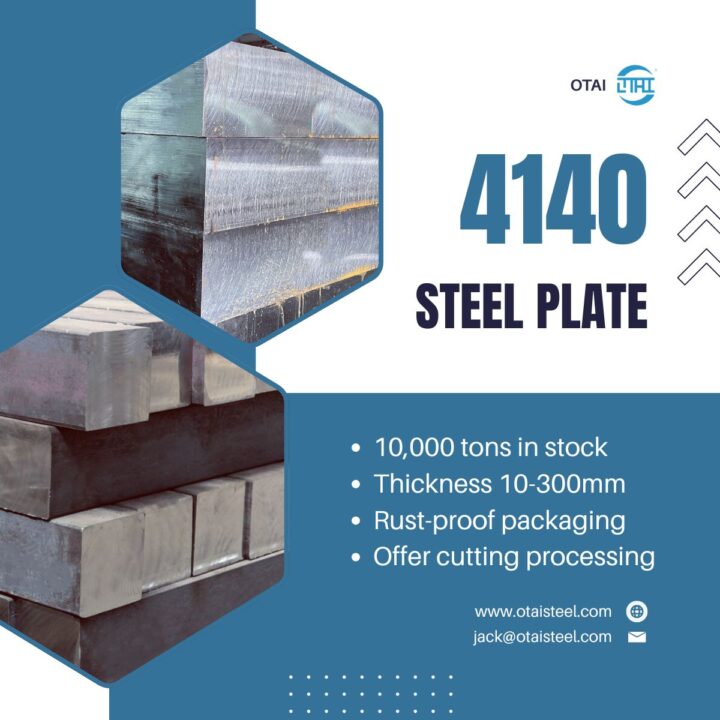
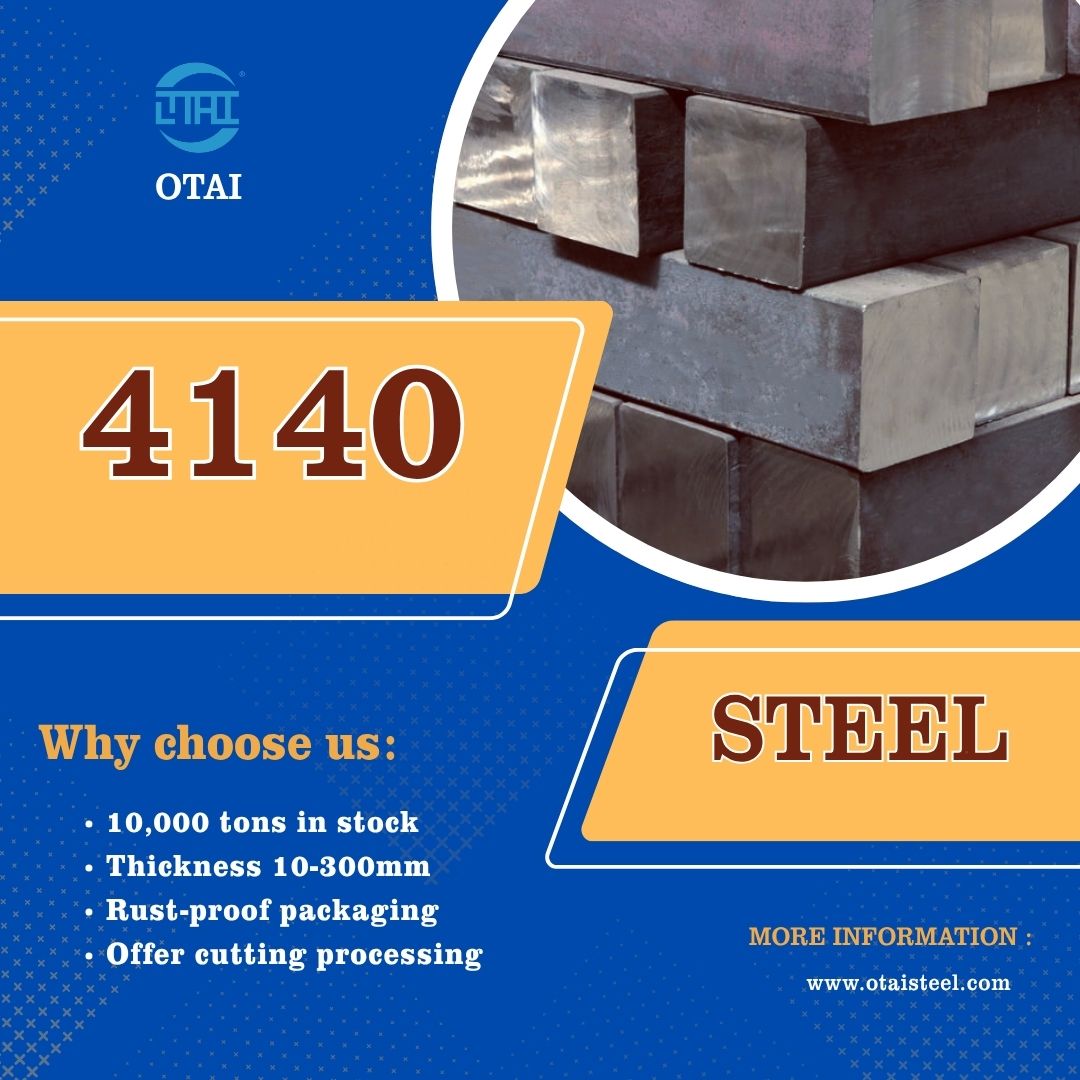
- Large 4140 inventory: Otai Special Steel maintains approximately 10,000 tons of steel inventory and keeps different 4140 dimensions available for industrial requirements.
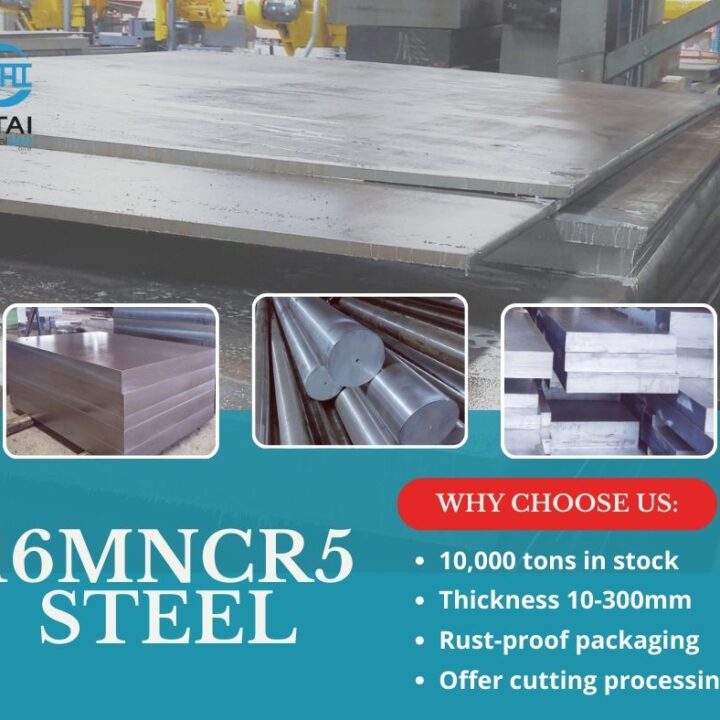
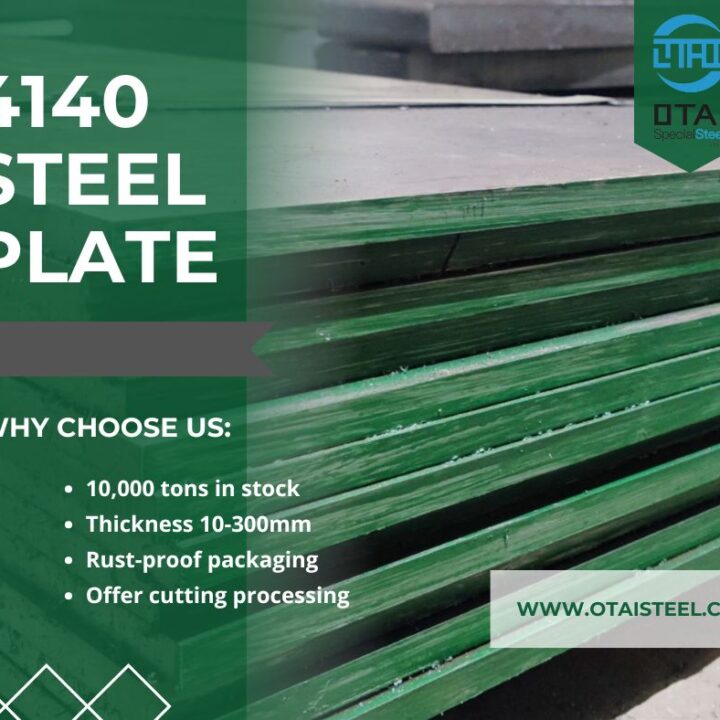
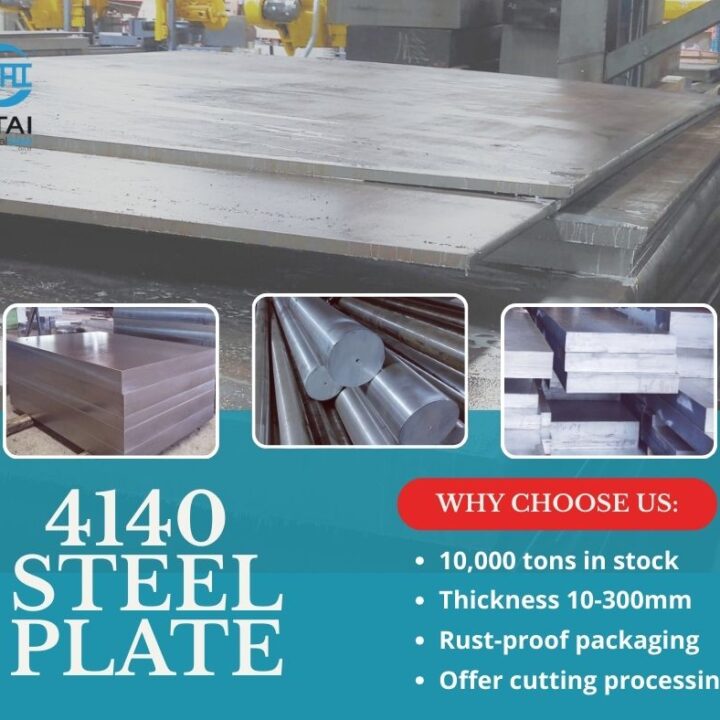
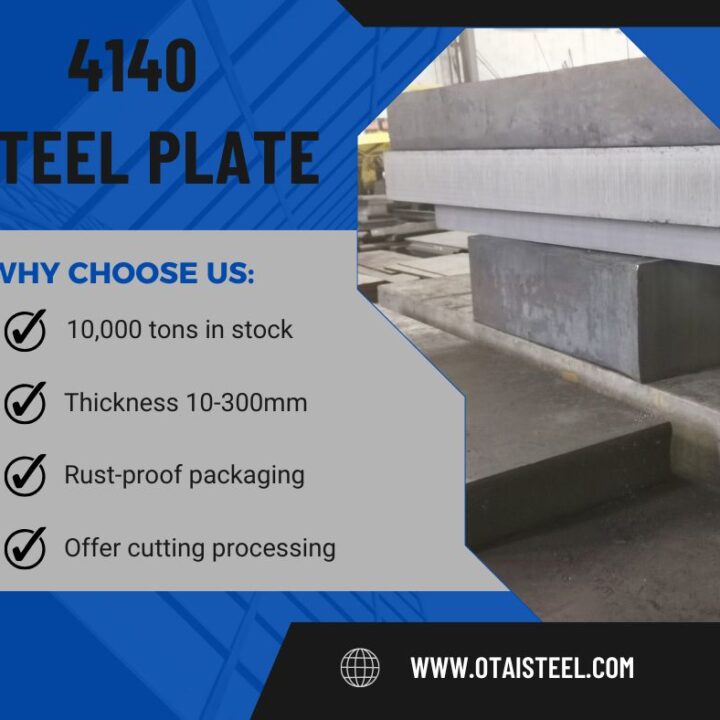
- 4140 steel plate stock: We can supply 4140 steel plates in different thicknesses, including common 10–300 mm sizes, subject to current stock.
- Different dimensions: We can supply different thicknesses, widths, lengths, and diameters according to project requirements.
- Cutting service: Steel can be cut according to customer drawings and specified dimensions.
- Heat treatment: Annealing, normalizing, quenching, tempering, and other heat-treatment services can be arranged according to requirements.
- Quality inspection: Ultrasonic testing and third-party inspection can be arranged for orders with specific quality requirements.
- Export packaging: Steel strapping, wooden cases, and anti-rust packaging help protect steel products during international transportation.
- International supply experience: Otai Special Steel has supplied steel products to customers with demanding technical requirements, including Fortune Global 500 companies.
If you are comparing 4140 steel vs 8620 for a specific project, provide the required dimensions, quantity, heat-treatment condition, mechanical requirements, and application. Otai Special Steel can help confirm suitable 4140 material and processing options.
❓ 10. Frequently Asked Questions
1. Is 4140 stronger than 8620?
4140 generally provides higher through-hardening potential because it contains more carbon. However, 8620 can provide excellent surface hardness and core toughness after carburizing. The final strength depends on heat treatment and section size.
2. What is the main difference between 4140 and 8620 steel?
4140 is a medium-carbon Cr-Mo steel commonly used for through-hardening. 8620 is a low-carbon Ni-Cr-Mo steel designed particularly for carburizing and case hardening.
3. Is 8620 better than 4140 for gears?
For gears that require a hard carburized surface and tough core, 8620 is often the better choice. However, 4140 can work well for selected gears when through-hardening or surface hardening meets the design requirements.
4. Can 4140 be carburized like 8620?
4140 can undergo various surface-hardening processes, but carburizing is not its primary application. 8620 has a low-carbon chemistry specifically suited to carburizing, making it the more conventional choice for carburized gears and similar components.
5. What 4140 steel products does Otai Special Steel supply?
Otai Special Steel supplies 4140 steel in different dimensions and product forms, including steel plates. We maintain approximately 10,000 tons of inventory and can arrange cutting, heat treatment, inspection, and export packaging according to project requirements.