 Passivating 4140 Steel: Process, Surface Treatment and Corrosion Protection
📑 Table of Contents
🔍 1. What Is Passivating 4140 Steel?
⚙️ 2. Can 4140 Steel Be Passivated?
🧪 3. 4140 Steel Passivation Process and Chemical Treatment
🔥 4. Benefits of Passivation Treatment for 4140 Alloy Steel
🛠️ 5. 4140 Steel Surface Treatment Methods
📊 6. Passivation vs Other 4140 Steel Protection Methods
🏢 Otai Special Steel Advantages
❓ FAQ About Passivating 4140 Steel
🔍 1. What Is Passivating 4140 Steel?
When engineers search for passivating 4140 steel, they usually want to understand whether AISI 4140 alloy steel can receive passivation treatment and how this process affects corrosion protection.
Engineers know 4140 steel, a chromium-molybdenum alloy steel, for its high strength, toughness, fatigue resistance, and excellent mechanical performance. Manufacturers widely use it for shafts, gears, bolts, tooling components, and heavy-duty machinery parts.
However, unlike stainless steel, 4140 steel does not naturally form a stable chromium oxide passive layer. Therefore, additional surface treatments are often required when corrosion resistance becomes an important requirement.
The purpose of 4140 steel passivation process is to clean the metal surface, remove free iron contaminants, and improve corrosion resistance by creating a more stable surface condition.
Although engineers commonly associate passivation with stainless steels, they can also apply chemical cleaning and surface conditioning treatments to some alloy steels such as 4140 when they select the correct process.
Basic Information About 4140 Steel
| Item | Description |
|---|---|
| Steel Grade | AISI 4140 |
| Steel Type | Chromium-molybdenum alloy steel |
| Carbon Content | Approximately 0.38–0.43% |
| Main Alloy Elements | Chromium and molybdenum |
| Main Features | High strength, toughness, and fatigue resistance |
| Common Applications | Shafts, gears, bolts, machinery parts |
Why Is Corrosion Protection Important for 4140 Steel?
4140 steel provides excellent mechanical properties, but its carbon and alloy composition means it can oxidize when exposed to moisture, chemicals, or harsh environments.
| Environment | Potential Risk |
|---|---|
| Outdoor exposure | Surface rust formation |
| Marine environments | Accelerated corrosion |
| Industrial atmosphere | Chemical contamination and oxidation |
| Storage conditions | Long-term surface deterioration |
For this reason, manufacturers often combine heat treatment, machining, and surface protection methods to improve the service life of 4140 steel components.
⚙️ 2. Can 4140 Steel Be Passivated?
A common question is can 4140 steel be passivated. The answer depends on the definition of passivation and the expected performance.
Traditional passivation treatments are mainly developed for stainless steel because stainless steel contains enough chromium to form a natural protective oxide layer.
4140 steel also contains chromium, but the chromium level is much lower than stainless steel grades. Therefore, it does not create the same passive film after conventional passivation.
Instead, passivation-like chemical treatments can improve surface cleanliness and remove reactive contaminants, which helps reduce corrosion risks.
Comparison Between Stainless Steel and 4140 Steel Passivation
| Feature | Stainless Steel | 4140 Steel |
|---|---|---|
| Chromium Content | High | Moderate |
| Natural Passive Film | Strong chromium oxide layer | No equivalent stainless passive layer |
| Main Purpose of Treatment | Improve corrosion resistance | Clean surface and reduce contamination |
| Typical Protection Method | Passivation | Coating, plating, chemical treatment |
When Is Passivation Considered for 4140 Steel?
- Precision components: Where surface cleanliness is important.
- Medical or aerospace-related parts: Where contamination control is required.
- Machined components: Where surface residues must be removed.
- Special industrial applications: Where additional corrosion protection is needed.
For many industrial applications, passivation treatment for 4140 alloy steel works best when combined with other protection methods such as coating, oil treatment, or plating.
🧪 3. 4140 Steel Passivation Process and Chemical Treatment
The 4140 steel passivation process usually focuses on surface preparation rather than creating a stainless-style passive layer.
A proper treatment removes contaminants, improves surface quality, and prepares the material for additional protective processes.
Typical Passivation Process for 4140 Steel
| Step | Process | Purpose |
|---|---|---|
| 1 | Cleaning | Remove oil, grease, and machining residues |
| 2 | Chemical treatment | Remove surface contaminants and free iron |
| 3 | Rinsing | Remove chemical residues |
| 4 | Drying | Prepare clean surface condition |
| 5 | Inspection | Confirm surface quality |
Chemical Passivation of 4140 Steel Considerations
The chemical solution and treatment parameters depend on the application requirements. Manufacturers must consider steel condition, heat treatment state, surface finish, and corrosion environment.
| Factor | Influence |
|---|---|
| Surface roughness | Affects corrosion performance |
| Heat treatment condition | Influences surface structure |
| Machining process | Determines contamination level |
| Working environment | Determines required protection level |
A suitable chemical treatment can improve the surface condition of 4140 steel, but you should select it according to the actual application rather than copy it from stainless steel passivation procedures.
🔥 4. Benefits of Passivation Treatment for 4140 Alloy Steel
Although 4140 steel is not stainless steel, proper surface treatment can significantly improve its resistance to oxidation and contamination. The main purpose of passivation treatment for 4140 alloy steel is to create a cleaner and more stable surface condition.
For precision components, surface quality is often as important as mechanical strength. A properly treated surface can reduce corrosion risks during storage, transportation, and service.
However, engineers should understand that passivation alone does not transform 4140 steel into a corrosion-resistant stainless material. Instead, it works as part of a complete protection strategy.
Main Benefits of Passivating 4140 Steel
| Benefit | Description |
|---|---|
| Improved surface cleanliness | Removes machining residues, oils, and contaminants |
| Reduced corrosion risk | Helps protect cleaned surfaces from oxidation |
| Better surface reliability | Creates a more consistent surface condition |
| Improved preparation for coating | Provides a cleaner base for additional protection |
| Extended component service life | Reduces surface deterioration during operation |
How Passivation Supports 4140 Steel Performance
The mechanical strength of 4140 steel mainly comes from its alloy composition and heat treatment. Surface treatments provide additional protection by controlling environmental effects.
| 4140 Steel Property | Role of Surface Treatment |
|---|---|
| High tensile strength | Maintains material performance by reducing surface damage |
| Fatigue resistance | Protects surface from corrosion-related fatigue problems |
| Wear resistance | Supports longer service life in demanding environments |
| Machined surface quality | Removes unwanted contaminants after processing |
For manufacturers requiring both mechanical performance and improved surface protection, combining heat treatment with suitable surface treatment provides better results.
🛠️ 5. 4140 Steel Surface Treatment Methods for Corrosion Protection
Because 4140 steel does not have the natural corrosion resistance of stainless steel, manufacturers often use different surface protection methods depending on the working environment.
The best 4140 steel surface treatment methods depend on factors such as corrosion exposure, mechanical loading, dimensional requirements, and production cost.
Common Surface Protection Methods for 4140 Steel
| Treatment Method | Purpose | Advantages |
|---|---|---|
| Passivation / Chemical Cleaning | Improve surface cleanliness | Removes contaminants and improves surface condition |
| Black Oxide Treatment | Create protective oxide coating | Improves appearance and mild corrosion resistance |
| Phosphating | Create conversion coating | Improves paint adhesion |
| Zinc Plating | Add corrosion protection layer | Provides better environmental resistance |
| Nitriding | Improve surface hardness | Enhances wear and fatigue resistance |
| Painting / Coating | Create external barrier | Suitable for harsh environments |
Choosing the Right Protection Method
| Application Condition | Recommended Treatment |
|---|---|
| Indoor machinery | Oil protection, black oxide, or light coating |
| Outdoor equipment | Paint coating or plating |
| High-wear components | Nitriding or hardened surface treatment |
| Precision machined parts | Chemical cleaning and controlled surface treatment |
| Marine environment | Heavy-duty coating or corrosion-resistant protection |
How to Protect 4140 Steel from Corrosion
Many customers search for how to protect 4140 steel from corrosion because 4140 steel components are often used in demanding environments.
- Apply suitable coatings: Protective coatings create a barrier between steel and corrosive environments.
- Control storage conditions: Keep components dry and protected from moisture.
- Use anti-rust oil: Temporary protection is useful during transportation and storage.
- Select proper surface treatments: Choose treatment according to application requirements.
- Maintain clean surfaces: Contaminants can accelerate corrosion.
A complete corrosion protection plan usually combines material selection, heat treatment, surface treatment, and proper maintenance.
📊 6. Passivation vs Other 4140 Steel Protection Methods
When selecting protection methods for 4140 steel, engineers often compare passivation with other surface treatments. Each method has different advantages depending on the application.
Comparison of 4140 Steel Protection Methods
| Method | Corrosion Protection | Wear Resistance | Typical Use |
|---|---|---|---|
| Passivation / Chemical Treatment | Moderate | Limited | Surface cleaning and contamination control |
| Zinc Plating | High | Moderate | Outdoor and industrial components |
| Nitriding | Moderate | Excellent | High-wear mechanical parts |
| Black Oxide | Low to Moderate | Limited | General machinery components |
| Painting | High | Depends on coating | Large industrial structures |
When Should You Choose Passivation?
| Situation | Recommendation |
|---|---|
| Need a clean machined surface | Passivation-style chemical cleaning can help |
| Need maximum corrosion resistance | Consider plating or coating |
| Need higher wear resistance | Consider nitriding or hard surface treatment |
| Need temporary protection | Use anti-rust oil or protective packaging |
The correct solution depends on the final service environment. Passivating 4140 steel is one useful option, but it should be evaluated together with other protection technologies.
🏭 7. Applications of Passivated 4140 Steel Components
Understanding passivating 4140 steel is especially important for industries that require both high mechanical strength and improved surface protection.
4140 steel is widely used in heavy-duty applications because of its excellent strength, toughness, and fatigue resistance. When these components operate in environments with moisture, chemicals, or frequent handling, additional surface protection can help extend service life.
Although passivation alone cannot provide the same corrosion resistance as stainless steel, properly treated 4140 components can achieve better surface stability when combined with suitable coatings, lubrication, and maintenance practices.
Common Applications of Protected 4140 Steel Components
| Industry | Components | Protection Requirement |
|---|---|---|
| Automotive Manufacturing | Drive shafts, gears, transmission parts | Reduce corrosion during service and storage |
| Oil and Gas Equipment | High-strength shafts, tools, mechanical parts | Resistance to harsh working environments |
| Construction Machinery | Heavy-duty pins, shafts, structural components | Long-term durability under load |
| Industrial Machinery | Gears, couplings, rollers, machine parts | Surface protection and wear control |
| Aerospace and Precision Equipment | High-strength machined components | Clean surface condition and contamination control |
Why Surface Protection Matters for 4140 Steel Parts
Engineers select 4140 steel mainly for its mechanical performance, but corrosion can negatively affect component reliability over time.
| Problem | Effect on Components |
|---|---|
| Surface oxidation | Reduces appearance and surface quality |
| Corrosion pits | May reduce fatigue resistance |
| Environmental contamination | Can accelerate surface damage |
| Improper storage | Creates rust before installation |
For this reason, manufacturers often combine high-quality 4140 steel with appropriate surface treatments to achieve reliable long-term performance.
🏢 Otai Special Steel Advantages
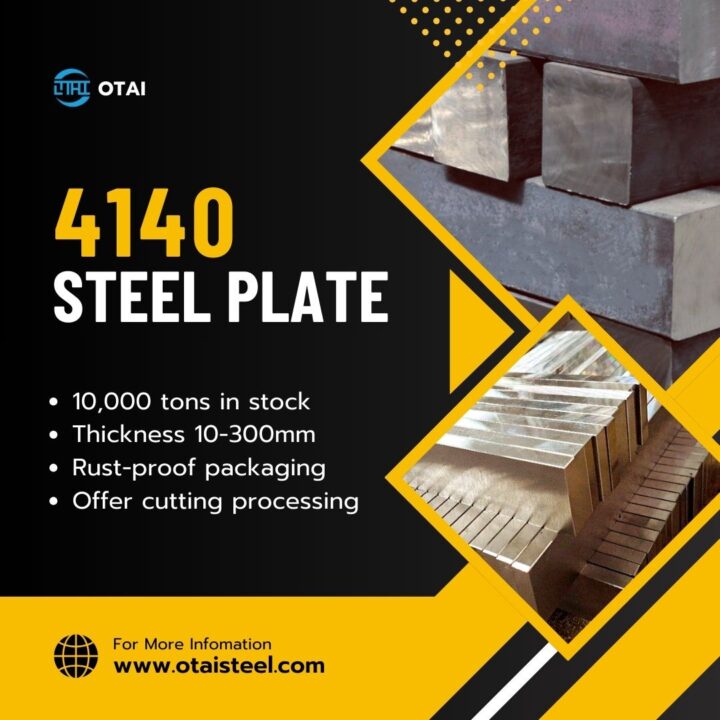
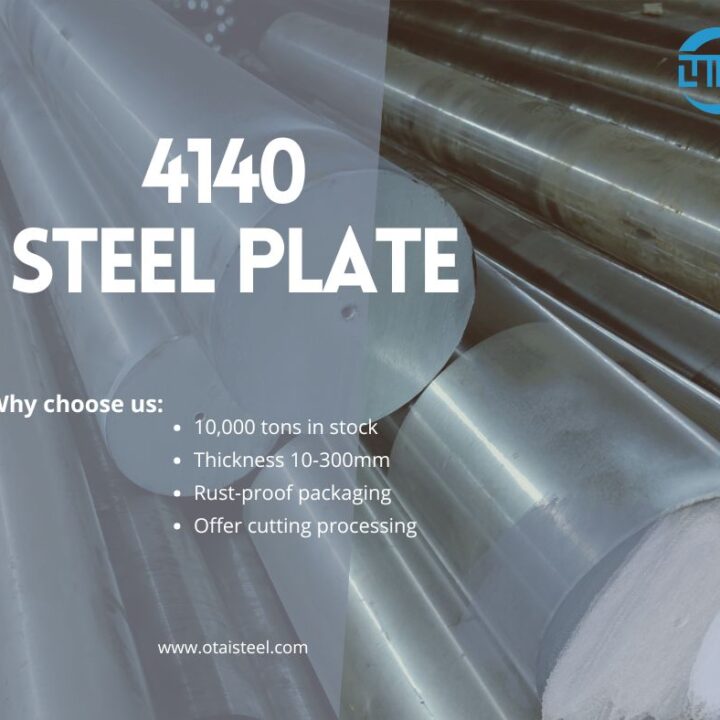
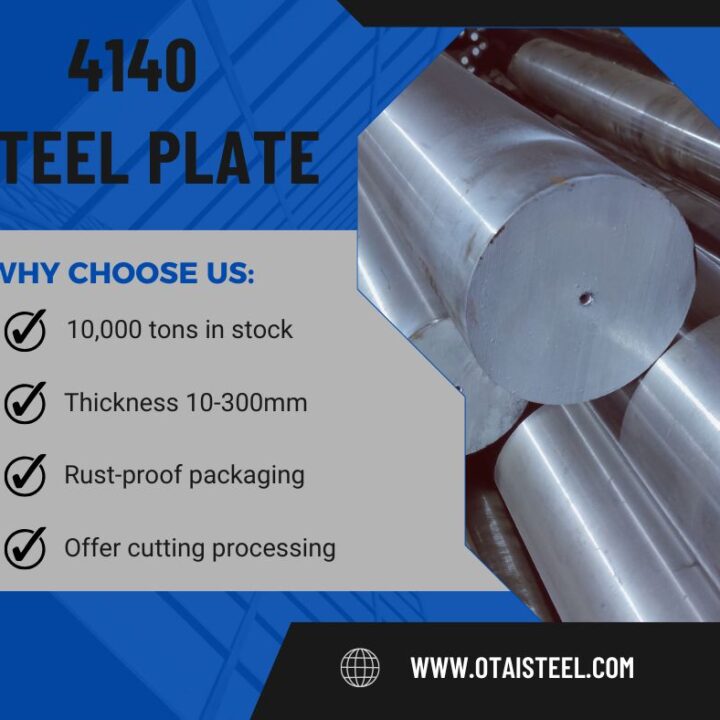
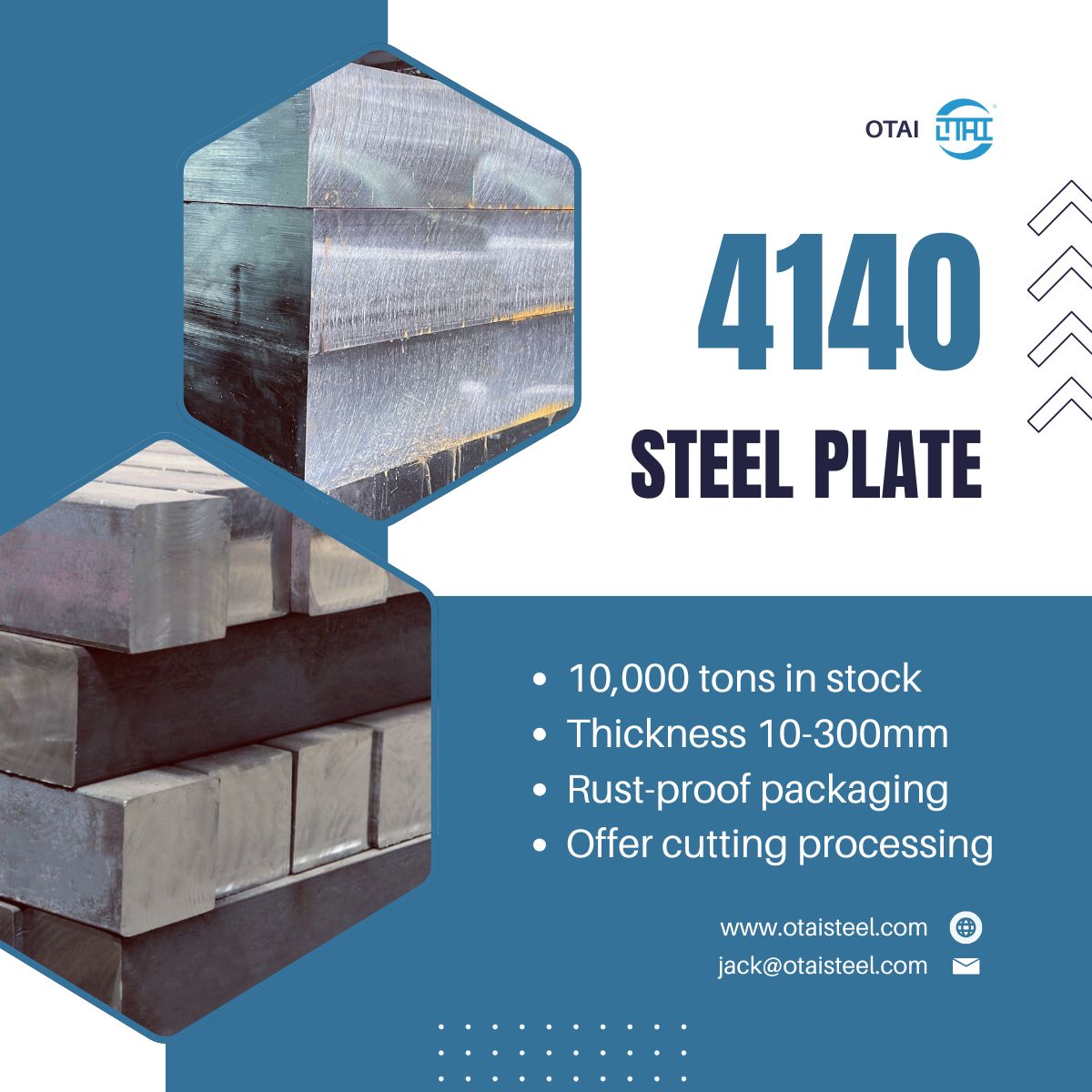
Otai Special Steel supplies high-quality AISI 4140 alloy steel plates and provides professional material solutions for customers requiring strong and reliable engineering steel.
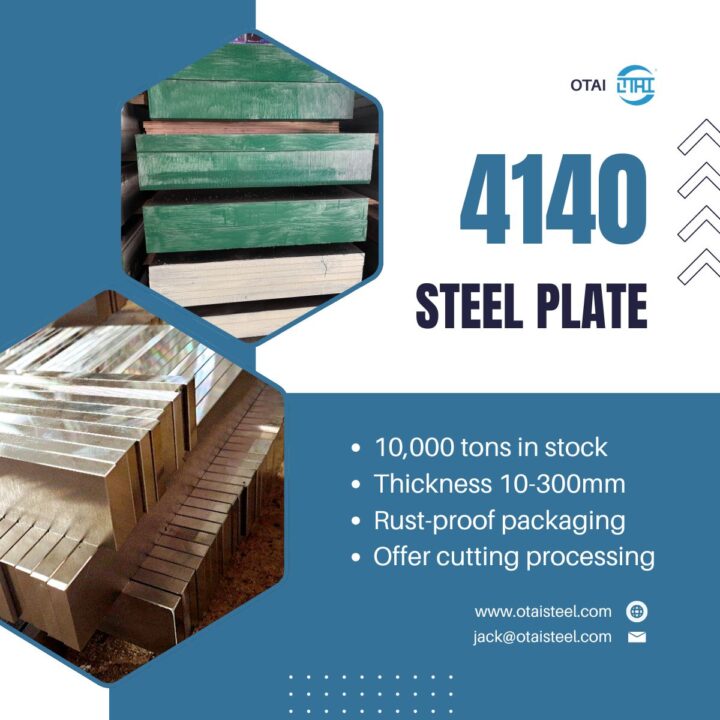
- Large inventory: Otai maintains approximately 10,000 tons of alloy steel inventory and keeps different sizes of 4140 steel plates available for customer requirements.
- Various dimensions available: Suppliers can deliver different thicknesses and sizes of 4140 alloy steel plates for machining and manufacturing projects.
- Processing service: Cutting, machining preparation, and customized processing services help customers improve production efficiency.
- Heat treatment support: We can arrange normalizing, quenching, tempering, and other heat treatment services according to application requirements.
- Quality inspection: Ultrasonic testing (UT) and third-party inspection services are available for customers with strict quality requirements.
- International supply experience: Otai has supplied alloy steel materials to global industrial customers with different technical specifications.
- Safe packaging: Anti-rust protection, steel strapping, and wooden box packaging ensure safe transportation.
With stable stock availability, professional processing capability, and technical support, Otai provides reliable 4140 steel solutions for mechanical manufacturing and industrial applications.
❓ FAQ About Passivating 4140 Steel
Q1: Can 4140 steel be passivated?
Yes, 4140 steel can receive certain chemical cleaning and passivation-style treatments. However, it does not form the same passive chromium oxide layer as stainless steel because its chromium content is much lower.
Q2: What is the purpose of passivating 4140 steel?
The purpose is mainly to remove surface contaminants, improve surface cleanliness, reduce corrosion risks, and prepare the steel for additional protective treatments.
Q3: Does passivation make 4140 steel corrosion resistant like stainless steel?
No. Passivation improves surface condition but does not transform 4140 steel into stainless steel. Additional coatings or treatments may be required for harsh environments.
Q4: What are the best methods to protect 4140 steel from corrosion?
Common methods include coating, zinc plating, black oxide treatment, nitriding, anti-rust oil, and proper storage protection depending on the application.
Q5: Can Otai supply 4140 steel plates for surface treatment applications?
Yes. Otai supplies 4140 alloy steel plates with large inventory, different sizes available, cutting service, heat treatment support, and ultrasonic testing options.