 16MnCr5 Raw Material Hardness: As-Supplied Values, Heat Treatment and Practical Selection
📑 Table of Contents
🔍 1. What Is the Raw Material Hardness of 16MnCr5?
⚙️ 2. Why 16MnCr5 Hardness Depends on Material Condition
📊 3. Typical Hardness of 16MnCr5 in Different Conditions
🔥 4. 16MnCr5 Annealed and Normalized Hardness
🛠️ 5. 16MnCr5 Hardness After Quenching and Tempering
⚔️ 6. Raw Material Hardness vs Carburized Surface Hardness
🏭 7. How Raw Material Hardness Affects Machining
📌 8. How to Specify 16MnCr5 Raw Material
🔍 1. What Is the Raw Material Hardness of 16MnCr5?
16MnCr5 raw material hardness does not have one universal value. The hardness depends on the delivery condition, manufacturing route, section size and applicable material specification.
This point is important because 16MnCr5 is a low-carbon alloy case-hardening steel. Buyers often see very high hardness values associated with finished gears or shafts and assume that the original raw material has the same hardness. It does not.
In its original supply condition, 16MnCr5 usually has a relatively moderate hardness. Suppliers often provide the material in an annealed or another condition that supports machining and subsequent case hardening.
The exact value should always come from the supplier’s material certificate and the agreed delivery condition. A hardness number without a specified condition can easily create confusion during purchasing.
| Material Condition | General Hardness Level | Main Purpose |
|---|---|---|
| Annealed | Relatively low | Improve machinability and prepare the material for manufacturing |
| Normalized | Moderate | Refine the structure and provide a more uniform condition |
| Quenched and tempered | Higher | Improve strength, hardness and toughness |
| Carburized and hardened | Very high at the surface | Improve wear resistance and contact fatigue performance |
For this reason, the term 16MnCr5 raw material hardness should normally refer to the hardness of the supplied steel before the final manufacturing treatment.
If the customer plans to carburize the material later, the raw material should not already have the extremely high surface hardness expected from a finished carburized component.
Instead, the steel should provide the correct chemistry and metallurgical condition for the planned production process.
⚙️ 2. Why 16MnCr5 Hardness Depends on Material Condition
The hardness of 16MnCr5 changes because heat treatment changes its microstructure. The same nominal grade can therefore show very different hardness values after different processing routes.
Annealing generally produces a softer and more machinable structure. Normalizing can refine the structure and provide a more uniform starting condition. Quenching creates a harder structure, while tempering adjusts the final balance between hardness and toughness.
Carburizing creates an even more dramatic change at the surface. The process introduces additional carbon into the outer layer of the component. After hardening, this carbon-enriched layer can reach a much higher hardness than the original steel.
Steel Grade Is Not the Same as Steel Condition
This distinction is especially important when purchasing 16MnCr5 steel raw material. The grade tells you about the chemical composition and general metallurgical design. It does not by itself tell you the final hardness of every product.
For example, two pieces of 16MnCr5 can have the same chemical composition but different hardness because one is annealed and the other is quenched and tempered.
The same principle applies to different production batches. Section thickness and heat-treatment history can influence the measured hardness even when the material meets the same chemical specification.
| Factor | Effect on Hardness |
|---|---|
| Carbon content | Influences hardenability and achievable hardness |
| Manganese and chromium | Improve hardenability |
| Annealing | Generally produces a softer condition |
| Normalizing | Can produce a stronger and more refined structure |
| Quenching | Significantly increases hardness |
| Tempering | Adjusts hardness and improves toughness |
| Carburizing | Creates a high-carbon hardened surface |
| Section thickness | Can affect hardness distribution during cooling |
Why Buyers Should Ask for the Delivery Condition
A buyer who only specifies “16MnCr5” may leave an important part of the purchasing specification undefined. The supplier should know whether the customer needs annealed, normalized, QT or another condition.
This becomes even more important when the customer plans additional heat treatment after machining. The starting hardness affects cutting performance, tool life and the production sequence.
For example, a manufacturer that needs to machine gears before carburizing may prefer a softer starting condition. A manufacturer that needs a stronger material before final assembly may request a different heat-treated condition.
Therefore, 16MnCr5 hardness before carburizing should always be considered together with the intended manufacturing process.
📊 3. Typical Hardness of 16MnCr5 in Different Conditions
A practical comparison helps explain why different hardness values appear in technical documents for 16MnCr5. The following ranges provide general engineering guidance rather than a replacement for the exact hardness requirement in a material standard or purchase specification.
| Condition | Approximate Hardness Range | Typical Use |
|---|---|---|
| Annealed raw material | Approximately 150–220 HB | Machining and general manufacturing preparation |
| Normalized | Approximately 160–230 HB | Refined starting structure and mechanical preparation |
| Quenched and tempered | Condition dependent | Higher strength mechanical components |
| Carburized surface | Can reach approximately 58–62 HRC | Gears, pinions and wear-loaded components |
The table shows why it is misleading to quote one number as the universal 16MnCr5 raw material hardness. The starting material and the finished component can have dramatically different hardness levels.
In particular, the 58–62 HRC range often associated with carburized 16MnCr5 refers to the hardened surface of a finished component. It does not describe the hardness of the original annealed plate or bar.
HB and HRC Are Different Hardness Scales
Buyers should also pay attention to the hardness scale. Brinell hardness is commonly used for softer and medium-hard steel conditions, while Rockwell C is more appropriate for harder materials.
Therefore, “200 HB” and “60 HRC” cannot be compared as if they were two numbers on the same scale.
| Hardness Scale | Typical Application | Common Situation for 16MnCr5 |
|---|---|---|
| HB / Brinell | Soft to medium-hard steel | Raw, annealed or normalized material |
| HRC / Rockwell C | Hard steel | Hardened or carburized surface |
| HV / Vickers | Wide hardness range and localized testing | Case-depth and microhardness evaluation |
For procurement, the customer should state the preferred hardness scale whenever hardness represents a critical requirement. This avoids unnecessary conversion assumptions.
The actual supplier certificate should remain the final reference for the delivered product.
🔥 4. 16MnCr5 Annealed and Normalized Hardness
For many machining operations, the starting condition of 16MnCr5 matters more than its final hardened hardness. Manufacturers often prefer a relatively soft condition before cutting, drilling, turning or milling.
Annealed 16MnCr5 generally offers good machinability because the softer microstructure reduces cutting forces and tool wear. This condition also makes it easier to remove material before the component receives its final heat treatment.
Normalized 16MnCr5 usually has a somewhat stronger and more refined structure. It can provide a useful balance between machinability and mechanical performance when the production process does not require the softest possible starting condition.
| Condition | Approximate Hardness | Machining Behavior | Typical Purpose |
|---|---|---|---|
| Annealed | Approx. 150–220 HB | Generally easier to machine | Machining preparation |
| Normalized | Approx. 160–230 HB | Good machinability with a stronger structure | General manufacturing preparation |
| QT | Depends on treatment | More difficult as hardness increases | Improved bulk strength |
| Carburized and hardened | Approx. 58–62 HRC at the surface | Requires grinding or specialized machining | High surface wear resistance |
Why Annealed Material Is Popular for Machining
The main advantage of annealed material is its relatively low hardness. A manufacturer can remove material efficiently before applying a harder final treatment.
This production sequence works particularly well for components that need complex shapes. The manufacturer can complete most dimensional machining while the material remains easier to cut.
After machining, the component can move to carburizing, hardening and tempering. The final surface then develops the hardness required for service.
For customers looking for 16MnCr5 raw material hardness for machining, the annealed condition may therefore be a practical starting point.
Normalized 16MnCr5
Normalizing heats the steel above its transformation range and then allows it to cool in air under controlled conditions. This process can refine the grain structure and produce a relatively uniform microstructure.
Normalized material may suit applications where the customer wants a more refined starting structure without requiring the softer condition produced by full annealing.
However, the exact hardness still depends on the product dimensions, chemistry and processing route. Buyers should use the supplier’s certificate rather than treating general hardness ranges as guaranteed values.
🛠️ 5. 16MnCr5 Hardness After Quenching and Tempering
Quenching and tempering can substantially increase the hardness and strength of 16MnCr5 compared with its softer raw material conditions.
During quenching, rapid cooling promotes the formation of harder microstructures. However, freshly quenched steel can contain high internal stresses and may become too brittle for practical service.
Tempering follows the quenching stage. It reduces some of the internal stresses and allows engineers to adjust the final balance between hardness, strength and toughness.
This means that 16MnCr5 QT hardness cannot be defined by the quenching process alone. The tempering temperature and holding conditions also have a major influence.
| Heat Treatment | Hardness Trend | Main Property Change |
|---|---|---|
| Annealing | Lower | Improved machinability |
| Normalizing | Low to moderate | Refined and more uniform structure |
| Quenching | High | Strong increase in hardness and strength |
| Low-temperature tempering | Retains relatively high hardness | Reduces some quenching stresses |
| Higher-temperature tempering | Lower hardness | Improves toughness and ductility |
Why Tempering Temperature Matters
Suppose two 16MnCr5 components receive the same quenching treatment. If one component receives a lower tempering temperature and the other receives a higher tempering temperature, their final hardness and toughness can differ considerably.
The lower-temperature treatment generally retains more hardness. The higher-temperature treatment normally sacrifices some hardness to achieve greater toughness and dimensional stability.
Therefore, engineers should not ask only for “hardened 16MnCr5.” They should define the complete heat-treatment condition when the final mechanical properties are critical.
Section Thickness Also Influences Hardness
The thickness of the component affects the cooling rate during quenching. A thin section can cool rapidly through most of its thickness, while a thick section may cool more slowly at the center.
This difference can create a hardness gradient between the surface and the core.
For this reason, a 16MnCr5 raw material hardness specification should include the product dimensions and testing requirements when hardness uniformity matters.
The supplier should also clarify the test location. A hardness value measured near the surface may not represent the entire cross-section of a thick product.
⚔️ 6. Raw Material Hardness vs Carburized Surface Hardness
This is one of the most important distinctions when discussing 16MnCr5. The hardness of the raw material and the hardness of a carburized finished component describe two completely different stages of production.
The original 16MnCr5 contains relatively low carbon. This chemistry allows the material to remain comparatively tough while providing an excellent foundation for carburizing.
During carburizing, the manufacturer introduces carbon into the surface at elevated temperature. The carbon-enriched layer can then harden significantly during subsequent quenching.
| Feature | Raw 16MnCr5 | Carburized 16MnCr5 |
|---|---|---|
| Carbon distribution | Original alloy composition | Higher carbon concentration near the surface |
| Surface hardness | Moderate | Can reach approximately 58–62 HRC |
| Core hardness | Depends on delivery condition | Lower than the hardened case |
| Main purpose | Manufacturing starting material | Finished wear-resistant component |
| Typical application | Machining and component production | Gears, pinions, shafts and transmission parts |
Why Carburized 16MnCr5 Gets Much Harder
The carburizing process changes the surface chemistry. The additional carbon allows the outer layer to form a much harder structure during hardening.
The core retains a lower carbon level. As a result, the finished component can combine a hard surface with a relatively tough interior.
This combination makes 16MnCr5 especially useful for gears and other components that experience repeated contact loads.
However, the high hardness value applies to the finished surface, not the original steel plate or bar.
Case Depth Is Also Important
Hardness alone does not completely describe a carburized component. Engineers also need to consider the depth of the hardened case.
A shallow case and a deep case can have similar surface hardness while behaving differently under service loads. Contact stress can penetrate below the surface, so the required effective case depth depends on the component geometry and operating conditions.
For this reason, gear manufacturers often specify both surface hardness and effective case depth after carburizing.
This distinction helps explain why searches for 16MnCr5 hardness before carburizing and 16MnCr5 carburized hardness produce very different technical values.
🏭 7. How Raw Material Hardness Affects Machining
Raw material hardness directly affects the way 16MnCr5 behaves during machining. Harder steel normally requires greater cutting forces and places more demand on the cutting tool.
Softer annealed material usually allows more efficient turning, milling, drilling and other material-removal operations.
When the material arrives in a harder condition, the manufacturer may need to reduce cutting parameters, select more wear-resistant tooling or use grinding for final dimensional control.
| Hardness Condition | Machining Difficulty | Typical Production Strategy |
|---|---|---|
| Low hardness | Lower | Conventional machining |
| Moderate hardness | Moderate | Controlled cutting parameters |
| High QT hardness | Higher | Hard machining or grinding |
| Carburized surface | Very high at the case | Grinding or specialized finishing |
Machining Before Heat Treatment
For many 16MnCr5 components, manufacturers remove most of the required material before the final hardening process. This approach can reduce tool wear and improve production efficiency.
The component then receives carburizing and hardening when a hard surface is required. Final grinding can correct dimensional changes caused by heat treatment.
This sequence is particularly useful for gears, pinions and precision transmission components.
Choosing the Right Starting Hardness
If the customer plans extensive machining, a softer starting condition can reduce manufacturing costs. If the customer needs the material ready for direct assembly or further processing, a harder condition may make more sense.
Therefore, 16MnCr5 raw material hardness for machining should be selected according to the complete manufacturing route rather than as an isolated specification.
A good purchasing specification should connect hardness with the planned machining process, final heat treatment and dimensional requirements.
📌 8. How to Specify 16MnCr5 Raw Material
A clear purchasing specification prevents most misunderstandings about raw material hardness. Instead of writing only “16MnCr5 steel,” buyers should provide enough information for the supplier to identify the required material condition.
| Specification Item | What to Define |
|---|---|
| Steel grade | 16MnCr5 |
| Applicable standard | Relevant EN or customer specification |
| Dimensions | Thickness, width and length |
| Delivery condition | Annealed, normalized, QT or another agreed condition |
| Hardness | Required value or range and hardness scale |
| Testing | Hardness test method and test location |
| Inspection | Material certificate, ultrasonic testing or third-party inspection when required |
| Processing | Cutting, machining allowance and surface requirements |
Do Not Specify Only a Hardness Number
For example, asking for “200 HB” without specifying the material condition may not provide enough information. The buyer should also identify the grade, dimensions and delivery state.
Similarly, requesting “60 HRC 16MnCr5” can create confusion because that value usually relates to a hardened or carburized surface rather than ordinary raw material.
A more complete specification could state the steel grade, product size, delivery condition, required hardness, inspection standard and intended application.
Material Certificate Verification
When the material arrives, the buyer should compare the certificate with the purchase order. The chemical composition should meet the specified grade, while the hardness and mechanical properties should match the agreed delivery condition.
This simple verification step helps identify whether the material is suitable for the next manufacturing stage.
For customers sourcing 16MnCr5 raw material supplier products internationally, clear technical communication is especially important. Different suppliers may describe delivery conditions differently, so written specifications reduce the risk of misunderstanding.
Ultimately, the correct hardness is the hardness required for the next production step. Raw material intended for machining does not need the same hardness as a finished carburized gear.
📦 9. Otai Special Steel Advantages
Otai Special Steel supplies 16MnCr5 steel for gear manufacturing, transmission components, machinery and other industrial applications. We focus on material consistency, flexible processing and reliable international supply.
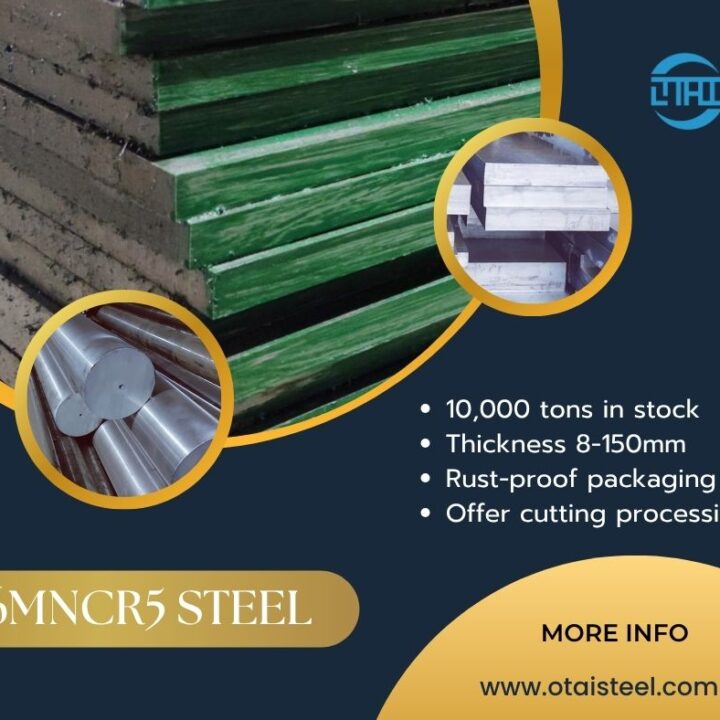
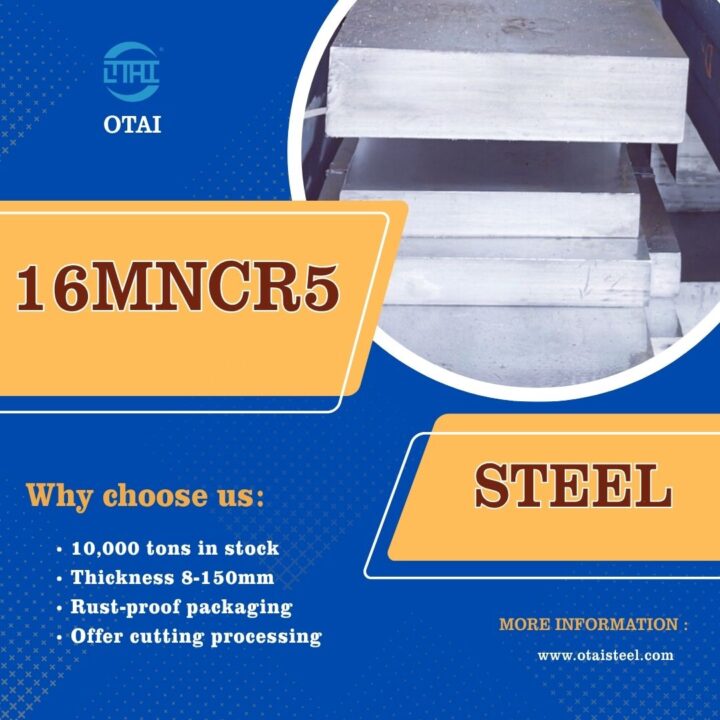
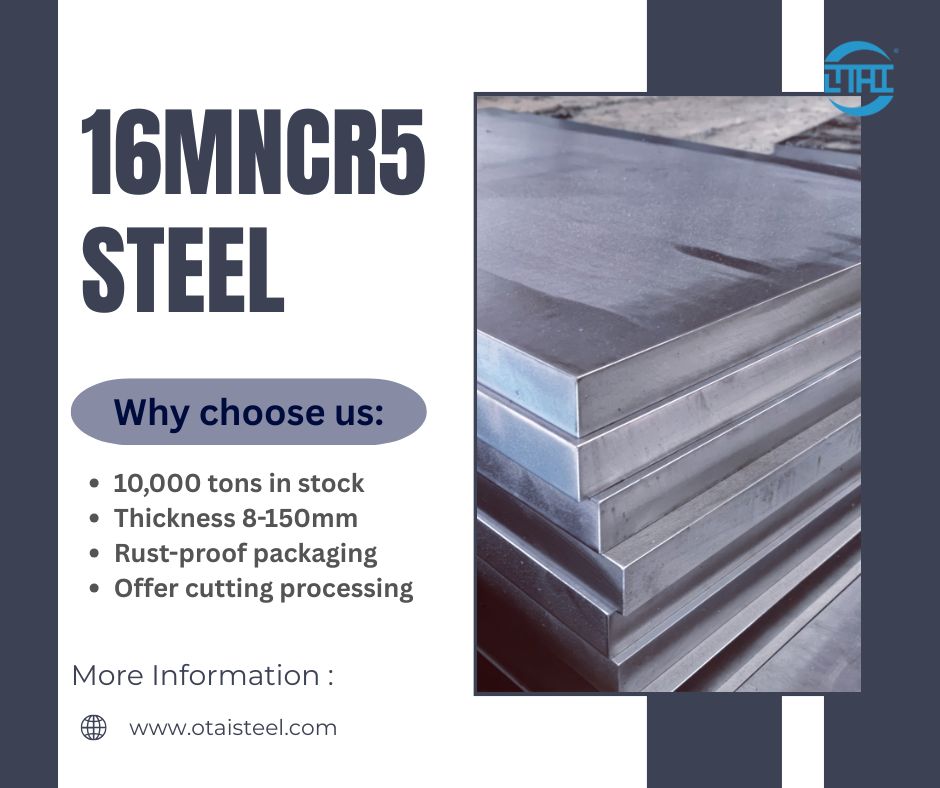
- Stock availability: 8–150mm thickness 16MnCr5 plates are available in stock for regular and urgent requirements.
- Cutting service: Plates can be cut to customer-specified dimensions and machining requirements.
- Heat treatment support: We can support customers with different heat-treatment and material-condition requirements.
- Quality inspection: Ultrasonic testing and third-party inspection can be arranged according to project requirements.
- Processing and packaging: Cutting, anti-rust protection, steel strapping and wooden box packaging are available for export shipments.
- International experience: Otai has supplied steel materials to customers with demanding technical requirements, including Fortune Global 500 companies.
When ordering 16MnCr5 raw material, customers can specify the required grade, dimensions, delivery condition, hardness, inspection requirements and processing services. Clear specifications help ensure that the supplied material fits the next manufacturing stage.
❓ 10. FAQ About 16MnCr5 Raw Material Hardness
1. What is the typical hardness of 16MnCr5 raw material?
The hardness depends on the delivery condition. Annealed 16MnCr5 commonly falls in an approximate range of 150–220 HB, while normalized material can be somewhat harder. Always confirm the actual value on the supplier’s material certificate.
2. Is 16MnCr5 a hard steel?
Raw 16MnCr5 is not normally considered an extremely hard steel. Its relatively low carbon content makes it suitable for machining and later case hardening. After carburizing and hardening, however, its surface can reach a much higher hardness.
3. What is the hardness of 16MnCr5 after carburizing?
A properly carburized and hardened 16MnCr5 component can achieve approximately 58–62 HRC at the surface. This value describes the hardened case, not the original raw material.
4. Is 16MnCr5 suitable for machining?
Yes. Annealed or appropriately prepared 16MnCr5 offers good machinability. Manufacturers often perform major machining before carburizing and final hardening because the softer starting material reduces cutting difficulty and tool wear.
5. Where can I buy 16MnCr5 raw material?
Otai Special Steel supplies 16MnCr5 plates for industrial applications. We have 8–150mm thickness plates available in stock and can provide cutting, heat-treatment support, inspection, anti-rust protection and export packaging according to customer requirements.