Is 4140 Steel Strong? Strength, Hardness, Toughness and Applications
📑 Table of Contents
🧪 2. Why Is 4140 Steel So Strong?
📊 3. 4140 Steel Strength and Mechanical Properties
🔥 4. 4140 Steel Hardness and Heat Treatment
⚙️ 5. 4140 Steel Toughness and Fatigue Resistance
🛠️ 6. 4140 Steel Strength vs Other Common Steels
🏭 7. Applications of Strong 4140 Steel
💡 8. Is 4140 Strong Enough for Your Application?
🔍 1. Is 4140 Steel Strong?
Is 4140 steel strong? Yes. 4140 is a high-strength chromium-molybdenum alloy steel that offers an excellent combination of strength, hardness, toughness, and wear resistance.
The steel becomes particularly strong after suitable quenching and tempering. This heat-treatment process allows manufacturers to adjust the balance between tensile strength, yield strength, hardness, and toughness for different applications.
Unlike some plain carbon steels, 4140 contains chromium and molybdenum. These alloying elements improve hardenability and help the steel maintain useful mechanical properties through larger cross-sections.
This combination explains why engineers use 4140 for demanding mechanical components. Shafts, axles, bolts, studs, gears, spindles, hydraulic parts, and heavy machinery components can all benefit from its strength.
| Property | 4140 Steel | Engineering Benefit |
|---|---|---|
| Steel type | Cr-Mo alloy steel | High strength and hardenability |
| Carbon content | Approximately 0.38–0.43% | Supports hardness and strength |
| Hardenability | Good to very good | Useful for larger sections |
| Toughness | Good when properly treated | Resists impact and cracking |
| Wear resistance | Good to very good | Suitable for demanding machinery |
| Heat treatment | Quenching and tempering | Allows property adjustment |
However, “strong” does not mean that 4140 has one fixed strength value. The actual mechanical properties depend on the heat-treatment condition, section size, testing direction, and applicable specification.
Therefore, when evaluating 4140 steel strength, always identify the delivery condition and heat-treatment condition instead of comparing grade names alone.
🧪 2. Why Is 4140 Steel So Strong?
The strength of 4140 comes from both its chemical composition and its ability to respond effectively to heat treatment. Carbon provides the foundation for hardness, while chromium and molybdenum improve hardenability.
| Element | Typical Content | Contribution to 4140 |
|---|---|---|
| Carbon (C) | 0.38–0.43% | Strength and hardness |
| Manganese (Mn) | 0.75–1.00% | Strength and hardenability |
| Chromium (Cr) | 0.80–1.10% | Hardenability and wear resistance |
| Molybdenum (Mo) | 0.15–0.25% | Hardenability and temper resistance |
| Silicon (Si) | Approximately 0.15–0.35% | Strength and deoxidation |
Carbon Provides the Strength Foundation
4140 contains significantly more carbon than low-carbon structural steels. This gives the material a strong response to hardening.
After austenitizing and quenching, the steel can develop a hard martensitic structure. Tempering then reduces excessive brittleness and creates a more practical balance between strength and toughness.
Chromium Improves Hardenability
Chromium allows 4140 to harden more effectively than many plain carbon steels. This matters when the component has a relatively large cross-section.
A shaft made from a small section and a large forged component do not necessarily achieve identical properties after the same heat treatment. Section size influences cooling and final microstructure.
Molybdenum Adds Another Advantage
Molybdenum improves hardenability and supports resistance to softening during tempering. It also contributes to the useful performance of 4140 in demanding mechanical applications.
Together, these alloying elements make 4140 a versatile engineering steel rather than simply a harder version of ordinary carbon steel.
📊 3. 4140 Steel Strength and Mechanical Properties
The mechanical properties of 4140 vary with heat treatment. A normalized or annealed product will not have the same strength as quenched-and-tempered 4140.
For this reason, engineers should use the actual mill test certificate and specified delivery condition when they need guaranteed mechanical values.
| Property | 4140 Typical Performance | Importance |
|---|---|---|
| Tensile strength | Can reach high levels after quenching and tempering | Resistance to pulling forces |
| Yield strength | High in suitable heat-treated conditions | Resistance to permanent deformation |
| Hardness | Wide range depending on treatment | Wear and strength control |
| Impact toughness | Good with suitable tempering | Resistance to sudden loading |
| Fatigue resistance | Good with proper design and treatment | Useful for cyclic loading |
| Machinability | Good in annealed or softer conditions | Supports efficient manufacturing |
4140 Yield Strength
The 4140 yield strength can vary substantially according to hardness and heat-treatment condition. Quenched-and-tempered material can achieve much higher yield strength than annealed material.
Yield strength matters when a component must carry a high static or dynamic load without permanent deformation. Shafts and structural machine components often rely on this property.
4140 Tensile Strength
The 4140 tensile strength also depends strongly on the final condition. Increasing hardness generally increases strength, but excessive hardness can reduce toughness.
That is why heat treatment should focus on the complete property balance. Maximum hardness is not automatically the best choice for every component.
4140 Strength-to-Weight Considerations
4140 can help engineers achieve high mechanical performance without using excessively large component dimensions. However, the design still needs to account for loading, fatigue, geometry, safety factors, and manufacturing conditions.
For critical parts, engineers should use verified material data rather than relying on generic online values.
🔥 4. 4140 Steel Hardness and Heat Treatment
Heat treatment is one of the main reasons 4140 can achieve high strength. Manufacturers can manipulate the microstructure to produce different combinations of hardness, strength, and toughness.
| Heat-Treatment Condition | General Characteristic | Typical Purpose |
|---|---|---|
| Annealed | Soft and machinable | Machining and forming |
| Normalized | Balanced strength and toughness | General engineering |
| Quenched | Very hard and strong | Hardening before tempering |
| Quenched and tempered | High strength with controlled toughness | Heavy-duty components |
| Induction hardened | Hard surface with tougher interior | Shafts and wear surfaces |
4140 Quenching and Tempering
During hardening, manufacturers heat 4140 to the required austenitizing range and then quench it under controlled conditions. The resulting structure provides high hardness and strength.
Tempering follows quenching in most engineering applications. It reduces internal stresses and adjusts the final hardness and toughness to match service requirements.
The tempering temperature has a major influence on the final mechanical properties. A lower tempering temperature generally preserves more hardness, while a higher temperature can improve toughness and reduce hardness.
4140 Induction Hardening
Induction hardening offers another useful option. Manufacturers can selectively harden the surface of a shaft, gear, pin, or similar component while keeping the interior tougher.
This process can create a useful combination of surface wear resistance and core toughness without carburizing the entire component.
The final 4140 steel hardness should therefore always be specified together with the treatment condition and measurement method.
⚙️ 5. 4140 Steel Toughness and Fatigue Resistance
Strength alone does not determine whether a steel is suitable for a demanding component. Toughness and fatigue resistance also play important roles.
4140 performs well because engineers can adjust its properties through heat treatment. A properly tempered condition can provide a useful combination of high strength and good toughness.
4140 Toughness
Toughness describes the material’s ability to absorb energy before fracture. This property matters for shafts, axles, bolts, and machinery components that may experience impact or fluctuating loads.
If engineers harden 4140 excessively without suitable tempering, the material can become less tolerant of impact. Therefore, selecting the correct hardness range is more important than simply maximizing hardness.
4140 Fatigue Resistance
The 4140 steel fatigue strength depends on surface finish, stress concentration, heat treatment, residual stresses, loading conditions, and component geometry.
Smooth surfaces generally improve fatigue performance because they reduce local stress concentrations. Proper heat treatment can also help create the strength required for cyclic loading.
For rotating components such as shafts, fatigue design becomes especially important. Engineers should consider both torsional and bending stresses instead of evaluating tensile strength alone.
| Performance Factor | Effect on 4140 Component Performance |
|---|---|
| Higher hardness | Usually increases strength and wear resistance |
| Proper tempering | Improves the strength-toughness balance |
| Good surface finish | Supports fatigue resistance |
| Reduced stress concentration | Helps extend fatigue life |
| Controlled heat treatment | Provides more consistent properties |
This is why is 4140 steel strong should not be answered using tensile strength alone. A strong engineering material must also perform reliably under the actual loading conditions of the component.
🛠️ 6. 4140 Steel Strength vs Other Common Steels
Comparing 4140 with other steel grades can help engineers understand where its strength advantage comes from. However, the comparison must use equivalent heat-treatment conditions.
| Steel Grade | General Type | Strength Potential | Typical Advantage |
|---|---|---|---|
| 1045 | Medium-carbon steel | Moderate to high | Cost and machinability |
| 4140 | Cr-Mo alloy steel | High | Strength, toughness and hardenability |
| 4150 | Higher-carbon Cr-Mo steel | High | Higher hardness potential |
| 4340 | Ni-Cr-Mo alloy steel | Very high | High strength and toughness |
| 8620 | Ni-Cr-Mo case-hardening steel | High after case hardening | Hard surface and tough core |
4140 vs 1045
4140 generally provides greater hardenability and a broader combination of strength and toughness than 1045. This makes it more attractive for heavily loaded components.
4140 vs 4340
4340 contains nickel in addition to chromium and molybdenum. It can achieve very high strength while maintaining strong toughness when properly treated. For many general industrial components, however, 4140 provides an effective balance of performance and cost.
4140 vs 8620
8620 is a case-hardening steel with lower carbon and significant nickel, chromium, and molybdenum content. It suits carburized gears and similar components.
4140, in contrast, offers higher carbon content and works especially well for through-hardening and induction hardening.
Therefore, the 4140 steel strength comparison should always consider the application’s heat-treatment route. A grade designed for carburizing should not be judged against a through-hardening grade using only untreated hardness values.
🏭 7. Applications of Strong 4140 Steel
The combination of strength, toughness, hardness, and machinability makes 4140 useful across many industrial sectors. Its versatility is one of the main reasons buyers continue to select this grade.
| Application | Why 4140 Works Well |
|---|---|
| Shafts | High strength and good fatigue performance |
| Axles | Good combination of strength and toughness |
| Bolts and studs | High strength after suitable heat treatment |
| Gears | Suitable for selected heat-treated designs |
| Spindles | Good strength and wear resistance |
| Hydraulic components | High mechanical performance |
| Heavy machinery parts | Versatile heat-treatment response |
4140 for Shafts and Axles
Shafts and axles often experience bending, torsion, impact, and fatigue loads. 4140 can provide the strength needed for these conditions while retaining useful toughness after proper tempering.
Surface hardening can also improve wear resistance at specific working areas, such as bearing seats or contact surfaces.
4140 for Bolts and Studs
High-strength fasteners can use 4140 when the application requires more mechanical performance than standard carbon steel can provide.
The final strength depends on the fastener design, manufacturing process, thread geometry, heat treatment, and applicable specification.
4140 for Heavy Machinery
Heavy machinery components often need a combination of high load capacity and resistance to impact. The versatility of 4140 allows manufacturers to select a suitable heat-treatment condition for many of these parts.
For this reason, 4140 steel applications extend from ordinary industrial machinery to demanding power transmission and mechanical equipment.
💡 8. Is 4140 Strong Enough for Your Application?
For many high-load mechanical components, 4140 is strong enough. The key is to match the material condition and heat treatment with the actual service requirements.
Choose 4140 When:
- You need a high-strength alloy steel.
- The component requires good toughness as well as strength.
- You need good hardenability for a relatively large section.
- The application involves shafts, axles, bolts, studs, or machinery parts.
- You need through-hardening or induction hardening.
- You require a widely available engineering steel.
Consider Another Grade When:
- The component requires a specialized carburized surface.
- You need extremely high strength beyond the target capability of 4140.
- The application has unusual temperature or corrosion requirements.
- A specific industry standard requires another material grade.
| Requirement | 4140 Suitability |
|---|---|
| High-strength shafts | Excellent |
| Heavy-duty axles | Excellent |
| High-strength bolts | Very suitable |
| General machinery parts | Excellent |
| Induction-hardened components | Excellent |
| Extremely hard carburized gears | Application dependent |
| High corrosion resistance | Not the primary advantage |
Before purchasing 4140, buyers should define the required dimensions, delivery condition, hardness range, tensile strength, yield strength, heat-treatment requirements, and inspection standard.
If you are asking is 4140 steel strong because you are selecting a material for a specific component, the application and final heat-treatment condition matter more than the grade name alone.
A properly specified 4140 product can provide an excellent combination of strength, toughness, hardness, and machinability. That balance makes it one of the most widely used alloy steels for demanding mechanical applications.
📦 9. Otai Special Steel Advantages
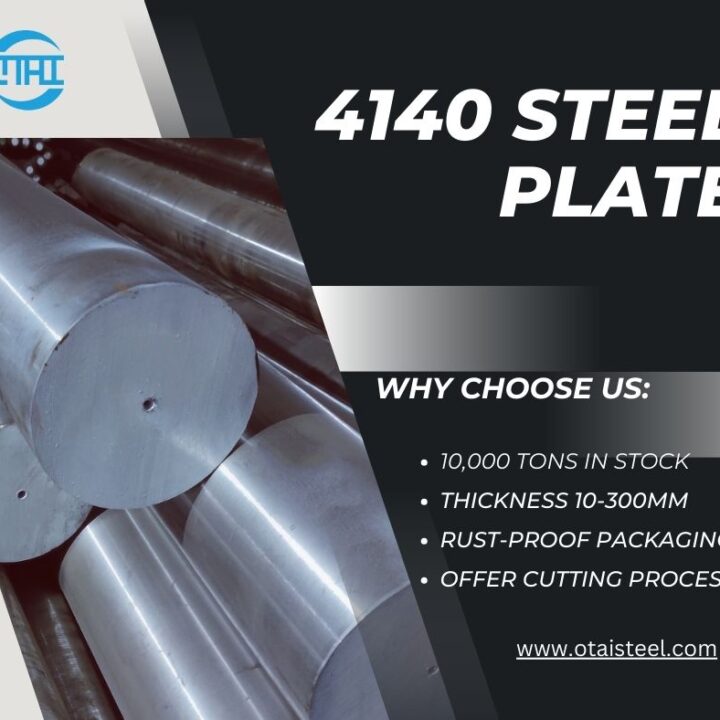
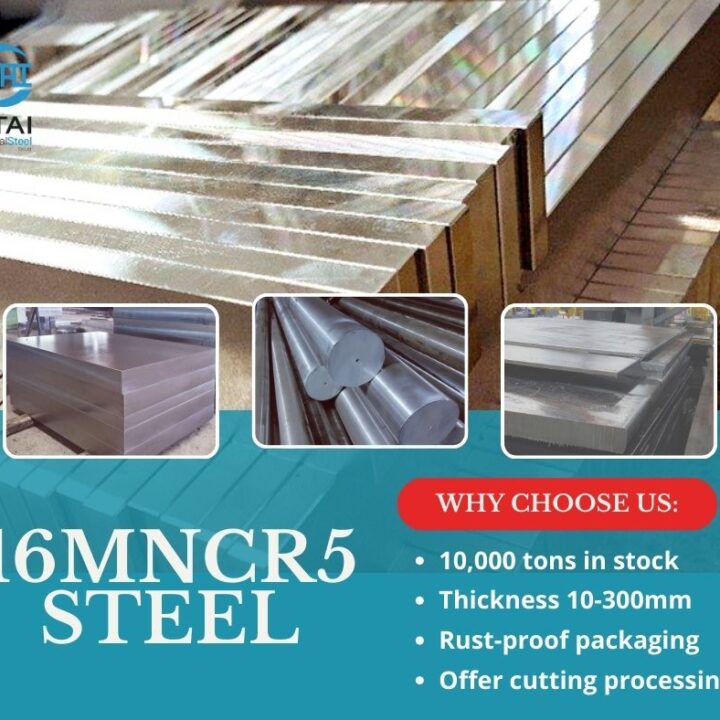
- Large 4140 inventory: Otai Special Steel maintains approximately 10,000 tons of steel stock and keeps different 4140 dimensions available for customer requirements.
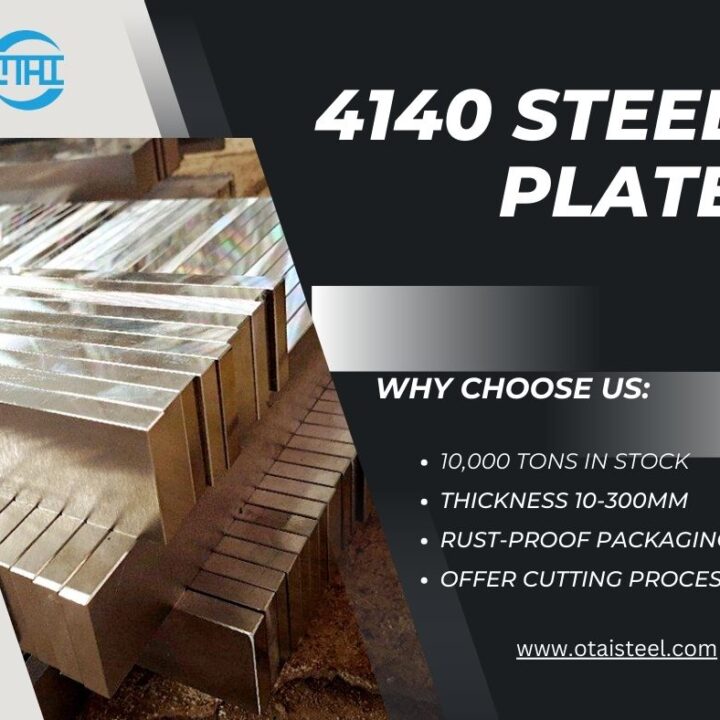
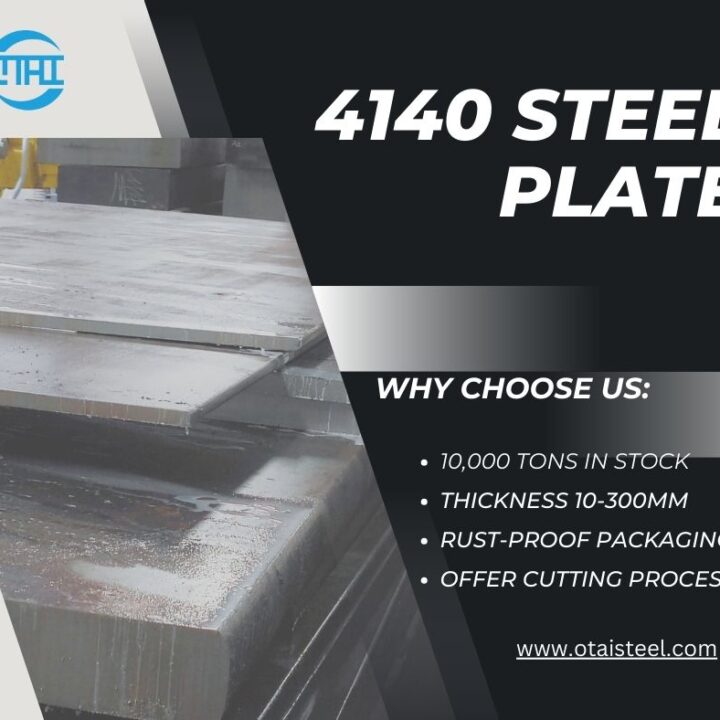
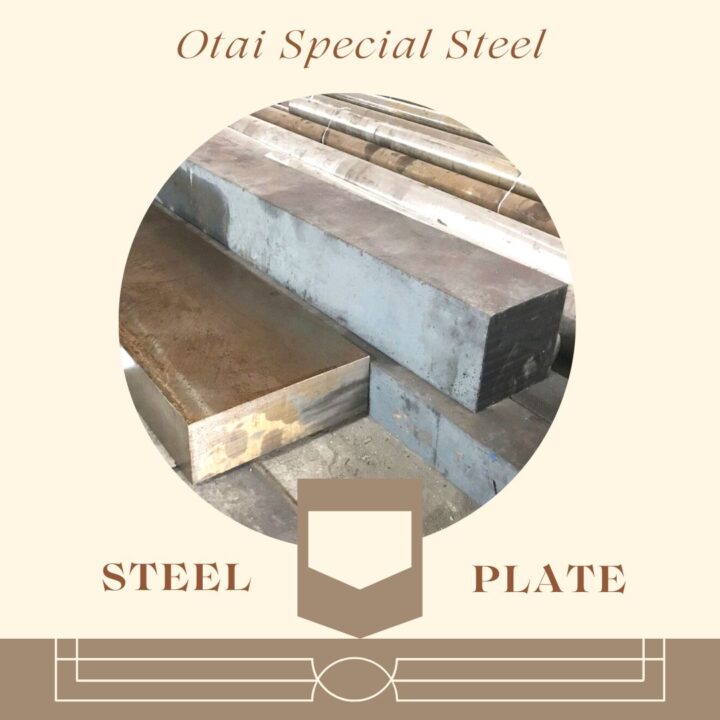
- 4140 steel plates: We can supply 4140 steel plates in different thicknesses and sizes according to project requirements.
- Cutting service: We can arrange cutting according to customer drawings and specified dimensions.
- Heat treatment: Annealing, normalizing, quenching, tempering, and other heat-treatment services can be arranged according to requirements.
- Quality inspection: Ultrasonic testing and third-party inspection can be arranged for orders with specific quality requirements.
- Export packaging: Steel strapping, wooden cases, and anti-rust packaging help protect steel products during international transportation.
- International supply experience: Otai Special Steel has supplied steel products to customers with demanding technical requirements, including Fortune Global 500 companies.
If you need strong 4140 steel for shafts, axles, bolts, machinery parts, or other demanding applications, provide the required dimensions, quantity, heat-treatment condition, and mechanical requirements. Otai Special Steel can help confirm suitable 4140 material and processing options.
❓ 10. Frequently Asked Questions
1. Is 4140 steel strong?
Yes. 4140 is a high-strength chromium-molybdenum alloy steel. It can achieve high tensile and yield strength after suitable quenching and tempering while retaining good toughness.
2. How strong is 4140 steel?
The strength of 4140 depends on its heat-treatment condition, section size, and applicable specification. Quenched-and-tempered 4140 can achieve substantially higher strength than annealed or normalized material.
3. Is 4140 stronger than 1045 steel?
4140 generally offers higher hardenability and stronger overall performance than 1045 when the grades receive appropriate heat treatment. However, the actual comparison should use equivalent material conditions and test requirements.
4. Does heat treatment make 4140 stronger?
Yes. Quenching and tempering can significantly increase the strength and hardness of 4140. Tempering then helps establish a practical balance between strength and toughness.
5. What is strong 4140 steel used for?
Common 4140 steel applications include shafts, axles, bolts, studs, spindles, gears, hydraulic components, and heavy machinery parts that require high strength and good toughness.