Skip to Content

About: Jack Otai

Recent Posts by Jack Otai

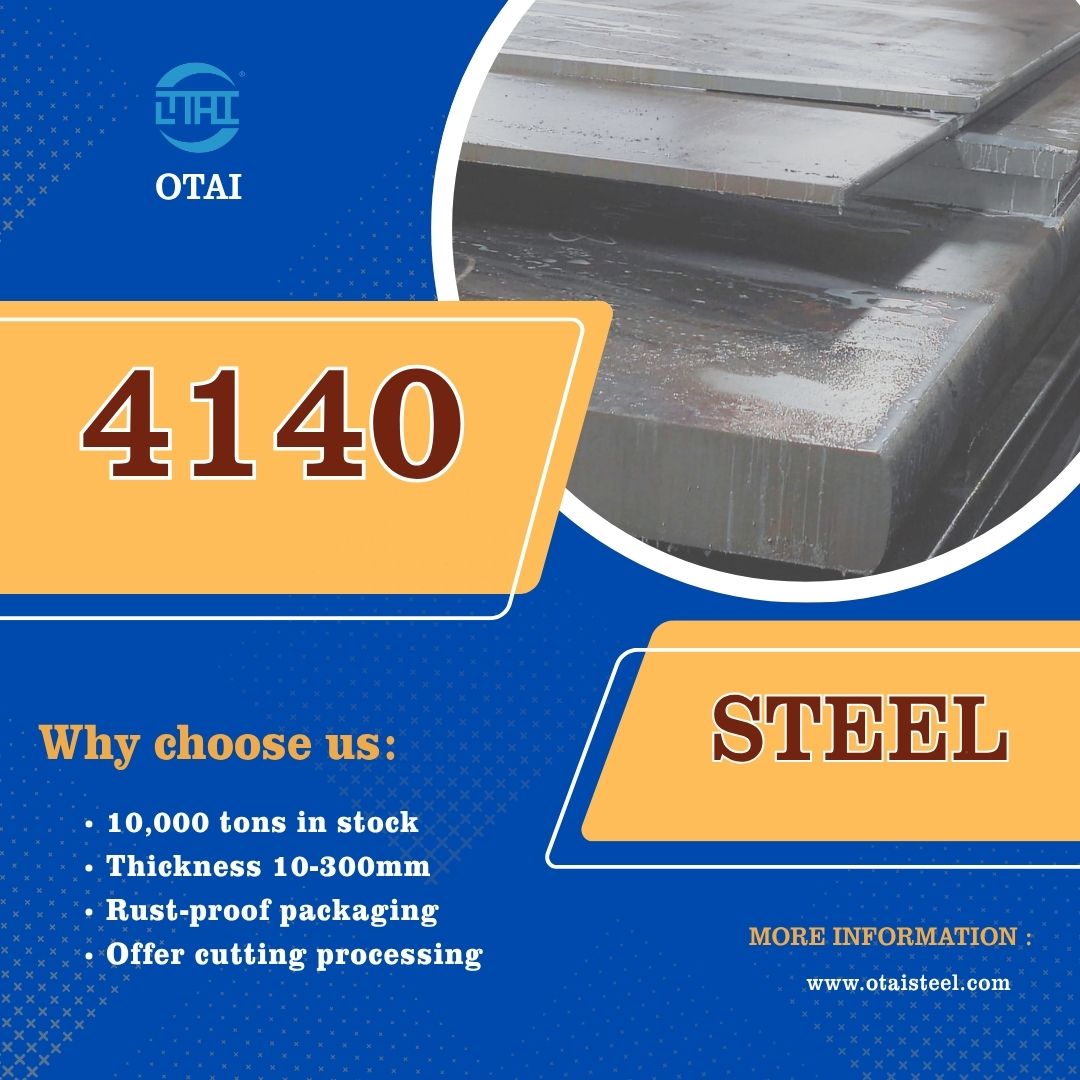
4140 Steel Heat Treated to RC 25-32: Properties, Applications, and Benefits

4140 Steel Heat Treated to RC 25-32: Properties, Applications, and Benefits4140 Steel Heat Treated to RC 25-32: Properties, Applications, and Benefits

🔍 Introduction

4140 steel heat treated to RC 25-32 is a popular condition for this alloy steel that balances toughness and strength. The RC scale (Rockwell C) measures hardness, and achieving this range in 4140 steel ensures a material with suitable hardness for heavy-duty applications while maintaining good impact resistance.

In this article, we’ll explore the 4140 steel heat treatment process for RC 25-32, how to achieve this hardness, the benefits, and its various industrial applications.


⚙️ What Is RC 25-32 Hardness in 4140 Steel?

When 4140 steel is heat treated to RC 25-32, it means that the steel has been subjected to a heat treatment process that results in a Rockwell hardness of between 25 and 32 HRC. This range provides a good balance between hardness and ductility, making it ideal for parts that need strength without being brittle.

Hardness Explanation:

  • RC 25-32 → Moderate hardness range
  • Achieved through tempering after quenching

The resulting material is harder than annealed steel but still tough enough for heavy-duty applications.


🔥 Heat Treatment Process for Achieving RC 25-32

The 4140 steel heat treatment process for RC 25-32 involves two primary steps: quenching and tempering.

1. Quenching:

  • Heat the steel to a high temperature (around 830–860°C).
  • Rapidly cool the material, typically in oil or water.
  • This step hardens the steel, increasing its strength.

2. Tempering:

  • After quenching, the steel is reheated to a lower temperature (around 550–650°C).
  • This step relieves internal stresses and increases toughness.
  • The result is a Rockwell hardness in the range of 25-32.

By adjusting the tempering temperature, manufacturers can control the final hardness level to suit specific applications.


📊 Mechanical Properties of 4140 Steel at RC 25-32

The 4140 steel mechanical properties at RC 25-32 reflect a balanced performance profile, suitable for medium-to-heavy-duty applications.

Property Value at RC 25-32
Hardness (HRC) 25-32 HRC
Tensile Strength 900–1100 MPa
Yield Strength 600–850 MPa
Impact Toughness Good (compared to higher hardness grades)
Ductility Moderate to good

Insight:

At RC 25-32, 4140 steel provides a good balance of strength, hardness, and toughness, making it suitable for parts that require both wear resistance and impact resistance.


🏭 Applications of 4140 Steel at RC 25-32

The 4140 steel applications with RC 25-32 hardness are numerous in industries that require durable components but do not need the extreme hardness associated with higher Rockwell C values.

Common Uses:

  • Gear shafts: Suitable for high-load applications.
  • Axles and spindles: Heavy-duty automotive components.
  • Crankshafts: High strength with impact resistance.
  • Industrial machinery: Parts that experience both stress and wear.

The RC 25-32 hardness range provides adequate wear resistance while maintaining good shock absorption, which is vital in machinery subjected to dynamic forces.


🔬 Comparison of 4140 Steel at Different Hardness Levels

When considering 4140 steel RC 25-32 vs other hardness levels, the key difference is how each treatment affects the steel’s performance. Here’s a comparison:

Hardness Level (HRC) Applications Characteristics
RC 25-32 Gears, shafts, automotive parts Good strength, moderate toughness
RC 35-40 High-performance components, tools Harder, lower impact resistance
RC 45-50 Cutting tools, molds, wear parts Very hard, brittle, wear-resistant
Annealed (RC 10-20) Structural components, large weldments Soft, easy to machine

Conclusion:

RC 25-32 provides a balanced mix of hardness and toughness, making it the most versatile choice for various mechanical components.


🛠️ Benefits of 4140 Steel Heat Treated to RC 25-32

The benefits of 4140 steel heat treated to RC 25-32 include:

  • Increased wear resistance: The steel can withstand moderate to high wear conditions.
  • Enhanced toughness: Retains good impact resistance, ideal for machinery components.
  • Good machinability: Easier to machine compared to higher hardness grades, which is crucial in complex manufacturing processes.
  • Versatility: Works well in both low and high-stress applications, providing flexibility across industries.

Insight:

The heat treatment process enhances mechanical properties, making 4140 steel at RC 25-32 an ideal material for parts that require both durability and toughness.


⚖️ Comparison of Benefits at Different Hardness Levels

Here’s a comparison of the 4140 steel hardness levels and the trade-offs:

Hardness Level (HRC) Benefits Trade-offs
RC 25-32 Good toughness and strength Moderate wear resistance
RC 35-40 Higher strength and wear resistance Reduced toughness
RC 45-50 Very high wear resistance Brittle, less tough
Annealed Very easy to machine Lower strength and wear resistance

Conclusion:

RC 25-32 provides a middle ground, offering durability and performance without being too brittle or difficult to machine.


🏆 Company Advantages

At Otai Special Steel, we offer 4140 steel heat treated to RC 25-32 with superior quality:

  • Over 10,000 tons of inventory available year-round
  • Full size range from 6mm to 300mm
  • Precision cutting and customized heat treatment services
  • Strict quality control including ultrasonic testing (UT) and chemical analysis
  • Support for third-party inspections such as SGS
  • Extensive experience supplying global industrial clients

We ensure your materials meet exacting standards for performance, strength, and durability.


❓ FAQ

1. What is RC 25-32 hardness in 4140 steel?

It refers to a moderate hardness level achieved through heat treatment, balancing strength and toughness.

2. How is RC 25-32 achieved?

Through a combination of quenching and tempering processes.

3. What is 4140 steel commonly used for at RC 25-32?

It is commonly used for gears, shafts, axles, and other machinery parts.

4. Can 4140 steel at RC 25-32 be easily machined?

Yes, it offers better machinability compared to higher hardness levels.

5. Why choose RC 25-32 over higher hardness levels?

It provides a good mix of wear resistance and impact resistance without becoming too brittle.

0 0 Continue Reading →

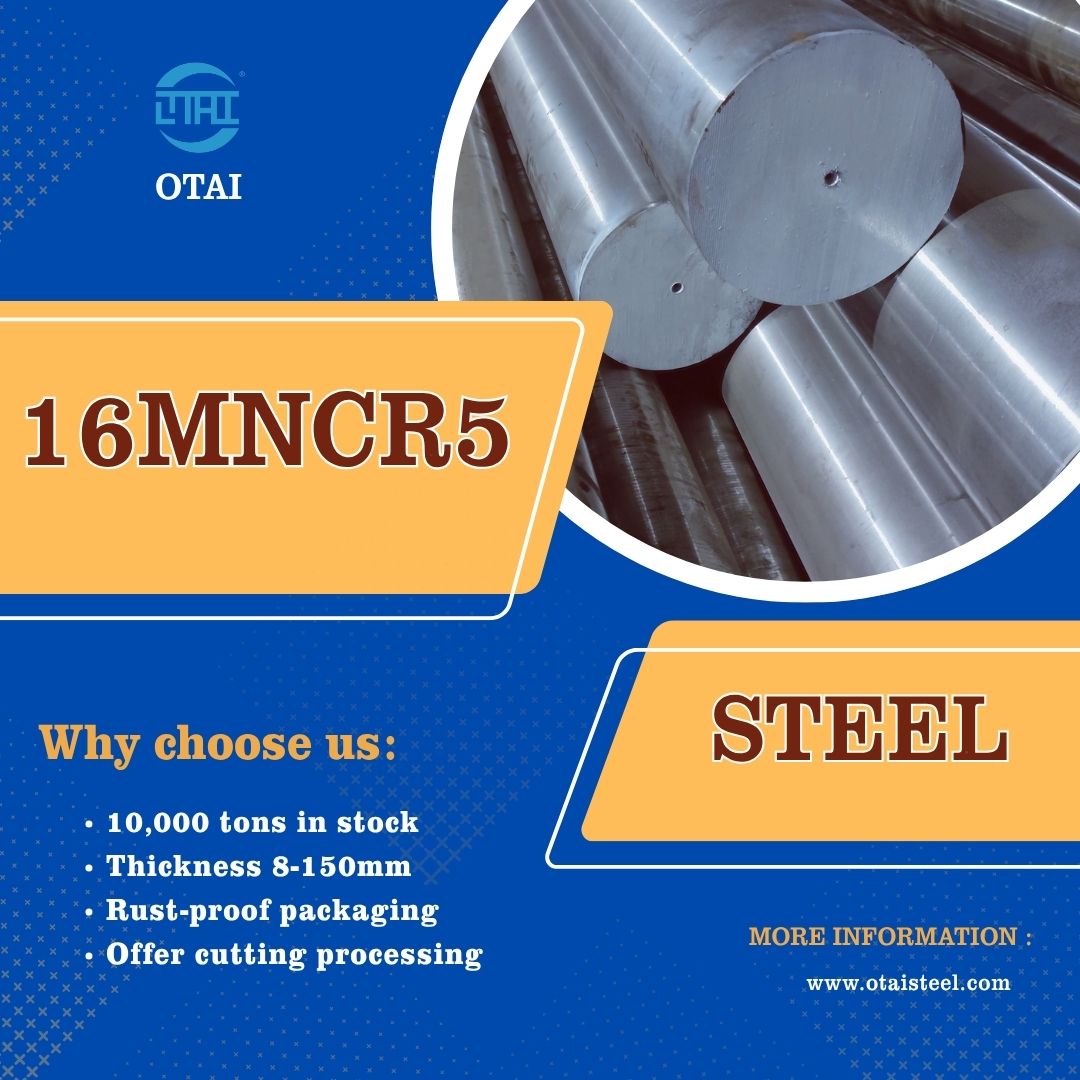
16MnCr5 Price: Cost Factors, Market Trends, and Buying Strategies

16MnCr5 Price: Cost Factors, Market Trends, and Buying Strategies16MnCr5 Price: Cost Factors, Market Trends, and Buying Strategies

🔍 Introduction

When evaluating 16MnCr5 price, many buyers focus only on numbers, but the real value lies in understanding what drives cost differences. As a widely used case hardening steel, 16MnCr5 is influenced by multiple technical and market factors rather than a fixed price point.

This article explains how pricing is determined, what affects cost variations, and how to make smarter purchasing decisions without relying on outdated or misleading price references.


⚙️ What Determines the Cost of 16MnCr5 Steel?

The what affects 16mncr5 steel pricing question is essential for accurate budgeting.

Key Cost Drivers:

  • Raw material composition (chromium, manganese content)
  • Production process (rolling, forging, seamless forming)
  • Supply chain and logistics
  • Market demand and industry cycles

Insight:

Price is not static—it reflects both technical specifications and market conditions.


🧪 Material Condition and Processing Impact

The 16mncr5 price based on heat treatment can vary significantly depending on processing.

Conditions:

  • Annealed → lower processing cost
  • Normalized → moderate cost
  • Carburized or heat-treated → higher cost due to additional processing

Additional Factors:

  • Precision machining
  • Surface finishing
  • Ultrasonic testing (UT)

Each added service increases the overall material value.


📊 Product Form and Size Influence

The 16mncr5 round bar price vs plate price differs due to manufacturing complexity.

Product Form Cost Impact Reason
Round Bar Moderate Standard production
Plate Higher Rolling complexity
Tube Higher Additional forming processes
Forged Block Highest Intensive processing

Insight:

Larger sizes and custom dimensions generally increase cost due to lower production efficiency.


🌍 Market Trends and Supply Factors

The current 16mncr5 steel price trends are influenced by global conditions.

Key Influences:

  • Raw material availability
  • Energy costs
  • Transportation and logistics
  • Industrial demand (automotive, machinery)

Observation:

Market fluctuations can significantly impact procurement timing.


⚖️ Comparison with Other Steels

The 16mncr5 price comparison with other steels provides context.

Steel Grade Cost Level Characteristics
16MnCr5 Medium Case hardening steel
4140 Medium-High Higher alloy content
1018 Low Simple carbon steel

Conclusion:

16MnCr5 offers a good balance between cost and performance.


🏭 Bulk Purchasing and Supply Strategy

The bulk 16mncr5 steel price supplier advantage becomes clear in large orders.

Benefits of Bulk Buying:

  • Lower unit cost
  • Stable supply
  • Better negotiation flexibility

Tip:

Long-term partnerships often lead to more competitive pricing.


🔬 Quality vs Cost Consideration

Focusing only on cost can be misleading.

Important Factors:

  • Material certification
  • Consistency of chemical composition
  • Mechanical property reliability
  • Inspection standards

Insight:

Higher-quality material reduces long-term failure risks and total cost.


🧭 How to Optimize Purchasing Decisions

To manage 16mncr5 material price in global market, consider:

  1. Specify exact requirements (size, condition, tolerance)
  2. Avoid over-specification
  3. Compare multiple suppliers
  4. Consider processing services in one package

Practical Tip:

A complete solution often reduces overall project cost.


⚠️ Common Mistakes in Price Evaluation

  1. Comparing prices without considering condition
  2. Ignoring processing and testing costs
  3. Choosing suppliers based only on lowest price
  4. Not factoring logistics and delivery time

Avoiding these mistakes ensures better value.


🏆 Company Advantages

At Otai Special Steel, we help customers achieve the best balance between cost and quality:

  • Over 10,000 tons of inventory available year-round
  • Full size range from 6mm to 300mm
  • Precision cutting and customized heat treatment services
  • Strict quality control including ultrasonic testing (UT) and chemical analysis
  • Support for third-party inspections such as SGS
  • Extensive experience supplying global industrial clients

We provide cost-effective solutions tailored to your project needs.


❓ FAQ

1. What affects the price of 16MnCr5 steel the most?

Raw materials, heat treatment, and processing requirements.

2. Does heat treatment increase cost?

Yes, additional processing raises overall cost.

3. Is bulk purchasing more economical?

Yes, it typically reduces unit cost.

4. Why do different suppliers offer different prices?

Differences in quality, processing, and service levels.

5. How can I get the best value?

By balancing quality, specifications, and supplier reliability.

0 0 Continue Reading →

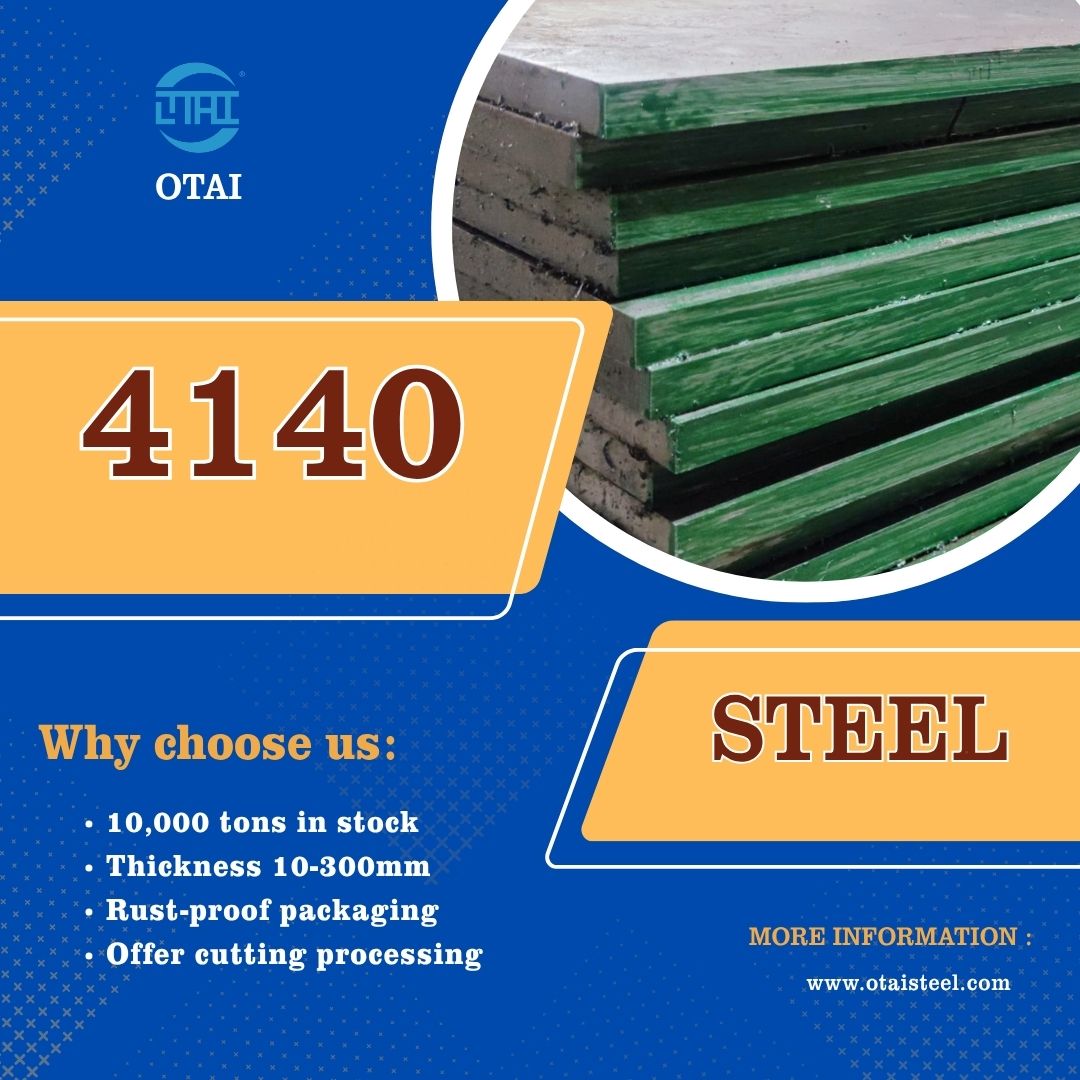
5/8 4140 Steel Plate: Properties, Performance, and Practical Applications

5/8 4140 Steel Plate: Properties, Performance, and Practical Applications5/8 4140 Steel Plate: Properties, Performance, and Practical Applications

🔍 Introduction

The 5/8 4140 steel plate is a widely used thickness in industrial applications where strength, toughness, and reliability are essential. This medium-thickness plate offers an excellent balance between structural rigidity and machinability, making it ideal for a wide range of engineering components.

In this article, we explore 5/8 4140 steel plate properties and specifications, including mechanical performance, heat treatment options, machining considerations, and typical applications.


⚙️ Overview of 5/8 Inch 4140 Steel Plate

A 5/8 inch 4140 steel plate refers to a plate with a thickness of approximately 15.875 mm made from chromium-molybdenum alloy steel. This thickness is commonly used because it provides sufficient strength without excessive weight.

Key Features:

  • High strength and toughness
  • Good wear resistance
  • Excellent heat treatment response
  • Versatile for machining and fabrication

This combination makes it suitable for demanding structural applications.


📊 Mechanical Properties and Strength

The 5/8 inch 4140 steel plate hardness and strength depend on the condition of supply.

Condition Yield Strength (MPa) Tensile Strength (MPa) Hardness
Annealed 415–620 650–850 ~20 HRC
Normalized 500–750 700–950 20–30 HRC
Quenched & Tempered 650–900 850–1100 28–50 HRC

Insight:

Heat treatment significantly enhances performance, especially for load-bearing applications.


🔥 Heat Treatment Options

The 5/8 4140 steel plate heat treatment options allow customization based on application needs.

Common Processes:

  • Normalizing → improves uniformity
  • Quenching → increases hardness
  • Tempering → enhances toughness

Result:

  • Balanced strength and ductility
  • Improved fatigue resistance
  • Better wear performance

Proper treatment ensures optimal results.


⚖️ Weight and Dimensions

Understanding the 5/8 4140 steel plate weight and dimensions is important for design and logistics.

Approximate Weight:

  • Thickness: 5/8 inch (15.875 mm)
  • Weight: ~49 kg/m²
Plate Size Approximate Weight
1 m² ~49 kg
2 m² ~98 kg
5 m² ~245 kg

Insight:

Weight increases linearly with surface area.


🛠️ Machining and Cutting

The 5/8 4140 steel plate machining and cutting process is efficient in the annealed or normalized condition.

Machining Tips:

  • Use carbide tools for better performance
  • Apply proper cutting speeds
  • Avoid machining after hardening if possible

Cutting Methods:

  • Plasma cutting
  • Laser cutting
  • Saw cutting

Proper techniques improve surface quality and reduce tool wear.


🏭 Applications of 5/8 Thick Plates

The 5/8 thick 4140 steel plate applications are diverse.

Common Uses:

  • Machinery base plates
  • Structural supports
  • Mold bases
  • Heavy equipment components

This thickness is ideal for medium-duty structural applications.


🔬 Comparison with Other Thicknesses

The 5/8 4140 steel plate vs other thickness comparison helps in selection.

Thickness Advantage Typical Use
1/2 inch Lighter Light structures
5/8 inch Balanced General engineering
1 inch Stronger Heavy-duty components

Conclusion:

5/8 inch offers an excellent balance of strength and weight.


📏 Tolerance and Standards

The 5/8 4140 steel plate tolerance and standards ensure consistency.

Standards:

  • ASTM A829
  • EN 10083 (42CrMo4 equivalent)

Tolerances:

  • Thickness tolerance depends on rolling standard
  • Flatness and surface quality controlled during production

Insight:

Strict standards ensure reliable performance.


🧭 Supply and Availability

The 5/8 4140 steel plate supplier and stock availability is generally stable due to high demand.

Key Points:

  • Available in various sizes
  • Custom cutting services common
  • Heat-treated options available

Working with reliable suppliers ensures consistent quality.


⚠️ Common Mistakes in Usage

  1. Ignoring heat treatment condition
  2. Underestimating weight impact
  3. Machining after hardening
  4. Not considering tolerance requirements

Avoiding these improves efficiency and performance.


🏆 Company Advantages

At Otai Special Steel, we supply high-quality 4140 steel plates in various thicknesses:

  • Over 10,000 tons of inventory available year-round
  • Full size range from 6mm to 300mm
  • Precision cutting and customized heat treatment services
  • Strict quality control including ultrasonic testing (UT) and chemical analysis
  • Support for third-party inspections such as SGS
  • Extensive experience supplying global industrial clients

We ensure reliable supply and consistent quality for your projects.


❓ FAQ

1. What is the thickness of a 5/8 steel plate in mm?

Approximately 15.875 mm.

2. Is 5/8 4140 plate strong?

Yes, especially after heat treatment.

3. Can it be machined easily?

Yes, particularly in annealed condition.

4. What industries use this thickness?

Machinery, construction, and heavy equipment industries.

5. Is heat treatment necessary?

It depends on the application, but it significantly improves performance.

0 0 Continue Reading →

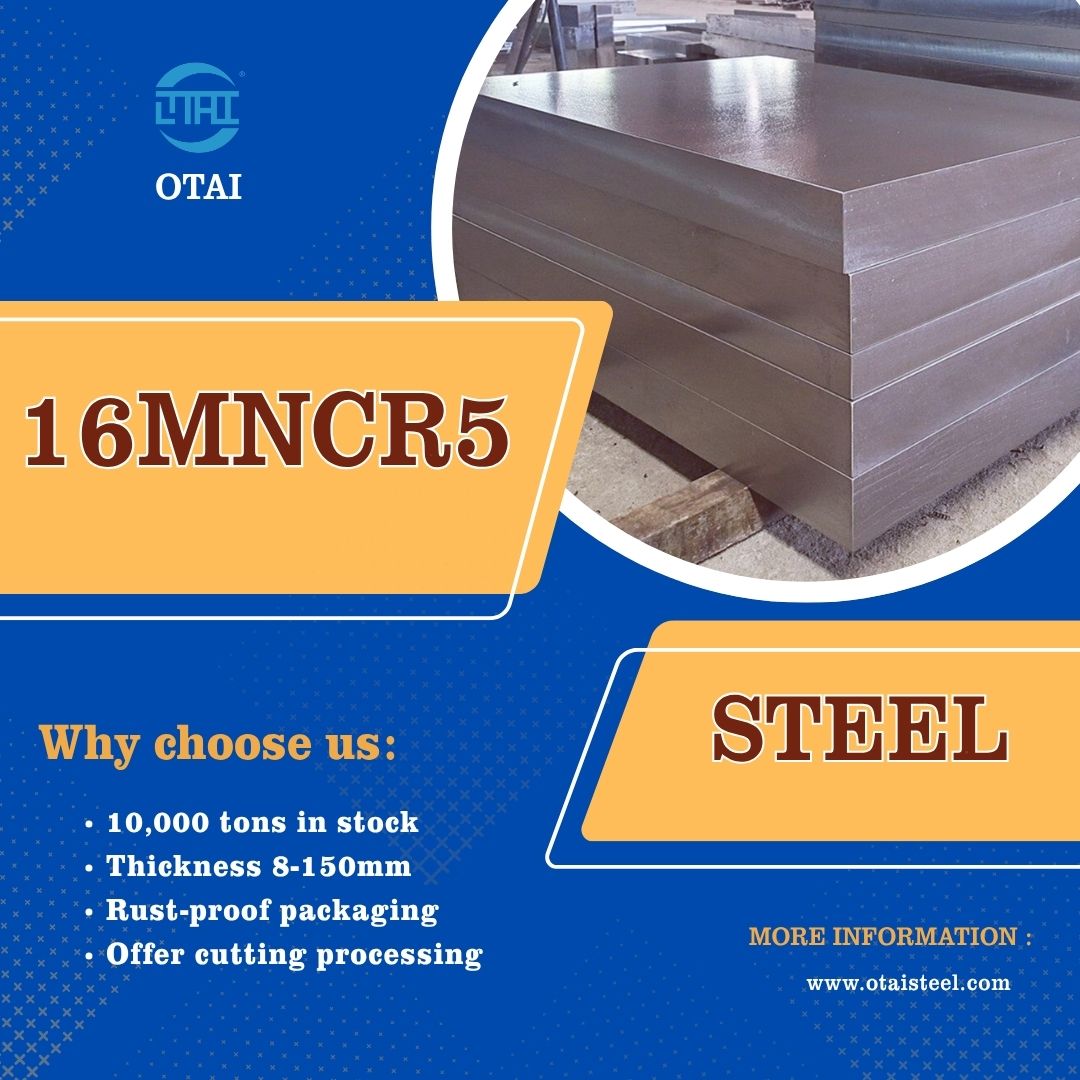
16MnCr5 Name: Meaning, Standard Definition, and Global Equivalents

16MnCr5 Name: Meaning, Standard Definition, and Global Equivalents16MnCr5 Name: Meaning, Standard Definition, and Global Equivalents

🔍 Introduction

The 16MnCr5 name often raises questions for engineers, buyers, and students who are not familiar with European steel designation systems. Unlike simple grade numbers, this name actually contains important information about the material’s composition and intended use.

In this article, we will clearly explain what does 16mncr5 name mean in steel, break down its designation, compare it with other naming systems, and show its equivalents worldwide.


⚙️ What Does 16MnCr5 Name Mean?

To understand the meaning of 16mncr5 in metallurgy, we need to break the name into parts:

Breakdown:

  • 16 → Approximate carbon content (0.16%)
  • Mn → Manganese as a key alloying element
  • Cr → Chromium for hardenability and wear resistance
  • 5 → Indicates alloy content level (approximate category in EN standard)

Key Insight:

The 16mncr5 material designation breakdown reflects both composition and application (case hardening steel).


🧪 Standard Definition and Classification

The 16mncr5 material name and standard definition comes from the European EN system.

Standard Information:

  • EN designation: 16MnCr5
  • Material number: 1.7131
  • Steel type: Case hardening steel

Characteristics:

  • Low carbon content
  • Suitable for carburizing
  • High surface hardness after treatment

📊 Chemical Composition Overview

The 16mncr5 steel name explanation and composition is closely related.

Element Content (%)
Carbon (C) 0.14–0.19
Manganese (Mn) 1.0–1.3
Chromium (Cr) 0.8–1.1
Silicon (Si) 0.15–0.35

Insight:

Each element in the name corresponds to actual alloying components.


🔄 16MnCr5 Name in Different Standards

The 16mncr5 name in different standards (EN, DIN, ASTM) varies globally.

Standard Equivalent Grade
EN 16MnCr5 (1.7131)
DIN 1.7131
ASTM/AISI 5115
JIS SCM415
GB 16CrMnH

Conclusion:

Different countries use different naming systems, but properties remain similar.


⚖️ Naming Rules in Steel Grades

The 16mncr5 steel grade naming rules follow European logic.

Key Rules:

  1. First number → carbon content × 100
  2. Letters → main alloying elements
  3. Final number → alloy level indicator

Example:

16MnCr5 = 0.16% carbon + Mn + Cr alloy steel


🆚 Comparison with Other Naming Systems

The 16mncr5 name vs other steel naming systems shows key differences.

European System (EN):

  • Based on composition
  • Descriptive naming

American System (AISI):

  • Numeric classification (e.g., 5115)
  • Less descriptive

Japanese System (JIS):

  • Combination of letters and numbers

Insight:

The EN system provides more intuitive information about composition.


🔬 Why Is It Called 16MnCr5?

The why is it called 16mncr5 steel question is straightforward.

It is named based on:

  • Carbon percentage
  • Alloying elements
  • Classification within a steel group

Practical Meaning:

The name itself acts as a quick reference for engineers.


🏭 Applications Based on Material Type

Because of its classification, this steel is widely used in:

Common Applications:

  • Gears and pinions
  • Shafts and axles
  • Automotive transmission parts
  • Machinery components

Its naming reflects its suitability for carburizing applications.


🧭 Engineering Significance of the Name

Understanding the 16mncr5 name equivalent grades worldwide helps in:

  • Material selection
  • International sourcing
  • Specification matching
  • Engineering design

Practical Tip:

Always cross-check equivalent grades when sourcing globally.


⚠️ Common Misunderstandings

  1. Thinking the name is arbitrary
  2. Ignoring composition information
  3. Confusing it with other grades
  4. Not checking equivalents

Avoiding these mistakes improves material selection accuracy.


🏆 Company Advantages

At Otai Special Steel, we supply high-quality 16MnCr5 with full technical support:

  • Over 10,000 tons of inventory available year-round
  • Full size range from 6mm to 300mm
  • Precision cutting and customized heat treatment services
  • Strict quality control including ultrasonic testing (UT) and chemical analysis
  • Support for third-party inspections such as SGS
  • Extensive experience supplying global industrial clients

We help customers understand and select the right materials efficiently.


❓ FAQ

1. What does 16MnCr5 mean?

It represents carbon content, alloying elements, and steel classification.

2. Is 16MnCr5 a standard name?

Yes, it follows the European EN standard.

3. What is its material number?

1.7131.

4. Are there equivalent grades?

Yes, such as AISI 5115 and SCM415.

5. Why is understanding the name important?

It helps in correct material selection and global sourcing.

0 0 Continue Reading →

4140 Steel Data Sheet: Composition, Properties, and Engineering Specifications

4140 Steel Data Sheet: Composition, Properties, and Engineering Specifications

🔍 Introduction

A complete 4140 steel data sheet is essential for engineers, buyers, and manufacturers who need accurate material information for design and production. Known for its excellent strength, toughness, and versatility, 4140 alloy steel is widely used across industries such as automotive, oil & gas, and heavy machinery.

This article provides a detailed overview of 4140 steel sheet properties and specifications, including chemical composition, mechanical performance, heat treatment guidelines, and practical applications.


⚙️ Overview of 4140 Steel

4140 is a chromium-molybdenum alloy steel designed for high strength and good hardenability. It performs well under both static and dynamic loads.

Key Characteristics:

  • Medium carbon alloy steel
  • High fatigue strength
  • Good wear resistance
  • Excellent heat treatment response

These features make it suitable for demanding engineering environments.


🧪 4140 Steel Chemical Composition Data Sheet

The 4140 steel chemical composition data defines its core performance.

Element Content (%)
Carbon (C) 0.38–0.43
Chromium (Cr) 0.8–1.1
Molybdenum (Mo) 0.15–0.25
Manganese (Mn) 0.75–1.0
Silicon (Si) 0.15–0.35
Phosphorus (P) ≤0.035
Sulfur (S) ≤0.040

Insight:

  • Chromium improves hardness and wear resistance
  • Molybdenum enhances strength and toughness
  • Carbon controls hardness potential

📊 4140 Steel Mechanical Properties Data Sheet

The 4140 steel mechanical properties data sheet varies depending on heat treatment.

Property Typical Range
Tensile Strength 850–1100 MPa
Yield Strength 650–900 MPa
Hardness 28–50 HRC
Elongation 12–25%
Impact Toughness High

These values make it suitable for high-load applications.


🔥 4140 Steel Heat Treatment Data Sheet

The 4140 steel heat treatment data sheet outlines key processing steps.

Typical Heat Treatment Process:

  1. Austenitizing: 830–870°C
  2. Quenching: oil cooling
  3. Tempering: 200–650°C

Results:

  • Increased strength
  • Improved toughness
  • Controlled hardness

Proper heat treatment is essential for achieving optimal performance.


🌡️ 4140 Steel Physical Properties Data Sheet

The 4140 steel physical properties data sheet includes:

Property Value
Density 7.85 g/cm³
Elastic Modulus ~210 GPa
Thermal Conductivity ~42 W/m·K
Thermal Expansion 12 × 10⁻⁶ /°C

These properties influence thermal and structural behavior in service.


⚖️ Hardness and Strength Relationship

The 4140 steel hardness and strength data sheet shows:

  • Higher hardness → increased wear resistance
  • Lower hardness → improved ductility

Example:

  • 50 HRC → maximum strength
  • 30 HRC → balanced properties

Selecting the right hardness depends on application requirements.


🔄 4140 Steel Equivalent Grades Data Sheet

The 4140 steel equivalent grades data sheet helps with global sourcing.

Standard Grade
AISI/SAE 4140
EN 42CrMo4 (1.7225)
DIN 1.7225
JIS SCM440
GB 42CrMo

These equivalents ensure compatibility across different standards.


🏭 Applications and Practical Use

The 4140 steel applications and properties overview shows its versatility.

Common Applications:

  • Shafts and axles
  • Gears and crankshafts
  • Oilfield equipment
  • Heavy-duty fasteners

Its strength and fatigue resistance make it ideal for critical components.


🧭 Design Considerations

When using data from a 4140 steel data sheet, consider:

  1. Required mechanical properties
  2. Heat treatment condition
  3. Operating environment
  4. Safety factors

Practical Tip:

Always verify material certification before use.


⚠️ Common Mistakes

  1. Ignoring heat treatment condition
  2. Using incorrect property values
  3. Overlooking standard differences
  4. Not applying safety factors

Avoiding these improves reliability and performance.


🏆 Company Advantages

At Otai Special Steel, we provide reliable 4140 steel with full technical support:

  • Over 10,000 tons of inventory available year-round
  • Full size range from 6mm to 300mm
  • Precision cutting and customized heat treatment services
  • Strict quality control including ultrasonic testing (UT) and chemical analysis
  • Support for third-party inspections such as SGS
  • Extensive experience supplying global industrial clients

We ensure consistent quality and fast delivery for your projects.


❓ FAQ

1. What is included in a 4140 steel data sheet?

It includes composition, mechanical properties, heat treatment, and physical properties.

2. Does the data sheet change with heat treatment?

Yes, mechanical properties vary significantly.

3. What is the hardness range of 4140 steel?

Typically between 28 and 50 HRC.

4. Are there international equivalents?

Yes, such as 42CrMo4 and SCM440.

5. Why is a data sheet important?

It ensures correct material selection and safe engineering design.

0 0 Continue Reading →

16MnCr5 vs 16MnCrS5: Key Differences in Machinability, Properties, and Applications

16MnCr5 vs 16MnCrS5: Key Differences in Machinability, Properties, and Applications16MnCr5 vs 16MnCrS5: Key Differences in Machinability, Properties, and Applications

🔍 Introduction

Understanding 16MnCr5 vs 16MnCrS5 is essential for engineers and buyers who need to balance machinability, strength, and performance in case hardening steels. While both grades belong to the same family and share similar base properties, a small difference in composition—specifically sulfur content—leads to noticeable changes in machining behavior and application suitability.

This article provides a detailed comparison of these two steels, including chemical composition, mechanical properties, heat treatment behavior, and practical use cases.


⚙️ Overview of 16MnCr5 and 16MnCrS5

Both materials are low-carbon alloy steels designed for carburizing applications.

16MnCr5:

  • Standard case hardening steel
  • Balanced strength and toughness
  • Suitable for high-performance components

16MnCrS5:

  • Modified version with added sulfur
  • Improved machinability
  • Slightly reduced toughness

The key distinction lies in sulfur addition.


🧪 Chemical Composition Comparison

The 16mncr5 vs 16mncrs5 chemical composition shows the primary difference.

Element 16MnCr5 (%) 16MnCrS5 (%)
Carbon (C) 0.14–0.19 0.14–0.19
Manganese (Mn) 1.0–1.3 1.0–1.3
Chromium (Cr) 0.8–1.1 0.8–1.1
Sulfur (S) ≤0.035 0.02–0.04

Insight:

The increased sulfur content in 16MnCrS5 improves machinability but affects toughness.


📊 Mechanical Properties Comparison

The 16mncr5 vs 16mncrs5 mechanical properties table highlights performance differences.

Property 16MnCr5 16MnCrS5
Tensile Strength 800–1100 MPa 750–1050 MPa
Yield Strength 500–800 MPa 450–750 MPa
Surface Hardness (carburized) 58–62 HRC 58–62 HRC
Toughness High Moderate

Conclusion:

Mechanical properties are similar, but 16MnCr5 offers slightly better toughness.


🛠️ Machinability Comparison

The 16mncr5 vs 16mncrs5 machinability comparison is the most significant difference.

16MnCr5:

  • Good machinability
  • Suitable for standard machining operations

16MnCrS5:

  • Excellent machinability
  • Reduced tool wear
  • Better chip breaking

Why?

The 16mncrs5 sulfur content effect on steel creates inclusions that improve cutting performance.


🔥 Heat Treatment Differences

The 16mncr5 vs 16mncrs5 heat treatment differences are minimal.

Common Process:

  • Carburizing: 880–950°C
  • Quenching: oil
  • Tempering: 150–200°C

Result:

  • Both achieve high surface hardness
  • Core strength remains similar

Insight:

Heat treatment response is nearly identical.


⚖️ Strength vs Machinability Trade-off

The difference between 16mncr5 and 16mncrs5 steel can be summarized:

  • 16MnCr5 → better mechanical performance
  • 16MnCrS5 → better machinability

Practical Trade-off:

Improved machinability comes at the cost of slightly reduced toughness.


🏭 Applications Comparison

The 16mncr5 vs 16mncrs5 applications vary depending on requirements.

16MnCr5 Applications:

  • High-load gears
  • Transmission shafts
  • Automotive components
  • Heavy-duty machinery

16MnCrS5 Applications:

  • Mass-produced machined parts
  • Components requiring high machining efficiency
  • Automotive parts with moderate load

🧭 Which Is Better: 16MnCr5 or 16MnCrS5?

The question which is better 16mncr5 or 16mncrs5 depends on application.

Choose 16MnCr5 when:

  • High toughness is required
  • Components face heavy loads
  • Fatigue resistance is critical

Choose 16MnCrS5 when:

  • Machining efficiency is important
  • Large production volumes are involved
  • Slightly lower toughness is acceptable

🔬 Free Cutting Steel Advantages

The 16mncrs5 free cutting steel advantages include:

  • Faster machining speeds
  • Lower tool wear
  • Reduced production cost

These benefits are valuable in high-volume manufacturing.


⚠️ Common Mistakes in Selection

  1. Choosing based only on cost
  2. Ignoring toughness requirements
  3. Overlooking machining needs
  4. Not considering production scale

Avoiding these ensures better material selection.


🏆 Company Advantages

At Otai Special Steel, we supply both 16MnCr5 and 16MnCrS5 with consistent quality:

  • Over 10,000 tons of inventory available year-round
  • Full size range from 6mm to 300mm
  • Precision cutting and customized heat treatment services
  • Strict quality control including ultrasonic testing (UT) and chemical analysis
  • Support for third-party inspections such as SGS
  • Extensive experience supplying global industrial clients

We help customers select the right material for optimal performance and efficiency.


❓ FAQ

1. What is the main difference between 16MnCr5 and 16MnCrS5?

The sulfur content in 16MnCrS5 improves machinability.

2. Which steel has better machinability?

16MnCrS5 offers better machining performance.

3. Which one is stronger?

16MnCr5 generally has slightly better toughness and strength.

4. Are heat treatments different?

No, both use similar carburizing processes.

5. When should I choose 16MnCrS5?

When machining efficiency and production speed are priorities.

0 0 Continue Reading →

What Is the Difference Between 4140 and 5140 Steel?

What Is the Difference Between 4140 and 5140 Steel?What Is the Difference Between 4140 and 5140 Steel: Composition, Properties, and Applications

🔍 Introduction

Understanding what is the difference between 4140 and 5140 steel is essential for engineers and buyers selecting the right alloy for strength, toughness, and cost efficiency. Both are medium-carbon alloy steels, but their alloying elements and performance characteristics differ significantly.

This article provides a clear and practical comparison, covering composition, mechanical properties, heat treatment behavior, and real-world applications.


⚙️ Overview of 4140 and 5140 Steel

Both materials belong to the AISI alloy steel family and are widely used in mechanical engineering.

4140 Steel:

  • Chromium-molybdenum alloy steel
  • Excellent strength and toughness
  • Good hardenability

5140 Steel:

  • Chromium alloy steel (no molybdenum)
  • Moderate strength
  • Good wear resistance

The presence or absence of molybdenum is the key difference.


🧪 Chemical Composition Comparison

The difference between 4140 and 5140 steel composition directly affects performance.

Element 4140 (%) 5140 (%)
Carbon (C) 0.38–0.43 0.38–0.43
Chromium (Cr) 0.8–1.1 0.7–0.9
Molybdenum (Mo) 0.15–0.25
Manganese (Mn) 0.75–1.0 0.7–0.9

Insight:

  • 4140 contains molybdenum → better strength and heat resistance
  • 5140 lacks molybdenum → lower hardenability

📊 Mechanical Properties Comparison

The 4140 vs 5140 steel strength comparison highlights key differences.

Property 4140 Steel 5140 Steel
Tensile Strength 850–1100 MPa 700–950 MPa
Yield Strength 650–900 MPa 500–750 MPa
Hardness (HRC) 28–50 25–45
Toughness High Moderate

Conclusion:

4140 generally offers superior strength and toughness.


🔥 Heat Treatment Differences

The 4140 vs 5140 heat treatment differences are important in performance.

4140 Steel:

  • Better response to quenching and tempering
  • Deeper hardening capability
  • More uniform properties

5140 Steel:

  • Shallower hardening depth
  • Less stable at high temperatures

Insight:

4140 performs better in demanding heat-treated applications.


⚖️ Hardness and Toughness Comparison

The 4140 vs 5140 hardness and toughness comparison shows:

  • 4140 → higher toughness and fatigue resistance
  • 5140 → adequate hardness but lower impact resistance

This makes 4140 more suitable for high-stress environments.


🛠️ Machinability and Weldability

The 4140 vs 5140 machinability and weldability comparison:

Machinability:

  • Both steels machine well in annealed condition
  • 5140 is slightly easier to machine

Weldability:

  • 4140 requires preheating and post-weld treatment
  • 5140 has similar welding requirements but slightly lower cracking risk

Practical Tip:

Use controlled welding procedures for both materials.


🏭 Applications of 4140 and 5140 Steel

The applications of 4140 and 5140 steel vary based on performance needs.

4140 Steel Applications:

  • Heavy-duty shafts
  • Gears and crankshafts
  • Oil and gas equipment
  • High-strength bolts

5140 Steel Applications:

  • Automotive components
  • Medium-load shafts
  • General machinery parts

Conclusion:

4140 is preferred for high-performance applications.


🧭 Which Is Better: 4140 or 5140 Steel?

The question which is better 4140 or 5140 steel depends on application.

Choose 4140 when:

  • High strength is required
  • Fatigue resistance is critical
  • Heat treatment performance matters

Choose 5140 when:

  • Cost is a concern
  • Moderate strength is sufficient
  • Machinability is prioritized

🔄 Equivalent Grades

The 4140 and 5140 steel equivalent grades help in global sourcing.

Grade Equivalent
4140 42CrMo4 (EN), SCM440 (JIS)
5140 41Cr4 (EN), SCr440 (JIS)

These equivalents provide similar performance across standards.


⚠️ Common Mistakes in Material Selection

  1. Ignoring alloy composition differences
  2. Selecting based on cost alone
  3. Overlooking heat treatment requirements
  4. Not considering fatigue performance

Avoiding these ensures better material selection.


🏆 Company Advantages

At Otai Special Steel, we supply both 4140 and 5140 steel with consistent quality:

  • Over 10,000 tons of inventory available year-round
  • Full size range from 6mm to 300mm
  • Precision cutting and customized heat treatment services
  • Strict quality control including ultrasonic testing (UT) and chemical analysis
  • Support for third-party inspections such as SGS
  • Extensive experience supplying global industrial clients

We help customers choose the right material for optimal performance.


❓ FAQ

1. What is the main difference between 4140 and 5140 steel?

4140 contains molybdenum, giving it better strength and hardenability.

2. Which steel is stronger?

4140 steel is generally stronger and tougher.

3. Is 5140 cheaper than 4140?

Yes, due to simpler composition.

4. Can 5140 replace 4140?

Only in less demanding applications.

5. Which is better for high-stress applications?

4140 is the better choice due to superior performance.

0 0 Continue Reading →

16MnCr5 Tube: Performance, Heat Treatment, and Industrial Applications

16MnCr5 Tube: Performance, Heat Treatment, and Industrial Applications16MnCr5 Tube: Performance, Heat Treatment, and Industrial Applications

🔍 Introduction

The 16MnCr5 tube is widely used in precision engineering and mechanical industries due to its excellent combination of surface hardness and core toughness. As a case hardening steel, it is particularly suitable for components that require wear resistance along with structural strength.

This article explores the key characteristics of this material, including its chemical composition, mechanical performance, heat treatment process, and real-world applications.


⚙️ What Is 16MnCr5 Tube?

16MnCr5 tubes are typically supplied as seamless or forged hollow sections made from low-carbon alloy steel. They are designed for carburizing, allowing the outer layer to achieve high hardness while maintaining a ductile core.

Key Features:

  • Low carbon alloy steel
  • Excellent carburizing capability
  • High wear resistance after heat treatment
  • Good machinability before hardening

These properties make it suitable for high-performance tubular components.


🧪 Chemical Composition

Understanding the chemical makeup helps explain its performance characteristics.

Element Content (%)
Carbon (C) 0.14–0.19
Manganese (Mn) 1.0–1.3
Chromium (Cr) 0.8–1.1
Silicon (Si) 0.15–0.35
Phosphorus (P) ≤0.025
Sulfur (S) ≤0.035

Insight:

  • Chromium improves wear resistance
  • Manganese enhances strength
  • Low carbon ensures a tough core after treatment

📊 Mechanical Properties

The mechanical performance depends strongly on heat treatment condition.

Property Typical Value
Tensile Strength 800–1100 MPa
Yield Strength 500–800 MPa
Surface Hardness 58–62 HRC (carburized)
Core Hardness 28–40 HRC
Impact Toughness High

These values highlight its suitability for demanding load conditions.


🔥 Heat Treatment Process

Heat treatment plays a critical role in achieving the desired properties.

Typical Process:

  1. Carburizing: 880–950°C
  2. Quenching: oil cooling
  3. Tempering: 150–200°C

Results:

  • Hard, wear-resistant surface
  • Tough and shock-resistant core
  • Improved fatigue resistance

This combination ensures long service life in dynamic applications.


🏭 Applications in Industry

Due to its unique structure, this material is widely used in various industries.

Common Applications:

  • Automotive transmission components
  • Hollow shafts and drive tubes
  • Gear sleeves and bushings
  • Hydraulic and mechanical systems

Its tubular form makes it especially suitable for components requiring internal flow or weight reduction.


🛠️ Machining and Welding

Machinability:

  • Good in annealed condition
  • Best performed before carburizing

Weldability:

  • Moderate
  • Requires preheating (150–300°C)
  • Post-weld heat treatment recommended

Proper processing ensures optimal performance.


⚖️ Equivalent Materials

For international sourcing, several equivalent grades are available:

Standard Equivalent
EN 16MnCr5 (1.7131)
ASTM/AISI 5115
JIS SCM415
GB 16CrMnH

These equivalents offer similar properties with minor variations.


🔬 Advantages in Tubular Applications

Compared to solid bars, tubes provide several benefits:

  • Reduced weight while maintaining strength
  • Improved material efficiency
  • Better suitability for rotational components
  • Capability for internal fluid transport

These advantages make them ideal for modern engineering designs.


⚠️ Common Mistakes in Using 16MnCr5 Tubes

  1. Skipping proper heat treatment
  2. Welding without preheating
  3. Ignoring case depth requirements
  4. Machining after hardening

Avoiding these issues ensures better performance and durability.


🏆 Company Advantages

At Otai Special Steel, we supply high-quality 16MnCr5 tubes with reliable performance:

  • Over 10,000 tons of inventory available year-round
  • Full size range from 6mm to 300mm
  • Precision cutting and customized heat treatment services
  • Strict quality control including ultrasonic testing (UT) and chemical analysis
  • Support for third-party inspections such as SGS
  • Extensive experience supplying global industrial clients

We help customers achieve efficient sourcing and consistent quality.


❓ FAQ

1. What is 16MnCr5 tube used for?

It is used for gears, shafts, and hollow mechanical components requiring strength and wear resistance.

2. Can it be heat treated?

Yes, carburizing and quenching significantly improve its performance.

3. Is it easy to machine?

Yes, especially before heat treatment.

4. Can it be welded?

Yes, but preheating and post-weld treatment are recommended.

5. Why choose tube instead of solid bar?

Because it reduces weight while maintaining structural strength.

0 0 Continue Reading →

4140 Steel Yield Strength (MPa): Key Values, Heat Treatment Effects, and Engineering Insights

4140 Steel Yield Strength (MPa): Key Values, Heat Treatment Effects, and Engineering Insights4140 Steel Yield Strength (MPa): Key Values, Heat Treatment Effects, and Engineering Insights

🔍 Introduction

The 4140 steel yield strength MPa is a crucial parameter for engineers designing components that must withstand high loads without permanent deformation. Known for its excellent balance of strength, toughness, and hardenability, 4140 alloy steel is widely used in demanding applications such as shafts, gears, and structural parts.

This article explains what is the yield strength of 4140 steel in MPa, how it varies under different heat treatment conditions, and how engineers can use this data in real-world design.


⚙️ What Is Yield Strength in 4140 Steel?

Yield strength is the stress level at which a material begins to deform plastically. For 4140 steel, this property determines how much load a component can handle before permanent deformation occurs.

Key Insight:

  • Below yield strength → elastic behavior (returns to original shape)
  • Above yield strength → permanent deformation

This makes yield strength one of the most important mechanical properties in design.


📊 Typical Yield Strength Values in MPa

The typical yield strength range of 4140 steel MPa depends on its condition.

Condition Yield Strength (MPa) Tensile Strength (MPa)
Annealed 415–620 MPa 650–850 MPa
Normalized 500–750 MPa 700–950 MPa
Quenched & Tempered 650–900 MPa 850–1100 MPa

These values form the basis of the 4140 steel mechanical properties table MPa used in engineering calculations.


🔥 Yield Strength After Heat Treatment

The 4140 steel yield strength after heat treatment MPa increases significantly compared to the annealed state.

Observations:

  • Annealed → lowest strength, best machinability
  • Normalized → moderate strength and toughness
  • Quenched & tempered → highest strength and performance

Practical Insight:

Heat treatment allows engineers to tailor material properties for specific applications.


⚖️ Yield Strength vs Tensile Strength

Understanding 4140 steel yield strength vs tensile strength MPa is essential.

Property Typical Range
Yield Strength 650–900 MPa
Tensile Strength 850–1100 MPa

Relationship:

  • Yield strength defines safe working limits
  • Tensile strength defines maximum load capacity

Designs are typically based on yield strength with safety factors applied.


🔬 Normalized vs Quenched and Tempered Conditions

The normalized 4140 steel yield strength MPa is lower than the quenched and tempered condition.

Comparison:

Condition Yield Strength Characteristics
Normalized 500–750 MPa Balanced properties
Quenched & Tempered 650–900 MPa High strength and toughness

Insight:

For high-load applications, quenched and tempered material is preferred.


🧪 Factors Affecting Yield Strength

Several factors affecting 4140 steel yield strength MPa must be considered:

1. Heat Treatment

The most significant factor influencing strength

2. Chemical Composition

Alloying elements improve hardenability

3. Cooling Rate

Faster cooling generally increases strength

4. Grain Size

Finer grains improve yield strength

5. Manufacturing Process

Forging and rolling can enhance properties


🏭 Comparison with Other Steels

The 4140 steel yield strength comparison with other steels provides context.

Steel Grade Yield Strength (MPa) Application
4140 650–900 High-strength components
1045 350–550 General engineering
1018 300–400 Low-strength applications

Conclusion:

4140 steel offers significantly higher strength than plain carbon steels.


🧭 Engineering Applications

The 4140 steel yield strength MPa values in different conditions make it suitable for:

Common Applications:

  • Drive shafts
  • Gears and crankshafts
  • Oil and gas components
  • Heavy machinery parts

Its high strength ensures reliability under load.


⚠️ Common Mistakes in Design

  1. Ignoring heat treatment condition
  2. Using tensile strength instead of yield strength
  3. Not applying safety factors
  4. Overlooking stress concentrations

Avoiding these mistakes improves safety and performance.


🏆 Company Advantages

At Otai Special Steel, we supply high-quality 4140 steel with consistent mechanical properties:

  • Over 10,000 tons of inventory available year-round
  • Full size range from 6mm to 300mm
  • Precision cutting and customized heat treatment services
  • Strict quality control including ultrasonic testing (UT) and chemical analysis
  • Support for third-party inspections such as SGS
  • Extensive experience supplying global industrial clients

We help customers achieve reliable performance in critical applications.


❓ FAQ

1. What is the yield strength of 4140 steel in MPa?

Typically between 650 and 900 MPa in quenched and tempered condition.

2. Does heat treatment affect yield strength?

Yes, it significantly increases strength and performance.

3. What is the difference between yield and tensile strength?

Yield strength is the limit before deformation, while tensile strength is the maximum load capacity.

4. Is 4140 stronger than 1018 steel?

Yes, it offers much higher strength and durability.

5. Which condition is best for high strength?

Quenched and tempered condition provides the highest yield strength.

0 0 Continue Reading →

16MnCr5 Shear Strength: Values, Estimation Methods, and Engineering Applications

16MnCr5 Shear Strength: Values, Estimation Methods, and Engineering Applications

16MnCr5 Shear Strength: Engineering Values, Estimation Methods, and Real Applications

🔍 Introduction

The 16MnCr5 shear strength plays a vital role in the design of components subjected to torsion, transverse forces, and cyclic loading. As a typical case hardening steel, 16MnCr5 offers a unique combination of a hardened outer layer and a tough inner core, which directly influences how it performs under shear stress.

This article explains the shear performance of 16MnCr5 in a practical and engineering-focused way, covering typical values, estimation formulas, heat treatment effects, and real-world applications.


⚙️ Understanding Shear Behavior in 16MnCr5

Shear strength refers to the maximum stress a material can withstand before failure along a plane parallel to the applied force. For 16MnCr5, this property mainly depends on the core condition rather than the hardened surface.

Key Insight:

  • Surface layer → improves wear resistance
  • Core structure → carries shear and torsional loads

This distinction is essential when evaluating load-bearing performance.


📊 Typical Mechanical Properties and Shear Estimates

Although direct shear data is not always provided in standards, engineers commonly estimate it based on tensile strength.

Condition Tensile Strength (MPa) Estimated Shear Strength (MPa)
Annealed 500–700 300–420
Normalized 700–900 420–540
Quenched & Tempered 800–1100 480–660
Carburized (core) 900–1200 540–720

These values provide a reliable reference for design calculations.


🧮 Practical Method to Estimate Shear Strength

In most engineering cases, shear capacity is approximated using a simple relationship:

Formula:

Shear Strength ≈ 0.6 × Tensile Strength

Example:

Tensile Strength Estimated Shear
1000 MPa ~600 MPa
900 MPa ~540 MPa

This approach is widely accepted when precise testing data is unavailable.


🔥 Influence of Heat Treatment on Performance

Heat treatment has the strongest impact on mechanical behavior.

Observations:

  • Annealed condition → lowest resistance to shear
  • Normalized → moderate improvement
  • Quenched and tempered → significant increase
  • Carburized → optimized surface + strong core

Key Point:

The carburizing process enhances surface hardness, but the internal structure determines resistance to deformation and failure.


🧪 Behavior After Carburizing

After carburizing, the material exhibits a dual structure:

  • Surface hardness: 58–62 HRC
  • Core strength: remains responsible for load-bearing

This combination allows components to resist both wear and mechanical stress simultaneously.


⚖️ Relationship Between Tensile and Shear Properties

Understanding the relationship between tensile and shear performance helps in design decisions.

Property Typical Range
Tensile Strength 800–1200 MPa
Shear Capacity 480–720 MPa

Insight:

Shear resistance typically falls between 50% and 60% of tensile strength, depending on microstructure and processing.


🧱 Core Strength vs Surface Hardness

One of the defining features of 16MnCr5 is the contrast between its surface and core.

Characteristics:

  • Hardened outer layer → protects against wear and contact fatigue
  • Tough inner core → absorbs stress and prevents brittle failure

Application Example:

In gears:

  • Surface handles friction and contact pressure
  • Core withstands torsion and bending

This balance significantly improves service life.


🔬 Key Factors Affecting Shear Performance

Several variables influence how the material behaves under load:

1. Heat Treatment

Controls hardness, toughness, and internal stress distribution

2. Microstructure

Fine grain structures improve resistance to deformation

3. Alloying Elements

Chromium and manganese enhance hardenability and strength

4. Cooling Rate

Faster cooling generally increases strength but may reduce toughness

5. Manufacturing Process

Forging and controlled rolling improve internal integrity


🏭 Industrial Applications

Shear-related properties are critical in many engineering components:

Common Uses:

  • Transmission gears
  • Drive shafts
  • Camshafts
  • Mechanical power systems

These parts rely on strong internal resistance to handle torsion and repeated loading.


🧭 Design Considerations

When selecting 16MnCr5 for engineering applications, consider:

  1. Type of load (static, dynamic, or cyclic)
  2. Required surface hardness
  3. Core mechanical properties
  4. Safety factors and design margins

Practical Advice:

Always base calculations on core properties rather than surface hardness values.


⚠️ Common Mistakes to Avoid

  1. Using surface hardness to estimate load capacity
  2. Ignoring the effect of heat treatment
  3. Overestimating strength without safety factors
  4. Neglecting stress concentrations in design

Avoiding these issues leads to safer and more reliable components.


🏆 Company Advantages

At Otai Special Steel, we provide high-quality 16MnCr5 with consistent and reliable performance:

  • Over 10,000 tons of inventory available year-round
  • Full size range from 6mm to 300mm
  • Precision cutting and customized heat treatment services
  • Strict quality control including ultrasonic testing (UT) and chemical analysis
  • Support for third-party inspections such as SGS
  • Extensive experience supplying global industrial clients

We help customers achieve optimal material performance in demanding applications.


❓ FAQ

1. What is the typical shear capacity of 16MnCr5?

It usually ranges between 480 and 720 MPa depending on condition.

2. How can it be estimated without testing?

A common method is multiplying tensile strength by 0.6.

3. Does carburizing improve shear resistance?

It mainly improves surface hardness; the core governs load-bearing behavior.

4. Why is core strength important?

Because it determines resistance to torsion and structural failure.

5. Where is this material commonly used?

In gears, shafts, and transmission components requiring both strength and wear resistance.

0 0 Continue Reading →


Recent Comments by Jack Otai