42CrMo4 vs 4140: Which Alloy Steel Fits Your Industrial Requirements?
📑 Table of Contents
- 📋 42CrMo4 vs 4140: Key Differences at a Glance
- 🧪 Chemical Composition and Standard Requirements
- 💪 Mechanical Properties and Strength Comparison
- 🔥 Heat Treatment, Hardness, and Machinability
- ⚙️ Applications: Which Grade Suits Your Component?
- 📑 Standards, Certificates, and Material Substitution
- 💰 Purchasing 42CrMo4 or 4140: Cost and Supply Factors
- 🏭 Choosing a Supplier for Alloy Steel Plate
- 🏢 Why Source Alloy Steel from Otai Special Steel?
- ❓ Frequently Asked Questions
When comparing 42CrMo4 vs 4140, industrial buyers often find that both grades are used for similar engineering components and are frequently treated as comparable chromium-molybdenum alloy steels. However, similar applications do not automatically mean identical specifications. The governing standard, chemical limits, delivery condition, mechanical test requirements, and product dimensions can all affect whether a particular batch is suitable.
This comparison explains the practical differences buyers should assess before selecting or substituting one grade for the other. It focuses on technical compliance and purchasing decisions rather than treating the two designations as universally interchangeable. For a reliable comparison, always match the actual material certificate and delivery condition to your drawing or purchase specification.
📋 42CrMo4 vs 4140: Key Differences at a Glance
42CrMo4 is a European alloy steel designation commonly associated with EN 10083 requirements and material number 1.7225. AISI/SAE 4140 is a widely used American designation for chromium-molybdenum alloy steel. Both are designed for engineering applications that require a useful combination of strength, toughness, and hardenability, particularly after suitable heat treatment.
In commercial steel supply, 42CrMo4 and 4140 are often presented as comparable or equivalent grades. That is a useful starting point for sourcing, but it should not replace a technical review. Different standards can specify different chemistry limits, testing requirements, product conditions, or acceptance criteria.
| Comparison point | 42CrMo4 | AISI/SAE 4140 |
|---|---|---|
| Designation system | European grade designation | American grade designation |
| Common material reference | 1.7225 | 4140 |
| Steel family | Chromium-molybdenum alloy steel | Chromium-molybdenum alloy steel |
| Typical processing route | May be annealed, normalized, or quenched and tempered, as specified | May be annealed, normalized, or quenched and tempered, as specified |
| Typical applications | Shafts, gears, machine components, and other loaded parts | Shafts, gears, fixtures, and general engineering components |
| Key purchasing check | Verify the specified EN requirements and actual test results | Verify the specified SAE/ASTM requirements and actual test results |
Which grade should buyers choose?
If your engineering drawing specifies EN 10083 and 42CrMo4, buying material certified to the required specification is usually the clearest route. If the drawing specifies AISI/SAE 4140, confirm that the supplier can meet the applicable requirements for that designation.
If you want to substitute one grade for the other, first compare the full specifications and obtain approval from the responsible engineering or quality team. The decision should depend on compliance and application requirements, not on the grade names alone.
🧪 Chemical Composition and Standard Requirements
Chemical composition is one of the first items to check when comparing 42CrMo4 vs 4140. Both grades contain chromium and molybdenum, which support hardenability and heat-treatment response. Carbon influences achievable hardness and strength, while manganese and silicon also contribute to the material’s properties and processing behavior.
Commonly referenced composition ranges
The following table shows commonly published composition ranges for the two designations. These figures are useful for preliminary comparison, but they are not a substitute for the exact standard and edition stated in your purchase order. Product-specific requirements and the applicable specification take precedence.
| Element | 42CrMo4, commonly referenced wt.% | AISI 4140, commonly referenced wt.% |
|---|---|---|
| Carbon (C) | 0.38–0.45 | 0.38–0.43 |
| Manganese (Mn) | 0.60–0.90 | 0.75–1.00 |
| Silicon (Si) | Common maximum: 0.40 | 0.15–0.35 |
| Chromium (Cr) | 0.90–1.20 | 0.80–1.10 |
| Molybdenum (Mo) | 0.15–0.30 | 0.15–0.25 |
Note: The ranges above are general references drawn from commonly cited specifications. Always verify the exact limits for the applicable standard, product form, and edition before approving material.
What do the composition differences mean?
The published ranges overlap substantially, but they are not identical. For example, the commonly referenced carbon range for 42CrMo4 extends above the upper limit often listed for AISI 4140. Chromium and molybdenum limits also differ. These differences do not automatically mean one grade performs better than the other; their significance depends on the specified limits and the actual heat analysis.
When reviewing supplier documents, distinguish three types of data:
- Standard limits: The permitted chemical ranges or maximum values set by the governing specification.
- Typical analysis: Representative values supplied for reference, not guaranteed values for every heat.
- Actual heat analysis: The chemical results reported for the material being supplied, typically recorded on the material test certificate (MTC).
For procurement approval, compare the actual heat analysis with the required standard limits. Do not assume that a typical composition published on a product page proves that the delivered batch complies.
💪 Mechanical Properties and Strength Comparison
Mechanical properties are essential when selecting alloy steel for components exposed to tension, torsion, impact, or repeated loading. Although 42CrMo4 and 4140 have similar hardenability characteristics, their strength and hardness cannot be defined by the grade designation alone.
Compare properties under the same conditions
For a meaningful comparison, evaluate both grades in the same delivery condition and at a comparable section size. A quenched-and-tempered specimen cannot be fairly compared with an annealed specimen simply because both carry a 42CrMo4 or 4140 designation.
| Property | Why it matters | What buyers should verify |
|---|---|---|
| Yield strength | Resistance to permanent deformation | Specified minimum or acceptable value and test basis |
| Tensile strength | Maximum tensile stress during testing | Required range, specimen details, and actual test results |
| Elongation | Indicates ductility under the test conditions | Minimum requirement and applicable test method |
| Hardness | Helps assess resistance to indentation and processing condition | Specified scale, range, and test location |
| Impact toughness | Relevant where impact loading or low-temperature service matters | Test temperature, specimen type, and acceptance criteria |
Why section size affects the comparison
Heat treatment does not always produce uniform properties throughout a thick steel section. Cooling rate, hardenability, and the dimensions of the component influence the resulting microstructure. Consequently, tensile properties or hardness measured on one specimen may not represent every location in a large plate or heavy section.
If your application requires a defined strength level throughout a component, specify the relevant test requirements and discuss the section size with the supplier. For critical parts, your engineering team may also need to define sampling location, impact testing, or other supplementary acceptance criteria.
Use actual results rather than generic data sheets
Published mechanical-property tables are useful for initial material selection. However, they may describe a particular heat-treatment condition or specimen size rather than a guaranteed result for every commercial supply.
Ask whether the quoted properties represent standard minimums, typical values, or actual test results. Before approving the order, check the MTC against the agreed requirements. If the drawing specifies a minimum yield strength and a hardness range, verify both rather than assuming that one measurement proves the other.
🔥 Heat Treatment, Hardness, and Machinability
Both 42CrMo4 and 4140 are commonly used in heat-treated engineering applications. Their chromium-molybdenum alloying system supports hardenability, while the final combination of strength, hardness, and toughness depends on the processing route and the component’s dimensions.
Understand the delivery condition
- Annealed: Often selected when machining or further processing requires a softer starting condition.
- Normalized: Used when the specified material condition and properties call for normalizing.
- Quenched and tempered (QT): Selected when a defined balance of strength, hardness, and toughness is required.
- Supplied for further heat treatment: Used when the buyer plans to control the final treatment process.
These conditions are not interchangeable from a purchasing perspective. A buyer planning extensive machining may have different requirements from a manufacturer that needs pre-hardened material for a finished component.
Hardness is only one part of the specification
Hardness can help verify the delivery condition, but it does not independently establish every mechanical property. If your component requires a specified tensile strength, yield strength, or impact energy, make those requirements explicit. Also identify the test method and acceptable range.
For thicker material, ask where the hardness will be measured and whether the test location represents the intended application. A surface reading may not demonstrate the properties at the core of a large section.
Machinability depends on more than the grade
Machining performance can vary with hardness, microstructure, inclusions, cutting conditions, and tool selection. Neither 42CrMo4 nor 4140 should automatically be considered easier to machine without reference to the actual supplied condition.
If machining cost is a major purchasing factor, tell the supplier your planned process and target condition. Confirm whether the quotation covers standard stock, cut blanks, or additional machining. This helps prevent comparisons between products that require different amounts of downstream work.
Agree on heat-treatment responsibilities
When the supplier provides QT material, specify the required properties and documentation. If your own facility performs heat treatment, confirm that the incoming condition is suitable for the planned procedure. Any required temperatures, holding times, cooling methods, and acceptance criteria should follow a qualified process appropriate to the component, not a universal recipe applied to every section size.
⚙️ Applications: Which Grade Suits Your Component?
Because 42CrMo4 and 4140 share similar alloying characteristics, they are both used in many engineering applications. The more important question is whether the supplied material meets the mechanical, dimensional, and certification requirements for the specific component.
Typical application areas
| Component or application | Relevant material requirements | Purchasing consideration |
|---|---|---|
| Shafts and axles | Strength, fatigue performance, and toughness | Confirm section size, heat-treatment condition, and mechanical test requirements |
| Gears and drive components | Strength, wear-related performance, and suitable surface treatment where needed | Clarify whether the design requires through-hardening or a specific surface-hardening process |
| Machine parts and fixtures | Strength, machinability, and dimensional stability | Match the starting condition to the machining sequence |
| Bolts and other loaded components | Defined strength class, toughness, and applicable product requirements | Verify the component standard and required mechanical testing, not just the steel grade |
| Hydraulic or industrial machinery components | Strength, fatigue resistance, surface quality, and dimensional control | Specify inspection, tolerances, and any special service requirements |
When 42CrMo4 may be the practical choice
42CrMo4 can be a straightforward choice when your design, customer documentation, or procurement system specifies the European designation and its applicable requirements. It may also simplify documentation when your existing qualification process already uses the relevant EN specification.
When 4140 may be the practical choice
AISI/SAE 4140 may be more convenient when your drawing, customer standard, or established supply chain uses the American designation. Choosing the grade already specified in your documentation can reduce approval work and help maintain consistency between repeat orders.
When substitution needs additional review
If a supplier proposes 4140 instead of 42CrMo4, or the reverse, compare the standards, actual chemistry, required mechanical properties, delivery condition, and inspection documents. Ask your engineering team to assess any effect on the component’s design and service performance before approving the substitution.
For safety-critical parts or applications governed by customer or regulatory requirements, follow the formal material-change approval process. Similar chemistry and common industry usage are not enough to bypass that process.
📑 Standards, Certificates, and Material Substitution
The grade designation identifies a material family, but the governing standard defines the requirements that apply to the purchase. Buyers should therefore specify the exact standard and, where relevant, its edition instead of relying on a general statement that two grades are equivalent.
Check the applicable standard
42CrMo4 is commonly associated with EN 10083 requirements, while 4140 is associated with American SAE/ASTM material designations depending on the product and specification. These documents may differ in scope and acceptance requirements. The correct standard depends on the product form, intended application, and requirements stated on the drawing or purchase order.
Before accepting an alternative grade, verify that the proposed material satisfies the full set of requirements. A cross-reference table can help identify candidate equivalents, but it does not prove that every product made to one specification complies with another.
Review the material test certificate
For each delivered batch, review the certificate and confirm the following details:
- Grade designation and governing specification.
- Heat number or other traceable material identification.
- Actual chemical analysis compared with the required limits.
- Delivery condition and any required heat-treatment information.
- Mechanical test results and hardness results where specified.
- Additional inspection reports required by the purchase order.
Make sure the certificate corresponds to the actual material being delivered. The heat number or identification should be consistent across the certificate, material markings, and relevant packing or inspection records.
Define the inspection scope in advance
Some purchases need only routine certification, while others require ultrasonic testing, dimensional inspection, impact testing, or third-party verification. State the required method, acceptance criteria, inspection stage, and reporting format in the purchase order.
If the buyer or end customer requires an independent inspection, agree on the inspection provider and scope before production or shipment. Late inspection requests can affect cost and delivery schedules.
Use a controlled substitution process
When a supplier suggests changing the grade, request a documented comparison of the applicable standards and actual material data. Have the responsible engineering or quality team review the evidence, and obtain written approval before changing the purchase order.
This process is especially important for repeat production. Retaining the approved specification and material records makes future purchasing more consistent and helps prevent unapproved substitutions between batches.
💰 Purchasing 42CrMo4 or 4140: Cost and Supply Factors
The lowest quoted price does not always deliver the lowest overall procurement cost. Differences in stock dimensions, delivery condition, cutting services, inspection, packaging, and lead time can change the total cost of supplying usable material to your facility.
Compare like-for-like quotations
When requesting offers for 42CrMo4 and 4140, provide the same technical specification to every supplier. Include grade, standard, dimensions, quantity, delivery condition, property requirements, tolerances, certificate requirements, and destination.
Then compare the quotations using the same basis. One offer may cover standard plate, while another includes cut blanks or additional machining. A lower material price may not remain lower after you account for processing, scrap, inspection, and freight.
Review the main cost drivers
- Material dimensions: Available stock sizes and cutting allowances influence material utilization.
- Delivery condition: Annealed and QT products may involve different processing routes and costs.
- Cutting and machining: Prepared blanks may reduce in-house work but add supplier processing charges.
- Inspection: Special tests and third-party verification may require additional time and cost.
- Packaging: Export packaging and corrosion protection affect shipment preparation.
- Lead time: Stock availability and processing requirements influence the delivery schedule.
Ask suppliers to confirm availability
Do not assume that a published size range means every thickness and quantity is ready for immediate dispatch. Ask the supplier to confirm actual dimensions, quantity, condition, inspection scope, and estimated shipment date for your specific requirement.
If the project needs a specific heat or batch, state that requirement at the quotation stage. For repeat orders, also discuss how the supplier will maintain traceability and consistency with the approved specification.
Prepare a clear request for quotation
A complete RFQ should identify the required grade and standard, dimensions, quantity, delivery condition, acceptance properties, documentation, packaging, destination, and requested delivery date. If any technical item remains undecided, mark it for confirmation instead of leaving the supplier to make assumptions.
Before placing the order, check that the final quotation and purchase order contain the same requirements. Resolve differences in grade, tolerances, inspection, or delivery condition in writing. This simple step can reduce avoidable disputes and receiving delays.
🏭 Choosing a Supplier for Alloy Steel Plate
A suitable supplier should do more than quote a grade name and unit price. For industrial buyers, reliable sourcing also depends on product identification, available sizes, processing capability, documentation, and the ability to meet agreed delivery requirements.
Evaluate technical support and processing capability
When evaluating suppliers, ask whether they can confirm the specified standard, provide the required certificate, and explain the delivery condition of the offered material. If your workshop needs cut-to-size blanks, CNC machining, or grinding, check whether those services are available and whether their tolerances meet your drawing.
For orders that require special inspection, define the scope before the supplier prepares the material. This gives both parties a clear understanding of the acceptance process and the documents that must accompany the shipment.
Verify stock and delivery information
Published stock ranges are useful for shortlisting suppliers, but current availability must be confirmed for the required dimensions and quantity. Ask for a clear quotation that identifies the offered grade, product form, delivery condition, tolerances, and lead time.
For international purchases, confirm export packaging, corrosion protection, shipping marks, and the documents needed by your receiving team. Clear instructions help reduce handling problems and make incoming inspection easier.
Use official product pages as a starting point
Review the supplier’s product information to understand the grades and services offered. Otai’s official pages provide product references for 42CrMo4 steel and 4140 alloy steel and plate.
Use these pages as an initial reference, then request confirmation of the exact standard, stock size, delivery condition, and documentation required for your order. A product-page description alone does not replace the purchase specification or the material test certificate for the supplied batch.
🏢 Why Source Alloy Steel from Otai Special Steel?
Otai Special Steel supplies alloy steel and tool steel to international industrial buyers. For a 42CrMo4 or 4140 requirement, buyers can discuss material specifications, stock dimensions, cutting, machining, documentation, and export preparation according to the needs of the project.
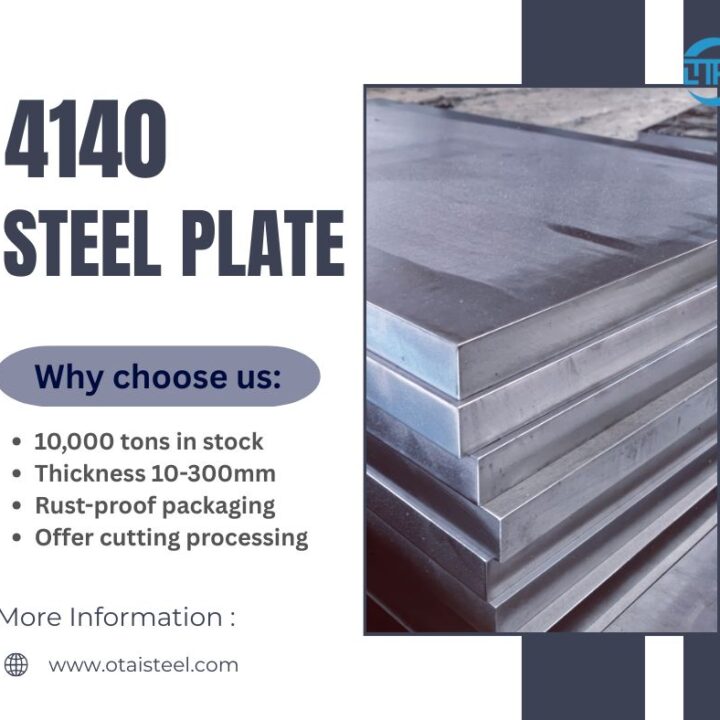
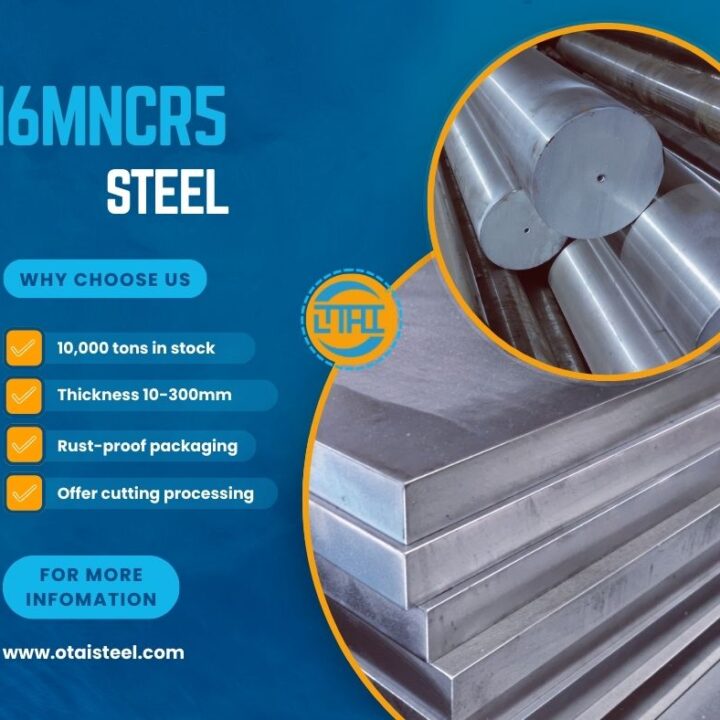
- Relevant stock ranges: 42CrMo4 / 4140 plate thickness range of 4–380 mm, with 4140 QT plate listed at 13–200 mm. Confirm the actual grade, dimensions, quantity, and condition before ordering.
- Established export experience: Exporting to more than 54 countries since 1999.
- Stock capability: More than 10,000 tons of steel stock across the company’s product range, subject to current grade and size availability.
- Cutting equipment: 20 saw-cutting machines support cutting and material preparation.
- Machining and grinding: CNC machining and grinding can be discussed for orders that need further dimensional processing.
- Customized dimensions: Buyers can request specific sizes and tolerances for review against the available material and processing route.
- Quality documentation: Material certificates and traceability can be discussed for the required order specification.
- Additional inspection: Ultrasonic testing and third-party inspection can be arranged where applicable and agreed in advance.
- Export packaging: Bundling, wooden crates, and anti-rust packaging options can be specified according to the shipment requirements.
- Coordinated service: Material supply, cutting, machining, and related processing needs can be reviewed together to support procurement planning.
When requesting a quotation, provide the grade, applicable standard, dimensions, quantity, delivery condition, required mechanical properties, and inspection documents. If you are considering substituting 42CrMo4 for 4140 or vice versa, include the drawing or relevant specification so the requirements can be reviewed before the order is confirmed.
Visit the official 42CrMo4 product page or 4140 product page to review the relevant product information, then confirm current availability and order-specific requirements with Otai.
❓ Frequently Asked Questions
1. Are 42CrMo4 and 4140 the same steel?
They are closely related chromium-molybdenum alloy steels and are often treated as comparable grades in commercial sourcing. However, their designations belong to different standards, and the applicable chemistry limits and other requirements may differ. Confirm the full specification and actual test results before treating them as interchangeable.
2. Which is stronger, 42CrMo4 or 4140?
Neither grade is automatically stronger in every condition. Strength depends on heat treatment, section size, specimen location, and the requirements used for testing. Compare both materials under the same delivery condition and review the specified mechanical properties and actual test certificates.
3. Can I replace 42CrMo4 with 4140 in an existing design?
Potentially, but substitution should follow a technical review. Compare the governing standards, chemical limits, mechanical requirements, delivery condition, dimensions, and inspection documents. Obtain approval from the responsible engineering or quality team before changing a controlled design or purchase specification.
4. What are the main differences between 42CrMo4 and 4140 chemical composition?
The commonly referenced composition ranges overlap, but they are not identical. Carbon, manganese, chromium, and molybdenum limits can differ between the relevant specifications. The exact requirements depend on the governing standard and product form, so compare the applicable limits with the actual heat analysis on the MTC.
5. Which grade is more cost-effective for industrial purchasing?
The answer depends on the required specification, stock availability, dimensions, delivery condition, processing, inspection, and shipping. Compare complete quotations based on the same technical requirements rather than choosing by grade name or unit price alone. A grade that already matches your approved drawing and supply chain may also reduce qualification work.