SCM440 Yield Strength for Industrial Buyers: How to Verify Actual Material Properties
SCM440 yield strength is a key consideration when selecting alloy steel for shafts, gears, and other load-bearing components. However, the actual strength depends on more than the grade designation. Heat treatment, section size, delivery condition, and testing requirements can all affect the mechanical properties supplied.
For industrial buyers, the main challenge is not simply finding a published yield-strength value. It is verifying that the material delivered meets the application’s requirements and that the test results support the purchase specification. This article explains how to interpret SCM440 yield strength data, review Material Test Certificates (MTCs), compare supplier quotations, and confirm mechanical-property requirements before purchasing.
📑 Table of Contents
- 🔎 SCM440 Yield Strength: The Reference Value and Its Limitations
- 📊 Yield Strength vs. Tensile Strength
- 🔥 How Heat Treatment Changes SCM440 Strength
- 📏 Why Section Size Matters
- 🧪 How to Verify Mechanical Properties on an MTC
- 📋 SCM440 Yield Strength Requirements for Procurement
- ⚖️ How SCM440 Compares with 4140 and 42CrMo4
- 💰 What Affects the Cost of SCM440 with Specified Strength?
- 🏭 Company Advantages: SCM440 Steel Supply from Otai
- ❓ Frequently Asked Questions
🔎 SCM440 Yield Strength: The Reference Value and Its Limitations
SCM440 yield strength is an important consideration when selecting chromium-molybdenum alloy steel for shafts, gears, machine components, and other parts exposed to mechanical loads. For industrial buyers, however, finding a single number online is only the first step. The more important question is whether that value applies to the material condition, dimensions, and acceptance requirements of the intended application.
What is the commonly quoted SCM440 yield strength?
A commonly cited reference value for quenched-and-tempered SCM440 is a minimum yield strength of approximately 835 MPa (121 ksi). This figure appears in traditional mechanical-property references associated with a specified heat-treatment condition and a test specimen approximately 25 mm in diameter.
It is essential to understand this qualification. The figure is not a universal guarantee for every SCM440 plate, bar, or finished component. The applicable product specification, delivery condition, section size, heat-treatment procedure, and agreed inspection requirements determine which mechanical properties can be guaranteed.
| Item | Reference information |
|---|---|
| Steel grade | SCM440, chromium-molybdenum alloy steel |
| Commonly cited yield strength | Approximately 835 MPa minimum under specified reference conditions |
| Commonly cited tensile strength | Approximately 980 MPa minimum under the same reference conditions |
| Typical reference condition | Quenched and tempered, with a specified test specimen |
| Final acceptance basis | Applicable specification, purchase requirements, and actual test results |
These figures are useful for preliminary evaluation, not a substitute for a material test certificate (MTC). The current JIS G 4053 material specification does not establish one universal quenched-and-tempered yield-strength guarantee for every supplied product and section size. Buyers should therefore identify the applicable property requirements rather than relying on the grade designation alone.
When does the reference value matter?
Use the reference value to compare candidate materials or begin a technical discussion with your supplier. Before approving the material for production, confirm whether the required yield strength applies to the delivered condition or to the component after additional heat treatment. This distinction helps prevent specification gaps and costly retesting.
📊 Yield Strength vs. Tensile Strength
Yield strength and tensile strength describe different stages of a material’s response to loading. Buyers should not treat them as interchangeable values when preparing a purchase specification or reviewing a mechanical test report.
What does yield strength measure?
Yield strength indicates the stress at which a material begins to undergo permanent plastic deformation under the specified test method. Below the yield point, a metal generally returns close to its original dimensions after the load is removed. Once the material exceeds its yield limit, permanent deformation can occur.
For components exposed to bending, torsion, axial loads, or repeated operating forces, yield strength helps engineers assess whether the part can withstand its intended service loads without unacceptable deformation.
What does tensile strength measure?
Tensile strength, also called ultimate tensile strength, is the maximum engineering stress reached during a tensile test. A material can continue to carry increasing load after yielding because it undergoes strain hardening. Eventually, the specimen reaches its maximum tensile stress and proceeds toward fracture.
For example, a quenched-and-tempered SCM440 reference dataset may list a yield strength of 835 MPa and a tensile strength of 980 MPa or higher. These values describe separate mechanical properties and must be assessed independently.
| Comparison | Yield strength | Tensile strength |
|---|---|---|
| Meaning | Resistance to the onset of permanent deformation | Maximum engineering stress in a tensile test |
| Common symbol | Re or Rp0.2, depending on the test and material behavior | Rm |
| Engineering use | Evaluating resistance to permanent deformation | Evaluating maximum tensile stress and material strength |
| Procurement check | Verify the required minimum and test result | Verify the required range or minimum and test result |
Why the distinction matters to buyers
A supplier may provide a tensile-strength result that meets a requirement while the yield-strength requirement remains unverified. Likewise, a high hardness reading does not automatically establish compliance with a specified yield strength. Each required property needs an appropriate test result or an expressly agreed verification method.
When preparing a purchase order, specify the minimum yield strength and tensile-strength requirements separately. If the design relies on proof strength at a defined permanent strain, identify the applicable test method and the required parameter, such as Rp0.2.
🔥 How Heat Treatment Changes SCM440 Strength
SCM440 contains chromium and molybdenum, which support hardenability and help the steel develop a useful balance of strength and toughness after suitable heat treatment. Its actual mechanical properties depend strongly on the processing route and the final tempering condition.
Annealed or softened material
Annealing or other softening treatments improve machinability and prepare the steel for subsequent manufacturing operations. Material supplied in this condition generally has lower strength and hardness than properly quenched-and-tempered material.
If your manufacturing process includes turning, milling, drilling, or other substantial machining, a softer delivery condition may be appropriate. However, do not assume that an annealed SCM440 plate meets a mechanical-property requirement intended for quenched-and-tempered material.
Quenching and tempering
Quenching heats the steel to a suitable austenitizing temperature and cools it under controlled conditions to develop a hardened microstructure. Tempering then adjusts the microstructure to achieve the required balance of strength, hardness, ductility, and toughness.
Higher tempering temperatures generally reduce hardness and strength while improving toughness and ductility, although the actual response depends on the steel, section dimensions, and processing details. A lower tempering temperature may retain higher strength, but it should not be selected on strength alone if impact resistance or service reliability is important.
What buyers should specify
When requesting SCM440 with guaranteed mechanical properties, identify the required delivery condition and whether any further heat treatment will take place after machining. If the material must arrive quenched and tempered, state that requirement explicitly rather than simply writing “SCM440.”
Where performance is critical, ask the supplier to confirm the heat-treatment route, hardness range, applicable mechanical-property requirements, and whether the certificate records results from the supplied condition. If the finished component will receive additional heat treatment, confirm which condition governs final acceptance.
Remember that a grade name identifies the alloy family; it does not independently guarantee one yield-strength value across every production route. The specification and documented test results establish the basis for acceptance.
📏 Why Section Size Matters
Section size is one of the most important factors when evaluating the yield strength of quenched-and-tempered alloy steel. A relatively small specimen may cool more quickly during quenching than the core of a thick plate or large bar. This difference can produce variations in microstructure, hardness, and mechanical properties across the section.
Thin and thick sections do not always behave alike
Smaller sections often respond more uniformly to heat treatment because heat can leave the material more quickly. In thicker sections, the surface and core may cool at different rates. As a result, the core may not develop the same properties as the surface, even when the same nominal grade and heat-treatment recipe are used.
For this reason, a yield-strength value measured on a small reference specimen should not automatically be applied to a thick industrial plate or large component. The effect becomes particularly important when the component has a large cross-section and the design depends on properties throughout the material.
Plate thickness and test location
For plate procurement, confirm whether the requested mechanical properties apply to the actual plate thickness. Ask where the test specimen will be taken, how it will be oriented, and whether the test represents the delivered material or a separately heat-treated sample.
For bars, forgings, and machined components, the relevant section or ruling diameter may influence the applicable mechanical-property requirements. A test taken close to the surface may not represent the material at the center. If the component’s core properties are critical, the test location should be agreed before production.
Questions to resolve before ordering
- Does the specified yield strength apply to the actual ordered thickness or diameter?
- Will the mechanical test specimen represent the delivered product and its heat-treatment condition?
- Is the test location defined, particularly for large sections?
- Are hardness, tensile strength, elongation, and impact properties also required?
- Does the applicable product specification cover the requested dimensions and delivery condition?
These checks help prevent a common procurement problem: receiving material with a valid grade designation but insufficient evidence that the actual product meets the engineering requirement.
🧪 How to Verify Mechanical Properties on an MTC
A Material Test Certificate (MTC) is one of the most useful documents for verifying the properties of supplied SCM440 steel. However, receiving a certificate is not enough by itself. Buyers need to check that the document corresponds to the actual shipment and records the properties required by the purchase order.
Check the grade and traceability first
Begin with the grade designation, applicable standard, heat number, product dimensions, and delivery condition. Confirm that these details match the quotation, purchase order, packing identification, and supplied material.
Traceability matters because a certificate containing satisfactory values does not prove that an unidentified piece of steel belongs to the certified heat. If the order requires individual or bundle-level identification, verify that the markings and documentation maintain that connection.
Review the actual mechanical test results
Locate the yield-strength result and check its units. One megapascal is equivalent to one newton per square millimeter, while 1 ksi is approximately 6.895 MPa. Make sure the reported value is compared with the requirement using consistent units.
Next, review the tensile strength, elongation, and hardness results if they form part of the specification. Check whether the report provides a measured value, a specified minimum, a permitted range, or a statement of compliance. These are different types of information and should not be treated as equivalent.
Confirm the test basis
The certificate should be assessed alongside the applicable standard and purchase requirements. Where necessary, clarify the test method, specimen dimensions, sampling location, test direction, and heat-treatment condition. If the report gives only hardness but the order specifies minimum yield strength, request the missing evidence or agree on an accepted verification route before shipment.
Hardness-to-strength conversion tables can provide approximate estimates, but the relationship varies with material condition and test method. A converted estimate should not replace a required tensile test unless the governing specification and buyer explicitly permit that approach.
When third-party inspection is appropriate
For critical applications, large orders, or projects with strict customer requirements, buyers may arrange third-party inspection. The inspection scope can include document review, material identification, dimensional checks, witness testing, or additional non-destructive testing when specified.
Agree on the inspection standard, acceptance criteria, and timing before production or dispatch. This approach gives the supplier and buyer a common basis for evaluating compliance and reduces the risk of disputes after delivery.
📋 SCM440 Yield Strength Requirements for Procurement
Effective procurement starts with a clear technical requirement. When a buyer specifies only “SCM440, high strength,” suppliers may interpret the request differently. One quotation may cover annealed material, while another may assume quenched-and-tempered supply. Their prices and test commitments may therefore be difficult to compare.
Build a measurable specification
Define the required yield strength, tensile strength, hardness, and other relevant properties in the purchase order. Include the product form, dimensions, delivery condition, applicable standard, and certificate requirements. If a project has a minimum impact energy or a special testing requirement, state it separately.
The acceptance criteria should be realistic for the requested section size and production route. If you need a particular yield strength across a thick section, ask the supplier to confirm feasibility before placing the order. This is more reliable than assuming that a standard reference value automatically applies.
Example: evaluating two supplier quotations
Suppose two suppliers quote SCM440 plate for a machined component. Supplier A offers material in a soft delivery condition with no guaranteed yield-strength value. Supplier B offers quenched-and-tempered material and agrees to provide mechanical test results for the specified thickness.
Although both quotations name SCM440, they do not describe the same purchasing requirement. The buyer should compare the supply condition, test evidence, machining implications, and final application requirements before deciding which quotation offers better value.
The following checklist helps standardize the comparison:
- Grade and standard: Specify SCM440 and the applicable material specification.
- Dimensions: State thickness, width, length, diameter where relevant, and tolerances.
- Delivery condition: Identify annealed, quenched and tempered, or another agreed condition.
- Mechanical properties: State the required yield strength, tensile strength, hardness, and any additional values.
- Testing: Define the applicable test method, sampling location, and direction when required.
- Documentation: Confirm MTC type, heat-number traceability, and any inspection requirements.
- Commercial terms: Compare processing, packing, lead time, transport, and total delivered cost.
For international orders, also confirm whether the buyer requires third-party inspection, specific packaging, export documentation, or a defined delivery schedule. These details can influence the final quotation and should be agreed before production begins.
⚖️ How SCM440 Compares with 4140 and 42CrMo4
SCM440 is commonly compared with AISI 4140 and EN 42CrMo4 because these grades belong to a similar chromium-molybdenum alloy-steel family. Their chemical compositions and intended applications overlap, which makes them useful candidates for technical comparison.
Similar alloy families do not guarantee identical properties
Although these grades are often treated as broadly comparable, their governing standards, chemical limits, product requirements, and mechanical-property guarantees may differ. A grade equivalence table does not establish that every product supplied under one designation will satisfy every requirement written for another.
For example, a buyer replacing SCM440 with 4140 should compare the actual standard, chemical composition, heat-treatment condition, dimensions, and required test results. If the project specifies a minimum yield strength, the replacement material must meet that requirement on the agreed testing basis rather than simply having a similar alloy designation.
Use a specification-based comparison
Before accepting an alternative grade, review the material standard and the actual certificate. Check whether the supplier can document the required mechanical properties for the ordered size and condition. For safety-critical or highly loaded components, engineering approval may also be necessary before changing the grade.
When the material will be machined and heat-treated by the buyer, compare not only the supplied condition but also the expected final properties and the ability of the manufacturing process to achieve them. If the component operates under cyclic loading, impact, or elevated temperatures, other mechanical properties may be as important as yield strength.
For more information about Otai’s alloy-steel supply, see the Otai EN19 / SCM440 / 4140 / 42CrMo4 alloy steel product page. Confirm the exact grade, dimensions, supply condition, and technical requirements when requesting a quotation.
💰 What Affects the Cost of SCM440 with Specified Strength?
SCM440 purchase price depends on more than the base steel grade. When a buyer requests a guaranteed yield strength or a particular quenched-and-tempered condition, the quotation may also reflect heat treatment, testing, dimensional requirements, machining, and delivery terms.
Material condition and processing
Annealed material and quenched-and-tempered material may have different processing costs and lead times. If the buyer requires a narrow hardness range or specified mechanical properties, the supplier may need additional process control and testing. Custom cutting and tight dimensional tolerances can also affect the final price.
Testing and documentation requirements
A standard material certificate may be sufficient for some applications, while other projects require additional mechanical tests, ultrasonic testing, or third-party inspection. These services should be defined in the quotation so the buyer can compare suppliers on the same basis.
Dimensions, quantity, and delivery
Thickness, cutting allowances, order quantity, packaging, and destination all influence the delivered cost. A low material price may not be the most economical option if it leads to excess machining, additional heat treatment, avoidable inspection costs, or delays caused by incomplete documentation.
To obtain a comparable quotation, provide the required dimensions, quantity, delivery condition, target mechanical properties, applicable standard, certificate requirements, and delivery destination. If the exact yield-strength requirement is not yet fixed, explain the application and ask the supplier to clarify feasible options before finalizing the order.
The goal is not simply to purchase steel with the highest available strength. It is to obtain material that meets the design requirement, arrives in the correct condition, and includes sufficient evidence for acceptance.
🏭 Company Advantages: SCM440 Steel Supply from Otai
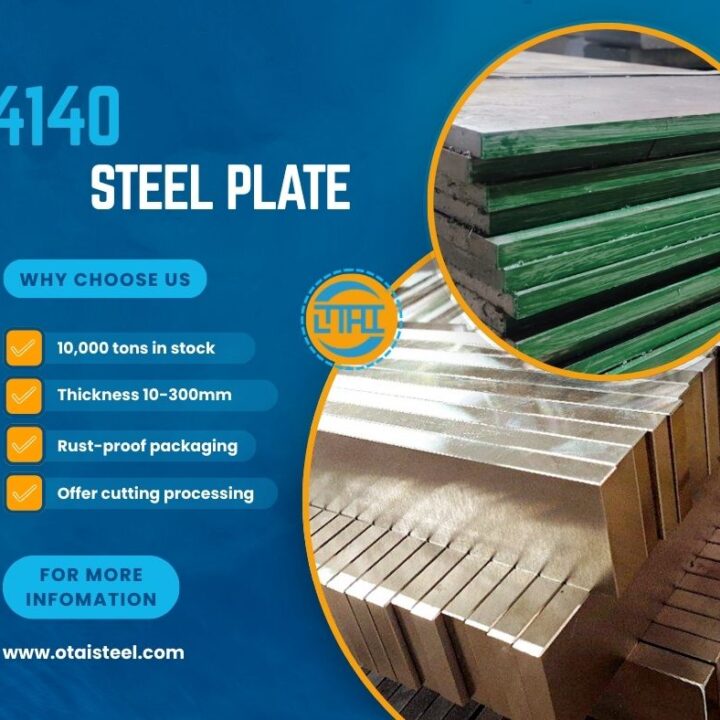
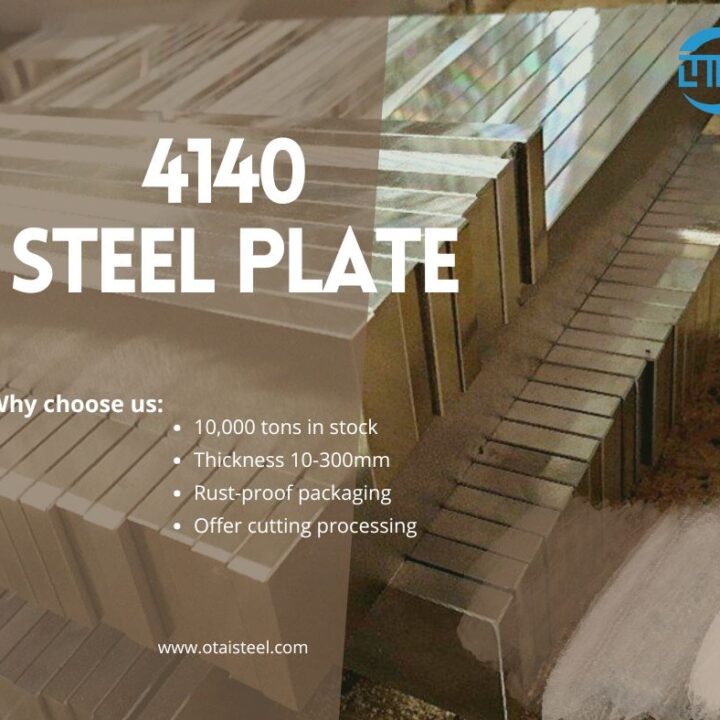
- 📏 SCM440 stock sizes: SCM440 / 4140 / 42CrMo4 alloy steel plate thickness range: 4–380 mm; quenched-and-tempered 4140 plate range: 13–200 mm; round bar diameter range: 14–500 mm for the relevant alloy-steel supply range. Actual SCM440 grade availability, quantity, dimensions, and delivery condition must be confirmed before ordering.
- 10,000+ tons of stock: A broad steel inventory supports sourcing across multiple alloy-steel and tool-steel grades.
- Cutting capacity: 20 saw cutting machines support cutting services for customer-specified dimensions.
- Custom dimensions and tolerances: Cutting and machining requirements can be reviewed against the application and drawing.
- Machining and grinding: CNC machining and grinding services support projects requiring further dimensional processing.
- Quality documentation: Material certificates and traceability documentation can be discussed according to the order requirements.
- Inspection support: Ultrasonic testing and third-party inspection can be arranged when applicable and agreed for the order.
- Export experience: Supplying international customers since 1999, with exports to more than 54 countries.
- Export packaging: Bundled, strapped, wooden-crate, and anti-rust packaging options can be selected according to the product and shipment requirements.
- One-stop service: Material sourcing, cutting, processing, inspection coordination, and export arrangements can be discussed within one supply process.
When contacting Otai about SCM440 yield strength, provide the required plate thickness or bar diameter, target mechanical properties, delivery condition, and applicable standard. If you need a particular yield strength for a critical application, state whether the requirement applies to the supplied material or the finished component after heat treatment. This information helps the team assess availability and clarify the appropriate testing and certification requirements.
❓ Frequently Asked Questions
1. What is the yield strength of SCM440?
A commonly quoted reference value for quenched-and-tempered SCM440 is approximately 835 MPa (121 ksi) minimum under specified reference conditions. It is not a universal guarantee for every product thickness or delivery condition. Confirm the applicable specification and actual test results for the material you intend to purchase.
2. Is SCM440 yield strength the same as tensile strength?
No. Yield strength indicates the onset of permanent deformation, while tensile strength is the maximum engineering stress reached during a tensile test. They are separate properties and should be specified and verified independently when both are required.
3. Does heat treatment affect SCM440 yield strength?
Yes. Quenching and tempering can substantially change strength, hardness, ductility, and toughness. The final results depend on the heat-treatment parameters, section size, and processing conditions. Always identify the required delivery condition and verify the relevant mechanical test results.
4. Can I use the same yield-strength value for every SCM440 plate thickness?
No. Section size and heat-treatment response can affect the properties achieved throughout the material. A reference value from a smaller specimen should not automatically be applied to a thicker plate or large component. Confirm the requirement and test basis for the actual ordered dimensions.
5. How can I confirm that purchased SCM440 meets the required yield strength?
Specify the minimum yield strength and relevant test conditions in the purchase order. Then review the MTC for grade identification, traceability, actual test results, delivery condition, and consistency with the agreed specification. Arrange additional testing or third-party inspection when the application or contract requires it.