4130 Steel Equivalent: How to Select a Substitute Without Compromising Performance
AISI 4130 is a chromium-molybdenum alloy steel valued for its combination of strength, toughness, and relatively good weldability. When sourcing this grade internationally, buyers may encounter alternatives such as 25CrMo4, SCM430, and 30CrMo. However, a similar grade designation does not automatically guarantee identical chemical composition, mechanical properties, or acceptance under the original specification.
For industrial procurement, the right 4130 steel equivalent depends on more than a cross-reference table. Buyers should evaluate the governing standard, product form, delivery condition, required mechanical properties, component dimensions, and inspection requirements before approving a substitution. This approach helps prevent material rejection, unnecessary processing costs, and performance problems after delivery.
🔎 Quick answer: Which steel is equivalent to AISI 4130?
Commonly cited alternatives include EN 25CrMo4 (1.7218), JIS SCM430, and GB/T 30CrMo. These grades share important chromium-molybdenum alloy characteristics with 4130, but their chemistry limits and product requirements can differ. Treat them as candidate substitutes, not automatic one-to-one replacements. Confirm the applicable standard and actual mill test certificate (MTC) before purchasing.
📑 Table of Contents
- 🔍 What Makes a Steel Grade Equivalent to 4130?
- 📊 4130 Steel Equivalent Grades Comparison
- 🧪 Chemical Composition: What Buyers Should Compare
- ⚙️ Mechanical Properties and Heat Treatment
- 🏭 How to Choose the Right 4130 Substitute
- 💰 Procurement Costs and Material Risks
- 📋 MTC and Quality Verification Checklist
- 📦 Otai 4130 Steel Supply and Processing
- 🏢 Company Advantages
- ❓ Frequently Asked Questions
🔍 What Makes a Steel Grade Equivalent to 4130?
Similar chemistry does not always mean identical performance
AISI 4130 belongs to the chromium-molybdenum family of low-alloy steels. Its relatively moderate carbon content supports a useful balance between strength, toughness, and weldability when the material is properly selected and processed. Chromium contributes to hardenability, while molybdenum helps improve hardenability and resistance to tempering-related softening.
Other standards specify steels with similar alloying systems. Nevertheless, each designation belongs to a particular standard framework. A European grade may specify different carbon or manganese limits from a US grade, while a Japanese or Chinese grade may impose its own chemical and product requirements.
For this reason, an equivalent-grade search should begin with the intended application rather than the grade name alone. A candidate that works for a general structural component may not meet the requirements of a pressure-containing component, safety-critical assembly, or aerospace application.
Three levels of equivalence
| Comparison level | What it means | Procurement decision |
|---|---|---|
| Chemical similarity | The alloying elements and their limits are broadly similar. | Shortlist a candidate for further review. |
| Functional suitability | The grade may meet the required strength, toughness, and processing needs. | Compare actual properties and service conditions. |
| Specification acceptance | The proposed material satisfies the drawing, standard, and customer approval requirements. | Obtain documented approval before substitution. |
Practical rule: Use equivalent-grade tables to identify candidates, then verify whether the proposed material meets the complete purchase specification. For regulated or safety-critical components, the responsible engineer or customer must approve the substitution.
📊 4130 Steel Equivalent Grades Comparison
Common international alternatives
The following table lists grades frequently considered when sourcing an alternative to AISI 4130. Their relationship to 4130 depends on the relevant edition of the standard, product form, and required properties. The table is a screening reference rather than a declaration of universal equivalence.
| Standard system | Candidate grade | Procurement consideration |
|---|---|---|
| US SAE/AISI | 4130 / UNS G41300 | Reference designation; confirm the actual product specification. |
| European EN | 25CrMo4 / 1.7218 | A commonly considered alternative; compare chemistry and product requirements. |
| Japanese JIS | SCM430 | Review the applicable JIS edition and specified delivery condition. |
| Chinese GB/T | 30CrMo | Compare the exact GB/T requirements with the original specification. |
| Other candidate | 30CrMo4 | Check the precise standard and edition; do not assume all designations remain interchangeable. |
How should buyers interpret the comparison?
25CrMo4: This European grade is often considered when a project specifies a chromium-molybdenum steel comparable to 4130. Its carbon range may be lower, depending on the applicable specification. That difference can affect strength potential, hardening response, and welding procedures.
SCM430: This Japanese grade is another candidate for comparison. Buyers should check the relevant JIS requirements rather than relying on a cross-reference that lists only the grade names. Chemical limits, cleanliness requirements, and delivery conditions still matter.
30CrMo: This Chinese grade shares a similar alloying concept with 4130. However, its applicable GB/T specification and the material’s actual certificate must determine whether it fits the intended use.
30CrMo4: Some reference sources associate this designation with 4130. Because designations and standards can change, verify the exact governing specification before including it in a purchase order.
For all four alternatives, the correct choice depends on the component’s requirements. If a drawing explicitly calls for AISI 4130 under a particular specification, do not change the designation without the necessary technical approval.
🧪 Chemical Composition: What Buyers Should Compare
Use the standard’s limits, not an isolated chemistry table
Chemical composition is a useful first screening tool because it reveals important differences between candidate grades. However, buyers should distinguish between three types of information:
- Standard composition limits: The permitted ranges or maximum values in the applicable material standard.
- Typical analysis: An illustrative composition reported by a producer or technical reference. It does not define every heat of the grade.
- Actual MTC analysis: The measured chemistry for the supplied heat or batch, reported on the material test certificate.
For reference, the commonly published composition limits for 4130 under relevant SAE/ASTM specifications are summarized below. The applicable edition and product specification must always be checked before using these values for acceptance.
| Element | Commonly published 4130 range or limit (wt.%) | Why it matters |
|---|---|---|
| Carbon (C) | 0.28–0.33 | Influences strength, hardness, hardenability, and weldability. |
| Manganese (Mn) | 0.40–0.60 | Supports hardenability and strength. |
| Silicon (Si) | 0.15–0.35 | Acts as a deoxidizer and contributes to strength. |
| Chromium (Cr) | 0.80–1.10 | Improves hardenability and wear-related performance through heat treatment. |
| Molybdenum (Mo) | 0.15–0.25 | Supports hardenability and tempering resistance. |
| Phosphorus (P) | Commonly ≤0.035 | A controlled residual element; lower limits may apply to specific requirements. |
| Sulfur (S) | Commonly ≤0.040 | Affects inclusion content and certain mechanical or processing characteristics. |
These figures are a reference summary, not a substitute for the specified standard. Other product specifications, aerospace requirements, or customer purchasing conditions may impose different or tighter limits.
What chemistry differences mean for substitution
When comparing 4130 with 25CrMo4, SCM430, or 30CrMo, check carbon, chromium, molybdenum, manganese, and residual-element limits first. Next, review the mechanical properties required for the component. Even when most alloying elements overlap, a difference in carbon content or hardenability may affect the final heat-treated result.
Do not reject a candidate solely because one value differs from a typical analysis. Equally, do not approve it merely because its chemistry looks similar. Compare the actual MTC against the correct standard and confirm that the proposed material can achieve the required properties in the specified section size.
⚙️ Mechanical Properties and Heat Treatment
Why delivery condition changes the comparison
A steel grade does not have one universal set of mechanical properties. Annealed, normalized, quenched-and-tempered, and other delivery conditions can produce different hardness, tensile strength, yield strength, and elongation. Section thickness and the heat-treatment process also influence the results.
Therefore, comparing a normalized 4130 sample with a quenched-and-tempered substitute does not provide a valid basis for approving an equivalent grade. First align the delivery condition and test requirements, then compare the reported results.
| Property or condition | Question to confirm | Why it matters |
|---|---|---|
| Hardness | What hardness range is required at delivery? | Affects machining, wear performance, and downstream processing. |
| Tensile strength | What minimum or permitted range applies? | Helps verify load-bearing requirements. |
| Yield strength | What specified test value is required? | Indicates resistance to permanent deformation. |
| Elongation and toughness | Are minimum ductility or impact requirements specified? | Supports assessment of deformation and fracture risks. |
| Section size | Will the required properties be achieved through the full section? | Cooling rate and hardenability affect properties through thickness. |
Heat treatment must match the intended performance
4130 can undergo normalizing, annealing, hardening, and tempering, depending on the application and required condition. The correct temperature, holding time, quenching method, and tempering schedule depend on the material specification, section size, equipment, and target properties. A substitute may respond differently even when its alloy composition appears close.
For this reason, buyers should specify the delivery condition instead of requesting only “4130 equivalent.” If the component requires a defined hardness or tensile range, include that requirement in the inquiry and ask the supplier to confirm whether the offered grade and condition can meet it.
When the component is weldable or will receive further heat treatment after delivery, involve the responsible engineering team before approving the alternative. Welding procedures, preheat requirements, cooling conditions, and post-weld heat treatment must follow the applicable design and fabrication requirements.
🏭 How to Choose the Right 4130 Substitute
Use the application to narrow the options
The most suitable candidate depends on what the component must do. A material used in a welded structural assembly may require a different balance of properties from one used in a highly stressed, heat-treated mechanical component. The original drawing, governing specification, and service conditions should determine the selection criteria.
| Procurement scenario | What to prioritize | Recommended next step |
|---|---|---|
| Drawing specifies 4130 | Compliance with the stated grade and standard | Source the specified material or obtain formal substitution approval. |
| European sourcing requirement | Applicable EN designation and product standard | Evaluate 25CrMo4 against the required chemistry and properties. |
| Japanese standard requirement | Relevant JIS requirements and delivery condition | Review SCM430 documentation and confirm acceptance. |
| Chinese sourcing requirement | Applicable GB/T standard and traceability | Compare 30CrMo with the original material specification. |
| Cost-driven substitution | Total delivered cost and technical acceptance | Compare material, processing, inspection, and approval costs together. |
Procurement scenario: replacing 4130 plate
Suppose a buyer needs a 50 mm thick alloy steel plate for a machined component and asks whether 25CrMo4 can replace 4130. The thickness alone cannot establish suitability. The buyer must also confirm the required delivery condition, mechanical properties, machining allowance, finished dimensions, and inspection criteria.
The supplier should identify the exact grade and standard being offered, provide the applicable MTC, and explain any differences from the original specification. Engineering should then assess whether the candidate can satisfy the design requirements. If the drawing or customer specification restricts the material to 4130, written approval must precede substitution.
This process prevents a common purchasing mistake: approving a material based on a grade-equivalence chart before checking whether the actual product meets the application’s requirements.
Questions to send to the supplier
- Which exact grade, standard, and standard edition will you supply?
- Can you provide the MTC with heat number and actual chemical analysis?
- What is the delivery condition and the guaranteed hardness or mechanical-property range?
- Can you supply the required thickness, width, length, and dimensional tolerances?
- Are additional testing, third-party inspection, or specific packaging requirements available?
- What differences from the original specification require customer approval?
💰 Procurement Costs and Material Risks
Compare the total cost, not just the price per kilogram
A substitute may have a lower quoted unit price but a higher total cost if it requires additional testing, a revised heat-treatment procedure, more machining, or lengthy engineering approval. Buyers should evaluate the complete procurement package before choosing between 4130 and a candidate equivalent.
- Material price: Confirm the grade, specification, delivery condition, dimensions, and quantity included in the quotation.
- Cutting and machining: Check whether the quotation covers the required cut sizes, tolerances, and machining allowance.
- Heat treatment: Confirm whether the material arrives in the required condition or needs further processing.
- Inspection: Include the cost and lead time for MTC review, additional testing, and third-party inspection when required.
- Delivery: Evaluate packaging, export documentation, transport, and the impact of approval delays on the project schedule.
Common procurement mistakes
Choosing by designation alone: Two grade names may appear in the same equivalence table without satisfying the same product requirements. Verify the actual specification.
Ignoring section thickness: Mechanical properties measured on one specimen or section size may not represent the properties achievable through a thicker component. Confirm the standard’s test rules and the supplier’s guarantees.
Comparing different delivery conditions: A price for annealed material is not directly comparable with a quotation for quenched-and-tempered material when the project requires a particular hardness or strength range.
Leaving inspection until after ordering: If the customer requires specific certificates or testing, state those requirements in the inquiry and purchase order. Retrofitting them later can cause delays or rejection.
Approving a substitution without documentation: Record the accepted grade, standard, condition, and any deviations. Verbal confirmation alone may not satisfy the customer’s quality system.
📋 MTC and Quality Verification Checklist
Check the certificate against the purchase order
The mill test certificate provides traceability and reports material test results. Before approving a proposed 4130 equivalent, the buyer or quality team should verify the certificate against the purchase order, drawing, and applicable specification.
- Grade identification: Confirm the exact designation and governing material standard.
- Heat traceability: Match the heat number on the certificate to the supplied material and its identification marks.
- Chemical analysis: Check reported values against the applicable standard and any additional customer limits.
- Mechanical properties: Confirm the reported values meet the specified requirements and apply to the relevant delivery condition.
- Dimensions and tolerances: Verify thickness, width, length, and any special dimensional requirements.
- Inspection requirements: Confirm whether the order requires ultrasonic testing, additional mechanical testing, or third-party inspection.
- Documentation: Check that certificate type, language, traceability, and other documentation meet the purchase specification.
What an MTC cannot prove by itself
A certificate is essential, but it does not automatically establish that a substitute is acceptable for every application. The buyer must still check whether the reported tests, sampling rules, product form, and delivery condition match the governing specification. A certificate for a chemically similar grade cannot override a drawing that requires a different material.
For critical components, request technical review before production or final machining. Where the customer specifies third-party inspection or additional testing, confirm the scope and acceptance criteria before placing the order.
📦 Otai 4130 Steel Supply and Processing
Match the material specification to the required plate dimensions
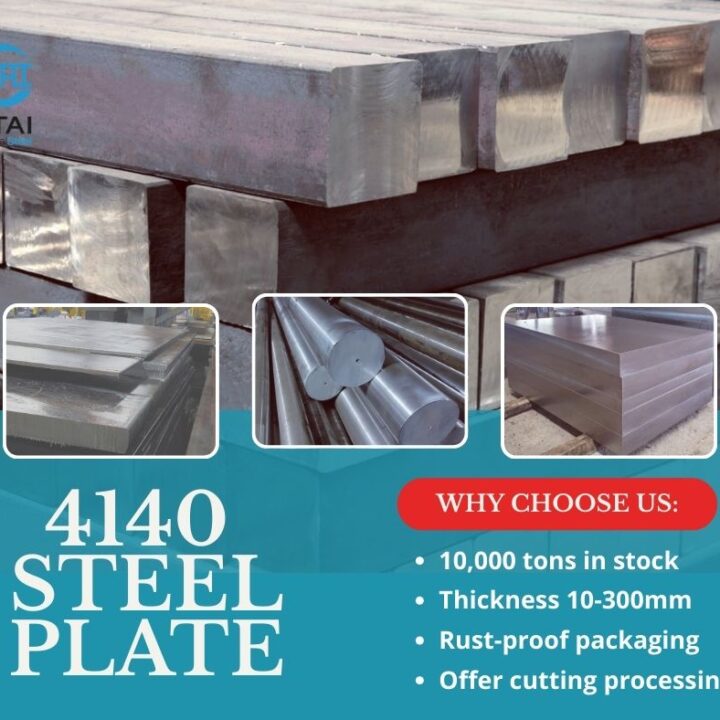
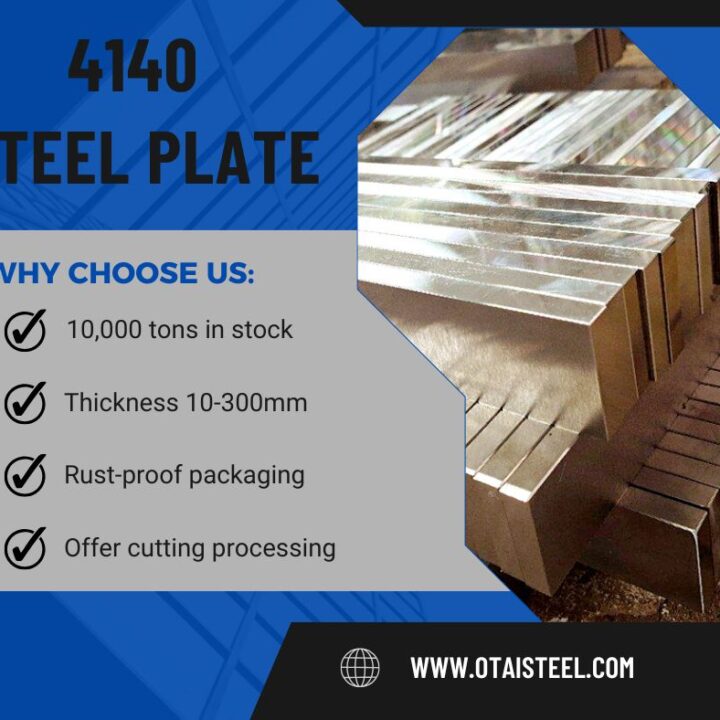
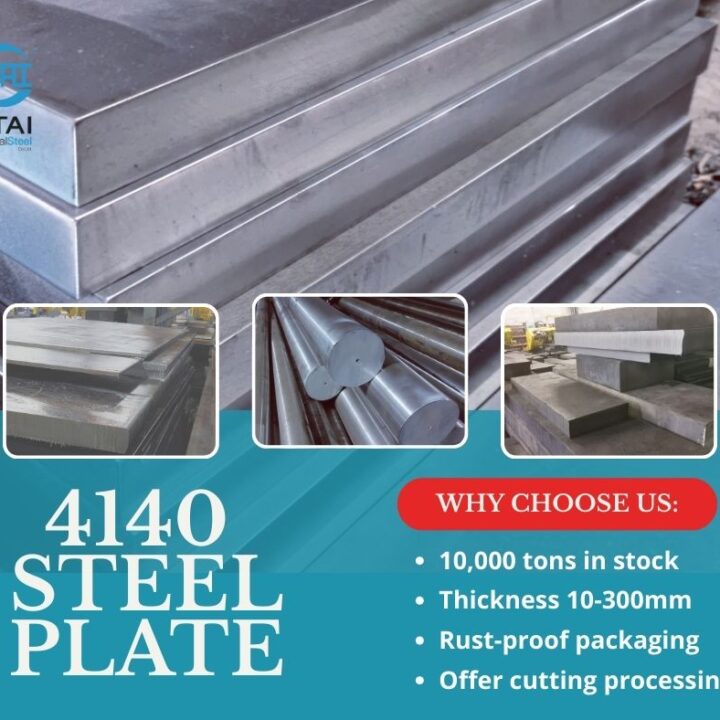
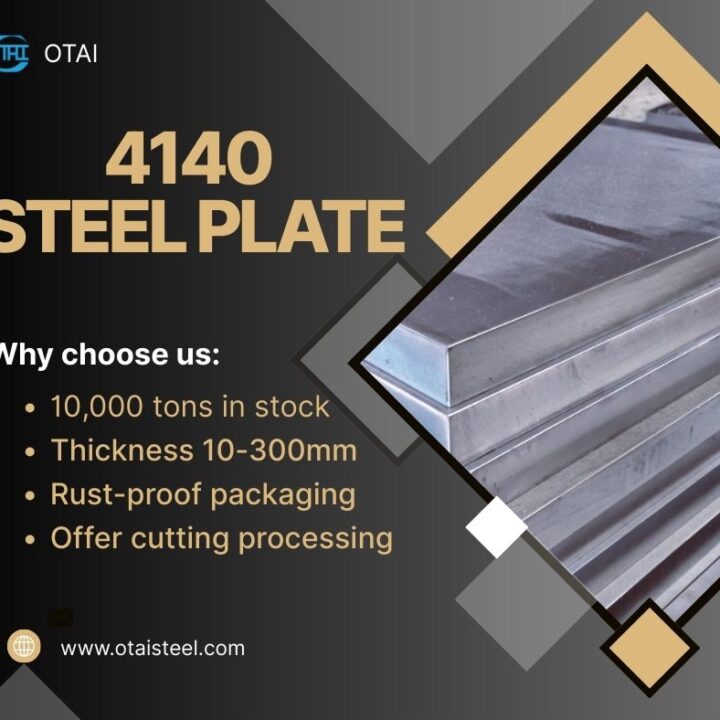
For buyers sourcing AISI 4130 plate, Otai Special Steel provides alloy steel supply and processing support for international industrial customers. The available 4130 steel plate thickness range is 10–70 mm, subject to current stock, grade verification, delivery condition, and quantity confirmation.
When requesting a quotation, specify the thickness, width, length, quantity, required condition, and any special tolerance or inspection requirements. If the project permits an equivalent grade, identify the original specification and request technical confirmation before accepting an alternative.
Otai can support cutting and customized sizing requirements, helping buyers coordinate material supply with downstream machining needs. The final quotation should confirm the actual dimensions available, processing scope, tolerances, packaging, and delivery schedule.
View the Otai 4130 steel product page for product information and inquiry details.
Information to include in a 4130 steel inquiry
- Required grade and standard, including whether an alternative is permitted.
- Plate thickness, width, length, and quantity.
- Delivery condition and specified mechanical properties or hardness.
- Required certificate, testing, inspection, and traceability documents.
- Cutting dimensions, tolerance requirements, and packaging instructions.
- Destination country and requested delivery schedule.
Providing these details at the inquiry stage allows the supplier to evaluate stock suitability, processing needs, documentation, and delivery more accurately.
🏢 Company Advantages
- 4130 Steel Plate Stock: 📏 4130 steel plate thickness range: 10–70 mm. Actual stock availability, quantity, and delivery condition are subject to confirmation.
- Established Experience: Supplying special steel to international customers since 1999.
- Large Inventory: More than 10,000 tons of stock across the company’s steel product range.
- Cutting Capacity: 20 saw-cutting machines support customized plate cutting and sizing.
- Processing Services: CNC machining, grinding, and customized dimensional tolerances according to project requirements.
- Quality Assurance: Material test certificates (MTCs), quality testing, and traceability support according to agreed specifications.
- Inspection Support: Ultrasonic testing and third-party inspection can be arranged where applicable and agreed for the order.
- International Supply: Export experience serving customers in more than 54 countries.
- Export Packaging: Anti-rust protection, strapping, and wooden-crate packaging options for international shipments.
- One-Stop Service: Material supply, cutting, machining, inspection coordination, and export packing according to the agreed order requirements.
❓ Frequently Asked Questions
1. What is the closest equivalent to AISI 4130 steel?
Commonly considered alternatives include 25CrMo4 (1.7218), SCM430, and 30CrMo. The closest candidate depends on the applicable standard, chemical limits, delivery condition, and required mechanical properties. None should be treated as an automatic substitute without verification.
2. Is 25CrMo4 the same as 4130 steel?
No. The two grades share a chromium-molybdenum alloy concept and are often compared for potential substitution, but their specifications can differ. Check the applicable chemistry limits, product requirements, and actual MTC before approving 25CrMo4 in place of 4130.
3. Can 30CrMo replace 4130?
30CrMo may be a candidate because of its similar alloying system. However, buyers must compare the relevant GB/T specification with the original 4130 requirements, including mechanical properties, delivery condition, dimensions, and acceptance criteria. Obtain engineering or customer approval when required.
4. Is 4140 a suitable replacement for 4130?
Not automatically. 4140 generally has a higher carbon content and can offer greater strength and hardenability under suitable heat-treatment conditions. Those differences may affect weldability, processing, and final performance. Select 4140 only after checking the design requirements and obtaining approval for any substitution.
5. What should buyers check before purchasing 4130 equivalent steel?
Confirm the exact grade and standard, chemical composition, delivery condition, mechanical-property requirements, product dimensions, tolerances, MTC, and inspection requirements. Also compare processing, packaging, and delivery costs. If the drawing specifies 4130, obtain formal approval before using another grade.