41Cr4 Standard: How to Check Compliance with the Applicable Standard
📑 Table of Contents
- 📋 What Standard Applies to 41Cr4 Steel?
- 🔎 41Cr4 Grade Designation and Material Number
- 🧪 Chemical Composition Requirements
- ⚙️ Mechanical Properties and Delivery Conditions
- 📄 How to Verify a 41Cr4 Material Test Certificate
- 📏 Product Form, Dimensions, and Inspection Requirements
- ⚖️ 41Cr4 Equivalents and Standard Substitution Risks
- 🛒 Purchasing 41Cr4 Steel That Meets Your Specification
- 🏢 Why Source 41Cr4 from Otai Special Steel?
- ❓ Frequently Asked Questions
The 41Cr4 standard determines how buyers should evaluate the material’s chemical composition, mechanical properties, delivery condition, and quality documentation. Although 41Cr4 is commonly associated with European material number 1.7035, confirming the grade name alone does not prove that a shipment complies with a particular purchase specification.
For industrial procurement, the critical question is whether the supplied steel meets the standard, product-form requirements, and acceptance criteria stated in the order. This requires checking the applicable standard edition, comparing the actual material test certificate (MTC) with the specified limits, and confirming that mechanical-property values apply to the supplied dimensions and condition. The following sections explain how to carry out these checks before approving a 41Cr4 steel shipment.
📋 What Standard Applies to 41Cr4 Steel?
41Cr4 is a chromium alloy steel used for quenching and tempering. It is commonly specified for engineering components that require a suitable combination of strength, toughness, and hardenability. The applicable standard depends on the product form, manufacturing route, and technical requirements of the purchase.
Relevant European standards
Two important references for 41Cr4 are EN 10083-3 and EN ISO 683-2. EN 10083-3 is an earlier European reference for alloy steels intended for quenching and tempering. EN ISO 683-2:2018 is a later reference covering alloy steels for quenching and tempering, including relevant product requirements for this material category.
However, buyers should not assume that every 41Cr4 product automatically falls under one identical specification. Bright steel products, forged products, and other product forms may fall under different standards. For example, the applicable standard for a bright bar may differ from the one specified for a hot-rolled product.
| Reference | Purpose | Buyer action |
|---|---|---|
| EN 10083-3 | Earlier reference for alloy steels for quenching and tempering. | Check whether the drawing or contract specifically requires this edition. |
| EN ISO 683-2:2018 | Reference for relevant alloy steels for quenching and tempering. | Confirm applicability to the ordered product and the specified requirements. |
| Product-specific standards | Address requirements for particular forms, such as bright or forged products. | Verify the exact standard applicable to the supplied form. |
Specify the standard, not just the grade
A purchase order that states only “41Cr4 steel” leaves room for different interpretations. Instead, specify the grade, material number where applicable, governing standard and edition, product form, delivery condition, dimensions, and required inspection documents.
If an older drawing references a superseded standard, do not automatically replace it with a newer edition. Ask the engineering or quality team whether the newer requirements are acceptable. The governing specification should be agreed before production or shipment.
🔎 41Cr4 Grade Designation and Material Number
Before checking detailed compliance, confirm that the material identification is correct. 41Cr4 is commonly associated with European material number 1.7035. Both designations help buyers identify the intended alloy, especially when sourcing from international suppliers.
What does 1.7035 tell you?
The material number provides an additional identification reference within the European material designation system. It is useful when a quotation, product datasheet, packing list, and MTC use different naming conventions.
Nevertheless, a matching material number does not replace the governing standard. The standard establishes the applicable technical requirements, while the grade and material number identify the intended material. Buyers must verify all three elements together.
Check the identification across documents
- Purchase order: Confirm the grade, material number, standard, and edition.
- Supplier quotation: Check that the quoted product matches the requested specification.
- Material test certificate: Verify the grade, heat number, and reported test results.
- Material markings: Match the available identification marks to the certificate and shipment records.
- Packing list: Confirm that the quantities and dimensions correspond to the ordered material.
Why product form matters
A grade designation does not establish whether the material is plate, bar, forged stock, or another product form. Nor does it guarantee a particular delivery condition. These details can change the applicable standard and the mechanical-property requirements.
For example, a buyer sourcing 41Cr4 plate for machining should confirm the plate dimensions and delivery condition. A buyer sourcing a finished or bright product may need additional dimensional, surface, or manufacturing requirements.
When the documents use different standard references, request written clarification before accepting the shipment. Resolving the discrepancy early is safer than assuming the documents describe interchangeable specifications.
🧪 Chemical Composition Requirements
Chemical composition is one of the first checks when evaluating compliance with a 41Cr4 standard. The relevant specification sets permitted ranges or limits for the principal alloying elements and controlled residual elements. The actual heat analysis should be recorded on the material certificate for the supplied batch.
Reference composition for 41Cr4
The following values are commonly referenced for 41Cr4 under EN 10083-3:2006. They are useful for preliminary verification, but the exact requirements in the purchase order and applicable standard must govern acceptance.
| Element | Reference range or limit (wt.%) | Compliance check |
|---|---|---|
| Carbon (C) | 0.38–0.45 | Compare the reported heat analysis with the specified range. |
| Silicon (Si) | 0.10–0.40 | Confirm the limit used by the applicable specification. |
| Manganese (Mn) | 0.60–0.90 | Check the reported value against the specified range. |
| Phosphorus (P) | Maximum 0.025 | Verify the applicable maximum limit. |
| Sulfur (S) | Maximum 0.035 | Check whether the order includes any additional sulfur requirements. |
| Chromium (Cr) | 0.90–1.20 | Confirm that the reported value meets the specified range. |
Important: This table is a reference for the cited edition, not a universal specification for every product sold as 41Cr4. Other editions or product-specific standards may apply different requirements. Always use the standard and edition stated in the contract.
Distinguish standard limits, typical analysis, and actual results
Three types of chemical data often appear in supplier documents:
- Standard composition limits: The permitted ranges or maximum values established by the applicable specification.
- Typical analysis: Representative values published by a steel producer to describe its material. These values are not automatically guaranteed for every heat.
- Actual heat analysis: The reported chemical results associated with the supplied heat, normally documented on the MTC.
For compliance purposes, compare the actual heat analysis with the contractual requirements. A typical analysis cannot prove that a specific shipment complies, and a chemical analysis alone cannot establish compliance with mechanical properties, dimensions, or other requirements.
Watch for equivalent-grade chemistry
When a supplier offers a related grade instead of the specified 41Cr4, compare its actual composition and the limits of its own standard. Similar carbon and chromium contents do not establish complete equivalence. Obtain engineering approval before accepting a substitute where the original grade is mandatory.
⚙️ Mechanical Properties and Delivery Conditions
Chemical composition is only one part of 41Cr4 compliance. Mechanical properties depend on the product form, dimensions, delivery condition, and heat-treatment process. Consequently, buyers should not apply one published tensile strength or hardness value to every 41Cr4 product.
Identify the required condition
41Cr4 may be supplied in an annealed condition or as quenched-and-tempered material, depending on the product and agreed specification. These conditions serve different manufacturing needs.
Annealed material is often selected when machinability is important before subsequent heat treatment. Quenched-and-tempered material has undergone hardening and tempering to achieve specified mechanical properties. The actual values depend on the applicable requirements and section size.
Why section size changes the requirements
During quenching, the cooling rate can vary between the surface and the core. Larger sections may therefore develop different mechanical properties from smaller sections under the same treatment. Relevant standards may specify separate property ranges for defined size groups.
For this reason, a tensile strength listed for a small section should not automatically be used to assess a thick plate or a larger component. Confirm the dimensional range and test requirements associated with the ordered product.
| Property or condition | What to verify |
|---|---|
| Hardness | Required value or range, test scale, testing location, and delivery condition. |
| Tensile strength | Specified range and its applicability to the product dimensions and condition. |
| Yield or proof strength | Minimum requirement and relevant test method. |
| Elongation | Required minimum and applicable specimen requirements. |
| Impact properties | Whether impact testing is required, including test temperature and acceptance criteria. |
Do not confuse incoming material with finished-part properties
A certificate for annealed 41Cr4 does not demonstrate that a finished component will achieve a specified strength after quenching and tempering. Likewise, a hardness result for heat-treated stock does not automatically guarantee the properties of a component after further manufacturing.
If the steel will undergo heat treatment after delivery, define which requirements apply to the incoming material and which apply to the finished component. This distinction helps prevent misunderstandings between the buyer, steel supplier, and heat-treatment provider.
📄 How to Verify a 41Cr4 Material Test Certificate
The material test certificate is a central document for verifying that supplied steel meets the agreed requirements. However, receiving an MTC is not sufficient by itself. Buyers should check the document against the purchase order and confirm that it belongs to the actual material being delivered.
Follow a practical certificate checklist
- Confirm the grade and standard. Check that the certificate identifies 41Cr4 and the required material number or specification, where applicable.
- Match the heat number. Compare the heat or batch identification on the MTC with the material markings and shipment records.
- Review chemical analysis. Compare the reported values with the applicable standard and any additional contractual limits.
- Check mechanical test results. Confirm that reported values meet the requirements for the relevant product form, dimensions, and delivery condition.
- Verify dimensions and quantity. Check the certificate, packing list, and order for consistency with the actual shipment.
- Review additional inspection requirements. Confirm any agreed hardness tests, ultrasonic testing, third-party inspection, or other reports.
Make sure the certificate covers the ordered product
A certificate may contain correct test results but still fail to demonstrate compliance with the purchase order if it refers to a different grade, heat, product form, or delivery condition. Traceability is therefore essential.
If the supplier provides a certificate covering several items, confirm that the listed heat numbers and product identification match the material allocated to your order. Where the project requires independent verification, arrange the agreed inspection before shipment.
What if the certificate does not match the order?
Do not approve the material based on a verbal assurance that the grades are similar. Ask the supplier to explain the discrepancy and provide corrected or supporting documentation. If the proposed material differs from the original specification, obtain approval from the responsible engineering or quality authority before accepting it.
For critical applications, the inspection plan may also require additional tests. These requirements should be agreed in advance because testing scope, sampling, acceptance criteria, and reporting affect the inspection process and delivery schedule.
📏 Product Form, Dimensions, and Inspection Requirements
Compliance with a 41Cr4 standard extends beyond chemistry and tensile properties. Product form, dimensions, tolerances, surface condition, and additional testing may all affect whether the material is suitable for its intended use.
Confirm the correct product specification
Before issuing a purchase order, identify whether you need plate, bar, forged stock, or another product form. Then confirm the standard that applies to that form. Do not assume that requirements for a hot-rolled product automatically cover a bright or forged product.
The order should also specify the nominal dimensions and tolerances. If the supplier will cut material to size, state the required finished dimensions and any machining allowance. Clarify whether the quoted dimensions refer to the original stock or the cut pieces.
Define inspection requirements in advance
Standard material testing may not cover every additional quality requirement in a customer’s drawing. Depending on the application, the buyer may need extra dimensional checks, hardness verification, ultrasonic testing, or independent third-party inspection.
These requirements should state the test method, inspection scope, acceptance criteria, and required reports wherever applicable. A request for “full inspection” without a defined scope may lead to different interpretations between the buyer and supplier.
Use a complete specification checklist
- Grade and material number, where applicable.
- Governing standard and edition.
- Product form and manufacturing route, if specified.
- Thickness, width, length, quantity, and tolerances.
- Delivery condition and required mechanical properties.
- MTC type and traceability requirements.
- Additional testing and third-party inspection, if required.
- Packaging, marking, and shipping documentation.
A complete specification gives the supplier a clear basis for checking stock and preparing a quotation. It also allows the buyer to compare offers on the same technical basis instead of focusing only on price per ton.
⚖️ 41Cr4 Equivalents and Standard Substitution Risks
41Cr4 is frequently compared with AISI/SAE 5140, JIS SCr440, and China’s 40Cr. These grades share similarities in their alloying concepts, so buyers may encounter them in international sourcing discussions. However, a comparison table alone cannot establish that one grade fully complies with the requirements written for another.
Why similar grades may not be interchangeable
Different national and international standards can specify different chemical limits, mechanical properties, product dimensions, heat-treatment conditions, and testing requirements. Even when two grades have similar nominal compositions, their contractual requirements may not be identical.
For example, a supplier might offer 5140 as an alternative to 41Cr4. Before approving the substitution, the buyer should compare the governing standards and actual material data. The engineering team should also confirm that the alternative can meet the component’s performance requirements.
| Designation | Common reference system | What to verify |
|---|---|---|
| 41Cr4 / 1.7035 | European designation system | Specified EN standard, product form, condition, and acceptance criteria. |
| AISI/SAE 5140 | US designation system | Applicable specification, actual chemistry, and required properties. |
| JIS SCr440 | Japanese designation system | Relevant JIS requirements and product-specific acceptance criteria. |
| GB 40Cr | Chinese designation system | Applicable GB standard, composition limits, and mechanical requirements. |
Follow a controlled substitution process
If an alternative grade is commercially attractive, request a technical comparison that covers chemistry, mechanical properties, delivery condition, product form, and testing requirements. Evaluate the actual material certificate when available.
Next, obtain approval from the responsible engineer or customer where the drawing specifies 41Cr4. Only then should the purchase order be revised to reflect the approved alternative. This process reduces the risk of receiving material that is commercially similar but technically noncompliant.
🛒 Purchasing 41Cr4 Steel That Meets Your Specification
For industrial buyers, selecting a compliant 41Cr4 supplier involves more than checking whether the grade appears on a product list. The supplier must confirm that the available material matches the requested dimensions, condition, documentation, and inspection scope.
Confirm the available plate dimensions
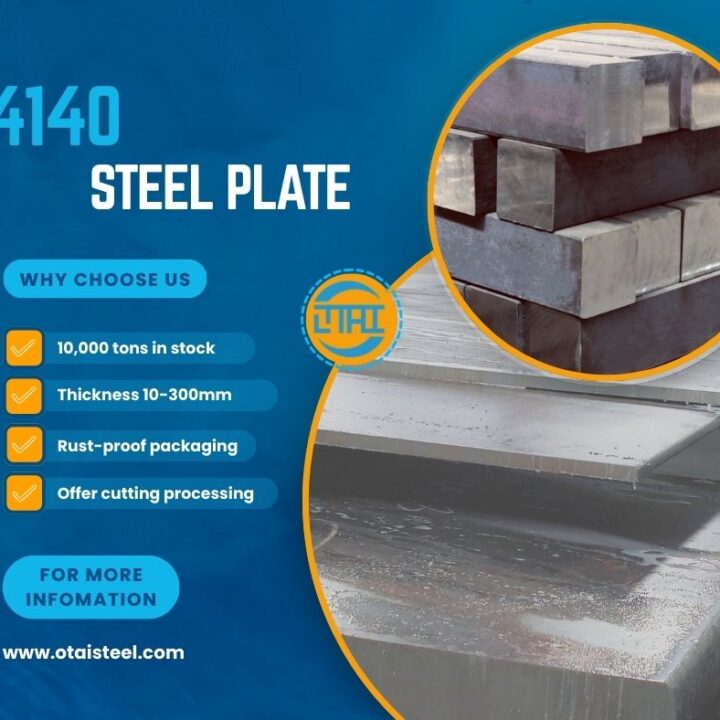
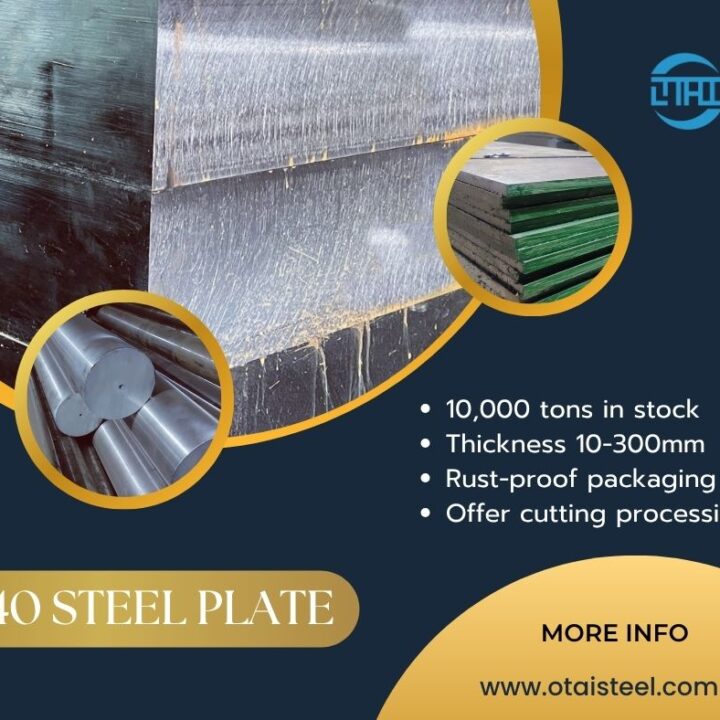
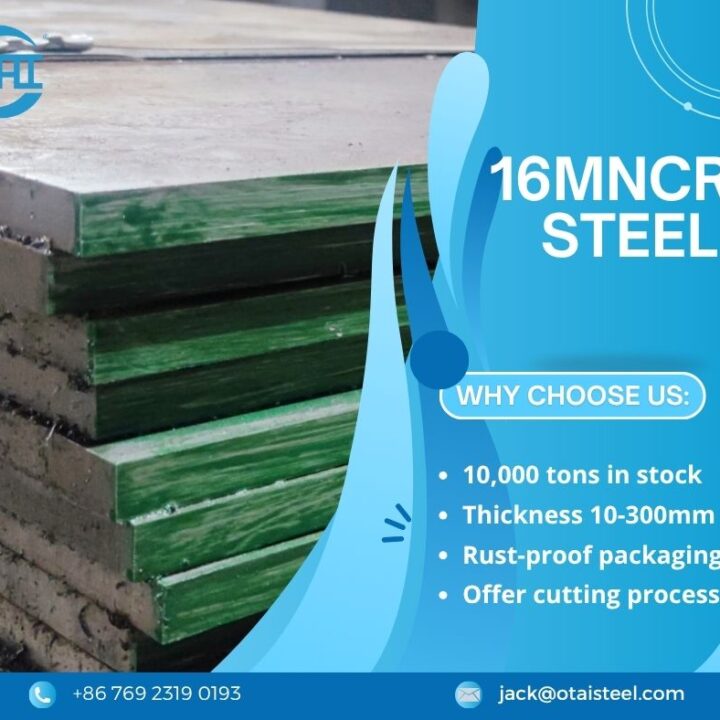
Otai’s stated stock range for 41Cr4 steel plate is 4–300 mm in thickness. This range provides a starting point for sourcing, but it does not mean every thickness, width, length, or quantity is always available. Confirm the actual stock, material condition, and delivery schedule for your order.
If your project requires cut-to-size material, provide the finished dimensions, tolerances, quantity, and machining allowance. These details help the supplier evaluate the available stock and determine the required cutting or processing work.
Compare quotations on a consistent basis
Two quotations may show different prices because they cover different technical and service requirements. One may quote standard stock, while another includes cutting, inspection, certification, and export packaging. Comparing the price per ton without considering these differences can produce a misleading result.
Before placing an order, confirm the following:
- Exact grade, material number, standard, and edition.
- Plate dimensions, quantity, and tolerance requirements.
- Delivery condition and required mechanical properties.
- MTC and any additional inspection documentation.
- Cutting, machining, or other agreed processing services.
- Packaging, shipping marks, delivery terms, and destination.
- Lead time and the conditions for material acceptance.
Review the official 41Cr4 product page
For product information, visit Otai’s official 1.7035 / 41Cr4 alloy steel page. The product page is a useful starting point, but the applicable standard and order-specific requirements should still be confirmed for your project.
Before approving the purchase, make sure the quotation, purchase order, MTC requirements, and inspection plan all refer to the same specification. This alignment helps prevent compliance disputes and supports a more predictable procurement process.
🏢 Why Source 41Cr4 from Otai Special Steel?
Otai Special Steel supplies alloy steel and tool steel to industrial customers in international markets. For 41Cr4 procurement, buyers can discuss the required plate dimensions, material condition, documentation, cutting services, and export preparation with the team.
- 41Cr4 steel plate stock: Stated thickness range of 4–300 mm. Confirm actual dimensions, quantity, condition, and availability before ordering.
- International supply experience: Exporting to more than 54 countries since 1999.
- Stock capability: More than 10,000 tons of steel stock across the company’s product range, subject to grade and size availability.
- Cutting equipment: 20 saw-cutting machines support material preparation and cutting services.
- Machining support: CNC machining and grinding options can be discussed for orders requiring additional processing.
- Customized dimensions: Buyers can request specific dimensions and tolerances for review against the available material and processing route.
- Quality documentation: Material certificates and traceability requirements can be discussed as part of the purchase specification.
- Additional inspection: Ultrasonic testing and third-party inspection can be arranged where applicable and agreed in advance.
- Export packaging: Bundling, wooden-crate, and anti-rust packaging options can be specified according to shipment requirements.
- Coordinated service: Material supply, cutting, machining, and related processing requirements can be reviewed together to support industrial procurement.
When requesting a quotation, provide the 41Cr4 grade, applicable standard, plate dimensions, quantity, delivery condition, mechanical-property requirements, and inspection documentation. If the material must meet a customer-specific specification, share the relevant technical requirements so the supplier can assess them before confirming the order.
Visit the official 41Cr4 / 1.7035 product page to review product information, then confirm current stock and order-specific compliance requirements with Otai.
❓ Frequently Asked Questions
1. What standard applies to 41Cr4 steel?
41Cr4 is commonly associated with EN 10083-3 in earlier specifications and EN ISO 683-2:2018 for relevant alloy steels for quenching and tempering. The correct reference depends on the product form and purchase requirements. Always confirm the standard and edition specified in the contract.
2. What is the material number for 41Cr4?
The commonly associated European material number is 1.7035. Buyers should use the grade and material number together with the applicable standard to verify that the supplied product meets the required specification.
3. What is the chemical composition of 41Cr4?
Commonly referenced EN 10083-3:2006 composition limits include carbon at 0.38–0.45%, manganese at 0.60–0.90%, silicon at 0.10–0.40%, and chromium at 0.90–1.20%. Phosphorus and sulfur also have specified limits. The applicable standard edition and the actual heat analysis on the MTC should govern acceptance.
4. Is AISI 5140 equivalent to 41Cr4?
AISI/SAE 5140 is commonly compared with 41Cr4 because the grades have similar alloying concepts. However, they are not automatically interchangeable under every specification. Compare the applicable standards, actual chemistry, delivery condition, and required mechanical properties before approving a substitution.
5. How can I confirm that a 41Cr4 shipment complies with the standard?
Check the grade, material number, standard edition, heat number, chemical analysis, mechanical test results, dimensions, and delivery condition against the purchase order. Match the MTC to the supplied material and verify any additional inspection requirements before accepting the shipment.