16MnCr5 Steel Stock: Available Plate Sizes and Supply Options
📑 Table of Contents
- 📦 What Does 16MnCr5 Steel Stock Mean?
- 📏 Available 16MnCr5 Steel Plate Sizes
- 🔍 How to Confirm Actual Stock Availability
- ⚙️ Choosing the Right 16MnCr5 Steel Plate
- 🔥 Why Material Condition Matters When Buying from Stock
- ✂️ Cutting Services and Custom Dimensions
- 📋 Quality Documents and Inspection Requirements
- 🚢 Lead Time, Packaging and International Delivery
- 💰 How to Compare 16MnCr5 Steel Stock Suppliers
- 🏭 Otai Special Steel: 16MnCr5 Stock and Supply Support
- ❓ FAQ About 16MnCr5 Steel Stock
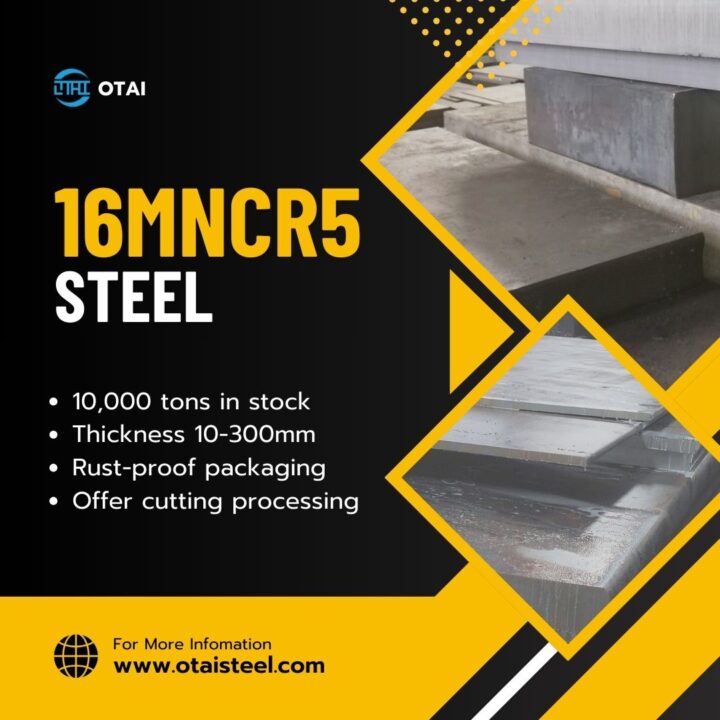
Finding 16MnCr5 steel stock involves more than locating a supplier that lists the grade on its website. Industrial buyers need to confirm the available plate thickness, actual dimensions, quantity, material condition, documentation and delivery schedule before placing an order. A supplier may advertise a broad product range, but the specific size required for a project may not be immediately available.
16MnCr5 is a case-hardening alloy steel commonly used for gears, shafts, pinions and other components that need a hard, wear-resistant surface and a tougher core after appropriate processing. Its performance depends on the material specification and the heat-treatment process, so purchasing teams must confirm that the supplied material suits the component’s manufacturing route.
For buyers sourcing 16MnCr5 steel plate, the key questions are straightforward: Which thicknesses can the supplier offer? Are the required dimensions available now? Can the supplier cut the plate to size? What documents accompany the shipment? And how soon can the material reach the destination?
This article explains how to evaluate available stock, verify supplier claims and compare supply options from an industrial purchasing perspective.
📦 What Does 16MnCr5 Steel Stock Mean?
The term 16MnCr5 steel stock generally refers to material that a steel supplier or distributor holds for sale or can supply through its existing inventory arrangements. However, the phrase can describe several different situations, and buyers should clarify which one applies to a quotation.
Physical stock versus a stated supply range
A supplier’s website may list a thickness range, such as 8–150 mm, to describe its normal supply capability. That range does not automatically mean every thickness, width, length and quantity is physically available at the time of inquiry.
Actual inventory is more specific. It identifies the material that the supplier can allocate to an order, including the relevant dimensions, quantity, condition and any restrictions on processing or delivery. If your project requires a particular plate thickness, ask the supplier to confirm that exact specification instead of relying only on a general product page.
It is also useful to distinguish stock held at the supplier’s warehouse from material that requires transfer, outside processing or new production. Each option may have a different lead time and cost.
Why stock availability matters to industrial buyers
Available stock can help manufacturers respond to urgent maintenance requirements, meet production schedules and reduce the waiting time associated with new production. It can also provide flexibility when a project requires several dimensions or a partial quantity.
Nevertheless, stock should not be the only purchasing criterion. The material must also meet the specified grade, dimensional tolerances, delivery condition and documentation requirements. A readily available plate that does not fit the manufacturing process may create more cost than it saves.
Therefore, evaluate stock availability together with technical suitability, processing options and delivery reliability. This approach helps purchasing teams select material that supports the production plan rather than simply choosing the first available offer.
📏 Available 16MnCr5 Steel Plate Sizes
Dimensions are usually the first practical consideration when searching for 16MnCr5 steel stock. Plate thickness determines whether the material can meet the component’s design requirements, while width and length affect cutting efficiency, machining allowance and material utilization.
Reference thickness range
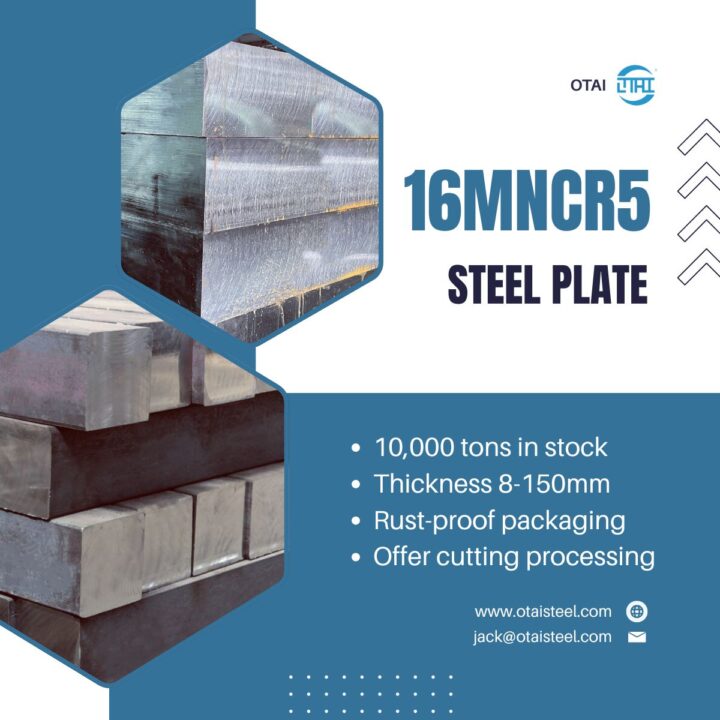
Otai’s stated supply range for 16MnCr5 steel plate is 8–150 mm in thickness. Buyers can use this range as an initial reference when evaluating whether the product may suit their project. However, it should not be interpreted as confirmation that every thickness within the range is currently available in every size or quantity.
Before ordering, confirm the required thickness, plate width, plate length, quantity and tolerance. If the component drawing specifies a finished dimension, also determine whether the supplier should deliver a rough-cut blank or material prepared closer to the final size.
| Purchasing item | What to specify | Why it matters |
|---|---|---|
| Steel grade | 16MnCr5 and the required material standard | Helps prevent confusion with similar case-hardening grades. |
| Thickness | Exact nominal thickness in millimeters | Determines suitability, weight and potential processing needs. |
| Width and length | Required plate dimensions and tolerance | Affects cutting plans, material yield and fit. |
| Quantity | Piece count or required weight | Allows the supplier to check available quantity and quote accurately. |
| Material condition | Required delivery condition and technical specification | Helps align stock with the planned manufacturing and heat-treatment route. |
| Processing | Cutting, machining or other specified services | Clarifies the delivered condition and additional charges. |
Stock sizes and custom-cut plates
Standard stock dimensions may be suitable for projects that allow machining allowance. Custom-cut plates can reduce material handling and internal cutting work, particularly when a buyer needs many blanks of a defined size.
However, cutting does not automatically reduce total cost. Buyers should compare the price of standard stock with the price of cut pieces, including material waste, cutting charges and the cost of processing in their own facilities.
If the required dimensions fall outside the supplier’s current inventory, ask whether another stock size can meet the application or whether the supplier needs to arrange new production. Request separate pricing and lead times for these alternatives so the purchasing team can make an informed decision.
🔍 How to Confirm Actual Stock Availability
One of the most important steps in buying 16MnCr5 steel is confirming that the supplier can allocate the required material to your order. Product pages and catalogs establish a starting point, but a stock confirmation should address the exact dimensions and quantity.
Ask for size-specific inventory confirmation
Provide the supplier with a clear list of required plate sizes. For each item, state the thickness, width, length, number of pieces and required material condition. If your project has multiple sizes, send a cutting list or spreadsheet instead of describing the order only as a total tonnage.
Ask the supplier to distinguish between material that is physically available, material awaiting processing and material that requires production or replenishment. This distinction helps you estimate the real lead time.
It is also worth confirming whether the quoted quantity is fully available. A supplier may have enough material for part of an order but need additional time to fulfill the balance. If the project depends on a complete delivery, partial availability may not meet your needs.
Confirm that stock matches the technical specification
Availability alone does not establish compliance. Ask the supplier to confirm the grade designation, applicable standard, material condition and relevant documentation. If the application requires particular mechanical properties, hardness or other acceptance criteria, include those requirements in the inquiry.
For case-hardening steel, the condition in which the material is supplied matters because the buyer may plan subsequent machining, carburizing, quenching and tempering operations. Do not assume that a plate is ready for a particular manufacturing step simply because it carries the 16MnCr5 designation.
Request a realistic dispatch date
Ask when the supplier expects to complete any cutting, inspection, packing and shipping preparation. Material that is physically in stock may still require processing before dispatch.
For urgent orders, request a written schedule that distinguishes stock allocation, processing completion and shipment. This is more useful than relying on a general statement such as “available from stock.” It also gives your production planner a clearer basis for scheduling downstream operations.
⚙️ Choosing the Right 16MnCr5 Steel Plate
Buyers should select 16MnCr5 steel stock according to the component’s design, manufacturing route and service requirements. Although availability can influence the decision, a convenient stock size should not replace the technical specification approved by the engineering team.
Understand the intended application
16MnCr5 is a case-hardening steel commonly used for components such as gears, pinions, shafts and other machine parts that need a hard surface and a comparatively tough core after suitable heat treatment. These properties make it useful in applications involving wear and contact loading.
However, the final performance depends on more than the steel grade. Component geometry, carburizing practice, hardening, tempering, machining and the applicable technical requirements all influence the result.
Before selecting available stock, confirm that the material is appropriate for the intended component. If the design requires a particular case depth, surface hardness or core property, make sure the complete manufacturing process can achieve the required results. Do not treat the grade name alone as a guarantee of finished-component performance.
Check the standard and grade designation
When purchasing 16MnCr5 internationally, confirm the exact standard and edition stated in the purchase specification. Similar grade names from different national or international standards may have comparable applications, but they should not automatically be treated as identical.
Where a project permits alternative grades, obtain engineering approval before substituting material. Compare the applicable chemical composition requirements, delivery condition, mechanical requirements and processing compatibility.
Allow for machining and finished dimensions
The plate thickness selected for a component should account for machining allowance and the dimensions of the finished part. Ordering material that is too close to the final dimension may leave insufficient stock for machining or surface preparation.
On the other hand, excessive allowance increases purchased weight, machining time and material waste. Share the component drawing or a clear dimension list with the supplier when appropriate. This can help determine whether standard stock or a cut blank offers a better balance between availability and material utilization.
🔥 Why Material Condition Matters When Buying from Stock
Two lots of 16MnCr5 steel can carry the same grade designation but differ in delivery condition, dimensional preparation and suitability for the buyer’s next manufacturing step. Confirming the material condition is therefore essential when comparing available stock.
Case-hardening steel and the manufacturing route
16MnCr5 is commonly selected for carburizing applications. During suitable processing, the surface develops a carbon-enriched layer that can be hardened, while the core retains the properties needed for the component’s design. The result depends on the specified process and its control, not simply on the material being available in stock.
For this reason, buyers should clarify whether the material will undergo substantial machining before heat treatment, whether the supplier must provide a particular starting condition and which requirements apply to the finished component.
Confirm the supplied condition in writing
Do not assume that all stock is delivered in the same condition. Ask the supplier to identify the condition offered and provide supporting documentation when required by the purchase specification. If the application has special requirements for hardness, mechanical properties or testing, state them explicitly.
Also distinguish between requirements for the incoming steel and requirements for the completed part. For example, a final surface-hardness requirement after carburizing is not the same as a hardness requirement for the plate as supplied.
Balance stock availability with process compatibility
A readily available plate may help meet a short purchasing schedule, but the buyer must still confirm that it suits the intended process. If the material requires additional preparation or testing, account for that work in both the cost and delivery plan.
When two suppliers offer different conditions, ask for the differences to be stated clearly. Compare the full technical scope rather than assuming that the lower-priced stock will provide equivalent performance or require the same downstream work.
Where the component has demanding service requirements, the engineering team should approve the material specification and heat-treatment route before procurement finalizes the purchase.
✂️ Cutting Services and Custom Dimensions
For many industrial buyers, the useful product is not a full plate but a set of blanks prepared for machining. A supplier that offers cutting services may help reduce internal handling, simplify material planning and coordinate several sizes within one purchase.
When cut-to-size material makes sense
Cutting can be useful when a project needs specific blank dimensions, when the buyer wants to avoid operating its own cutting equipment or when production schedules make internal material preparation difficult. It may also help buyers manage large plates that would otherwise require additional handling at the receiving facility.
Before requesting cut pieces, provide a complete cutting list. Include the finished blank dimensions, quantity per size, tolerance, required machining allowance and any special handling or identification instructions.
Ask whether the supplier will quote each piece, the total weight or the full cutting package. Confirm how the supplier calculates material weight and whether the quotation includes the cutting process, setup, handling and any required edge preparation.
Compare custom cutting with standard stock
Custom cutting can add processing charges, but it may reduce waste and labor elsewhere. Standard stock may have a lower material rate, yet require more work at the buyer’s facility. The best choice depends on the cutting pattern, quantity, available equipment and value of the leftover material.
For repeat orders, discuss whether the same cutting plan can be used across future shipments. A stable cutting list can simplify quoting and production planning. However, the supplier should still confirm the availability of the required parent plate for each order.
Define dimensional acceptance criteria
Specify whether dimensions refer to the rough-cut blank or the final machined component. Cutting tolerances and machining tolerances are not necessarily the same, and buyers should not assume that a saw-cut plate will arrive at finished-part dimensions.
If flatness, surface condition or other dimensional characteristics are critical, state the relevant requirements in the RFQ. Clear acceptance criteria reduce misunderstandings and help suppliers quote the correct processing level.
📋 Quality Documents and Inspection Requirements
Material documentation allows purchasing and quality teams to verify that the delivered steel matches the agreed specification. For industrial applications, the required documents should be identified before the order is confirmed rather than requested only after dispatch.
Material test certificates
Ask whether the supplier can provide a material test certificate (MTC) that corresponds to the supplied material and identifies the relevant heat or batch where applicable. The document should contain the information required by the purchase specification, such as chemical analysis and any applicable test results.
Do not assume that a general product brochure or a sample certificate proves the properties of the actual lot being purchased. Confirm which document will accompany your shipment and how it will be linked to the delivered material.
Additional testing and inspection
Some projects require checks beyond standard documentation. Depending on the specification, these may include dimensional inspection, hardness testing, ultrasonic testing or third-party inspection. Such requirements can affect availability, cost and lead time.
Specify the required test method, acceptance criteria and inspection scope where the project demands them. A vague request for “full inspection” may not tell the supplier which checks to perform or which records to provide.
If a third-party inspector must attend before shipment, coordinate the inspection stage and release procedure in advance. This helps avoid delays caused by arranging inspections after the material has already been prepared for dispatch.
Traceability and receiving inspection
For repeat or regulated industrial purchases, agree on how material identification will be maintained through cutting and packaging. If the order requires traceability between the original material batch and the delivered pieces, confirm the supplier’s identification and documentation process.
On receipt, check the dimensions, quantity, markings, packaging condition and documents against the purchase order. If anything differs from the agreed specification, record the discrepancy promptly and follow the agreed nonconformance process.
Clear quality requirements protect the buyer without automatically adding unnecessary testing. The most efficient approach is to define the level of verification that the actual application requires.
🚢 Lead Time, Packaging and International Delivery
Stock availability is valuable only when the material can reach the buyer within the required schedule. For international orders, the total lead time may include inventory confirmation, cutting, inspection, packaging, export documentation, transport and import clearance.
Separate stock readiness from dispatch readiness
A supplier may physically hold the required plate but still need time to cut it, complete inspections or prepare export packaging. Ask for separate estimates for processing completion and dispatch so the purchasing team can plan around the actual shipment schedule.
For urgent requirements, clarify whether the supplier can allocate the material immediately and whether all requested processing can fit the desired timeline. If the supplier can deliver only part of the order quickly, ask for the options and assess whether split shipments are practical.
Choose packaging for the route
Steel plate needs suitable protection during storage, handling and transport. Depending on the shipment and destination, packaging may include strapping, protective wrapping, anti-rust measures or wooden cases.
Tell the supplier about any destination-specific packaging, labeling or handling requirements before finalizing the price. Special packing can affect both cost and preparation time, particularly for export shipments or material with special handling needs.
Understand delivery terms and total cost
When sourcing from overseas, compare quotations using the same destination and delivery basis. Terms such as EXW, FOB, CIF, DAP and DDP allocate transport responsibilities, costs and risks differently. A low FOB price, for example, should not be compared directly with a delivered price without accounting for the remaining charges.
Ask the supplier to identify what is included in the quotation and what remains payable by the buyer. Depending on the arrangement, additional expenses may include freight, insurance, customs clearance, import duties, taxes and local delivery.
Finally, check the expected transit time and the documents needed for customs clearance. A well-planned delivery arrangement helps prevent avoidable delays after the steel leaves the supplier’s facility.
💰 How to Compare 16MnCr5 Steel Stock Suppliers
Comparing suppliers effectively requires more than collecting unit prices. Each quotation should cover the same technical specification, quantity, processing scope and delivery arrangement. Otherwise, the apparent price difference may reflect different products or services rather than a genuine purchasing advantage.
Use a like-for-like quotation comparison
Ask each supplier to quote the same plate thickness, width, length, quantity, material condition and dimensional tolerance. Include the required documents, testing, cutting, packaging and destination. If a supplier cannot meet one requirement, ask for the deviation to be stated clearly.
| Evaluation factor | What to verify | Purchasing benefit |
|---|---|---|
| Stock confirmation | Exact dimensions and available quantity | Reduces the risk of unexpected sourcing delays. |
| Specification compliance | Grade, standard, material condition and tolerance | Helps prevent technical mismatches. |
| Processing scope | Cutting, machining and surface requirements | Makes the delivered product easier to compare. |
| Quality documentation | MTC, traceability and required inspection | Supports quality control and receiving checks. |
| Delivery schedule | Processing time, dispatch date and transit estimate | Helps protect production planning. |
| Total delivered cost | Material, services, packaging and transport charges | Reveals the actual commercial difference between offers. |
Check the supplier’s service capabilities
A supplier’s ability to coordinate stock, cutting, documentation and export packaging can reduce the number of separate arrangements required from the buyer. This may be particularly useful when purchasing several dimensions or supplying material to an overseas manufacturing facility.
Ask which services the supplier performs directly and which it arranges through external partners. Also confirm the scope, cost and schedule of each service. Clear responsibilities make it easier to resolve problems if dimensions, documents or delivery dates do not meet the agreement.
Evaluate value rather than choosing on price alone
The lowest quote may be appropriate when all specifications and delivery conditions match. However, a slightly higher offer may provide better value if it includes the required cutting, reduces internal labor or offers a more reliable delivery schedule.
Use your production requirements to determine which differences matter. For recurring purchases, keep records of delivery performance, quality issues and quotation accuracy. These records provide a stronger basis for future sourcing decisions than a single price comparison.
🏭 Otai Special Steel: 16MnCr5 Stock and Supply Support
Otai Special Steel supplies alloy and tool steels to international industrial customers. For buyers sourcing 16MnCr5 steel plate, the purchasing discussion can cover plate dimensions, stock confirmation, cutting requirements, quality documents, packaging and delivery arrangements.
- 16MnCr5 plate range: The stated reference thickness range is 8–150 mm. Confirm the actual thickness, width, length and quantity available for your order.
- Cutting capacity: 20 saw cutting machines support cutting services for specified dimensions.
- Processing support: CNC machining and grinding options can be discussed where the project requires additional processing.
- Custom sizes and tolerances: Provide a dimension list or drawing so the team can assess the required blank sizes and processing scope.
- Quality documentation: Material certificates and other agreed testing documentation can be discussed according to the purchase specification. Confirm ultrasonic testing or third-party inspection requirements for the specific order.
- Packaging options: Strapping, wooden cases and anti-rust protection can be considered according to the shipment and destination requirements.
- International supply experience: Otai has exported to more than 54 countries since 1999 and provides one-stop service for overseas steel buyers.
- Inventory resources: The company maintains more than 10,000 tons of stock across its overall product range. This figure does not represent 16MnCr5 stock alone.
For grade details and inquiries, visit the Otai 16MnCr5 case-hardening steel product page.
When requesting a quotation, include your required thickness, width, length, quantity, material condition, inspection documents and destination. If you need cut-to-size blanks, attach the cutting list and state the dimensional tolerances. These details help the team assess stock availability and quote the required supply scope more accurately.
Because inventory changes as orders are processed, confirm current availability and the expected dispatch date before committing to a production schedule.
❓ FAQ About 16MnCr5 Steel Stock
1. What thicknesses of 16MnCr5 steel plate can I source from stock?
Otai’s stated reference supply range for 16MnCr5 steel plate is 8–150 mm in thickness. However, the exact sizes and quantities available can change. Confirm the required thickness, width, length, quantity and material condition with the supplier before placing an order.
2. Does a listed stock range mean every size is immediately available?
No. A published range generally describes the supplier’s stated supply capability, not necessarily the physical inventory of every size. Request size-specific confirmation and ask whether the material is ready for dispatch, requires cutting or needs replenishment.
3. Can I order 16MnCr5 steel plate cut to custom dimensions?
Custom cutting may be available depending on the supplier’s equipment, stock dimensions and order requirements. Provide the required dimensions, quantities, tolerances and machining allowance. Ask for cutting charges and the processing lead time as separate quotation details where appropriate.
4. What documents should I request when buying 16MnCr5 steel stock?
Specify the material test certificate and any additional documentation required by your purchase specification. Depending on the application, you may also need dimensional inspection, hardness testing, ultrasonic testing or third-party inspection. Confirm the exact scope and acceptance criteria before the order is finalized.
5. How can I get a quotation for 16MnCr5 steel plate?
Send the supplier the grade and standard, thickness, width, length, quantity, required material condition, tolerance, processing needs, inspection requirements and delivery destination. Ask the supplier to confirm actual stock, lead time, unit price, additional charges, packaging and delivery terms so you can compare offers on an equivalent basis.