16MnCr5 Steel for Sale: Stock, Specifications and What to Confirm Before Ordering
📑 Table of Contents
- 🔎 1. What Should You Check When Buying 16MnCr5 Steel?
- 📋 2. 16MnCr5 Steel Grade and Standard
- 🧪 3. 16MnCr5 Chemical Composition
- ⚙️ 4. Why 16MnCr5 Works for Case-Hardened Components
- 📐 5. 16MnCr5 Steel Dimensions and Supply Condition
- 🏭 6. Applications: Where 16MnCr5 Makes Sense
- 📑 7. MTC, Inspection and Quality Checks Before Purchase
- 💰 8. What Affects the Cost of 16MnCr5 Steel for Sale?
- 🛒 9. How to Request a 16MnCr5 Steel Quotation
- 🏢 10. Why Buy 16MnCr5 Steel from Otai?
- ❓ FAQ About 16MnCr5 Steel for Sale
🔎 1. What Should You Check When Buying 16MnCr5 Steel?
When you search for 16MnCr5 steel for sale, the main question is not simply whether a supplier has the grade. You also need to know whether the available material matches your required standard, dimensions, delivery condition, quantity, and subsequent heat-treatment process.
16MnCr5 is a manganese-chromium alloy case-hardening steel commonly associated with EN 10084 and material number 1.7131. Its relatively low carbon content supports carburizing, while manganese and chromium contribute to hardenability and the final performance of the treated component.
For a buyer, this distinction matters because a material can carry the correct grade designation but still require additional confirmation before it fits your production route. If your parts will undergo carburizing, for example, the supplier needs to provide material that meets the specified chemistry and delivery requirements rather than simply offering a steel with a similar name.
Before placing an order, confirm these points:
- 16MnCr5 grade and applicable standard
- Material number 1.7131 where applicable
- Required thickness and plate dimensions
- Delivery condition and surface requirements
- Heat-treatment route planned for the finished component
- Mill Test Certificate and actual heat chemistry
- Quantity and cutting requirements
- Inspection requirements, if applicable
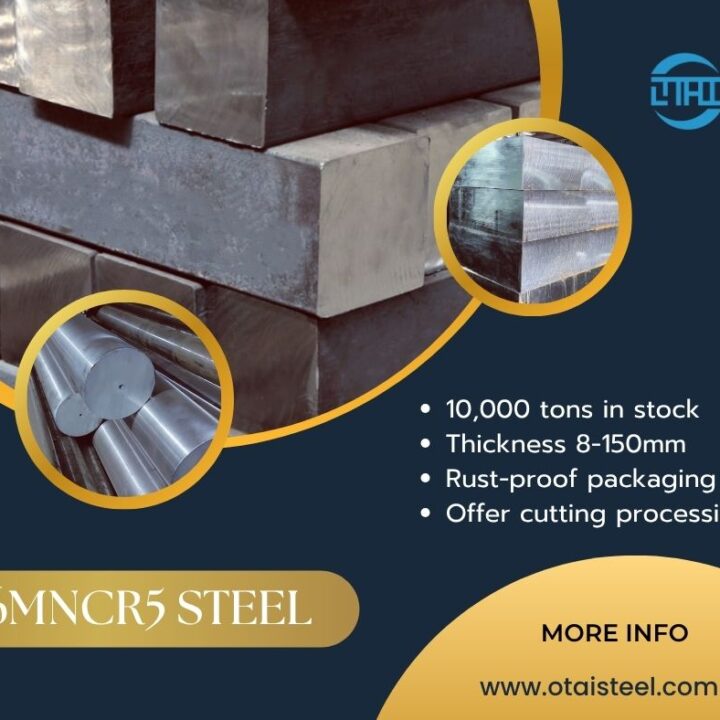
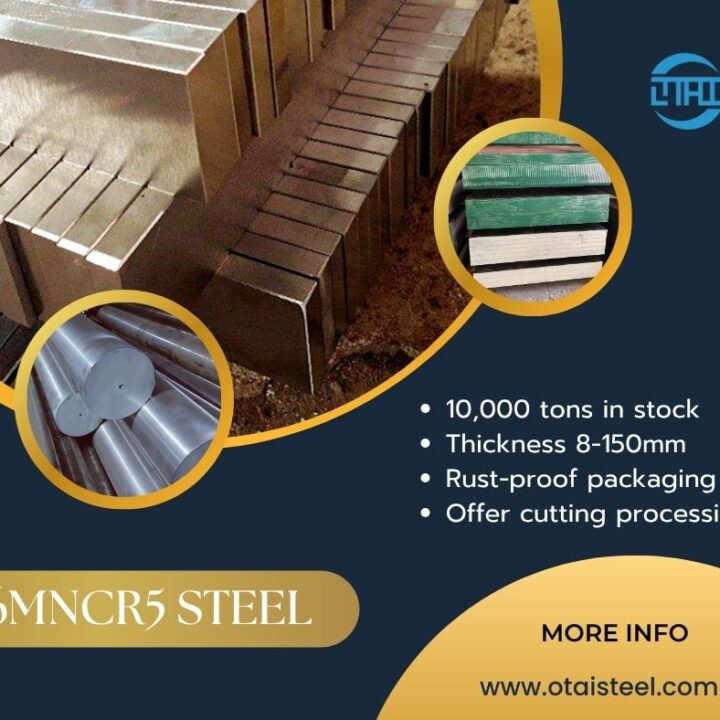
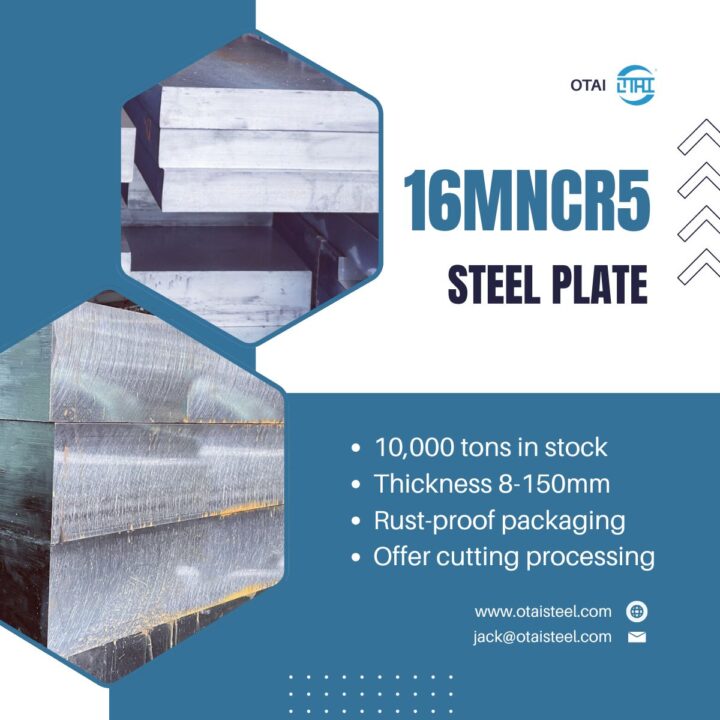
For buyers looking for readily available plate, Otai currently lists 16MnCr5 steel plate in 8–150 mm thickness. That can be useful when your project requires material without waiting for a completely new production cycle.
📋 2. 16MnCr5 Steel Grade and Standard
16MnCr5 belongs to the family of alloyed case-hardening steels. EN 10084 identifies 16MnCr5 as material number 1.7131. The standard covers case-hardening steels and their technical delivery conditions.
In procurement documents, you may therefore see several related descriptions, including:
| Item | Reference | Why It Matters to the Buyer |
|---|---|---|
| Steel grade | 16MnCr5 | Confirms the intended alloy grade |
| Material number | 1.7131 | Useful for identifying the European material designation |
| Common standard | EN 10084 | Defines technical delivery requirements for case-hardening steels |
| Steel family | Case-hardening alloy steel | Helps determine whether the grade suits carburized parts |
Some databases also list SAE 5115 and other grades as comparison references. However, buyers should treat such cross-reference tables as starting points rather than automatic substitutions. Different standards can impose different chemistry limits, mechanical requirements, product forms, and delivery conditions.
If your drawing specifies 16MnCr5, ask the supplier to quote the material against the exact standard stated in the purchase specification. That simple step can prevent problems when your quality department checks the MTC later.
🧪 3. 16MnCr5 Chemical Composition
Chemical composition is one of the first technical details to check when buying 16MnCr5. The grade relies on a controlled combination of carbon, manganese, chromium, silicon and other elements to achieve the desired carburizing and hardening response.
The following figures represent the composition limits associated with 16MnCr5 under EN 10084:2008. They should not be confused with a particular steel mill’s Typical Analysis or with the actual chemistry of an individual heat.
| Element | EN 10084 Reference Range / Limit (%) | Procurement Relevance |
|---|---|---|
| C | 0.14–0.19 | Important for carburizing response and core properties |
| Si | ≤ 0.40 | Controlled alloying element affecting processing and properties |
| Mn | 1.00–1.30 | Supports hardenability and strength |
| P | ≤ 0.025 | Controlled residual element |
| S | ≤ 0.035 | Affects machinability and cleanliness requirements |
| Cr | 0.80–1.10 | Contributes to hardenability and case-hardening performance |
For purchasing purposes, the most important point is documentation. A standard gives the permissible composition range, while the MTC normally records the actual heat analysis. Therefore, do not use a supplier’s generic webpage chemistry as a substitute for the chemistry of the material you are actually buying.
When requesting a quotation, you can ask the supplier to confirm that the offered heat complies with your specified standard and to provide the actual MTC chemistry before shipment or according to your agreed documentation procedure.
⚙️ 4. Why 16MnCr5 Works for Case-Hardened Components
The main reason buyers choose 16MnCr5 is its ability to combine a hard wear-resistant surface with a tougher supporting core after suitable carburizing and hardening treatment.
Low carbon content before carburizing
The relatively low initial carbon content helps maintain a comparatively tough core after the surface receives additional carbon during carburizing. This makes the grade suitable for components where surface wear resistance and core toughness need to work together.
Manganese and chromium contribution
Manganese and chromium increase hardenability compared with a simple low-carbon steel. They also support the response of the steel during subsequent quenching and tempering operations.
Why this matters when ordering
The material is not normally purchased simply because it has a certain hardness in the as-supplied condition. Instead, you should consider the final component specification. If your drawing requires a particular case depth, surface hardness, core hardness, or distortion limit, the steel grade represents only one part of the solution.
Before buying, give the supplier as much information as possible about your intended processing route. For example, the supplier may need to know whether you require annealed material for machining, a specific surface condition, or a particular dimensional allowance for later heat treatment and finishing.
That information helps the supplier recommend the appropriate delivery condition rather than quoting the grade in isolation.
📐 5. 16MnCr5 Steel Dimensions and Supply Condition
For a buyer searching for 16MnCr5 steel for sale, availability in the required dimensions can be just as important as the material designation. A supplier may have the correct grade but not the thickness, width, length, or quantity required for your production schedule.
Otai currently has 16MnCr5 steel plate in 8–150 mm thickness available in stock. This range gives buyers a practical starting point when they need plate rather than waiting for a new production order.
| Purchase Item | What to Confirm | Why It Matters |
|---|---|---|
| Grade | 16MnCr5 / 1.7131 | Prevents grade substitution |
| Thickness | 8–150 mm available in Otai stock | Determines whether stock can meet your blank size |
| Width / length | Required dimensions | Affects cutting yield and machining allowance |
| Delivery condition | As specified on the order | Influences machining and heat-treatment preparation |
| Quantity | Total weight / pieces | Influences stock allocation and freight planning |
If your finished component requires smaller blanks, ask whether the supplier can cut the plate to your required dimensions. That can reduce material handling at your facility and may improve material utilization.
Do not assume that every available 16MnCr5 product form has the same stock status. The confirmed Otai inventory for this grade is 16MnCr5 steel plate in 8–150 mm thickness. Product form, exact dimensions and quantity should be reconfirmed against your purchase order.
🏭 6. Applications: Where 16MnCr5 Makes Sense
16MnCr5 suits mechanical components that need a wear-resistant case while retaining useful toughness in the core after the specified heat-treatment process.
Typical application areas include:
- Gears and gear components
- Shaft-related mechanical components
- Pinions
- Bushes and sleeves
- Machine-building components
- Automotive and transmission-related components
- Other parts requiring carburized surfaces
For procurement teams, the application should determine the material specification rather than the other way around. A small transmission gear and a large industrial component may both use a case-hardening steel, but their requirements for section size, case depth, distortion control and final hardness can differ significantly.
When 16MnCr5 is a logical candidate
Consider 16MnCr5 when your component requires a relatively hard surface after carburizing while retaining a tougher core. It can also make sense when your engineering documentation already references EN 10084 or material number 1.7131.
When you should ask for an alternative
If the component requires substantially higher core hardenability, unusually large section sizes, or a different heat-treatment response, your engineering team may need another alloy grade. In that situation, do not select a substitute only from an online equivalence table. Compare the applicable standards, chemistry, hardenability, mechanical requirements and actual heat-treatment process first.
📑 7. MTC, Inspection and Quality Checks Before Purchase
A competitive price does not help if the delivered steel cannot pass your incoming inspection. For this reason, documentation should form part of the purchasing decision from the beginning.
Check the MTC against the purchase specification
The Mill Test Certificate should identify the material and provide the relevant actual test results. Depending on the agreed specification, this may include chemical analysis, mechanical properties, heat number and delivery condition.
For chemical composition, pay particular attention to the distinction between the standard limits and the actual heat analysis. The actual MTC values belong to the material being shipped and therefore provide much stronger purchasing evidence than a generic grade datasheet.
Confirm inspection requirements early
If your project requires ultrasonic testing, dimensional inspection, third-party inspection or other special requirements, specify them before the supplier prepares the quotation. Adding inspection requirements after production can affect both cost and lead time.
Review surface and dimensional requirements
For plate purchases, confirm thickness tolerance, width, length, flatness, surface condition and cutting tolerance where these characteristics affect your machining process.
The more precise your downstream process, the more valuable it becomes to define these requirements before ordering rather than correcting them after delivery.
💰 8. What Affects the Cost of 16MnCr5 Steel for Sale?
The price quoted for 16MnCr5 depends on much more than the basic price per kilogram. Two quotations for the same grade can differ because the suppliers are offering different dimensions, conditions, processing services, quantities or delivery terms.
| Cost Factor | Possible Impact | What Buyers Should Compare |
|---|---|---|
| Material condition | Different production or delivery conditions can change the price | Confirm both grade and condition |
| Thickness | Different thicknesses have different availability and production costs | Compare the exact thickness |
| Quantity | Larger orders may have different commercial terms | Use the same quantity for quotation comparison |
| Cutting | Custom cutting adds processing cost | Compare raw plate versus cut blanks |
| Inspection | Additional testing can affect total cost | Confirm UT and third-party inspection requirements |
| Freight and packaging | International delivery can significantly affect landed cost | Compare the complete delivered cost |
For this reason, a buyer should not compare suppliers using only a headline price per ton. A better comparison uses the same grade, standard, thickness, quantity, cutting requirements, documentation and delivery terms.
If one supplier has suitable stock while another requires new production, the quoted prices may also reflect different lead times and commercial risks. Confirm availability before assuming that two quotations offer the same purchasing solution.
🛒 9. How to Request a 16MnCr5 Steel Quotation
A detailed RFQ usually produces a more useful quotation than a message containing only “16MnCr5 steel for sale?” If you already know your requirements, send the supplier enough information to quote the material accurately the first time.
Recommended RFQ information
- Grade: 16MnCr5
- Material number: 1.7131, if required
- Standard: applicable EN specification
- Product form: steel plate
- Thickness: required thickness or thickness range
- Width and length: required dimensions
- Quantity: pieces and/or total weight
- Delivery condition: as required by your specification
- Cutting: finished blank dimensions if cutting is required
- Inspection: MTC, UT or third-party inspection requirements
- Destination: city and country for freight calculation
For example, instead of asking only for the price of 16MnCr5, a buyer can request a quotation for a defined plate thickness, required dimensions, quantity, standard, MTC and delivery destination. The supplier can then determine whether existing stock can satisfy the order and calculate the actual commercial offer.
Stock or new production?
This is another question worth asking. If your required dimensions match available inventory, stock material may provide a shorter route to delivery. If the project needs unusual dimensions or a large quantity, new production may become more appropriate.
Therefore, ask the supplier two separate questions: “Do you have this size in stock?” and “If not, what is the production lead time?” This gives you a much clearer picture of the purchasing options.
🏢 10. Why Buy 16MnCr5 Steel from Otai?
For buyers sourcing 16MnCr5 internationally, Otai Special Steel combines stock availability with cutting, machining and export-support capabilities. The goal is to provide more than a material grade: the supplier can help coordinate the practical steps between the steel stock and your production requirements.
- 📏 16MnCr5 steel plate thickness range: 8–150 mm in stock.
- 10,000+ tons of total steel inventory across the company’s product range.
- 20 saw cutting machines for customized cutting requirements.
- CNC machining and grinding services for projects requiring additional processing.
- Custom dimensions and tolerances can be discussed according to the order requirements.
- One-stop service covering material supply, cutting, processing, inspection and export packaging.
- Ultrasonic testing and third-party inspection support can be arranged when required.
- Anti-rust packaging, bundled/strapped packaging and wooden-box packaging options are available according to shipment requirements.
- Export experience to more than 54 countries.
- More than 20 years of experience serving international steel buyers since 1999.
For a 16MnCr5 order, the practical advantage is that you can discuss the material specification and cutting requirements with the supplier before shipment. If your project requires a particular plate thickness, cut size, tolerance or inspection document, include those requirements in the RFQ so the quotation reflects the material you actually need.
❓ FAQ About 16MnCr5 Steel for Sale
1. What is 16MnCr5 steel?
16MnCr5 is an alloyed case-hardening steel associated with EN 10084 and material number 1.7131. It is commonly selected for components that require a carburized, wear-resistant surface combined with a tougher core after suitable heat treatment.
2. What is the 16MnCr5 material number?
The EN designation 16MnCr5 corresponds to material number 1.7131. Buyers should still confirm the exact standard specified on their drawing or purchase specification because designation alone does not define every delivery requirement.
3. What thickness of 16MnCr5 steel plate is available from Otai?
Otai currently lists 16MnCr5 steel plate in 8–150 mm thickness in stock. Exact width, length, quantity, surface condition and availability should be confirmed for the specific order.
4. Is 16MnCr5 suitable for gears?
Yes. 16MnCr5 is commonly used for gears and other mechanical components that benefit from case hardening. The final suitability depends on the component design, required case depth, surface hardness, core properties and heat-treatment process.
5. What should I include when requesting a 16MnCr5 quotation?
Provide the grade, applicable standard, material number if required, plate thickness, width, length, quantity, delivery condition, cutting requirements, inspection documents and destination. If carburizing or another specific heat-treatment process will follow, include the relevant technical requirements as well.