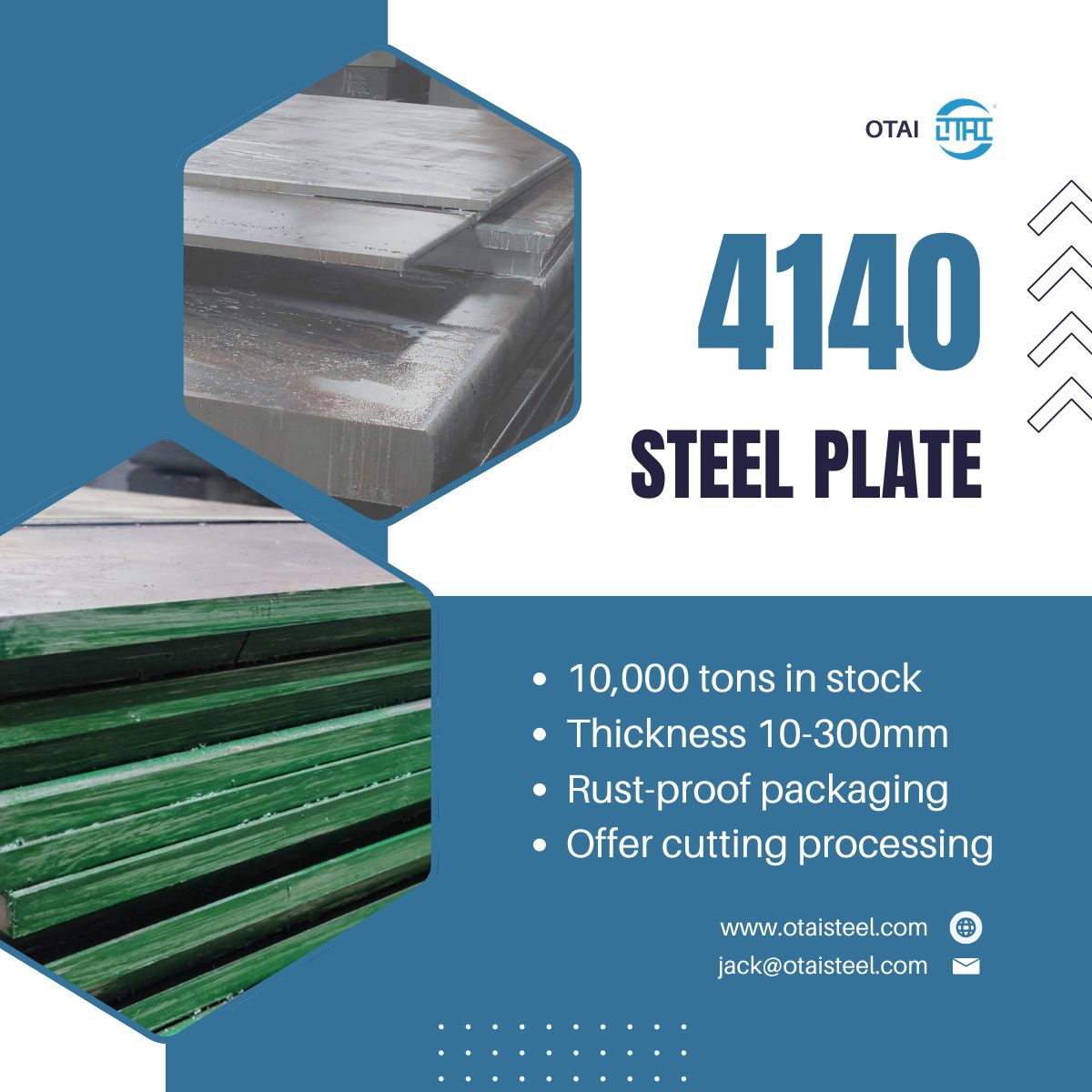
 4140 Steel Hardness Brinell – Complete Analysis of Hardness Values
When engineers search for 4140 steel hardness Brinell, they are usually trying to understand one of the most important performance indicators of AISI 4140 alloy steel. Hardness directly affects wear resistance, machining behavior, strength, and service life in industrial components.
4140 steel is a chromium-molybdenum alloy steel widely used for shafts, gears, bolts, tooling components, and heavy-duty mechanical parts. However, its actual performance depends strongly on heat treatment condition.
The same 4140 steel grade can show very different Brinell hardness values depending on whether it is supplied in annealed, normalized, or quenched and tempered condition.
Therefore, understanding **4140 steel hardness Brinell value** requires analyzing both material composition and manufacturing process.
📑 Table of Contents
🔍 1. What Is 4140 Steel Hardness Brinell?
🧪 2. Understanding Brinell Hardness Number of 4140 Steel
⚙️ 3. 4140 Steel Hardness Brinell Values in Different Conditions
🔥 4. Heat Treatment Effects on 4140 Brinell Hardness
📊 5. Relationship Between Brinell Hardness and Mechanical Properties
🏭 6. Industrial Applications Based on 4140 Hardness
🌍 7. 4140 Steel Hardness Comparison with Other Grades
📌 8. How to Select 4140 Steel Based on Hardness Requirements
🏭 Otai Special Steel Advantages
❓ FAQ – 4140 Steel Hardness Brinell
🔍 1. What Is 4140 Steel Hardness Brinell?
The term 4140 steel hardness Brinell refers to the hardness measurement of AISI 4140 alloy steel using the Brinell hardness test method.
The Brinell Hardness Number (BHN or HBW) measures the resistance of a material against indentation under a controlled load.
During the test, a hardened steel or tungsten carbide ball is pressed into the steel surface. The diameter of the resulting indentation determines the hardness value.
| Hardness Test | Measurement Method | Common Application |
|---|---|---|
| Brinell (HB/HBW) | Ball indentation measurement | Large alloy steel parts |
| Rockwell (HRC) | Depth of penetration | Heat-treated components |
| Vickers (HV) | Diamond pyramid indentation | Thin sections and coatings |
For large 4140 steel plates and forged components, Brinell hardness is commonly preferred because it provides a reliable measurement across larger surface areas.
Unlike tensile strength testing, hardness testing is faster and easier to perform during quality inspection.
For industrial buyers, the Brinell hardness value helps determine whether the material is suitable for machining, welding, heat treatment, or direct service applications.
For example:
- Lower hardness 4140 is easier to machine before manufacturing.
- Higher hardness 4140 provides improved wear resistance.
- Quenched and tempered 4140 provides a balance between strength and toughness.
Therefore, the **4140 steel hardness Brinell range** is not a fixed number. It changes according to material condition and processing history.
🧪 2. Understanding Brinell Hardness Number of 4140 Steel
The Brinell hardness number provides engineers with a practical indication of how 4140 steel will behave during manufacturing and service.
The typical Brinell hardness of 4140 steel depends on carbon content, alloy elements, heat treatment, and cooling conditions.
The chemical composition of 4140 plays an important role in hardness development.
| Element | Typical Content | Effect on Hardness |
|---|---|---|
| Carbon (C) | 0.38–0.43% | Primary element controlling hardness potential |
| Chromium (Cr) | 0.80–1.10% | Improves hardenability and wear resistance |
| Molybdenum (Mo) | 0.15–0.25% | Improves strength and deep hardening ability |
| Manganese (Mn) | 0.75–1.00% | Enhances toughness and hardenability |
Carbon increases the hardness potential because it supports martensite formation during quenching.
Chromium improves the ability of the steel to harden deeper into larger sections.
Molybdenum reduces temper brittleness and improves high-strength performance after heat treatment.
This alloy combination explains why 4140 is widely used when engineers need higher strength than ordinary carbon steels.
| Material Condition | Typical Brinell Hardness |
|---|---|
| Annealed 4140 Steel | 180–220 HB |
| Normalized 4140 Steel | 200–250 HB |
| Quenched and Tempered | 250–320 HB |
| High Strength Condition | 320–400 HB |
These values are typical ranges. Actual hardness may vary depending on thickness, heat treatment parameters, and supplier specifications.
For customers purchasing 4140 steel plate, confirming the required hardness condition before ordering is essential because it directly affects machining and final application performance.
⚙️ 3. 4140 Steel Hardness Brinell Values in Different Conditions
The most important factor affecting AISI 4140 Brinell hardness is the supply condition.
4140 steel can be delivered in several conditions depending on whether customers prioritize machinability, strength, or wear resistance.
| Condition | Brinell Hardness Range | Main Characteristics |
|---|---|---|
| Annealed | 180–220 HB | Excellent machinability |
| Normalized | 200–250 HB | Improved strength and uniform structure |
| QT (Quenched & Tempered) | 250–320 HB | High strength and toughness |
| Pre-hardened | 280–360 HB | Ready for many industrial applications |
Annealed 4140 is commonly selected when extensive machining is required. The lower hardness reduces cutting force and improves tool life.
Quenched and tempered 4140 provides much higher mechanical performance. It is commonly used for shafts, gears, and structural components exposed to heavy loads.
The correct hardness level depends on the final application.
- Machining parts → lower hardness condition
- High-load shafts → medium to high hardness condition
- Wear-resistant components → higher hardness condition
Therefore, when discussing **4140 steel hardness Brinell**, engineers must always specify the material condition together with the hardness requirement.
🔥 4. Heat Treatment Effects on 4140 Brinell Hardness
The final 4140 steel hardness Brinell value is strongly influenced by heat treatment. Unlike low-alloy structural steels that rely mainly on chemical composition, 4140 achieves its performance through controlled heating and cooling processes.
The chromium-molybdenum alloy design allows 4140 to respond very well to hardening treatments. Engineers can adjust hardness, strength, and toughness according to different application requirements.
The main heat treatment processes include:
- Annealing: Softens the steel and improves machinability before manufacturing.
- Normalizing: Refines grain structure and improves mechanical consistency.
- Quenching: Rapid cooling creates a harder martensitic structure.
- Tempering: Reduces brittleness while maintaining high strength.
| Heat Treatment | Typical Temperature | Effect on Brinell Hardness |
|---|---|---|
| Annealing | Approx. 800–850°C | Reduces hardness for machining |
| Normalizing | Approx. 870–900°C | Creates balanced strength and hardness |
| Quenching | Approx. 830–870°C | Significantly increases hardness |
| Tempering | 200–650°C | Controls final hardness and toughness |
The cooling rate during quenching has a major effect on the final structure. Faster cooling usually produces higher hardness because more martensite forms.
However, extremely high hardness is not always beneficial. Excessive hardness may reduce impact resistance and increase the risk of cracking.
For this reason, many industrial users select quenched and tempered 4140 steel because it provides an excellent balance between:
- High tensile strength
- Good toughness
- Wear resistance
- Reliable fatigue performance
For example, a heavy-duty shaft requires enough hardness to resist surface damage but also needs sufficient toughness to survive repeated torque loading.
Therefore, the relationship between heat treatment and **4140 steel hardness Brinell** must always be considered during material selection.
📊 5. Relationship Between Brinell Hardness and Mechanical Properties
Hardness is closely related to the mechanical properties of 4140 steel. Generally, higher hardness indicates higher resistance to deformation and wear, but toughness may decrease if hardness becomes excessive.
The **4140 steel hardness Brinell range** provides engineers with a quick reference for estimating mechanical performance.
| Brinell Hardness | Approximate HRC | Typical Condition |
|---|---|---|
| 180–220 HB | 10–22 HRC | Annealed condition |
| 220–280 HB | 22–29 HRC | Normalized or lightly treated |
| 280–320 HB | 29–34 HRC | Quenched and tempered |
| 320–400 HB | 34–42 HRC | High-strength condition |
The relationship between hardness and strength can be summarized as follows:
| Property | Influence of Higher Hardness |
|---|---|
| Tensile Strength | Generally increases |
| Wear Resistance | Improves significantly |
| Machinability | Becomes more difficult |
| Impact Toughness | May decrease if hardness is excessive |
| Fatigue Resistance | Often improves with proper treatment |
This balance explains why 4140 is widely used in demanding engineering applications.
A component made from soft 4140 may machine easily but may wear faster in service. On the other hand, extremely hard 4140 may resist wear but become less tolerant of impact.
Engineers normally select a hardness range based on operating conditions rather than choosing the highest possible value.
For example:
- Shaft applications often use 250–320 HB conditions.
- Heavy mechanical parts may require higher hardness.
- Machined components often start from annealed material.
Therefore, Brinell hardness is not only a quality inspection value but also an important design parameter.
🏭 6. Industrial Applications Based on 4140 Hardness
The practical importance of 4140 steel hardness Brinell can be seen in industries that require high strength, durability, and resistance to mechanical stress.
Because 4140 can achieve different hardness levels through heat treatment, it can serve many different engineering purposes.
| Industry | Typical Components | Required Hardness Performance |
|---|---|---|
| Automotive | Axles, shafts, gears, connecting parts | Strength and fatigue resistance |
| Oil & Gas Equipment | Drill components, pressure parts | Wear resistance and toughness |
| Heavy Machinery | Bolts, pins, hydraulic components | High load capacity |
| Manufacturing Equipment | Molds, tooling parts, machine shafts | Dimensional stability |
Common 4140 steel applications include:
- Drive shafts
- Gear components
- High-strength bolts
- Hydraulic rods
- Machine parts
- Forged components
For rotating components, hardness is especially important because surface wear and fatigue damage can reduce service life.
For example, a transmission shaft must resist repeated torque loads while maintaining dimensional accuracy. A properly treated 4140 steel shaft provides both strength and reliability.
The versatility of 4140 comes from its ability to achieve different Brinell hardness levels without changing the basic material grade.
This makes it a preferred alloy steel choice for manufacturers that require both performance flexibility and reliable availability.
🌍 7. 4140 Steel Hardness Comparison with Other Grades
Understanding the difference between 4140 steel hardness Brinell and other engineering steels helps manufacturers choose the most suitable material for their applications.
Although many alloy steels can achieve similar hardness levels, their chemical composition, hardenability, toughness, and heat treatment response are different.
| Steel Grade | Typical Brinell Hardness | Main Characteristics | Common Applications |
|---|---|---|---|
| 4140 Steel | 250–320 HB (QT condition) | Chromium-molybdenum alloy steel with excellent strength balance | Shafts, gears, machinery parts |
| 1045 Steel | 170–220 HB | Medium carbon steel with lower hardenability | General shafts and structural parts |
| 4340 Steel | 280–360 HB | Higher nickel alloy content with superior toughness | Aircraft and heavy-duty components |
| 8620 Steel | 180–250 HB before carburizing | Case-hardening alloy steel | Gears and transmission parts |
| 16MnCr5 Steel | 180–250 HB before carburizing | European carburizing steel | Gear components |
Compared with 1045 steel, 4140 provides better hardenability and higher strength after heat treatment.
Compared with 4340 steel, 4140 has slightly lower strength but offers better cost efficiency for many industrial applications.
Carburizing steels such as 8620 and 16MnCr5, 4140 is usually selected when the entire cross-section needs strength rather than only a hardened surface layer.
| Selection Requirement | Recommended Steel Type |
|---|---|
| High surface wear resistance | Carburizing steel such as 16MnCr5 or 8620 |
| High overall strength | 4140 alloy steel |
| Maximum toughness | 4340 alloy steel |
| Easy machining and lower cost | 1045 carbon steel |
Therefore, choosing the correct steel requires considering the complete working environment rather than hardness alone.
The **4140 steel hardness Brinell value** is one important factor, but engineers must also consider fatigue loading, impact conditions, corrosion environment, and manufacturing process.
📌 8. How to Select 4140 Steel Based on Hardness Requirements
Selecting the correct 4140 steel hardness level requires understanding the relationship between manufacturing requirements and final operating conditions.
Different industries require different hardness ranges because components experience different types of stress.
| Application Requirement | Suggested Hardness Condition | Reason |
|---|---|---|
| Machining before fabrication | 180–220 HB | Better machinability and lower cutting force |
| General mechanical parts | 220–280 HB | Balanced strength and processing ability |
| Heavy-duty shafts | 280–320 HB | Higher strength and fatigue resistance |
| Wear-resistant components | 320 HB+ | Improved surface durability |
Before ordering 4140 steel plate, customers should confirm:
- Required hardness range
- Thickness and dimensions
- Heat treatment condition
- Machining requirements
- Final application environment
For example, a customer manufacturing hydraulic rods may require a different hardness condition compared with a customer producing large machine shafts.
A professional supplier should help customers select the appropriate condition instead of only supplying standard material.
Important purchasing factors include:
- Stable stock availability
- Accurate material certificates
- Reliable hardness testing
- Processing capability
- Fast delivery support
Correct material selection improves production efficiency and reduces the risk of premature component failure.
🏭 Otai Special Steel Advantages
Otai Special Steel specializes in supplying 4140 alloy steel plates and engineering materials for global industrial customers. With strong inventory capability and professional processing support, Otai provides reliable solutions for customers requiring consistent 4140 steel hardness Brinell performance.
- Large inventory advantage: Otai maintains long-term stock of alloy steel products with 10,000 tons inventory available to support urgent customer requirements.
- Multiple size availability: Different thicknesses and dimensions are available to meet various machining and manufacturing needs.
- Cutting and processing service: Provides steel cutting, machining preparation, and customized processing according to customer drawings and requirements.
- Heat treatment support: Assists customers with suitable heat treatment solutions to achieve required hardness and mechanical properties.
- Quality inspection: Provides ultrasonic testing and third-party inspection services to ensure material reliability.
- Global supply experience: Has supplied steel materials to international customers, including Fortune Global 500 companies with strict technical requirements.
- Professional packaging: Provides anti-rust packaging, steel strapping packaging, and wooden box packaging for safe international transportation.
For customers searching for a reliable 4140 steel plate supplier, Otai provides complete support from material selection and stock supply to processing and inspection.
❓ FAQ – 4140 Steel Hardness Brinell
Q1: What is the Brinell hardness of 4140 steel?
The typical Brinell hardness of 4140 steel depends on condition. Annealed 4140 is usually around 180–220 HB, while quenched and tempered material can reach approximately 250–320 HB.
Q2: What is AISI 4140 Brinell hardness in heat-treated condition?
Heat-treated 4140 commonly reaches around 280–320 HB depending on tempering temperature and thickness.
Q3: Is higher Brinell hardness always better for 4140 steel?
No. Higher hardness improves wear resistance but may reduce toughness and impact resistance. The correct hardness depends on the application.
Q4: How does heat treatment affect 4140 hardness?
Quenching increases hardness by forming martensite, while tempering adjusts the balance between hardness and toughness.
Q5: What is the difference between 4140 and 1045 hardness?
4140 generally achieves higher hardness and strength because chromium and molybdenum improve hardenability.