41Cr4 Supplier: How to Choose the Right Steel Supplier for Your Order
📑 Table of Contents
- 🔎 1. What Should You Confirm When Choosing a 41Cr4 Supplier?
- 📋 2. 41Cr4 Steel Grade, Material Number and Standards
- 🧪 3. 41Cr4 Chemical Composition and MTC Requirements
- ⚙️ 4. 41Cr4 Properties and Heat-Treatment Condition
- 📐 5. 41Cr4 Steel Sizes and Stock Availability
- 🏭 6. 41Cr4 Applications and Material Selection
- ✂️ 7. Cutting, Machining and Custom Size Requirements
- 📑 8. Inspection, MTC and Quality Control Before Shipment
- 💰 9. How to Compare 41Cr4 Supplier Quotations
- 🏢 10. 41Cr4 Supplier and Service Capabilities at Otai
- ❓ FAQ About 41Cr4 Suppliers
🔎 1. What Should You Confirm When Choosing a 41Cr4 Supplier?
When you search for a 41Cr4 supplier, the lowest price is rarely the only factor that determines whether the purchase will work smoothly. For an industrial buyer, the more important question is whether the supplier can provide the correct grade, size, condition, documentation and processing support at the required delivery time.
41Cr4 is a chromium alloy structural steel commonly identified as material number 1.7035. It belongs to the quenched-and-tempered alloy steel family and appears in applications where engineers need a balance of strength, toughness, machinability and wear resistance.
That means your supplier should understand more than the grade name. Before ordering, confirm the exact specification and product form, then check whether the supplier can match your dimensional and inspection requirements.
A practical supplier evaluation should cover:
- 41Cr4 / 1.7035 grade identification
- Applicable EN or other specified standard
- Available thickness, width and length
- Delivery condition
- Actual heat chemistry and MTC
- Required mechanical properties
- Cutting and machining requirements
- Ultrasonic or third-party inspection requirements
- Packaging and export arrangements
- Lead time and actual stock availability
A supplier that can answer these questions clearly gives you a much better basis for comparing quotations than a supplier that only provides a price per ton.
📋 2. 41Cr4 Steel Grade, Material Number and Standards
41Cr4 is a medium-carbon chromium alloy steel. The European designation is commonly associated with material number 1.7035. EN 10083 covers steels for quenching and tempering, including 41Cr4.
| Item | Reference | Buyer Relevance |
|---|---|---|
| European grade | 41Cr4 | Identifies the specified alloy grade |
| Material number | 1.7035 | Useful for international purchasing and documentation |
| European standard | EN 10083 | Defines requirements for relevant quenched-and-tempered steels |
| Common comparison grade | AISI 5140 | Useful for cross-standard sourcing, subject to specification comparison |
| Other commonly compared grades | SCr440, 40Cr | Can help identify alternative sourcing options |
Although 41Cr4 is often compared with AISI 5140, JIS SCr440 and Chinese 40Cr, buyers should not assume that these designations guarantee identical requirements. Standards can differ in chemical limits, mechanical properties, hardenability requirements and product specifications.
If your drawing specifically calls for 41Cr4, give the supplier the original standard instead of asking for a generic “equivalent.” This makes the quotation easier to verify and reduces the risk of receiving a material that only appears similar in a comparison chart.
🧪 3. 41Cr4 Chemical Composition and MTC Requirements
Chemical composition provides an important first check when evaluating a 41Cr4 supplier. The standard specifies composition limits, while the actual heat analysis appears on the material certificate for the steel supplied.
For 41Cr4 under the commonly referenced EN 10083 specification, the principal composition limits include:
| Element | Reference Range / Limit (%) | Why It Matters |
|---|---|---|
| C | 0.38–0.45 | Contributes to strength and hardening response |
| Si | ≤ 0.40 | Supports strength and processing characteristics |
| Mn | 0.60–0.90 | Contributes to hardenability and strength |
| P | ≤ 0.025 | Controlled residual element |
| S | ≤ 0.035 | Controlled for material quality and machinability requirements |
| Cr | 0.90–1.20 | Improves hardenability and wear-related performance |
These figures represent standard composition requirements, not a universal chemical analysis for every 41Cr4 heat. A steel mill may publish a Typical Analysis, but the actual chemistry of your purchased material should come from the MTC associated with its heat number.
For purchasing, this distinction is important. If your quality department needs traceability, ask the supplier to provide the actual heat analysis and confirm that it meets the standard specified in your order.
It is also useful to tell your supplier whether your engineering specification controls elements beyond the standard’s normal requirements. That way, the supplier can check the material before allocating it to your order.
⚙️ 4. 41Cr4 Properties and Heat-Treatment Condition
41Cr4 can provide a useful combination of strength and toughness after appropriate quenching and tempering. However, the final mechanical properties depend on the material condition, section size and actual heat-treatment process.
Annealed material
Suppliers may offer 41Cr4 in an annealed condition when the buyer needs material that can be machined before final heat treatment. The exact hardness requirement should come from the applicable specification and purchase order.
Quenched and tempered material
For applications requiring higher strength, buyers may specify quenched and tempered 41Cr4. The resulting hardness and mechanical properties depend on section size and the selected treatment cycle.
| Condition | Typical Purchasing Purpose | What to Confirm |
|---|---|---|
| Annealed | Machining and subsequent heat treatment | Hardness, structure and delivery specification |
| Quenched and tempered | Finished or semi-finished high-strength components | Hardness and mechanical-property requirements |
| Cut-to-size material | Reducing preparation work before machining | Cutting tolerance and dimensional allowance |
Therefore, when requesting a quotation, do not write only “41Cr4 steel.” Tell the supplier the condition you require. If you are machining the material before your own heat treatment, the correct delivery condition can be more important than simply selecting a hardness number.
📐 5. 41Cr4 Steel Sizes and Stock Availability
For an industrial buyer, a supplier’s actual stock can significantly affect both lead time and total purchasing cost. A supplier may technically offer 41Cr4 but still require new production for the thickness you need.
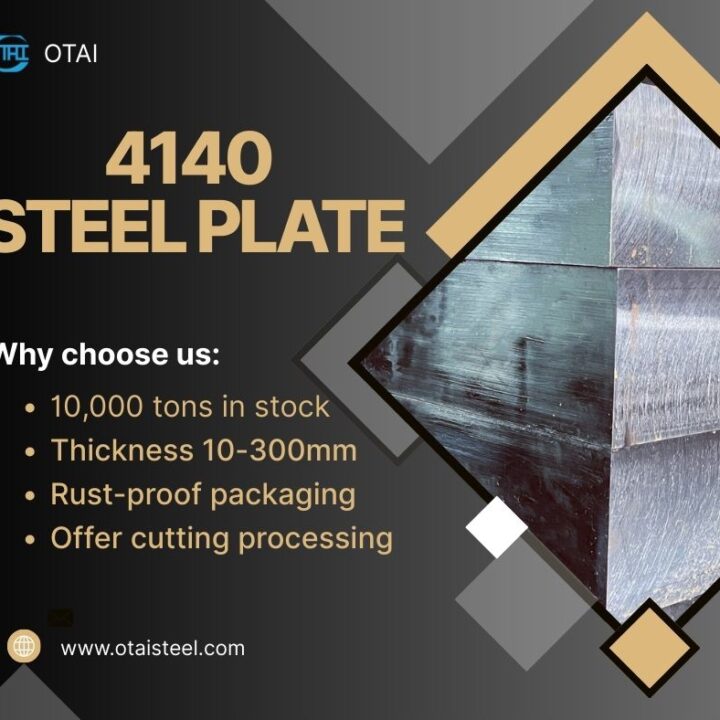
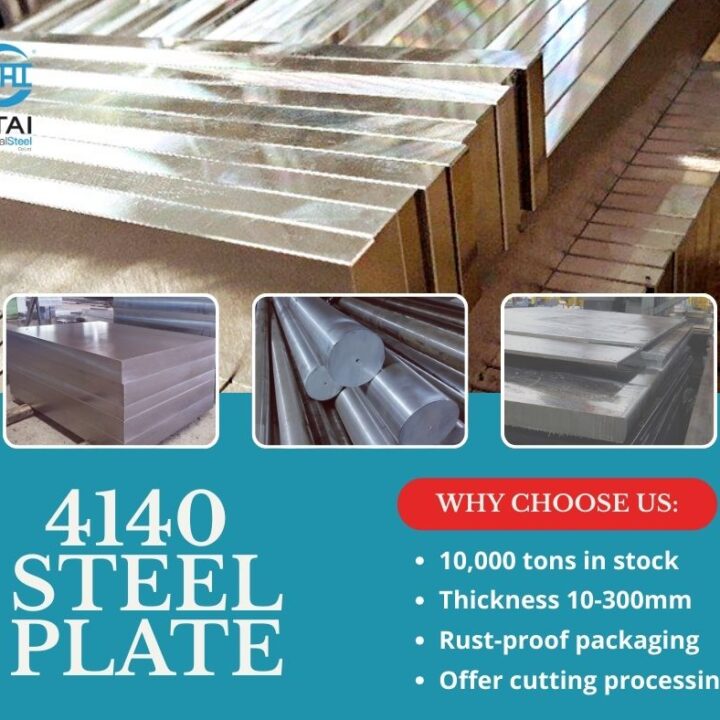
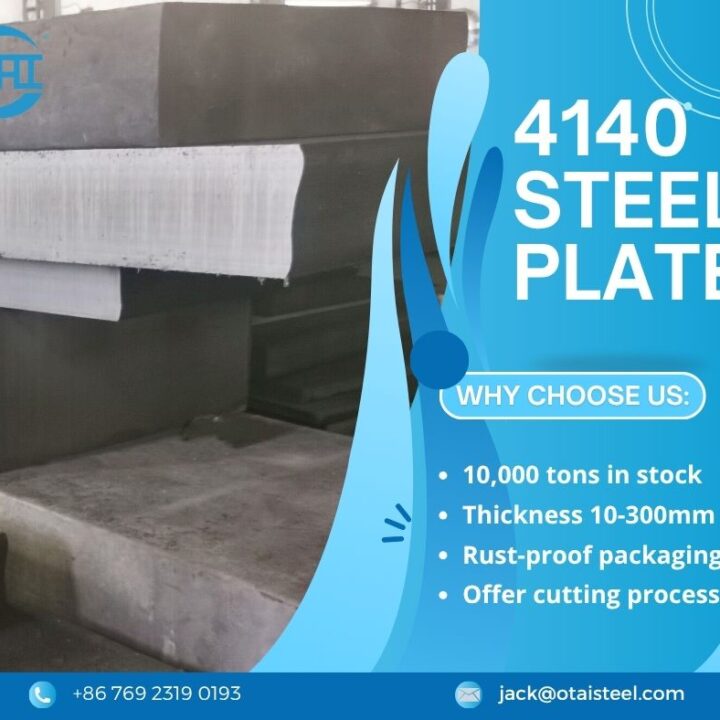
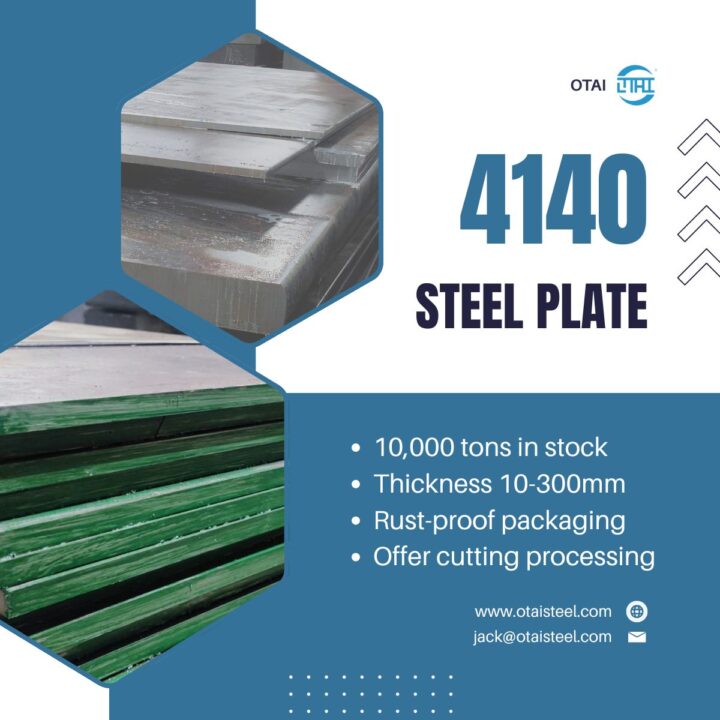
Otai currently has 41Cr4 steel plate in 4–300 mm thickness available in stock. Buyers should confirm the exact width, length, quantity, condition and current availability before placing an order.
| Specification | What to Confirm with the Supplier |
|---|---|
| Grade | 41Cr4 / 1.7035 |
| Plate thickness | Otai stock range: 4–300 mm |
| Width | Required finished or stock width |
| Length | Stock length or required cut length |
| Condition | Annealed, QT or other specified condition |
| Quantity | Pieces, dimensions and total weight |
If your required thickness falls within the available stock range, ask the supplier whether the material can be allocated directly from inventory. This can be particularly useful when your production schedule cannot accommodate a long new-production lead time.
Do not assume that stock availability means every dimension is immediately available. Thickness, width, length, quantity and delivery condition all need confirmation against the actual inventory.
🏭 6. 41Cr4 Applications and Material Selection
41Cr4 is commonly selected for mechanical components that require moderate-to-high strength after heat treatment together with useful toughness and wear resistance.
Typical applications include:
- Gears and gear components
- Shafts and transmission shafts
- Axles
- Bolts and studs
- Machine components
- Automotive components
- General engineering parts exposed to mechanical loading
41Cr4 versus 42CrMo4
Buyers sometimes compare 41Cr4 with 42CrMo4 because both are medium-carbon alloy steels used for demanding mechanical components. Their chemistry is not identical, however. 42CrMo4 contains molybdenum, which changes its hardenability and heat-treatment response.
If your component specification originally calls for 41Cr4, do not replace it with 42CrMo4 simply because both grades can achieve high strength after heat treatment. Compare the required mechanical properties, section size, heat treatment and applicable standard first.
41Cr4 versus 5140
AISI 5140 is frequently listed as a corresponding or closely related grade for 41Cr4 in cross-standard references. Nevertheless, an equivalence table should support the purchasing investigation rather than replace the engineering specification.
For international sourcing, give the supplier your original grade and standard first. Then ask whether the supplier can provide a documented alternative if your project permits substitutions.
✂️ 7. Cutting, Machining and Custom Size Requirements
A 41Cr4 supplier can provide more value when the order includes practical processing support. If you purchase a large plate and then perform every cutting operation yourself, your internal labor, equipment time and material handling can increase.
Before ordering, consider whether you need:
- Cut-to-length pieces
- Custom plate dimensions
- Close cutting tolerances
- CNC machining
- Grinding
- Additional machining allowance
For example, if the finished part requires a 120 mm × 250 mm blank, the supplier can quote either the original plate or a cut blank depending on your production needs. The correct choice depends on material utilization, machining allowance, quantity and the total cost of preparing the part.
Otai operates 20 saw cutting machines and can discuss customized cutting requirements. CNC and grinding services are also available for projects that require additional processing.
When requesting a cut-size quotation, provide the finished blank dimensions, quantity per size and required tolerance. This gives the supplier enough information to evaluate cutting yield and processing cost instead of quoting only the raw material weight.
📑 8. Inspection, MTC and Quality Control Before Shipment
For international steel purchasing, quality documentation should be part of the order discussion rather than an afterthought.
Mill Test Certificate
Ask for an MTC that provides traceability to the supplied material. Depending on your specification, the certificate may include the heat number, chemical analysis, mechanical test results and delivery condition.
The actual heat analysis is particularly important. A general 41Cr4 datasheet describes the grade, while the MTC tells you about the specific heat supplied for your order.
Ultrasonic testing
If internal soundness matters to your application, specify ultrasonic testing before shipment. Do not assume that every standard 41Cr4 plate order automatically includes UT.
Third-party inspection
Some projects require independent inspection before shipment. If your customer or quality system requires this, tell the supplier at the quotation stage so the inspection scope can form part of the commercial offer.
Packaging
International shipments also require suitable protection against handling damage and corrosion. Depending on the order, packaging can include strapping, bundled packing, anti-rust protection or wooden cases.
These details may seem secondary when comparing prices, but they directly affect whether the material arrives ready for your incoming inspection and production process.
💰 9. How to Compare 41Cr4 Supplier Quotations
When several suppliers quote 41Cr4, compare equivalent purchasing conditions rather than comparing only the unit price.
| Quotation Item | Questions to Ask |
|---|---|
| Material | Is it 41Cr4 / 1.7035 under the required standard? |
| Condition | Is the quoted material annealed, QT or another condition? |
| Dimensions | Are thickness, width and length identical between quotations? |
| Processing | Does the price include cutting or other machining? |
| Documents | Is an MTC included? Are additional inspections required? |
| Lead time | Is the material actually in stock or does it require production? |
| Delivery | What shipping term, packaging and freight cost apply? |
For example, Supplier A may offer a lower price for untreated stock, while Supplier B quotes cut-to-size material with an MTC, inspection and export packaging included. The two prices do not represent the same purchasing package.
For this reason, your RFQ should define the material and service scope clearly. A supplier that responds with a detailed specification gives you a more reliable basis for calculating the actual landed cost.
A practical 41Cr4 RFQ format
You can provide the following information:
- Grade: 41Cr4
- Material number: 1.7035
- Standard: applicable EN specification
- Product: steel plate
- Thickness: required size
- Width × length: required dimensions
- Quantity: pieces / total weight
- Condition: annealed or QT as required
- Cutting: required or not required
- MTC: required
- UT / third-party inspection: if required
- Destination: city and country
This format helps the supplier identify suitable stock and return a quotation that reflects your actual requirements.
🏢 10. 41Cr4 Supplier and Service Capabilities at Otai
Otai Special Steel supplies alloy and tool steels to international industrial buyers and supports orders that require more than standard material delivery. For 41Cr4 purchasing, the focus is on matching the grade and stock condition with the buyer’s required dimensions, processing and documentation.
- 📏 41Cr4 steel plate thickness range: 4–300 mm in stock.
- 10,000+ tons of steel inventory across the company’s product range.
- 20 saw cutting machines for customized cutting requirements.
- CNC machining and grinding support for projects requiring additional processing.
- Custom dimensions and tolerances can be discussed according to the order specification.
- Ultrasonic testing support for orders that require additional internal-quality verification.
- Third-party inspection support for customer-specific quality requirements.
- Anti-rust, bundled/strapped and wooden-box packaging options for export shipments.
- One-stop service covering steel supply, cutting, processing, inspection and export preparation.
- International export experience to more than 54 countries since 1999.
For buyers evaluating a 41Cr4 supplier, the practical benefit is the ability to discuss material, dimensions and processing requirements in the same RFQ. Instead of purchasing a generic steel plate and arranging every subsequent operation separately, you can define the required supply condition and processing scope before the order is confirmed.
If your project requires 41Cr4 plate, provide the required thickness, dimensions, quantity, delivery condition and inspection requirements. The supplier can then check the available stock and determine the most appropriate supply route for the order.
❓ FAQ About 41Cr4 Suppliers
1. What is 41Cr4 steel?
41Cr4 is a chromium alloy structural steel commonly identified by material number 1.7035. It belongs to the quenched-and-tempered alloy steel family and is used for shafts, gears, axles, fasteners and other mechanically loaded components.
2. What is the equivalent of 41Cr4?
AISI 5140 is commonly referenced as a corresponding grade, while JIS SCr440 and Chinese 40Cr are also frequently compared with 41Cr4. However, these grades should not be treated as automatically identical. The applicable standard, chemistry and mechanical requirements should be checked before substitution.
3. What 41Cr4 steel plate thickness does Otai have in stock?
Otai currently lists 41Cr4 steel plate in 4–300 mm thickness. Exact dimensions, quantity, condition and current availability should be confirmed for the specific order.
4. What documents should I request from a 41Cr4 supplier?
At minimum, discuss the required MTC and traceability information. Depending on the project, you may also need chemical analysis, mechanical test results, ultrasonic testing, dimensional inspection or third-party inspection documentation.
5. What information should I send when asking for a 41Cr4 quotation?
Provide the grade, material number, standard, product form, thickness, width, length, quantity, delivery condition, cutting requirements, inspection requirements and destination. A complete RFQ allows the supplier to quote the actual material and service package rather than only a generic price per ton.