41cr4 mechanical properties: Material Selection for Buyers
📑 Table of Contents
- 🔎 1. What Are the Mechanical Properties of 41Cr4 Steel Plate?
- 📊 2. 41Cr4 Tensile Strength, Yield Strength and Elongation
- 🔩 3. 41Cr4 Hardness in Different Delivery Conditions
- 🔥 4. How Heat Treatment Changes 41Cr4 Performance
- 📏 5. How Plate Thickness Affects Mechanical Properties
- ⚙️ 6. Match 41Cr4 Properties to Your Industrial Application
- 🔄 7. 41Cr4 vs 5140 and Other Related Grades
- 🧪 8. Verify Mechanical Properties Through Standards and MTCs
- 🛒 9. How to Select a 41Cr4 Steel Plate Supplier
- 🏭 Company Advantages – Otai Special Steel
- ❓ Frequently Asked Questions
🔎 1. What Are the Mechanical Properties of 41Cr4 Steel Plate?
When purchasing 41Cr4 steel plate, buyers need to understand how the material will perform under load, during machining and after heat treatment. Tensile strength, yield strength, elongation and hardness provide useful information, but none of these values tells the whole story on its own.
41Cr4 is a medium-carbon chromium alloy steel designed primarily for quenching and tempering. Its European material number is 1.7035, and the grade appears in European alloy-steel specifications, including EN 10083-3. Manufacturers use it for mechanical components that require a combination of strength, toughness and hardenability.
The mechanical properties of 41Cr4 steel plate depend on several factors:
- Delivery condition: Annealed, normalized and quenched-and-tempered materials can have significantly different properties.
- Plate thickness: Section size influences the cooling rate during heat treatment and the resulting properties through the material.
- Heat-treatment parameters: Austenitizing, quenching and tempering conditions affect strength, hardness and toughness.
- Product specification: The applicable standard defines the relevant requirements and the conditions under which specified values apply.
- Testing requirements: Tensile tests, hardness tests and impact tests measure different aspects of material performance.
These differences matter when you compare supplier quotations. One distributor may offer annealed 41Cr4 plate for machining, while another may quote material that has undergone quenching and tempering. Although both products carry the same grade designation, they may not meet the same production requirements.
For example, a manufacturer producing shafts or load-bearing machine components may prioritize tensile strength and toughness. A workshop that plans to machine the plate before conducting its own heat treatment may prefer a softer starting condition. Therefore, buyers should identify the intended manufacturing route before deciding which property values to request.
Another important point is that 41Cr4 is not automatically suitable for every high-strength application. Engineers should evaluate the component’s loading conditions, dimensions, fatigue requirements, impact exposure and operating environment before approving the grade.
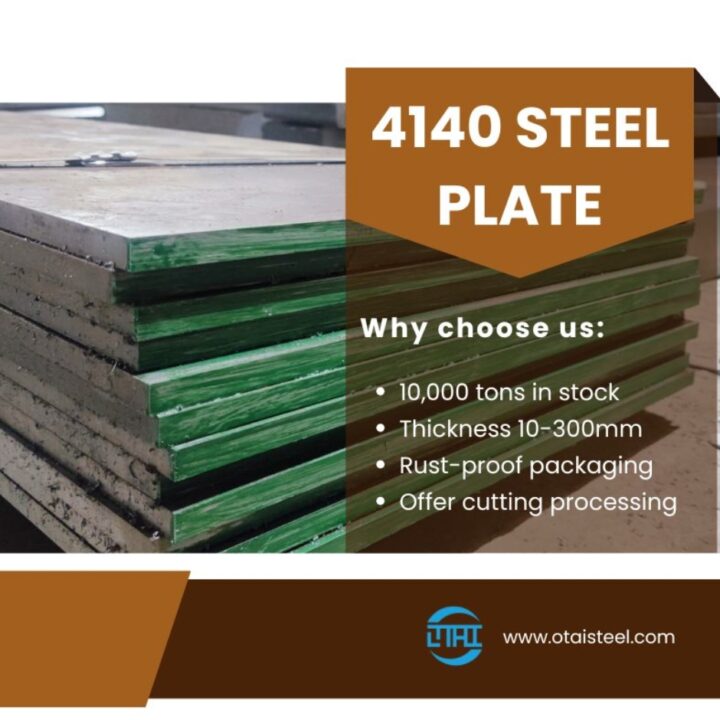
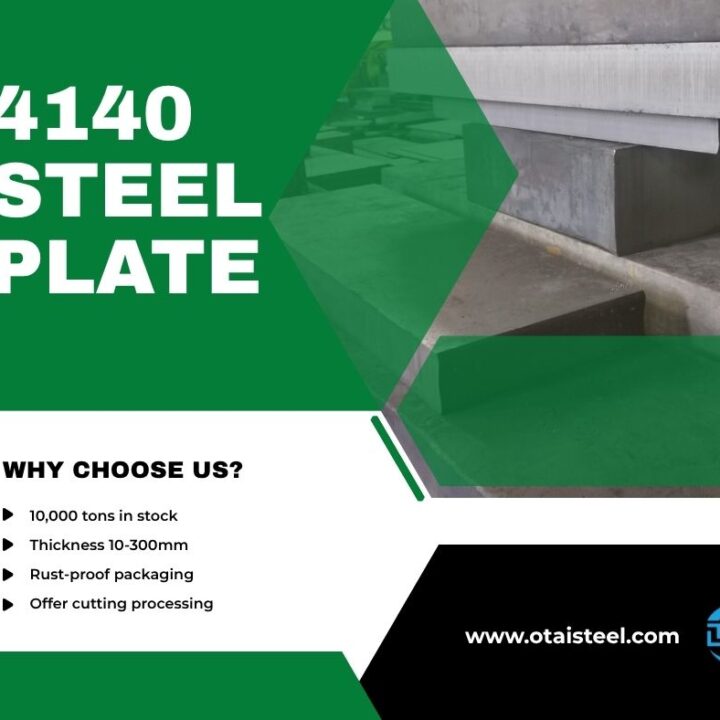
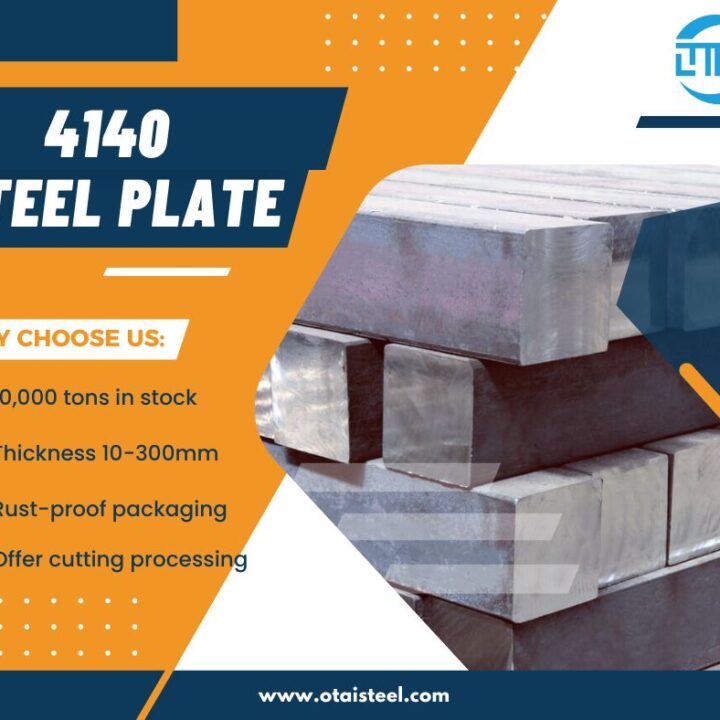
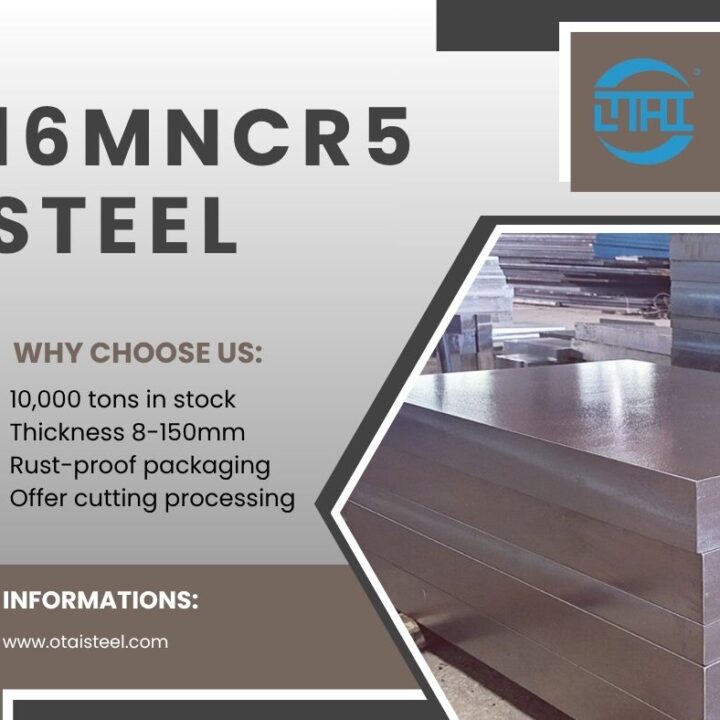
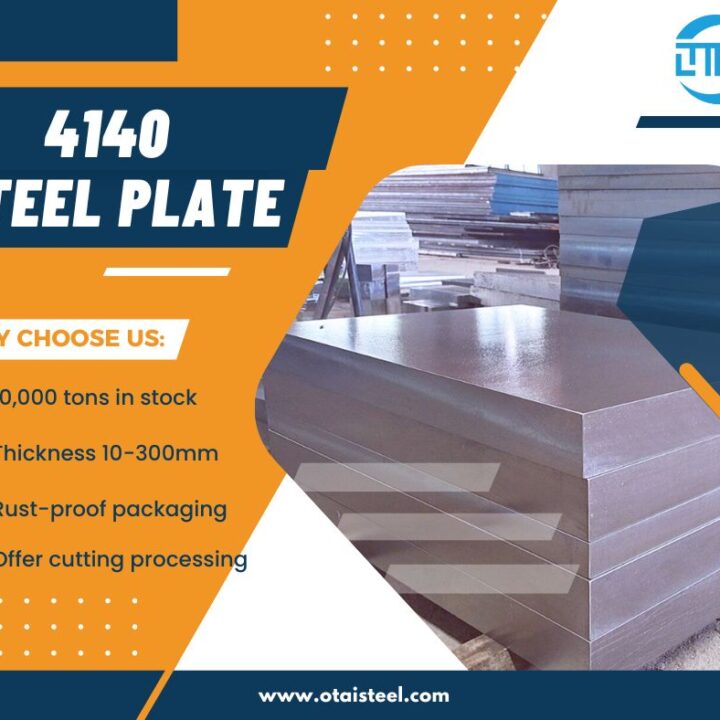
For product identification, dimensions and supply options, review the 41Cr4 / 1.7035 alloy steel product page from Otai Special Steel. When requesting a quotation, specify steel plate and the required thickness rather than relying on the general grade name alone.
📊 2. 41Cr4 Tensile Strength, Yield Strength and Elongation
Tensile strength, yield strength and elongation are three important mechanical properties for industrial material selection. They describe different aspects of how steel responds to an applied force, so buyers should evaluate them together rather than using a single value to judge suitability.
Tensile strength (Rm) represents the maximum engineering stress reached during a tensile test. It helps engineers evaluate a material’s resistance to tensile loading before fracture.
Yield strength or proof strength (Re or Rp0.2) indicates the stress associated with the onset of significant permanent deformation. Engineers use this value when assessing whether a component can withstand its intended working load without unacceptable deformation.
Elongation (A) measures the extension of a tensile-test specimen before fracture, expressed as a percentage. It provides information about ductility, although it does not replace toughness or impact testing.
For 41Cr4 in the quenched-and-tempered (+QT) condition, EN 10083-3:2006 provides different mechanical-property requirements according to the ruling section size. The following table summarizes representative reference values for the applicable size groups. For flat products, the corresponding size parameter is plate thickness.
| Product Thickness / Section Size | Minimum Yield / Proof Strength | Tensile Strength | Minimum Elongation |
|---|---|---|---|
| Plate thickness up to 8 mm | 800 MPa | 1,000–1,200 MPa | 11% |
| Over 8 mm to 20 mm | 660 MPa | 900–1,100 MPa | 12% |
| Over 20 mm to 60 mm | 560 MPa | 800–950 MPa | 14% |
Reference basis: EN 10083-3:2006, mechanical properties for 41Cr4 in the quenched-and-tempered condition. The table summarizes selected thickness groups and should not replace the complete standard or the requirements specified in the purchase order. The applicable edition, test specimen requirements and product specification must be confirmed for the actual order.
The table illustrates an important principle: the specified strength values generally decrease as the relevant section size increases. A larger plate section cools differently during quenching than a smaller section. Consequently, the material may not develop the same properties throughout its thickness under identical heat-treatment conditions.
For purchasing teams, this means that an advertised tensile strength of 1,000 MPa does not automatically apply to every thickness of 41Cr4 plate. You need to establish the product size, delivery condition and applicable specification before using the value for engineering calculations.
Elongation also deserves attention. Higher strength does not automatically mean better overall performance. A component that experiences impact, vibration or repeated loading may require a carefully balanced combination of strength, ductility and toughness.
When a drawing specifies minimum yield strength, tensile strength and elongation, ask the distributor to confirm whether the proposed product meets those requirements in the supplied condition. If the supplier cannot confirm compliance for the requested plate thickness, the engineering team should evaluate an alternative material or delivery route before purchase.
🔩 3. 41Cr4 Hardness in Different Delivery Conditions
Hardness is another major consideration when selecting 41Cr4 steel plate. It indicates a material’s resistance to localized indentation and can help buyers evaluate machinability, wear-related requirements and the consistency of a specified heat-treatment condition.
However, hardness does not provide a complete measurement of mechanical performance. Two steel products with similar hardness values may have different tensile properties, toughness or internal structures. The relationship between hardness and strength also depends on the material condition and the applicable test method.
For 41Cr4, the expected hardness depends mainly on whether the steel arrives in an annealed, quenched-and-tempered or surface-hardened condition.
| Condition | Hardness Reference | Typical Purchasing Consideration |
|---|---|---|
| Soft annealed (+A) | Maximum approximately 241 HBW in commonly cited EN-based references | Suitable when a softer starting condition supports machining or further processing. |
| Quenched and tempered (+QT) | Depends on section size and the specified strength and tempering condition | Check the required mechanical properties and hardness together. |
| Induction hardened | Surface hardness can reach high levels; a specific reference may require at least 52 HRC | Specify surface hardness, hardened depth and the inspection method. |
These are indicative reference values, not universal acceptance limits for every 41Cr4 product. The maximum annealed hardness and induction-hardening performance depend on the applicable product specification and processing route. A surface-hardness value should not be treated as the hardness of the entire plate.
For buyers who plan to machine the material, annealed 41Cr4 can be a practical option because its lower hardness generally makes cutting easier than machining a high-strength quenched-and-tempered product. Nevertheless, machinability also depends on the microstructure, cutting parameters, tooling and condition of the supplied material.
If the plate will undergo heat treatment after machining, your team should establish the required final hardness and mechanical properties before selecting the starting condition. This helps avoid paying for a delivery condition that adds little value to the production route.
Surface-hardening applications require additional care. Induction hardening creates a hardened surface layer while leaving the underlying material comparatively tougher. The actual hardness profile depends on the heating and quenching process, component geometry and specified acceptance criteria.
Consequently, buyers should not request only “41Cr4, 52 HRC” without explaining what that value represents. Does it refer to the finished component’s surface, the plate’s incoming condition or a specific test location? Clear wording helps the supplier quote the correct material and prevents disagreements during inspection.
When hardness is a contractual requirement, identify the hardness scale, acceptable range, test method and inspection location. If your production process includes subsequent heat treatment, distinguish the incoming material requirement from the finished-component requirement.
🔥 4. How Heat Treatment Changes 41Cr4 Performance
Heat treatment determines much of the strength, hardness and toughness that 41Cr4 can deliver. Although chemical composition establishes the steel’s basic response to heating and cooling, the final properties depend on the actual process and the dimensions of the material.
For procurement purposes, it is useful to distinguish three common routes: annealing, quenching and tempering, and induction hardening. Each serves a different purpose, so buyers should not assume that one condition automatically suits every application.
Annealing for machining and preparation
Annealing can soften the steel and help establish a suitable microstructure for machining. This condition may suit manufacturers that intend to cut or machine the plate before applying their own final heat treatment.
However, annealing does not provide the same strength level as a suitable quenched-and-tempered condition. If your design requires specified tensile or yield strength at delivery, confirm that annealed material meets the requirement before approving it.
Quenching and tempering for strength and toughness
Quenching hardens the steel by rapidly cooling it from an appropriate austenitizing temperature. Tempering then adjusts the resulting structure to balance hardness, strength and toughness for the intended service conditions.
For 41Cr4, the exact treatment temperatures and holding times depend on the product, section size, furnace practice and required properties. A heat-treatment schedule should therefore come from an applicable technical specification or a qualified process procedure rather than a universal temperature recommendation.
Quenching and tempering can substantially increase strength compared with the annealed condition. Nevertheless, excessive hardness may reduce toughness, while a higher tempering temperature generally reduces hardness and strength. The appropriate balance depends on the component’s loading and service requirements.
Induction hardening for surface wear resistance
Induction hardening locally heats the surface before rapid cooling. It can develop a hard outer layer while preserving a tougher core, which makes the process useful for selected shafts, pins and other components exposed to surface wear.
When the finished component requires induction hardening, purchasing teams should coordinate with the heat-treatment provider. Required surface hardness, effective hardened depth, geometry and inspection criteria should be defined before material procurement whenever they influence grade selection or manufacturing feasibility.
The following comparison summarizes the practical differences between the main conditions.
| Treatment Route | Primary Objective | What Buyers Should Specify |
|---|---|---|
| Annealing | Softer material for machining or further processing | Delivery condition and required hardness range |
| Quenching and tempering | A specified balance of strength, hardness and toughness | Mechanical properties, section size and acceptance criteria |
| Induction hardening | High surface hardness with a comparatively tougher core | Surface hardness, hardened depth and test locations |
Before purchasing, confirm which condition applies to the supplied plate and which applies to the finished component. This simple distinction helps prevent incorrect hardness expectations and unnecessary processing costs.
📏 5. How Plate Thickness Affects Mechanical Properties
Plate thickness plays an important role in material selection because it influences heat transfer during heat treatment. A thin section and a thick section do not cool at the same rate under identical conditions. As a result, the final microstructure and mechanical properties may differ.
This is one reason why standards specify mechanical properties according to section-size groups. The relevant size is not simply a purchasing label; it helps define the conditions under which the required properties can be achieved and verified.
For example, the EN 10083-3:2006 reference values for 41Cr4 in the quenched-and-tempered condition show different strength requirements for plate thicknesses up to 8 mm, over 8 mm to 20 mm, and over 20 mm to 60 mm. The larger group has lower specified minimum yield strength and a lower tensile-strength range than the smaller groups.
When you purchase 41Cr4 plate, therefore, the correct sequence is to establish the required thickness, determine the delivery condition, and then check whether the applicable specification supports the required properties for that size.
Consider a buyer who needs 30 mm plate for a machined component. The buyer should not simply copy a tensile-strength figure from a datasheet that covers thin plate or small-diameter bars. Instead, the quotation should identify the 30 mm plate, the required condition and the property requirements applicable to that product.
The same principle applies when you purchase cut blanks. Cutting a blank from a larger plate does not automatically make the blank equivalent to a thinner plate that was heat-treated under a different process. Its material history and resulting properties still matter.
For thick plate, ask the supplier to clarify the following points:
- Whether the required thickness is available in the specified grade.
- Whether the proposed delivery condition meets the applicable product requirements.
- Which mechanical properties the supplier can certify for that thickness.
- Whether any additional testing is required by your drawing or customer specification.
- Whether the material will undergo further heat treatment after cutting or machining.
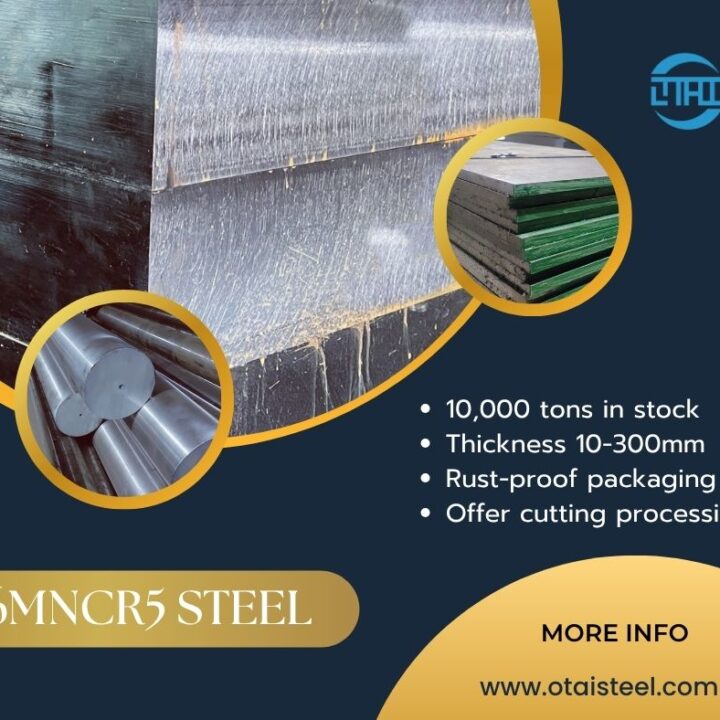
Otai has 41Cr4 steel plate in 4–300 mm thicknesses in stock. This is the available inventory thickness range, not a statement that every thickness automatically meets every quenched-and-tempered mechanical-property requirement. Confirm the actual dimensions, delivery condition, quantity and applicable specification for your order.
Where a project requires certified properties for a particular plate thickness, the supplier should confirm the exact requirements and available documentation before you place the purchase order. If the requested condition falls outside the available stock specification, discuss suitable alternatives with your engineering team.
⚙️ 6. Match 41Cr4 Properties to Your Industrial Application
Material selection should begin with the component’s operating requirements rather than a general preference for high strength. A steel grade that performs well in one application may be unnecessary or unsuitable in another.
41Cr4 is commonly used for mechanical parts that require useful strength, toughness and hardenability. Typical applications include shafts, axles, pins, gears, spindles, bolts and other machinery components. The correct choice depends on the actual load, component geometry, wear conditions and manufacturing process.
| Application | Relevant Property Considerations | Purchasing Check |
|---|---|---|
| Shafts and spindles | Yield strength, tensile strength, fatigue behavior and toughness | Confirm the required condition and section-size properties. |
| Pins and axles | Strength, impact resistance and wear requirements | Check the loading conditions and any surface-hardening needs. |
| Gears and transmission parts | Surface hardness, core toughness and fatigue performance | Coordinate material selection with the planned hardening process. |
| Bolts and connecting components | Tensile performance, ductility and service loads | Confirm the required mechanical class or component specification. |
| Machined machine parts | Machinability, dimensional stability and final strength | Choose a suitable incoming condition and machining allowance. |
For shafts subjected to torsion or repeated bending, yield strength alone is not enough to determine suitability. Engineers may also need to evaluate fatigue resistance, stress concentrations, surface finish and the effect of heat treatment.
For gears and other components exposed to repeated surface contact, wear resistance and surface-hardening performance may carry greater weight. In such cases, the required surface hardness and hardened depth should form part of the component specification.
Meanwhile, manufacturers that machine large quantities of blanks may prioritize consistent incoming hardness, cutting efficiency and material utilization. Purchasing plate close to the required dimensions can reduce waste, although the cost of customized cutting should be compared with the expected savings.
41Cr4 is not automatically the best option for every application requiring high strength. If a component has demanding hardenability requirements, a large effective section or severe service conditions, the engineering team should compare other alloy grades and verify that the selected material meets the design requirements.
The practical approach is to translate the application into measurable requirements. Identify the load, dimensions, operating environment, heat-treatment route and acceptance criteria, then ask the distributor to quote material that meets the approved specification.
🔄 7. 41Cr4 vs 5140 and Other Related Grades
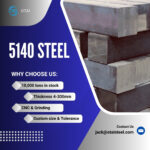
Industrial buyers may encounter 41Cr4 alongside AISI/SAE 5140, SCr440 and China’s 40Cr. These grades are often compared because they share a medium-carbon chromium alloy concept. However, similar designations or commercial cross-references do not automatically prove that their chemical composition, mechanical properties and delivery requirements are identical.
41Cr4 is associated with European material number 1.7035. AISI/SAE 5140 is a commonly cited related grade, while SCr440 and 40Cr appear in Japanese and Chinese material systems respectively. The relevant standards may specify different chemistry limits, heat-treatment requirements and mechanical-property acceptance criteria.
| Grade | Common Designation System | What Buyers Should Verify |
|---|---|---|
| 41Cr4 / 1.7035 | European EN designation | Applicable EN standard, delivery condition and section-size requirements. |
| AISI/SAE 5140 | US designation system | Applicable specification and actual heat chemistry. |
| SCr440 | Japanese JIS designation | Relevant JIS requirements and the intended product form. |
| 40Cr | Chinese GB designation | Applicable GB standard, chemistry and mechanical requirements. |
When a supplier proposes 5140 as an alternative to 41Cr4, do not approve the substitution based only on an equivalence chart. Compare the relevant chemistry limits, mechanical properties, product form, heat-treatment condition and inspection requirements. The engineering team or customer must approve any substitution where the drawing specifies a particular grade.
The same rule applies to 40Cr and SCr440. They may be useful candidates for comparison, but their suitability depends on the applicable standard and the requirements of the component. A similar nominal carbon or chromium content is not enough to establish full interchangeability.
For purchasing teams, the safest method is to specify the original grade and standard clearly. If an alternative is acceptable, list the approved alternatives in the inquiry or request the supplier to provide a technical comparison for engineering review.
This approach protects production quality and makes supplier quotations easier to compare. It also prevents confusion when a distributor uses a commercial equivalent designation that does not fully match the original technical specification.
🧪 8. Verify Mechanical Properties Through Standards and MTCs
Published datasheets help buyers understand the expected performance of 41Cr4, but the actual purchase should rely on the agreed specification and the documentation for the supplied material.
Three types of information deserve particular attention:
- Standard requirements: The applicable standard defines the specified limits or property requirements for the relevant product and condition.
- Typical values: A producer may publish representative values to describe a material. These figures do not automatically become contractual guarantees for every order.
- Actual test results: The Mill Test Certificate (MTC) records the material identification and applicable test information for the supplied heat or product, according to the agreed specification.
These categories serve different purposes. For example, a typical tensile strength published in a product brochure may help with preliminary material selection. However, if your drawing requires a minimum yield strength, you need confirmation that the proposed material meets that requirement under the specified conditions.
When reviewing an MTC, check the following details:
- Steel grade and material number.
- Applicable material standard and delivery condition.
- Heat number or other agreed traceability identification.
- Chemical composition for the supplied heat.
- Mechanical test results required by the order.
- Product dimensions or identification details where specified.
- Additional testing reports required by the purchase specification.
Hardness results should be interpreted in the context of the specified condition and test method. Likewise, tensile-test results should be evaluated against the correct product-size group and acceptance requirements. A value from an unrelated datasheet should not replace the contractual criteria.
Some industrial projects require additional inspections, such as ultrasonic testing or independent third-party inspection. If your order includes these requirements, agree on the inspection procedure, acceptance criteria, reporting format and inspection timing before shipment.
For international purchases, traceability also matters when your quality department needs to connect the MTC with the physical material. Ask the distributor how the material will be identified and how the certificate will accompany the shipment.
These checks help buyers make an informed decision without confusing general material information with verified product compliance. They also reduce the risk of receiving a technically suitable grade in a condition that does not satisfy the purchase order.
🛒 9. How to Select a 41Cr4 Steel Plate Supplier
Once you understand the required mechanical properties, the next step is to find a supplier who can provide the correct grade, dimensions, condition and documentation. A competitive price is useful, but the supplier must also demonstrate that the quoted material fits your production requirements.
For industrial buyers, a practical supplier evaluation should cover stock availability, technical communication, processing capability, inspection support and delivery arrangements.
Confirm stock and dimensions
Start by providing the required plate thickness, width, length and quantity. Ask whether the supplier can allocate material from existing stock or needs to arrange new production. A stated stock range does not guarantee that every dimension is immediately available, so obtain confirmation for your exact order.
Otai has 41Cr4 steel plate in 4–300 mm thicknesses in stock. Buyers should confirm the required dimensions, quantity, delivery condition and applicable mechanical-property requirements before placing an order.
Specify the required condition
Do not request only “41Cr4 steel plate.” State whether you need annealed or quenched-and-tempered material, or another agreed condition. If the plate must meet specified tensile strength, yield strength, elongation or hardness, include the applicable acceptance criteria in the RFQ.
Compare processing and inspection services
Cutting services can reduce material preparation at your factory, while CNC machining and grinding may help with more demanding dimensional requirements. Confirm the scope of each service, the tolerances, inspection arrangements and additional charges before comparing quotations.
If the project requires ultrasonic testing, third-party inspection or special documentation, state these requirements early. This allows the supplier to include the appropriate cost and schedule in the offer.
Evaluate the complete quotation
Compare material price, processing fees, inspection costs, packaging, freight and delivery terms. Also check whether the quoted material meets the required standard and condition. A lower price is not a genuine saving if the material requires extra processing or fails to meet the project’s acceptance requirements.
For repeat orders, communication and supply consistency are also important. A supplier who confirms stock accurately, answers technical questions and provides clear dispatch information can help purchasing teams plan production more reliably.
Before issuing the purchase order, confirm the grade, standard, plate dimensions, delivery condition, mechanical requirements, quantity, MTC, inspection scope, packaging and delivery schedule in writing. This final review helps both parties work from the same specification.
🏭 Company Advantages – Otai Special Steel
Otai Special Steel supplies alloy steel and tool steel to industrial buyers and international customers. We support material selection and purchasing by coordinating stock, cutting, processing, inspection and export requirements.
- 📏 41Cr4 steel plate in stock: Plate thicknesses from 4–300 mm are available in stock. Confirm the exact dimensions, delivery condition and quantity for your project.
- 📦 10,000+ tons of steel stock: Broad inventory supports different industrial material requirements.
- ✂️ 20 saw cutting machines: Cutting services help prepare steel plate to agreed dimensions.
- ⚙️ CNC machining and grinding: Additional processing options support projects with specific dimensional requirements.
- 📐 Customized sizes and tolerances: Cutting and machining requirements can be discussed according to your drawings and specifications.
- 🔬 Inspection support: Material certification, ultrasonic testing and third-party inspection can be coordinated according to the agreed order requirements.
- 📋 Quality documentation: MTCs and related inspection documents can be arranged according to the applicable specification.
- 📦 Export packaging: Anti-rust protection, steel strapping and wooden-case packaging can be discussed to suit the shipment.
- 🌍 International supply experience: Otai has exported steel to more than 54 countries since 1999.
- 🤝 One-stop service: Material supply, cutting, processing coordination, inspection support and export preparation can be managed through one supplier.
When requesting a 41Cr4 steel plate quotation, provide the required thickness, dimensions, quantity, standard, delivery condition and mechanical-property requirements. Our team can then check the relevant stock and discuss suitable processing, inspection and delivery options for your project.
❓ Frequently Asked Questions
1. What are the mechanical properties of 41Cr4 steel?
The mechanical properties depend on delivery condition and section size. For 41Cr4 in the quenched-and-tempered condition, commonly cited EN 10083-3:2006 reference values include tensile strength of 1,000–1,200 MPa for plate thicknesses up to 8 mm, 900–1,100 MPa for thicknesses over 8 mm to 20 mm, and 800–950 MPa for thicknesses over 20 mm to 60 mm. Confirm the applicable standard and requirements for the actual product.
2. What is the hardness of 41Cr4 steel plate?
Hardness depends on the delivery condition and heat treatment. Commonly cited references give a maximum of approximately 241 HBW for soft-annealed material, while quenched-and-tempered hardness varies with the specified properties and section size. Induction hardening can produce a much harder surface under suitable processing conditions.
3. Does thicker 41Cr4 steel plate have lower strength?
Under the referenced EN 10083-3 quenched-and-tempered requirements, larger section-size groups have lower specified strength values than smaller groups. Actual performance depends on the product and heat-treatment process, so buyers should verify the requirements applicable to their exact plate thickness.
4. Is 41Cr4 equivalent to AISI 5140?
41Cr4 and AISI/SAE 5140 are commonly compared as related chromium alloy steels. However, buyers should not assume complete interchangeability without checking the applicable standards, chemical composition, delivery condition and mechanical-property requirements. Obtain engineering approval before substituting a specified grade.
5. What information should I provide when buying 41Cr4 steel plate?
Provide the grade, applicable standard, plate thickness, width, length, quantity, delivery condition, required mechanical properties, MTC requirements, additional inspections and delivery destination. If the supplier will cut or machine the material, also specify the finished dimensions and tolerances.