16MnCr5 Steel Distributor: How to Choose the Right Supplier for Industrial Projects
📑 Table of Contents
- 🔎 1. Why Your Choice of 16MnCr5 Steel Distributor Matters
- 📋 2. Verify the Grade, Material Number and Applicable Standard
- 📏 3. Check Stock Availability, Plate Thickness and Dimensions
- 🧪 4. Review Chemical Composition and Material Certification
- ⚙️ 5. Match the Supply Condition to Your Manufacturing Process
- ✂️ 6. Evaluate Cutting, Machining and Inspection Capabilities
- 💰 7. Compare Quotations Beyond the Price per Kilogram
- 🌍 8. Assess Export Experience, Packaging and Delivery Reliability
- 📝 9. Prepare an Accurate RFQ for 16MnCr5 Steel
- 🏭 Company Advantages – Otai Special Steel
- ❓ Frequently Asked Questions
🔎 1. Why Your Choice of 16MnCr5 Steel Distributor Matters
When sourcing 16MnCr5 steel for an industrial project, the distributor you choose can influence material quality, purchasing costs, production schedules and the consistency of your finished components. A competitive quotation matters, but price alone cannot determine whether a supplier can meet your technical and commercial requirements.
16MnCr5 is a low-carbon manganese-chromium alloy steel designed primarily for case hardening. It is commonly identified by European material number 1.7131 and associated with EN 10084. Manufacturers use this grade for components that require a wear-resistant surface and a comparatively tough core after an appropriate carburizing and hardening process.
For purchasing managers, this application creates several requirements beyond simply finding the correct grade. You need a distributor who can confirm stock availability, supply suitable dimensions, provide the agreed material documentation and coordinate any required processing before shipment.
Consider a manufacturer preparing machined blanks for a transmission component. If the selected distributor cannot provide the required plate thickness, the buyer may need to revise the production plan or wait for new material. If the supplier cannot provide adequate traceability, the quality department may struggle to approve the shipment. Either situation can add costs that the original quotation did not reveal.
A professional 16MnCr5 steel distributor should therefore help you assess the complete supply arrangement, including:
- Compliance with the specified grade and material standard.
- Availability of the required plate thickness, dimensions and quantity.
- Delivery condition and suitability for subsequent machining.
- Mill Test Certificate (MTC) and other agreed inspection documents.
- Cutting services, dimensional tolerances and additional processing.
- Packaging, export documentation and delivery arrangements.
These checks are particularly important when you purchase steel for repeat production. A supplier who understands your drawings, quality requirements and delivery schedule can make future orders easier to manage. Over time, reliable communication and consistent supply may provide more value than a small difference in the initial material price.
For an overview of the product, you can also review Otai’s 16MnCr5 steel plate information before preparing your inquiry.
📋 2. Verify the Grade, Material Number and Applicable Standard
Before comparing distributors, make sure every quotation refers to the same material specification. A similar commercial description does not automatically establish that two steel products meet identical requirements.
16MnCr5 belongs to the case-hardening steel family. The designation is commonly associated with material number 1.7131, while EN 10084 specifies requirements for case-hardening steels and their technical delivery conditions. However, your purchase order should identify the exact standard and edition required by the drawing or customer specification.
| Item to Verify | What Buyers Should Check | Why It Matters |
|---|---|---|
| Steel grade | 16MnCr5 | Establishes the intended alloy grade. |
| Material number | 1.7131, where applicable | Helps identify the European material designation. |
| Applicable standard | The standard and edition specified in the purchase documents | Defines the relevant technical and delivery requirements. |
| Product form | Steel plate, with exact dimensions | Prevents misunderstandings about the supplied product. |
| Substitution approval | Written engineering approval for any proposed alternative | Reduces the risk of using an unsuitable grade. |
International buyers may encounter cross-reference tables that associate 16MnCr5 with other carburizing steels, including certain SAE/AISI grades. Treat these references as starting points for technical evaluation rather than proof of complete equivalence. Different standards may define different chemistry limits, hardenability requirements, product forms and acceptance criteria.
If your drawing specifies 16MnCr5, ask the distributor to quote that grade against the stated standard. Should the supplier propose an alternative, compare its chemical composition, hardenability, heat-treatment response and relevant mechanical requirements before approving a substitution.
It is also useful to distinguish the steel’s delivery condition from the condition required after manufacturing. The raw material may arrive in an annealed or another specified condition, while the finished component may require carburizing, quenching and tempering. Your supplier needs to understand which requirements apply to the incoming steel and which belong to your downstream process.
Clarifying these points before requesting prices makes supplier quotations easier to compare and reduces the risk of technical disputes after delivery.
📏 3. Check Stock Availability, Plate Thickness and Dimensions
For many industrial buyers, availability is one of the most important reasons to work with a stockholding distributor. Existing inventory can shorten purchasing lead times and help manufacturers respond to urgent production requirements. Nevertheless, a supplier’s general stock statement does not guarantee that every dimension and quantity is immediately available.
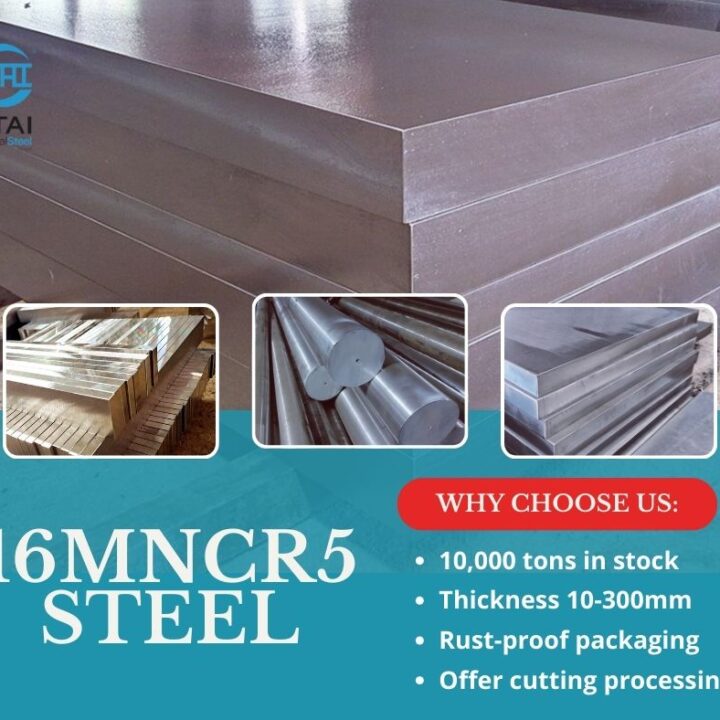
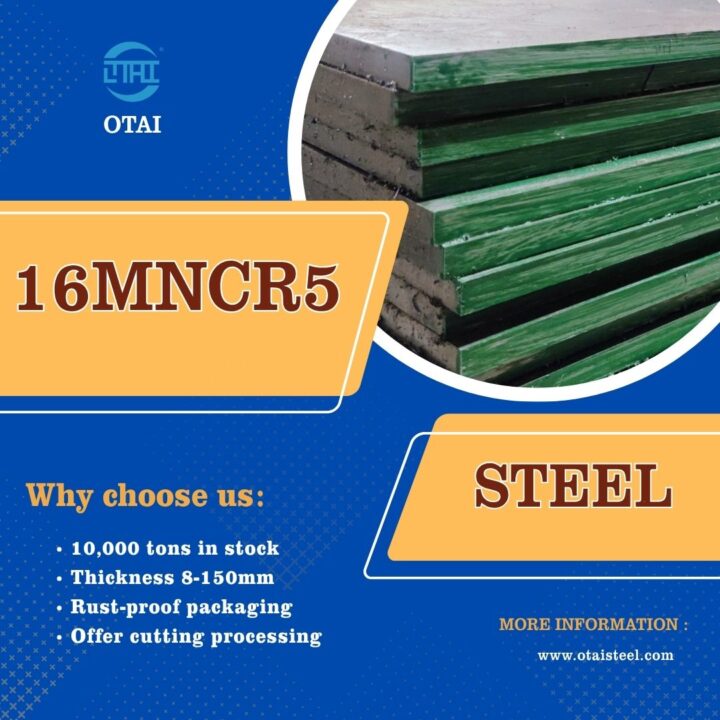
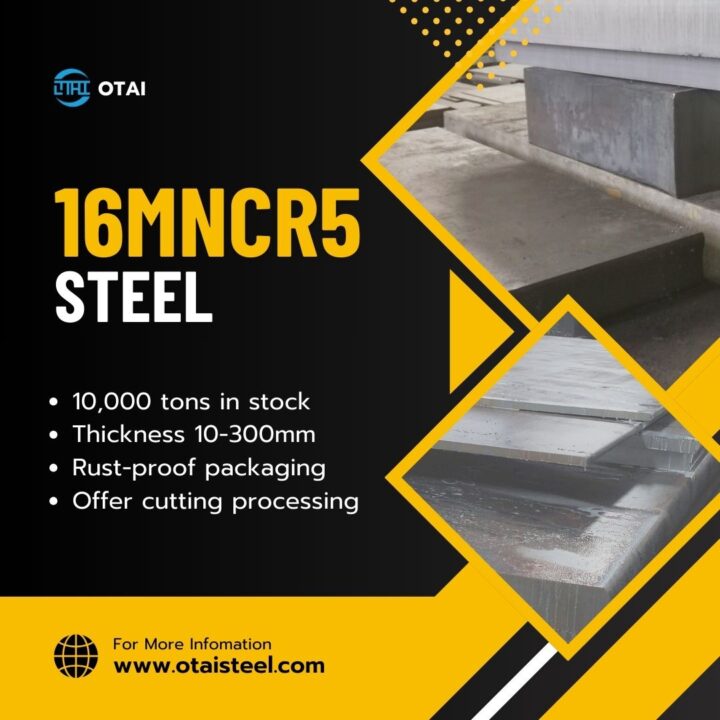
Otai Special Steel has 16MnCr5 steel plate in 8–150 mm thicknesses in stock. This range gives buyers a practical starting point when planning machined blanks or other components made from plate. Exact availability should still be confirmed against the required thickness, width, length and quantity.
When reviewing a quotation, distinguish between confirmed stock and material that requires new production. A distributor should clearly explain which option applies to your inquiry, rather than presenting an estimated supply range as guaranteed inventory.
| Dimension or Requirement | Information to Provide | Purchasing Benefit |
|---|---|---|
| Thickness | Required nominal thickness and any permitted variation | Helps identify suitable stock. |
| Width and length | Required plate dimensions or blank dimensions | Improves cutting and material-yield planning. |
| Quantity | Number of pieces and estimated or calculated weight | Supports stock allocation and freight planning. |
| Tolerance | Required tolerance for supplied or cut dimensions | Reduces additional correction work. |
| Delivery timing | Required dispatch date and destination | Helps determine whether stock can meet the schedule. |
Stock availability also affects how you plan machining allowances. Suppose a component requires a finished thickness of 40 mm. Your manufacturing team may need a thicker blank to allow for rough machining, surface preparation and final finishing. Conversely, purchasing excessive thickness may increase material cost, machining time and waste.
For this reason, provide the distributor with both the finished component dimensions and the desired starting dimensions whenever possible. The supplier can then assess whether an available plate size suits your production route.
Ask the distributor to confirm three separate details: whether the grade is in stock, whether the exact dimensions can be supplied or cut, and when the material can leave the warehouse. These answers give you a more realistic delivery estimate than a general stock statement alone.
🧪 4. Review Chemical Composition and Material Certification
Chemical composition helps establish whether the supplied steel complies with the specified grade. However, buyers should distinguish between standard limits, a producer’s Typical Analysis and the actual heat analysis recorded on the material certificate.
For 16MnCr5, the following values are commonly associated with EN 10084:2008. Confirm the applicable standard edition and product requirements for your order before using this table as an acceptance specification.
| Element | Commonly Cited Standard Range / Limit (%) | Relevance to Procurement |
|---|---|---|
| Carbon (C) | 0.14–0.19 | Influences carburizing response and core properties. |
| Silicon (Si) | ≤ 0.40 | Part of the specified chemistry controls. |
| Manganese (Mn) | 1.00–1.30 | Contributes to hardenability. |
| Phosphorus (P) | ≤ 0.025 | Controlled residual element. |
| Sulfur (S) | ≤ 0.035 | Relevant to the specified chemistry and machinability considerations. |
| Chromium (Cr) | 0.80–1.10 | Supports hardenability and case-hardening performance. |
These figures describe commonly cited standard limits, not a universal chemical analysis for every heat of 16MnCr5. A steel producer’s Typical Analysis may show representative values within the permitted limits, while the actual material certificate records the chemical analysis of the specific heat supplied.
For procurement, request a Mill Test Certificate (MTC) that corresponds to the material being offered. Your quality team should be able to connect the certificate to the delivered steel through the agreed identification and traceability system.
Depending on the purchase specification, the documentation may include:
- Steel grade and applicable material standard.
- Heat number and traceability information.
- Actual chemical composition.
- Delivery condition and applicable test results.
- Dimensions or product identification, where specified.
- Additional inspection reports required by the customer.
Do not assume that every order automatically includes the same tests or documents. State your requirements in the RFQ and confirm them in the quotation. If your project requires ultrasonic testing or an independent inspection, agree on the inspection scope, acceptance criteria and reporting requirements before shipment.
Clear documentation makes incoming inspection easier and provides a reliable basis for resolving quality questions. It also helps procurement teams avoid comparing a fully documented offer with a cheaper quotation that excludes essential inspection or certification requirements.
⚙️ 5. Match the Supply Condition to Your Manufacturing Process
Two quotations for 16MnCr5 may describe the same grade but offer material in different delivery conditions. That difference can affect machinability, inspection requirements, production planning and the subsequent heat-treatment route.
Before requesting a price, explain how your facility intends to process the material. If your team will machine the steel before carburizing, the incoming condition should suit the planned machining operations. If the material must meet a specific delivery hardness or surface condition, include that requirement in the purchase specification rather than leaving the distributor to interpret it.
For case-hardening steel, it is particularly important to separate the condition of the incoming plate from the properties required in the finished component. The as-supplied steel is not expected to have the same surface hardness as a component that has undergone carburizing and hardening.
During carburizing, the steel surface absorbs additional carbon. Subsequent hardening develops a high-hardness case, while the lower-carbon core can retain a comparatively tougher structure. This combination makes 16MnCr5 useful for components such as gears, shafts, pins and transmission parts that experience surface wear and repeated contact.
However, the final result depends on more than the grade name. Component geometry, case-depth requirements, furnace conditions, quenching, tempering and dimensional control all influence performance. A distributor can help confirm the incoming material specification, but the final heat-treatment procedure should follow the component design and the responsible engineering team’s requirements.
When comparing suppliers, clarify the following points:
- Delivery condition: State the required condition and any applicable standard designation.
- Machining sequence: Explain whether the material will undergo rough machining, finishing or other operations before heat treatment.
- Surface requirements: Specify any surface-condition or defect-acceptance requirements.
- Final heat treatment: Identify the intended carburizing and hardening process when it affects material selection or purchasing requirements.
- Dimensional allowance: Account for material removal and any expected dimensional changes during subsequent processing.
For example, if your production route includes precision machining before carburizing, purchasing steel in an unsuitable starting condition can increase tool wear or slow down processing. On the other hand, requesting an unnecessary special condition may raise the purchase cost without improving the finished component.
The practical solution is to involve both procurement and engineering before placing the order. The distributor should receive enough information to quote the correct supply condition, while the manufacturing team remains responsible for approving the process that will deliver the required final performance.
For further technical context, see Otai’s article on 16MnCr5 steel properties and purchasing considerations.
✂️ 6. Evaluate Cutting, Machining and Inspection Capabilities
A steel distributor’s processing services can affect the total cost and workload of your purchase. If the supplier can cut material to the agreed dimensions, your factory may spend less time handling oversized stock and preparing blanks. Depending on the project, additional machining or grinding services may also reduce the number of subcontractors involved.
Nevertheless, processing capability should match your actual requirements. A buyer who needs standard plate dimensions may not benefit from an expensive precision-machining package. Conversely, a manufacturer purchasing many identical blanks may value consistent cutting accuracy and reliable dimensional inspection.
| Service | Questions to Ask | Potential Benefit |
|---|---|---|
| Saw cutting | Can the supplier cut the required thickness and blank dimensions? | Reduces material preparation and handling at your facility. |
| CNC machining | Which operations and tolerances can the supplier support? | May reduce downstream processing steps. |
| Grinding | What dimensional and surface-finish requirements can be achieved? | Supports applications requiring controlled dimensions or finish. |
| Ultrasonic testing | What testing standard, coverage and acceptance criteria apply? | Provides additional information about internal material soundness. |
| Third-party inspection | Can the agreed independent inspector attend and issue reports? | Supports customer-specific quality procedures. |
Before approving a processing quotation, define the inspection points clearly. For cutting, confirm the dimensions, tolerance, quantity and whether the quoted size represents the finished blank or an approximate cut. For machining and grinding, specify the required tolerances and surface finish instead of relying on general descriptions such as “precision service.”
Inspection requirements also deserve early attention. Ultrasonic testing, for example, should follow an agreed procedure and acceptance standard appropriate to the application. The presence of a UT service alone does not establish that a material meets your requirements; the test scope and results must correspond to the purchase specification.
Otai operates 20 saw cutting machines and offers customized cutting, CNC machining and grinding services. These capabilities can help buyers coordinate material supply and processing through one supplier. If your project requires additional testing or independent inspection, discuss the scope and documentation before confirming the order.
When evaluating a distributor, look for a clear explanation of what the service includes, what tolerances the supplier accepts, which inspection documents will accompany the material and how the supplier handles nonconforming results. These details are more useful than a general claim that a company provides “complete service.”
💰 7. Compare Quotations Beyond the Price per Kilogram
When several distributors quote 16MnCr5 steel, the lowest unit price may appear to offer the greatest saving. However, the actual purchasing cost includes more than the price of the raw material. Cutting, inspection, packaging, freight, import-related charges and production delays can change the final cost considerably.
To make a fair comparison, first check whether every supplier has quoted the same technical specification. One quotation may cover standard plate, while another includes cutting, additional testing or special packaging. Comparing their headline prices without adjusting for these differences can lead to the wrong decision.
| Cost Component | What to Confirm | Risk if Overlooked |
|---|---|---|
| Material price | Grade, standard, dimensions, condition and quoted weight basis | You may compare different products as if they were identical. |
| Cutting and processing | Cutting fees, machining charges and dimensional tolerances | Additional preparation costs may appear later. |
| Inspection and documents | MTC, UT, third-party inspection and reporting fees | The offer may not satisfy your quality requirements. |
| Packaging and freight | Packaging method, delivery terms and destination | The landed cost may exceed the original estimate. |
| Lead time | Stock confirmation, processing time and dispatch schedule | Production may be delayed if delivery assumptions prove incorrect. |
It is also worth considering material utilization. If a distributor can cut a plate into the blank sizes you require, the purchase may reduce internal handling and material preparation. However, compare the cutting charge with the value of the material saved and the labor avoided before deciding whether the service is economical.
For repeat orders, evaluate supply consistency as well. A distributor who can communicate stock changes early, retain clear order records and respond quickly to technical questions may help your purchasing team avoid emergency sourcing. These operational benefits can matter more than a small initial discount.
Ask each supplier to identify exclusions in the quotation. For example, confirm whether the price includes cutting, inspection, export packaging and transport to the agreed destination. If delivery terms place certain costs or responsibilities on your company, include them in the total-cost calculation.
The best quotation is not necessarily the most expensive or the cheapest. It is the offer that meets the required specification and provides an acceptable balance of price, quality, processing, delivery and service.
🌍 8. Assess Export Experience, Packaging and Delivery Reliability
For overseas buyers, selecting a 16MnCr5 steel distributor also means evaluating how well the supplier manages international shipments. Even technically compliant steel can arrive with avoidable problems if the supplier does not prepare the packaging, documentation and dispatch arrangements carefully.
Start by confirming the destination, required delivery date and agreed delivery terms. Ask the distributor to explain the expected preparation time, dispatch schedule and any dependencies, such as inspection approval or confirmation of cutting dimensions. This helps your purchasing team coordinate the order with production planning.
Packaging deserves similar attention. Steel plates may experience moisture exposure, movement and surface contact during storage and transportation. Depending on the shipping route and customer requirements, the supplier may use anti-rust protection, steel strapping, protective wrapping or wooden cases. The appropriate method depends on the dimensions, weight, transport conditions and handling requirements.
Before shipment, clarify the following items:
- Packaging method: Confirm anti-rust protection and the agreed packing arrangement.
- Load security: Ensure that the packing and securing method suits the shipment’s weight and dimensions.
- Shipping documents: Agree on the commercial invoice, packing list, material certificate and other required documents.
- Inspection release: Confirm whether the shipment requires customer approval or third-party inspection before dispatch.
- Delivery terms: Identify the responsibilities for transport, insurance, customs clearance and other applicable charges.
- Communication: Establish who will provide dispatch updates and respond to questions during shipment.
A distributor with international supply experience should be able to explain its export process and identify the documents it can provide. However, buyers should not assume that every destination follows the same customs procedure or documentation requirements. Confirm any country-specific requirements with the relevant logistics and import specialists.
Reliable delivery also depends on realistic lead times. Stock material may be ready sooner than material requiring new production, but cutting, inspection, packaging and transport still take time. Ask for a schedule based on your actual order rather than relying on a general statement such as “fast delivery.”
For projects with repeated shipments, consistent communication can be particularly valuable. Agree on how the supplier will notify you of changes to availability, processing or dispatch. That visibility allows your team to respond before a delay affects manufacturing.
📝 9. Prepare an Accurate RFQ for 16MnCr5 Steel
A well-prepared Request for Quotation (RFQ) helps a distributor identify suitable stock, estimate processing costs and provide a more accurate delivery schedule. It also reduces the number of follow-up messages needed to clarify technical details.
Rather than sending only “Please quote 16MnCr5 steel,” include the information your supplier needs to evaluate the order. If a requirement remains undecided, identify it as an open point instead of allowing the supplier to make an assumption.
Recommended information for your 16MnCr5 steel RFQ:
- Steel grade: 16MnCr5.
- Material number: 1.7131, where applicable.
- Applicable standard and edition.
- Product form: steel plate.
- Required thickness, width and length.
- Quantity by piece and/or total weight.
- Required delivery condition and surface requirements.
- Cutting dimensions and tolerances, if applicable.
- MTC and any additional testing or inspection requirements.
- Packaging requirements and delivery destination.
- Required delivery date or target dispatch window.
If your project involves carburized components, provide relevant information about the intended manufacturing route when it affects material selection. For example, your engineering team may need to specify the required delivery condition for machining or identify any special material acceptance requirements. Final case depth and surface hardness should be defined in the component specification and heat-treatment requirements, not confused with the raw plate’s delivery properties.
After receiving quotations, compare them using the same checklist. Verify that the offered dimensions match your request, that the supplier has confirmed actual availability, and that the quoted documentation and inspection scope meet your requirements.
It is also useful to request a clear statement of stock status. Ask whether the quoted material is currently available in the required dimensions, whether cutting is included and when the supplier expects to dispatch it. If the material is not in stock, request the expected production lead time separately.
Before issuing the purchase order, review the final specification, price basis, quantity, delivery terms, packaging, inspection requirements and agreed delivery schedule. Written confirmation helps both parties work from the same requirements.
For buyers who source steel internationally, a complete RFQ is more than an administrative form. It is a practical way to control purchasing risk, reduce avoidable communication and make supplier quotations genuinely comparable.
🏭 Company Advantages – Otai Special Steel
Otai Special Steel supplies alloy steel and tool steel to industrial customers and international buyers. We support purchasing teams that need material availability, customized processing and clear communication throughout the supply process.
- 📏 16MnCr5 steel plate in stock: Plate thicknesses from 8–150 mm are available in stock. Confirm the exact dimensions and quantity for your project.
- 📦 10,000+ tons of inventory: Broad stock resources support different industrial material requirements.
- ✂️ 20 saw cutting machines: Cutting services help prepare steel to agreed dimensions.
- ⚙️ CNC machining and grinding: Additional processing options support customers with specific dimensional requirements.
- 📐 Customized sizes and tolerances: We can discuss cutting and processing requirements according to your drawings and specifications.
- 🔬 Inspection support: Ultrasonic testing and third-party inspection can be arranged according to the agreed requirements.
- 📋 Material documentation: MTC and related quality documentation can be coordinated according to the order specification.
- 📦 Export packaging: Anti-rust protection, steel strapping and wooden-case packaging can be discussed to suit shipment requirements.
- 🌍 International supply experience: Otai has exported steel products to more than 54 countries since 1999.
- 🤝 One-stop service: Material supply, cutting, processing coordination, inspection support and export preparation can be managed through one supplier.
When sourcing 16MnCr5 steel, send us your required thickness, dimensions, quantity, standard, delivery condition and inspection requirements. We can then check the relevant stock and discuss suitable processing and delivery options for your industrial project.
❓ Frequently Asked Questions
1. What should I look for in a 16MnCr5 steel distributor?
Check the distributor’s confirmed stock, compliance with the specified material standard, MTC availability, processing services, inspection options, packaging and delivery arrangements. A supplier should also communicate clearly about dimensions, lead times and any limitations in the quotation.
2. What thickness of 16MnCr5 steel plate does Otai have in stock?
Otai Special Steel has 16MnCr5 steel plate in 8–150 mm thicknesses in stock. Confirm the exact thickness, width, length and quantity because stock availability may vary by dimension.
3. Is 16MnCr5 the same as material number 1.7131?
Yes. Material number 1.7131 is the numerical designation commonly associated with 16MnCr5 in the European steel designation system. Buyers should still specify the applicable standard and technical requirements in the purchase order.
4. What documents should I request when buying 16MnCr5 steel?
Request a Mill Test Certificate that identifies the supplied material and provides the required chemical analysis and test information. Depending on the order, you may also need traceability records, ultrasonic testing reports or third-party inspection documents. Agree on the documentation requirements before shipment.
5. Can a 16MnCr5 steel distributor provide customized cutting?
Yes, distributors with suitable processing equipment can cut plate to agreed dimensions. Provide the required thickness, width, length, quantity and tolerance. Confirm whether the quotation covers cutting, dimensional inspection and any additional machining or grinding services.