4130 Steel Stock: How to Check Availability, Specifications and Delivery
📑 Table of Contents
- 🔎 1. What Does 4130 Steel Stock Mean for Buyers?
- 📋 2. Confirm the 4130 Grade and Applicable Standard
- 📏 3. Check 4130 Stock by Thickness, Size and Quantity
- ⚙️ 4. Delivery Condition and Mechanical Requirements
- 🧪 5. 4130 Chemistry and MTC: What Should You Verify?
- ✂️ 6. Cutting, Tolerance and Processing for Stock Material
- 💰 7. What Affects the Cost of 4130 Steel Stock?
- 📦 8. What to Include When Requesting 4130 Stock
- 🏭 9. 4130 Steel Stock from Otai Special Steel
- ❓ FAQ About 4130 Steel Stock
🔎 1. What Does 4130 Steel Stock Mean for Buyers?
When a buyer searches for 4130 steel stock, the main concern is usually availability. However, seeing 4130 listed on a supplier’s website does not automatically mean that the exact material required for your project is sitting in the warehouse.
For an industrial purchase, stock availability has several dimensions. You need to know the product form, thickness or diameter, width and length, quantity, delivery condition, applicable specification and documentation. A supplier may have 4130 available in general while lacking the size required for your production order.
That distinction becomes important when your project has a fixed machining schedule. If the required material is already available, you may avoid the lead time associated with new production. On the other hand, if the supplier needs to source or produce the material first, the delivery schedule can change significantly.
Before requesting a quotation, consider these four questions:
- Is the required 4130 product physically in stock?
- Does the available material match the required dimensions?
- Does its delivery condition match your manufacturing process?
- Can the supplier provide the required MTC and inspection documents?
In other words, useful 4130 steel stock is not simply material with the right grade name. It is material that matches the technical and delivery requirements of your order.
📋 2. Confirm the 4130 Grade and Applicable Standard
Before comparing stock quantities or prices, confirm exactly which 4130 specification your project requires. The designation “4130” identifies a chromium-molybdenum alloy steel, but the purchasing specification should also define the applicable standard and product requirements.
What should appear in your purchasing specification?
| Requirement | What the buyer should confirm |
|---|---|
| Grade | AISI/SAE 4130 or the exact designation required by the drawing |
| Standard | Applicable ASTM, SAE, AMS or customer-specific specification |
| Product form | Plate, sheet, bar, tube or another specified form |
| Condition | Annealed, normalized, quenched and tempered, or another specified condition |
| Inspection | MTC, hardness, UT or third-party inspection when required |
4130 is widely recognized as a chromium-molybdenum alloy steel. Its combination of strength, toughness and hardenability makes it useful for demanding mechanical and structural applications. Nevertheless, the material specification should come from your drawing, customer specification or purchasing standard rather than from the grade name alone.
This is particularly important when buying stock for export. A material that matches the general 4130 designation may still require a specific product standard, heat-treatment condition or inspection level before your customer can accept it.
For that reason, give the supplier your exact specification at the quotation stage. This allows the stockist to check the available material against the requirement instead of confirming only the grade.
📏 3. Check 4130 Stock by Thickness, Size and Quantity
For buyers looking for 4130 steel stock, dimensions often determine whether the material can actually solve the purchasing problem.
For example, suppose your drawing requires a 30 mm thick plate. A supplier may have 4130 in stock, but if the available thickness starts at 40 mm, you still need to consider whether machining down from the available stock makes technical and economic sense.
The same issue applies to width and length. If the required blanks can be cut from existing plate dimensions, a stockist may provide a faster solution than producing a new batch. If the available stock is too small, however, a new production order may become necessary.
Otai’s confirmed 4130 stock
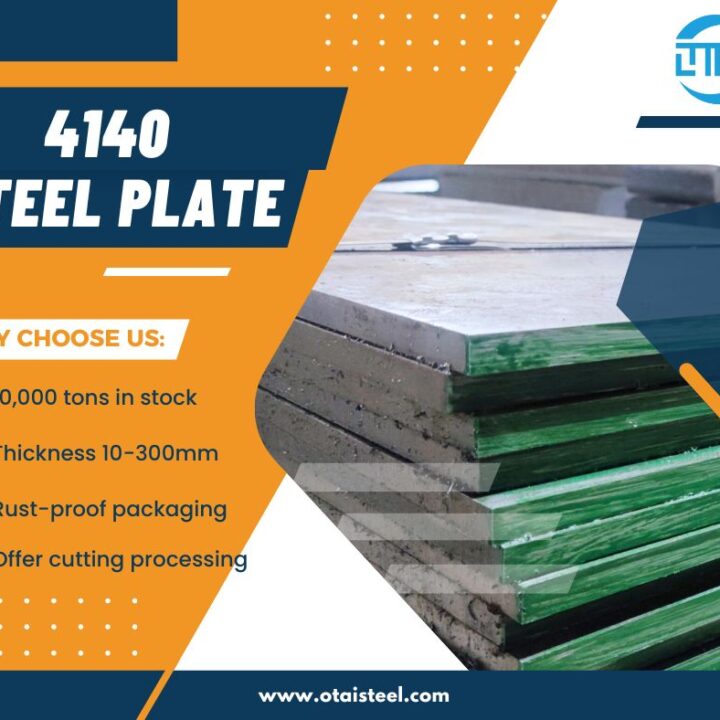
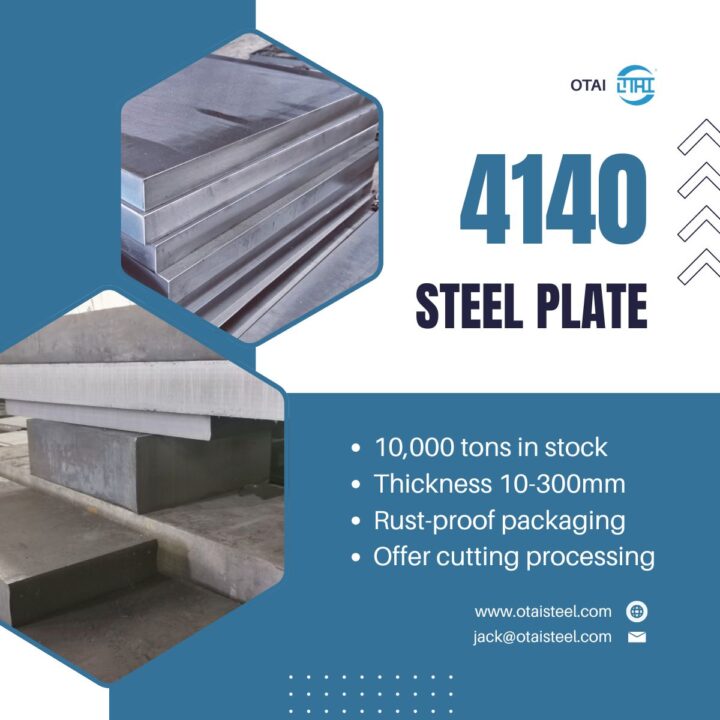
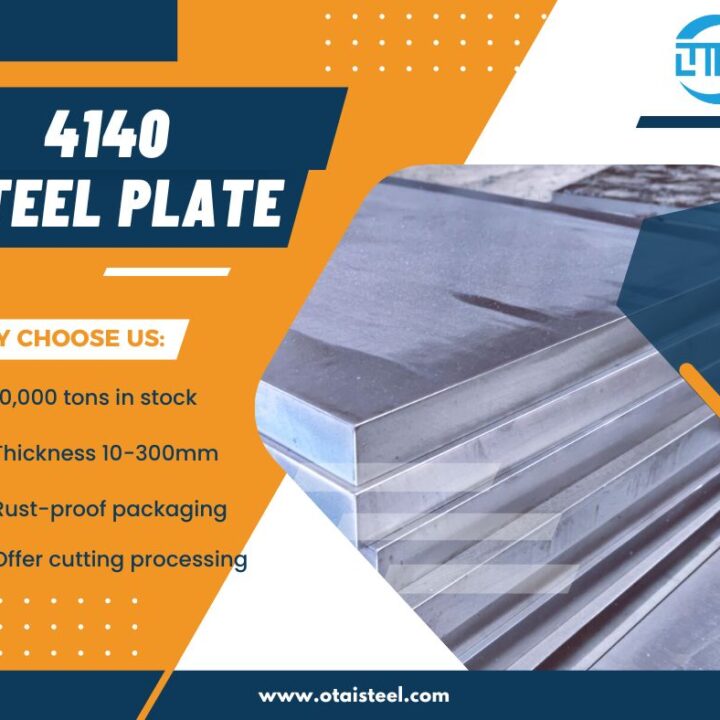
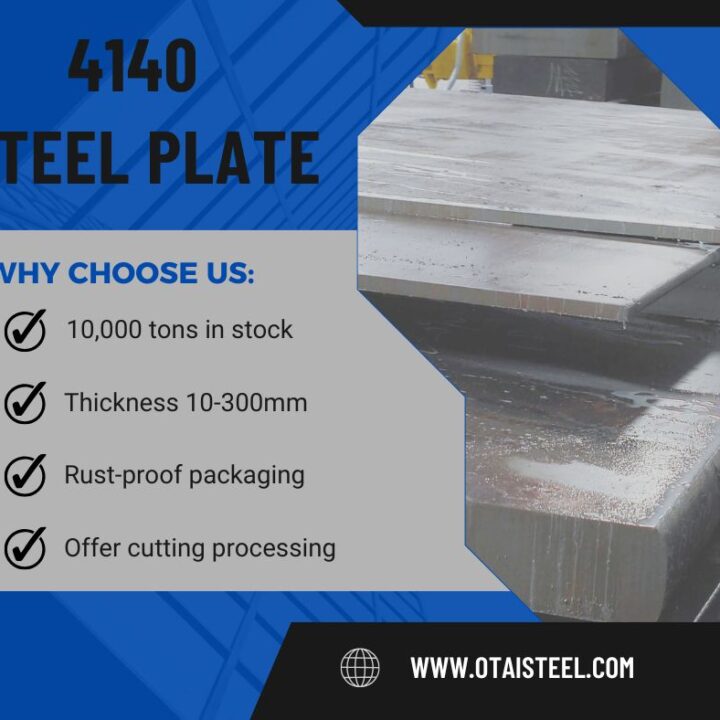
Otai currently has 4130 steel plate in stock in thicknesses from 10–70 mm. This is the confirmed 4130 inventory range to use when evaluating current stock availability.
For a specific purchasing requirement, you should still confirm the available width, length, quantity and material condition. Stock ranges describe the inventory program; they do not guarantee that every thickness within the range is available in every dimension at every moment.
| Buyer information | Why it matters |
|---|---|
| Thickness | Determines whether existing stock can meet the drawing requirement |
| Width × length | Determines how efficiently the stock can produce your required blanks |
| Quantity | Confirms whether the available inventory covers the complete order |
| Required cut size | Allows the supplier to calculate cutting requirements and material yield |
If you are sourcing 4130 plate, you can review the AISI 4130 Alloy Steel product page and then provide your required dimensions and quantity for an actual stock check.
⚙️ 4. Delivery Condition and Mechanical Requirements
Finding the correct 4130 thickness is only the first step. The delivery condition can also determine whether the stock fits your manufacturing route.
4130 may undergo annealing, normalizing, quenching and tempering, or other heat-treatment processes depending on the application. Each condition can produce different hardness and mechanical properties. Therefore, a buyer should not treat “4130 steel” as a single mechanical-property condition.
Match the stock condition to your process
If your workshop will perform the final heat treatment, you may need material in a condition that supports machining before hardening. If the supplier needs to deliver finished or semi-finished material with a specified hardness, the purchase specification should state that requirement clearly.
For structural or mechanical components, tensile strength, yield strength, elongation and impact requirements may also matter. The exact values depend on the applicable product specification, section size and heat-treatment condition.
Before accepting a quotation, ask the supplier:
- What is the delivery condition of the available stock?
- What hardness does the actual material have?
- Does the MTC report the required mechanical properties?
- Will the supplied condition work with the customer’s heat-treatment process?
This prevents a common purchasing mistake: choosing material based only on grade and dimensions while ignoring the condition in which the steel will arrive.
🧪 5. 4130 Chemistry and MTC: What Should You Verify?
Chemical composition provides another important checkpoint when purchasing 4130 steel stock. A supplier may publish a typical composition table, but that information should not replace the actual MTC for the material being shipped.
For 4130, commonly referenced composition ranges include carbon around 0.28–0.33%, silicon around 0.15–0.35%, manganese around 0.40–0.60%, chromium around 0.80–1.10% and molybdenum around 0.15–0.25%, depending on the applicable specification.
These figures should be treated as specification-related reference information rather than as a universal fixed chemistry for every heat. Different product standards can establish different requirements, and the actual heat chemistry appears on the relevant mill test certificate when provided.
Separate specification data from actual material data
| Data source | How to use it when buying |
|---|---|
| Applicable standard | Defines the required composition range or limits |
| Typical Analysis | Provides representative information from a producer and does not replace the standard |
| Actual MTC | Documents the chemistry of the supplied heat or lot according to the certificate |
If your customer requires material traceability, ask the 4130 stockist to identify the heat number and provide the corresponding MTC. For larger or critical orders, you may also request additional inspection according to the purchase specification.
✂️ 6. Cutting, Tolerance and Processing for Stock Material
One advantage of purchasing from a steel stockist is the possibility of receiving material closer to the dimensions required by your workshop.
For 4130 plate, cutting can reduce the amount of oversized material that your own facility needs to handle. It can also simplify production planning when several component blanks require different dimensions.
Give the stockist clear cutting information
- Original plate thickness
- Required cut length and width
- Quantity of each cut size
- Cutting tolerance
- Whether the pieces require machining or grinding
- Surface or edge requirements
- Packaging requirements for shipment
Otai operates 20 saw cutting machines and provides cutting and processing support for steel products. CNC machining and grinding capabilities can also support projects that require additional dimensional preparation.
However, buyers should distinguish between stock material tolerance and finished machining tolerance. A saw-cut piece does not automatically have the same dimensional accuracy as a precision-machined component. State the required tolerance clearly so the supplier can select the correct processing route.
This approach can also improve cost control. If your machining process already removes a significant amount of material, purchasing standard stock dimensions may be more economical than requesting unnecessary precision processing.
💰 7. What Affects the Cost of 4130 Steel Stock?
Stock availability can shorten lead time, but it does not mean every 4130 quotation will have the same price. The final purchase cost depends on several technical and commercial factors.
| Factor | Potential effect on cost |
|---|---|
| 4130 specification | The required standard and quality level influence sourcing |
| Thickness | Unusual or difficult-to-source sizes may affect the quotation |
| Quantity | Order volume affects material utilization and commercial pricing |
| Cutting | Cut-to-size orders require additional processing and handling |
| Inspection | UT, third-party inspection and special documentation may add cost |
| Packaging | Export packaging and anti-rust protection affect shipment cost |
| Freight | Destination, shipment method and weight determine delivered cost |
For this reason, compare 4130 quotations on an equivalent basis. If one supplier quotes standard stock and another includes cutting, inspection and export packaging, the two prices do not represent the same purchasing package.
A good RFQ should therefore request both the material price and the key services included in the quotation. That makes the final comparison more meaningful.
📦 8. What to Include When Requesting 4130 Stock
A detailed RFQ gives a stockist enough information to check real inventory instead of sending a generic 4130 quotation.
Recommended 4130 stock RFQ checklist
- Grade: State AISI/SAE 4130 or the required customer specification.
- Standard: Identify the applicable material standard.
- Product form: Specify the form required for your application.
- Dimensions: Give thickness, width and length for plate.
- Quantity: State pieces, total weight or both.
- Condition: Specify annealed, normalized, Q&T or another required condition.
- Mechanical requirements: Include hardness or strength requirements when applicable.
- Inspection: State MTC, UT, third-party inspection or other requirements.
- Cutting: Give finished dimensions and tolerance if you need cut pieces.
- Destination: Provide the delivery location for an accurate freight quotation.
If you have a customer drawing or previous purchasing specification, attaching it to the RFQ can make the discussion much more efficient. The supplier can then compare the available stock against your actual technical requirements.
For repeat orders, retaining the previous heat number, MTC and dimensional requirements can also simplify future purchasing. Instead of asking whether “4130 is available,” your team can request a specific grade, condition, size and quantity.
🏭 9. 4130 Steel Stock from Otai Special Steel
For buyers sourcing 4130 steel from China, Otai Special Steel provides stock and processing support for alloy steel products. The company has supplied international customers since 1999 and exports to more than 54 countries.
- 4130 steel plate in stock: 10–70 mm thickness range.
- Stock verification: Specific dimensions and quantities can be checked against current inventory.
- Saw cutting: 20 saw cutting machines support cut-to-size requirements.
- CNC and grinding: Additional processing is available when project specifications require it.
- Custom dimensions and tolerances: Supply can be coordinated according to the buyer’s technical requirements.
- Inspection support: Quality testing, ultrasonic testing and third-party inspection can be arranged according to project requirements.
- Export packaging: Bundling, wooden cases and anti-rust packaging are available for international shipments.
- One-stop service: Material sourcing, cutting, processing, inspection and export preparation can be coordinated through one supplier.
If you are specifically looking for 4130 plate from stock, the AISI 4130 Alloy Steel product page is the appropriate starting point for reviewing the product information. For an actual stock inquiry, provide the required thickness, width, length, quantity and delivery condition.
The practical goal is not simply to find a supplier that lists 4130. It is to find available material that matches your specification and can move through cutting, inspection, packaging and delivery without creating an unexpected delay.
❓ FAQ About 4130 Steel Stock
1. What 4130 steel thickness is currently in stock at Otai?
Otai currently has 4130 steel plate in stock from 10–70 mm thickness. Specific width, length, quantity and condition should be confirmed when placing an inquiry.
2. Does “4130 steel stock” mean the material is ready to ship?
Not necessarily. Stock generally indicates that material is held or available through the supplier’s inventory system, but the exact size, quantity, inspection documents, cutting requirements and shipment schedule still need confirmation.
3. What information should I provide when asking for 4130 stock?
Provide the grade and standard, product form, dimensions, quantity, delivery condition, required mechanical properties, MTC or inspection requirements, destination and any cutting requirements. This gives the supplier enough information to check suitable material.
4. Can 4130 stock be cut to a required size?
Yes. Cutting can be arranged when the supplier offers the required processing service. Give the finished dimensions and tolerance in your RFQ so the supplier can quote the material and cutting together.
5. Should I compare 4130 stock based only on price per kilogram?
No. Compare equivalent specifications, dimensions, delivery condition, inspection, cutting, packaging, freight and lead time. A lower material price may not represent a lower total purchasing cost if additional processing or shipping requirements remain outside the quotation.