 4140 Steel MatWeb: Material Properties, Specifications, and Industrial Uses
🔍 Introduction
Many engineers and purchasing professionals search for 4140 steel MatWeb data when evaluating alloy steel materials for industrial applications. 4140 steel is one of the most widely used chromium-molybdenum alloy steels because it offers an excellent combination of strength, hardness, toughness, and machinability.
Material databases such as MatWeb help users compare mechanical properties, chemical composition, heat treatment conditions, and engineering specifications before selecting a steel grade. Understanding the typical 4140 steel MatWeb data allows manufacturers to choose the correct material for demanding projects.
🛠️ What Is 4140 Steel?
4140 steel is a medium-carbon low-alloy steel containing chromium and molybdenum. These alloying elements improve hardenability, wear resistance, and tensile strength.
Chemical Composition of 4140 Steel
| Element | Composition (%) |
|---|---|
| Carbon (C) | 0.38 – 0.43 |
| Manganese (Mn) | 0.75 – 1.00 |
| Chromium (Cr) | 0.80 – 1.10 |
| Molybdenum (Mo) | 0.15 – 0.25 |
| Silicon (Si) | 0.15 – 0.35 |
| Phosphorus (P) | ≤ 0.035 |
| Sulfur (S) | ≤ 0.040 |
This composition gives 4140 steel excellent mechanical performance under high-stress conditions.
📊 Typical 4140 Steel MatWeb Properties
The following table summarizes common 4140 steel MatWeb mechanical properties in quenched and tempered condition.
| Property | Typical Value |
|---|---|
| Tensile Strength | 950 – 1080 MPa |
| Yield Strength | 655 – 850 MPa |
| Elongation | 12 – 25% |
| Hardness | 28 – 35 HRC |
| Density | 7.85 g/cm³ |
| Elastic Modulus | 205 GPa |
| Thermal Conductivity | 42.6 W/m·K |
| Melting Point | 1416°C |
These values may vary depending on heat treatment, section size, and manufacturing process.
🔥 Heat Treatment Information
One reason engineers frequently review 4140 steel MatWeb data is to understand heat-treatment performance.
Annealing
- Improves machinability
- Reduces internal stress
- Produces lower hardness
Quenching
- Increases strength and hardness
- Enhances wear resistance
- Usually performed in oil
Tempering
- Reduces brittleness
- Improves toughness
- Balances hardness and ductility
After proper quenching and tempering, 4140 steel achieves excellent fatigue resistance and mechanical stability.
⚙️ Mechanical Advantages of 4140 Steel
High Strength
The alloy maintains strong tensile and yield properties under heavy loads.
Good Toughness
4140 steel resists cracking and impact damage in demanding applications.
Excellent Wear Resistance
Heat-treated surfaces handle abrasion and friction effectively.
Strong Hardenability
The chromium and molybdenum content help the material achieve deep hardness penetration during heat treatment.
Good Machinability
In annealed condition, manufacturers can machine the steel efficiently before final hardening.
🏭 Common Applications
Because of the mechanical properties shown in 4140 steel MatWeb data, manufacturers use this material across many industries.
Automotive Industry
Applications include:
- Crankshafts
- Axles
- Drive shafts
- Steering components
Oil and Gas Industry
Typical components include:
- Drill collars
- Pump shafts
- Tool joints
- Valve parts
Heavy Machinery
Manufacturers use 4140 steel for:
- Gears
- Rollers
- Hydraulic shafts
- Couplings
Aerospace Industry
The material supports aerospace applications requiring:
- High strength
- Toughness
- Reliable fatigue performance
🌍 International Equivalent Grades
Many users comparing 4140 steel MatWeb specifications also review equivalent grades.
| Standard | Equivalent Grade |
|---|---|
| ASTM / AISI | 4140 |
| DIN | 42CrMo4 |
| EN | 42CrMoS4 |
| JIS | SCM440 |
| GB | 42CrMo |
| BS | 708M40 |
These equivalent materials offer similar chemical composition and mechanical properties.
🏢 Company Advantages
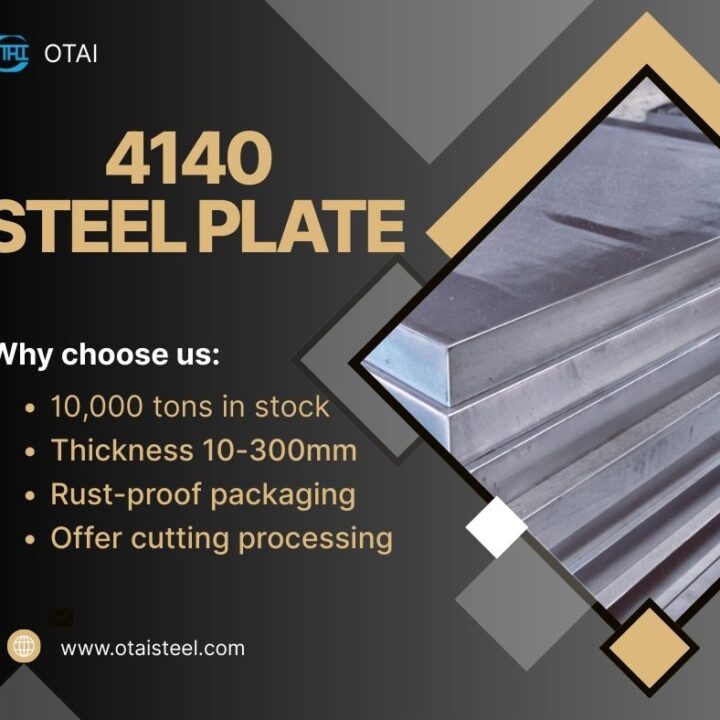
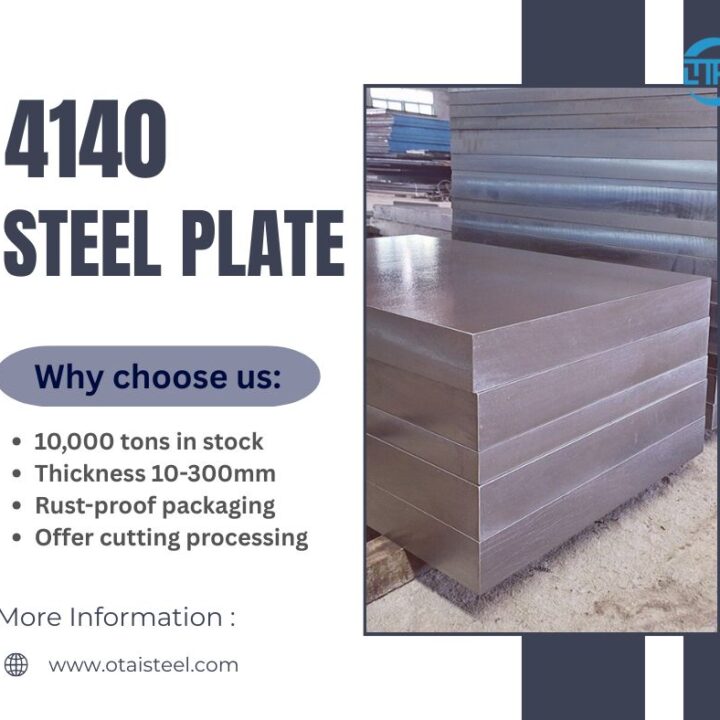
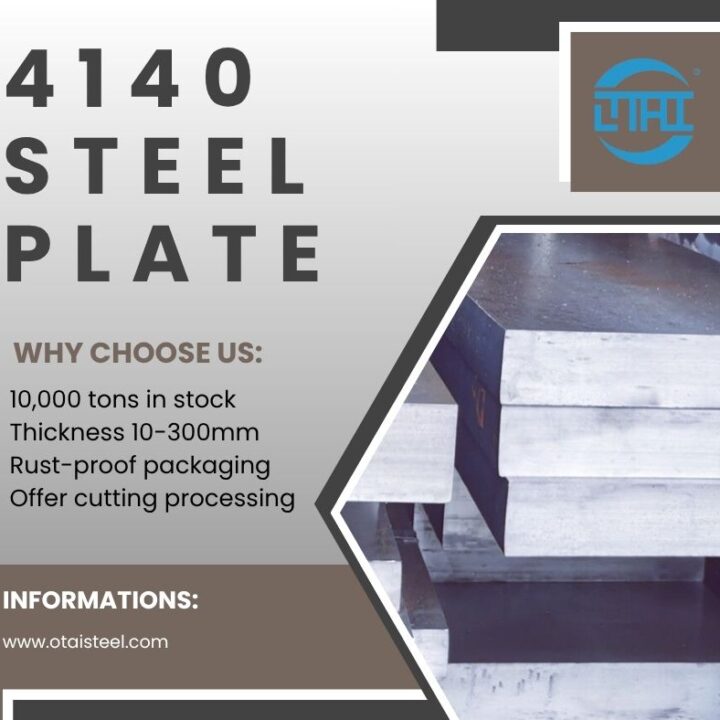
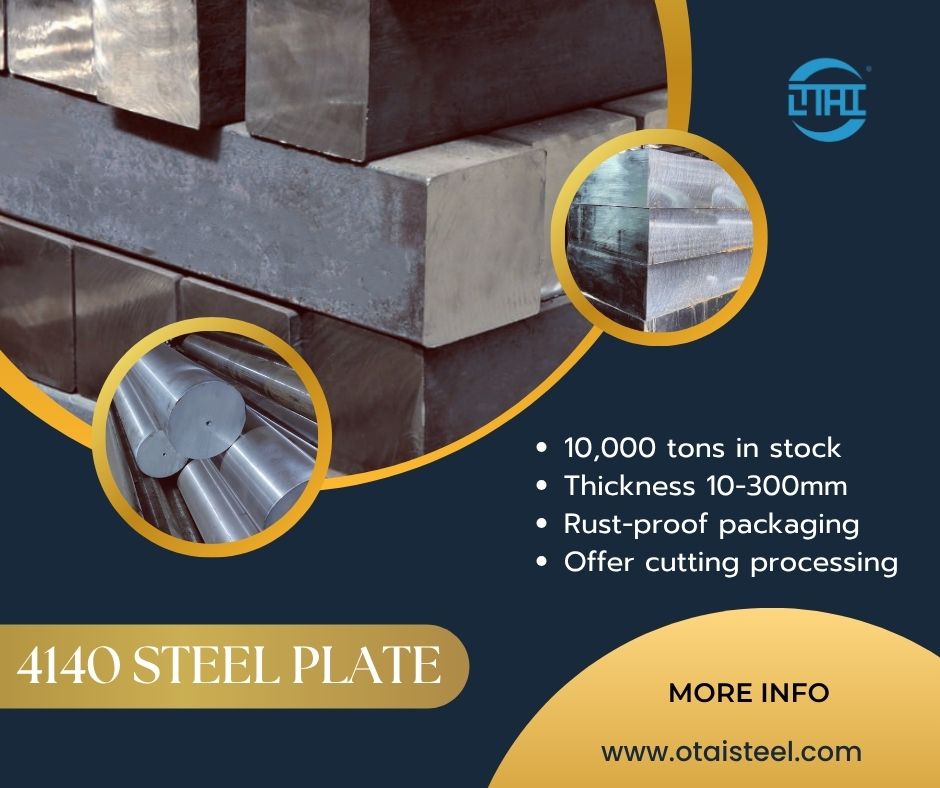
At Otai Special Steel, we supply premium-quality 4140 steel products with stable inventory and professional processing services.
Our Capabilities
- Large stock availability
- Precision cutting services
- Heat treatment support
- Ultrasonic testing (UT)
- Mechanical property inspection
- Export-standard packaging
We support trading companies, machine shops, and industrial manufacturers worldwide.
❓ FAQ
1. What is 4140 steel commonly used for?
Manufacturers use 4140 steel for gears, shafts, axles, crankshafts, and high-strength machinery components.
2. Why do engineers search for 4140 steel MatWeb data?
They use the data to compare chemical composition, mechanical properties, and heat-treatment performance before selecting materials.
3. Is 4140 steel easy to heat treat?
Yes. The steel responds very well to annealing, quenching, and tempering processes.
4. What is the hardness of heat-treated 4140 steel?
Typical hardness ranges from 28 to 35 HRC after quenching and tempering.
🔚 Conclusion
Searching for 4140 steel MatWeb information helps engineers and buyers understand the material’s mechanical properties, heat-treatment capability, and industrial suitability. With excellent strength, toughness, and wear resistance, 4140 steel remains one of the most reliable alloy steels for demanding applications.
Otai Special Steel provides high-quality 4140 alloy steel products with custom processing, strict quality inspection, and stable global supply.