 Thermal Expansion of 4140 Steel: Coefficient, Properties and Engineering Applications
📑 Table of Contents
🔍 1. What Is Thermal Expansion of 4140 Steel?
📏 2. Thermal Expansion Coefficient of 4140 Steel
⚙️ 3. Factors Affecting Thermal Expansion of 4140 Steel
📊 4. 4140 Steel Thermal Expansion Data Sheet
🔥 5. Effect of Heat Treatment on Thermal Expansion
💪 6. 4140 Steel Properties at Different Temperatures
⚖️ 7. 4140 Steel vs Other Alloy Steels Thermal Expansion Comparison
🏭 8. Applications Considering 4140 Steel Thermal Expansion
📦 9. Otai Special Steel Advantages
❓ 10. FAQ About Thermal Expansion of 4140 Steel
🔍 1. What Is Thermal Expansion of 4140 Steel?
When engineers design mechanical components, understanding the thermal expansion of 4140 steel is essential because temperature changes can affect dimensions, clearances and assembly accuracy.
4140 steel is a chromium-molybdenum alloy steel widely used for shafts, gears, bolts, molds and heavy-duty mechanical parts. Like all metals, 4140 steel expands when heated and contracts when cooled.
The amount of dimensional change depends on temperature variation, original size and the material’s thermal expansion coefficient.
In simple terms, thermal expansion of 4140 steel describes how much the length, width or volume of 4140 steel changes when its temperature increases.
Basic Principle of Thermal Expansion
| Factor | Effect on 4140 Steel |
|---|---|
| Temperature Increase | Steel expands and dimensions become larger |
| Temperature Decrease | Steel contracts and dimensions become smaller |
| Higher Temperature Range | Greater dimensional change |
| Larger Component Size | Larger absolute expansion amount |
For example, a long 4140 steel shaft installed in industrial equipment may experience measurable dimensional changes during operation because of heat generated by friction or external temperature conditions.
Why Thermal Expansion Matters for 4140 Steel Applications
The thermal expansion coefficient of 4140 steel becomes especially important in precision engineering applications.
- Machining accuracy: Temperature changes during machining can affect final dimensions.
- Assembly clearance: Designers must consider expansion gaps between components.
- High-temperature operation: Components must maintain strength and stability.
- Heat treatment: Temperature changes can influence material structure and dimensions.
For industries using 4140 alloy steel thermal expansion data, accurate calculations help prevent unexpected deformation and improve component reliability.
📏 2. Thermal Expansion Coefficient of 4140 Steel
The most important value used to calculate the thermal expansion of 4140 steel is the coefficient of thermal expansion (CTE).
The coefficient represents the amount a material expands per unit length when temperature increases by one degree.
Typical Thermal Expansion Coefficient of 4140 Steel
| Temperature Range | Thermal Expansion Coefficient |
|---|---|
| 20–100°C | Approx. 12.2 × 10⁻⁶ /°C |
| 20–200°C | Approx. 12.8 × 10⁻⁶ /°C |
| 20–300°C | Approx. 13.2 × 10⁻⁶ /°C |
| 20–500°C | Approx. 13.8 × 10⁻⁶ /°C |
Thermal Expansion Calculation Formula
Engineers commonly calculate linear expansion using the following formula:
ΔL = α × L₀ × ΔT
| Symbol | Meaning |
|---|---|
| ΔL | Change in length |
| α | Thermal expansion coefficient |
| L₀ | Original length |
| ΔT | Temperature change |
Example Calculation of 4140 Steel Expansion
Assume a 1-meter-long 4140 steel bar is heated from 20°C to 120°C.
| Parameter | Value |
|---|---|
| Original Length | 1000 mm |
| Temperature Increase | 100°C |
| Expansion Coefficient | 12.2 × 10⁻⁶ /°C |
| Expansion | Approx. 1.22 mm |
This example shows why engineers must consider thermal expansion of 4140 steel when designing precision shafts, molds and mechanical assemblies.
⚙️ 3. Factors Affecting Thermal Expansion of 4140 Steel
Although the chemical composition of 4140 steel is standardized, several factors can influence its actual expansion behavior.
Main Factors Affecting 4140 Steel Expansion
| Factor | Influence |
|---|---|
| Temperature Range | Higher temperatures usually increase expansion |
| Heat Treatment Condition | Microstructure changes may slightly affect dimensional behavior |
| Carbon and Alloy Content | Composition influences thermal properties |
| Residual Stress | May cause dimensional changes during heating |
| Manufacturing Process | Forging and machining history can affect stability |
For example, 4140 QT steel used in high-load components may show different dimensional stability compared with annealed 4140 steel because the microstructure and residual stress conditions are different.
Therefore, engineers should always consider both thermal expansion characteristics and mechanical properties when selecting 4140 steel for high-temperature applications.
📊 4. 4140 Steel Thermal Expansion Data Sheet
For engineers working with precision components, a reliable 4140 steel thermal expansion data sheet helps predict dimensional changes during heating and cooling processes.
4140 steel is a chromium-molybdenum alloy steel with stable thermal characteristics. Its thermal expansion behavior is similar to many low-alloy steels, making it predictable for industrial design calculations.
Typical Thermal Properties of 4140 Steel
| Property | Typical Value |
|---|---|
| Material Type | Chromium-Molybdenum Alloy Steel |
| Steel Grade | AISI 4140 |
| Density | Approx. 7.85 g/cm³ |
| Thermal Expansion Coefficient (20–100°C) | Approx. 12.2 × 10⁻⁶ /°C |
| Thermal Conductivity | Approx. 42–44 W/m·K |
| Specific Heat Capacity | Approx. 460–500 J/kg·K |
| Melting Temperature | Approx. 1415–1450°C |
Linear Expansion of 4140 Steel at Different Lengths
The absolute expansion of 4140 steel depends not only on temperature but also on the original component length.
| Original Length | Temperature Increase | Approximate Expansion |
|---|---|---|
| 100 mm | 100°C | 0.12 mm |
| 500 mm | 100°C | 0.61 mm |
| 1000 mm | 100°C | 1.22 mm |
| 2000 mm | 100°C | 2.44 mm |
These values demonstrate why thermal expansion of 4140 steel should be considered when designing long shafts, precision guides and industrial machine components.
A small dimensional change may not affect ordinary structural parts, but it can become critical in high-precision assemblies.
🔥 5. Effect of Heat Treatment on Thermal Expansion
Heat treatment changes the microstructure of 4140 steel, which can influence dimensional stability during temperature changes.
Although the basic coefficient of thermal expansion remains relatively similar, different heat treatment conditions may affect residual stress, hardness and dimensional behavior.
Thermal Behavior of Different 4140 Steel Conditions
| Condition | Characteristics | Thermal Stability |
|---|---|---|
| Annealed 4140 | Soft structure, lower internal stress | Good dimensional stability |
| Normalized 4140 | Refined grain structure | Improved stability |
| 4140 QT (Quenched and Tempered) | High strength and toughness | Excellent for engineering applications |
| Cold Worked 4140 | Higher residual stress | May require stress relieving |
Why Stress Relief Matters for 4140 Steel
During machining, forging or cold working, internal stresses can develop inside the material.
When the component later experiences heating, these stresses may release and cause unexpected dimensional changes beyond normal thermal expansion.
| Process | Purpose |
|---|---|
| Stress Relieving | Reduce internal stress after machining |
| Tempering | Improve toughness and reduce brittleness |
| Annealing | Improve machinability and stability |
For precision applications, combining correct heat treatment with knowledge of 4140 steel thermal expansion coefficient helps maintain dimensional accuracy.
💪 6. 4140 Steel Properties at Different Temperatures
Temperature affects not only the thermal expansion of 4140 steel but also its mechanical properties.
As temperature increases, strength and hardness generally decrease. Therefore, engineers must consider both dimensional changes and mechanical performance.
Typical 4140 Steel Performance at Elevated Temperatures
| Temperature | Material Behavior |
|---|---|
| Room Temperature (20°C) | Maximum strength and normal mechanical properties |
| 100–200°C | Small strength reduction, stable performance |
| 300–400°C | Noticeable reduction in strength and hardness |
| 500°C+ | Significant loss of mechanical strength |
4140 Steel Properties Related to Temperature
| Property | Temperature Effect |
|---|---|
| Strength | Decreases as temperature rises |
| Hardness | Gradually decreases at high temperatures |
| Toughness | May improve at moderate temperatures |
| Thermal Expansion | Increases with temperature range |
For applications involving elevated temperatures, designers should evaluate both 4140 steel thermal expansion and temperature-dependent mechanical properties.
This is especially important for molds, tooling components, engine parts and heavy industrial equipment.
⚖️ 7. 4140 Steel vs Other Steels Thermal Expansion Comparison
Comparing thermal expansion values helps engineers select suitable materials for different environments.
Thermal Expansion Comparison of Common Steels
| Steel Grade | Thermal Expansion Coefficient (Approx.) | Main Feature |
|---|---|---|
| 4140 Steel | 12.2 × 10⁻⁶ /°C | High strength alloy steel |
| 1045 Steel | 11.5–12 × 10⁻⁶ /°C | Medium carbon steel |
| 4340 Steel | 12.3 × 10⁻⁶ /°C | High toughness alloy steel |
| 316 Stainless Steel | 16 × 10⁻⁶ /°C | High corrosion resistance |
The thermal expansion value of 4140 steel is close to many carbon and alloy steels, but its advantage comes from its superior strength, fatigue resistance and hardenability.
🏭 8. Applications Considering 4140 Steel Thermal Expansion
Understanding the thermal expansion of 4140 steel is especially important when this alloy steel is used in precision mechanical systems, high-load components and temperature-changing environments.
Although 4140 steel is mainly selected because of its excellent strength, toughness and fatigue resistance, engineers must also consider dimensional changes caused by heat.
The combination of high mechanical performance and predictable thermal behavior makes 4140 alloy steel suitable for many demanding applications.
Common Applications Where Thermal Expansion Matters
| Application | 4140 Steel Component | Why Thermal Expansion Matters |
|---|---|---|
| Hydraulic Equipment | Piston rods, cylinders and shafts | Maintains accurate movement and sealing clearance |
| Automotive Components | Axles, gears and drive shafts | Controls dimensional changes during operation |
| Industrial Machinery | High-load shafts and rotating parts | Prevents excessive clearance variation |
| Tooling Industry | Molds, dies and fixtures | Maintains machining accuracy |
| Oil and Gas Equipment | Pressure components and connectors | Handles temperature fluctuations |
Precision Machining and Thermal Expansion
During machining, temperature generated by cutting forces can temporarily increase the size of 4140 steel components.
If manufacturers measure parts immediately after machining without temperature control, the final dimensions may not meet the required tolerance after cooling.
| Machining Factor | Effect on 4140 Steel |
|---|---|
| Cutting Heat | Temporary expansion during machining |
| Cooling Process | Component returns to original temperature and contracts |
| Stress Release | May cause additional dimensional changes |
| Temperature Control | Improves final accuracy |
For precision applications using 4140 steel thermal expansion coefficient, manufacturers often use controlled temperature environments to achieve accurate measurements.
Why Engineers Choose 4140 Steel Despite Thermal Expansion
- High tensile strength: Suitable for heavy mechanical loads.
- Excellent fatigue resistance: Performs well under repeated stress.
- Good hardenability: Allows deep and consistent heat treatment.
- Predictable thermal behavior: Makes engineering calculations easier.
- Wide availability: Available in many sizes and supply conditions.
In engineering design, thermal expansion is not considered a disadvantage. Instead, it is a predictable material characteristic that can be calculated and managed.
By combining accurate 4140 steel thermal expansion data with proper design practices, engineers can achieve reliable and long-lasting components.
📦 9. Otai Special Steel Advantages
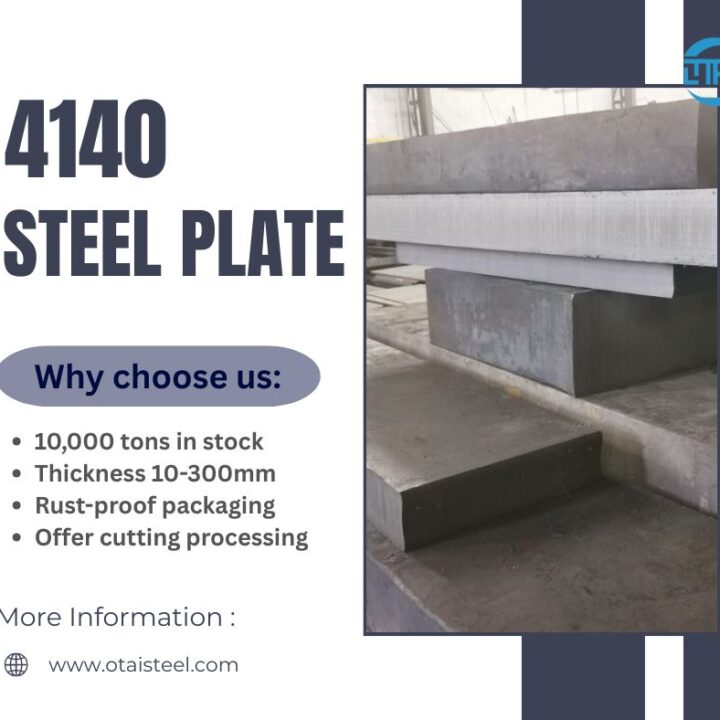
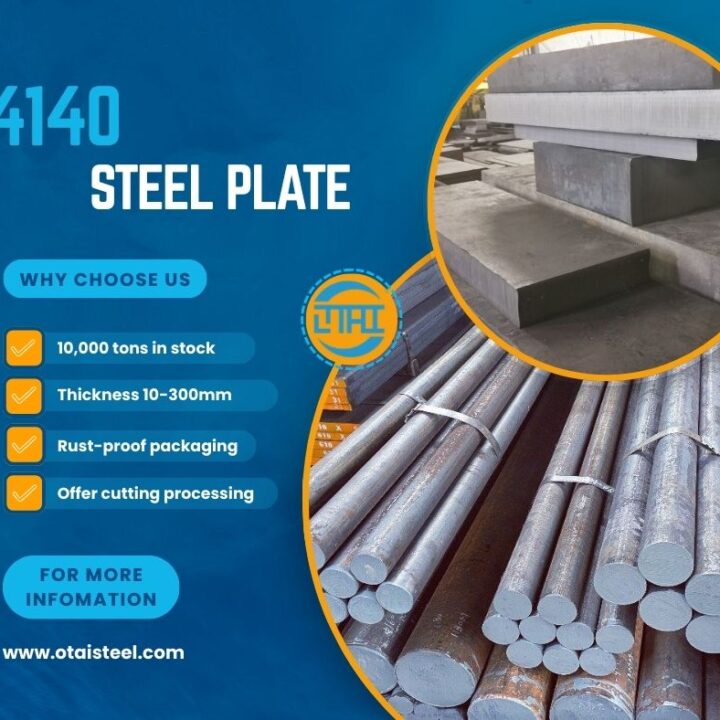
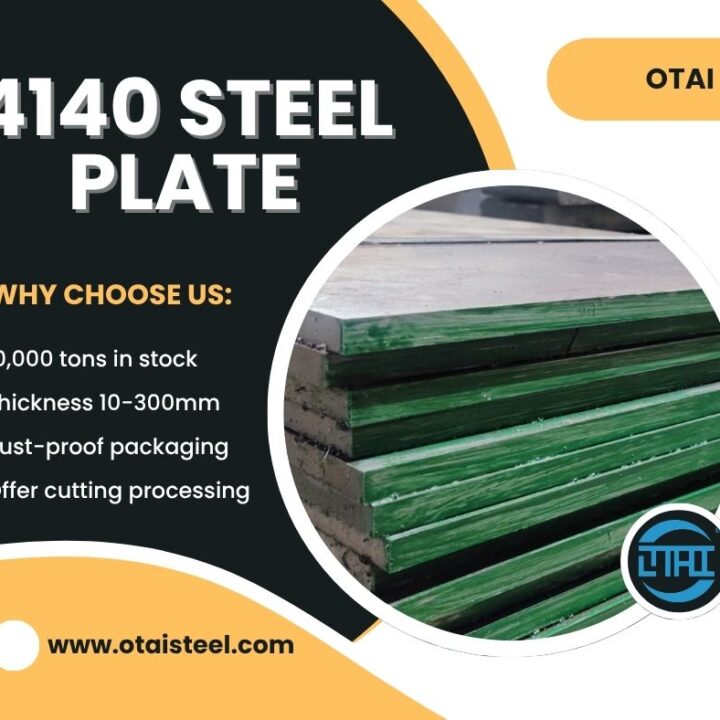
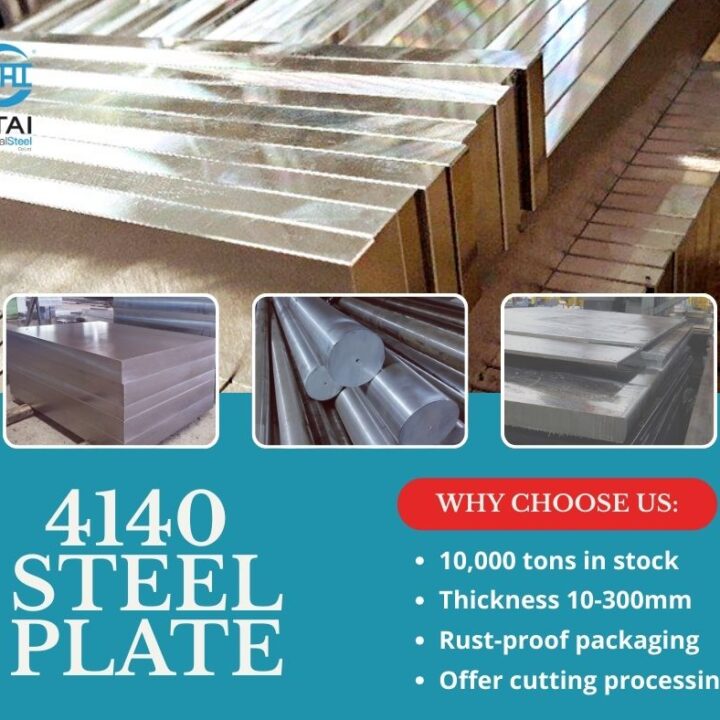
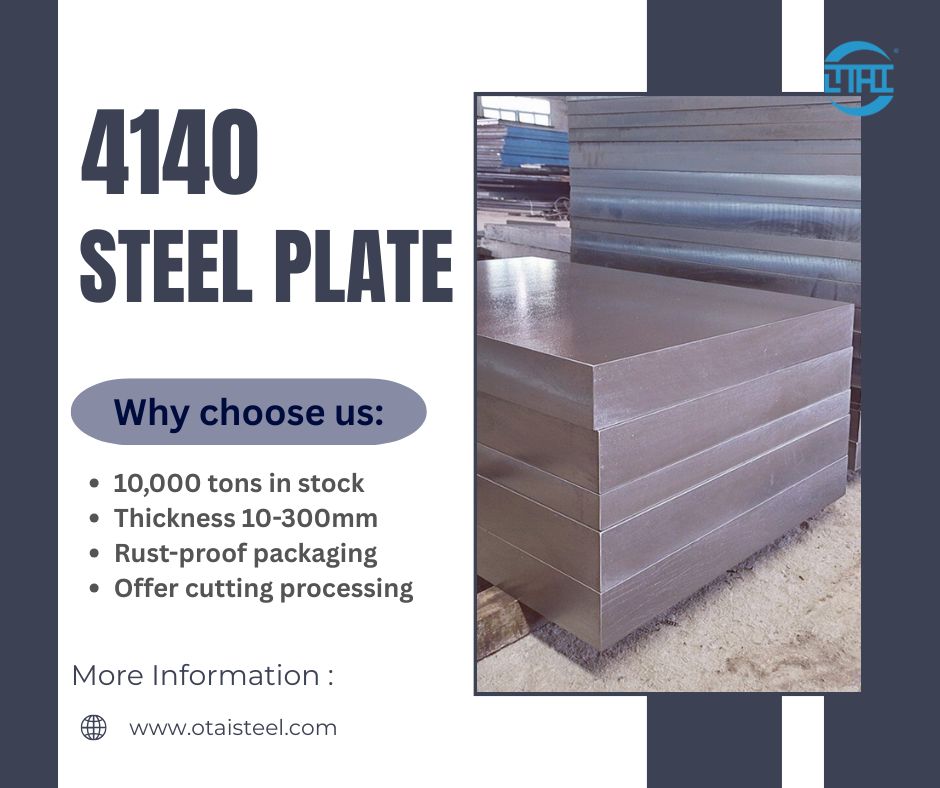
Otai Special Steel supplies 4140 alloy steel plates and other engineering steels for global customers requiring stable quality, reliable stock and professional processing services.
With years of experience in international steel supply, Otai supports customers from material selection to final delivery.
Why Choose Otai Special Steel?
- Large inventory: Otai maintains approximately 10,000 tons of steel inventory with different sizes of 4140 steel available in stock to support urgent and large-volume projects.
- Wide product range: Supply 4140 alloy steel plates and other alloy structural steels according to international standards.
- Cutting service: Provide customized cutting according to customer drawings and project requirements.
- Heat treatment support: Support quenching, tempering, stress relieving and other related processes.
- Quality assurance: Provide ultrasonic testing and third-party inspection services when required.
- Export experience: Supply steel materials for international customers with strict technical requirements.
- Professional packaging: Provide anti-rust protection, steel strapping and wooden box packaging for overseas shipment.
For customers searching for reliable 4140 steel supplier, Otai provides complete solutions based on mechanical requirements, application conditions and manufacturing needs.
❓ 10. FAQ About Thermal Expansion of 4140 Steel
1. What is the thermal expansion of 4140 steel?
The thermal expansion of 4140 steel describes how much the material changes in size when temperature increases or decreases. Its typical thermal expansion coefficient is around 12.2 × 10⁻⁶ /°C at room temperature ranges.
2. What is the thermal expansion coefficient of 4140 steel?
The thermal expansion coefficient of 4140 steel is approximately 12.2 × 10⁻⁶ /°C between 20°C and 100°C. The value may increase slightly at higher temperatures.
3. Does heat treatment affect 4140 steel thermal expansion?
Heat treatment does not dramatically change the basic expansion coefficient, but it can influence dimensional stability by changing microstructure and residual stress levels.
4. How much does a 4140 steel bar expand when heated?
Expansion depends on original length and temperature change. For example, a 1000 mm 4140 steel bar heated by 100°C expands approximately 1.22 mm.
5. Why is thermal expansion important when using 4140 steel?
Thermal expansion affects machining accuracy, assembly clearance and component performance. Engineers consider it when designing shafts, molds, hydraulic parts and precision machinery.