 4140 Steel Rust Resistance: Corrosion Behavior, Protection Methods and Applications
📑 Table of Contents
🔍 1. Does 4140 Steel Rust? Understanding Its Corrosion Resistance
🧪 2. 4140 Steel Rust Resistance and Corrosion Behavior
⚙️ 3. Factors Affecting AISI 4140 Rust Resistance
🛡️ 4. How to Improve 4140 Steel Corrosion Resistance
🔩 5. 4140 Steel Surface Treatment and Protection Methods
🏭 6. 4140 Steel vs Stainless Steel Corrosion Resistance Comparison
🌧️ 7. 4140 Steel Outdoor Applications and Maintenance Tips
📦 8. 4140 Alloy Steel Supply and Processing Service
❓ FAQ About 4140 Steel Rust Resistance
🔍 1. Does 4140 Steel Rust? Understanding Its Corrosion Resistance
When engineers search for 4140 steel rust resistance, they usually want to know whether AISI 4140 alloy steel can resist corrosion in different working environments.
The simple answer is yes, 4140 steel can rust because it is not a stainless steel. However, compared with ordinary carbon steels, 4140 alloy steel provides better performance because it contains chromium and molybdenum, which improve hardenability, strength, and resistance to certain environmental effects.
4140 steel is a chromium-molybdenum alloy steel widely used for shafts, gears, bolts, pressure components, tooling parts, and heavy-duty machinery components. Its excellent mechanical properties make it popular in industries that require high strength and fatigue resistance.
However, corrosion resistance is not the main design purpose of 4140 steel. Unlike stainless steel, which contains a high percentage of chromium to create a passive protective layer, 4140 steel requires additional protection when exposed to moisture, chemicals, or outdoor conditions.
Basic Information About AISI 4140 Steel
| Item | Description |
|---|---|
| Steel Grade | AISI 4140 |
| Steel Type | Chromium-molybdenum alloy steel |
| Main Alloy Elements | Chromium (Cr), Molybdenum (Mo), Manganese (Mn) |
| Carbon Content | Approximately 0.38–0.43% |
| Main Advantages | High strength, toughness and fatigue resistance |
| Corrosion Performance | Moderate, requires protection in corrosive environments |
Does 4140 Steel Rust Easily?
| Environment | Rust Risk | Protection Requirement |
|---|---|---|
| Dry indoor environment | Low | Basic surface protection |
| Humid environment | Medium | Oil coating or protective treatment recommended |
| Outdoor exposure | High | Coating or surface treatment required |
| Salt water environment | Very high | Special corrosion protection needed |
Therefore, does 4140 steel rust depends mainly on the environment and surface protection method. Proper treatment can significantly extend the service life of 4140 components.
🧪 2. 4140 Steel Rust Resistance and Corrosion Behavior
The 4140 steel corrosion resistance level comes mainly from its alloy composition. Chromium improves hardenability and provides some resistance against oxidation, while molybdenum improves strength and high-temperature performance.
However, the chromium content in 4140 steel is much lower than stainless steel. Therefore, it cannot form a continuous chromium oxide protective film that prevents rust formation.
How Alloy Elements Influence 4140 Corrosion Behavior
| Element | Effect on Corrosion and Performance |
|---|---|
| Chromium (Cr) | Improves oxidation resistance and hardenability |
| Molybdenum (Mo) | Improves strength and resistance to high-temperature degradation |
| Manganese (Mn) | Improves toughness and hardening response |
| Carbon (C) | Provides strength but can reduce corrosion resistance |
4140 Steel Oxidation Resistance Compared With Carbon Steel
| Material | Oxidation Resistance | Main Reason |
|---|---|---|
| AISI 4140 | Moderate | Contains chromium and molybdenum alloying elements |
| 1045 Carbon Steel | Lower | Limited alloy content |
| Stainless Steel 304 | Excellent | High chromium passive layer |
Compared with standard carbon steel, 4140 provides better environmental resistance. However, for applications requiring continuous exposure to water or chemicals, additional protection remains necessary.
⚙️ 3. Factors Affecting AISI 4140 Rust Resistance
The corrosion performance of 4140 steel depends on more than chemical composition. Surface condition, environment, processing method, and maintenance practices also influence rust formation.
Main Factors Affecting 4140 Steel Corrosion Resistance
| Factor | Effect |
|---|---|
| Humidity | High moisture accelerates rust formation |
| Surface finish | Smooth surfaces reduce corrosion risk |
| Heat treatment condition | Changes microstructure and surface characteristics |
| Exposure chemicals | Salt and acids accelerate corrosion |
| Storage condition | Proper protection prevents oxidation during storage |
Effect of Surface Condition on Rust Formation
| Surface Condition | Rust Risk |
|---|---|
| Polished surface | Lower corrosion possibility |
| Machined surface | Moderate protection requirement |
| Rough untreated surface | Higher rust possibility |
| Protected surface | Greatly improved corrosion resistance |
Understanding these factors helps manufacturers choose the correct 4140 alloy steel corrosion protection method for different applications.
🛡️ 4. How to Improve 4140 Steel Corrosion Resistance
Although 4140 steel provides better corrosion performance than ordinary carbon steel, it still needs additional protection in harsh environments. Improving 4140 steel corrosion resistance mainly depends on surface protection, storage methods, and proper maintenance.
Because AISI 4140 is designed primarily for strength, toughness, and fatigue resistance, manufacturers usually apply protective treatments when components must operate in humid, outdoor, or chemically aggressive conditions.
Common Methods to Improve 4140 Steel Rust Resistance
| Protection Method | Working Principle | Application |
|---|---|---|
| Protective oil coating | Creates a barrier between steel surface and moisture | Storage and transportation |
| Painting or powder coating | Blocks oxygen and water contact | Outdoor machinery components |
| Electroplating | Adds a corrosion-resistant metal layer | Bolts, shafts, precision parts |
| Black oxide treatment | Creates a thin protective oxide layer | Mechanical components |
| Nitriding treatment | Improves surface hardness and wear resistance | High-performance components |
How to Prevent 4140 Steel From Rusting
Many customers ask how to prevent 4140 steel from rusting during storage and operation. The following practices can significantly reduce corrosion problems.
| Method | Recommended Practice |
|---|---|
| Storage control | Keep steel in a dry and ventilated environment |
| Surface protection | Apply anti-rust oil before long-term storage |
| Packaging | Use waterproof and protective packaging materials |
| Regular inspection | Check surfaces periodically for early oxidation |
| Cleaning | Remove salt, chemicals, and contaminants quickly |
For industrial applications, selecting the correct protective method is essential because excessive coating thickness or unsuitable treatment may affect dimensional accuracy and assembly performance.
🔩 5. 4140 Steel Surface Treatment and Protection Methods
Surface treatment plays an important role in improving 4140 steel surface treatment performance. Different methods provide different levels of corrosion protection, hardness improvement, and wear resistance.
Engineers usually select surface treatments based on operating environment, required mechanical properties, and service life expectations.
Comparison of 4140 Steel Protective Treatments
| Treatment | Corrosion Protection | Main Advantage |
|---|---|---|
| Painting | Good | Low cost and suitable for large structures |
| Zinc coating | Very good | Provides sacrificial corrosion protection |
| Black oxide | Moderate | Improves appearance and reduces oxidation |
| Nitriding | Good | Improves hardness and wear resistance |
| Chrome plating | Excellent | High surface protection and durability |
Heat Treatment and Corrosion Performance
Heat treatment does not make 4140 steel corrosion-resistant like stainless steel, but it changes the microstructure and mechanical performance of the material.
| Condition | Effect on 4140 Steel |
|---|---|
| Annealed | Improves machinability and reduces internal stress |
| Quenched and tempered | Provides high strength and toughness |
| Nitrided | Improves surface hardness and wear resistance |
| Coated condition | Provides better corrosion protection |
For applications requiring both strength and corrosion protection, manufacturers often combine heat treatment with surface coating technologies.
🏭 6. 4140 Steel vs Stainless Steel Corrosion Resistance Comparison
A common question is whether 4140 steel can replace stainless steel in corrosion-sensitive applications. The answer depends on the operating environment.
4140 provides excellent mechanical strength, while stainless steel provides superior corrosion resistance. These materials are designed for different engineering purposes.
4140 Steel vs Stainless Steel Corrosion Resistance
| Feature | 4140 Steel | Stainless Steel 304 |
|---|---|---|
| Steel Type | Chromium-molybdenum alloy steel | Austenitic stainless steel |
| Chromium Content | Approximately 0.8–1.1% | Approximately 18–20% |
| Rust Resistance | Moderate | Excellent |
| Strength | Very high | Medium to high |
| Heat Treatment Response | Excellent hardening ability | Limited compared with alloy steel |
| Main Application | Heavy-duty mechanical parts | Corrosion-resistant equipment |
When Choose 4140 Instead of Stainless Steel?
| Requirement | Recommended Material |
|---|---|
| High mechanical load | 4140 alloy steel |
| High wear resistance | 4140 after heat treatment |
| Continuous seawater exposure | Stainless steel |
| Outdoor equipment with coating protection | 4140 with surface treatment |
Therefore, the choice between 4140 and stainless steel depends on whether the project prioritizes mechanical strength or corrosion resistance.
🌧️ 7. 4140 Steel Outdoor Applications and Maintenance Tips
Although 4140 steel outdoor applications are common in heavy machinery, construction equipment, and industrial components, engineers must consider environmental exposure before using this alloy steel outdoors.
4140 steel provides excellent strength, toughness, and fatigue resistance, but it does not have the natural corrosion protection of stainless steel. Therefore, outdoor components usually require protective coatings, regular maintenance, or suitable surface treatments.
With proper corrosion protection, 4140 steel can provide long-term service performance even in demanding mechanical environments.
Common Outdoor Applications of 4140 Steel
| Application | Component Examples | Protection Requirement |
|---|---|---|
| Construction Equipment | Hydraulic rods, shafts, pins | Coating or chrome plating recommended |
| Mining Machinery | Heavy-duty shafts and structural parts | Wear and corrosion protection required |
| Agricultural Equipment | Drive shafts, gears, connecting parts | Regular maintenance needed |
| Oil and Gas Equipment | High-strength mechanical components | Special surface protection required |
| Industrial Machinery | Rollers, gears, and machine parts | Anti-rust treatment recommended |
Maintenance Tips for 4140 Steel Components
| Maintenance Method | Purpose |
|---|---|
| Regular cleaning | Removes salt, dust, and chemical contaminants |
| Anti-rust oil application | Creates a moisture barrier |
| Surface inspection | Detects early corrosion problems |
| Coating repair | Maintains protective layer performance |
| Proper storage | Reduces oxidation during idle periods |
4140 Steel Storage Recommendations
Proper storage is especially important for 4140 steel plates and machined components. Even high-quality alloy steel can develop surface oxidation if exposed to moisture for extended periods.
- Store steel in a dry and ventilated area.
- Avoid direct contact with water or corrosive materials.
- Apply anti-rust oil during long-term storage.
- Use protective packaging during transportation.
- Inspect material surfaces before machining.
For manufacturers purchasing 4140 steel plates, proper storage and protection methods help maintain surface quality and reduce unnecessary processing costs.
📦 8. 4140 Alloy Steel Supply and Processing Service
For customers looking for reliable 4140 alloy steel corrosion protection solutions, choosing an experienced steel supplier is essential. Material quality, surface condition, processing capability, and inspection service all influence final component performance.
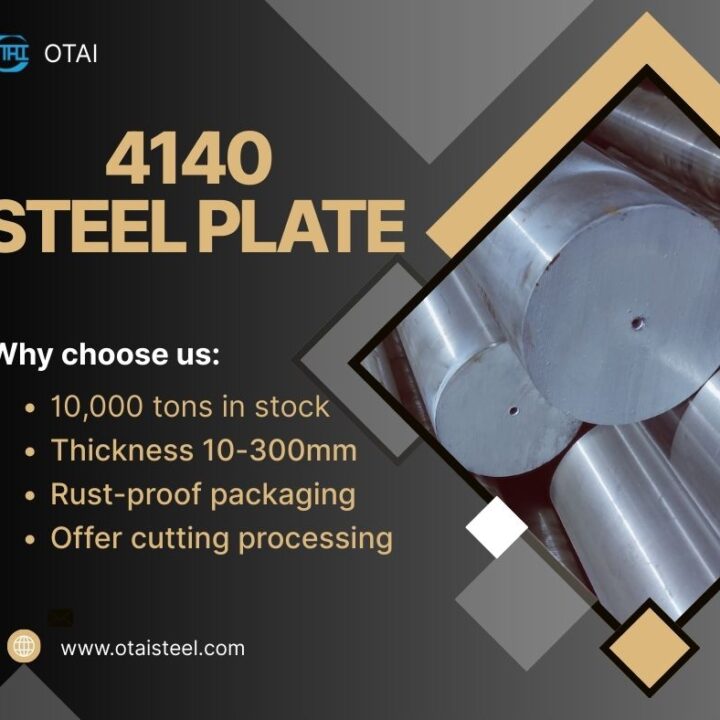
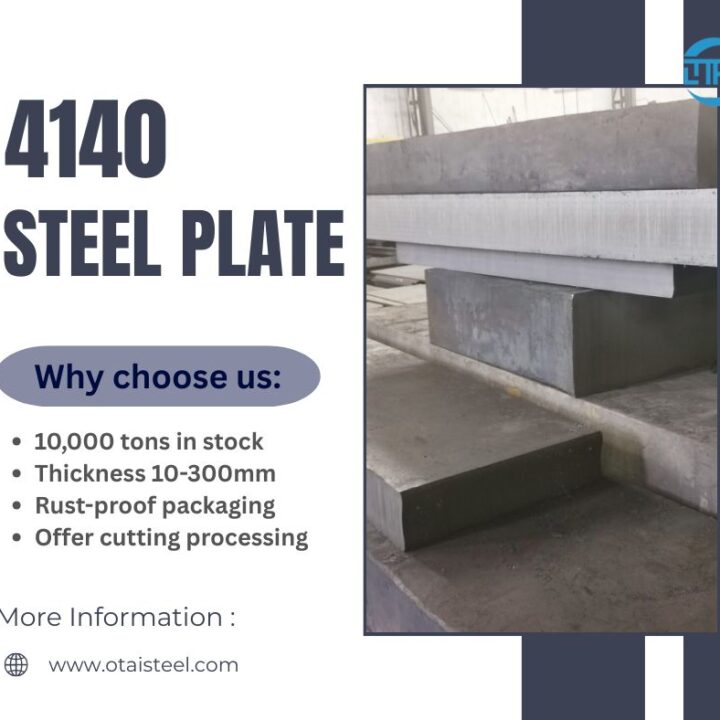
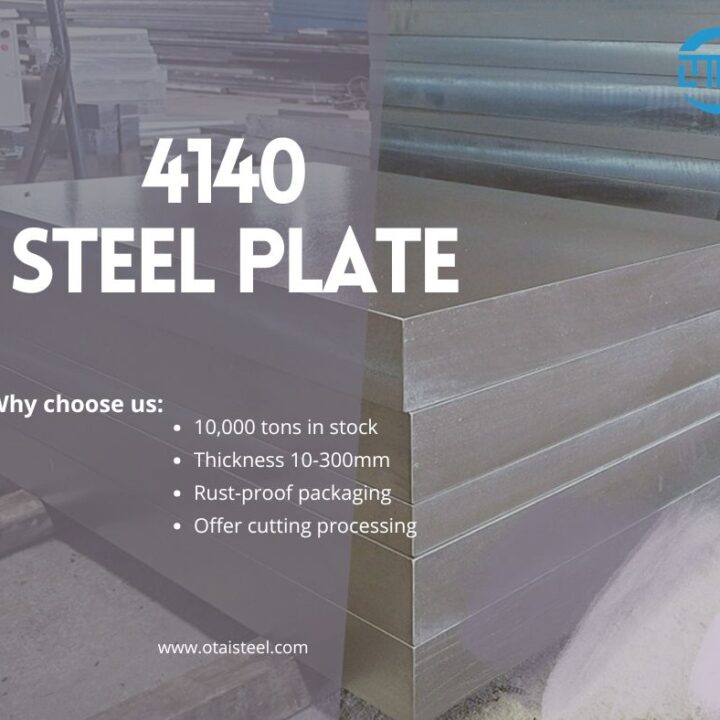
Otai Special Steel supplies AISI 4140 alloy steel plates and provides customized services for customers in machinery manufacturing, automotive industries, energy equipment, and engineering projects.
Besides supplying 4140 steel materials, Otai supports customers with cutting, machining preparation, heat treatment, inspection, and protective packaging services.
Otai Special Steel Advantages
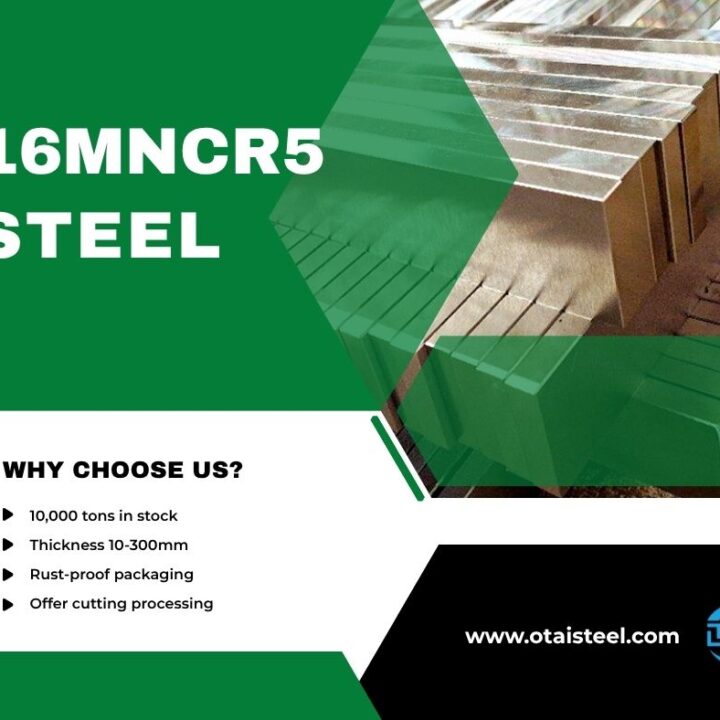
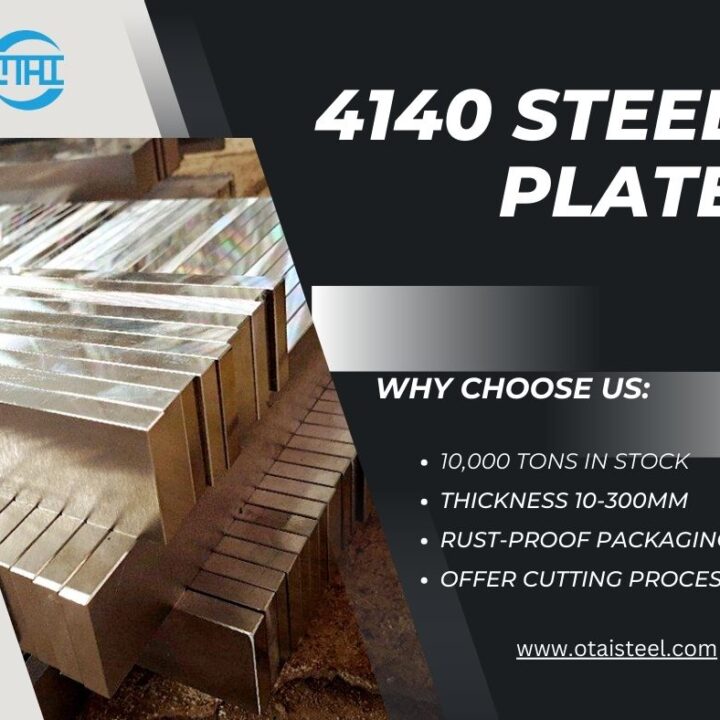
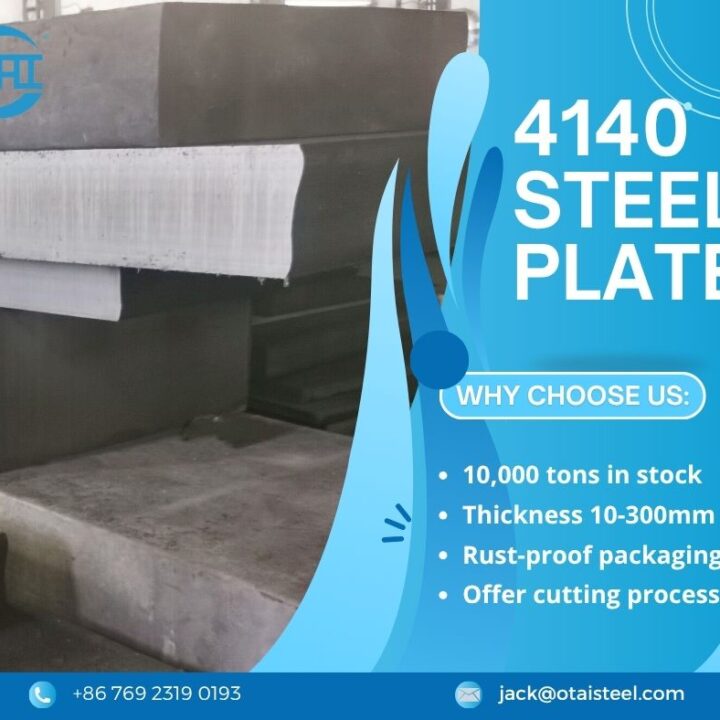
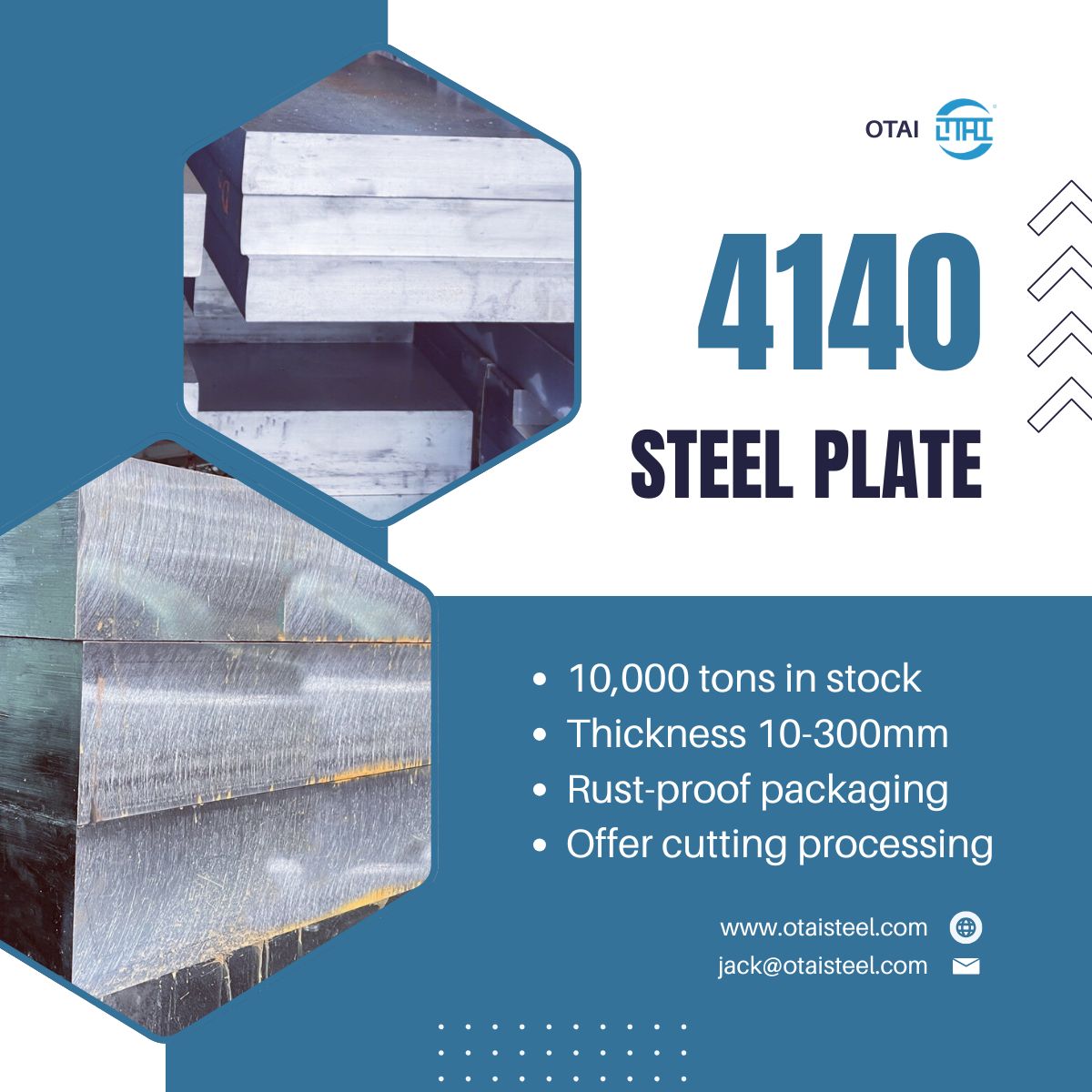
- Large inventory: Otai maintains 10,000 tons of steel inventory and keeps different sizes of 4140 steel plates in stock to support urgent project requirements.
- Processing service: Cutting, machining preparation, and customized processing services help customers reduce production preparation time.
- Heat treatment support: Quenching, tempering, and other heat treatment services are available according to customer requirements.
- Quality inspection: Ultrasonic testing (UT) and third-party inspection services ensure reliable material quality.
- Technical support: Otai helps customers select suitable 4140 steel conditions according to strength, hardness, and application requirements.
- International supply experience: Otai has supplied special steel materials to customers from different industries worldwide.
- Protective packaging: Anti-rust packaging, steel strapping, and wooden box packaging help protect materials during transportation.
With stable stock availability, professional processing capability, and strict quality control, Otai Special Steel provides dependable 4140 alloy steel solutions for global customers.
❓ FAQ About 4140 Steel Rust Resistance
Q1: Does 4140 steel rust?
Yes. 4140 steel can rust because it is not stainless steel. However, its chromium and molybdenum alloy content provides better corrosion performance than ordinary carbon steel.
Q2: Is 4140 steel corrosion resistant?
4140 steel has moderate corrosion resistance but is not designed for corrosion protection. It usually requires coatings, oil protection, or surface treatments in humid environments.
Q3: How can I prevent 4140 steel from rusting?
Common methods include applying anti-rust oil, painting, electroplating, black oxide treatment, nitriding, and proper storage management.
Q4: Is 4140 steel better than stainless steel for corrosion resistance?
No. Stainless steel provides much better corrosion resistance because of its higher chromium content. However, 4140 steel provides higher strength and better heat treatment performance for heavy-duty applications.
Q5: Does Otai supply corrosion-protected 4140 steel plates?
Yes. Otai supplies 4140 steel plates with different sizes in stock and provides cutting, heat treatment, ultrasonic testing, third-party inspection, and anti-rust packaging services.