16MnCr5 Steel Stockist: Reliable Case Hardening Steel Plate Supply for Global Buyers
📑 Table of Contents
🏭 2. Why Choose a 16MnCr5 Steel Stockist?
🧪 3. 16MnCr5 Chemical Composition and Material Features
🔥 4. 16MnCr5 Heat Treatment and Carburizing Process
📏 5. 16MnCr5 Hardness and Mechanical Properties
⚙️ 6. Machining and Processing of 16MnCr5 Steel
🌍 7. 16MnCr5 Equivalent Grades Worldwide
🏗️ 8. Applications of 16MnCr5 Steel
📦 9. Buying Guide for 16MnCr5 Steel Stock
🔍 1. What Is 16MnCr5 Steel?
16MnCr5 steel is a low-carbon alloy case hardening steel widely used for mechanical components that require a hard wear-resistant surface and a tough internal core.
According to the EN standard system, 16MnCr5 is commonly identified as 1.7131 and belongs to case-hardening steels specified under EN 10084 / EN ISO 683-3. The material contains manganese and chromium as major alloying elements, which improve hardenability and surface hardening performance. :contentReference[oaicite:0]{index=0}
The main feature of 16MnCr5 is its ability to achieve a high surface hardness through carburizing treatment while maintaining good core toughness. During carburizing, carbon enriches the surface layer, creating a wear-resistant outer layer while the core remains strong enough to absorb impact loads. :contentReference[oaicite:1]{index=1}
This balanced performance makes 16MnCr5 suitable for gears, shafts, pins, bushings, and other mechanical parts exposed to friction and repeated loading.
| Feature | 16MnCr5 Steel |
|---|---|
| Material Number | 1.7131 |
| Steel Type | Low-carbon alloy case hardening steel |
| Main Alloy Elements | Manganese and Chromium |
| Main Treatment | Carburizing and hardening |
| Main Advantage | Hard surface with tough core |
For international buyers, choosing the correct 16MnCr5 steel stockist is important because material availability, dimensional accuracy, certification, and processing capability directly affect production efficiency.
The steel grade specification alone is not enough; the delivery condition and actual application requirements determine the final performance.
🏭 2. Why Choose a 16MnCr5 Steel Stockist?
A reliable 16MnCr5 steel stockist provides more than material supply. Global buyers usually need stable inventory, accurate documentation, customized processing, and professional technical support.
Compared with purchasing directly from uncertain sources, working with an experienced stockist can simplify international procurement. A qualified supplier understands steel standards, customer specifications, and export requirements.
| Supplier Capability | Buyer Benefit |
|---|---|
| Stock Availability | Shortens purchasing lead time |
| Material Certificate | Confirms chemical composition and mechanical data |
| Cutting Service | Provides customized dimensions before shipment |
| Processing Support | Reduces additional machining preparation |
| Export Experience | Improves international communication and delivery |
For 16MnCr5 steel, buyers often need confirmation of thickness, tolerance, surface condition, heat treatment requirements, and inspection documents.
Especially for case hardening steel, the final performance depends heavily on carburizing quality and heat treatment control. Therefore, suppliers should understand the customer’s production process instead of only providing a material quotation.
🧪 3. 16MnCr5 Chemical Composition and Material Features
The performance of 16MnCr5 steel comes from its carefully balanced alloy composition. As a low-carbon alloy steel, it contains a controlled amount of carbon together with manganese and chromium to provide good carburizing performance.
The relatively low carbon content allows the core of the material to maintain toughness, while the carburized surface can achieve high hardness and wear resistance after heat treatment.
The chemical composition of 16MnCr5 is defined within specific ranges. The exact analysis may vary slightly depending on the steel mill, production standard, and customer requirements.
| Element | Typical Range | Function |
|---|---|---|
| Carbon (C) | Approx. 0.14–0.19% | Provides carburizing response while maintaining core toughness |
| Silicon (Si) | Approx. ≤0.40% | Supports deoxidation and strength |
| Manganese (Mn) | Approx. 1.00–1.30% | Improves hardenability and toughness |
| Chromium (Cr) | Approx. 0.80–1.10% | Improves wear resistance and carburizing performance |
| Phosphorus (P) | Approx. ≤0.025% | Controlled to maintain material quality |
| Sulfur (S) | Approx. ≤0.035% | Controlled for cleanliness and machinability |
The chromium and manganese combination gives 16MnCr5 better hardenability than plain carbon steels. Therefore, the material can achieve a more reliable hardened layer after carburizing.
However, the final performance does not depend only on chemical composition. Factors such as carburizing depth, quenching method, tempering temperature, and component size also influence the finished part.
The actual mill certificate remains the most important reference when confirming 16MnCr5 chemical composition.
🔥 4. 16MnCr5 Heat Treatment and Carburizing Process
Heat treatment is the key process that allows 16MnCr5 steel to achieve its typical combination of a hard surface and tough core.
Unlike through-hardening alloy steels, 16MnCr5 is mainly used after carburizing. During this process, carbon atoms diffuse into the surface layer at high temperature, increasing the carbon concentration near the outside area.
| Process | Typical Temperature | Purpose |
|---|---|---|
| Carburizing | Approx. 880–950°C | Adds carbon to the surface layer |
| Quenching | Usually after carburizing from around 820–860°C | Creates a hard martensitic surface structure |
| Tempering | Approx. 150–200°C | Reduces stress and improves toughness |
The carburizing time depends mainly on the required case depth and component size. For many industrial parts, carburizing may require several hours because carbon diffusion gradually develops from the surface toward the core.
For example, a thin component may require a shorter treatment cycle, while a large gear or shaft needs longer soaking time to achieve the required hardened layer depth.
After carburizing and quenching, 16MnCr5 can achieve a surface hardness of approximately 58–62 HRC, while the core maintains better toughness and impact resistance.
The purpose of carburizing is not to make the entire material extremely hard; it creates a wear-resistant surface while protecting the tougher internal structure.
📏 5. 16MnCr5 Hardness and Mechanical Properties
Hardness requirements for 16MnCr5 depend on whether the material is supplied before or after carburizing treatment.
As a case hardening steel, the most important performance indicator is usually the relationship between surface hardness and core toughness.
| Condition | Typical Hardness | Performance |
|---|---|---|
| Soft Annealed Condition | Approx. 160–200 HB | Suitable for machining preparation |
| Carburized Surface | Approx. 58–62 HRC | Excellent wear resistance |
| Core After Treatment | Typically around 30–45 HRC depending on treatment | Maintains toughness and impact resistance |
Mechanical properties vary according to section size, carburizing depth, and heat treatment parameters. Therefore, customers should define their required hardness range before purchasing.
For gears and transmission parts, excessive hardness without sufficient toughness may increase the risk of cracking under impact loads.
16MnCr5 performs best when the surface hardness and core strength are properly balanced for the working environment.
⚙️ 6. Machining and Processing of 16MnCr5 Steel
Before carburizing treatment, 16MnCr5 steel provides relatively good machinability because of its low carbon content. Manufacturers can perform turning, milling, drilling, and other machining operations more easily compared with fully hardened steels.
After carburizing and quenching, the surface hardness increases significantly. Therefore, finishing processes such as grinding are commonly used when tight dimensional accuracy and surface quality are required.
| Processing Method | Application Consideration |
|---|---|
| Cutting | Suitable for preparing required dimensions before machining |
| CNC Machining | Supports customized component production |
| Grinding | Improves surface finish and dimensional accuracy |
| Carburizing | Creates wear-resistant hardened surface |
Welding 16MnCr5 requires careful control because the carburized surface and alloy composition may affect weld quality. In applications requiring welding, engineers should evaluate preheating, filler material selection, and post-weld treatment requirements.
For many industrial components, manufacturers complete rough machining before carburizing and perform final finishing after heat treatment. This method helps maintain dimensional accuracy after the material develops its hardened surface.
The correct processing sequence improves both production efficiency and final component reliability.
🌍 7. 16MnCr5 Equivalent Grades Worldwide
International buyers often compare 16MnCr5 with similar case hardening steels from different standards. These comparisons help companies identify possible alternatives during global sourcing.
However, equivalent grades should always be verified through chemical composition, mechanical properties, and customer specifications before replacement.
| Grade | Standard | Relationship |
|---|---|---|
| 16MnCr5 | EN / DIN | Main European case hardening steel grade |
| 1.7131 | Material Number | Identification number for 16MnCr5 |
| SAE 5115 | USA | Similar low-carbon chromium alloy steel |
| SAE 5117 | USA | Comparable carburizing steel in some applications |
Although these grades share similar purposes, differences may exist in alloy content and performance requirements. For critical components, buyers should request technical confirmation before selecting an alternative material.
The safest approach is to compare actual certificates instead of relying only on grade names.
🏗️ 8. Applications of 16MnCr5 Steel
16MnCr5 steel is widely used in mechanical engineering applications where components need strong wear resistance on the surface and reliable toughness inside.
The carburized layer allows parts to withstand friction and contact stress, while the tougher core helps absorb impact loads during operation.
| Industry | Typical Components |
|---|---|
| Automotive Industry | Gears, shafts, transmission parts |
| Mechanical Engineering | Bushings, pins, rotating components |
| Gear Manufacturing | Precision gears requiring wear resistance |
| Industrial Equipment | Heavy-duty moving components |
Typical applications require a combination of surface hardness, fatigue resistance, and dimensional stability. Therefore, selecting the correct steel condition before manufacturing is important.
Compared with ordinary carbon steel, 16MnCr5 provides improved performance for parts exposed to continuous contact stress and repeated loading.
📦 9. Buying Guide for 16MnCr5 Steel Stock
When purchasing 16MnCr5 steel stock, international buyers should provide detailed technical requirements to ensure the supplier can prepare the correct material and processing solution.
Because 16MnCr5 is mainly used for carburizing applications, buyers should consider not only steel size and quantity but also the final component requirements, heat treatment process, and required surface performance.
| Important Information | Reason |
|---|---|
| Steel Grade | Confirms the correct material standard and specification |
| Thickness and Size | Determines cutting and processing requirements |
| Delivery Condition | Affects machining performance and production planning |
| Inspection Requirement | Ensures quality confirmation before shipment |
| Application | Helps suppliers recommend suitable solutions |
For overseas procurement, buyers usually need information such as chemical composition, mechanical properties, tolerance, surface condition, and inspection documents.
A professional 16MnCr5 steel stockist can also support additional requirements, including cutting service, customized dimensions, and export packaging.
When comparing suppliers, customers should evaluate not only material price but also supply stability, technical communication, processing capability, and delivery reliability.
A complete specification helps avoid incorrect material selection and improves purchasing efficiency.
🏢 10. Why Choose Otai as Your 16MnCr5 Steel Supplier?
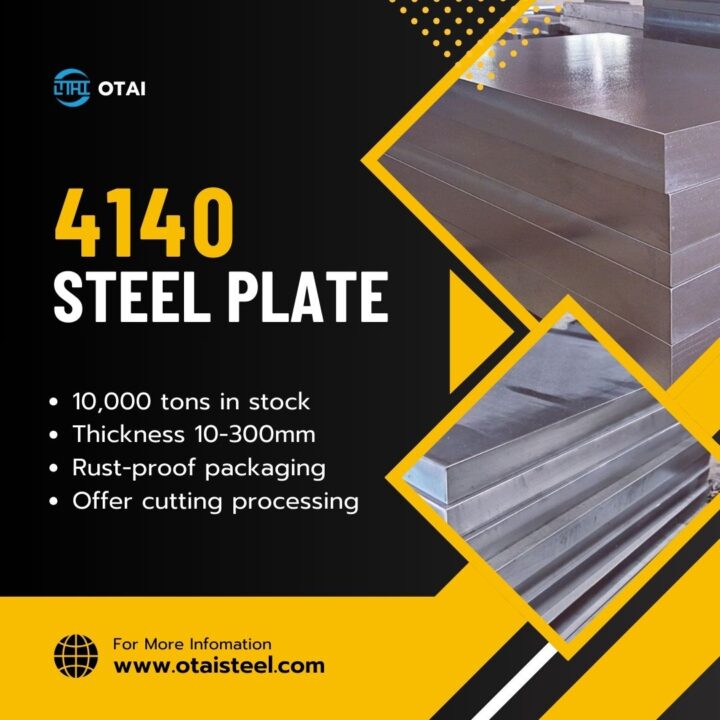
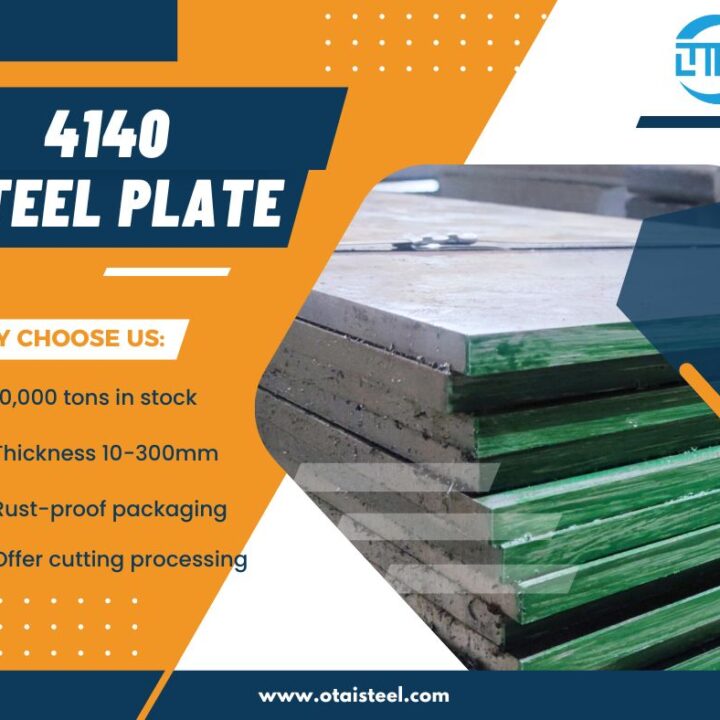
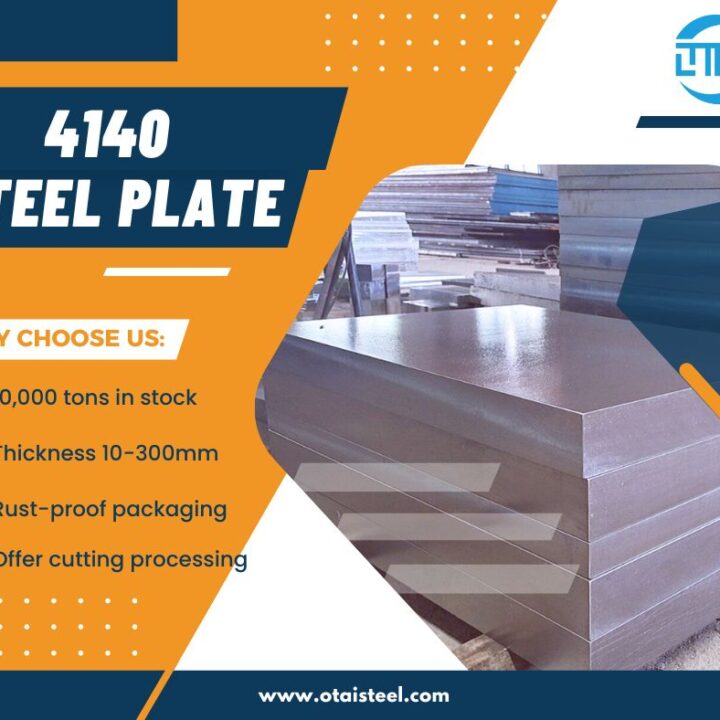
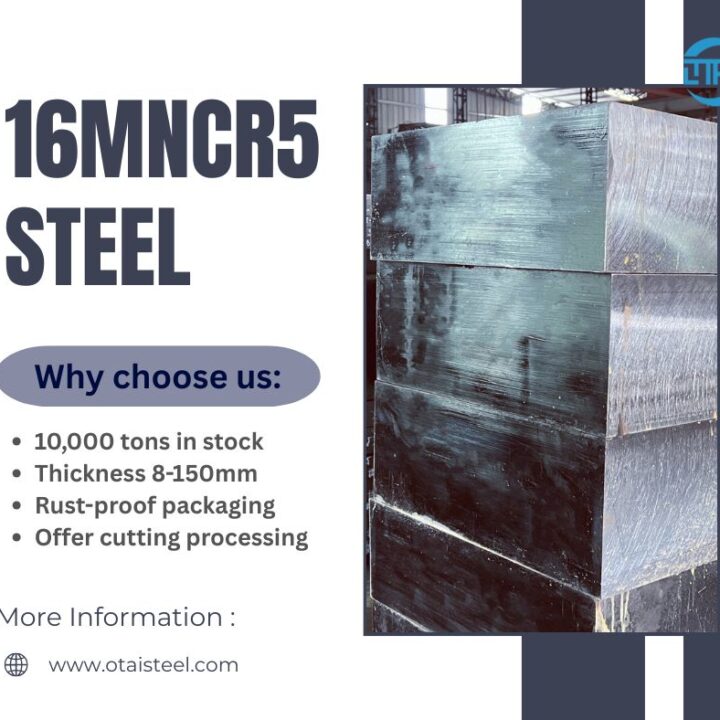
- 16MnCr5 steel plate stock availability: Otai supplies 16MnCr5 steel plate with thickness from 8–150mm in stock to support different industrial purchasing requirements.
- 10,000+ tons stock: Large inventory capacity helps overseas customers obtain stable material supply and reduces waiting time.
- 20 saw cutting machines: Multiple cutting machines improve processing efficiency and support customized size requirements.
- CNC & grinding service: Provides additional processing options for customers requiring closer dimensional accuracy.
- Custom size & tolerance: Supports different engineering specifications according to customer drawings and requirements.
- One-stop service: Integrates steel supply, cutting, machining, inspection support, packaging, and export preparation.
- International export experience: Otai has exported steel products to more than 54 countries since 1999.
For global buyers searching for a reliable 16MnCr5 steel stockist, Otai provides material supply solutions with inventory support, processing capability, and international export experience.
Customers can confirm requirements such as steel grade, thickness, tolerance, inspection documents, and packaging method before shipment.
❓ FAQ About 16MnCr5 Steel Stockist
1. What is 16MnCr5 steel used for?
16MnCr5 is mainly used for carburized mechanical components such as gears, shafts, bushings, pins, and transmission parts. It provides a hard wear-resistant surface with a tougher internal structure.
2. What is the equivalent of 16MnCr5 steel?
16MnCr5 is commonly identified as DIN 1.7131 and EN 10084 case hardening steel. Similar grades may include SAE 5115 or SAE 5117 depending on application requirements, but technical confirmation is recommended before substitution.
3. What hardness can 16MnCr5 achieve?
After carburizing and hardening, the surface hardness of 16MnCr5 can typically reach around 58–62 HRC. The core hardness depends on the heat treatment process and component size.
4. Does Otai stock 16MnCr5 steel?
Yes. Otai supplies 16MnCr5 steel plate with thickness from 8–150mm in stock. Customers can also request customized cutting, tolerance requirements, and processing support according to their projects.
5. What should buyers confirm before ordering 16MnCr5 steel?
Buyers should confirm steel grade, dimensions, quantity, delivery condition, inspection requirements, and final application. These details help suppliers provide accurate quotations and suitable material solutions.