SCM440 Equivalent: 4140, 42CrMo4 & Material Comparison
📑 Table of Contents
- 🔎 1. What Is the SCM440 Equivalent?
- 🌍 2. SCM440 Equivalent Grades by Standard
- 🧪 3. SCM440 Chemical Composition Comparison
- ⚙️ 4. SCM440 vs 4140 vs 42CrMo4
- 🔥 5. Heat Treatment and Mechanical Properties
- 📏 6. SCM440 Equivalent for Steel Plate Procurement
- 🏭 7. Choosing the Right Equivalent for Your Application
- 💰 8. SCM440 Equivalent Price and Purchasing Factors
- 📦 9. Buying SCM440 from a Steel Supplier
- 🏢 Otai Special Steel Advantages
- ❓ FAQ About SCM440 Equivalent
🔎 1. What Is the SCM440 Equivalent?
When buyers search for SCM440 equivalent, they usually want to identify a steel grade with similar chemical composition, hardenability, strength, and application performance. The most frequently discussed equivalents include AISI 4140 and 42CrMo4.
However, an equivalent grade does not automatically mean an identical grade. SCM440 belongs to the Japanese JIS alloy structural steel system, while AISI 4140 follows the SAE/AISI system and 42CrMo4 belongs to the European EN system. Each standard defines its own chemical composition, mechanical requirements, delivery conditions, testing rules, and dimensional requirements.
For this reason, buyers should treat SCM440 equivalent grades as technical alternatives rather than automatically interchangeable materials. The correct choice depends on the drawing, applicable standard, heat-treatment condition, required mechanical properties, and customer approval.
In practical international purchasing, AISI 4140 and 42CrMo4 are commonly considered close alternatives to SCM440. Nevertheless, the supplier should compare the requested specification with the actual mill certificate before confirming substitution.
SCM440 in the JIS system
SCM440 is a chromium-molybdenum alloy structural steel covered by JIS G4053. Its Cr-Mo alloy design gives the material a useful combination of strength, toughness, hardenability, and wear resistance after suitable heat treatment.
For international procurement, buyers may encounter several designations for steels with similar metallurgical characteristics. The designation alone, however, cannot replace a specification check.
🌍 2. SCM440 Equivalent Grades by Standard
The following table provides a practical comparison for buyers looking for SCM440 equivalent grades.
| Standard | Grade | Typical Relationship to SCM440 | Main Market |
|---|---|---|---|
| JIS | SCM440 | Reference grade | Japan / Asia |
| SAE / AISI | 4140 | Common close equivalent | USA / international |
| EN | 42CrMo4 | Common close equivalent | Europe / international |
| EN | 1.7225 | Material number associated with 42CrMo4 | Europe |
Among these grades, AISI 4140 and 42CrMo4 are the two names buyers most often encounter when looking for SCM440 alternatives. International steel references also commonly group 42CrMo4 and 4140 as similar Cr-Mo alloy steels.
Is 4140 exactly the same as SCM440?
No. Although the two grades have very similar alloy concepts and often serve similar engineering applications, they belong to different standards. A purchasing department should not replace SCM440 with 4140 solely because a comparison chart lists them together.
Instead, compare the required chemistry, delivery condition, hardness, tensile strength, yield strength, impact requirements, size, and inspection requirements.
Is 42CrMo4 the same as SCM440?
42CrMo4 is another commonly cited SCM440 equivalent. Its designation comes from the European standard system, and its material number is commonly listed as 1.7225. Industrial steel references identify 42CrMo4 alongside AISI 4140 as a similar designation.
Still, buyers should confirm the exact standard edition and product specification before placing a substitution order.
🧪 3. SCM440 Chemical Composition Comparison
Chemical composition provides one of the first technical checks when evaluating an SCM440 equivalent. SCM440, 4140, and 42CrMo4 all use chromium and molybdenum as important alloying elements, with carbon providing the basis for strength and hardening response.
However, the exact limits depend on the applicable standard and product specification. Therefore, a general comparison should not replace the chemical analysis on the actual mill test certificate.
| Grade | C | Cr | Mo | General Alloy Concept |
|---|---|---|---|---|
| SCM440 | Cr-Mo alloy steel | Cr-bearing | Mo-bearing | JIS alloy structural steel |
| AISI 4140 | Approx. 0.40% C class | Approx. 1% Cr class | Approx. 0.20% Mo class | SAE/AISI Cr-Mo steel |
| 42CrMo4 | Approx. 0.42% C class | Approx. 1% Cr class | Approx. 0.20% Mo class | EN Cr-Mo steel |
Important: the table above describes the general alloy design rather than a universal chemical specification. For a purchasing decision, use the limits from the requested standard and then compare them with the actual MTC chemistry.
Standard range vs typical analysis vs MTC
Steel buyers should separate three different types of chemistry data:
- Standard chemical range or limit: the specification requirement for the grade.
- Mill Typical Analysis: a representative chemistry from a steel producer.
- Actual MTC chemistry: the measured chemistry for the specific production heat or supplied material.
This distinction matters when a customer asks whether a particular 4140 or 42CrMo4 product can replace SCM440. The safest method is to compare the actual certificate with the customer’s required standard.
⚙️ 4. SCM440 vs 4140 vs 42CrMo4
SCM440, 4140, and 42CrMo4 occupy a similar position in alloy steel applications. They support components that require a combination of strength, toughness, hardenability, and fatigue resistance.
| Factor | SCM440 | AISI 4140 | 42CrMo4 |
|---|---|---|---|
| Primary standard | JIS | SAE/AISI | EN |
| Steel family | Cr-Mo alloy steel | Cr-Mo alloy steel | Cr-Mo alloy steel |
| Heat treatment | Quenching & tempering | Quenching & tempering | Quenching & tempering |
| Typical applications | Machinery, shafts, gears | Automotive, machinery, fasteners | Machinery, shafts, high-strength components |
| Substitution check | Reference requirement | Verify specification | Verify specification |
SCM440 vs 4140
SCM440 and 4140 are probably the most frequently compared grades in international procurement. Both belong to the chromium-molybdenum alloy steel family and can achieve high strength after appropriate heat treatment.
For buyers in North America, 4140 may appear more frequently on engineering drawings, specifications, and stock lists. A Chinese supplier may instead quote SCM440 or another regional designation depending on the requested standard.
Before substituting one for the other, confirm the product form, heat-treatment condition, mechanical requirements, and certificate requirements.
SCM440 vs 42CrMo4
42CrMo4 provides another common international comparison. European buyers often specify 42CrMo4 or material number 1.7225, while Japanese or Asian drawings may specify SCM440.
The two grades share a similar Cr-Mo alloy concept, but buyers should still check the relevant EN and JIS requirements. A supplier should not rely only on a generic equivalent-grade chart when the component carries a safety-critical or tightly controlled specification.
🔥 5. Heat Treatment and Mechanical Properties
One reason SCM440 and its equivalent grades receive extensive industrial use is their response to heat treatment. Quenching and tempering can produce a useful balance between strength and toughness.
Quenching and tempering
During heat treatment, the steel first reaches an austenitizing temperature suitable for the specific product size and supplier procedure. The material then undergoes controlled cooling followed by tempering.
The exact temperature should come from the applicable material standard, steel mill datasheet, product thickness, and required mechanical properties. Do not copy one heat-treatment schedule across all SCM440, 4140, and 42CrMo4 products without checking the applicable specification.
For many industrial applications, suppliers provide SCM440 in annealed, normalized, pre-hardened, or quenched-and-tempered conditions. The required delivery condition can significantly affect machining and final performance.
Hardness and strength
SCM440 can achieve high hardness and strength after quenching and tempering. The final values depend strongly on section size, heat-treatment parameters, tempering temperature, cooling method, and test location.
Therefore, a buyer should specify whether the project requires a hardness range, tensile strength, yield strength, impact value, or another mechanical requirement. The supplier can then select the appropriate delivery condition.
For an equivalent-grade purchase, matching the required mechanical condition is often more important than simply matching the grade name.
📏 6. SCM440 Equivalent for Steel Plate Procurement
When purchasing SCM440 steel plate, buyers often search for an equivalent because their local market does not stock the exact JIS designation. In that situation, the procurement process should focus on technical compatibility rather than the name alone.
Check the steel grade first
Ask the supplier which standard the quoted material follows. A quotation may say “SCM440 equivalent,” but that phrase alone does not tell you whether the material is 4140, 42CrMo4, or another Cr-Mo grade.
The quotation should identify the actual grade, standard, product form, dimensions, delivery condition, and inspection documents.
Check thickness and delivery condition
Large-section steel can behave differently during heat treatment because cooling rates vary through the thickness. Consequently, two materials with similar chemistry may not deliver identical mechanical properties in thick sections.
For steel plate procurement, confirm:
- Plate thickness and width
- Length or cut-to-size requirement
- Heat-treatment condition
- Hardness requirement
- Tensile and yield strength requirements
- Ultrasonic testing requirements
- Surface condition
- Dimensional tolerance
- Mill Test Certificate requirements
These details allow the supplier to determine whether a proposed SCM440 equivalent can meet the actual engineering requirement.
SCM440 plate stock availability
For buyers who need SCM440 rather than a substitute, Otai Special Steel keeps SCM440 steel plate in a broad thickness range. Current stock includes SCM440 steel plate from 4–380 mm.
This range allows buyers to discuss both standard-size material and cut-to-size requirements with the supplier before selecting an alternative grade.
🏭 7. Choosing the Right Equivalent for Your Application
The best SCM440 equivalent depends on the application and the specification behind the purchase. A buyer should first determine why the original design specifies SCM440.
| Application Requirement | What to Confirm |
|---|---|
| High strength | Tensile strength, yield strength, hardness |
| Heavy section | Hardenability and through-thickness properties |
| Machining before heat treatment | Annealed or suitable pre-machining condition |
| Finished high-strength component | Quenching, tempering, hardness and final mechanical properties |
| Safety-critical component | Applicable standard, MTC, testing and customer approval |
For general machinery
SCM440 and its common equivalents can support shafts, gears, bolts, couplings, machine components, and other parts that require a combination of strength and toughness.
The supplier should still match the material condition to the machining and heat-treatment process. For example, a buyer planning extensive machining may require a softer delivery condition than a buyer purchasing material for final assembly.
For engineering drawings
If the drawing specifically calls for JIS SCM440, do not replace it automatically. Ask the engineering or quality department whether 4140 or 42CrMo4 is an approved alternative.
This approach prevents a common procurement problem: receiving a material that looks equivalent on a commercial quotation but does not satisfy the project’s formal specification.
💰 8. SCM440 Equivalent Price and Purchasing Factors
Searching for SCM440 equivalent price does not always produce a meaningful comparison because suppliers may quote different grades, dimensions, delivery conditions, and processing services.
A 42CrMo4 quotation, for example, may include a different heat-treatment condition from an SCM440 quotation. Similarly, a 4140 plate may come from a different mill, thickness range, or quality level.
What affects the final price?
- Steel grade and applicable standard
- Plate thickness and dimensions
- Total order weight
- Heat-treatment condition
- Ultrasonic testing
- Cutting and machining requirements
- Surface and dimensional tolerance
- Packaging requirements
- Inspection and certification
- Shipping destination and delivery terms
For this reason, buyers should compare quotations on the same technical basis. A lower material price does not necessarily represent a lower total procurement cost if the quotation excludes cutting, inspection, certification, packaging, or other required services.
Ask for a technical comparison before substitution
If SCM440 is unavailable in the buyer’s local market, provide the supplier with the original specification and ask for a formal comparison with the proposed 4140 or 42CrMo4.
The most useful document is a side-by-side comparison of the requested specification and the actual MTC. This gives purchasing and engineering teams a clear basis for approval.
📦 9. Buying SCM440 from a Steel Supplier
When buying SCM440 or an equivalent grade internationally, the supplier should provide more than a grade name. A professional quotation should identify the material standard and clearly describe the supplied condition.
Information to include in an RFQ
- SCM440 or requested equivalent grade
- Applicable standard
- Plate thickness, width, and length
- Required quantity
- Delivery condition
- Hardness or mechanical-property requirements
- Ultrasonic testing requirements, if applicable
- Inspection certificate requirements
- Cutting or machining dimensions
- Destination and shipping requirements
For overseas buyers, this information helps the supplier provide a more accurate quotation and reduces repeated clarification during order processing.
SCM440 supplier or equivalent supplier?
If the original drawing requires SCM440, sourcing the exact grade can simplify approval. When the market cannot provide SCM440, a supplier with experience in 4140, 42CrMo4, and other Cr-Mo alloy steels can help compare the alternatives.
However, the supplier should present the substitution as a technical comparison rather than simply claiming that every grade is “the same.” The final acceptance should follow the customer’s engineering and purchasing requirements.
🏢 Otai Special Steel Advantages
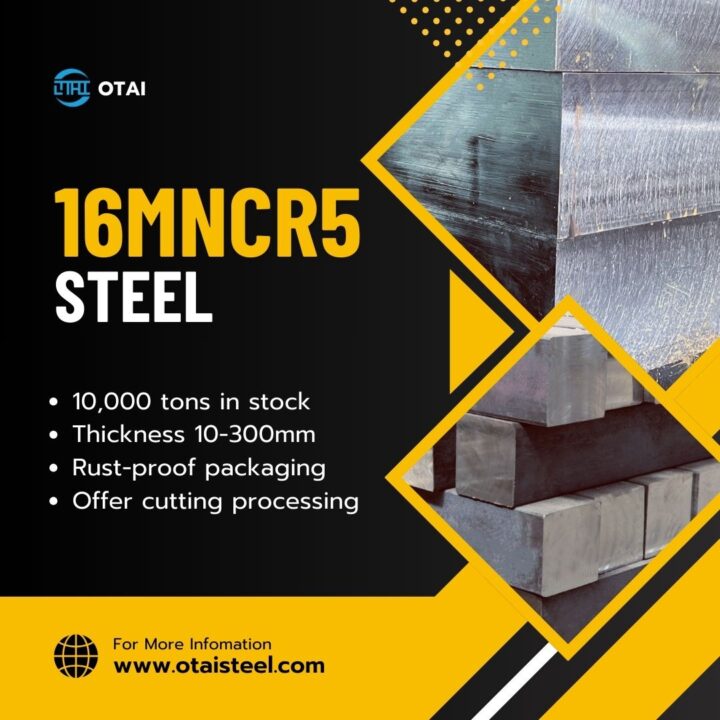
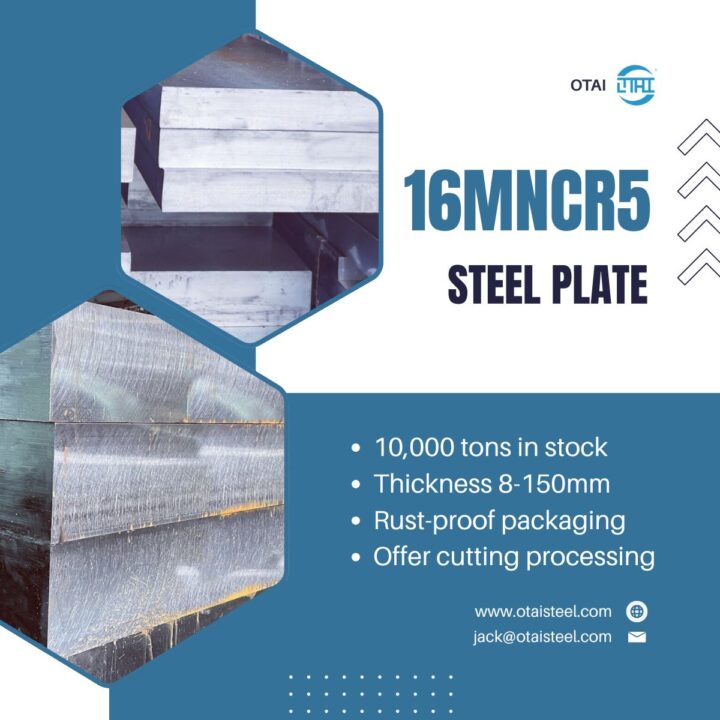
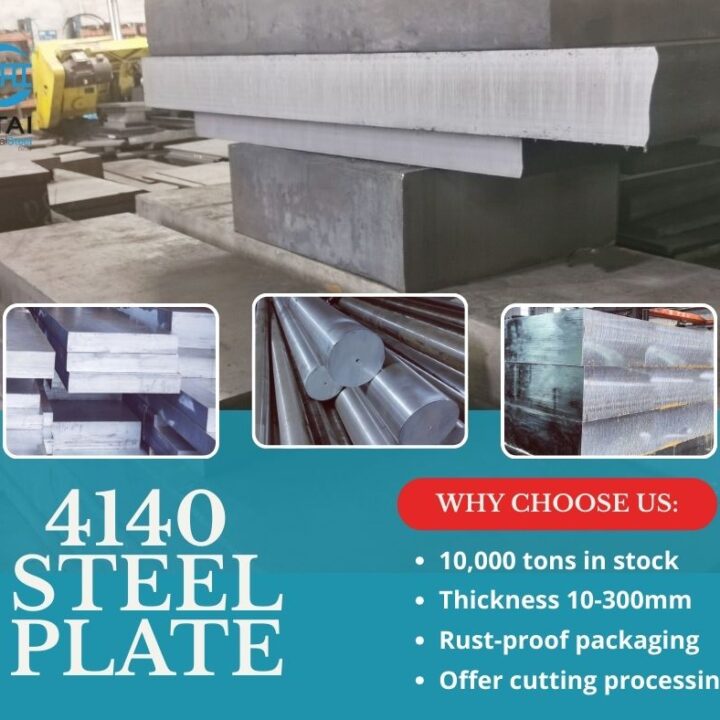
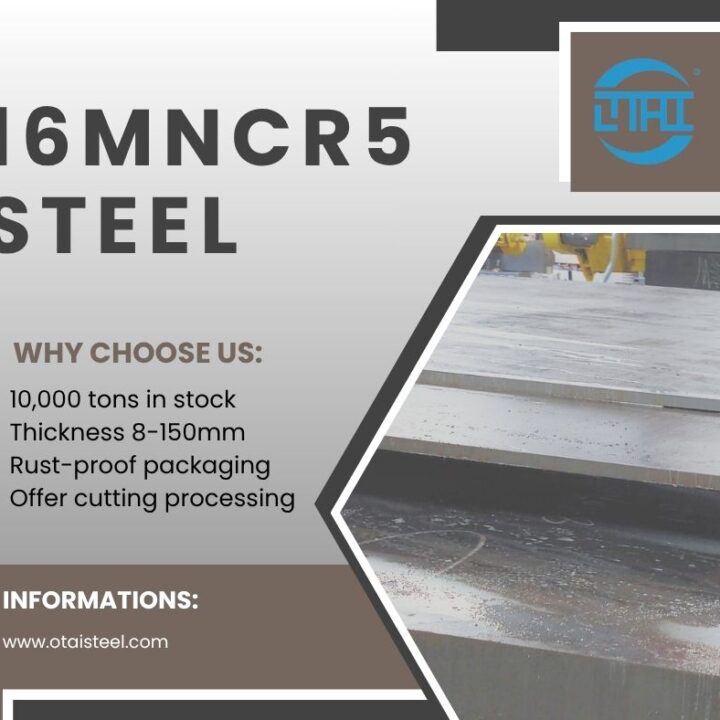
- 10,000+ tons of steel stock supports fast material selection and international supply.
- SCM440 steel plate in 4–380 mm thickness is available from current stock.
- 20 saw cutting machines support efficient cutting and customized dimensions.
- CNC machining and grinding support customers who need additional processing.
- Custom sizes and tolerances can be arranged according to project requirements.
- One-stop service covers cutting, machining, heat treatment, inspection, and export packaging.
- Ultrasonic testing and third-party inspection support are available for applicable orders.
- Professional export packaging includes bundled, wooden-box, and anti-rust packaging options.
- Otai has supplied tool steel and alloy steel to customers in 54+ countries since 1999.
❓ FAQ About SCM440 Equivalent
1. What is the most common SCM440 equivalent?
AISI 4140 and EN 42CrMo4 are the two most commonly discussed SCM440 equivalents. Both belong to the Cr-Mo alloy steel family, but buyers should verify the exact standard and material condition before substitution.
2. Is SCM440 equivalent to AISI 4140?
SCM440 and AISI 4140 are widely treated as close equivalent grades for many engineering applications. However, they follow different standards, so the actual chemical composition, mechanical requirements, and delivery condition should be checked before replacement.
3. Is SCM440 equivalent to 42CrMo4?
42CrMo4 is commonly listed as a close equivalent to SCM440 because both are chromium-molybdenum alloy structural steels with similar application areas. The buyer should still compare the applicable JIS and EN requirements before approving substitution.
4. Can I replace SCM440 with 4140 without approval?
Not when the drawing or purchasing specification explicitly requires SCM440. Ask the customer or engineering department to approve the alternative after comparing chemistry, mechanical properties, heat-treatment condition, dimensions, and inspection requirements.
5. What should I check when buying SCM440 equivalent steel?
Check the actual grade, applicable standard, chemical composition, product form, dimensions, delivery condition, hardness, mechanical properties, MTC, testing requirements, and quantity. For a substitution order, request a technical comparison before purchase.