4130 Steel Welding: Is Preheating Necessary?
📑 Table of Contents
- 🔍 Why Is Preheating Important When Welding 4130 Steel?
- 🧪 How Does 4130 Steel Composition Affect Weldability?
- 🌡️ What Preheating Temperature Is Recommended for 4130 Steel?
- 🔥 How Should You Preheat 4130 Steel Before Welding?
- ⚙️ Which Welding Processes Are Suitable for 4130 Steel?
- 🛠️ Is Post-Weld Heat Treatment Necessary for 4130 Steel?
- ⚠️ What Welding Problems Can Occur Without Proper Preheating?
- 📋 What Should Manufacturers Check Before Welding 4130 Steel?
- 🏢 Company Advantages
- ❓ Frequently Asked Questions
4130 steel is a chromium-molybdenum alloy steel widely used in mechanical structures, automotive components, tubing, and industrial equipment. Its combination of strength, toughness, and relatively good weldability makes it a practical engineering material. However, welding 4130 still requires attention to heat input, cooling rate, hydrogen control, and the condition of the base metal.
One question often arises during fabrication: does 4130 steel need preheating before welding? The answer depends on the material thickness, delivery condition, joint design, welding process, and required mechanical properties. Thin-wall normalized tubing may be welded without substantial preheating under a qualified procedure, while thicker sections or heat-treated components may need much more careful temperature control.
For manufacturers and procurement teams, understanding these differences helps prevent cracking, reduce rework, and select the correct material condition. This article explains when preheating is necessary, how to determine a suitable temperature, and what to check before starting a 4130 welding project.
🔍 Why Is Preheating Important When Welding 4130 Steel?
Preheating controls the cooling rate
Preheating means raising the temperature of the base metal around a joint before welding begins. The main purpose is to control how quickly the weld area cools after the welding heat source passes. When 4130 cools too rapidly, its heat-affected zone (HAZ) can develop hard microstructures that are more susceptible to cracking.
4130 contains chromium and molybdenum, which improve hardenability. These alloying elements help the steel develop strength through heat treatment, but they also influence the microstructure formed during welding. If the cooling rate is too high, the HAZ may become excessively hard, particularly when the material has a relatively high carbon equivalent or the joint has substantial restraint.
Preheating reduces the temperature difference between the weld area and the surrounding base metal. This can slow cooling, reduce thermal gradients, and provide more time for hydrogen to diffuse away from the weld region. As a result, it can lower the risk of hydrogen-assisted cracking under suitable welding conditions.
Preheating helps reduce hydrogen cracking risk
Hydrogen-assisted cold cracking usually requires three contributing conditions:
- Diffusible hydrogen: Hydrogen enters the weld metal or heat-affected zone through moisture, contaminated surfaces, welding consumables, or the welding environment.
- A susceptible microstructure: Rapid cooling can produce hard and relatively brittle structures in the weld or HAZ.
- Tensile stress: Residual welding stress, joint restraint, and external loading can contribute to crack formation.
Preheating can help address the cooling-rate and hydrogen-diffusion aspects of this problem. However, it does not eliminate the need for clean joint surfaces, low-hydrogen consumables, suitable welding parameters, and proper joint design. These controls must work together.
Why the same rule does not apply to every 4130 product
A thin-wall 4130 tube and a thick 4130 plate do not behave the same way during welding. Thin sections generally lose heat differently from thick sections. A thick joint can also create greater restraint and a more complex thermal cycle.
The delivery condition matters as well. Normalized or annealed 4130 may respond differently from quenched-and-tempered material. Therefore, a preheat recommendation for thin tubing should not automatically be applied to a thick industrial plate or a hardened component.
Technical guidance from TWI identifies material composition, section thickness, welding heat input, and joint restraint as important factors in hydrogen-cracking prevention. TWI’s guidance on low-alloy steel weldability explains why preheat and hydrogen control must be considered together.
🧪 How Does 4130 Steel Composition Affect Weldability?
Carbon, chromium, and molybdenum influence hardenability
4130 is a low-alloy chromium-molybdenum steel. Its commonly specified carbon content is approximately 0.28–0.33%, although buyers should verify the exact range against the applicable material standard and edition. Chromium and molybdenum contribute to hardenability, allowing the material to develop useful mechanical properties through appropriate heat treatment.
These elements also influence the welding thermal cycle. When the HAZ cools rapidly, the alloy composition can promote the formation of harder microstructures. The resulting hardness and cracking susceptibility depend on the actual chemical composition, cooling conditions, material condition, and welding procedure.
For this reason, two products carrying the 4130 designation may not have identical welding behavior if their actual chemistry, dimensions, or delivery conditions differ.
Carbon equivalent provides a useful assessment
Carbon equivalent (CE) is a calculation that estimates how the combined alloying elements influence weldability and hardening tendency. One commonly used formula is the International Institute of Welding (IIW) equation:
CE(IIW) = C + Mn/6 + (Cr + Mo + V)/5 + (Ni + Cu)/15
All element values in this formula are expressed as percentages by mass. The calculation helps engineers evaluate the influence of the actual chemical composition rather than relying on the grade name alone.
For 4130, carbon, manganese, chromium, and molybdenum all contribute to the calculated value. The result can vary between heats because the actual chemical analysis varies within the permitted specification limits.
What does carbon equivalent mean for preheating?
A higher carbon equivalent generally indicates greater hardenability and a potentially higher risk of hydrogen-assisted cracking. However, CE is not a complete welding assessment. It does not independently determine the required preheat temperature or replace a qualified welding procedure.
Engineers should consider CE together with:
- Actual plate or tube thickness and combined joint thickness.
- Material condition, including normalized, annealed, or quenched-and-tempered states.
- Welding process and diffusible hydrogen level.
- Joint geometry, restraint, and residual stress.
- Heat input, cooling time, and minimum interpass temperature.
Why buyers should request actual chemical analysis
When purchasing 4130 steel for welding, buyers should review the mill test certificate (MTC) rather than relying only on a product description. The actual heat analysis provides the chemical values needed for a more meaningful weldability assessment.
If the application has strict welding requirements, provide the MTC to the welding engineer before fabrication. This allows the team to evaluate the material’s actual composition and confirm whether the existing welding procedure remains suitable.
🌡️ What Preheating Temperature Is Recommended for 4130 Steel?
There is no single preheat temperature for every 4130 application
The correct preheat temperature depends on the complete welding situation. A thin-wall normalized tube may require little or no additional preheating under a qualified procedure, while a thick plate, highly restrained joint, or quenched-and-tempered component may require a substantially higher temperature.
For example, Harris Products Group explains that preheating is generally unnecessary for thinner 4130 sections around 0.120 inch (approximately 3 mm) in its specific welding guidance. For tubing thicker than that, it describes a 300–400°F (approximately 150–205°C) preheat range to obtain acceptable results. These figures are product and procedure guidance, not universal acceptance limits for every 4130 component. See Harris Products Group’s 4130 welding guidance.
Manufacturers should use these examples as context only. The approved welding procedure specification (WPS), relevant design code, material condition, and engineering assessment must determine the actual requirement.
Factors that determine the required temperature
| Factor | Effect on Preheating Requirements |
|---|---|
| Material thickness | Thicker sections can increase heat loss and joint cooling differences, potentially requiring more preheat. |
| Chemical composition | Higher hardenability may increase the need for cooling-rate and hydrogen control. |
| Delivery condition | Quenched-and-tempered material may need more careful control than normalized or annealed material. |
| Joint restraint | Rigid assemblies and highly restrained joints can increase cracking risk. |
| Welding consumables | Low-hydrogen consumables and controlled storage can reduce hydrogen-related risks. |
| Ambient conditions | Cold, damp, or windy conditions can increase cooling rates and moisture-related concerns. |
Thin-wall tubing versus thick plate
Thin-wall 4130 tubing is commonly used in applications such as automotive structures, motorsport components, and engineered frames. Under suitable conditions, a qualified procedure may permit welding without substantial preheating. Nevertheless, the material should be clean and dry, and the joint should not be exposed to excessive cooling or unnecessary restraint.
Thicker 4130 plate or heavy-section components require a more detailed assessment. Their greater thermal mass does not automatically mean slower cooling at every point in the joint. Heat flow, joint geometry, welding sequence, and the surrounding structure all influence the thermal cycle. A suitable preheat may be necessary to control HAZ hardness and reduce hydrogen-cracking risk.
How should manufacturers establish the final temperature?
Start with the applicable welding code and qualified procedure. Review the material certificate, calculate carbon equivalent where appropriate, and assess the thickness, joint configuration, hydrogen level, and delivery condition. Then establish the minimum preheat and interpass temperatures through the engineering assessment or procedure qualification required for the application.
Do not select a temperature simply because another workshop uses it for a different 4130 product. A procedure developed for thin normalized tubing may not be suitable for a thick plate or a high-strength heat-treated component.
🔥 How Should You Preheat 4130 Steel Before Welding?
Prepare the joint before applying heat
Good welding preparation begins before preheating. Remove oil, grease, moisture, rust, paint, cutting fluid, and other contaminants from the joint area. Contamination can introduce hydrogen or other defects into the weld, so cleaning should cover the joint faces and the surrounding heat-affected area.
Check the joint fit-up, root gap, alignment, and clamping arrangement. Excessive restraint can increase residual stress and make cracking more likely. Where possible, use a welding sequence and fixture arrangement that avoid unnecessary restraint while maintaining the required dimensional accuracy.
Use suitable heating equipment
Depending on component size and workshop facilities, manufacturers can use controlled gas heating, electrical resistance heaters, induction heating, or other approved heating equipment. The selected method should provide sufficiently uniform heating around the joint.
For larger components, localized heating may create uneven temperature distribution if the heated area is too narrow. The welding procedure should define the required heating zone and temperature measurement locations. The objective is to control the temperature through the relevant section, not simply to make the visible surface hot.
Measure and verify the temperature
Temperature-indicating crayons, contact thermocouples, and suitable digital temperature instruments can help verify preheat and interpass conditions. The measurement method should be appropriate for the component and the requirements of the welding procedure.
Manufacturers should pay attention to these points:
- Measure the temperature at the location specified by the WPS or applicable code.
- Allow sufficient time for the temperature to equalize through the material thickness.
- Check both sides of the joint when the procedure requires it.
- Confirm the minimum temperature before starting the weld and before depositing subsequent passes.
- Record temperature readings when the project requires documented process control.
Maintain interpass temperature during welding
Preheating is not only a one-time operation before the first weld pass. During multi-pass welding, the joint may cool between passes. If its temperature falls below the specified minimum interpass temperature, the welder may need to reheat the component before continuing.
However, excessive temperature can also create problems. The WPS should establish both minimum and maximum interpass limits where required. Welders should follow these limits rather than applying additional heat without control.
Control cooling after welding
After welding, avoid sudden cooling caused by water, compressed air, or exposure to strong drafts. The approved procedure may require controlled cooling or a post-weld holding treatment, depending on the material and application.
Do not assume that wrapping a component or allowing it to cool slowly will replace a specified post-weld heat treatment. Cooling and heat-treatment requirements should be defined by the engineering specification and qualified procedure.
⚙️ Which Welding Processes Are Suitable for 4130 Steel?
TIG welding (GTAW)
TIG welding is widely used for 4130 tubing and precision components because it provides good control over the weld pool and heat input. It is particularly useful for thin-wall sections, small joints, and applications where weld appearance and dimensional control matter.
Clean base metal, suitable shielding gas, correct filler selection, and consistent torch technique are important. Although TIG welding can introduce relatively low diffusible hydrogen when the process and materials are clean and dry, it does not automatically remove the need for preheating in thicker or more crack-sensitive applications.
MIG welding (GMAW)
MIG welding can provide higher deposition rates and is suitable for production environments where consistent welding parameters and productivity are important. Manufacturers should select a compatible filler wire and shielding gas based on the base-metal condition and required joint properties.
Control of heat input, wire cleanliness, shielding gas quality, and welding parameters remains essential. For thicker 4130 components, preheat and interpass temperature requirements should follow the qualified procedure.
Stick welding (SMAW)
Stick welding may be suitable for certain 4130 repair or fabrication applications. However, consumable selection and hydrogen control require particular attention. Low-hydrogen electrodes are often considered when the joint has a meaningful hydrogen-cracking risk.
Electrode storage, baking, and exposure limits should follow the manufacturer’s instructions and the applicable welding procedure. Moisture absorption can increase diffusible hydrogen and raise the risk of delayed cracking.
Compare common welding processes
| Welding Process | Common Advantages | Important Considerations |
|---|---|---|
| TIG / GTAW | Precise heat and weld-pool control; suitable for thin tubing and detailed work. | Requires clean surfaces, skilled operators, and appropriate filler selection. |
| MIG / GMAW | Higher productivity and suitability for repeat production. | Requires controlled parameters, shielding gas, and compatible wire. |
| Stick / SMAW | Flexible for selected repair and fabrication work. | Low-hydrogen electrode handling and storage are important. |
How should manufacturers select filler metal?
Filler metal selection depends on the required weld strength, toughness, service conditions, and whether the welded assembly will receive subsequent heat treatment. ER70S-2 and ER80S-D2 are examples of filler metals used in certain 4130 welding applications, but they are not interchangeable for every design.
A lower-strength filler may be appropriate for some thin-wall structures, while a higher-strength filler may be required for other joints. A 4130-composition filler may be considered when the entire weldment will undergo a suitable heat-treatment process. The final selection must follow the design requirements and qualified welding procedure.
🛠️ Is Post-Weld Heat Treatment Necessary for 4130 Steel?
Preheating and PWHT serve different purposes
Preheating takes place before welding and continues as required during the welding operation. Its main purpose is to influence the cooling cycle and reduce the risk of hydrogen-assisted cracking.
Post-weld heat treatment (PWHT) takes place after welding. Depending on the selected treatment, it may temper hardened microstructures, reduce residual stress, improve dimensional stability, or restore properties required by the design. Therefore, PWHT should not be treated as an automatic extension of preheating.
When may PWHT be required?
PWHT may be considered for thicker sections, highly restrained joints, components with demanding mechanical-property requirements, or assemblies that will undergo further machining. It may also be required by the governing design code, customer specification, or qualified welding procedure.
For quenched-and-tempered 4130, welding can alter the original heat-treated microstructure around the joint. The HAZ may no longer retain the same properties as the unaffected base metal. Engineers must evaluate whether the welded component can meet its required strength and toughness after the selected post-weld treatment.
Why thin-wall tubing may follow a different route
Some thin-wall 4130 tubing applications are designed around an as-welded condition. In these cases, unnecessary post-weld heating can create additional distortion or alter local mechanical properties. The design may instead account for the properties of the welded region through suitable joint design and engineering allowables.
Other applications require a controlled heat-treatment cycle for the complete assembly. The decision depends on the material condition, component design, service loads, and applicable industry rules. A general workshop practice should not replace the engineering requirements for a critical component.
Control temperature and dimensional changes
PWHT requires accurate control of heating rate, soak temperature, holding time, and cooling conditions. Excessive or unsuitable heating can reduce strength, change hardness, or cause dimensional distortion. Large components may also need a controlled furnace arrangement to maintain temperature uniformity.
Before specifying PWHT, manufacturers should confirm:
- The original delivery condition of the 4130 material.
- The required final hardness and mechanical properties.
- The approved heat-treatment temperature range and holding time.
- Whether the complete assembly or only a local region will be treated.
- The need for post-treatment machining and dimensional inspection.
- The testing and documentation required after treatment.
For critical welded structures, the final PWHT route should be established by a qualified welding or materials engineer. A generic temperature recommendation is not sufficient for every 4130 grade condition and component size.
⚠️ What Welding Problems Can Occur Without Proper Preheating?
Hydrogen-induced cold cracking
One of the main concerns when welding crack-sensitive low-alloy steels is hydrogen-induced cold cracking. This type of cracking can develop after the weld has cooled, rather than appearing immediately during welding. Hydrogen, a susceptible hard microstructure, and tensile stress combine to create the conditions for cracking.
Cracks may appear in the heat-affected zone or weld metal, depending on the material, filler, and welding procedure. This delayed behavior makes inspection timing important. Immediate visual inspection alone may not identify every hydrogen-related defect.
Excessive HAZ hardness
Rapid cooling can produce a hard HAZ in 4130. Excessive local hardness may reduce ductility and increase susceptibility to cracking, especially when hydrogen and residual stress are also present.
Preheating can help moderate the cooling rate, but the welding procedure must also control heat input and interpass temperature. Simply increasing the preheat temperature without considering the complete thermal cycle is not a reliable solution.
Residual stress and distortion
Welding produces uneven heating and cooling. The resulting expansion and contraction can create residual stress and dimensional distortion. High joint restraint can make these effects more severe.
Suitable preheating may reduce temperature gradients, but it cannot eliminate all welding stress. Proper joint preparation, fixture design, welding sequence, and controlled heat input remain important for dimensional accuracy.
Common problems and preventive measures
| Potential Problem | Possible Cause | Preventive Measure |
|---|---|---|
| Delayed hydrogen cracking | Hydrogen, hard microstructure, and tensile stress. | Use low-hydrogen controls, suitable preheat, and an approved welding procedure. |
| Excessive HAZ hardness | Rapid cooling and material hardenability. | Control preheat, heat input, and interpass temperature. |
| Weld cracking | Unsuitable filler, contamination, high restraint, or poor procedure control. | Review filler compatibility, joint design, cleanliness, and welding parameters. |
| Distortion | Uneven heating, cooling, and welding sequence. | Plan the welding sequence and use suitable fixturing and temperature control. |
| Inconsistent weld properties | Variable material condition, heat input, or consumable handling. | Verify the MTC, qualify the procedure, and record process parameters. |
Inspection should account for delayed defects
Inspection requirements depend on the application and governing code. Visual testing can identify surface defects, while magnetic particle testing or other suitable methods may help detect surface-breaking or near-surface discontinuities. Ultrasonic testing and radiographic testing may be used where the joint configuration and acceptance criteria make them appropriate.
For crack-sensitive applications, the inspection plan should also consider delayed inspection after welding. The required waiting period and method must follow the applicable code, project specification, and engineering assessment.
📋 What Should Manufacturers Check Before Welding 4130 Steel?
Confirm the material specification and condition
Before welding begins, verify that the supplied material matches the drawing and purchase specification. The 4130 designation alone does not provide all the information needed for a welding procedure. Confirm the governing standard, product form, dimensions, delivery condition, and any additional mechanical-property requirements.
For example, normalized tubing, annealed plate, and quenched-and-tempered material may require different welding controls. If the component has been heat treated before fabrication, the welding engineer should assess the effect of the welding thermal cycle on the original properties.
Review the MTC and traceability information
The mill test certificate provides important information for material verification. Buyers and manufacturers should check:
- Material grade and applicable standard.
- Heat number and product traceability.
- Actual chemical analysis, including carbon and alloying elements.
- Mechanical test results where specified.
- Delivery condition and product dimensions.
- Additional inspection records required by the purchase order.
Actual chemistry can help the welding engineer assess carbon equivalent and determine whether additional controls may be needed. If the MTC is missing or does not match the delivered material, resolve the discrepancy before fabrication.
Confirm the WPS and welding consumables
A suitable welding procedure specification should define the welding process, filler metal, joint preparation, preheat, minimum and maximum interpass temperature where applicable, heat input range, and any post-weld treatment. Procedure qualification and welder qualification should meet the requirements of the relevant code or project specification.
Consumables should be compatible with the base material and intended service conditions. Their storage, handling, and exposure limits must also be controlled. For low-hydrogen electrodes, follow the manufacturer’s instructions for storage and rebaking where applicable.
Check dimensions and joint design
Material thickness, cutting accuracy, bevel preparation, root gap, and alignment all influence welding quality. Incorrect fit-up can increase local stress or make it difficult to maintain consistent penetration. Buyers should provide clear drawings and dimensional tolerances when ordering stock for welded components.
For plate applications, confirm that the available thickness and cutting allowance suit the finished component. A suitable stock dimension can reduce unnecessary machining and improve material utilization.
Establish inspection and documentation requirements
Before production, agree on the inspection plan with the supplier, fabricator, and customer where necessary. Requirements may include visual inspection, dimensional checks, hardness testing, mechanical testing, nondestructive testing, and documented temperature records.
For overseas procurement, also confirm material marking, traceability, packaging, and export documentation. These details help ensure that the material arrives in a condition suitable for the planned fabrication process.
Use a complete technical inquiry when sourcing 4130 steel
When requesting a quotation, provide the grade, standard, product form, dimensions, quantity, delivery condition, and any welding-related requirements. If the steel will be used in a critical welded structure, share the relevant technical specification or drawing so the supplier can confirm whether the requested stock matches the intended application.
Clear requirements help avoid purchasing material that is chemically correct but unsuitable for the required fabrication route. They also make it easier to compare suppliers on a consistent technical basis.
🏢 Company Advantages
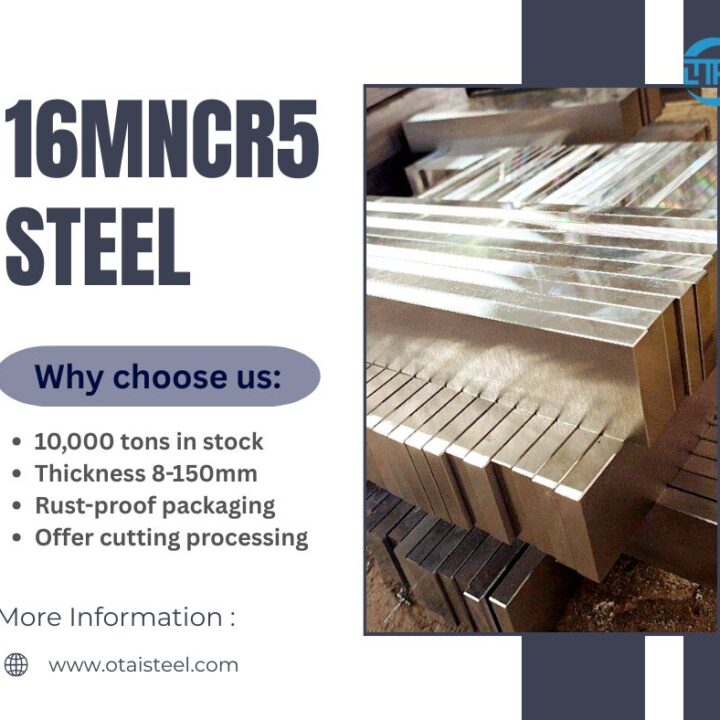
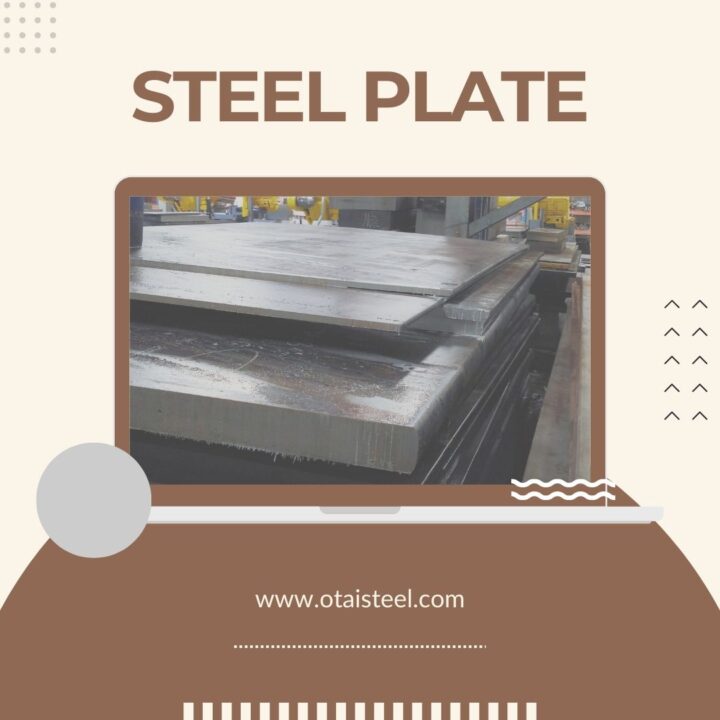
- 4130 steel plate stock: Thickness range of 10–70 mm, subject to current inventory confirmation.
- Extensive inventory: More than 10,000 tons of steel stock across our product range, supporting different industrial purchasing requirements.
- Cutting capability: 20 saw cutting machines for processing steel to customer-specific dimensions.
- Machining services: CNC machining and grinding options to support custom dimensions and tolerances.
- One-stop service: Support for material selection, cutting, machining, heat-treatment coordination, inspection, and export packaging.
- Quality assurance: Material testing, traceability documentation, ultrasonic testing, and third-party inspection support according to agreed requirements.
- International supply experience: Export experience in more than 54 countries since 1999, serving customers across different industrial sectors.
- Export packaging: Rust-prevention protection, strapping, bundling, and wooden case packaging options for international shipments.
- Customer-focused supply: We work with buyers to confirm specifications, dimensions, tolerances, and delivery requirements before shipment.
OTAI supplies 4130 steel plate for manufacturers and international buyers who need reliable alloy steel stock for machining and fabrication. Our team can help review your required grade, thickness, dimensions, and inspection requirements before preparing a quotation.
If your project involves welding 4130 steel, provide the material specification and intended application when contacting us. This helps us understand your stock requirements and coordinate the appropriate material supply and processing support.
❓ Frequently Asked Questions
1. Does 4130 steel always need preheating before welding?
No. Thin-wall normalized 4130 tubing may be welded without substantial preheating under a qualified procedure and suitable conditions. However, thicker sections, heat-treated material, highly restrained joints, and crack-sensitive applications may require preheating. The final requirement depends on the material condition, thickness, actual chemistry, welding process, and applicable procedure.
2. What temperature should I use to preheat 4130 steel?
There is no universal temperature for every 4130 application. Some welding guidance permits little or no additional preheat for thin sections, while thicker tubing and other components may require substantially higher temperatures. Use the approved WPS and engineering assessment to establish the minimum and maximum temperatures for the actual joint.
3. Can thin-wall 4130 tubing be welded without preheating?
In some applications, yes. Thin-wall normalized tubing can often be welded without substantial preheating when the material is clean and dry, joint restraint is controlled, and the welding procedure supports that approach. Cold or damp conditions, material condition, and the required service properties may change the recommendation.
4. Does 4130 steel require post-weld heat treatment?
Not in every application. Some thin-wall structures are designed to remain in the as-welded condition, while thicker or highly restrained components may require a controlled post-weld treatment. The decision depends on the original material condition, required mechanical properties, design code, and qualified welding procedure.
5. How can manufacturers prevent cracking when welding 4130 steel?
Manufacturers should verify the actual material composition, select compatible low-hydrogen consumables where required, clean the joint surfaces, control preheat and interpass temperatures, and avoid unnecessary joint restraint. They should also follow the qualified welding procedure, manage post-weld cooling, and perform the required inspection, including delayed inspection where specified.