5140 vs 4130 Steel: Which Grade Is Better for Your Application?
📑 Table of Contents
- 🔍 What Are 5140 and 4130 Steel?
- 🧪 5140 vs 4130: How Do Their Chemical Compositions Differ?
- 💪 5140 vs 4130 Steel: Which Offers Better Strength and Hardness?
- 🔥 How Do 5140 and 4130 Respond to Heat Treatment?
- 🔧 Which Steel Is Easier to Machine and Weld?
- ⚙️ 5140 vs 4130: Which Is Better for Different Applications?
- 💰 What Factors Affect the Cost of 5140 and 4130 Steel?
- 📋 What Should Buyers Check Before Purchasing 5140 or 4130?
- 🏢 Company Advantages
- ❓ Frequently Asked Questions
Choosing between 5140 and 4130 steel requires more than comparing their chemical compositions. Both are chromium-alloy steels used in mechanical engineering, automotive manufacturing, and industrial component production. However, their different carbon contents influence strength potential, hardenability, welding requirements, and suitable applications.
For buyers, the right choice depends on the component’s working conditions and the manufacturing process. A shaft that requires high strength after quenching and tempering may need a different material from a welded structure that requires good fabrication performance. Product dimensions, delivery condition, heat-treatment requirements, and inspection standards also affect the final decision.
This comparison explains the practical differences between 5140 and 4130 steel from both engineering and procurement perspectives. It also highlights the information buyers should confirm with a steel supplier before placing an order.
🔍 What Are 5140 and 4130 Steel?
5140 steel: A medium-carbon chromium alloy steel
5140 is an AISI/SAE medium-carbon chromium alloy steel. Its relatively high carbon content gives it good potential for strength and hardness development through suitable heat treatment. Manufacturers commonly select it for mechanical components that must withstand repeated loading, friction, or demanding service conditions.
Typical applications include shafts, axles, gears, pins, and other machine parts. Quenching and tempering can provide a useful combination of strength and toughness, although the actual results depend on section size, heat-treatment parameters, and the specified delivery condition.
For buyers sourcing 5140 plate, the material’s condition matters as much as its grade designation. An annealed plate intended for further machining does not have the same mechanical properties as a quenched-and-tempered product. Therefore, the purchase specification should state the required condition rather than simply listing 5140.
OTAI supplies 5140 alloy steel for industrial and machining requirements. Buyers can confirm available dimensions, delivery conditions, and processing options against their drawings and technical specifications.
4130 steel: A lower-carbon chromium-molybdenum alloy steel
4130 is a chromium-molybdenum alloy steel with a lower carbon content than 5140. Its alloy design provides a balance of strength, toughness, and fabrication performance. It is widely used in mechanical structures, tubing, automotive components, and applications where engineers need a combination of strength and weldability.
The lower carbon content generally makes 4130 easier to weld than 5140 under comparable conditions. Nevertheless, welding procedures still require attention to material thickness, joint restraint, preheat requirements, hydrogen control, and the final service conditions.
4130 can also respond to normalizing, quenching, and tempering. Its final properties depend on the heat-treatment route and product dimensions. Buyers should therefore avoid assuming that every 4130 product has the same strength or hardness.
OTAI offers 4130 steel for customers who need this chromium-molybdenum grade for industrial manufacturing and component production.
Why the distinction matters to buyers
Both grades belong to the family of alloy structural steels, but they are not interchangeable by default. 5140 is often considered when higher carbon content and heat-treatment potential are important. In contrast, 4130 is frequently selected when a lower-carbon alloy steel with useful strength and better welding characteristics is required.
The application should determine the grade, not the assumption that a higher carbon content always means a better material. A suitable selection must also consider fatigue, impact loading, operating temperature, fabrication methods, and the applicable design standard.
🧪 5140 vs 4130: How Do Their Chemical Compositions Differ?
Carbon content is one of the main differences
The most noticeable chemical difference between 5140 and 4130 is their carbon content. Commonly specified composition ranges place 5140 at approximately 0.38–0.43% carbon, while 4130 typically contains approximately 0.28–0.33% carbon. These figures are useful for an initial comparison, but buyers must check the applicable standard and edition for the exact limits.
Carbon affects the steel’s response to hardening. In general, a higher carbon content allows a steel to develop greater hardness and strength after suitable heat treatment. This helps explain why 5140 is often selected for components that require a relatively high strength level.
However, carbon content alone does not determine the final mechanical properties. Chromium, molybdenum, manganese, section size, cooling conditions, and tempering temperature also influence the result.
Comparing the main alloying elements
The following table provides a general comparison of the two grades. The ranges are indicative of commonly used AISI/SAE grade descriptions, not a substitute for the governing product standard. The applicable specification and mill test certificate must control the actual purchase.
| Element | 5140 (Typical Range, %) | 4130 (Typical Range, %) | General Role |
|---|---|---|---|
| Carbon (C) | 0.38–0.43 | 0.28–0.33 | Influences hardness, strength, and weldability |
| Chromium (Cr) | 0.70–0.90 | 0.80–1.10 | Improves hardenability and contributes to strength |
| Manganese (Mn) | 0.70–0.90 | 0.40–0.60 | Supports hardenability and strength |
| Molybdenum (Mo) | Not normally a principal specified addition | 0.15–0.25 | Improves hardenability and high-temperature strength retention |
| Silicon (Si) | Commonly around 0.15–0.35 | Commonly around 0.15–0.35 | Contributes to deoxidation and strength |
Important: These indicative figures are intended to explain general grade differences. They should not be used as universal acceptance limits. Composition requirements can vary with the governing specification, product form, and edition.
How chemistry affects material selection
The higher carbon content of 5140 generally supports greater hardness potential after hardening. Its manganese and chromium additions also contribute to hardenability. This combination makes the grade useful for components that need a strong core and suitable wear resistance after the correct heat treatment.
4130 contains molybdenum as a principal alloying element. Together with chromium, molybdenum supports hardenability and strength while the lower carbon level generally offers better welding characteristics than 5140.
When reviewing a chemical analysis, buyers should distinguish three types of information: the standard’s permitted composition range, a mill’s typical analysis, and the actual heat analysis recorded on the MTC. Only the actual certificate for the supplied heat confirms the measured composition of the ordered material.
💪 5140 vs 4130 Steel: Which Offers Better Strength and Hardness?
Strength potential after heat treatment
5140 generally offers higher carbon-related hardness and strength potential than 4130 when both grades receive suitable heat treatment. This is one reason manufacturers often consider 5140 for shafts, axles, and other mechanical components that must withstand substantial loads.
Nevertheless, a grade comparison should not be confused with a comparison of guaranteed tensile strength. A 5140 plate supplied in an annealed condition may have very different mechanical properties from a quenched-and-tempered 5140 bar. The same applies to 4130.
Actual strength depends on several factors:
- Delivery condition, such as annealed, normalized, or quenched and tempered.
- Product thickness or diameter and the resulting cooling response.
- Quenching medium, temperature control, and tempering parameters.
- Sampling location, specimen orientation, and test method.
- The mechanical-property requirements in the governing specification or purchase agreement.
Hardness and toughness are not the same property
Hardness indicates resistance to localized indentation or surface deformation. Toughness describes the material’s ability to absorb energy and resist fracture. A higher hardness value does not automatically mean a component will perform better under impact or cyclic loading.
For example, a shaft may need sufficient hardness to resist wear while retaining enough toughness to handle shock loads. Excessive hardness without an appropriate balance can increase the risk of brittle failure. Engineers must therefore select a suitable heat-treatment condition rather than simply specifying the highest possible hardness.
Practical comparison of mechanical performance
| Performance Factor | 5140 Steel | 4130 Steel |
|---|---|---|
| Carbon content | Generally higher | Generally lower |
| Hardness potential | Generally higher after suitable hardening | Can achieve useful hardness with suitable treatment |
| Strength potential | Often preferred for higher-strength mechanical parts | Offers a useful strength and toughness balance |
| Weldability | More demanding | Generally better |
| Typical selection priority | Strength and hardness after heat treatment | Fabrication flexibility and strength balance |
This table compares general tendencies, not guaranteed mechanical values. Buyers who need numerical tensile strength, yield strength, elongation, impact energy, or hardness should specify the delivery condition, product dimensions, test temperature, and applicable standard.
Why section size matters
A thick component cools differently from a thin component during quenching. Consequently, the hardness and strength may vary between the surface and the core. A grade that performs well in a small test specimen may not deliver the same properties throughout a large industrial component.
For this reason, buyers should provide the finished component dimensions or the original stock dimensions when requesting a quotation. This allows the supplier and heat-treatment provider to assess whether the selected grade and product size can meet the required mechanical performance.
🔥 How Do 5140 and 4130 Respond to Heat Treatment?
Annealing and normalizing
Annealing can reduce hardness and improve machinability by producing a more suitable microstructure for subsequent processing. Manufacturers may choose annealed stock when they need to remove substantial material before hardening or when they require a softer starting condition.
Normalizing involves heating the steel to an appropriate temperature above its critical transformation range, followed by cooling in air under controlled conditions. This process can refine the microstructure and produce a more uniform starting condition. The exact cycle depends on the grade, section size, and required properties.
Both 5140 and 4130 can undergo these processes. However, buyers should confirm the intended delivery condition because the term “steel plate” alone does not define its hardness or mechanical performance.
Quenching and tempering
Quenching and tempering are important processes for developing the mechanical properties of both grades. During quenching, the steel is heated to a suitable austenitizing temperature and cooled at a controlled rate. This produces a hardened microstructure. Tempering then reduces excessive brittleness and adjusts the final balance of strength, hardness, and toughness.
Because 5140 has a higher carbon content, it generally offers greater hardness potential after suitable hardening. 4130 also responds to quenching and tempering, with molybdenum and chromium contributing to its hardenability. Neither grade has one universal heat-treatment recipe for every thickness and application.
Heat-treatment considerations for buyers
Before purchasing material for heat treatment, confirm the following points with the supplier or processing provider:
- Starting condition: Confirm whether the material is annealed, normalized, or already quenched and tempered.
- Final hardness: State the required hardness range and measurement scale, such as HRC or HB, where appropriate.
- Component dimensions: Provide the section thickness or diameter because it affects heating and cooling behavior.
- Distortion allowance: Discuss dimensional changes, machining allowance, and possible post-treatment grinding.
- Testing requirements: Confirm where hardness measurements will be taken and whether additional mechanical tests are necessary.
Which grade should you choose for heat-treated components?
5140 is often a strong candidate when the design requires relatively high hardness and strength after quenching and tempering. It can be suitable for shafts, gears, and other loaded mechanical parts. However, the selected section size must still achieve the required through-hardening or core properties.
4130 may be more suitable when the component requires a combination of strength, toughness, and fabrication flexibility. Its lower carbon content can also be advantageous when welding forms part of the manufacturing process.
In either case, the purchase order should specify the required delivery state and final property targets. If the supplier only receives a grade name without a condition or performance requirement, the delivered material may not match the buyer’s intended manufacturing route.
🔧 Which Steel Is Easier to Machine and Weld?
Machinability depends on the delivery condition
It is difficult to rank 5140 and 4130 for machinability using their grade names alone. Hardness, microstructure, cutting speed, tool material, feed rate, and machining allowance all influence cutting performance.
Annealed material is generally easier to machine than a hardened product. Therefore, a buyer planning extensive milling, turning, or drilling should consider the stock condition before comparing the two grades. A material with a lower purchase price may create higher manufacturing costs if it requires slower machining or additional processing.
For large components, the machining plan should also consider residual stress and dimensional stability. Rough machining followed by stress-relief treatment and finish machining may be appropriate in some manufacturing routes. The exact sequence should be established with the production and heat-treatment teams.
Weldability: 4130 generally has an advantage
4130 generally offers better weldability than 5140 because of its lower carbon content. Its chromium-molybdenum alloy system still requires proper welding control, but the lower carbon level usually makes it a more practical choice for fabricated components.
5140 has a higher carbon content and can be more susceptible to hard zones and cracking in the heat-affected zone if welding is not properly controlled. Welding may require preheating, controlled heat input, suitable consumables, and post-weld heat treatment, depending on thickness, restraint, material condition, and service requirements.
What should manufacturers consider before welding?
Neither grade should be welded based only on a general statement that it is weldable. A qualified welding procedure should address the specific material, joint design, thickness, and service conditions.
Key considerations include:
- Confirming the actual chemical composition and material condition.
- Determining whether preheating is required and selecting an appropriate temperature.
- Controlling hydrogen input and using suitable welding consumables.
- Managing heat input and interpass temperature.
- Evaluating whether post-weld heat treatment is necessary.
- Inspecting the completed joint using the required visual or nondestructive testing method.
How fabrication affects the total cost
When a component requires extensive welding, 4130 may reduce fabrication complexity compared with 5140. On the other hand, if the part is machined from solid stock and requires high hardness after heat treatment, 5140 may be the more appropriate choice.
Buyers should compare the full manufacturing route rather than the raw material price alone. Include machining time, welding preparation, heat treatment, inspection, scrap risk, and finishing operations in the cost calculation. This approach provides a more realistic comparison between the two grades.
⚙️ 5140 vs 4130: Which Is Better for Different Applications?
When 5140 is a suitable choice
5140 is commonly considered for mechanical components that need strength and hardness after suitable heat treatment. Its carbon content makes it useful where the design requires a hardened material with a balance of strength and toughness.
Typical application areas include:
- Shafts and axles: Components that experience torsional loads, bending stress, and repeated mechanical loading.
- Gears and transmission parts: Parts that need suitable strength and resistance to wear after the specified processing route.
- Machine components: Pins, connecting parts, and other components that require reliable mechanical performance.
- Industrial equipment: Selected mechanical parts operating under demanding load conditions.
For these applications, buyers should specify the required hardness, strength, toughness, and section size. If the part needs a particular surface hardness or core property, the heat-treatment method must support that requirement.
When 4130 is a suitable choice
4130 is often selected for applications where manufacturers need a useful combination of strength, toughness, and weldability. Its chromium-molybdenum alloy composition supports mechanical performance, while its lower carbon content generally makes fabrication more manageable than with 5140.
Common application areas include:
- Mechanical structures: Fabricated components that require strength and controlled welding procedures.
- Automotive and motorsport parts: Selected chassis, brackets, tubing, and other engineered components.
- Industrial tubing and fittings: Applications where the product form and governing specification permit the use of 4130.
- Machinery components: Parts that need a balance of strength, toughness, and manufacturing flexibility.
However, the suitability of 4130 depends on the exact product form and design requirements. A grade designation does not automatically confirm compliance with a particular pressure, structural, aerospace, or automotive specification.
Application-based selection comparison
| Application Requirement | Grade Often Considered | Reason |
|---|---|---|
| High-strength shafts after heat treatment | 5140 | Higher carbon content supports hardness and strength potential |
| Gears and loaded mechanical parts | 5140 | Can provide a suitable strength and hardness balance after treatment |
| Welded mechanical structures | 4130 | Generally better weldability than 5140 |
| Automotive and motorsport tubing | 4130 | Commonly used where its strength and fabrication characteristics suit the design |
| Machined components requiring a softer starting condition | Either grade | Selection depends on the required final properties and machining route |
Can 5140 replace 4130, or can 4130 replace 5140?
Neither grade should replace the other automatically. Although both are chromium-alloy steels, their carbon content, alloy design, welding behavior, and heat-treatment response differ. Substitution can affect strength, fatigue life, fracture resistance, weld quality, and manufacturing costs.
Before approving a substitution, engineers should compare the governing material specifications, actual chemical composition, mechanical-property requirements, product form, section size, and manufacturing process. They should also review the component’s design calculations and any customer or industry approval requirements.
For procurement teams, the safest approach is to obtain written engineering approval before changing the specified grade. A lower material price does not justify a substitution that may compromise component performance or certification.
💰 What Factors Affect the Cost of 5140 and 4130 Steel?
Raw material and alloy composition
The price difference between 5140 and 4130 depends on market conditions, production costs, supplier inventory, and the required product specification. Their alloy compositions differ, but buyers should not assume that one grade is always more expensive. Prices can change with steelmaking costs, demand, order volume, and delivery location.
For an accurate comparison, request quotations for the same product form, dimensions, quantity, delivery condition, and inspection requirements. Comparing an annealed plate with a quenched-and-tempered plate will not provide a meaningful raw material price comparison.
Dimensions and processing requirements
Thickness, width, length, and cutting tolerance can influence the final price. Non-standard dimensions may require additional cutting or machining. Large sections may also have different availability and processing requirements from common stock sizes.
Additional services can increase the total purchase cost but may reduce the buyer’s own processing workload. These services can include:
- Saw cutting to the required dimensions.
- Precision cutting and machining allowance control.
- CNC machining or surface grinding where available.
- Heat-treatment coordination or supply in a specified condition.
- Ultrasonic testing and other agreed inspection services.
- Export packaging, rust prevention, and shipping preparation.
Inspection, documentation, and logistics
Inspection requirements should be clear before the supplier prepares a quotation. A standard MTC, additional mechanical testing, ultrasonic testing, third-party inspection, and special traceability requirements can all affect the cost and lead time.
International buyers should also consider packaging, freight, insurance, customs clearance, and delivery terms. A supplier offering a lower ex-works price may not provide the lowest landed cost if the order requires extra processing or complicated logistics.
How to compare supplier quotations fairly
Ask each supplier to quote against the same technical and commercial requirements. The comparison should include grade, standard, dimensions, quantity, delivery condition, tolerances, inspection documents, packaging, lead time, and shipping terms.
For repeat orders, supply stability matters as well. A supplier that can maintain consistent specifications, traceability, and delivery arrangements may help reduce production interruptions and incoming inspection problems. Buyers should evaluate the supplier’s ability to meet the complete requirement rather than choosing solely on the lowest quoted price.
📋 What Should Buyers Check Before Purchasing 5140 or 4130?
Confirm the grade and governing standard
Start by identifying the exact material designation and governing standard. AISI/SAE grade names are useful for identifying a material family, but the purchase order should state the applicable specification and edition wherever the project requires one.
Do not assume that similar-looking grade designations from different national standards have identical chemical limits or mechanical requirements. If a buyer requests an equivalent grade, the supplier should confirm the comparison against the actual standard rather than relying on a grade-name match alone.
Specify the delivery condition and mechanical requirements
State whether the material must be supplied annealed, normalized, quenched and tempered, or in another specified condition. If the component will undergo further heat treatment, explain the intended manufacturing route and final performance requirements.
Where mechanical properties matter, define the required tensile strength, yield strength, elongation, impact properties, and hardness. Also identify the test method, sampling location, specimen orientation, and applicable acceptance criteria. These details help prevent disagreements between the buyer, supplier, and inspection organization.
Review the MTC and traceability
The mill test certificate is an important document for verifying supplied steel. Buyers should review the following information:
- Material grade and applicable standard.
- Heat number and traceability information.
- Actual chemical analysis for the supplied heat.
- Mechanical test results, where required by the specification.
- Delivery condition and product dimensions.
- Inspection results and any additional testing records agreed in the order.
For critical applications, buyers may also request independent inspection or additional testing. Ultrasonic testing, for example, can help assess internal discontinuities when the product specification and acceptance criteria require it. The inspection method, coverage, and acceptance level should be agreed before production or shipment.
Check dimensions, tolerances, and packaging
Material dimensions should match the buyer’s cutting plan and machining allowance. Confirm thickness, width, length, flatness, surface condition, and dimensional tolerances. If the material will be used for precision machining, these details can affect yield and production efficiency.
For overseas orders, packaging also deserves attention. Rust-prevention measures, protective wrapping, steel strapping, and wooden cases may be appropriate depending on the product form, transport route, and destination requirements. The supplier should confirm packaging details before shipment.
Choose a supplier that can support the complete order
A reliable steel supplier should understand both the material specification and the buyer’s manufacturing needs. Beyond price and stock availability, assess the supplier’s cutting capability, inspection support, documentation, export experience, and ability to maintain traceability.
For buyers comparing 5140 and 4130, a useful quotation request should include the grade, standard, dimensions, quantity, delivery condition, mechanical requirements, inspection requirements, and destination. Providing these details helps the supplier recommend a suitable product and prepare a more accurate quotation.
🏢 Company Advantages
- Extensive steel inventory: More than 10,000 tons of steel stock across our product range, supporting different industrial purchasing requirements.
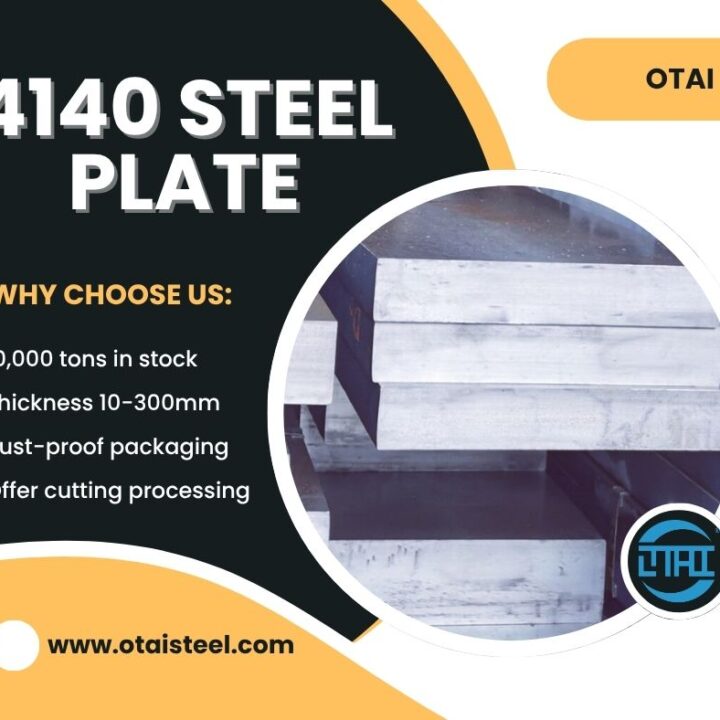
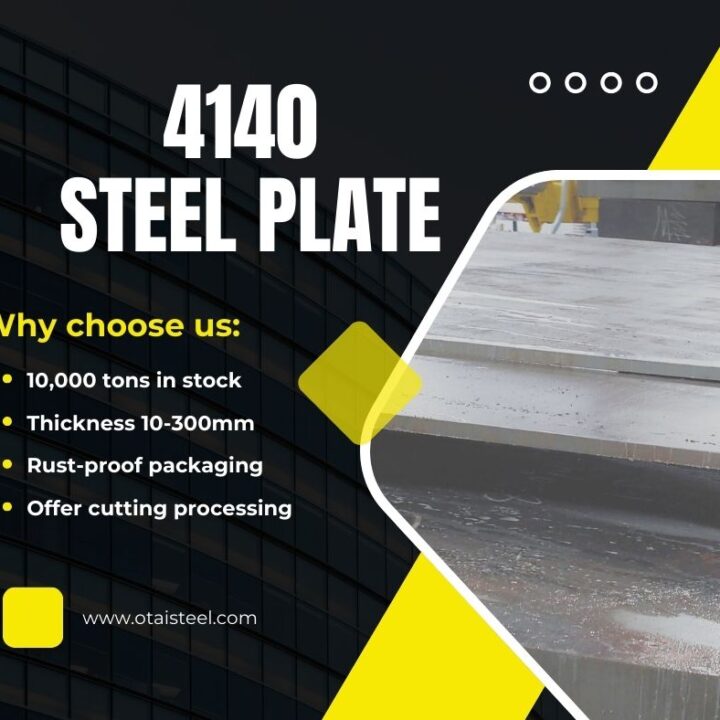
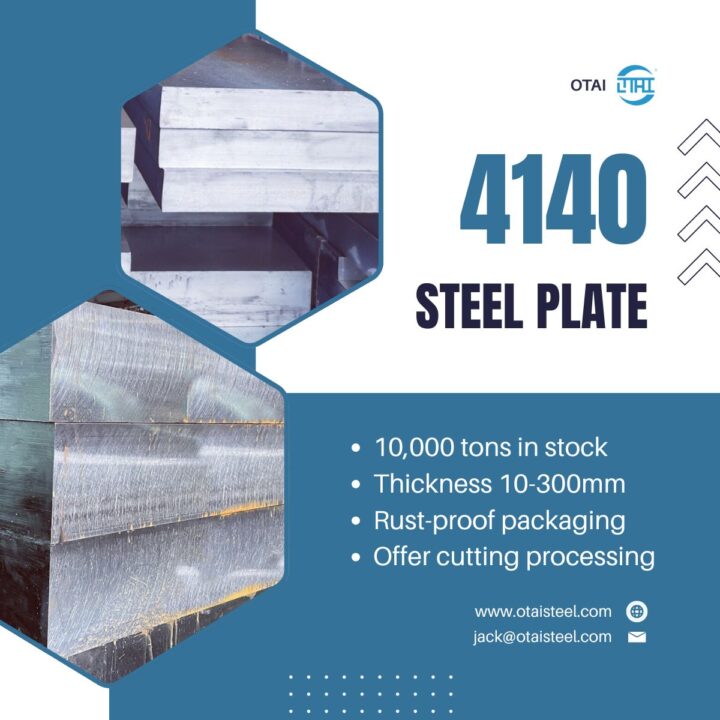
- 5140 steel plate stock: Plate thickness range of 4–300 mm, subject to current inventory confirmation.
- 4130 steel plate stock: Plate thickness range of 10–70 mm, subject to current inventory confirmation.
- Cutting and processing capability: 20 saw cutting machines, with CNC machining and grinding services to support customer-specific dimensions and tolerances.
- One-stop service: Support for material selection, cutting, machining, heat-treatment coordination, inspection, and export packaging.
- Quality assurance: Material testing, traceability documentation, ultrasonic testing, and third-party inspection support according to agreed requirements.
- International supply experience: Export experience in more than 54 countries since 1999, serving customers across different industrial sectors.
- Export packaging: Rust-prevention protection, strapping, bundling, and wooden case packaging options for international shipments.
- Customer-focused supply: We work with buyers to confirm material specifications, dimensions, tolerances, and delivery requirements before shipment.
Whether your project requires 5140 for heat-treated mechanical components or 4130 for applications that need a balance of strength and fabrication performance, OTAI can help you review the material requirements and identify suitable stock options. Contact us with your grade, dimensions, quantity, and technical specification for a quotation.
❓ Frequently Asked Questions
1. Is 5140 steel stronger than 4130 steel?
5140 generally has greater hardness and strength potential after suitable heat treatment because it contains more carbon. However, actual strength depends on the delivery condition, section size, heat-treatment process, and applicable specification. A direct comparison requires test results from materials supplied in comparable conditions.
2. What is the main difference between 5140 and 4130 steel?
The main difference is their chemical composition. 5140 generally contains approximately 0.38–0.43% carbon, while 4130 typically contains approximately 0.28–0.33%. 4130 also contains molybdenum as a principal alloying addition. These differences influence hardening response, strength potential, and weldability.
3. Is 4130 easier to weld than 5140?
Yes. 4130 generally offers better weldability because of its lower carbon content. However, it still requires a suitable welding procedure. Preheating, heat-input control, hydrogen management, and post-weld heat treatment may be necessary depending on the component and service conditions. Welding 5140 usually requires more careful control.
4. Can 5140 and 4130 be heat treated?
Both grades can undergo heat-treatment processes such as annealing, normalizing, quenching, and tempering. The correct process depends on the required mechanical properties, product dimensions, and intended application. Buyers should specify the required delivery condition or final hardness and strength rather than relying on the grade designation alone.
5. Which steel should I choose for shafts and mechanical components?
5140 is often a suitable candidate for shafts and mechanical parts that require relatively high strength and hardness after heat treatment. However, 4130 may be more appropriate when welding, fabrication flexibility, and a balanced strength profile are important. The final selection should follow the component’s engineering requirements and applicable material specification.