16MnCr5 Steel for Sale: How Can Buyers Find the Right Stock?
📑 Table of Contents
- 🔍 What Does 16MnCr5 Steel for Sale Mean for Industrial Buyers?
- 📏 Which 16MnCr5 Steel Sizes Are Available from Stock?
- ⚙️ How Should Buyers Match Stock Dimensions to Finished Parts?
- ✂️ Full Plates or Cut-to-Size Blanks: Which Is More Practical?
- 🏭 Which Applications Require Different 16MnCr5 Stock Specifications?
- 📋 What Material Details Should Buyers Confirm Before Purchasing?
- 🚚 How Do Stock Availability and Processing Affect Delivery Time?
- 💰 How Can Buyers Reduce Material Waste and Purchasing Costs?
- 🤝 Why Consider OTAI for 16MnCr5 Steel Supply?
- 🏢 Company Advantages
- ❓ Frequently Asked Questions
When searching for 16MnCr5 steel for sale, industrial buyers need more than a supplier quotation. They need material that matches the required grade, dimensions, delivery condition, processing plan, and final application. A low price does not necessarily represent good value if the available plate requires excessive machining or does not meet the customer’s technical requirements.
16MnCr5 is a case-hardening alloy steel commonly selected for components that need a wear-resistant surface and a comparatively tough core after suitable heat treatment. Buyers use it for gears, pinions, shafts, and other mechanical transmission parts. However, selecting the correct stock is an important first step. The plate dimensions, material condition, chemical composition, and traceability all influence the next manufacturing stages.
This article explains how to evaluate 16MnCr5 steel stock from a practical purchasing perspective. It also covers plate dimensions, cutting options, documentation, delivery considerations, and ways to reduce material waste when sourcing from an international steel supplier.
🔍 What Does 16MnCr5 Steel for Sale Mean for Industrial Buyers?
Understanding the material before requesting a quotation
16MnCr5 is a low-carbon alloy case-hardening steel with the European material number 1.7131. Buyers may encounter it under the designation EN 10084 or the later EN ISO 683-3 standard family, depending on the specification and project documentation. When comparing quotations, procurement teams should identify the exact standard and edition required by their drawings or purchase contract.
The grade contains chromium and manganese as important alloying elements. Its relatively low carbon content supports a case-hardening process rather than the same through-hardening approach used for many medium-carbon alloy steels. After appropriate carburizing and hardening, a component can develop a hard, wear-resistant surface while retaining a tougher core.
Why stock suitability matters as much as the steel grade
Two suppliers may both offer 16MnCr5, but their products may differ in thickness, width, length, delivery condition, surface quality, and available processing. Those differences can affect machining allowances, production schedules, and total material costs.
For example, a buyer manufacturing a group of gear blanks may need a particular plate thickness and a cutting plan that produces several blanks from each plate. Another buyer may require larger pieces for machining more substantial components. Both need 16MnCr5, but their stock requirements are not identical.
Buyers should therefore evaluate the complete supply specification rather than relying on the grade name alone. A useful enquiry identifies the intended application, required dimensions, quantity, standard, delivery condition, and any additional inspection requirements.
📏 Which 16MnCr5 Steel Sizes Are Available from Stock?
Start with the available thickness range
Stock dimensions are one of the first details buyers should check when searching for 16MnCr5 steel for sale. A supplier may list the correct grade but have limited sizes available. If the required thickness is unavailable, the buyer may need to consider another stock size, additional machining, or a different production arrangement.
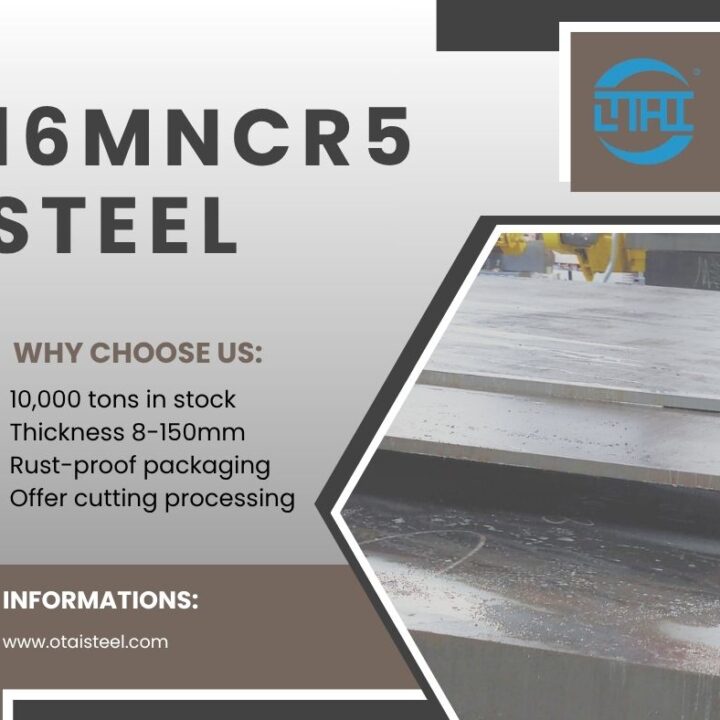
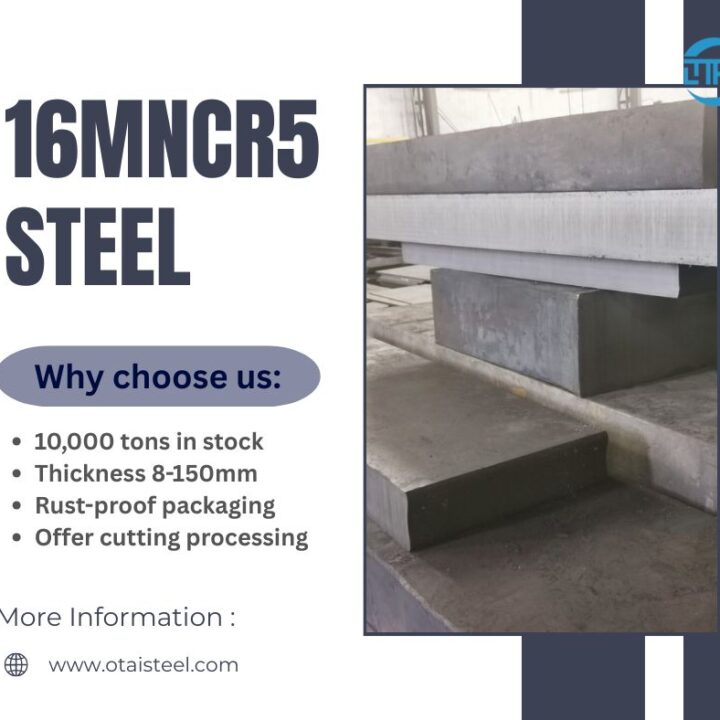
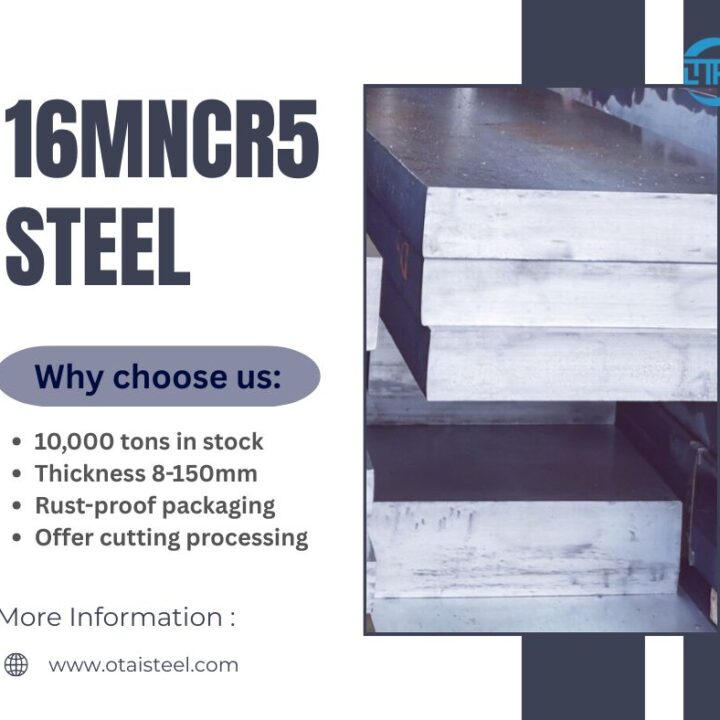
OTAI’s confirmed 16MnCr5 steel plate thickness range is 8–150 mm. This range gives buyers several options for evaluating plate stock against their component dimensions and machining requirements. However, it does not mean that every thickness, width, length, and quantity is available for immediate shipment at all times. Actual inventory should be confirmed when requesting a quotation.
What dimensions should appear in your enquiry?
Thickness alone is not enough to establish whether a plate suits a manufacturing project. Buyers should also provide the required width and length. These dimensions determine whether the supplier can provide a suitable full plate or cut the material into more convenient blanks.
| Stock information | What buyers should check | Why it matters |
|---|---|---|
| Steel grade | 16MnCr5 / 1.7131 | Confirms the intended material designation. |
| Thickness | Within the confirmed 8–150 mm range | Determines machining allowance and blank suitability. |
| Width and length | Required finished plate dimensions | Affects cutting plans, yield, and transport. |
| Quantity | Pieces or total weight | Helps the supplier confirm stock and calculate the quotation. |
| Delivery condition | Specified condition and applicable requirements | Helps determine whether the material suits the next process. |
Confirm actual availability, not just catalogue dimensions
Online product pages and stock lists provide a useful starting point, but inventory changes as suppliers complete orders and replenish materials. Before placing a purchase order, ask the supplier to confirm the available thickness, width, length, quantity, and expected dispatch date.
If your project has a strict dimensional tolerance, include it in the enquiry. Standard commercial plate dimensions and specially processed dimensions may involve different cutting or machining arrangements.
⚙️ How Should Buyers Match Stock Dimensions to Finished Parts?
Work backward from the component drawing
The most reliable way to select 16MnCr5 steel stock is to start with the finished component drawing. Identify the maximum finished dimensions, machining allowance, cutting allowance, and any areas that require special treatment. Then compare these requirements with the supplier’s available plate sizes.
For example, if a component needs a finished thickness of 40 mm, a buyer should not automatically request a 40 mm plate. The machining process may remove material from one or both faces. The buyer should calculate the required starting thickness based on the machining plan and the dimensional tolerances of the finished part.
Consider cutting and machining allowances
Cutting operations can introduce dimensional variation, surface marks, and heat effects near the cut edge. Subsequent machining may remove these areas, depending on the manufacturing process. Therefore, buyers should discuss the cutting method and allowance with the supplier before confirming blank dimensions.
For precision components, the drawing should clearly distinguish between raw material dimensions and finished dimensions. This helps prevent misunderstandings when a supplier quotes cut blanks rather than fully machined parts.
Use a practical dimension comparison
| Manufacturing requirement | Stock selection consideration |
|---|---|
| Finished component thickness | Allow enough material for the specified machining operations. |
| Component width and length | Check whether the full plate can produce the required blank layout. |
| Tight dimensional tolerance | Clarify whether saw cutting or further precision machining is necessary. |
| Large production batch | Compare repeatable cutting dimensions and material yield. |
| Heat-treatment allowance | Discuss possible dimensional changes and the required finishing allowance with the heat-treatment provider. |
Do not overlook the final heat-treatment process
16MnCr5 is selected for case hardening, but the steel plate supplied by a stockholder is not automatically ready for use as a finished case-hardened component. Carburizing, quenching, tempering, and subsequent finishing depend on the component design and production specification.
Buyers should tell the supplier whether the material will undergo machining and case hardening after delivery. This information helps the supplier understand the intended application and identify any requirements that need to be agreed before shipment.
✂️ Full Plates or Cut-to-Size Blanks: Which Is More Practical?
When full plates make sense
Buying full plates can be practical when a manufacturer has its own cutting equipment, processes different component sizes, or purchases material regularly. Full plates give the production team more flexibility to arrange its own cutting patterns and manage leftover material.
However, full plates require suitable handling equipment, storage space, and an internal cutting process. Buyers should also consider whether their workshop can handle the plate dimensions and weight safely.
When cut-to-size blanks are a better option
Cut-to-size material can reduce the amount of preparation required after delivery. A supplier can cut the plate into specified blank dimensions, allowing the buyer to move the material more directly into machining or the next manufacturing operation.
This option may be useful for overseas customers who want to reduce local cutting work or do not have suitable equipment for processing large plates. It can also make incoming material handling more convenient.
Compare the total cost, not only the unit price
A cut blank may have a higher price per unit of weight than a full plate because the supplier performs additional work. Nevertheless, the buyer may save on internal labour, cutting equipment time, handling, and production preparation.
Before choosing, compare the material cost and processing cost together. Ask whether the supplier calculates the quotation using the original plate weight, finished blank weight, or another agreed method. Also confirm how the supplier handles cutting kerf, remnants, and dimensional tolerances.
| Comparison | Full plate | Cut-to-size blanks |
|---|---|---|
| Initial material flexibility | High; buyer controls the cutting layout. | Depends on the agreed blank dimensions. |
| In-house preparation | Usually requires buyer-side cutting. | Less cutting work after receipt. |
| Handling | May require larger handling equipment. | Can be easier to handle if blank sizes are suitable. |
| Cost evaluation | Consider cutting, labour, and material utilization. | Include supplier processing and agreed cutting allowances. |
Neither option is automatically better. The right choice depends on production volume, equipment, material utilization, and the buyer’s preferred division of work between supplier and manufacturer.
🏭 Which Applications Require Different 16MnCr5 Stock Specifications?
Gears and pinions
Gears and pinions often experience repeated contact stress and surface wear. Manufacturers choose 16MnCr5 for suitable components because case hardening can produce a hard surface layer while maintaining a comparatively tough core. The required blank dimensions depend on gear geometry, machining allowance, and the number of parts produced from each plate.
For these applications, buyers should confirm the material specification and intended heat-treatment route. They should also check whether the supplied plate can provide the required blanks without excessive waste.
Shafts and transmission components
Some shafts and transmission parts require wear resistance at specific contact areas. The component design determines whether 16MnCr5 is suitable and which dimensions the manufacturer needs. Buyers should not assume that every shaft design can use the same stock thickness or material condition.
General machinery components
Mechanical equipment may contain pins, connecting parts, and other components that require a hardened surface after processing. For these parts, material selection should consider load, wear, geometry, production quantity, and heat-treatment capability.
Match the material to the process
16MnCr5 is not a universal replacement for every alloy steel. Its case-hardening characteristics make it suitable for certain wear-resistant components, but the final performance depends on the component design and the complete manufacturing process.
Before purchasing, buyers should check:
- Whether the component requires a hardened case and a tough core.
- Whether the specified grade and standard match the engineering drawing.
- Whether the plate dimensions support the required blank layout.
- Whether the heat-treatment provider can meet the specified case-depth and hardness requirements.
- Whether the final machining process accounts for dimensional changes during heat treatment.
When the application involves high loads, fatigue, impact, or strict safety requirements, the engineering team should validate the material and heat-treatment specification rather than selecting stock based only on availability or price.
📋 What Material Details Should Buyers Confirm Before Purchasing?
Grade, standard, and chemical composition
Start by confirming the complete material designation. The purchase order should identify 16MnCr5 and the relevant material number, 1.7131, where applicable. It should also state the required standard and edition. This is particularly important when the buyer’s drawing refers to an older standard or uses a company-specific specification.
The chemical composition should comply with the agreed standard and product requirements. Typical reference ranges for 16MnCr5 include carbon of approximately 0.14–0.19%, manganese of 1.00–1.30%, and chromium of 0.80–1.10%. These figures are useful for identifying the grade, but they are not a substitute for the applicable standard or the actual mill test certificate.
Delivery condition and mechanical requirements
Ask the supplier to state the delivery condition of the offered material. For example, soft-annealed, normalized, or another specified condition may affect hardness and machinability. Do not assume that a plate is supplied in a particular condition unless the quotation and order documents confirm it.
Mechanical-property requirements also need context. Hardness values and other properties can depend on product form, dimensions, delivery condition, and the relevant standard. If your project requires a specific hardness range or test method, include it in the purchase specification.
Inspection and traceability
For industrial procurement, material traceability is important. Buyers should request the agreed inspection documents and check whether the heat number, grade, dimensions, and quantity match the supplied material. If the project requires additional inspection, define the scope before production or shipment.
| Document or check | Information to verify |
|---|---|
| Mill Test Certificate (MTC) | Grade, heat number, chemical analysis, and reported test results. |
| Dimensional inspection | Thickness, width, length, and agreed tolerances. |
| Surface inspection | Visible surface condition and any agreed acceptance criteria. |
| Additional testing | Ultrasonic testing or third-party inspection, when specified. |
| Packing and marking | Identification, bundle details, and protection for transport. |
Not every order needs every additional test. The buyer should define the inspection level according to the application, drawing, contract, and quality requirements. Clear requirements help the supplier quote accurately and reduce disagreements during acceptance.
🚚 How Do Stock Availability and Processing Affect Delivery Time?
Separate stock confirmation from processing time
A supplier may have the required 16MnCr5 plate in stock, but the order may still need cutting, inspection, marking, packing, and export preparation. Buyers should ask for the expected completion date for each relevant stage rather than relying only on a general delivery estimate.
For example, a full-plate order may need less processing than an order requiring many individual blanks. However, the actual schedule depends on the available stock, cutting workload, inspection requirements, and quantity.
Plan international shipments carefully
Overseas buyers should also consider packing, loading, customs documentation, and transportation arrangements. Steel plates are heavy cargo, so packing methods and loading plans can affect handling efficiency and shipping costs.
Before confirming the purchase order, clarify the following details:
- Confirmed stock dimensions and quantity.
- Cutting or machining requirements and completion time.
- Inspection documents and any third-party inspection schedule.
- Export packing method and material identification.
- Estimated dispatch date and agreed shipping terms.
Keep communication clear when schedules are tight
If the buyer has a fixed production deadline, the supplier should know it before the order is confirmed. This allows both parties to check whether the requested material and processing schedule are realistic. It also reduces the risk of assuming that stock availability means immediate shipment.
For repeat orders, buyers can improve planning by sharing forecast quantities and expected purchasing dates. A supplier can then review stock requirements and discuss replenishment or production arrangements in advance.
💰 How Can Buyers Reduce Material Waste and Purchasing Costs?
Optimize the cutting layout
Material utilization can have a significant effect on the total cost of a 16MnCr5 purchase. If a buyer orders plates without considering the finished blank dimensions, the cutting process may leave large unused sections. A basic cutting plan helps identify the most suitable plate size and the number of blanks that can be produced.
Provide the supplier with the blank dimensions and required quantity. When possible, include a drawing or cutting layout. The supplier can then assess whether the available plate dimensions support a practical cutting arrangement.
Compare quotations on the same basis
Steel quotations are difficult to compare when suppliers use different assumptions. One quotation may cover full plates, while another includes cutting. A third may quote a different delivery condition or inspection scope.
For a fair comparison, ask each supplier to quote against the same technical and commercial requirements:
- 16MnCr5 grade and agreed standard.
- Required plate thickness, width, and length.
- Quantity and unit of measurement.
- Delivery condition and tolerance requirements.
- Cutting, machining, and inspection scope.
- Packaging, delivery terms, and estimated lead time.
Consider the total landed cost
For international procurement, the purchase price is only one part of the final cost. Buyers should also consider cutting charges, packing, freight, import duties, handling, and any additional processing required after arrival.
A slightly higher material quotation may still offer better value if it reduces waste or avoids unnecessary preparation. Conversely, buying oversized blanks may increase material and freight costs without improving the finished component.
The best purchasing decision balances material price, usable yield, processing requirements, delivery reliability, and compliance with the technical specification. This approach is more useful than choosing a supplier solely because its initial price is the lowest.
🤝 Why Consider OTAI for 16MnCr5 Steel Supply?
Stock dimensions and processing support
When sourcing 16MnCr5 steel, buyers often need a supplier that can coordinate material availability, cutting, inspection, and export packing. OTAI supplies alloy steels and tool steels to international customers and supports purchasing requirements for different industrial applications.
OTAI’s confirmed 16MnCr5 steel plate thickness range is 8–150 mm. Buyers can provide their required width, length, quantity, and cutting dimensions so the sales team can check current availability and prepare a quotation based on the actual order requirements.
Discuss the complete supply requirement
Rather than requesting a price using only the grade name, buyers can share their drawings or a detailed material list. This helps OTAI evaluate whether the available plate dimensions suit the required blanks and whether cutting or other processing services are appropriate.
OTAI also supports dimensional customization, saw cutting, CNC machining, grinding, inspection coordination, and export packing according to agreed requirements. The exact scope depends on the product, order, and technical specification.
Review the product information
For the grade description and product details, visit the OTAI 16MnCr5 case-hardening steel product page.
When requesting a quotation, include the following information:
- Steel grade: 16MnCr5 / 1.7131.
- Required standard and edition.
- Plate thickness, width, and length.
- Quantity in pieces or total weight.
- Delivery condition and any special technical requirements.
- Cutting, machining, inspection, and packing requirements.
- Destination country and preferred delivery terms.
With these details, OTAI can check the relevant stock, review the processing scope, and provide a quotation that better reflects the buyer’s actual requirements.
🏢 Company Advantages
- 16MnCr5 steel plate thickness range: 8–150 mm in stock, subject to current availability confirmation.
- Large overall inventory: More than 10,000 tons of steel stock across the company’s product range.
- Cutting capacity: 20 saw cutting machines support material cutting requirements.
- Processing services: CNC machining, grinding, and customized dimensions according to agreed drawings and tolerances.
- Quality support: Material testing, ultrasonic testing, and third-party inspection coordination according to order requirements.
- Export experience: Supplying customers in more than 54 countries since 1999.
- One-stop service: Support for material selection, cutting, processing coordination, inspection, and export packing.
- Export packaging: Strapping, bundling, anti-rust protection, and wooden cases according to shipment requirements.
- International supply experience: Long-term cooperation with global industrial buyers, including customers from major international companies.
❓ Frequently Asked Questions
1. What is the material number of 16MnCr5 steel?
The material number of 16MnCr5 is 1.7131. It is a case-hardening alloy steel commonly specified under EN 10084 or the EN ISO 683-3 standard family. Buyers should confirm the exact standard and edition required for their project.
2. What thickness of 16MnCr5 steel plate does OTAI supply?
OTAI’s confirmed 16MnCr5 steel plate thickness range is 8–150 mm. Actual availability depends on current stock, required dimensions, and order quantity. Buyers should confirm the available sizes before placing an order.
3. Is 16MnCr5 suitable for manufacturing gears?
Yes. 16MnCr5 is commonly used for gears, pinions, and other transmission components that require a wear-resistant case and a comparatively tough core after suitable case hardening. The engineering team should confirm that the grade and heat-treatment route meet the component’s design requirements.
4. Can I buy cut-to-size 16MnCr5 steel plate?
Buyers can discuss cut-to-size requirements with the supplier. Provide the required blank thickness, width, length, quantity, and dimensional tolerances. The supplier can then check whether the available stock and cutting arrangements meet the request.
5. What documents should I request when purchasing 16MnCr5 steel?
Buyers should normally confirm the required mill test certificate, including the material grade, heat number, chemical analysis, and reported test results. Depending on the project, they may also specify dimensional inspection, surface inspection, ultrasonic testing, or third-party inspection. All document and testing requirements should be agreed before the order is confirmed.