16MnCr5 Stockist vs Manufacturer: Which Is Better for Your Order?
📑 Table of Contents
- 🔍 What Is a 16MnCr5 Steel Stockist?
- 🏭 What Does a 16MnCr5 Steel Manufacturer Do?
- ⚖️ 16MnCr5 Stockist vs Manufacturer: Key Differences
- 📦 When Is a Stockist the Better Choice?
- ⚙️ When Should Buyers Order Directly from a Manufacturer?
- 🧪 How Can Buyers Verify 16MnCr5 Material Quality?
- 🚢 How Do Stockists and Manufacturers Handle Overseas Orders?
- 📋 How Should Buyers Choose the Right Supply Channel?
- 🏢 Why Source 16MnCr5 from OTAI?
- ❓ Frequently Asked Questions
When sourcing 16MnCr5 steel, buyers often face a practical decision: should they purchase from a steel stockist or contact a manufacturer directly? Both supply channels can provide suitable material, but they serve different purchasing needs. A stockist usually focuses on available inventory, flexible quantities, cutting, and fast order fulfillment. A manufacturer focuses on steel production, manufacturing specifications, and production planning.
The better option depends on your order size, required dimensions, delivery schedule, and quality expectations. For example, a buyer who needs several plates from available inventory may benefit from a stockist. However, a large-volume project requiring a special production specification may be better suited to a direct manufacturer order.
16MnCr5 is a case-hardening steel commonly selected for gears, shafts, pinions, and other mechanical components that need a wear-resistant surface and a tough core after suitable heat treatment. Buyers should therefore consider more than the initial quotation. Material condition, chemical composition, inspection documents, and processing capability also affect the final purchasing decision.
🔍 What Is a 16MnCr5 Steel Stockist?
Understanding the role of a steel stockist
A steel stockist purchases steel from mills or other qualified supply sources and maintains inventory for resale. Instead of waiting for a new production batch, buyers can select from material that the stockist already holds, subject to actual availability and inspection requirements.
For 16MnCr5, a stockist may offer available material in different dimensions, arrange cutting to the customer’s requested sizes, and coordinate inspection and export delivery. This arrangement can simplify procurement for buyers who do not need a full mill production quantity.
However, the term stockist does not automatically mean manufacturer. A stockist may not operate a steelmaking or rolling mill. Buyers should understand where the material originates, who performed the heat treatment if applicable, and which company is responsible for the supplied material’s documentation.
Why ready stock matters
Ready stock can reduce the time between quotation approval and shipment because the supplier does not need to arrange a new production run for every order. It can also give buyers more flexibility when they need several dimensions or a smaller quantity than a mill’s normal production batch.
For example, a machinery manufacturer may need 16MnCr5 plate for a limited production run or replacement components. If a stockist has suitable dimensions available, the buyer can potentially proceed directly to cutting and preparation rather than waiting for a new mill schedule.
Nevertheless, buyers should distinguish between a product range shown on a website and stock physically available for a particular order. A published size range indicates the supplier’s supply capability; it does not necessarily mean every thickness and dimension is immediately available in every quantity.
What services can a stockist provide?
Depending on its equipment and supply arrangements, a stockist may offer:
- Ready-stock material in selected dimensions.
- Saw cutting or other cutting services.
- Customized lengths, widths, and thicknesses within available processing limits.
- CNC machining and surface grinding through its own facilities or qualified processing partners.
- Material identification and MTC documentation.
- Inspection coordination, including ultrasonic testing or third-party inspection when agreed.
- Export packaging and shipment coordination.
These services can reduce the number of suppliers involved in a purchasing project. Still, buyers should confirm which operations the stockist performs directly and which it arranges through external partners.
🏭 What Does a 16MnCr5 Steel Manufacturer Do?
Steel production and manufacturing control
A steel manufacturer produces material through processes such as steelmaking, casting, rolling, and subsequent processing. Depending on its facilities and product range, the manufacturer may control the material from the original steelmaking stage through the finished product.
For 16MnCr5, manufacturing control matters because chemical composition, steel cleanliness, rolling conditions, and the specified delivery condition can influence the material’s response to later processing. Manufacturers normally establish production specifications and quality-control procedures for their products.
Some manufacturers also provide heat treatment, peeling, drawing, machining, or other finishing operations. However, not every mill offers every product form or processing service. A buyer should check the manufacturer’s actual production range rather than assume that direct mill sourcing provides every required dimension.
Production orders and customization
Direct manufacturer purchasing can be useful when a project requires a large quantity or a specification that does not match available stock. The buyer may discuss production dimensions, chemical composition requirements within the applicable grade specification, delivery condition, testing scope, and packaging before the mill schedules production.
For example, an automotive or machinery project may require a regular supply of a particular 16MnCr5 product form. A direct production arrangement can help coordinate recurring volumes and technical requirements, especially when the buyer has a stable forecast.
However, production customization usually requires more planning. The manufacturer may have minimum production quantities, available rolling schedules, tooling limitations, or restrictions on certain dimensions. A special specification may also require additional approval before the mill accepts the order.
Manufacturer documentation and responsibility
A manufacturer can often provide production-related documentation, including material test certificates and information about the manufacturing batch. The exact documents depend on the product specification, inspection agreement, and certification system.
Buyers should still review the documents rather than assume that a mill-issued certificate automatically satisfies every project requirement. The certificate must identify the supplied grade, relevant heat or batch, product dimensions, delivery condition, and test results required by the order.
For 16MnCr5, the applicable product standard and delivery condition should be clear. EN 10084 is a recognized reference for case-hardening steels, while newer product specifications may refer to EN ISO 683-3. Buyers should use the standard and edition stated in their drawings or purchase documents, not mix requirements from different specifications.
⚖️ 16MnCr5 Stockist vs Manufacturer: Key Differences
Compare the supply channels by purchasing requirement
Neither a stockist nor a manufacturer is automatically the better choice for every 16MnCr5 order. The main difference is how each supply channel fulfills the order. A stockist generally works from available inventory, while a manufacturer may need to allocate production capacity or schedule a new batch.
| Purchasing factor | Stockist | Manufacturer |
|---|---|---|
| Material availability | Can supply from existing inventory when the required material is available. | May supply existing products or arrange a new production batch. |
| Order quantity | Often more flexible for smaller or mixed-size orders. | May require a higher minimum quantity for production orders. |
| Lead time | Potentially shorter when stock is ready and inspection is complete. | Depends on production schedules and manufacturing lead time. |
| Dimension flexibility | Can cut available stock into requested sizes within processing limits. | Can discuss production dimensions subject to mill capabilities and order quantity. |
| Special specifications | Usually limited by available material and the supplier’s sourcing options. | May offer more direct control over agreed production requirements. |
| Processing services | May provide cutting, machining, grinding, and packaging coordination. | Depends on the manufacturer’s own processing facilities. |
| Price structure | Includes inventory, handling, processing, and service costs. | Depends on production volume, raw materials, processing, and mill terms. |
| Documentation | Should provide traceable material certificates from the relevant production source. | Can provide production and test documentation for its supplied material. |
Which option offers a better price?
Buyers often assume that purchasing directly from a manufacturer must be cheaper because it removes an intermediary. This assumption does not always hold true. A manufacturer may quote a lower material price for a large production order, but the buyer must also consider minimum quantities, freight, production lead time, inspection, and the cost of holding excess inventory.
A stockist may offer a higher unit price but reduce the buyer’s total purchasing cost by supplying a smaller quantity, cutting the material to size, or avoiding a long production wait. The buyer may also reduce storage costs and unused offcuts.
For a fair comparison, calculate the total landed and usable cost rather than comparing only the quoted price per ton. Include processing, packaging, freight, inspection, potential waste, and the cost of delayed production.
Check the actual supply arrangement
Some companies combine stockholding and manufacturing-related services. A supplier may maintain inventory while also coordinating production with partner mills. Therefore, buyers should ask whether the quoted material is ready stock, newly produced material, or sourced specifically for the order.
This distinction helps establish a realistic delivery schedule and clarifies which documents and inspection records will accompany the material.
📦 When Is a Stockist the Better Choice?
When the order is urgent
A stockist can be a practical choice when a buyer needs material quickly. If the required 16MnCr5 dimensions are already available, the supplier may proceed with inspection, cutting, packing, and shipment without waiting for a new production schedule.
This can be especially useful when a manufacturer faces an unexpected maintenance requirement, a replacement-part order, or a short production run. The buyer should still confirm the actual stock quantity, material identification, and readiness for dispatch before relying on the proposed delivery date.
When the order quantity is relatively small
Not every project needs a full mill production batch. A buyer may need only a few plates or a limited quantity for prototypes, replacement components, or a specific machining job. A stockist can often divide available inventory into smaller orders, subject to its sales policy and material dimensions.
This flexibility helps avoid purchasing more steel than the project needs. It can also reduce the amount of unused material stored after production.
When several dimensions are required
Stockists can be useful when a buyer needs multiple sizes from one material grade. Instead of arranging separate production orders, the buyer may select available stock and request cutting according to a dimension list.
For example, a machine shop may need several 16MnCr5 plate sizes for different components. If the stockist has suitable parent material, it can prepare the required pieces and coordinate their identification and packing.
When processing support matters
Some stockists offer more than material resale. Cutting, CNC machining, grinding, dimensional inspection, and export packaging can help buyers consolidate purchasing activities with one supplier.
This is particularly useful for overseas customers who want to reduce communication between multiple vendors. However, buyers should confirm the available equipment, tolerances, processing scope, and inspection responsibilities before approving the order.
A stockist is therefore often the practical choice when the priority is ready availability, flexible quantities, processing convenience, and coordinated delivery. The key is to verify that the available material meets the exact technical requirements of the component.
⚙️ When Should Buyers Order Directly from a Manufacturer?
When the project requires large quantities
Direct manufacturer sourcing may be suitable for projects that consume substantial volumes of 16MnCr5 on a regular basis. Large orders can justify production planning and may allow the buyer to negotiate commercial terms based on forecast demand, batch size, and delivery schedules.
For manufacturers with stable consumption, a long-term supply arrangement can improve production planning. The buyer and mill may coordinate recurring orders, agreed specifications, and quality documentation across multiple deliveries.
When a special production specification is needed
Some projects require dimensions, delivery conditions, or technical requirements that do not match the stock market’s normal range. In these cases, contacting a manufacturer can provide a more direct discussion of production feasibility.
For example, a buyer may need a particular product form, a defined dimensional tolerance, or a special testing arrangement. The manufacturer can assess whether its production equipment and quality-control system can meet the request.
However, buyers should not assume that every special requirement is possible. Steel mills have limitations relating to rolling equipment, minimum batch sizes, product dimensions, and production schedules. The manufacturer must confirm feasibility before the buyer treats a requested specification as guaranteed.
When production traceability is a major priority
Some automotive, industrial machinery, and engineering projects require close control over material origin and manufacturing records. Direct mill sourcing can simplify communication about production specifications, heat numbers, and mill-level test documentation.
Even so, traceability depends on the actual documentation and identification system, not simply on whether the seller is a manufacturer. A qualified stockist can also provide traceable material when it maintains the original certificates and preserves the connection between the supplied pieces and their production batches.
When a long-term supply agreement is needed
If a buyer has predictable annual consumption, direct manufacturer negotiations may support long-term pricing and production planning. The buyer can discuss forecast quantities, release schedules, packaging requirements, and technical consistency across future batches.
For smaller buyers, however, the required annual volume may not justify a direct mill arrangement. In that situation, a stockist with suitable inventory and reliable replenishment channels may provide a more practical solution.
Direct manufacturer purchasing is often worth considering when volume, production customization, and mill-level coordination are more important than immediate availability. Buyers should compare the full commercial and technical conditions before choosing this route.
🧪 How Can Buyers Verify 16MnCr5 Material Quality?
Confirm the grade and applicable standard
Regardless of whether the seller is a stockist or manufacturer, buyers should begin by confirming the exact steel grade. 16MnCr5 is a case-hardening steel with material number 1.7131. EN 10084 is a commonly referenced standard for this grade, while newer specifications may refer to EN ISO 683-3.
The buyer should follow the standard and edition stated in the technical drawing, contract, or purchase order. Similar grade names and claimed equivalents do not automatically guarantee identical chemical composition or mechanical requirements.
Review chemical composition
Typical EN 10084 reference limits for 16MnCr5 include the following elements. Always verify the exact limits against the edition and product specification used for the order.
| Element | Typical specified range or limit (% by mass) | Why it matters |
|---|---|---|
| Carbon (C) | 0.14–0.19 | Supports the required carbon content for case hardening. |
| Silicon (Si) | Max. 0.40 | Affects deoxidation and steel properties. |
| Manganese (Mn) | 1.00–1.30 | Contributes to hardenability and strength. |
| Phosphorus (P) | Max. 0.025 | Controlled as an impurity element. |
| Sulfur (S) | Max. 0.035 | Affects cleanliness and machinability. |
| Chromium (Cr) | 0.80–1.10 | Contributes to hardenability and case-hardening response. |
These figures are reference composition limits, not a substitute for the actual heat analysis. Buyers should check the MTC for the reported chemical composition of the supplied heat. If a project requires additional elements, special cleanliness, or a restricted composition range, state those requirements in the order.
Understand the delivery condition
16MnCr5 is commonly supplied in a condition suitable for machining before the final case-hardening operation. Depending on the product specification, buyers may encounter annealed, normalized, or other agreed delivery conditions.
Do not confuse the hardness of the delivered material with the final surface hardness after carburizing and hardening. The initial condition supports machining and subsequent heat treatment. The final component properties depend on the complete heat-treatment process, including carburizing depth, quenching, tempering, and component geometry.
For this reason, buyers should tell the supplier how the material will be used. A gear manufacturer, for example, may need to machine the component before carburizing. The supplier can then confirm whether the proposed delivery condition matches the production route.
Check the MTC and traceability
A proper mill test certificate should identify the supplied material and provide the test information required by the purchase specification. Buyers should check:
- Steel grade and material number.
- Applicable standard and edition.
- Heat number and batch identification.
- Actual chemical analysis.
- Delivery condition and product dimensions.
- Mechanical or hardness results where required.
- Inspection certificate type and any additional agreed test reports.
For stockist purchases, confirm that the certificate corresponds to the actual material being supplied. If the stock has been cut into smaller pieces, ask how the original heat number and material identification will remain traceable after cutting.
Where the application requires additional quality assurance, buyers may request ultrasonic testing, third-party inspection, or other agreed checks. These requirements should be confirmed before shipment rather than added after the material has been prepared.
🚢 How Do Stockists and Manufacturers Handle Overseas Orders?
Availability and delivery planning
For overseas buyers, the quoted lead time should cover more than the time needed to obtain the steel. It may also include cutting, inspection, document preparation, packing, export handling, and international transportation.
A stockist with ready inventory may shorten the material preparation stage. However, the supplier must still confirm that the requested dimensions and quantity are available and that the material has the required documentation. A manufacturer may need additional time for production, but a planned mill order can be suitable for large or recurring shipments.
Ask suppliers to separate the expected material preparation time from the estimated shipping time. This makes it easier to compare quotations and plan the arrival of material at the destination.
Packaging and material protection
16MnCr5 steel may require suitable packaging to protect it during storage and transportation. The appropriate method depends on product dimensions, surface condition, transportation route, and the buyer’s handling requirements.
For international shipments, buyers should confirm whether the supplier will use bundles, protective wrapping, anti-rust measures, or wooden cases where appropriate. The package should also preserve material identification and make it possible to check the shipment against the packing list.
Export documents and communication
Overseas procurement often involves several documents, including commercial invoices, packing lists, bills of lading, and material test certificates. Depending on the destination and contract, additional origin or inspection documents may be required.
A supplier with export experience can help coordinate these documents and communicate shipment progress. Buyers should identify the required documents at the quotation stage, especially when their customs broker or end customer has specific requirements.
Compare total landed cost
A lower material price does not always result in a lower final purchasing cost. Buyers should compare the complete order value, including cutting, machining, inspection, packaging, freight, customs-related costs, and any extra handling charges.
For smaller orders, a stockist may offer better overall value by supplying the required quantity without a large production commitment. For large recurring orders, a manufacturer may provide a more suitable commercial arrangement. The correct comparison depends on the order’s full cost and delivery requirements.
📋 How Should Buyers Choose the Right Supply Channel?
Match the supplier to the order requirements
Before contacting suppliers, buyers should define the technical and commercial details of the order. This prevents a common purchasing problem: receiving quotations that look comparable but actually cover different product forms, delivery conditions, or inspection scopes.
The following decision table can help buyers select the most suitable supply channel.
| Your purchasing situation | Supply channel to consider | Reason |
|---|---|---|
| Urgent replacement or maintenance order | Stockist | Ready stock may reduce the waiting time for production. |
| Small quantity or several cut sizes | Stockist | Inventory splitting and cutting can provide more flexibility. |
| Large-volume production order | Manufacturer or qualified stockist | Compare mill production terms with available bulk inventory. |
| Special production dimensions | Manufacturer | The mill can assess whether the required dimensions can be produced. |
| Regular scheduled consumption | Manufacturer or long-term stockist | A supply agreement can support consistent replenishment. |
| Material plus cutting and machining | Stockist with processing capability | One supplier may coordinate material and processing requirements. |
Prepare a complete 16MnCr5 inquiry
To receive an accurate quotation, buyers should provide the following information:
- Grade: 16MnCr5 / 1.7131, with the applicable standard.
- Product form: Plate, round bar, or another required form.
- Dimensions: Thickness, width, length, or diameter as applicable.
- Quantity: Total weight or number of pieces.
- Delivery condition: The required condition for the planned machining and heat-treatment route.
- Quality documents: MTC, inspection certificate, and any additional test reports.
- Processing: Cutting, machining, grinding, or other services.
- Destination: Delivery country and preferred shipping arrangement.
- Schedule: Required delivery date or target shipment window.
Evaluate the supplier, not just the supply channel
A reliable stockist should explain the material’s origin, confirm actual inventory, preserve traceability, and provide the documents agreed in the order. A reliable manufacturer should clearly communicate production feasibility, manufacturing lead time, testing arrangements, and delivery commitments.
In either case, buyers should assess the supplier’s communication, technical understanding, quality-control arrangements, and ability to meet the agreed schedule. A supplier who asks for the intended application and exact dimensions is often better positioned to recommend a suitable supply arrangement than one who only provides a price per ton.
The best purchasing decision is therefore not simply “stockist or manufacturer.” It is choosing a supply partner whose inventory or production capability matches the order’s technical requirements, quantity, processing needs, and delivery schedule.
🏢 Why Source 16MnCr5 from OTAI?
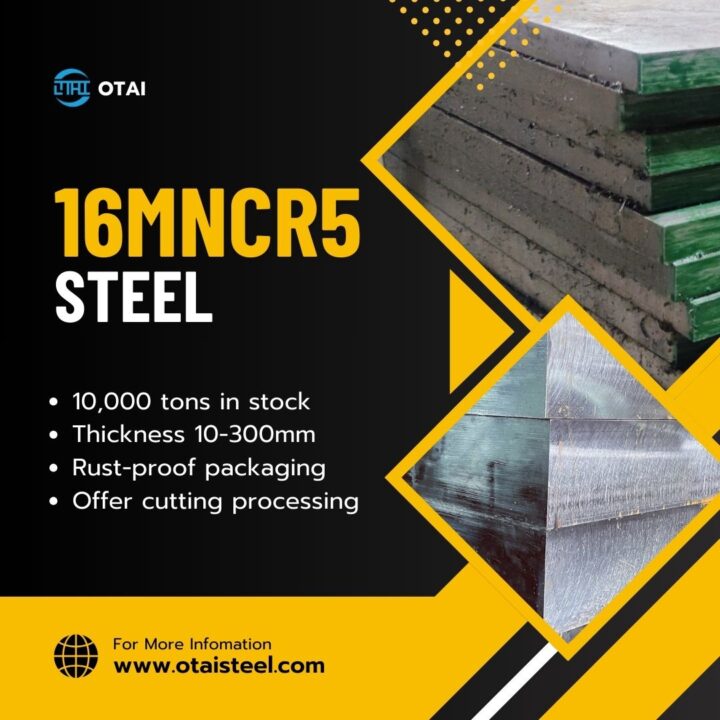
OTAI supplies alloy steel and tool steel to international buyers, with inventory and processing support for different industrial requirements. For customers sourcing 16MnCr5, our stock and service capabilities can help simplify purchasing when the required dimensions are available.
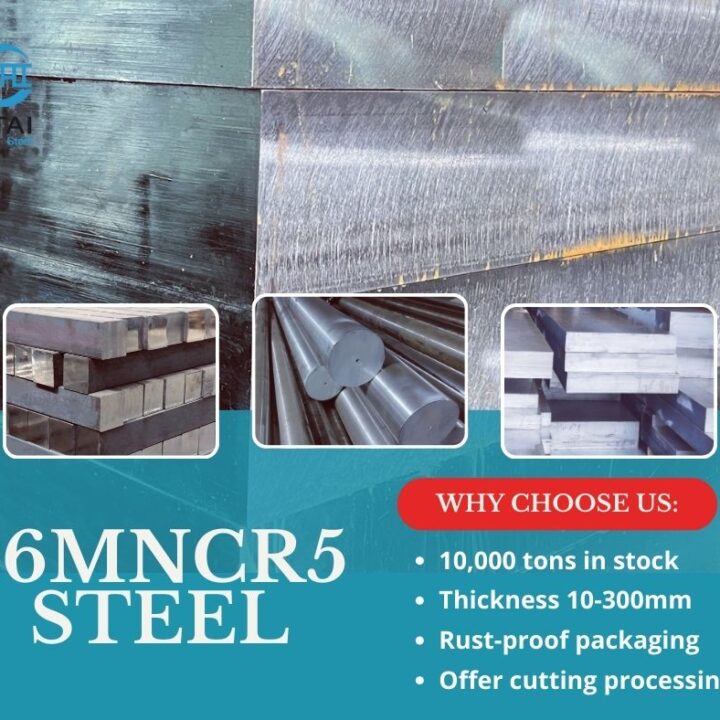
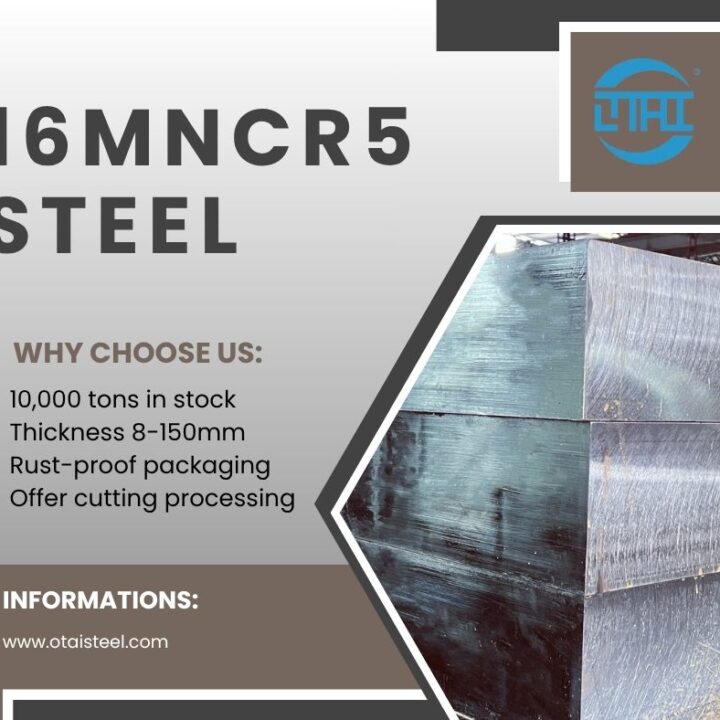
- 16MnCr5 steel plate stock: Thickness range from 8 mm to 150 mm.
- Large inventory: More than 10,000 tons of steel stock across our product range.
- Cutting capacity: 20 saw cutting machines for different material dimensions.
- Processing services: CNC machining, grinding, precision cutting, and customized dimensions and tolerances.
- Quality support: Material testing, ultrasonic testing arrangements, and third-party inspection support according to order requirements.
- Export experience: Supplying customers in more than 54 countries since 1999.
- One-stop service: Support for material selection, cutting, processing, inspection coordination, packaging, and export delivery.
When requesting a quotation, please provide the required 16MnCr5 plate thickness, width, length, quantity, delivery condition, and inspection requirements. Our team can then check the available inventory and confirm whether the requested dimensions can be supplied from stock or require another supply arrangement.
For grade information and product details, visit the OTAI 16MnCr5 steel product page.
❓ Frequently Asked Questions
1. What is the difference between a 16MnCr5 stockist and a manufacturer?
A stockist maintains inventory purchased from steel producers or other supply sources and sells available material to buyers. A manufacturer produces steel through manufacturing processes such as steelmaking and rolling. Stockists often provide more flexibility for ready-stock orders, while manufacturers may be better suited to large production quantities or special manufacturing requirements.
2. Is buying 16MnCr5 from a stockist more expensive than buying directly from a manufacturer?
Not necessarily. A manufacturer may offer competitive pricing for large production orders, but minimum quantities, production lead time, freight, and inventory costs also matter. A stockist may offer better overall value for smaller orders or cut-to-size requirements. Compare the total landed and usable cost before deciding.
3. Can a 16MnCr5 stockist provide a mill test certificate?
Yes, a qualified stockist should be able to provide traceable material documentation for the supplied batch. Buyers should confirm that the MTC corresponds to the actual material, including its grade, heat number, dimensions, delivery condition, and required test results.
4. Is 16MnCr5 available as ready stock?
Availability depends on the supplier, product form, dimensions, and quantity. OTAI’s confirmed 16MnCr5 plate thickness range is 8–150 mm. Buyers should provide their exact dimensions and quantity so the available stock can be checked before ordering.
5. Which is better for overseas buyers: a 16MnCr5 stockist or manufacturer?
A stockist may be more convenient for smaller quantities, urgent orders, multiple cut sizes, and coordinated processing. A manufacturer may be more suitable for large recurring volumes or special production requirements. Overseas buyers should also compare export experience, packaging, inspection documents, communication, and delivery arrangements.