16MnCr5 Steel Equivalent in USA: AISI 5115, 5120 or 8620?
📑 Table of Contents
🔍 1. What Is the 16MnCr5 Steel Equivalent in USA?
When a US buyer searches for the 16MnCr5 steel equivalent in USA, AISI 5115 usually appears first. The European grade 16MnCr5 belongs to the EN 10084 case-hardening steel family and carries the material number 1.7131. AISI 5115 belongs to the American AISI/SAE alloy steel system.
AISI 5115 is the closest commonly referenced US grade, but it should not be treated as an automatically identical replacement.
That distinction matters during material substitution. Cross-reference tables can identify a suitable starting point, yet engineers still need to compare chemistry, hardenability, carburizing behavior, case depth and final hardness before approving a replacement.
16MnCr5 uses a low-carbon manganese-chromium composition. The low carbon content allows the surface to absorb additional carbon during carburizing. After quenching, the enriched surface becomes very hard while the lower-carbon core retains better toughness.
This combination makes the grade suitable for gears, pinions, shafts, cams, bushes and pins. Such components often experience repeated contact, sliding, impact or torsional loading. A hard case resists wear, while the tougher core helps support the load.
Therefore, buyers searching for a 16MnCr5 AISI equivalent should begin with AISI 5115. If the component has demanding hardenability or case-depth requirements, the purchasing team should compare additional grades rather than approving a substitution from the designation alone.
🧪 2. 16MnCr5 Chemical Composition and Why It Matters
The chemical composition explains much of the performance difference between 16MnCr5 and its potential American alternatives. Carbon controls the carburizing potential, while manganese and chromium improve strength and hardenability.
Typical 16MnCr5 chemistry contains about 0.14–0.19% carbon, 1.00–1.30% manganese and 0.80–1.10% chromium.
| Element | Typical Range | Main Function |
|---|---|---|
| Carbon (C) | 0.14–0.19% | Supports carburizing and core toughness |
| Silicon (Si) | ≤ 0.40% | Deoxidation and strength contribution |
| Manganese (Mn) | 1.00–1.30% | Improves strength and hardenability |
| Phosphorus (P) | ≤ 0.025% | Controlled impurity |
| Sulfur (S) | ≤ 0.035% | Controlled for cleanliness and machinability |
| Chromium (Cr) | 0.80–1.10% | Improves hardenability and wear resistance |
Composition differences become important when a buyer compares AISI 5115 with 16MnCr5. Commonly published AISI 5115 data show manganese around 0.70–0.90%, while 16MnCr5 uses approximately 1.00–1.30%. Chromium ranges can also differ.
Those differences influence the response of the steel during carburizing and quenching. The result may affect the depth and hardness profile that a finished component can achieve.
For this reason, an engineer should evaluate the material certificate together with the heat-treatment specification. The grade name provides a useful reference, but the actual chemistry determines much of the processing behavior.
🇺🇸 3. AISI 5115 vs 16MnCr5: Is It a Direct Equivalent?
International cross-reference databases commonly connect AISI/SAE 5115 with EN 10084 16MnCr5 / 1.7131. However, cross-reference tables generally indicate the closest comparable grade rather than guaranteeing identical chemistry or performance.
AISI 5115 is the most practical US reference for 16MnCr5, but engineers should verify the substitution against the actual component specification.
| Feature | 16MnCr5 | AISI 5115 |
|---|---|---|
| Standard | EN 10084 | AISI / SAE |
| Material Number / UNS | 1.7131 | UNS G51150 |
| Steel Type | Mn-Cr case-hardening steel | Low-carbon Cr alloy steel |
| Main Treatment | Carburizing, hardening and tempering | Carburizing and hardening |
| Typical Applications | Gears, shafts, pins and cams | Similar carburized components |
Suppose a drawing specifies EN 10084 16MnCr5. In that situation, the purchasing team should not replace the grade with AISI 5115 without engineering approval. Compare the material certificates, required case depth, surface hardness and core properties first.
The same principle applies when purchasing steel internationally. A supplier should confirm the original specification instead of assuming that an equivalence chart settles the material-selection question.
⚙️ 4. 16MnCr5 Heat Treatment: Temperature and Holding Time
Heat treatment determines the final surface and core properties of 16MnCr5. Because the grade belongs to the case-hardening family, carburizing normally comes before hardening and tempering.
A practical reference range is 880–930°C for carburizing, approximately 820–860°C for hardening, and about 150–200°C for low-temperature tempering.
| Treatment | Temperature | Holding Time Reference | Purpose |
|---|---|---|---|
| Carburizing | 880–930°C | Several hours; determined by case depth | Increase surface carbon |
| Hardening | 820–860°C | About 30 min or longer depending on section size | Form a hard martensitic surface |
| Quenching | Immediately after austenitizing | Rapid cooling according to the qualified process | Develop final hardness |
| Tempering | 150–200°C | About 1 h minimum as a small-section reference | Reduce residual stress |
Holding time requires more attention than simply selecting a furnace temperature. The required case depth, component thickness, furnace atmosphere and carburizing method all influence the actual cycle.
For example, a component requiring approximately 1.0 mm effective case depth may need several hours of carburizing under conventional conditions. A published technical process for 16MnCr5 reports approximately 5.5 hours at 925°C for a specified 1.0 mm case-depth criterion.
Do not use one fixed carburizing time for every component; determine the time from the required case depth and production conditions.
After carburizing, the component normally undergoes hardening and quenching. Low-temperature tempering then reduces residual stresses and improves dimensional stability without removing the desired case hardness.
Actual production cycles should come from a qualified heat-treatment procedure. Section thickness and furnace loading can change the required heating and holding time significantly.
🔨 5. What Is the Hardness of 16MnCr5?
The answer depends on the material condition. Annealed 16MnCr5 has relatively low hardness for machining, while carburizing and quenching create a much harder surface.
After carburizing and hardening, the surface hardness typically reaches about 58–62 HRC.
| Condition | Typical Hardness | Practical Meaning |
|---|---|---|
| Annealed / soft condition | ≤ 207 HB | Good starting condition for machining |
| Common treated supply condition | Approximately 140–187 HB | Relatively soft before case hardening |
| Carburized surface | About 58–62 HRC | High wear and contact resistance |
| Carburized core | Often around 25–35 HRC | Tougher support beneath the case |
The surface becomes hard because carburizing increases the carbon concentration near the outside of the component. Quenching then transforms this carbon-enriched region into a hard martensitic structure.
Meanwhile, the core retains its original low-carbon character. As a result, the component develops a hardness gradient instead of one uniform hardness value.
This structure works especially well for gears and transmission parts. The teeth require high surface hardness to resist repeated contact, while the core needs enough toughness to withstand shock and bending loads.
For engineering drawings, specify where the hardness applies. A requirement such as “60 HRC” should identify whether the value refers to the surface, a defined depth, or another test location.
⚖️ 6. 16MnCr5 vs AISI 5115, 5120 and 8620
US buyers may encounter AISI 5115, AISI 5120 and AISI 8620 when they search for alternatives to 16MnCr5. These grades can serve similar carburizing applications, but their alloy designs differ.
AISI 5115 is the closest common US reference; AISI 5120 can suit selected applications; AISI 8620 is a functional alternative rather than a direct equivalent.
| Grade | Alloy Design | Relationship to 16MnCr5 | Why Buyers Consider It |
|---|---|---|---|
| AISI 5115 | Low-carbon Cr alloy | Closest common US reference | Cross-standard replacement |
| AISI 5120 | Low-carbon Cr-Mn alloy | Possible alternative | Selected carburized components |
| AISI 8620 | Ni-Cr-Mo alloy | Functional alternative | Higher hardenability requirements |
AISI 8620 deserves special attention because nickel, chromium and molybdenum give it a different hardenability profile. Engineers may select it when a component requires deeper hardening, but the chemistry and processing response do not match 16MnCr5 exactly.
AISI 5120 also requires application-specific evaluation. Its composition differs from 16MnCr5, so the engineer should verify case depth, hardness and core performance before approval.
For a straightforward cross-standard inquiry, AISI 5115 provides the best starting point. More demanding components may require a broader comparison based on hardenability and final mechanical requirements.
🏭 7. Applications and When to Choose 16MnCr5
16MnCr5 suits components that need a hard, wear-resistant surface without sacrificing core toughness. Carburizing creates the required surface carbon enrichment, and subsequent quenching develops the high surface hardness.
Choose 16MnCr5 when surface wear resistance and contact fatigue resistance matter more than uniform through-hardness.
| Application | Main Requirement | Material Advantage |
|---|---|---|
| Gears | Wear and contact fatigue resistance | Hard case with tougher core |
| Pinions | Repeated surface contact | Good carburizing response |
| Transmission Shafts | Wear and torsional loading | Hard surface and supportive core |
| Cams | Repeated sliding contact | High surface hardness after treatment |
| Pins and Bushes | Surface wear resistance | Case hardening improves wear performance |
Machining normally takes place before carburizing because the untreated material offers much better machinability than the final hardened surface. Manufacturers can then leave a suitable allowance for heat-treatment distortion and final grinding.
Component size also affects material selection. A small gear and a large gear may require different hardenability even when both use a carburizing process.
When the section becomes larger, the core must achieve the required transformation during quenching. If the selected grade cannot provide sufficient hardenability, another alloy may produce a more suitable hardness profile.
📋 8. How to Select a US Equivalent for 16MnCr5
A material substitution works best when the engineering team starts with the component requirements rather than the grade number. This method reduces the risk of selecting a chemically similar grade that cannot deliver the required final properties.
The practical selection sequence is: compare chemistry → define case depth → check hardenability → set surface hardness → confirm core properties → approve heat treatment.
Step 1 — Compare chemical composition. Check carbon, manganese, chromium and impurity limits. Pay particular attention to elements that influence hardenability.
Step 2 — Define the effective case depth. State the required depth clearly, such as 0.8 mm, 1.0 mm or 1.5 mm. The target directly affects carburizing time.
Step 3 — Set the surface hardness. If the drawing requires approximately 60 HRC, specify the target together with the measurement method and location.
Step 4 — Confirm core hardness and toughness. The core supports the hardened case, so it must meet the mechanical requirements of the component.
Step 5 — Check component dimensions. Section thickness affects hardenability and the final hardness distribution after quenching.
Step 6 — Review the heat-treatment cycle. Compare carburizing temperature, holding time, carbon potential, quenching medium and tempering conditions.
Step 7 — Obtain engineering approval. If the original drawing specifies EN 10084 16MnCr5 / 1.7131, obtain approval before changing the material designation to an AISI/SAE grade.
This procedure becomes particularly important for automotive transmission parts, industrial gears and other components where material performance directly affects service life.
📦 9. 16MnCr5 Supply, Stock and Processing
Material equivalence is only one part of an international steel purchase. Buyers also need reliable stock, accurate cutting, inspection support and export packaging.
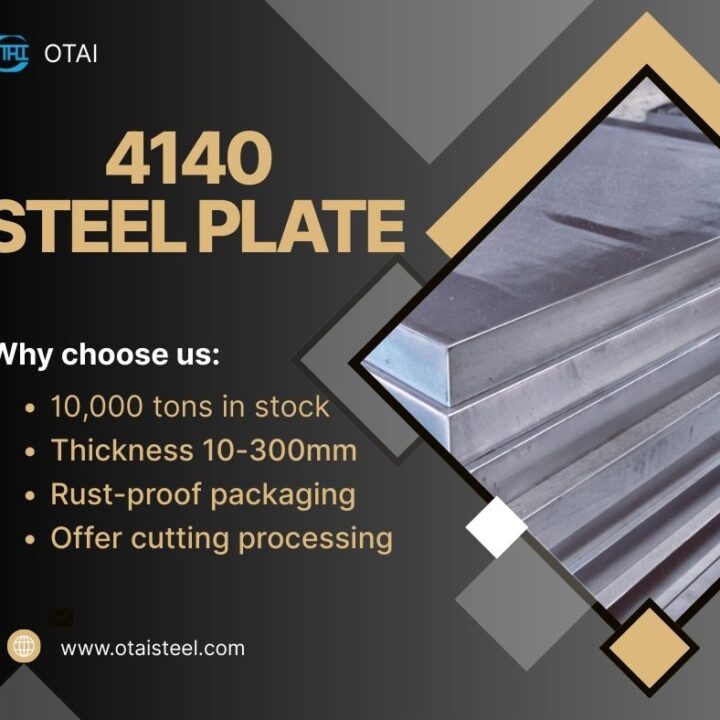
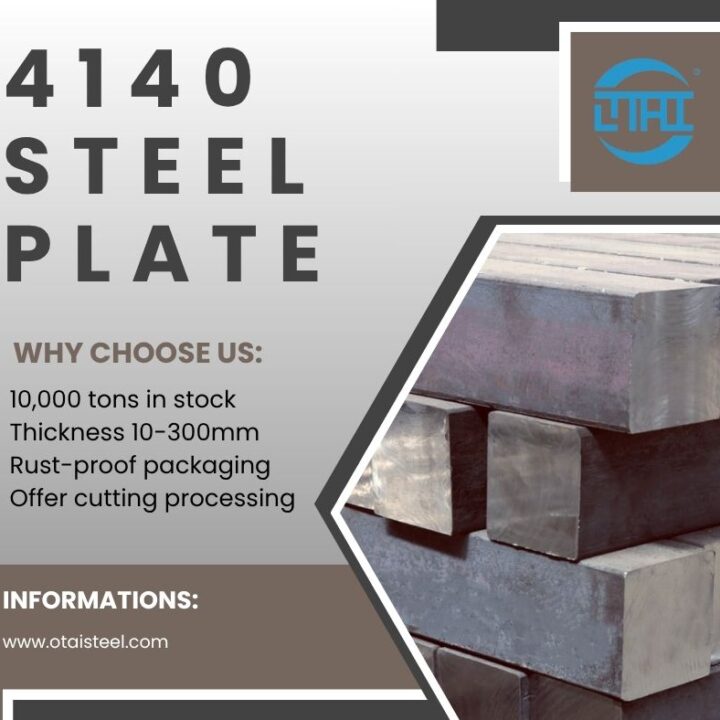
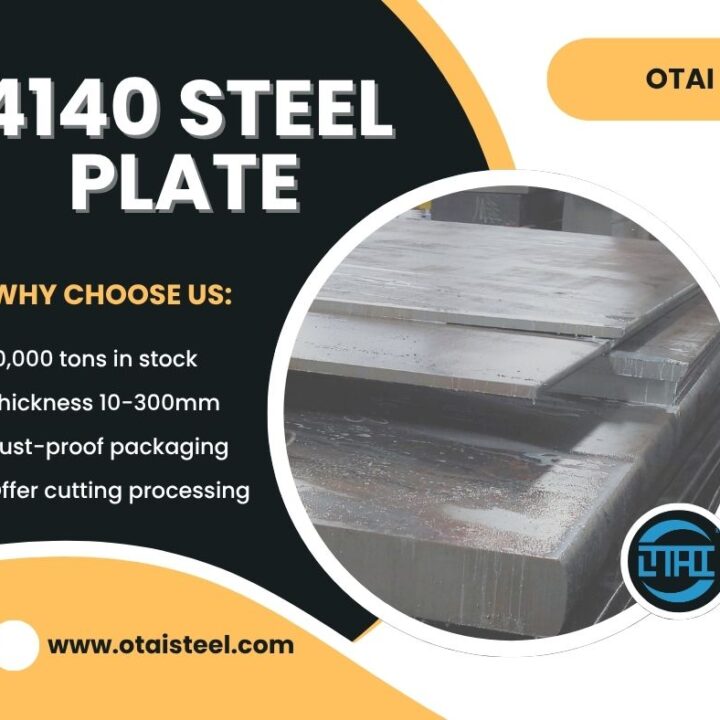
Otai Special Steel keeps 16MnCr5 steel plate in stock from 8–150 mm thickness and can arrange cutting and further processing according to customer requirements.
Customers may purchase full plates for their own machining or request cut blanks for downstream production. Accurate cutting can reduce material waste and help customers prepare parts for machining and subsequent carburizing.
CNC machining and grinding can support projects that require closer dimensional control after cutting. Customers should provide drawings, dimensions, tolerances and the required delivery condition before production starts.
Quality documentation can also be arranged according to project requirements. Depending on the order, buyers may request material certificates, dimensional inspection, ultrasonic testing or third-party inspection.
Export orders require suitable protection during transportation. Anti-rust protection, strap packaging and wooden cases can help protect steel against moisture, handling damage and long-distance shipment conditions.
🏢 Company Advantages
- 16MnCr5 steel plate in stock: thickness range from 8–150 mm for customers requiring ready material.
- 10,000+ tons of total steel stock support stable supply for international projects.
- 20 saw cutting machines support efficient cutting for different order sizes.
- CNC machining and grinding are available for projects requiring additional processing.
- Custom sizes and tolerances can be arranged according to drawings and project requirements.
- One-stop service covers material supply, cutting, machining, inspection and export preparation.
- 54+ countries served since 1999, with long-term experience in international steel supply.
- Ultrasonic testing and third-party inspection support are available for projects with additional quality-control requirements.
- Anti-rust protection, strap packaging and wooden box packaging can be arranged for export shipments.
❓ FAQ
1. What is the closest USA equivalent to 16MnCr5?
AISI 5115 is the closest commonly referenced US grade. Engineers should still compare chemistry, hardenability, case depth and final properties before approving it as a replacement.
2. Is AISI 5115 exactly the same as 16MnCr5?
No. The two grades are closely related, but their chemical composition ranges and standards differ. Treat AISI 5115 as a close reference rather than an automatic one-to-one substitute.
3. What is the hardness of 16MnCr5 after carburizing?
The carburized surface typically reaches about 58–62 HRC. Core hardness remains lower and tougher, with the final value depending on component size and the selected heat-treatment process.
4. What temperature is used to carburize 16MnCr5?
A common carburizing range is approximately 880–930°C. Holding time depends mainly on the required case depth, furnace conditions and carburizing method. A 1.0 mm effective case can require several hours under conventional processing conditions.
5. Can AISI 8620 replace 16MnCr5?
AISI 8620 can replace 16MnCr5 in selected applications, but it is not a direct chemical equivalent. Its Ni-Cr-Mo alloy design provides different hardenability, so engineers should verify case depth, core properties and heat-treatment requirements before approving the substitution.