4130 Steel Supplier: Matching Material Specifications to Your Project
📑 Table of Contents
- 🔎 Why Your Choice of 4130 Alloy Steel Supplier Matters
- 📋 4130 Steel Specifications Buyers Should Confirm
- 📏 Available Sizes, Thickness and Cutting Requirements
- ⚙️ Mechanical Properties and Delivery Conditions
- 🧪 Chemical Composition and Material Verification
- 🏭 Applications and Material Selection
- 💰 What Influences 4130 Alloy Steel Price?
- 🚚 Processing, Inspection and International Delivery
- 🤝 Why Work with Otai Special Steel?
- ❓ Frequently Asked Questions
🔎 Why Your Choice of 4130 Alloy Steel Supplier Matters
Choosing a 4130 alloy steel supplier involves more than finding a company that lists the grade in its catalog. Industrial buyers need material that matches the project specification, arrives in the required dimensions, and performs reliably during machining, welding, fabrication, or heat treatment.
4130 is a chromium-molybdenum alloy steel commonly selected for its combination of strength, toughness, and heat-treatment response. Engineers use it in components that need better mechanical performance than many plain carbon steels can provide. However, the grade name alone does not establish whether a particular batch will meet the requirements of a finished component.
For example, a buyer sourcing 4130 steel plate for machining must consider plate thickness, delivery condition, dimensional tolerance, and the mechanical properties required after processing. A company purchasing material for a welded structure may need to pay greater attention to carbon equivalent, welding procedures, preheating, and post-weld requirements.
These differences affect both material selection and the final purchasing cost. Therefore, buyers should evaluate a supplier’s technical support, stock availability, processing capabilities, inspection documentation, and export experience together.
Before requesting a quotation, prepare a clear specification covering the points below:
- Material identification: 4130 grade, applicable standard, and any project-specific requirements.
- Product form: plate or another form that the supplier can actually provide.
- Dimensions: thickness, width, length, quantity, and dimensional tolerances.
- Delivery condition: the required condition, such as annealed or another agreed supply state.
- Quality documents: material test certificate, inspection requirements, and traceability.
- Delivery terms: processing, packaging, shipping destination, and required delivery date.
A supplier that confirms these details before quoting can help reduce specification misunderstandings, avoid unnecessary processing, and make the purchasing decision more predictable.
📋 4130 Steel Specifications Buyers Should Confirm
When comparing 4130 steel suppliers, begin with the technical specification rather than the quoted price. Two offers may both describe the material as 4130 while covering different standards, dimensions, delivery conditions, or inspection arrangements. These differences can affect whether the material is suitable for your project.
The term 4130 steel commonly refers to an AISI/SAE chromium-molybdenum alloy steel designation. Nevertheless, buyers should identify the governing standard on the purchase order. A similar designation in another national or industry standard does not automatically guarantee identical chemistry, properties, or acceptance requirements.
| Specification item | What buyers should confirm | Why it matters |
|---|---|---|
| Grade and standard | 4130 designation and applicable specification | Reduces the risk of grade or standard mismatches. |
| Product form | Steel plate or another explicitly agreed form | Confirms the supplier can provide the required product. |
| Dimensions | Thickness, width, length, and tolerances | Affects cutting yield, machining allowance, and cost. |
| Delivery condition | Agreed supply state and required properties | Influences machinability and subsequent processing. |
| Inspection | MTC, testing, traceability, and special inspections | Supports incoming quality checks and project compliance. |
Buyers should also distinguish between a supplier’s standard commercial offer and a project-specific order. Standard stock may come with an established delivery condition and a standard set of documents. A custom order may require additional testing, tighter tolerances, or a specific heat-treatment state.
When a drawing or technical specification controls the purchase, send it to the supplier before placing the order. Ask the supplier to identify any differences between the requested specification and the material offered. Written confirmation is more reliable than assuming that two similar grade names mean the same thing.
For product information and supply discussions, review Otai’s 4130 steel product page. Confirm the exact grade, product form, dimensions, and delivery condition for your particular order.
📏 Available Sizes, Thickness and Cutting Requirements
Dimension availability is one of the first commercial checks when buying 4130 steel plate. A supplier may list a broad size range, but the actual stock position can change with orders, production schedules, and material reservations. Buyers should therefore request confirmation of current availability instead of relying solely on a general product description.
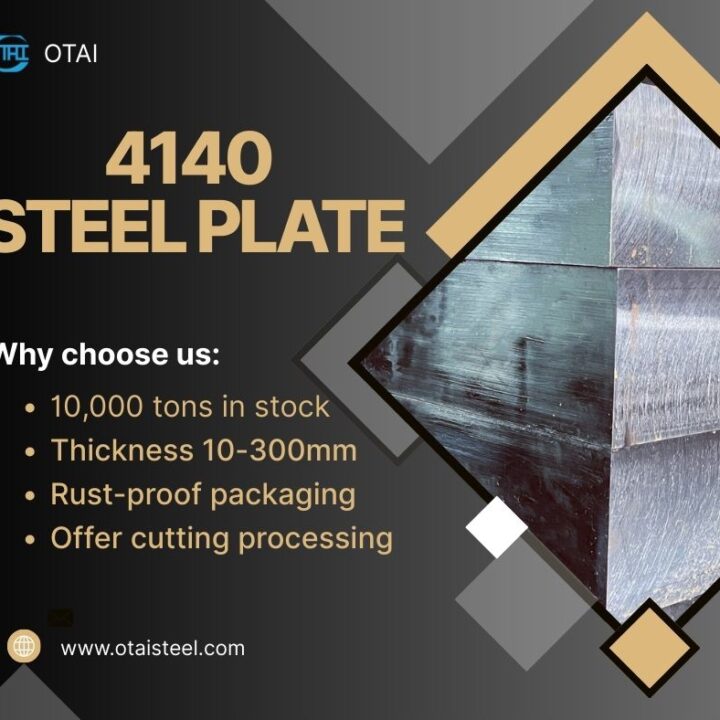
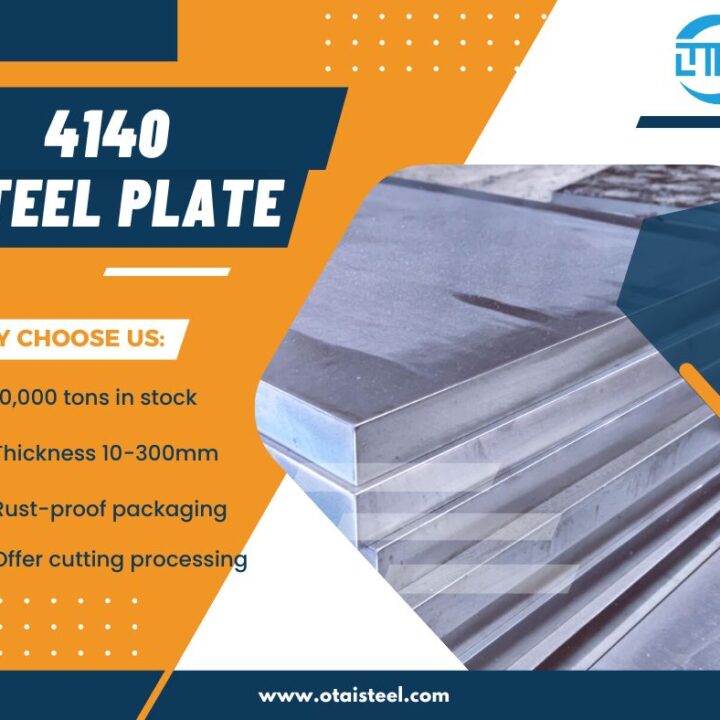
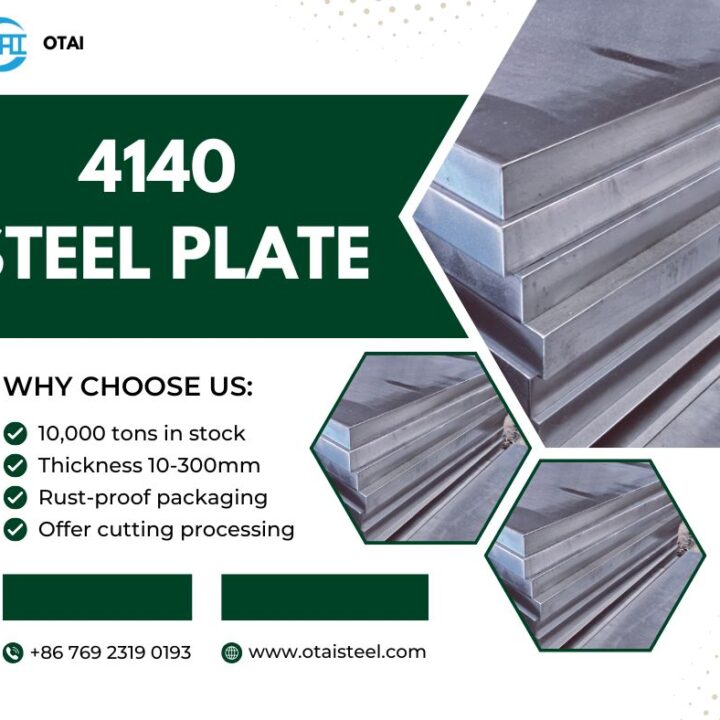
Otai Special Steel’s current 4130 inventory includes steel plate in thicknesses from 10 mm to 70 mm. If your project requires a plate within this range, provide the required thickness, width, length, and quantity so the team can confirm available dimensions and cutting options.
When the required thickness falls outside this range, ask whether a suitable sourcing or production arrangement is possible. Do not assume that a size outside the stated stock range is immediately available. Lead time and minimum order requirements may differ for non-stock material.
| Purchasing requirement | Questions to ask the supplier |
|---|---|
| Standard plate size | Is the required thickness currently available, and what are the available plate dimensions? |
| Cut-to-size plate | Can the supplier cut the plate to the drawing dimensions, and what tolerances apply? |
| Machining allowance | Should extra material remain for milling, grinding, or final finishing? |
| Multiple components | Can cutting plans improve material utilization and reduce offcuts? |
| Non-stock dimensions | What sourcing options, minimum quantities, and lead times apply? |
Cutting requirements can influence the total cost significantly. For instance, a buyer who needs several rectangular blanks may benefit from having the supplier cut the plate before shipment. This can reduce handling at the receiving facility, although the final benefit depends on cutting charges, material utilization, and the buyer’s own equipment and labor costs.
Before requesting precision cutting, clarify whether the quoted dimensions refer to rough-cut sizes or finished dimensions. If the components require machining afterward, include an appropriate allowance. For parts with tight tolerances, also establish the measurement method and the inspection points before production.
Packaging matters as well. Cut plates need protection against movement, impact, and corrosion during storage and transit. Tell the supplier whether you need individual identification, bundled components, anti-rust protection, or wooden-crate packaging.
⚙️ Mechanical Properties and Delivery Conditions
4130 alloy steel is valued for its balance of strength, toughness, and response to heat treatment. However, buyers should not treat a single published tensile strength or hardness figure as a guaranteed property for every 4130 product. Results depend on the product form, section size, steelmaking and processing history, heat-treatment condition, and applicable specification.
For this reason, a supplier quotation should identify the offered delivery condition and the property requirements that apply to the ordered material. If the component will undergo further heat treatment, the buyer should also clarify whether the incoming material needs to meet a specific condition for machining or subsequent processing.
| Condition or process | Potential purchasing consideration |
|---|---|
| Annealed or softened supply condition | May support machining, depending on the actual hardness and process requirements. |
| Normalized condition | Confirm the applicable specification and resulting mechanical properties. |
| Quenched and tempered | Specify the required strength, hardness, toughness, and test conditions. |
| Further heat treatment by the buyer | Confirm the starting condition, section dimensions, and final property targets with the heat-treatment provider. |
These conditions are not interchangeable. A softer supply condition may simplify machining, while a quenched-and-tempered product may suit applications that need specified strength before final assembly. The right choice depends on the manufacturing sequence and the performance requirements of the finished component.
Section size deserves particular attention. Thick and thin sections may respond differently during heat treatment, and properties measured on a test specimen do not necessarily represent every location within a large component. If the design relies on a minimum tensile strength, yield strength, impact value, or hardness, specify the applicable test standard and sampling requirements.
For components that require a particular hardness after heat treatment, avoid giving the supplier a hardness target without explaining the intended condition. Hardness limits for incoming stock, final heat-treated components, and locally processed areas can serve different purposes. Record the stage at which each requirement applies.
Finally, make sure the purchase order, drawing, and material test certificate use compatible requirements. This simple check can prevent disputes when the material reaches inspection or when the component moves to its next manufacturing stage.
🧪 Chemical Composition and Material Verification
4130 steel contains chromium and molybdenum as alloying elements, alongside carbon and other elements controlled by the applicable specification. This alloy system contributes to its hardenability and mechanical performance. Nevertheless, the grade designation does not replace the need to verify the actual material against the purchase requirements.
When evaluating a 4130 alloy steel supplier, buyers should distinguish three types of chemical information:
- Standard-specified composition: the permitted limits or ranges defined by the standard and product specification that govern the order.
- Typical analysis: representative values published by a producer for reference; these are not necessarily the exact composition of every batch.
- Actual heat analysis: the measured chemical composition associated with the supplied steel heat, normally documented through the material test certificate when required.
This distinction is important during supplier qualification. A generic datasheet may help engineers understand the grade, but it cannot confirm the composition of the specific plate being purchased. For that purpose, review the applicable material certificate and check that its identification corresponds to the supplied material.
Buyers should confirm that the certificate records the required grade, standard, heat or batch identification, and relevant chemical results. If the project specification calls for additional tests, such as ultrasonic testing or independent inspection, those requirements should appear in the inquiry and order confirmation rather than being assumed to be included.
Material traceability also matters when a shipment contains several plates or cut components. Ask how the supplier will preserve the link between the original plate, the heat number, the test certificate, and the delivered pieces. If cutting removes the original markings, agree on a practical marking-transfer procedure before processing begins.
For critical applications, third-party inspection may offer an additional verification step. However, the inspection scope should be clear: document review, dimensional checks, chemical verification, mechanical testing, or non-destructive testing are different activities. The buyer and supplier should agree on the required standard, acceptance criteria, and reporting format.
A reliable sourcing process does not depend on a datasheet alone. It combines the governing specification, actual batch documentation, suitable inspection, and traceability throughout delivery.
🏭 Applications and Material Selection
Manufacturers use 4130 alloy steel for a range of engineered components that need a useful combination of strength, toughness, and processability. The suitability of the grade depends on the component design, loading conditions, manufacturing method, and applicable industry requirements. Buyers should therefore connect material selection to the actual operating conditions rather than choosing a grade by name alone.
Common application areas include:
- Machined engineering components: parts that require a controlled material condition before machining and possible subsequent heat treatment.
- Mechanical and structural components: applications where strength and toughness requirements must be evaluated alongside section size and loading.
- Automotive and motorsport components: selected parts designed around specified material properties and a qualified manufacturing process.
- Industrial equipment: components for which the engineer has established suitable requirements for strength, fatigue performance, and service conditions.
- Fabricated assemblies: applications where weldability, joint design, preheating, and any required post-weld heat treatment need careful assessment.
Although 4130 is often associated with applications that need higher performance than plain carbon steel, it is not automatically the best choice for every project. Some components may need higher wear resistance, greater corrosion resistance, or different manufacturing characteristics. Compare candidate materials against the complete requirement rather than one mechanical property.
Welding deserves special consideration. The alloy content and carbon level influence hardenability, so welding procedure, material thickness, restraint, consumable selection, and cooling conditions can affect cracking risk and joint properties. Buyers should consult a qualified welding engineer and the applicable procedure requirements before specifying the material for a welded assembly.
For projects that require a formal material substitution, do not rely on a broad equivalence chart alone. Confirm chemistry, mechanical properties, delivery condition, product form, heat-treatment response, and any industry-specific approvals. A grade that appears similar on paper may not satisfy every requirement of the original design.
Suppliers can support this decision by providing the product information, available dimensions, documentation, and processing options needed for technical review. The final material selection, however, should follow the engineering specification and the relevant acceptance criteria.
💰 What Influences 4130 Alloy Steel Price?
The price of 4130 alloy steel depends on more than the quoted price per kilogram or ton. Buyers should compare the full scope of each offer, including material specification, size availability, delivery condition, cutting, inspection, packaging, and transportation.
For a fair comparison, ask each supplier to quote against the same technical and commercial requirements. A low material price may not represent the best overall value if the offer excludes required cutting, documentation, testing, or export packaging.
| Cost factor | How it can affect the quotation | Buyer action |
|---|---|---|
| Grade and specification | Different requirements may affect sourcing and testing costs. | State the governing standard and acceptance criteria. |
| Dimensions and quantity | Size, order volume, and material yield can influence unit cost. | Provide exact sizes and total quantities. |
| Delivery condition | Required heat treatment or special processing may add cost. | Identify the required supply state clearly. |
| Cutting and machining | Processing charges depend on the work scope and tolerances. | Separate material and processing costs where practical. |
| Inspection and packaging | Additional tests, reports, or export protection can affect the total. | Specify inspection scope and destination requirements. |
Stock availability can also influence the purchasing decision. If a supplier already holds the required plate size, the order may avoid some of the waiting time associated with sourcing or production. Still, buyers should confirm that the available material meets the required specification and delivery condition before treating stock as a suitable match.
When comparing quotations, calculate the landed or project cost where possible. Include material, cutting, packing, freight, import-related charges, and the internal work needed to bring the steel to the required dimensions. Also consider whether the supplier can combine several processing steps to reduce handling or simplify receiving inspection.
For repeat orders, establish whether the supplier can maintain consistent documentation and communicate changes in stock or lead time. A transparent quotation with a clearly defined scope often provides better purchasing control than an unusually low price with uncertain inclusions.
🚚 Processing, Inspection and International Delivery
For overseas buyers, the purchasing process continues after the material has been selected. Cutting quality, identification, inspection documents, packaging, and delivery coordination all affect whether the steel reaches the factory ready for the next step.
When choosing a 4130 steel supplier, check which services the supplier can coordinate in-house and which require an external partner. This distinction helps buyers understand lead times, responsibilities, and the documents they should expect at each stage.
Cutting and dimensional control: Confirm the cutting method, finished dimensions, allowable tolerances, and whether the supplier will inspect the pieces before dispatch. If the plate will undergo precision machining, specify the machining allowance and any surface requirements in advance.
Quality documentation: State whether the shipment requires a material test certificate, dimensional inspection report, heat-number traceability, or other project documents. If a third-party inspection is necessary, agree on the inspection agency, scope, timing, and acceptance criteria before the order enters processing.
Packaging and corrosion protection: Discuss anti-rust protection, bundling, individual marking, and wooden-crate packaging where appropriate. Packaging should suit the plate dimensions, weight, transport method, and storage conditions at the destination.
Shipping and order communication: Confirm the shipping destination, delivery terms, estimated lead time, dispatch arrangements, and the documents required for customs clearance. Ask the supplier to communicate promptly if a stock reservation, production step, or inspection schedule changes.
Before approving the shipment, buyers should compare the order confirmation against the original inquiry. Check the grade, quantity, dimensions, delivery condition, testing requirements, and packaging instructions. This final review is especially useful when one purchase order contains multiple sizes or cut components.
A supplier with stock, cutting capacity, and export experience can simplify coordination by reducing the number of parties involved. However, buyers should still document the required scope clearly. Clear responsibilities help both sides resolve issues more quickly if a discrepancy appears during receiving inspection.
🤝 Why Work with Otai Special Steel?
Otai Special Steel serves international buyers looking for tool steel and alloy steel supply, with support for material sourcing, cutting, processing, and export coordination. For a 4130 steel purchase, the objective is to match the material and service scope to the buyer’s technical requirements rather than quote a grade name without confirming the details.
Otai’s current 4130 steel plate inventory covers 10–70 mm thickness. Buyers should submit their required dimensions and quantities so the team can confirm current availability, suitable plate sizes, and the processing options for the order.
Company capabilities relevant to industrial procurement include:
- 10,000+ tons of stock: broad inventory across the company’s steel product range, with availability confirmed according to the specific grade and dimensions.
- 20 saw cutting machines: cutting support for orders that need material prepared to specified sizes.
- CNC machining and grinding: processing options for projects that require additional dimensional preparation, subject to confirmation of the requested scope.
- Custom sizes and tolerances: support for discussing drawing-based requirements and appropriate machining allowances.
- One-stop service: coordination of material supply and relevant processing, inspection, and packaging requirements.
- International supply experience: exports to more than 54 countries since 1999.
- Inspection support: material documentation, quality checks, ultrasonic testing, and third-party inspection arrangements can be discussed according to the order requirements.
For buyers, the value of these capabilities depends on how well they match the project. A stock plate order may need fast size confirmation and cutting. A more demanding order may require closer review of the standard, delivery condition, inspection scope, and traceability requirements.
To request a quotation, provide the following information:
- Grade and governing material standard.
- Required plate thickness, width, length, and quantity.
- Delivery condition and any required mechanical properties.
- Material certificate, inspection, or testing requirements.
- Cutting dimensions, tolerances, and machining allowance, if applicable.
- Destination country, packaging requirements, and target delivery date.
With these details, Otai can review the request more efficiently and clarify which requirements can be met from current stock and which may need additional sourcing or processing. For grade-specific information, visit the 4130 steel product page and contact the team to discuss your order.
❓ Frequently Asked Questions
1. What should I look for in a 4130 alloy steel supplier?
Look for a supplier that can confirm the grade and governing standard, current stock dimensions, delivery condition, quality documentation, inspection options, and processing requirements. For international purchases, also check export packaging and delivery coordination. Compare offers against the same specification rather than choosing solely by price.
2. What 4130 steel plate thicknesses does Otai currently stock?
Otai’s current 4130 inventory includes steel plate in thicknesses from 10 mm to 70 mm. Actual availability can change, so provide the required thickness, width, length, and quantity for confirmation before placing an order.
3. Is 4130 steel suitable for welding?
4130 can be welded when the application and procedure are properly controlled. However, its alloy composition and hardenability mean that joint design, material thickness, preheating, filler selection, cooling conditions, and any post-weld heat treatment may require careful evaluation. Use a qualified welding procedure appropriate to the component and governing specification.
4. Can a supplier guarantee the same mechanical properties for every 4130 plate?
Not from the grade name alone. Mechanical properties depend on the applicable standard, product dimensions, delivery condition, and processing history. Specify the required properties and testing conditions, then review the material certificate and any additional inspection results required by the purchase order.
5. How can I get an accurate quotation for 4130 steel plate?
Send the supplier the grade, governing standard, plate dimensions, quantity, delivery condition, required documentation, processing instructions, packaging requirements, and delivery destination. If your project includes special tolerances or inspection requirements, include them in the initial inquiry. This helps the supplier quote the correct material and service scope.