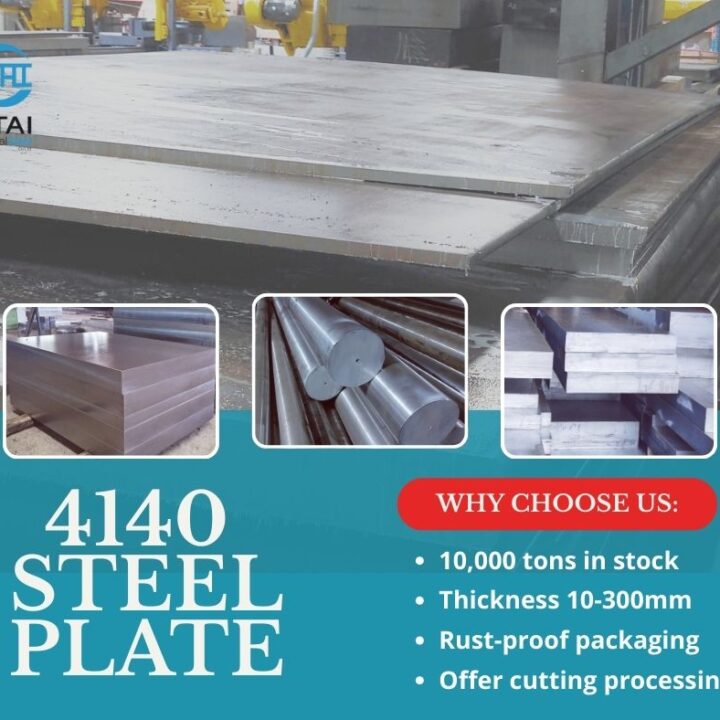
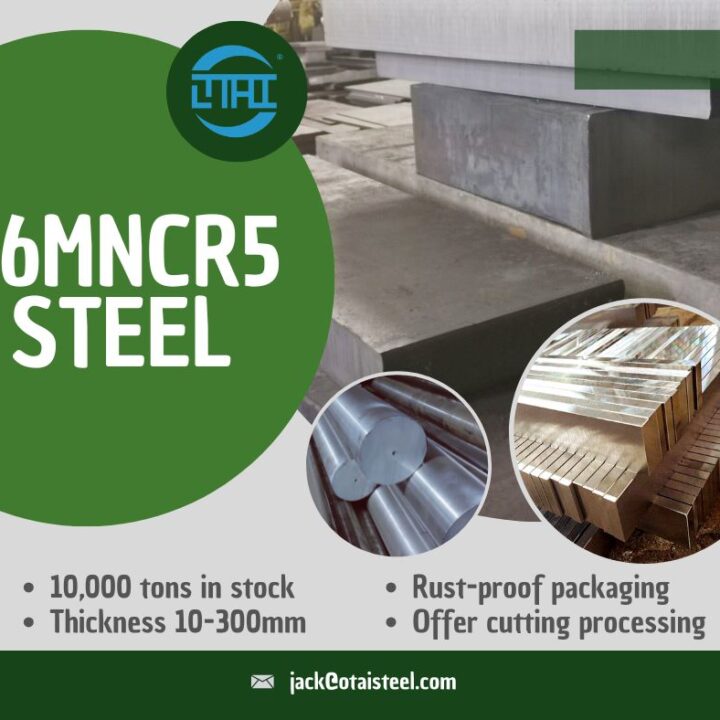
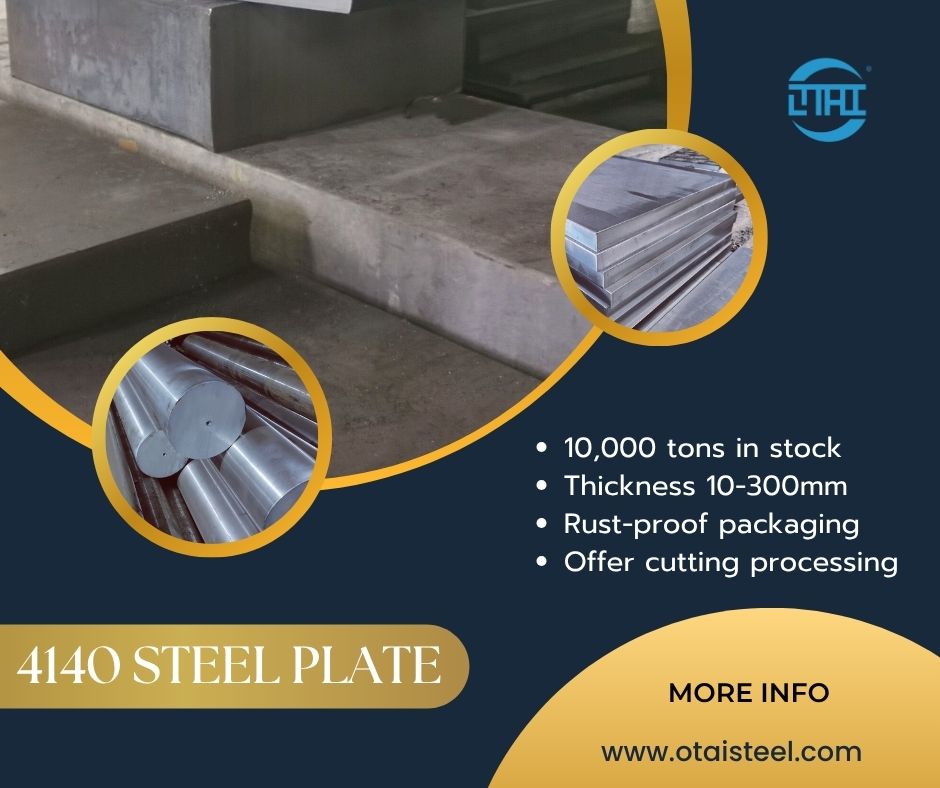
 Turning 4140 Steel: Best Machining Practices for Strength and Precision
Turning 4140 steel requires the right balance of cutting speed, tooling selection, coolant control, and machining parameters. 4140 alloy steel remains one of the most popular engineering steels in manufacturing because it combines high strength, good toughness, excellent hardenability, and reliable machinability.
Manufacturers widely use 4140 steel in industries such as oil and gas, aerospace, automotive, tooling, and heavy machinery. The material performs especially well in components that require high fatigue strength and impact resistance.
However, machining 4140 steel can become challenging when hardness levels increase after heat treatment. Proper turning strategies help reduce tool wear, improve surface finish, and maintain dimensional accuracy.
Typical applications include:
- Shafts
- Gears
- Spindles
- Bolts
- Hydraulic cylinders
- Oilfield components
- Heavy machinery parts
🔍 What is 4140 Steel?
4140 steel is a chromium-molybdenum alloy steel known for its high tensile strength, good toughness, and excellent heat treatment response. The material belongs to the AISI 41xx alloy steel family.
The combination of chromium and molybdenum improves:
- Hardenability
- Wear resistance
- Fatigue strength
- Impact toughness
- Heat resistance
| Property | Performance |
|---|---|
| Strength | High |
| Toughness | Excellent |
| Machinability | Good |
| Heat Treatment Response | Excellent |
⚗️ Chemical Composition of 4140 Steel
The alloy chemistry strongly affects machining performance and tool life during turning operations.
| Element | Content (%) | Function |
|---|---|---|
| Carbon (C) | 0.38 – 0.43 | Increases strength and hardness |
| Chromium (Cr) | 0.80 – 1.10 | Improves hardenability |
| Molybdenum (Mo) | 0.15 – 0.25 | Enhances toughness |
| Manganese (Mn) | 0.75 – 1.00 | Improves strength |
This alloy structure allows 4140 steel to maintain good machining performance while providing superior mechanical strength.
🛠️ Turning Characteristics of 4140 Steel
4140 steel machines relatively well in the annealed or normalized condition. However, hardness increases significantly after quenching and tempering, making cutting operations more demanding.
During turning operations, machinists often encounter:
- High cutting temperatures
- Rapid tool wear
- Built-up edge formation
- Surface finish challenges
- Chip control difficulties
Proper tooling geometry and cutting parameters help minimize these machining problems.
| Condition | Machinability |
|---|---|
| Annealed | Good |
| Normalized | Moderate |
| Pre-Hardened | More Difficult |
| Hardened | Challenging |
⚙️ Recommended Cutting Speeds and Feeds
Choosing the correct cutting parameters improves tool life and machining stability during turning operations.
| Tool Type | Cutting Speed | Feed Rate |
|---|---|---|
| Carbide Insert | 80 – 180 m/min | 0.15 – 0.50 mm/rev |
| Ceramic Tool | 150 – 300 m/min | 0.10 – 0.35 mm/rev |
| HSS Tool | 20 – 40 m/min | 0.10 – 0.30 mm/rev |
Operators should adjust parameters based on hardness level, machine rigidity, coolant condition, and surface finish requirements.
🔧 Best Tooling for Turning 4140 Steel
Tool selection plays a major role in machining efficiency and surface quality. Carbide inserts remain the most common choice for turning 4140 steel because they provide excellent wear resistance and thermal stability.
Manufacturers often use coated carbide inserts with TiAlN or CVD coatings to improve cutting performance under high temperatures.
Recommended tooling options include:
- Coated carbide inserts
- Cermet inserts
- Ceramic tools for hardened material
- CBN tools for very hard conditions
| Tool Material | Best Application |
|---|---|
| Carbide | General turning |
| Ceramic | High-speed hard turning |
| CBN | Hardened 4140 steel |
| HSS | Low-speed operations |
Positive rake geometry often helps reduce cutting forces and improve chip evacuation during finishing operations.
💧 Coolant and Chip Control Strategies
Heat generation becomes a major challenge during turning operations on 4140 steel, especially in pre-hardened or heat-treated conditions.
Coolant helps:
- Reduce cutting temperature
- Improve surface finish
- Extend tool life
- Improve chip evacuation
- Reduce thermal deformation
Flood coolant systems remain the most common solution for general turning applications. High-pressure coolant systems provide even better chip control in deep or aggressive cuts.
| Cooling Method | Main Benefit |
|---|---|
| Flood Coolant | General heat reduction |
| High-Pressure Coolant | Improved chip breaking |
| Dry Machining | Reduced coolant cost |
Proper chip control prevents chip entanglement and improves machining safety during continuous turning operations.
🔥 Challenges When Turning Hardened 4140 Steel
Turning hardened 4140 steel becomes significantly more difficult once hardness exceeds approximately 35 HRC. Cutting temperatures rise rapidly, and tool wear accelerates.
Machinists commonly face:
- Insert edge chipping
- Excessive heat generation
- Poor surface finish
- Machine vibration
- Dimensional instability
To improve machining performance in hardened conditions, operators should:
- Reduce cutting depth
- Use rigid machine setups
- Select CBN or ceramic tooling
- Optimize feed rate
- Maintain stable coolant flow
| Hardness Level | Turning Difficulty |
|---|---|
| 20 – 25 HRC | Easy |
| 28 – 35 HRC | Moderate |
| 40 – 50 HRC | Difficult |
🏭 Industrial Applications of Turned 4140 Steel Components
Turned 4140 steel components appear in many demanding engineering industries because the material combines excellent machinability with high mechanical performance.
| Industry | Typical Components |
|---|---|
| Oil and Gas | Drill collars and shafts |
| Automotive | Axles and gears |
| Aerospace | Structural components |
| Heavy Machinery | Hydraulic shafts |
Manufacturers value 4140 steel because it maintains strength and dimensional stability even under demanding operational conditions.
📈 Tips to Improve Surface Finish When Turning 4140 Steel
Surface finish quality directly affects component performance, fatigue life, and dimensional precision. Poor surface finish can increase friction, accelerate wear, and reduce operational reliability.
Machinists can improve surface quality during turning operations by following several important practices.
- Use sharp cutting inserts
- Reduce machine vibration
- Optimize feed rate and spindle speed
- Maintain proper coolant flow
- Use rigid workholding systems
- Minimize excessive tool overhang
Finishing operations typically require lower feed rates and lighter cutting depths to achieve smoother surface conditions.
| Machining Factor | Effect on Surface Finish |
|---|---|
| Sharp Inserts | Reduces tearing and roughness |
| Stable Setup | Minimizes vibration marks |
| Proper Coolant | Improves thermal stability |
| Optimized Feed Rate | Produces smoother surfaces |
Manufacturers producing precision shafts and hydraulic components often prioritize surface finish optimization to improve sealing performance and fatigue strength.
🏭 Company Advantages
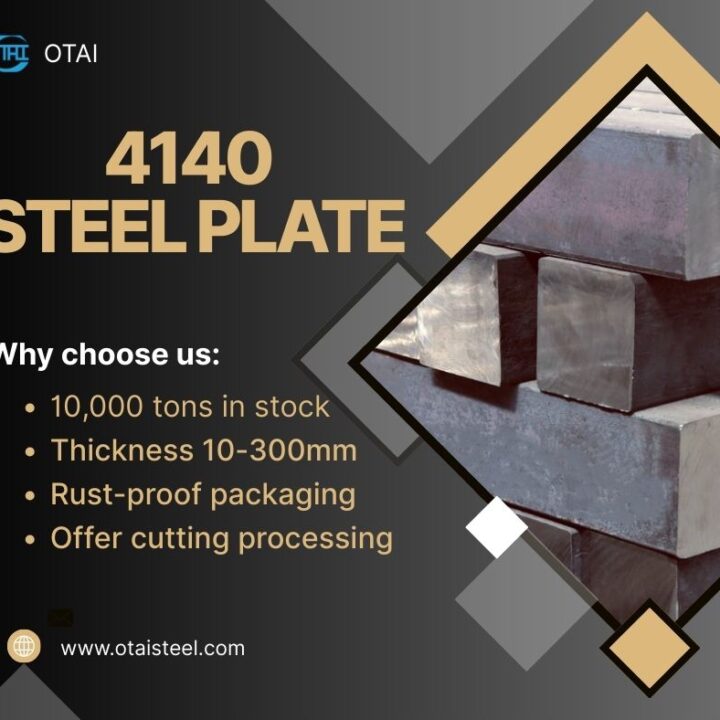
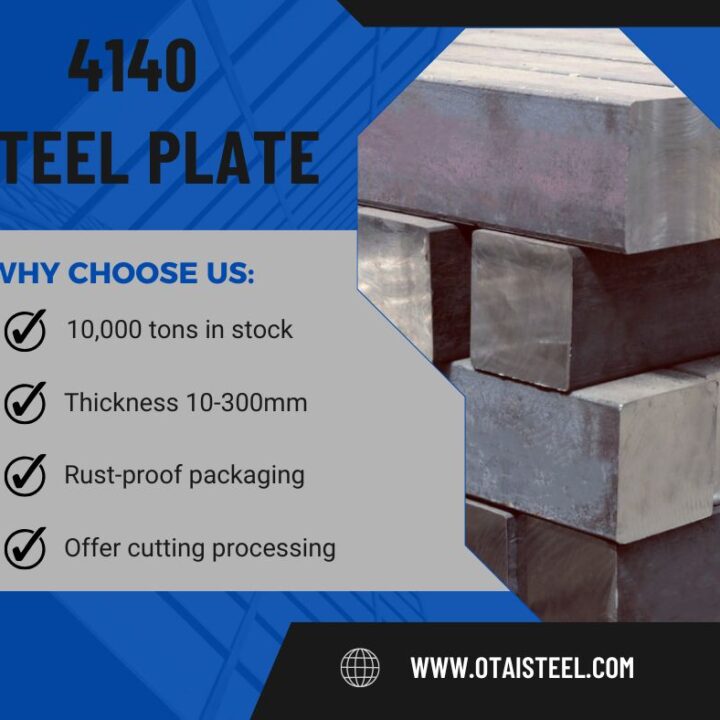
Otai Special Steel supplies premium-quality 4140 alloy steel materials for machining, tooling, oilfield equipment, aerospace, and heavy engineering industries.
- Large inventory and stable supply
- Custom cutting services based on drawings
- Pre-hardened and heat-treated material options
- Ultrasonic testing (UT) support
- Chemical composition verification
- Third-party inspection support including SGS
- Professional export packaging and logistics services
- Fast response for urgent machining projects
We support global customers with reliable material quality and technical assistance for demanding turning and machining applications.
❓ FAQ
Q1: Is 4140 steel easy to turn?
A1: 4140 steel machines relatively well in the annealed condition, but machining becomes more difficult after heat treatment because hardness increases significantly.
Q2: Which cutting tool works best for turning 4140 steel?
A2: Coated carbide inserts remain the most common and effective tooling choice for general turning operations.
Q3: Does coolant improve machining performance?
A3: Yes. Proper coolant application reduces heat generation, improves tool life, and enhances surface finish quality.
Q4: Can machinists turn hardened 4140 steel?
A4: Yes. Ceramic and CBN tooling can successfully machine hardened 4140 steel under optimized cutting conditions.
Q5: What industries commonly machine 4140 steel?
A5: Oil and gas, aerospace, automotive, tooling, and heavy machinery industries widely use turned 4140 steel components.