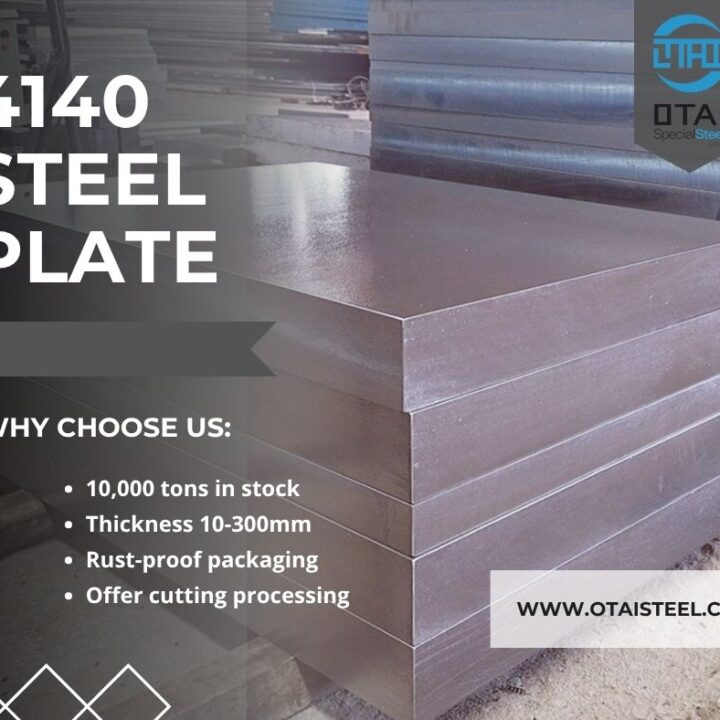
42CrMo4 Specification: Which Requirements Should Buyers Check?
When purchasing 42CrMo4 alloy steel, checking the grade name alone is not enough. Buyers need to confirm the applicable European standard, chemical composition, mechanical properties, delivery condition, dimensional requirements, and inspection documents. These details determine whether the supplied material meets the requirements of the intended component and manufacturing process.
42CrMo4, identified by material number 1.7225, is a chromium-molybdenum alloy steel commonly used for shafts, gears, machine components, and other parts that require strength and toughness after heat treatment. Buyers often encounter EN 10083-3 in older specifications and technical documents. However, they should also recognize that EN 10083-3:2006 has been replaced by EN ISO 683-2:2018 for the relevant category of alloy steels for quenching and tempering.
This article explains the main specification points from a purchasing perspective, including how to read chemical composition limits, interpret mechanical properties, and check the material test certificate (MTC) before accepting an order.
📑 Table of Contents
- 📘 What Is the 42CrMo4 Steel Specification?
- 🧪 What Is the Chemical Composition of 42CrMo4?
- 📊 What Mechanical Properties Does 42CrMo4 Require?
- 🔥 How Does Delivery Condition Affect the Specification?
- 📏 Which Dimensions and Tolerances Should Buyers Confirm?
- 📄 What Should Buyers Check on the 42CrMo4 MTC?
- 🔄 Is 42CrMo4 Equivalent to AISI 4140 and SCM440?
- 🏭 How Can Buyers Select a Reliable 42CrMo4 Supplier?
- 🏢 Company Advantages
- ❓ Frequently Asked Questions
📘 What Is the 42CrMo4 Steel Specification?
Grade designation and material number
42CrMo4 is a European alloy structural steel grade designed primarily for quenching and tempering. Its material number is 1.7225. The designation provides useful information about the steel’s approximate carbon and alloying characteristics, while the material number helps buyers identify the grade in technical documents and purchasing records.
| Identification | Information |
|---|---|
| Steel grade | 42CrMo4 |
| Material number | 1.7225 |
| Steel family | Chromium-molybdenum alloy steel |
| Main application category | Steel for quenching and tempering |
| Common historical standard reference | EN 10083-3 |
| Later standard reference | EN ISO 683-2:2018 |
EN 10083-3 and EN ISO 683-2: understand the standard version
Many drawings, purchasing specifications, and supplier datasheets still refer to EN 10083-3. This standard covered technical delivery conditions for alloy steels for quenching and tempering. Its 2006 edition is a common reference in older 42CrMo4 documentation.
However, buyers should not automatically describe EN 10083-3:2006 as the current standard. The standard was replaced by EN ISO 683-2:2018. Therefore, a new purchasing contract should clearly state which edition applies rather than simply listing EN 10083-3 without a year or revision.
This distinction matters because a standard revision may change requirements, terminology, test conditions, or the way product specifications are presented. A supplier should confirm the exact standard and edition before quoting material against a customer’s drawing.
What should a purchasing specification include?
A clear 42CrMo4 purchase specification should identify more than the grade and material number. Buyers should define the product form, dimensions, delivery condition, mechanical property requirements, inspection scope, and documentation requirements.
For example, a request for 42CrMo4 plate should identify the required thickness, width, length, dimensional tolerances, and whether the material must arrive in an annealed or quenched-and-tempered condition. If the customer requires a specific mechanical property range, the purchase order should state the applicable test and acceptance requirements.
Without these details, two suppliers may quote different products under the same grade name. Their prices may appear comparable, but the actual supply conditions may not meet the same production requirements.
🧪 What Is the Chemical Composition of 42CrMo4?
Standard chemical composition limits
Chemical composition is one of the first items buyers should check when reviewing a 42CrMo4 specification. Carbon, chromium, and molybdenum contribute to the steel’s hardenability and strength after heat treatment. Manganese and silicon also influence the steel’s processing and mechanical behavior.
The following table presents commonly published composition limits associated with the EN 10083-3:2006 specification for 42CrMo4. Buyers should check the exact limits and applicable analysis rules in the standard edition named in their contract.
| Element | Minimum (%) | Maximum (%) | Why it matters |
|---|---|---|---|
| Carbon (C) | 0.38 | 0.45 | Supports hardness and strength after heat treatment |
| Silicon (Si) | — | 0.40 | Acts as a deoxidizing and strengthening element |
| Manganese (Mn) | 0.60 | 0.90 | Contributes to hardenability and strength |
| Phosphorus (P) | — | 0.025 | Controlled as an impurity |
| Sulfur (S) | — | 0.035 | Affects machinability and cleanliness |
| Chromium (Cr) | 0.90 | 1.20 | Improves hardenability and wear-related performance |
| Molybdenum (Mo) | 0.15 | 0.30 | Supports hardenability and tempering resistance |
Why carbon, chromium, and molybdenum matter
Carbon has a major influence on the hardness and strength that 42CrMo4 can achieve through heat treatment. However, carbon content alone does not determine the final performance. The alloying elements and the heat treatment process work together to produce the required mechanical properties.
Chromium increases hardenability, helping the steel develop suitable properties through a greater section than a comparable plain carbon steel. Molybdenum further supports hardenability and helps reduce the risk of certain tempering-related problems. This combination makes 42CrMo4 useful for components that need a balance of strength and toughness.
Manganese also contributes to hardenability. Meanwhile, phosphorus and sulfur require control because excessive levels can affect toughness, ductility, and other aspects of material quality.
Standard limits, typical analysis, and actual MTC results
Buyers should distinguish three types of chemical composition data. First, standard limits define the permitted range or maximum value under the specified standard. Second, a mill’s typical analysis describes a representative production result. Third, the actual heat analysis on an MTC reports the measured composition for a particular heat or batch.
These figures are not interchangeable. A typical analysis is useful for understanding a supplier’s usual production chemistry, but it does not replace the acceptance limits in the purchase specification. Likewise, buyers should not expect every heat to have exactly the same carbon, chromium, or molybdenum content.
When checking an MTC, compare the reported values against the applicable standard limits and any additional customer requirements. If the order specifies product analysis rather than ladle analysis, also confirm the relevant product-analysis tolerances.
📊 What Mechanical Properties Does 42CrMo4 Require?
Mechanical properties depend on section size
42CrMo4 is designed for quenching and tempering, but its mechanical properties do not have one universal value for every product size. The effective section size influences how the material responds during heat treatment. Consequently, the required tensile strength and yield strength can vary with the diameter of a round product or the thickness of a flat product.
The following table summarizes commonly published EN 10083-3:2006 quenched-and-tempered reference values for different ruling sections. These values should be checked against the exact standard table and product dimensions specified in the contract.
| Ruling section | Yield strength Re (MPa), min. | Tensile strength Rm (MPa) | Elongation A (%), min. |
|---|---|---|---|
| d ≤ 16 mm | 900 | 1,100–1,300 | 10 |
| 16 mm < d ≤ 40 mm | 750 | 1,000–1,200 | 11 |
| 40 mm < d ≤ 100 mm | 650 | 900–1,100 | 12 |
| 100 mm < d ≤ 160 mm | 550 | 800–950 | 13 |
| 160 mm < d ≤ 250 mm | 500 | 750–900 | 14 |
Note: The table shows reference requirements for the stated historical standard edition and section categories. Flat products use corresponding thickness categories rather than round-bar diameter. Do not apply these figures to every product form or thickness without checking the applicable standard tables and delivery requirements.
Yield strength and tensile strength are different
Yield strength indicates the stress at which a material begins to deform permanently under the specified test conditions. Tensile strength represents the maximum stress reached during a tensile test before the specimen fails. Both values matter when engineers select steel for load-bearing components.
For a shaft or gear, for example, the design may require sufficient yield strength to resist permanent deformation and adequate tensile strength to withstand service loads. However, a high tensile strength figure alone does not guarantee good component performance. Engineers should also consider toughness, fatigue resistance, hardness, geometry, and operating conditions.
Elongation, reduction of area, and impact properties
Elongation and reduction of area provide information about ductility. They help engineers assess how much deformation the steel can tolerate during a tensile test. Impact properties, when specified, indicate the material’s ability to absorb energy under a defined impact test condition.
For some applications, these properties are as important as tensile strength. A component exposed to shock loading or variable operating conditions may require a specific impact energy value at a specified test temperature. Buyers should therefore confirm whether the drawing or purchase order requires Charpy impact testing and identify the acceptance criteria.
Why should buyers avoid using one mechanical value for every size?
A common mistake is to copy a tensile strength value from a supplier’s datasheet and apply it to every 42CrMo4 plate or bar. This can create a mismatch between the actual product size and the mechanical property requirement.
For example, a 20 mm plate and a 120 mm plate do not necessarily fall into the same ruling-section category. Buyers should identify the relevant thickness range before comparing the MTC results with the specification. If a project requires a tighter mechanical property range than the standard provides, state that requirement clearly in the purchase order.
🔥 How Does Delivery Condition Affect the Specification?
Common 42CrMo4 delivery conditions
The delivery condition determines the material’s condition when it reaches the buyer. It also affects hardness, machinability, and the subsequent manufacturing process. A buyer who needs to machine a component before final heat treatment may select a different supply condition from a buyer who requires ready-to-use quenched-and-tempered material.
| Designation | Meaning | Purchasing consideration |
|---|---|---|
| +A | Soft annealed | Often selected for improved machining conditions |
| +N | Normalized | Used when the specified normalized condition is required |
| +QT | Quenched and tempered | Selected when the material must meet specified strength and toughness requirements |
| +U | Untreated condition | Confirm the actual manufacturing and supply condition |
Annealed 42CrMo4 for machining
Soft-annealed 42CrMo4 is commonly selected when manufacturers plan to machine the material before carrying out the final hardening and tempering process. The softer condition can make cutting operations more manageable, depending on the actual hardness and machining setup.
However, buyers should not assume that every annealed product has the same hardness. The applicable specification, product form, section size, and supplier’s production route all matter. If the machining process requires a maximum hardness, state that value and the required test method in the purchase order.
Quenched-and-tempered 42CrMo4
Quenched-and-tempered 42CrMo4 is selected when the customer needs a defined combination of strength and toughness in the supplied condition. The steel undergoes hardening followed by tempering to achieve the specified mechanical properties.
Buyers should check the required tensile strength, yield strength, elongation, impact properties where applicable, and hardness range. They should also confirm the section size because mechanical property requirements can change with the ruling section.
Why delivery condition must appear on the purchase order
Simply writing “42CrMo4, 1.7225” may leave too much room for interpretation. One supplier may quote annealed material, while another may quote quenched-and-tempered material. Both products can carry the same grade designation, but their hardness and mechanical properties may differ substantially.
To avoid this problem, buyers should specify the delivery condition and any required property range. They should also clarify whether the supplier must deliver the material ready for machining, ready for further heat treatment, or in a finished quenched-and-tempered condition.
📏 Which Dimensions and Tolerances Should Buyers Confirm?
Product form and nominal dimensions
42CrMo4 is available in different product forms, including round bars, plates, and forged products. Each form has its own dimensional requirements and relevant product standards. Buyers should therefore avoid treating a general grade specification as a complete dimensional specification.
For plate orders, the purchase request should identify thickness, width, length, flatness, and thickness tolerance. For round bars, it should identify diameter, length, straightness, and surface condition. If the customer needs custom-cut pieces, the drawing should show the final dimensions and acceptable tolerances.
Confirm the applicable dimensional standard
EN 10083-3 and EN ISO 683-2 address the technical delivery conditions for the steel grade category. They do not automatically define every dimensional tolerance for every product form. Buyers may need to specify a separate dimensional standard depending on whether they are purchasing hot-rolled plate, bar, forged material, or machined stock.
This distinction is important because the same 42CrMo4 grade can be supplied in products with different manufacturing routes and dimensional tolerances. The supplier should identify the product standard and the tolerance class in the quotation or order confirmation.
Stock size versus finished component size
Manufacturers often purchase raw steel in a size larger than the finished component. The difference provides machining allowance and may account for surface removal, cutting, or other production requirements.
For example, a customer making a shaft may require a round bar with a diameter larger than the finished shaft diameter. A plate manufacturer may also need extra thickness to allow for machining both surfaces. Buyers should discuss these allowances with the production team before selecting stock dimensions.
Check surface and internal quality requirements
Surface condition can affect machining preparation and the amount of material removed before production. Buyers should clarify whether they need hot-rolled, peeled, turned, ground, or machined surfaces, depending on the product form and supply options.
For demanding applications, the purchase specification may also include ultrasonic testing, cleanliness requirements, or additional inspection. These requirements should be agreed before production rather than added after the material has been prepared for shipment.
📄 What Should Buyers Check on the 42CrMo4 MTC?
Confirm the grade and heat number
The material test certificate provides evidence of the supplied material’s test results and identification. When reviewing a 42CrMo4 MTC, buyers should first check the grade designation, material number, applicable standard, and heat number.
The heat number connects the material to its production and testing records. It should remain traceable through the supplier’s stock management, cutting process, and shipment documents. If an order contains material from multiple heats, the buyer should confirm that the relevant certificates cover every supplied batch.
Check chemical analysis against the correct limits
Compare the reported carbon, silicon, manganese, phosphorus, sulfur, chromium, and molybdenum values with the limits required by the purchase specification. Do not compare the MTC with a generic online composition table without checking whether both refer to the same standard edition and analysis type.
If the customer requires a specific maximum sulfur level, restricted composition range, or additional alloying element control, check that requirement separately. Standard compliance does not automatically demonstrate compliance with every supplementary customer condition.
Verify mechanical test results and delivery condition
For quenched-and-tempered material, check the tensile test results against the applicable section-size category. Review yield strength, tensile strength, elongation, and impact energy if the order requires them. Also verify the test specimen direction, test temperature, and other relevant conditions where the specification calls for them.
Hardness results can provide additional information about the supplied condition. However, hardness should not replace tensile testing when the contract requires tensile properties. Buyers should also confirm that the MTC records the delivery condition agreed in the purchase order.
| MTC item | What buyers should verify |
|---|---|
| Grade and material number | 42CrMo4 and 1.7225 |
| Standard and edition | Matches the purchase order |
| Heat number | Traceable to the supplied material |
| Chemical composition | All required elements meet the applicable limits |
| Mechanical properties | Results meet the correct section-size requirements |
| Delivery condition | Matches the specified +A, +N, +QT, or other agreed condition |
| Inspection results | Required hardness, impact, ultrasonic, or other tests are documented |
| Dimensions and quantity | Match the order and shipment records |
Do not overlook additional inspection requirements
Some applications require more than routine chemical and mechanical testing. Buyers may request ultrasonic testing, third-party inspection, or additional quality documentation according to their project specifications.
These requirements should identify the inspection method, acceptance criteria, inspection stage, and reporting format. A general statement such as “UT required” may not provide enough detail for the supplier or inspection agency to carry out the correct inspection.
Before accepting the shipment, compare the MTC, packing list, and purchase order. This final document check helps prevent grade, quantity, and traceability problems during receiving inspection.
🔄 Is 42CrMo4 Equivalent to AISI 4140 and SCM440?
Commonly compared alloy steel grades
42CrMo4 is frequently compared with AISI 4140 and JIS SCM440 because these grades belong to the chromium-molybdenum alloy steel family. Their chemical compositions and typical applications are similar, which makes them common alternatives in international material sourcing.
| Standard system | Grade | Material identification |
|---|---|---|
| European | 42CrMo4 | 1.7225 |
| American | AISI 4140 | SAE/AISI grade designation |
| Japanese | SCM440 | JIS grade designation |
Why are these grades often treated as equivalents?
These materials contain chromium and molybdenum as important alloying elements. Their carbon and alloy content ranges are also broadly comparable. As a result, engineers often consider them for similar applications, including shafts, gears, axles, and other components requiring heat-treated strength.
However, similar chemistry does not mean that every requirement is identical. The standards may use different composition limits, mechanical property tables, product categories, testing rules, and delivery conditions. Even when two grades are technically close, their certificates must be checked against the customer’s specified standard.
When can buyers accept a substitute grade?
Before accepting AISI 4140 or SCM440 as a substitute for 42CrMo4, buyers should compare the chemical composition, mechanical properties, heat treatment condition, dimensions, and inspection requirements. They should also check whether the customer or engineering department permits material substitution.
For a general machine component, an alternative grade may be acceptable after technical review. However, for safety-critical parts or components governed by approved drawings and formal material specifications, the buyer should obtain written approval before changing the grade.
When sourcing from an international supplier, it is useful to request the exact standard and MTC rather than relying only on a statement that the material is equivalent to 4140 or SCM440.
Check the actual product specification
Buyers sourcing 42CrMo4 can review the OTAI 42CrMo4 steel product page for product information. Before ordering, confirm the available product form, dimensions, delivery condition, and required certification with the supplier.
🏭 How Can Buyers Select a Reliable 42CrMo4 Supplier?
Check whether the supplier understands the specification
A reliable supplier should be able to discuss more than the grade name and price. The sales and technical teams should understand the applicable standard, product form, delivery condition, dimensions, and inspection requirements.
When requesting a quotation, buyers should provide a complete specification or drawing. The supplier can then confirm whether the requested material is available and identify any differences between the requested condition and the available stock. This reduces the risk of receiving a product that meets the grade designation but fails another important purchase requirement.
Evaluate stock availability and processing capability
Stock availability can influence delivery time and purchasing cost. A supplier with a broad inventory may offer more flexibility when buyers need several thicknesses or custom-cut dimensions. However, buyers should always confirm actual stock rather than assuming that every listed size is immediately available.
Processing capability also matters. Saw cutting, precision cutting, CNC machining, and grinding can help manufacturers receive material closer to their production dimensions. Before ordering, discuss the required tolerances and whether the supplier can meet them through its own facilities or an approved processing partner.
Review quality control and export experience
For international orders, buyers should evaluate the supplier’s quality documentation, inspection support, packaging methods, and shipment coordination. A clear MTC and reliable heat-number traceability are particularly important when the material will enter a controlled manufacturing process.
Buyers may also need ultrasonic testing, third-party inspection, or specific export packaging. Confirm these requirements in advance and make sure the quotation identifies any additional costs or lead-time implications.
Use a practical purchasing checklist
Before issuing a purchase order for 42CrMo4, buyers can use the following checklist:
- Confirm the grade designation and material number 1.7225.
- Specify the standard and edition required by the project.
- Confirm product form, thickness or diameter, width, and length.
- Identify the required delivery condition.
- Check chemical composition and mechanical property requirements.
- Confirm dimensional tolerances and surface condition.
- Specify MTC requirements and heat-number traceability.
- Identify any additional hardness, impact, ultrasonic, or third-party inspection requirements.
- Agree on cutting dimensions, packaging, and delivery arrangements.
- Clarify the acceptance criteria before shipment.
For procurement teams, the most effective approach is to treat the specification as a complete set of requirements rather than a single grade designation. This makes supplier comparisons more accurate and reduces the possibility of disputes during production or incoming inspection.
🏢 Company Advantages
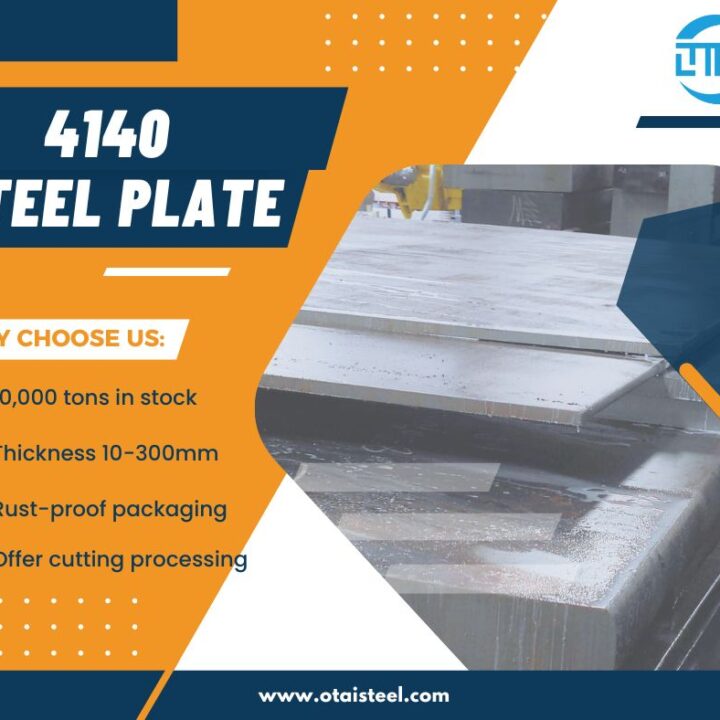
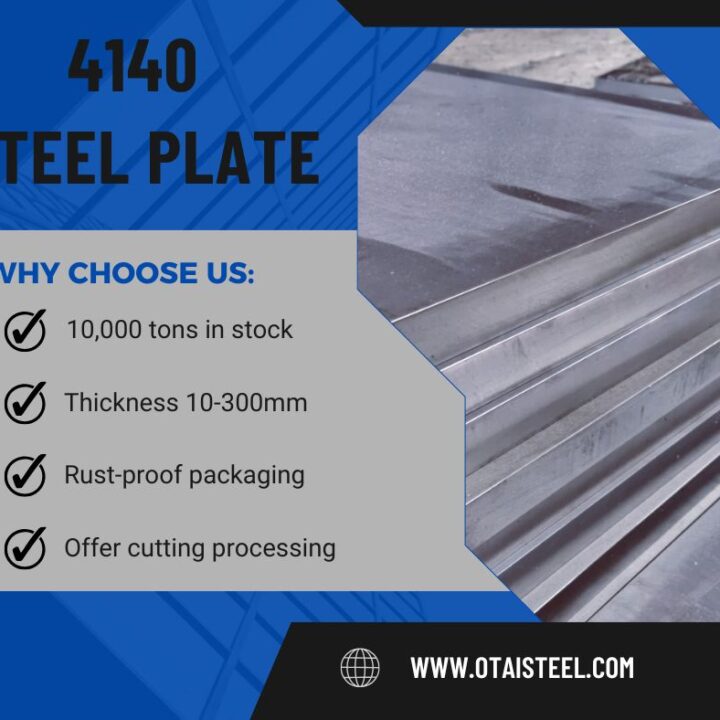
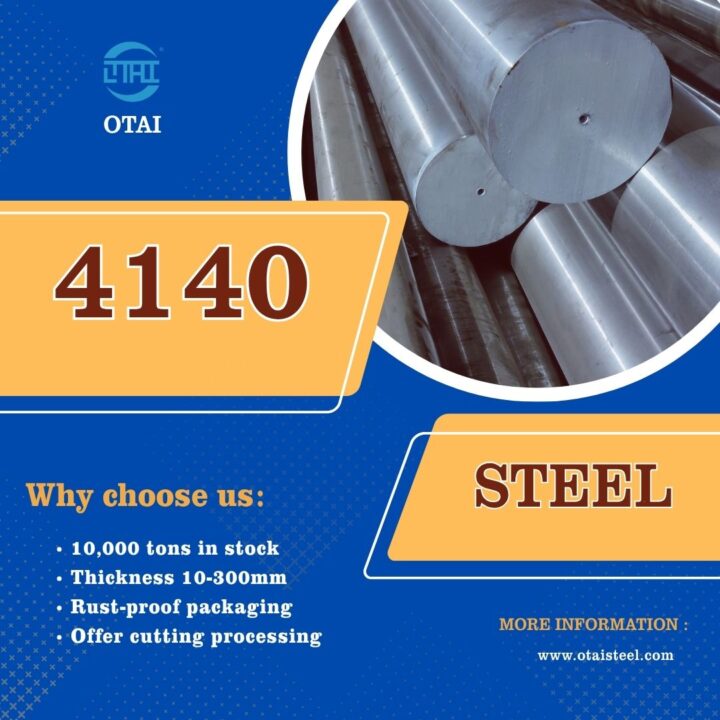
- 42CrMo4 plate stock: Thickness range of 4–380 mm, subject to current inventory confirmation.
- Large inventory: More than 10,000 tons of steel stock to support different customer requirements.
- Cutting capacity: 20 saw cutting machines for stock preparation and custom cutting.
- Machining services: CNC machining and grinding to support customer-specific dimensions and tolerances.
- One-stop service: Material supply, cutting, machining coordination, inspection support, and export packaging.
- Quality support: Material testing, ultrasonic testing, and third-party inspection arrangements according to agreed requirements.
- Export experience: Supplying international customers in more than 54 countries since 1999.
- Export packaging: Anti-rust protection, strapping, bundling, and wooden cases for overseas shipments.
❓ Frequently Asked Questions
1. What is the material number of 42CrMo4?
The material number of 42CrMo4 is 1.7225. It is a chromium-molybdenum alloy steel commonly used for components that require strength and toughness after quenching and tempering.
2. What standard covers 42CrMo4 steel?
EN 10083-3 is a commonly referenced historical standard for 42CrMo4. Its 2006 edition was replaced by EN ISO 683-2:2018. Buyers should specify the exact standard edition required by their project rather than relying on an unspecified standard reference.
3. What is the chemical composition of 42CrMo4?
Commonly published EN 10083-3:2006 limits include 0.38–0.45% carbon, 0.60–0.90% manganese, 0.90–1.20% chromium, and 0.15–0.30% molybdenum. Silicon has a maximum of 0.40%, phosphorus 0.025%, and sulfur 0.035%. Always check the applicable standard edition and purchase specification.
4. Is 42CrMo4 the same as AISI 4140?
42CrMo4 and AISI 4140 are closely related chromium-molybdenum alloy steels and are often considered comparable. However, their standards and detailed requirements are not automatically identical. Buyers should compare chemical composition, mechanical properties, delivery condition, and certification before accepting a substitution.
5. What should buyers check on a 42CrMo4 material test certificate?
Buyers should verify the grade, material number, applicable standard, heat number, chemical composition, mechanical test results, delivery condition, and required inspection records. They should also check that the certificate corresponds to the supplied material and the purchase order.