Steel 16MnCr5: Is This the Right Grade for Your Gear Components?
📑 Table of Contents
- ⚙️ What Is 16MnCr5 Steel?
- 🔩 Why Is 16MnCr5 Used for Gear Components?
- 🧪 16MnCr5 Chemical Composition and Its Effects
- 🔥 Carburizing, Hardness and Mechanical Properties
- 📊 16MnCr5 vs 20MnCr5 and Other Case-Hardening Steels
- 📄 Standards, Material Identification and MTC Checks
- 📏 Product Forms, Dimensions and Purchasing Requirements
- 🤝 How to Choose a 16MnCr5 Steel Supplier
- 🏭 Company Advantages
- ❓ Frequently Asked Questions
Gear components often face two different demands: a hard, wear-resistant surface and a core that can withstand impact and repeated loading. Choosing a steel grade that balances these requirements is essential for gear life, manufacturing efficiency and overall component reliability.
16MnCr5 steel (1.7131) is a manganese-chromium case-hardening steel commonly used for gears, pinions, shafts and transmission components. Its relatively low carbon content supports a tougher core, while carburizing and subsequent heat treatment can create a hard surface layer. However, 16MnCr5 is not automatically suitable for every gear design. Buyers should consider component size, loading conditions, required case depth, heat-treatment capability and inspection requirements before selecting it.
This article explains how 16MnCr5 works, which gear applications suit it, how it compares with other case-hardening steels, and what procurement teams should verify before placing an order.
⚙️ What Is 16MnCr5 Steel?
16MnCr5 is a low-carbon alloy steel designed primarily for case hardening. It belongs to the manganese-chromium family of engineering steels and is identified by European material number 1.7131. Its composition and delivery requirements are covered by the relevant European case-hardening steel standards.
The grade designation gives buyers a useful first indication of its composition. The number “16” relates approximately to its nominal carbon content in hundredths of a percent, while “MnCr” identifies manganese and chromium as important alloying elements. The final number forms part of the European symbolic grade designation.
What makes 16MnCr5 different from ordinary carbon steel?
Unlike ordinary low-carbon steel, 16MnCr5 contains controlled additions of manganese and chromium. These elements improve hardenability and help the steel respond to carburizing and subsequent quenching. This makes it suitable for components that need a hardened surface without sacrificing the toughness required in the core.
Its relatively low carbon content is particularly important. Before carburizing, the steel does not have the high carbon level required to achieve very high hardness throughout the entire section. During carburizing, carbon enters the surface layer. After quenching, this enriched layer can develop high hardness, while the lower-carbon core retains comparatively greater toughness.
Basic identification of 16MnCr5
| Item | Information |
|---|---|
| Steel grade | 16MnCr5 |
| Material number | 1.7131 |
| Steel family | Alloy case-hardening steel |
| Main alloying elements | Manganese and chromium |
| Main treatment | Carburizing followed by hardening and tempering |
| Common applications | Gears, pinions, shafts and transmission parts |
| Common standard reference | EN 10084 / EN ISO 683-3, depending on specification and edition |
For buyers, the key point is that 16MnCr5 is a case-hardening grade, not a through-hardening steel selected primarily for high strength across the entire section. Its performance depends heavily on the final heat-treatment process and the design of the component.
🔩 Why Is 16MnCr5 Used for Gear Components?
Gears operate under repeated contact stress, friction and sometimes sudden changes in torque. Their tooth surfaces must resist wear and contact fatigue, while the material beneath the hardened layer needs enough toughness to support the applied loads.
16MnCr5 is often selected because its low-carbon core and carburizing response make this combination possible. After suitable treatment, the surface can achieve high hardness, while the core provides support and helps resist fracture under service loads.
1. Wear resistance at the gear tooth surface
Gear teeth repeatedly contact one another during operation. Without adequate surface hardness, friction and contact pressure can gradually damage the tooth flanks. Carburizing enriches the surface with carbon, allowing the outer layer to become significantly harder after quenching.
This hardened layer helps resist abrasive and adhesive wear. It can also improve resistance to contact-related damage when the case depth, hardness profile, surface finish and lubrication system suit the application.
2. A tougher core to support the hardened case
High surface hardness alone does not guarantee a reliable gear. If the core lacks sufficient toughness or strength, the component may fail under bending stress, impact or repeated loading.
16MnCr5 addresses this requirement through its low-carbon core. After appropriate heat treatment, the core can retain a useful balance of strength and toughness. This support is particularly important around gear teeth, where the hardened case must withstand repeated contact loads without cracking or separating from the underlying material.
3. Suitable for precision machining before heat treatment
Many gears require turning, milling, drilling, hobbing, shaping or other machining operations before final heat treatment. Suppliers commonly deliver 16MnCr5 in a soft-annealed or other agreed machinable condition, allowing manufacturers to prepare the component before carburizing.
Machining before hardening can reduce tool wear and simplify production compared with machining a fully hardened component. Nevertheless, buyers should confirm the delivery hardness and machining allowance because the actual production route depends on the component design and supplier condition.
Which gear components commonly use 16MnCr5?
- Small and medium-sized gears: Components requiring a wear-resistant tooth surface and a supporting core.
- Pinions: Smaller gear components exposed to repeated contact and rotational loading.
- Gear shafts: Parts combining shaft loading with surface wear requirements.
- Transmission components: Mechanical parts that need a durable hardened surface.
- Camshafts and pins: Components where surface wear resistance is important.
However, application suitability depends on more than the steel designation. Large, heavily loaded gears may require a higher-hardenability grade or a different alloy system. Buyers should evaluate the gear’s dimensions, tooth geometry, loading, required fatigue life and heat-treatment process before approving 16MnCr5.
🧪 16MnCr5 Chemical Composition and Its Effects
Chemical composition determines how 16MnCr5 responds to machining, carburizing and hardening. Carbon, manganese and chromium are particularly important because they influence the final hardness profile and the performance of the core.
The following table gives commonly referenced composition limits for 16MnCr5 under EN 10084. The applicable edition, product standard and agreed specification should always govern acceptance.
| Element | Commonly referenced limit (%) | Contribution to steel performance |
|---|---|---|
| Carbon (C) | 0.14–0.19 | Supports a tougher core and provides the basis for surface carbon enrichment. |
| Silicon (Si) | 0.40 max. | Acts as a deoxidizing element and contributes to strength. |
| Manganese (Mn) | 1.00–1.30 | Improves hardenability and supports core strength. |
| Phosphorus (P) | 0.025 max. | Controlled impurity; excessive levels can affect toughness. |
| Sulfur (S) | 0.035 max. | Controlled impurity; influences machinability and material quality. |
| Chromium (Cr) | 0.80–1.10 | Improves hardenability and supports the response to heat treatment. |
Why is carbon content important?
The carbon content of 16MnCr5 is relatively low compared with many quenched and tempered engineering steels. This helps preserve core toughness after suitable treatment. However, the low-carbon composition also means that the original surface cannot achieve the same high hardness as a carbon-enriched case without additional processing.
During carburizing, the surface absorbs carbon at elevated temperature. This creates a carbon-rich layer that can transform into a hard martensitic structure after quenching. The core retains a lower carbon content, which helps it maintain a different mechanical response from the surface.
How do manganese and chromium contribute?
Manganese improves hardenability and contributes to the steel’s response during quenching. It helps the material develop the required hardened structure under suitable heat-treatment conditions.
Chromium also improves hardenability and supports the development of a hardened case. Together, manganese and chromium make 16MnCr5 more suitable for case-hardening applications than an unalloyed low-carbon steel with a similar carbon content.
Standard limits, typical analysis and actual MTC results
Buyers should distinguish three types of chemical composition information:
- Standard limits: The permitted ranges and maximum values specified by the applicable standard.
- Typical analysis: Representative chemistry published by a steel producer or supplier. It is useful for reference but is not a universal requirement.
- Actual heat analysis: The measured composition of the specific production heat, normally recorded on the MTC.
For order acceptance, compare the actual heat analysis with the applicable standard and purchase specification. If a customer requires tighter limits or additional elements, agree on these requirements before production or shipment.
Also check the exact grade designation. For example, 16MnCrS5 is a sulfur-modified variant intended to improve machinability. It is not simply another spelling of standard 16MnCr5, and buyers should not accept it as a substitute without technical approval.
🔥 Carburizing, Hardness and Mechanical Properties
The final performance of 16MnCr5 depends strongly on its heat-treatment route. For gear applications, carburizing followed by quenching and tempering is a common process. The objective is to create a hardened outer case while retaining a suitable core structure.
How does carburizing work?
Carburizing heats the steel in a carbon-rich environment so that carbon diffuses into the surface. The process creates a carbon concentration gradient: the outer region contains more carbon than the original core.
After carburizing, the component undergoes hardening, usually through a controlled quenching process. The carbon-enriched surface can transform into a hard martensitic case. Tempering then helps adjust the final structure and reduce excessive brittleness and residual stress.
The final result depends on several process variables, including carburizing temperature, holding time, carbon potential, quenching conditions and tempering parameters. Therefore, the same steel grade can produce different case depths and hardness profiles under different treatment schedules.
Surface hardness and core properties are different
Carburized 16MnCr5 gears are often designed to achieve a surface hardness around 58–62 HRC. This is a commonly encountered target range, not a universal guaranteed value for every component. The required hardness should be specified according to the application, treatment process and inspection method.
Core hardness is lower than case hardness. Its purpose is to provide support and toughness rather than to match the hardened surface. The required core properties depend on the section size, hardenability, heat-treatment parameters and component design.
| Property or process | What buyers should understand |
|---|---|
| Delivery hardness | Depends on the supplied condition. Soft-annealed 16MnCr5 is commonly specified with a maximum hardness of 207 HBW under relevant product requirements. |
| Carburized surface hardness | Often targeted around 58–62 HRC, depending on the component and heat-treatment specification. |
| Effective case depth | Must be specified according to gear size, load and design requirements. |
| Core hardness | Depends on section size and heat-treatment conditions; it is not the same as surface hardness. |
| Distortion | Must be considered when planning machining allowances and final dimensional inspection. |
Why is effective case depth important for gears?
Case depth describes how far the hardened layer extends beneath the surface. A case that is too shallow may not provide sufficient support under repeated contact stress. An unnecessarily deep case can increase processing time, cost and the risk of distortion or other heat-treatment problems.
For gear procurement, the required effective case depth should be agreed with the engineering or heat-treatment team. It should not be selected from a generic steel datasheet alone. Gear module, tooth geometry, load, surface hardness and service conditions all influence the appropriate target.
What should buyers specify before heat treatment?
- Required surface hardness and measurement method.
- Effective case depth and its acceptance criteria.
- Core hardness or mechanical-property requirements, if specified.
- Heat-treatment route and any special process restrictions.
- Dimensional tolerances before and after heat treatment.
- Inspection method, sampling locations and reporting requirements.
These details help the steel supplier, machining company and heat-treatment provider work toward the same final component requirements.
📊 16MnCr5 vs 20MnCr5 and Other Case-Hardening Steels
16MnCr5 is not the only option for manufacturing gears. Depending on component dimensions, loading conditions and production requirements, engineers may also consider 20MnCr5, 16MnCrS5 or other case-hardening grades.
These grades can serve similar applications, but their chemical compositions and performance characteristics differ. Buyers should compare the exact specifications rather than select a material based only on a cross-reference table.
16MnCr5 vs 20MnCr5
20MnCr5 is another widely used manganese-chromium case-hardening steel. Compared with 16MnCr5, it has a higher carbon range and slightly higher manganese and chromium ranges under commonly referenced EN specifications.
These differences can influence hardenability and the response to heat treatment. However, the best choice still depends on the component’s dimensions, required case depth and mechanical demands. A higher alloy or carbon content does not automatically make one grade the better choice for every gear.
| Comparison item | 16MnCr5 | 20MnCr5 |
|---|---|---|
| Material number | 1.7131 | 1.7147 |
| Carbon (%) | 0.14–0.19 | 0.17–0.22 |
| Manganese (%) | 1.00–1.30 | 1.10–1.40 |
| Chromium (%) | 0.80–1.10 | 1.00–1.30 |
| Steel family | Case-hardening steel | Case-hardening steel |
The values above are commonly referenced composition ranges. Always check the relevant standard edition and product requirements before using them for material acceptance.
16MnCr5 vs 16MnCrS5
16MnCrS5 is a sulfur-modified variant designed to improve machinability. The sulfur content is intentionally controlled differently from standard 16MnCr5. This can benefit certain machining operations, but it may also affect other properties and should be considered when the component has demanding fatigue or toughness requirements.
For gears exposed to high contact and bending stresses, buyers should not switch between these grades simply because their names look similar. The engineering team should approve the substitution after reviewing the application and relevant technical data.
How about AISI 5115 and other international grades?
AISI 5115 is often listed as a comparable grade to 16MnCr5. Buyers may also encounter other manganese-chromium case-hardening steels in Japanese, Chinese or national standards. However, equivalence tables provide reference comparisons rather than proof of identical technical requirements.
Before approving an alternative, compare the chemical composition, hardenability, mechanical properties, delivery condition and applicable product standard. Also consider whether the existing carburizing process can achieve the required case depth and hardness with the proposed alternative.
📄 Standards, Material Identification and MTC Checks
For international procurement, buyers should confirm the exact standard reference and material identification before accepting 16MnCr5. A familiar grade name does not automatically confirm that the supplied product meets every requirement on the drawing or purchase order.
Which standards cover 16MnCr5?
EN 10084 is a long-established European standard for case-hardening steels and their technical delivery conditions. The later European standard reference is EN ISO 683-3, covering case-hardening steels. Buyers may encounter DIN EN 10084 in older specifications and DIN EN ISO 683-3 in more recent documentation.
Product form also matters. For example, hot-rolled flat products, bright bars and cold-rolled strip may be subject to different product standards for dimensions, tolerances and delivery requirements. The purchase order should identify the standard appropriate to the material being supplied.
What should buyers check on the MTC?
A mill test certificate helps buyers confirm the material’s identity and actual test results. For 16MnCr5, review the following items before accepting the shipment:
| MTC item | Buyer verification |
|---|---|
| Steel grade | Confirm 16MnCr5, not a similar but different grade. |
| Material number | Check 1.7131 where applicable. |
| Standard reference | Confirm the agreed EN or DIN EN standard and edition. |
| Heat number | Match the certificate to the delivered material identification. |
| Chemical analysis | Compare actual heat results with the applicable limits. |
| Delivery condition | Confirm the specified condition, such as soft annealed or another agreed condition. |
| Hardness or test results | Check the tests required by the order and product specification. |
| Inspection document | Confirm the required EN 10204 certificate type. |
Why does delivery condition matter?
16MnCr5 is commonly supplied in a soft-annealed condition for machining. Depending on the product and specification, other delivery conditions may also be available. Buyers should identify the required condition before ordering because it affects hardness, machinability and subsequent processing.
Do not confuse the steel’s delivery condition with the final condition of a carburized gear. A supplier’s MTC normally documents the supplied material condition. The final surface hardness and case depth are usually verified after the component undergoes the specified heat-treatment process.
Should buyers request third-party inspection?
Third-party inspection may be appropriate for critical components, large orders or projects with strict quality procedures. The inspection scope should be agreed in advance, including document review, material identification, dimensional checks, sampling and any additional tests.
If ultrasonic testing or other special inspections are required, specify the applicable test standard, inspection level and acceptance criteria. A general request for “full inspection” is not precise enough to define a consistent acceptance process.
📏 Product Forms, Dimensions and Purchasing Requirements
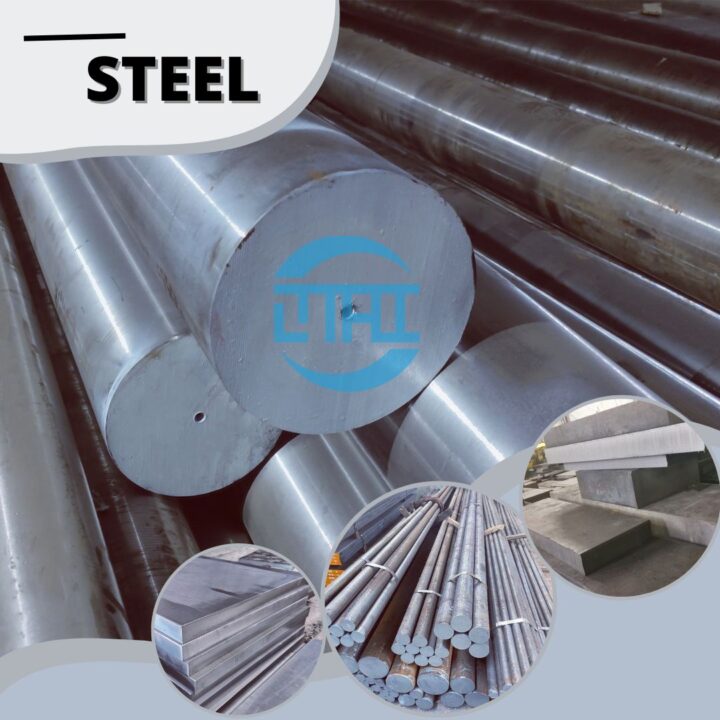
16MnCr5 is available in different product forms depending on the producer and supplier’s stock range. Buyers may source it as round bar, flat bar, plate, strip or other forms for machining and component production. However, availability, tolerances and technical requirements can vary significantly between product forms.
Choosing the right product form
For gear manufacturing, the required product form depends on the component design and production route. Round bar may suit shafts, pins and cylindrical components. Plate or flat products may suit machined parts, blanks and other applications where the required geometry can be cut from flat stock.
Before requesting a quotation, specify the product form and finished dimensions. If the component will undergo extensive machining, consider the required machining allowance and the amount of material that will be removed during production.
Dimensions and tolerances to confirm
Buyers should provide the thickness or diameter, width, length, quantity and dimensional tolerances. They should also identify any requirements for flatness, straightness, surface condition or machining allowance.
For precision gear components, dimensional consistency can influence machining efficiency and final inspection results. If the supplier needs to perform cutting, milling or grinding, agree on the required finished dimensions and tolerance range before production.
Inspection and packaging for international shipments
Depending on the application, buyers may require dimensional inspection, hardness checks, ultrasonic testing or third-party inspection. These requirements should be confirmed in the quotation and purchase order rather than added after the material has been prepared.
Export packaging also deserves attention. Steel should be protected against corrosion and transport damage. Common options include anti-rust protection, strapped bundles, clear material labels and wooden export cases. The packaging method should match the product dimensions, shipment method and destination requirements.
What information should an enquiry include?
- Steel grade: 16MnCr5 / 1.7131.
- Applicable standard and edition.
- Product form: plate, flat bar, round bar or another required form.
- Dimensions and dimensional tolerances.
- Delivery condition and required hardness.
- Quantity and cutting requirements.
- MTC and inspection-document requirements.
- Additional testing, packaging and delivery instructions.
A complete enquiry helps suppliers quote the correct material and reduces the risk of misunderstandings about grade, condition, dimensions or inspection scope.
🤝 How to Choose a 16MnCr5 Steel Supplier
When purchasing 16MnCr5, buyers should evaluate more than the price per ton. The supplier’s ability to identify the correct grade, maintain traceability, provide suitable dimensions and arrange the required inspection can have a direct impact on production efficiency and material acceptance.
Check the supplier’s material knowledge
A reliable supplier should understand that 16MnCr5 is a case-hardening steel and should be able to explain the difference between standard 16MnCr5 and similar grades such as 16MnCrS5 or 20MnCr5. The supplier should also clarify the applicable standard, material number and delivery condition rather than relying only on a general product description.
Ask for technical information and review the available MTC documentation. If your drawing specifies a particular standard edition or special chemistry requirement, communicate it clearly before confirming the order.
Confirm stock and processing capabilities
Stock availability is important when production schedules depend on short lead times. A supplier with suitable inventory can reduce procurement delays and provide more flexibility when customers need non-standard dimensions.
Processing capability also matters. Cutting, precision machining and grinding can help buyers obtain material closer to the required dimensions. Before placing an order, confirm the available thickness range, cutting accuracy, machining tolerance and delivery schedule.
Evaluate quality control and traceability
For industrial applications, the supplier should maintain clear material identification and provide the agreed inspection documents. Buyers should confirm how the supplier manages heat numbers, MTC records and material traceability.
If the project requires ultrasonic testing, additional inspection or third-party verification, define the inspection scope and acceptance criteria in advance. This helps avoid disputes when the material is ready for shipment.
Compare the total purchasing cost
The lowest material price may not produce the lowest overall cost. Consider cutting charges, machining allowances, inspection expenses, packaging, freight and the potential cost of rejected material. A supplier that provides accurate dimensions, suitable documentation and responsive technical support may offer better value over the complete purchasing process.
For 16MnCr5 enquiries, provide the grade, standard, product form, dimensions, delivery condition, quantity and inspection requirements together. This allows the supplier to evaluate the request accurately and prepare a more useful quotation.
For product details and available supply options, visit Otai 16MnCr5 case-hardening steel.
🏭 Company Advantages
- Specialized in alloy steel and tool steel supply for international industrial buyers since 1999.
- Export experience covering more than 54 countries.
- 10,000+ tons of steel inventory to support regular and project-based purchasing requirements.
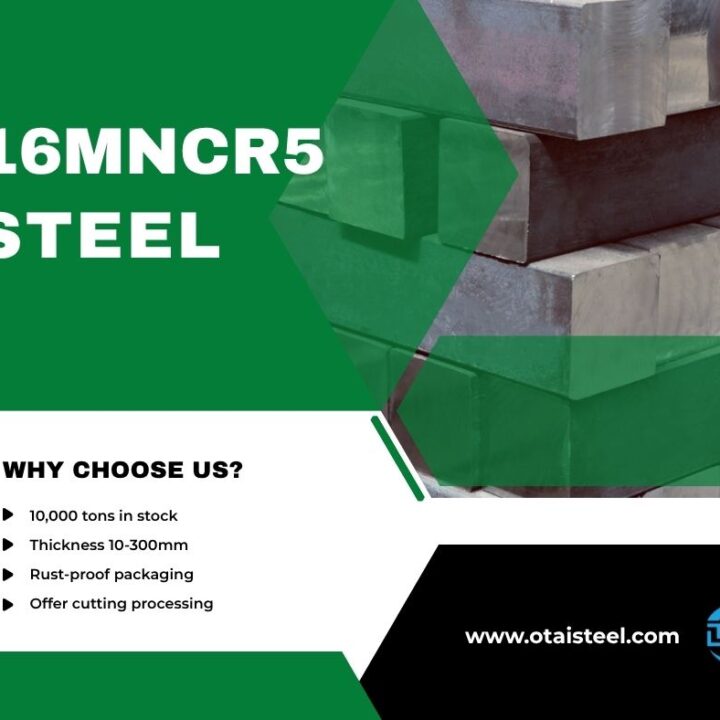
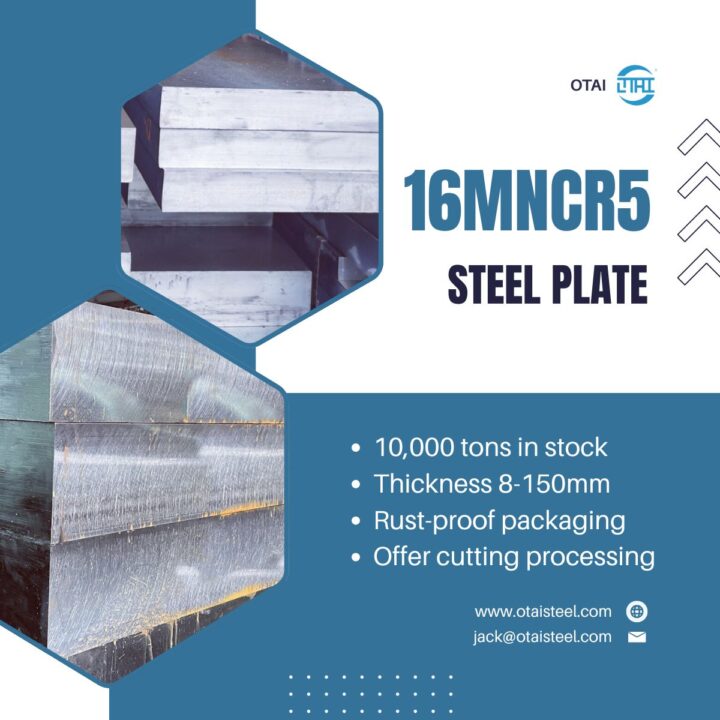
- 16MnCr5 steel plate thickness range: 8–150 mm in stock.
- 20 saw-cutting machines for efficient cutting and order preparation.
- CNC machining and grinding services to support customized dimensions and tolerances.
- One-stop service covering material supply, cutting, precision machining, processing coordination and export packaging.
- Material identification and MTC documentation support for traceability and quality verification.
- Ultrasonic testing and third-party inspection support when required and agreed for the order.
- Anti-rust protection, strapped bundles and wooden export packaging options.
- Stable supply, responsive service and cost-effective solutions for international customers.
❓ Frequently Asked Questions
1. Is 16MnCr5 a good steel for gears?
Yes. 16MnCr5 is commonly used for gears, pinions and transmission components that need a hard, wear-resistant surface and a tougher core. Its suitability depends on gear size, loading conditions, required case depth and the heat-treatment process.
2. What is the material number of 16MnCr5?
The European material number for 16MnCr5 is 1.7131. Buyers may see both designations on technical documents and material certificates. The grade and material number identify the material, while the applicable standard defines its technical requirements.
3. What is the hardness of 16MnCr5 steel?
Hardness depends on the delivery condition and heat treatment. Soft-annealed 16MnCr5 is commonly specified with a maximum hardness of 207 HBW under relevant requirements. After carburizing and hardening, the surface may be designed to reach approximately 58–62 HRC, depending on the process and component specification.
4. What is the difference between 16MnCr5 and 20MnCr5?
Both are manganese-chromium case-hardening steels, but 20MnCr5 generally has higher carbon, manganese and chromium ranges. Their hardenability and heat-treatment responses can differ. The correct selection depends on component dimensions, required case properties and engineering requirements.
5. Can 16MnCr5 be supplied as steel plate?
Yes, 16MnCr5 can be supplied in flat product forms, depending on stock and production availability. Otai’s stated 16MnCr5 steel plate thickness range is 8–150 mm. Buyers should confirm the required dimensions, delivery condition, tolerances and inspection documents when requesting a quotation.