 Difference Between 1045 and 4140 Steel – Comprehensive Comparison of Strength and Industrial Applications
The difference between 1045 and 4140 steel is one of the most important topics in material selection for mechanical engineering, manufacturing, and industrial design. Although both steels belong to the medium-carbon steel family, their performance varies significantly due to alloy composition, heat treatment response, and mechanical strength levels.
1045 steel is a plain carbon steel widely used in general engineering applications, while 4140 is a chromium-molybdenum alloy steel designed for high-strength, high-stress, and fatigue-critical components. Understanding the 1045 carbon steel vs 4140 alloy steel comparison is essential for selecting the right material based on cost, durability, and performance requirements.
In modern manufacturing, choosing between these two steels directly affects product reliability, service life, and machining efficiency.
📊 Chemical Composition and Metallurgical Differences
The main reason for performance variation lies in alloy composition. 4140 steel contains chromium and molybdenum, which significantly improve hardenability and strength, while 1045 steel does not include alloying elements beyond manganese.
| Element | 1045 Steel | 4140 Steel |
|---|---|---|
| Carbon (C) | 0.43–0.50% | 0.38–0.43% |
| Manganese (Mn) | 0.60–0.90% | 0.75–1.00% |
| Chromium (Cr) | None | 0.80–1.10% |
| Molybdenum (Mo) | None | 0.15–0.25% |
| Silicon (Si) | 0.10–0.35% | 0.15–0.30% |
The addition of chromium improves corrosion resistance and wear resistance, while molybdenum enhances strength at high temperatures. These differences make 4140 steel significantly more suitable for demanding engineering applications.
⚙️ Mechanical Difference Between 1045 and 4140 Steel
The mechanical difference between 1045 and 4140 steel becomes very clear when comparing strength, hardness, and fatigue resistance under load conditions.
| Property | 1045 Steel | 4140 Steel |
|---|---|---|
| Tensile Strength | 570–700 MPa | 850–1100 MPa |
| Yield Strength | 300–450 MPa | 650–950 MPa |
| Hardness (HRC) | 10–20 (normalized) | 28–55 (heat treated) |
| Fatigue Resistance | Moderate | High |
| Impact Toughness | Medium | High |
| Wear Resistance | Moderate | High |
From an engineering perspective, 4140 steel strength vs 1045 steel shows that 4140 provides nearly double the yield strength and significantly better fatigue resistance, making it suitable for high-stress rotating machinery components.
🔥 Heat Treatment Difference Between 1045 and 4140 Steel
The heat treatment difference between 1045 and 4140 steel plays a key role in determining final performance. 4140 steel has deeper hardenability due to alloying elements, while 1045 steel has limited hardening depth.
| Aspect | 1045 Steel | 4140 Steel |
|---|---|---|
| Hardenability | Low | High |
| Heat Treatment Depth | Shallow surface hardening | Deep and uniform hardening |
| Quenching Medium | Water or oil | Oil (recommended) |
| Distortion Risk | Higher | Lower |
| Tempering Response | Limited stability | Excellent stability |
Because of this, 4140 is widely used in precision components where dimensional stability is critical after heat treatment.
🔧 Machinability, Weldability, and Processing Behavior
The machinability of 1045 vs 4140 steel is another key consideration in manufacturing cost and efficiency.
| Property | 1045 Steel | 4140 Steel |
|---|---|---|
| Machinability | Good | Moderate |
| Weldability | Excellent | Requires preheating |
| Surface Finish | Good | Very good (annealed state) |
| Tool Wear | Low | Higher |
1045 steel is easier and cheaper to machine, while 4140 steel requires more advanced tooling and controlled cutting conditions, especially after heat treatment.
🏭 Industrial Applications and Performance Selection
The selection between these steels depends heavily on application requirements.
| Industry | 1045 Steel Applications | 4140 Steel Applications |
|---|---|---|
| Automotive | Basic shafts, bolts, brackets | Crankshafts, axles, gears |
| Machinery | General machine parts | High-load rotating components |
| Oil & Gas | Light-duty structures | Drill tools and connectors |
| Construction | Structural supports | Heavy-duty load systems |
| Tooling | Basic tools | High-strength dies |
The 1045 steel applications vs 4140 applications comparison clearly shows that 1045 is suitable for cost-sensitive and low-load applications, while 4140 is preferred for critical performance environments.
📉 Cost, Availability, and Engineering Decision Factors
1045 steel is widely available and significantly cheaper, making it attractive for general engineering applications. However, 4140 steel offers longer service life, higher reliability, and better performance under extreme conditions.
In real-world engineering decisions, the difference between 1045 and 4140 steel should not be based only on cost. Lifecycle performance, safety margin, maintenance cost, and failure risk must also be considered.
In many industrial systems, choosing 4140 steel reduces long-term replacement costs and improves equipment reliability.
🏭 Company Advantages
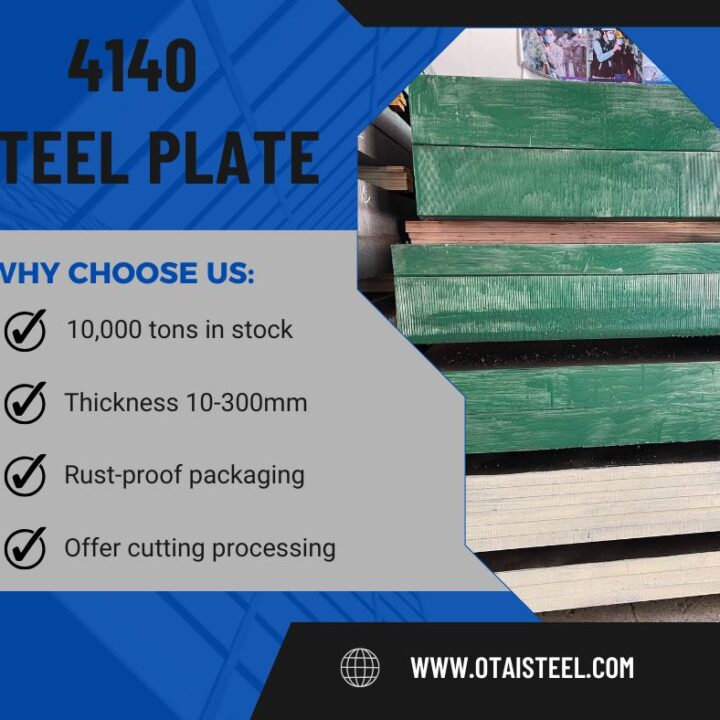
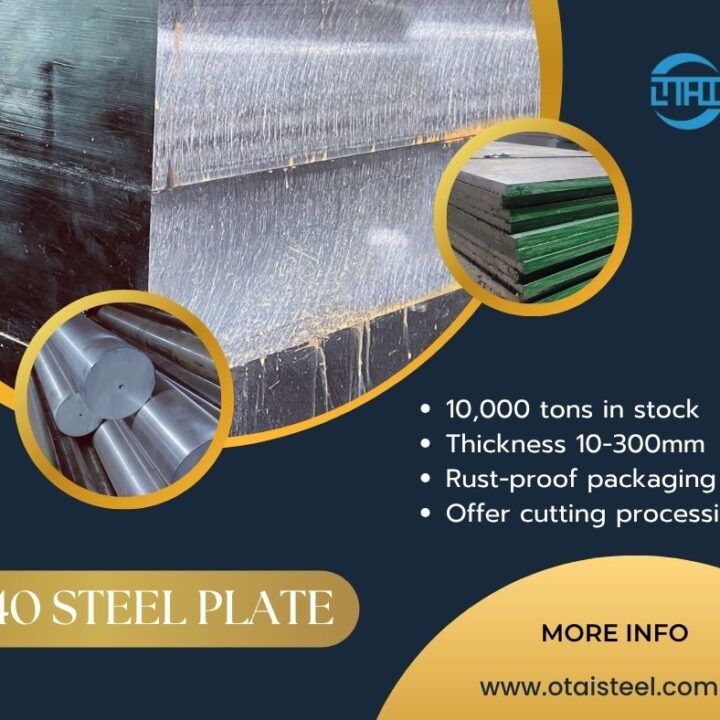
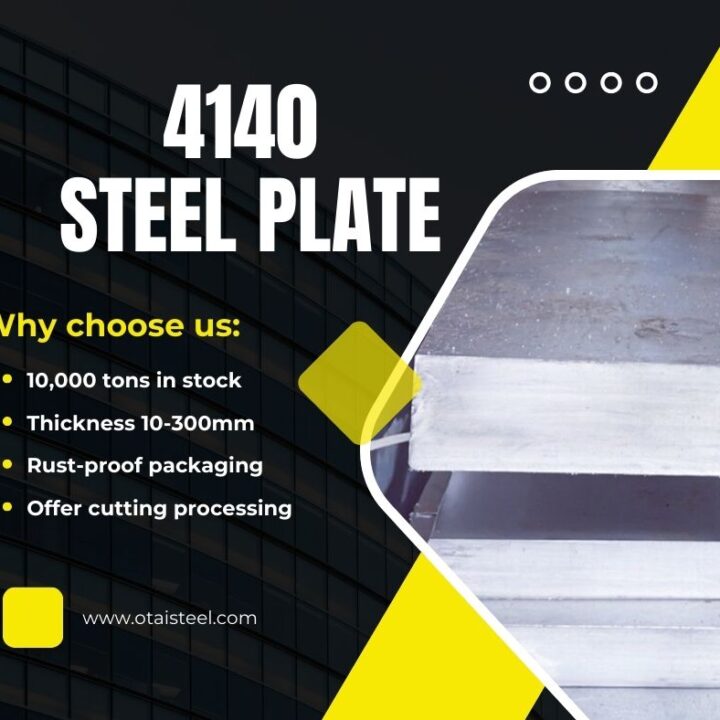
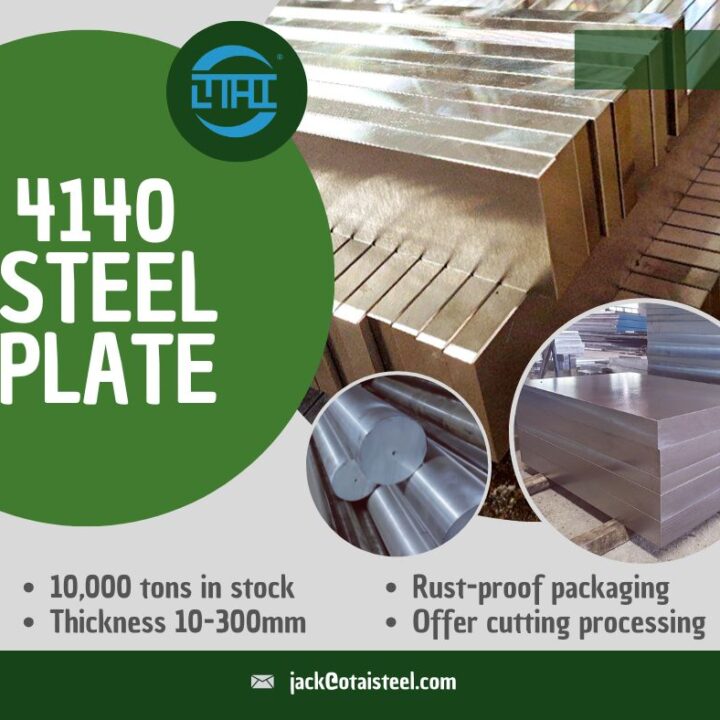
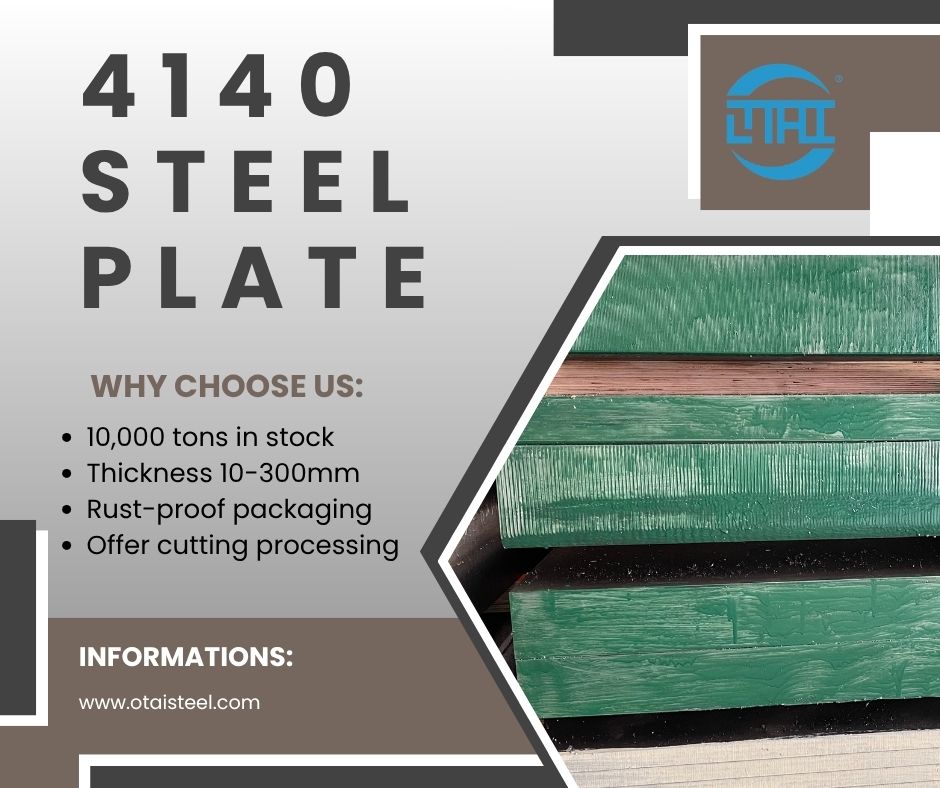
- Over 10,000 tons of steel inventory available year-round
- Wide range of 1045 and 4140 steel products in stock
- Round bars, plates, and forged components supply
- Custom cutting and machining services
- Heat treatment and technical support available
- Ultrasonic testing (UT) quality inspection
- Chemical and mechanical property certification
- Third-party inspection (SGS) support
- Fast international shipping and export packaging
❓ FAQ
Q1: What is the main difference between 1045 and 4140 steel?
A: 4140 contains chromium and molybdenum, giving it higher strength and hardenability compared to 1045 steel.
Q2: Which steel is stronger?
A: 4140 steel is significantly stronger and more fatigue-resistant than 1045 steel.
Q3: Is 1045 steel suitable for heat treatment?
A: Yes, but it has limited hardening depth compared to 4140 steel.
Q4: Why is 4140 more expensive?
A: Because it contains alloying elements and offers higher performance and durability.
Q5: Which steel is better for shafts?
A: 4140 is preferred for high-stress shafts, while 1045 is used for general-purpose applications.
Q6: Can 1045 replace 4140 in industrial applications?
A: Only in low-load conditions; it cannot replace 4140 in high-stress environments.