 16MnCr5 Hardening and Tempering – Achieving the Ideal Balance of Hardness and Toughness
16MnCr5 hardening and tempering is a critical heat treatment process used to optimize the mechanical properties of one of the world’s most popular carburizing steels. Widely utilized in automotive transmissions, industrial gearboxes, agricultural machinery, mining equipment, and precision engineering applications, 16MnCr5 steel delivers excellent wear resistance, fatigue strength, and toughness when properly heat treated.
As a low-carbon chromium alloy steel, 16MnCr5 is specifically designed for carburizing applications. However, hardening and tempering also play a vital role in achieving the desired microstructure, dimensional stability, and service life of mechanical components.
Understanding the correct 16MnCr5 heat treatment process helps manufacturers improve performance, reduce failure risks, and extend component lifespan in demanding operating environments.
📊 Chemical Composition of 16MnCr5 Steel
The alloy composition provides the foundation for the excellent hardening response of 16MnCr5.
| Element | Content (%) |
|---|---|
| Carbon (C) | 0.14 – 0.19 |
| Silicon (Si) | ≤ 0.40 |
| Manganese (Mn) | 1.00 – 1.30 |
| Chromium (Cr) | 0.80 – 1.10 |
| Phosphorus (P) | ≤ 0.025 |
| Sulfur (S) | ≤ 0.035 |
The chromium and manganese additions significantly improve hardenability, allowing the steel to achieve excellent strength and wear resistance after heat treatment.
🔥 What Is Hardening and Tempering?
Hardening and tempering is a two-stage heat treatment process used to increase strength while maintaining sufficient toughness.
The process generally involves:
- Heating the steel to the austenitizing temperature.
- Rapid cooling through quenching.
- Reheating to a lower temperature for tempering.
- Controlled cooling to room temperature.
For 16MnCr5 quenched and tempered steel, this process refines the microstructure and improves mechanical performance.
| Heat Treatment Stage | Purpose |
|---|---|
| Hardening | Increase hardness and strength |
| Tempering | Reduce brittleness and improve toughness |
⚙️ 16MnCr5 Hardening Process
The 16MnCr5 hardening process begins by heating the steel into the austenite region.
| Parameter | Typical Value |
|---|---|
| Hardening Temperature | 820–860°C |
| Holding Time | Depends on section size |
| Quenching Medium | Oil |
| Resulting Structure | Martensite |
The correct 16MnCr5 hardening temperature ensures complete austenitization while minimizing grain growth and distortion.
After quenching, the steel becomes extremely hard but also relatively brittle. Tempering is therefore required before service.
🌡️ 16MnCr5 Tempering Process
The tempering stage reduces internal stresses generated during quenching while maintaining high strength.
| Parameter | Typical Value |
|---|---|
| Tempering Temperature | 150–650°C |
| Holding Time | 1–3 Hours |
| Cooling Method | Air Cooling |
| Main Objective | Improve toughness |
The selected 16MnCr5 tempering temperature depends on the desired balance between hardness and toughness.
Lower tempering temperatures preserve hardness, while higher temperatures increase impact resistance and ductility.
📈 Mechanical Properties After Hardening and Tempering
The final properties of 16MnCr5 hardening and tempering depend on section size, quenching conditions, tempering temperature, and material cleanliness.
| Property | Typical Range |
|---|---|
| Tensile Strength | 800–1100 MPa |
| Yield Strength | 550–850 MPa |
| Elongation | 8–15% |
| Impact Toughness | Good |
| Core Hardness | 28–40 HRC |
These values make 16MnCr5 mechanical properties after tempering highly suitable for dynamic loading conditions and long-term fatigue resistance.
🔬 Carburizing, Hardening, and Tempering Combination
For gears and transmission components, hardening and tempering are often combined with carburizing.
The complete 16MnCr5 carburizing and hardening cycle typically follows these steps:
| Step | Typical Temperature | Purpose |
|---|---|---|
| Carburizing | 880–950°C | Increase surface carbon content |
| Diffusion | 840–880°C | Uniform carbon distribution |
| Hardening | 820–860°C | Form martensite |
| Tempering | 150–200°C | Stress relief |
After this treatment, surface hardness generally reaches 58–62 HRC while the core remains tough and shock-resistant.
⚙️ Applications of Hardened and Tempered 16MnCr5 Steel
The combination of high wear resistance and core toughness allows 16MnCr5 to perform exceptionally well in demanding industrial environments.
| Component | Benefit of Heat Treatment |
|---|---|
| Transmission Gears | High wear resistance |
| Pinion Shafts | Improved fatigue strength |
| Sprockets | Extended service life |
| Bushings | Better abrasion resistance |
| Industrial Gearboxes | Reduced maintenance costs |
| Agricultural Machinery | High durability under impact loads |
Because of these advantages, 16MnCr5 gear steel heat treatment remains one of the most widely specified processes in power transmission manufacturing.
⚠️ Common Heat Treatment Challenges
Although 16MnCr5 offers excellent hardenability, improper heat treatment may lead to quality problems.
| Problem | Possible Cause | Solution |
|---|---|---|
| Distortion | Uneven cooling | Controlled quenching |
| Cracking | Excessive quenching stress | Immediate tempering |
| Low Hardness | Insufficient hardening temperature | Correct heat treatment cycle |
| Excessive Brittleness | Tempering temperature too low | Optimize tempering process |
Strict temperature control and proper process monitoring are essential for achieving consistent results.
🏭 Company Advantages
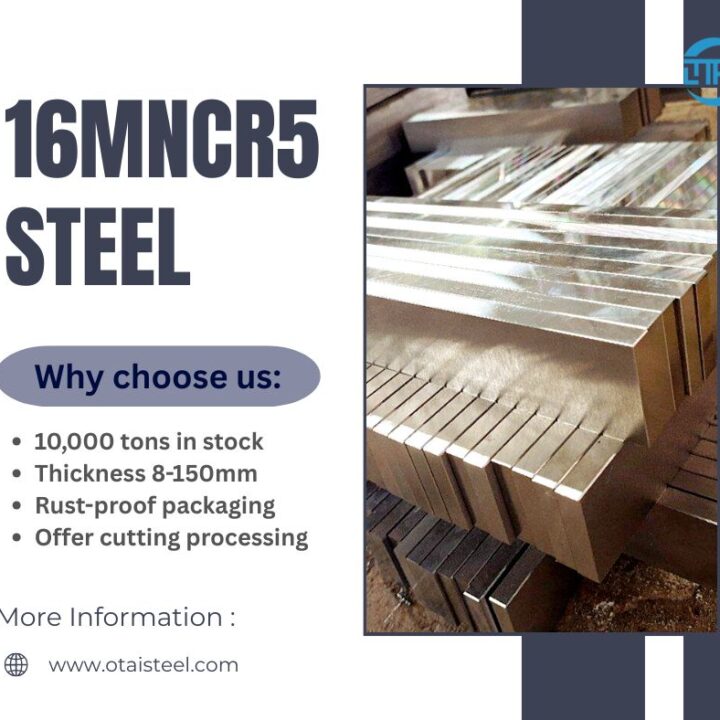
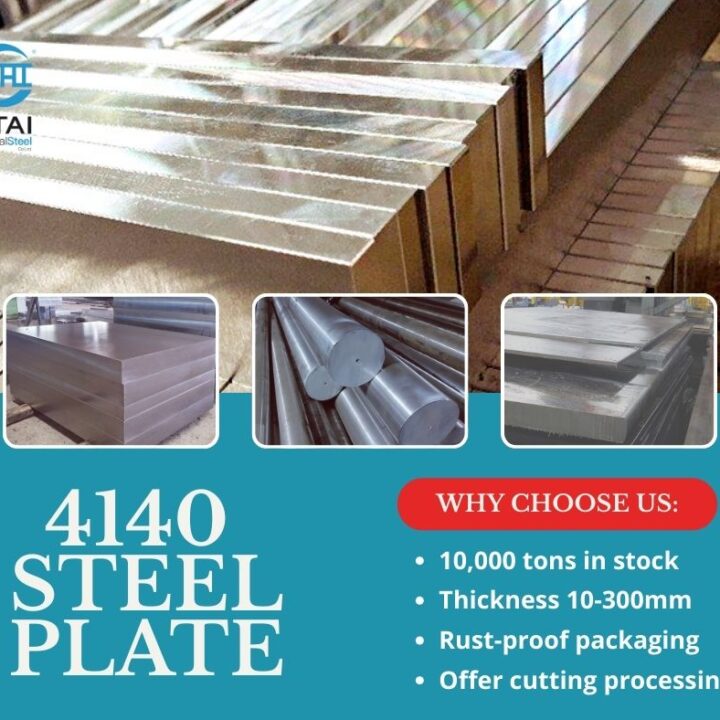
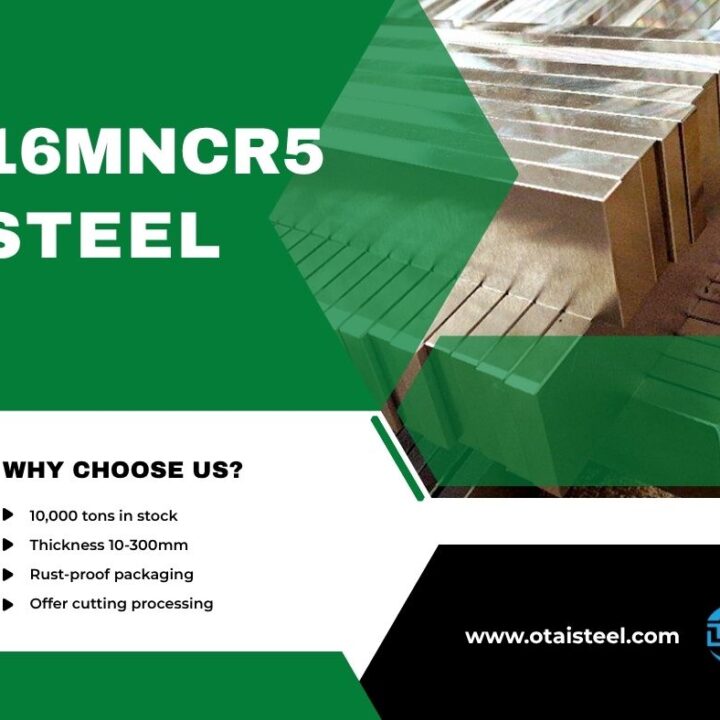
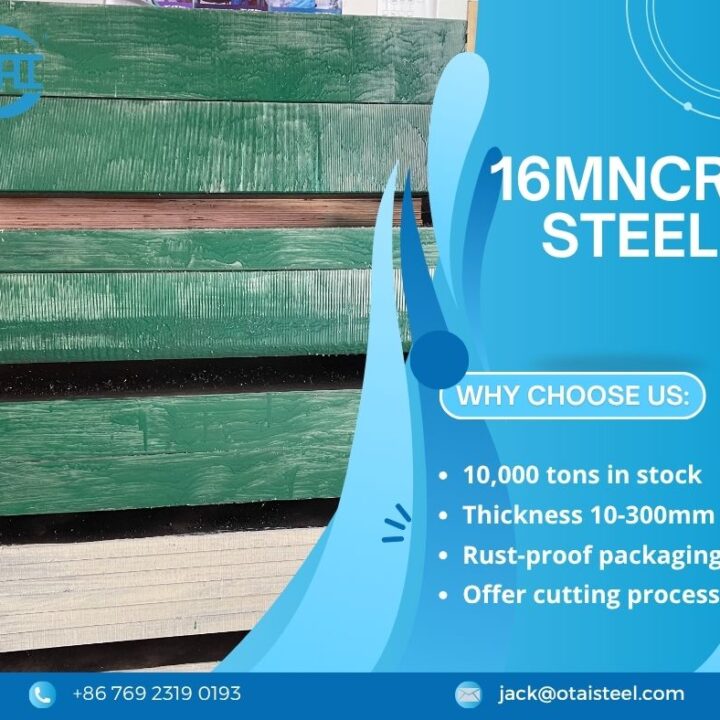
Otai Special Steel is a professional supplier of 16MnCr5 alloy steel products for global manufacturers in the automotive, gearbox, mining, energy, and industrial machinery sectors.
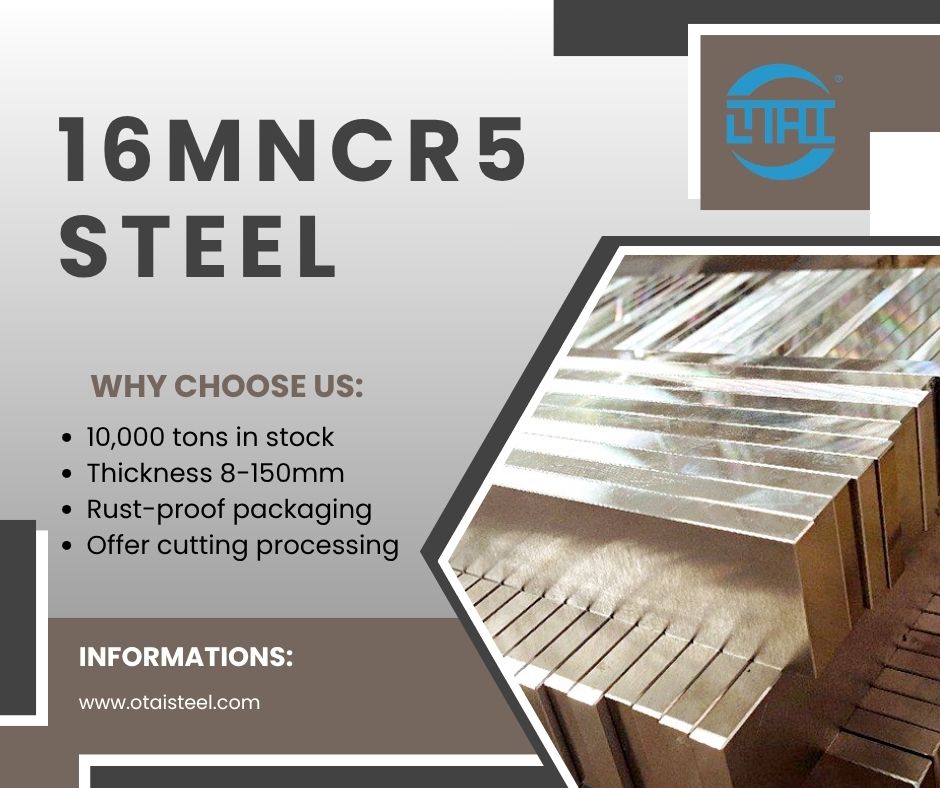
- More than 10,000 tons of steel inventory available year-round
- 8–150mm thickness 16MnCr5 steel plates available in stock
- Round bars, forged blocks, flat bars, and steel plates available
- Custom cutting according to customer drawings and specifications
- Professional heat treatment support and technical consultation
- Ultrasonic testing (UT) available for internal quality inspection
- Chemical composition verification and material traceability
- Third-party inspection services including SGS
- Export-standard packaging for worldwide shipments
- Extensive experience supplying international engineering companies
Our team helps customers obtain high-quality 16MnCr5 steel with stable properties, reliable delivery schedules, and competitive pricing.
📋 Why Proper Hardening and Tempering Matters
The success of any heat-treated component depends on achieving the correct balance between hardness, toughness, fatigue strength, and dimensional stability.
A properly executed 16MnCr5 steel heat treatment process provides several important advantages:
- Improved wear resistance
- Higher fatigue life
- Enhanced load-carrying capacity
- Better resistance to impact loading
- Reduced risk of premature failure
- Longer service life for gears and shafts
- Greater reliability in demanding industrial environments
For critical transmission components, the combination of carburizing, hardening, and tempering remains the preferred solution for achieving optimal performance.
✅ Conclusion
16MnCr5 hardening and tempering is a vital process for maximizing the performance of this widely used case-hardening steel. By carefully controlling hardening temperatures, quenching conditions, and tempering parameters, manufacturers can achieve an excellent combination of surface hardness, core toughness, and fatigue resistance.
Whether used in automotive gears, industrial gearboxes, mining equipment, or agricultural machinery, properly heat-treated 16MnCr5 components provide outstanding durability and long-term reliability. Understanding the correct 16MnCr5 quenching process, selecting the appropriate 16MnCr5 heat treatment hardness, and optimizing tempering conditions are essential for obtaining the best possible mechanical performance.
❓ FAQ
Q1: What is the hardening temperature for 16MnCr5 steel?
A1: The typical hardening temperature ranges from 820°C to 860°C, followed by oil quenching.
Q2: What is the purpose of tempering after hardening?
A2: Tempering reduces brittleness, relieves internal stresses, and improves toughness while maintaining adequate hardness.
Q3: What hardness can 16MnCr5 achieve after carburizing and hardening?
A3: Surface hardness typically reaches 58–62 HRC, depending on carburizing depth and process control.
Q4: Why is 16MnCr5 widely used for gears?
A4: The steel develops a hard wear-resistant surface and a tough core, making it ideal for heavily loaded gear applications.
Q5: What quenching medium is commonly used for 16MnCr5?
A5: Oil quenching is most commonly used because it provides effective hardening while minimizing distortion and cracking risks.