41Cr4 vs C45: Can C45 Replace 41Cr4 in Mechanical Parts?
📑 Table of Contents
- 🔍 Why Do Buyers Compare 41Cr4 and C45?
- 🧪 How Do 41Cr4 and C45 Differ in Chemical Composition?
- ⚙️ Which Grade Offers Better Mechanical Properties?
- 🔥 How Does Heat Treatment Affect 41Cr4 vs C45?
- 🏭 Can C45 Replace 41Cr4 in Shafts and Mechanical Parts?
- 📊 How Do Hardenability and Section Size Affect the Choice?
- 💰 Is C45 More Cost-Effective Than 41Cr4?
- 📑 What Should Buyers Check Before Substituting C45 for 41Cr4?
- 🏭 Company Advantages
- ❓ Frequently Asked Questions
When buyers compare 41Cr4 vs C45, they often want to know whether a lower-cost carbon steel can perform the same job as a chromium alloy steel. Both grades contain a medium level of carbon and can achieve useful hardness through heat treatment. However, their alloy content gives them different hardening responses, particularly when manufacturers process larger sections or require consistent mechanical properties through a component.
C45 may replace 41Cr4 in some shafts, pins, brackets and general mechanical parts. Nevertheless, the decision depends on the component’s dimensions, loading conditions, required hardness, heat-treatment process and service life. A grade substitution based only on price or nominal carbon content can create unexpected performance problems.
This comparison explains the differences from a manufacturing and procurement perspective. It helps buyers identify where C45 offers a practical alternative and where 41Cr4 remains the more reliable choice.
🔍 Why Do Buyers Compare 41Cr4 and C45?
41Cr4 and C45 appear in many mechanical engineering applications. Both grades can supply the strength and hardness needed for components that experience moderate to substantial mechanical loads. Therefore, purchasing teams may consider them as alternatives when they review material costs, delivery schedules or available stock.
Different material categories, similar carbon ranges
41Cr4 is a chromium alloy steel identified by material number 1.7035. It belongs to the family of steels designed for quenching and tempering. Its chromium content improves hardenability, which helps manufacturers obtain a more uniform hardened structure in larger cross-sections.
C45 is a non-alloy medium-carbon steel, commonly identified by material number 1.0503. It offers a practical balance of strength, hardness, machinability and cost for many general engineering applications. Manufacturers can use it in normalized, annealed or heat-treated conditions, depending on the component requirements.
What usually triggers a substitution decision?
- Material cost: Buyers may evaluate C45 when the original 41Cr4 specification increases the purchase budget.
- Availability: A project may need an alternative when the required 41Cr4 dimensions or delivery condition are not immediately available.
- Performance requirements: Engineers may determine that the component does not need the additional hardenability of chromium alloy steel.
- Manufacturing conditions: The existing machining and heat-treatment process may support a change, but the manufacturer must verify this before production.
The important distinction is that a material substitution should meet the same engineering requirements, not simply provide a similar chemical composition. If the component needs a particular core hardness or strength throughout a large section, C45 may not deliver the same result as 41Cr4.
For buyers, the first question should therefore be: what properties does the finished component actually require? Once the engineering requirements are clear, the cost and availability comparison becomes more meaningful.
🧪 How Do 41Cr4 and C45 Differ in Chemical Composition?
The chemical composition explains why these two grades respond differently to heat treatment. Their carbon ranges overlap, but 41Cr4 contains a substantial chromium addition. C45 does not use chromium as a principal alloying element.
Typical standard composition ranges
The following table summarizes commonly specified composition ranges for 41Cr4 under EN 10083-3 and C45 under EN 10083-2 or its successor specifications. Buyers should confirm the applicable edition and product standard because the permitted limits can vary with the grade designation and delivery requirements.
| Element | 41Cr4 (%) | C45 (%) | Practical significance |
|---|---|---|---|
| Carbon (C) | 0.38–0.45 | 0.42–0.50 | Supports hardness and strength after suitable heat treatment. |
| Silicon (Si) | ≤0.40 | 0.10–0.40 | Acts mainly as a deoxidizer and contributes to strengthening. |
| Manganese (Mn) | 0.60–0.90 | 0.50–0.80 | Contributes to strength and hardenability. |
| Chromium (Cr) | 0.90–1.20 | Residual limits apply; not an intentional alloy addition | Improves 41Cr4 hardenability and wear-related performance after suitable treatment. |
| Phosphorus (P) | ≤0.025 | ≤0.045 for standard C45 | Controlled to limit undesirable brittleness. |
| Sulfur (S) | ≤0.035 | ≤0.045 for standard C45 | Affects cleanliness, machinability and toughness. |
Note: These are reference composition limits, not guaranteed test results for every supplied heat. C45E and C45R have different phosphorus and sulfur limits from standard C45. Always check the exact grade and applicable standard on the material certificate.
Why chromium matters
The most important difference is the chromium content in 41Cr4. Chromium delays certain transformation reactions during cooling. As a result, the steel can develop a hardened structure more readily through a larger section than a comparable non-alloy carbon steel under suitable quenching conditions.
C45 can also form martensite during quenching. However, its hardening response is more sensitive to section size and cooling conditions. A small C45 component may achieve the required hardness, while a larger component made from the same grade may retain a softer core.
Carbon content alone does not determine whether one grade can replace another. In fact, C45 has a slightly higher specified carbon range, but this does not automatically give it better overall hardenability. Chromium and the complete alloy composition also influence the transformation behavior.
For procurement teams, a chemical analysis should be checked against the ordered grade and standard. Do not approve a substitution simply because the carbon values look similar.
⚙️ Which Grade Offers Better Mechanical Properties?
Neither 41Cr4 nor C45 has one fixed tensile strength or hardness value that applies to every product. Mechanical properties depend on the delivery condition, product dimensions, heat-treatment process, sampling position and applicable standard. A normalized plate, an annealed bar and a quenched-and-tempered component can show very different results even when they use the same grade.
Strength and hardness depend on the final condition
In the quenched-and-tempered condition, 41Cr4 can provide a useful combination of strength, hardness and toughness. Its chromium content helps manufacturers achieve more consistent hardening in larger sections than they may obtain with C45 under comparable conditions.
C45 also offers good mechanical performance after suitable heat treatment. It can be a sensible choice for components with moderate section sizes and less demanding through-hardening requirements. In some applications, its higher carbon range can support high surface hardness after quenching, although this does not remove its hardenability limitations.
| Property or factor | 41Cr4 | C45 |
|---|---|---|
| Tensile strength | Can achieve high strength after suitable quenching and tempering. | Can also achieve high strength, depending on section size and treatment. |
| Yield strength | Often suitable for demanding load-bearing components in the specified condition. | Suitable for many general mechanical components. |
| Hardness | Can develop a more uniform hardened structure through larger sections. | Can achieve high hardness, but hardening depth is more limited. |
| Toughness | Can provide a useful strength-toughness balance after correct tempering. | Can provide good toughness when the strength and heat treatment are appropriately selected. |
| Hardenability | Generally higher because of chromium alloying. | Generally lower, especially as section size increases. |
| Typical selection priority | Components requiring more reliable through-hardening. | General engineering parts where the required properties are achievable economically. |
Why buyers should avoid comparing isolated strength values
A supplier may quote a tensile strength range for 41Cr4 or C45, but buyers should first check the test condition and product size. A value measured on a small test specimen cannot automatically represent the center of a large-diameter shaft.
Furthermore, hardness alone does not describe the complete mechanical performance. A component may need adequate impact resistance, fatigue strength and resistance to repeated bending or torsion. Excessive hardness can also reduce toughness if the heat-treatment process does not provide the right balance.
When comparing quotations, ask suppliers to identify the delivery condition and the standard behind each property value. For critical components, request test results that represent the actual product and specified condition.
🔥 How Does Heat Treatment Affect 41Cr4 vs C45?
Heat treatment has a major influence on the performance of both grades. Manufacturers can use annealing, normalizing, quenching and tempering to adjust hardness, strength, machinability and toughness. However, the same heat-treatment schedule does not necessarily produce the same result in 41Cr4 and C45.
Annealing and normalizing
Annealing can soften both grades and improve machinability before further processing. Manufacturers may select this condition when they need to remove material efficiently or prepare stock for machining.
Normalizing refines the microstructure and can produce a more consistent starting condition. It is useful when manufacturers need a balance of strength and machinability without requiring the higher strength associated with quenching and tempering.
Quenching and tempering
During quenching, the steel is heated into the appropriate austenitizing range and then cooled using a selected medium. The cooling rate determines the resulting microstructure and hardness. Tempering follows quenching to reduce brittleness and establish the required combination of strength and toughness.
Because 41Cr4 contains chromium, it generally hardens more deeply than C45. This advantage becomes important when a component has a relatively large cross-section or needs consistent mechanical properties between its surface and core.
C45 can still be quenched and tempered successfully. However, manufacturers must select the section size, quenching medium and process parameters carefully. A rapid quench may create distortion or cracking risks, while insufficient cooling may leave the core softer than required.
Induction hardening and surface treatment
Both grades can be considered for induction hardening in suitable applications. The process heats the surface rapidly, followed by controlled cooling, to create a hardened surface layer while retaining a tougher core.
C45 is widely used for induction-hardened shafts and similar parts. It may provide sufficient surface hardness when the component dimensions and service requirements are appropriate. Meanwhile, 41Cr4 may be preferred when the design also requires stronger through-section performance or a different hardening response.
Before selecting either grade, manufacturers should define the required surface hardness, effective hardened depth, core hardness and acceptable distortion. A surface hardness target alone is not enough to establish material suitability.
| Heat-treatment process | 41Cr4 consideration | C45 consideration |
|---|---|---|
| Annealing | Used to soften stock and support machining. | Also suitable for improving machinability. |
| Normalizing | Provides a refined starting structure for further processing. | Common option for general engineering stock. |
| Quenching and tempering | Better suited to applications requiring greater hardenability. | Suitable when section size and cooling conditions allow the required properties. |
| Induction hardening | Can provide a hardened surface with a strong core when correctly processed. | A practical choice for many surface-hardened shafts and parts. |
In short, heat treatment can improve both grades, but it cannot eliminate their basic hardenability difference. Manufacturers should validate the process on the actual component geometry before approving a substitution.
🏭 Can C45 Replace 41Cr4 in Shafts and Mechanical Parts?
C45 can replace 41Cr4 in selected mechanical parts when the component does not require the higher hardenability of chromium alloy steel. However, the decision must follow the actual service conditions and engineering specifications.
Applications where C45 may be suitable
C45 is often considered for general-purpose shafts, pins, studs, couplings, machine components and other parts that need moderate to high strength. If the component has a relatively small cross-section and the required properties can be achieved through normalizing, quenching or induction hardening, C45 may offer a cost-effective solution.
For example, a small shaft operating under moderate torque may not need the deeper hardening response of 41Cr4. If engineering tests confirm that C45 meets the specified hardness, strength and fatigue requirements, the substitution may be reasonable.
Applications where 41Cr4 is often preferable
41Cr4 deserves stronger consideration for components that experience substantial mechanical loads or require more reliable hardening through a larger section. Examples may include heavily loaded shafts, axles, transmission parts and selected gear-related components.
In these applications, the core properties can be just as important as the surface hardness. A component that develops a hard outer layer but retains an insufficiently strong core may not meet the intended service life.
Application-based comparison
| Component | C45 suitability | 41Cr4 suitability | What to evaluate |
|---|---|---|---|
| Small mechanical shafts | Often suitable | Suitable | Torque, bending stress and required hardness. |
| Heavy-duty shafts | Requires careful validation | Often preferred | Section size, core strength and fatigue life. |
| Pins and studs | Often suitable for moderate loads | Suitable for more demanding conditions | Contact pressure, shear loads and wear. |
| Induction-hardened parts | Common practical option | Suitable where core performance also matters | Case depth, surface hardness and core properties. |
| Large cross-section components | More limited hardening response | Generally the stronger candidate | Hardness variation from surface to center. |
| General machine parts | Often economical | May offer additional performance margin | Actual load, production cost and service requirements. |
When should engineers reject the substitution?
Engineers should not approve C45 as a direct replacement when the original 41Cr4 specification defines a minimum core hardness, through-hardening requirement or mechanical property that C45 cannot reliably achieve in the specified section size. The same applies when the component has a proven service history based on 41Cr4 and no redesign or validation has taken place.
Therefore, the safest approach is to compare the finished component requirements rather than the material names alone. A controlled substitution may reduce costs, but an unverified change can increase failure risk, inspection costs and production downtime.
📊 How Do Hardenability and Section Size Affect the Choice?
Hardenability is one of the most important factors in the 41Cr4 vs C45 comparison. It describes a steel’s ability to form a hardened structure to a certain depth during quenching. It is different from maximum hardness, which mainly depends on carbon content and the resulting microstructure.
Surface hardness does not tell the whole story
Imagine two components with the same diameter and the same target surface hardness. One uses C45, while the other uses 41Cr4. Both may achieve the required surface reading after a suitable process. However, the center of the C45 component may cool more slowly and develop a softer structure.
Because 41Cr4 contains chromium, it generally has a greater ability to harden through the section. This does not mean that every 41Cr4 component will have uniform hardness. Actual results still depend on the steel’s hardenability band, section geometry, quenching medium, agitation and heat-treatment control.
Why component dimensions matter
As section thickness or diameter increases, the core cools more slowly than the surface. This creates a temperature and transformation difference across the component. A steel with higher hardenability can tolerate slower cooling and still develop a hardened structure deeper into the section.
For this reason, a small C45 pin may perform well, while a large C45 shaft may fail to achieve the same core properties. The same grade can therefore be suitable for one component size and unsuitable for another.
What should manufacturers measure?
- Surface hardness: Confirms the hardness at the specified test location.
- Core hardness: Helps determine whether the center of the component meets the design requirement.
- Hardness distribution: Shows how properties change between the surface and the center.
- Effective hardened depth: Important for induction-hardened components and other surface-hardening processes.
- Mechanical test results: Tensile and impact tests may be necessary when the design specifies strength and toughness requirements.
For critical parts, manufacturers may use a Jominy end-quench test or another agreed hardenability assessment. Such results help engineers compare the expected hardening response of different heats. However, they should not replace component-specific validation when the design has demanding requirements.
When requesting quotations, buyers should provide the finished dimensions and required heat-treatment condition. If they only state the grade and approximate weight, suppliers may not have enough information to evaluate whether an alternative material is appropriate.
💰 Is C45 More Cost-Effective Than 41Cr4?
C45 is often a more economical material choice because it does not contain the intentional chromium alloy addition found in 41Cr4. However, the lowest purchase price does not always produce the lowest total manufacturing cost.
Compare the complete production cost
When a component only requires moderate strength and a relatively shallow hardened zone, C45 may reduce material expenditure without affecting performance. It can also simplify sourcing when local suppliers maintain suitable stock in common dimensions.
However, if C45 requires additional process development, more stringent inspection or a different heat-treatment cycle to meet the same component requirements, the apparent material saving may become smaller. In some cases, a failed substitution can create much higher costs through rework, rejected parts or premature component failure.
| Cost factor | C45 consideration | 41Cr4 consideration |
|---|---|---|
| Raw material price | Often lower due to its non-alloy composition. | May cost more because of alloying elements and production requirements. |
| Machining | Machinability depends on delivery condition and hardness. | Also depends on condition, hardness and cutting parameters. |
| Heat treatment | May need closer control for larger sections. | Can provide greater hardenability, but still requires process control. |
| Inspection | Core hardness and property verification may be important. | Testing must confirm the specified properties and section performance. |
| Service life | Cost-effective when it meets the design requirements. | May justify its higher price in more demanding applications. |
When does C45 offer better value?
C45 may offer better value when the component has a modest cross-section, moderate loading and achievable hardness requirements. It is also attractive when the engineering team has already validated its performance in the same application.
On the other hand, 41Cr4 may provide better overall value when the component requires reliable through-hardening, higher core strength or a more demanding balance of strength and toughness. A slightly higher material price may be reasonable if it reduces process uncertainty and improves component reliability.
Buyers should compare quotations using the same dimensions, delivery condition, inspection requirements, machining scope and packaging terms. Otherwise, the price comparison may not reflect the actual cost of supplying usable material.
📑 What Should Buyers Check Before Substituting C45 for 41Cr4?
Before changing from 41Cr4 to C45, purchasing teams should work with engineering and quality departments to confirm that the alternative meets the component specification. The supplier can provide material documentation and technical information, but the final substitution should follow the customer’s design approval process.
1. Confirm the applicable material standard
Identify the exact grade, material number and standard edition. For example, 41Cr4 is commonly identified as 1.7035, while C45 is commonly identified as 1.0503. Do not assume that a similar designation or commercial description guarantees identical requirements.
2. Review the chemical composition certificate
Request the mill test certificate (MTC) and check the actual heat analysis against the ordered grade. Pay particular attention to carbon, manganese and chromium. Also confirm whether the order specifies C45, C45E or C45R, because these designations have different requirements for certain elements.
3. Specify the delivery condition
State whether the material is required in an as-rolled, normalized, annealed or quenched-and-tempered condition. The delivery condition affects machining, dimensional stability and the subsequent heat-treatment route. Avoid comparing the price of annealed stock with the price of quenched-and-tempered stock as if they were equivalent products.
4. Define the finished component requirements
Provide the final dimensions, minimum tensile and yield strength where applicable, surface hardness, core hardness, impact requirements and any fatigue-related design criteria. For surface-hardened components, also specify the required effective hardened depth and acceptance method.
5. Evaluate the heat-treatment process
Ask the heat-treatment provider whether the proposed grade can achieve the required properties in the actual section size. The evaluation should consider quenching conditions, distortion, cracking risk, tempering and the expected surface-to-core hardness profile.
6. Confirm inspection and traceability
For important components, agree on the inspection scope before production. Depending on the application, this may include chemical analysis, hardness testing, tensile testing, impact testing, ultrasonic testing and third-party inspection. Make sure the test methods, sampling locations and acceptance criteria are clear.
7. Compare the complete supply specification
When requesting quotations, include the grade, standard, dimensions, quantity, delivery condition, tolerances, inspection requirements and destination. This allows suppliers to quote on a consistent basis and reduces the risk of receiving material that does not match the intended application.
Practical purchasing rule: Approve C45 as a replacement only after engineering confirms that it can meet the required performance in the finished component. If the design depends on the higher hardenability of 41Cr4, retaining the original grade is usually the safer decision.
🏭 Company Advantages
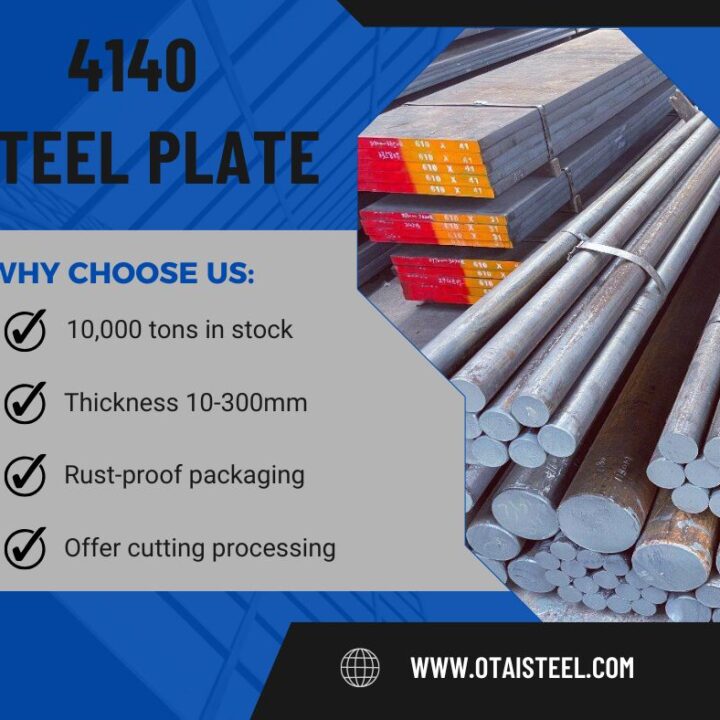
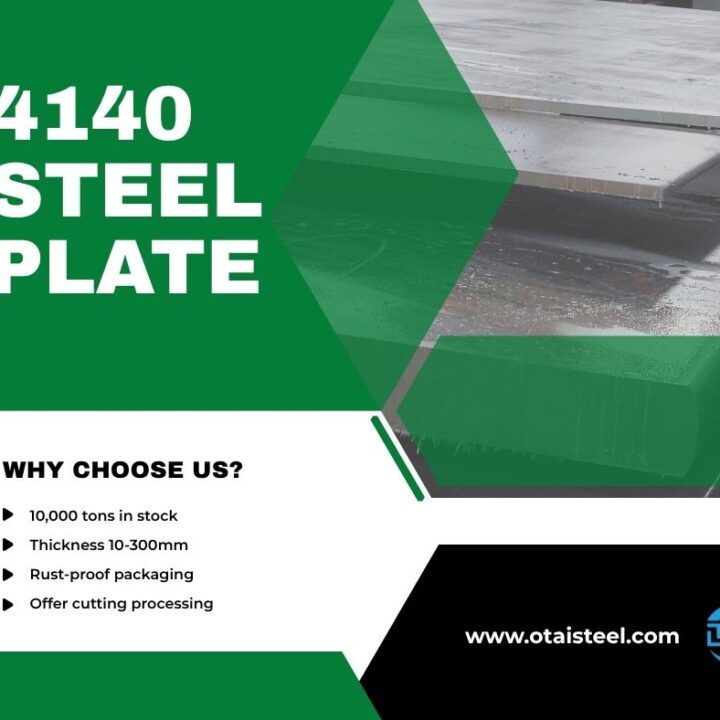
- 41Cr4 steel plate stock: Thickness range of 4–300 mm, subject to current inventory confirmation.
- Large stock capacity: More than 10,000 tons of steel stock across the company’s product range.
- Cutting capability: 20 saw cutting machines support customer-specific dimensions and cutting requirements.
- Machining services: CNC machining and grinding help customers source material closer to their required specifications.
- Custom dimensions and tolerances: Cutting and processing can be arranged according to project requirements.
- Quality assurance: Material testing, ultrasonic testing and third-party inspection support are available according to order requirements.
- Export experience: Supplying international customers in more than 54 countries since 1999.
- Packaging and delivery: Anti-rust protection, strapping, bundling and wooden-case packaging can be arranged for export shipments.
- One-stop service: Support for material selection, cutting, processing, inspection and shipment coordination.
OTAI supplies alloy steels and tool steels to international industrial customers. Buyers evaluating 41Cr4 for shafts, machine parts or other engineering applications can review the 41Cr4 / 1.7035 steel product information and contact the sales team with their required dimensions, quantity and delivery condition.
For an accurate quotation, provide the applicable standard, product dimensions, technical requirements and destination. The team can then check the available stock and discuss suitable cutting, inspection and packaging arrangements.
❓ Frequently Asked Questions
1. Is 41Cr4 stronger than C45?
Not in every delivery condition. Both grades can achieve useful strength through heat treatment. However, 41Cr4 generally offers better hardenability because it contains chromium. This advantage can help manufacturers obtain more consistent properties through larger cross-sections. Actual strength must be confirmed against the specified product condition and test requirements.
2. Is C45 equivalent to 41Cr4?
No. C45 is a non-alloy medium-carbon steel, while 41Cr4 is a chromium alloy steel. Their carbon ranges overlap, but their alloy compositions and hardenability differ. Therefore, buyers should not treat them as directly interchangeable grades without engineering approval.
3. Can C45 be quenched and tempered?
Yes. C45 can undergo quenching and tempering to improve strength and hardness. However, the achievable properties depend on section size, quenching conditions and heat-treatment control. Larger components may not develop the same through-hardening response as 41Cr4.
4. Which steel is better for shafts, 41Cr4 or C45?
C45 can be suitable for many general-purpose shafts, particularly when the section size and loading requirements are moderate. 41Cr4 is often a better candidate for more heavily loaded shafts or components that need greater hardenability and core strength. The final choice should follow the design requirements and heat-treatment validation.
5. Is C45 always cheaper than 41Cr4?
C45 often has a lower raw material cost because it does not contain the intentional chromium addition found in 41Cr4. However, the total cost also includes machining, heat treatment, inspection, material availability and service life. Buyers should compare complete supply specifications rather than relying only on the price per kilogram.