16MnCr5 Steel Producer vs Distributor: Which Supplier Is Right for Your Project?
📑 Table of Contents
- 🏭 Understanding the Difference Between a 16MnCr5 Producer and Distributor
- ⚙️ What Makes 16MnCr5 Suitable for Industrial Applications?
- 🔍 When Should You Buy Directly from a Steel Producer?
- 📦 When Is a 16MnCr5 Steel Distributor the Better Choice?
- 📏 Comparing Producers and Distributors: Key Purchasing Factors
- 📋 Technical Documents and Quality Control Before Purchase
- 🚢 Delivery, Processing, and International Supply
- 💰 How to Compare the Total Cost of 16MnCr5 Steel
- 🏢 Why Consider Otai for 16MnCr5 Steel Supply?
- ❓ Frequently Asked Questions
Choosing between a 16MnCr5 steel producer and a distributor affects more than the purchase price. It can influence minimum order quantities, available dimensions, material traceability, processing options, delivery schedules, and the amount of coordination required before production starts. A steel mill may offer direct access to its manufacturing process and production planning, while a specialist distributor may provide more flexible stock, cutting services, and support for smaller or time-sensitive orders.
For industrial buyers, the right choice depends on the actual project requirements. This article compares both supply channels from a procurement perspective and explains what to check before purchasing 16MnCr5 case-hardening steel.
🏭 1. Understanding the Difference Between a 16MnCr5 Producer and Distributor
When searching for a 16MnCr5 steel producer, buyers may encounter steel mills, manufacturers, stockholders, distributors, and international trading companies. These businesses can all participate in the supply chain, but they do not necessarily perform the same role.
What does a 16MnCr5 steel producer do?
A steel producer manufactures the material through steelmaking and subsequent processing. Depending on its facilities, the producer may control melting, casting, rolling, forging, heat treatment, and final inspection. Its production capabilities determine which dimensions, delivery conditions, and quality specifications it can supply.
Buying directly from a producer can be suitable when a project requires substantial tonnage, a consistent production specification, or a long-term supply agreement. Buyers may also work with the mill to discuss production schedules and technical requirements.
What does a 16MnCr5 steel distributor do?
A distributor purchases steel from mills or other qualified sources and supplies it to industrial customers. Instead of manufacturing the steel itself, the distributor focuses on inventory, material selection, cutting, machining coordination, inspection arrangements, packaging, and delivery.
A specialist distributor can be useful when a buyer needs available stock rather than a new production batch. It may also combine different dimensions or arrange processing before shipment.
| Supply channel | Main responsibility | Typical advantage |
|---|---|---|
| Steel producer | Manufacturing and production control | Direct production coordination |
| Steel distributor | Inventory and customer supply | Stock availability and order flexibility |
| Trading company | Sourcing and commercial coordination | Access to multiple supply sources |
These categories can overlap. Some distributors provide substantial processing services, while some producers sell through authorized distributors. Therefore, buyers should evaluate the actual capabilities of the company rather than rely on its business title alone.
⚙️ 2. What Makes 16MnCr5 Suitable for Industrial Applications?
Before comparing suppliers, buyers should understand the material they intend to purchase. 16MnCr5 is a case-hardening steel commonly specified under the EN 10084 standard. It combines a relatively low-carbon core with alloying elements that support hardenability and surface hardening after the appropriate heat-treatment process.
Case-hardening performance
The main purpose of 16MnCr5 is to produce components with a hard, wear-resistant surface and a tougher supporting core. During carburizing, carbon enters the surface layer. Subsequent hardening and tempering develop the required surface and core properties, provided the process matches the component design and material specification.
This combination makes the grade suitable for components that experience contact stress, friction, and repeated mechanical loading. However, final performance depends on more than the steel designation. Carburizing depth, quenching conditions, tempering, component geometry, and machining practice all influence the finished part.
Common industrial applications
Engineers and manufacturers may specify 16MnCr5 for gears, shafts, pinions, bushings, and other transmission or mechanical components. The grade is particularly relevant when the design requires a hardened surface and a comparatively tough core.
Buyers should confirm the exact application with their engineering team. A grade that works well for one gear design may not automatically suit another component with different loads, dimensions, fatigue requirements, or heat-treatment conditions.
Why supplier knowledge matters
A supplier should understand the difference between the steel’s delivery condition and its final heat-treated condition. For example, a buyer purchasing annealed material for machining should not assume that its delivery hardness represents the final surface hardness after carburizing and hardening.
Ask the supplier to confirm the grade, applicable standard, product form, delivery condition, and available inspection documents. These details help prevent specification misunderstandings between purchasing, machining, and heat-treatment teams.
For product information, see Otai’s 16MnCr5 case-hardening steel product page.
🔍 3. When Should You Buy Directly from a Steel Producer?
Direct purchasing from a steel producer can be a strong option when the project requires large quantities, controlled production specifications, or a long-term manufacturing arrangement. However, direct mill purchasing does not automatically provide the lowest total cost or the shortest lead time. Buyers need to compare the producer’s commercial terms with their actual project requirements.
Large-volume and recurring orders
When a factory consumes substantial quantities of 16MnCr5 on a regular basis, direct mill sourcing may help establish a stable supply arrangement. The buyer can discuss production planning, batch consistency, technical specifications, and future demand forecasts with the producer or its sales channel.
Recurring demand also makes it easier to plan production batches and manage inventory. However, buyers should check minimum order quantities, production lead times, payment terms, and the producer’s ability to maintain the required delivery schedule.
Special production requirements
Some projects require specific dimensions, controlled chemical composition within the applicable standard, particular delivery conditions, or additional inspection requirements. A producer may be better positioned to discuss manufacturing feasibility when the specification requires a new production arrangement.
For example, a buyer may need a large batch with a defined dimensional range and a documented inspection plan. Direct communication with the mill can help clarify which requirements can be controlled during production and which require additional processing or third-party services.
When direct mill purchasing may be less convenient
Direct purchasing can become less practical when the required quantity is small, the delivery schedule is urgent, or the buyer needs several different dimensions. A mill may prioritize production batches that meet its commercial minimums. Producing a new batch for a limited requirement can also increase lead time and create additional inventory for the buyer.
International buyers should also consider communication, export documentation, freight arrangements, and the time needed to coordinate inspection and shipment. A direct mill quotation is only one part of the procurement decision.
📦 4. When Is a 16MnCr5 Steel Distributor the Better Choice?
A specialist steel distributor can offer a more practical purchasing route when the buyer needs available material, flexible quantities, or additional services before delivery. For many machine shops, component manufacturers, and overseas buyers, the ability to source stock and arrange cutting can be more important than purchasing directly from the original steel mill.
When stock availability matters
If production is waiting for raw material, a distributor with suitable 16MnCr5 inventory may help reduce procurement delays. The buyer can check available dimensions, quantities, delivery conditions, and material documents before placing an order.
Stock purchasing is especially useful for maintenance requirements, trial production, prototype work, and projects with changing demand. Instead of waiting for a new production batch, the buyer may be able to purchase material that is already available.
When the required quantity is limited
Not every project needs a full mill production batch. A distributor may be able to supply a smaller quantity, subject to stock availability and its minimum order policy. This can reduce the need to purchase excess material that occupies warehouse space and ties up working capital.
However, buyers should not assume that every distributor accepts any quantity. Confirm the minimum order, available piece dimensions, cutting allowance, and whether the quoted quantity refers to gross or net weight.
When processing services are important
Some distributors offer more than material resale. They may arrange saw cutting, precision cutting, CNC machining, grinding, heat-treatment coordination, and export packaging. These services can simplify purchasing by reducing the number of suppliers that the buyer needs to manage.
For example, a manufacturer that needs several cut-to-size plates may prefer one supplier to coordinate material selection, cutting, inspection documents, and shipment. This approach can reduce communication steps, although buyers should still review the quality responsibility and acceptance criteria for each service.
Check the distributor’s sourcing and traceability
A distributor does not become the steel producer simply because it holds inventory or performs processing. Buyers should ask where the material comes from, whether the original mill documentation is available, and how the supplier maintains heat-number traceability after cutting or processing.
A reliable distributor should explain its role clearly and provide documents that support the material’s identity and specified quality.
📏 5. Comparing Producers and Distributors: Key Purchasing Factors
The best supplier is not necessarily the company with the largest factory or the biggest warehouse. Buyers should compare each option against the project’s required quantity, dimensions, technical specification, delivery schedule, and inspection needs.
| Purchasing factor | Steel producer | Steel distributor |
|---|---|---|
| Production control | Direct manufacturing control, depending on facilities | Relies on qualified upstream sources |
| Stock availability | Depends on finished inventory and production schedule | May offer ready stock in multiple dimensions |
| Minimum quantity | May require production-based minimums | May accept smaller stock orders |
| Custom processing | Depends on mill equipment and service scope | May coordinate cutting and machining services |
| Technical documentation | Can provide production and inspection records | Should provide and maintain relevant source documents |
| Lead time | Depends on production planning and mill schedule | May ship available stock sooner |
| Order flexibility | Often suited to planned production volumes | May offer more flexible stock quantities and dimensions |
Match the supplier to the project
Use the following purchasing logic as a starting point:
- Choose a producer or mill-direct channel when you need substantial volume, a planned production schedule, or close coordination of manufacturing specifications.
- Choose a distributor when you need available stock, smaller quantities, cut-to-size material, or coordinated export services.
- Compare both channels when the order has a high value, strict technical requirements, or a delivery schedule that cannot change.
Do not make the decision based only on the supplier’s advertised capacity. Ask for evidence of the specific capability that matters to your order. A large production facility may not have your required size available, while a distributor with the right stock may be able to meet the schedule more effectively.
📋 6. Technical Documents and Quality Control Before Purchase
Regardless of whether you buy from a producer or distributor, technical verification should remain part of the purchasing process. A company name, product description, or grade label cannot replace the material documents and inspection requirements written into the purchase order.
Confirm the applicable standard and grade
16MnCr5 is associated with EN 10084 case-hardening steel specifications. The purchase order should identify the required grade, standard and edition where relevant, product form, dimensions, delivery condition, and any additional technical requirements.
Do not treat similar grades from other national standards as automatically identical. If a supplier proposes an alternative, compare the applicable chemical composition limits, hardenability requirements, mechanical or heat-treatment requirements, product form, and intended application. Engineering approval should come before substitution.
Review chemical composition correctly
Chemical composition is an important part of grade verification, but buyers should understand three different types of data:
- Standard limits: The permitted composition ranges or limits specified by the applicable material standard.
- Typical analysis: Representative values published by a mill or supplier. These values are informative and do not replace standard limits.
- Actual heat analysis: The measured chemical composition for the specific steelmaking heat, normally recorded on the material test certificate.
When reviewing an offer, compare the actual MTC results with the applicable standard requirements. Do not reject or approve a material solely because its values differ from a typical analysis published in a product brochure.
Check the material test certificate
Ask whether the supplier can provide an EN 10204 3.1 inspection certificate or another document type required by your purchase specification. Confirm that the certificate identifies the grade, relevant standard, heat number, dimensions or product identification, and actual test results as applicable.
For cut material, ask how the supplier preserves the connection between each delivered piece and its original heat number. If the distributor cuts a large plate into smaller pieces, traceability should not disappear during processing.
Agree on additional inspection requirements
Some projects require ultrasonic testing, dimensional inspection, hardness testing, or third-party inspection. These requirements should appear in the inquiry or purchase order, including the applicable inspection standard, acceptance criteria, sampling method, and reporting format.
Do not assume that every 16MnCr5 plate automatically includes ultrasonic testing or third-party inspection. Confirm availability, scope, and cost with the supplier before order confirmation.
| Document or check | What buyers should verify |
|---|---|
| Material test certificate | Grade, standard, heat number, and actual test results |
| Chemical analysis | Actual heat results against the applicable standard |
| Dimensional inspection | Thickness, width, length, and agreed tolerances |
| Ultrasonic testing | Specified testing standard and acceptance level, if required |
| Traceability records | Connection between delivered pieces and original heat identification |
| Third-party inspection | Inspection scope, timing, acceptance criteria, and report |
🚢 7. Delivery, Processing, and International Supply
For overseas buyers, the procurement decision should include the full supply process, not just the material quotation. A supplier may offer an attractive steel price but provide limited support with cutting, packaging, export documents, or shipment coordination. These gaps can increase the workload for the purchasing team.
Confirm stock dimensions and cutting requirements
Before requesting a quotation, provide the required thickness, width, length, quantity, and dimensional tolerances. If the supplier offers stock plates, ask for the actual available dimensions rather than relying only on a general product range.
When you need cut pieces, specify the finished dimensions and whether the order requires cutting allowance. The supplier should clarify whether the quotation covers raw plate dimensions or finished cut sizes. This distinction helps prevent quantity and weight disputes.
Evaluate processing capability
Depending on the project, processing may include saw cutting, precision cutting, CNC machining, or grinding. Buyers should confirm which operations the supplier performs in-house and which it arranges through external partners.
For each service, agree on the drawing revision, dimensional tolerances, surface condition, inspection method, and responsibility for nonconforming work. If the material requires heat treatment after machining, coordinate the process sequence with the engineering and heat-treatment teams.
Review export packaging and shipping arrangements
Steel plates need suitable protection during storage and international transportation. Depending on the shipment, packaging may include anti-rust protection, strapping, protective wrapping, and wooden cases or pallets suitable for export handling.
Confirm the packaging method, gross and net weight, loading arrangement, shipping marks, and destination requirements. Buyers should also agree on the Incoterms rule, named place, shipment schedule, and required export documents before placing the order.
Ask for a realistic delivery schedule
For stock material, the lead time may depend on cutting, inspection, packing, and transport arrangements. For mill production, it may also include production planning, manufacturing, testing, and release of the finished material.
Request a schedule that separates material availability from processing and transit time. This makes it easier to coordinate incoming inspection and production planning at the receiving factory.
💰 8. How to Compare the Total Cost of 16MnCr5 Steel
The lowest quoted price per ton does not always represent the lowest procurement cost. Buyers should compare the complete cost of receiving material that meets the project’s technical and delivery requirements.
Consider the cost components
A useful comparison should include:
- Material price: The quoted price per ton or per piece, including the specified grade and delivery condition.
- Minimum order quantity: Whether the supplier requires a production-based or stock-based minimum.
- Cutting and processing: Saw cutting, precision cutting, machining, grinding, and other agreed services.
- Inspection: Additional testing, third-party inspection, and documentation charges.
- Packaging: Anti-rust protection, strapping, wooden cases, and export packing.
- Logistics: Inland transportation, port charges, freight, insurance, and destination handling, depending on the agreed trade terms.
- Inventory impact: Excess material, storage costs, and working capital tied up in unused stock.
Compare equivalent quotations
Make sure each supplier quotes against the same specification. If one quotation covers standard stock plate and another includes cut-to-size material with additional inspection, the prices are not directly comparable.
Ask each supplier to identify exclusions clearly. For example, a quotation may exclude cutting, export packaging, or third-party inspection. These items should be added before you compare the final landed cost.
Consider the cost of delays and material mismatch
A delayed shipment can interrupt production, while incorrect dimensions or incomplete traceability can create extra inspection and rework. These risks may outweigh a small difference in the original material price.
For a project with a fixed production schedule, a supplier with verified stock and a clear delivery plan may offer better overall value than a lower-priced option that requires a longer production cycle. The right decision depends on the cost of delay, the quantity required, and the consequences of a material failure.
🏢 9. Why Consider Otai for 16MnCr5 Steel Supply?
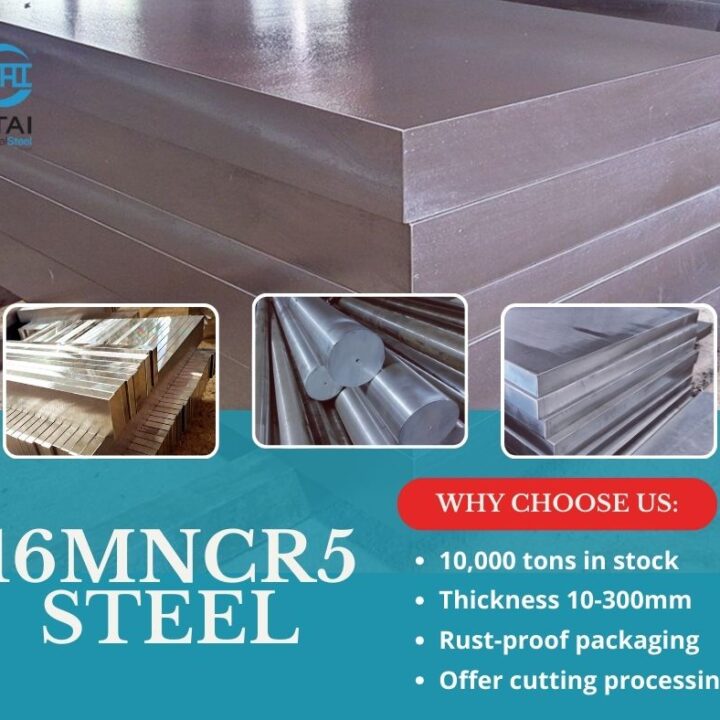
Otai Special Steel serves international buyers as a steel stock supplier and distributor, with a focus on alloy steels and tool steels. For buyers who need 16MnCr5 plate, stock availability, processing coordination, and export support are important points to evaluate.
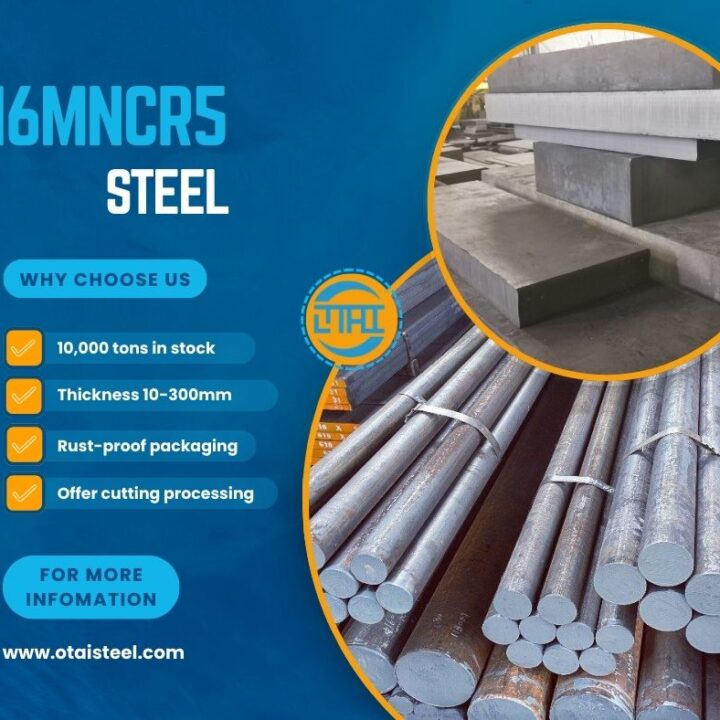
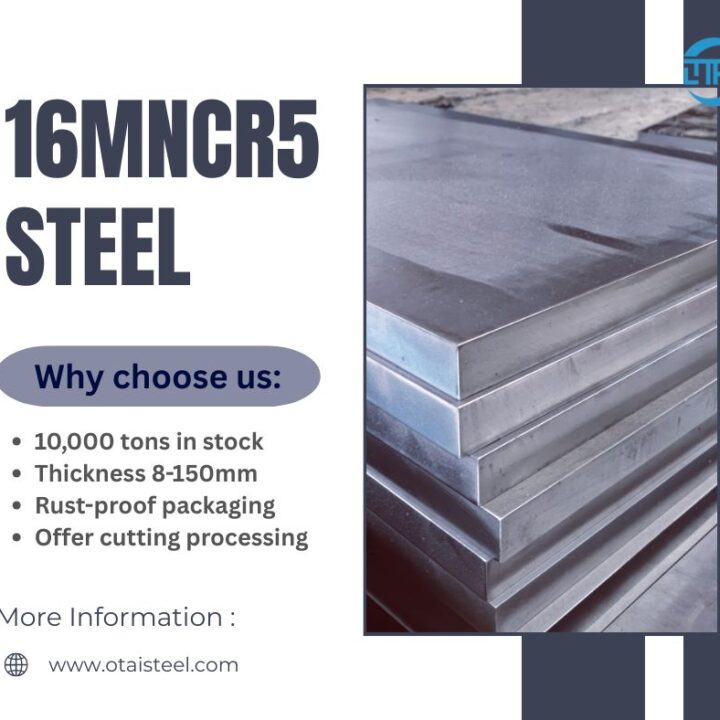
- 16MnCr5 steel plate stock: Thickness range of 8–150 mm, subject to current inventory confirmation.
- Large inventory resources: More than 10,000 tons of steel stock across the company’s product range.
- Cutting capability: 20 saw-cutting machines to support material cutting requirements.
- Processing services: CNC machining, grinding, and customized dimensions and tolerances, depending on the order.
- One-stop supply support: Material sourcing, cutting, processing coordination, inspection arrangements, and packaging.
- Quality documentation: Material certificates and traceability support, subject to the source material and agreed order requirements.
- Additional inspection: Ultrasonic testing and third-party inspection can be arranged when specified and agreed before purchase.
- Export experience: Supplying international customers in more than 54 countries since 1999.
- Export packaging: Anti-rust protection, strapping, and wooden packaging options according to shipment requirements.
Otai should be evaluated as a stock supplier and distributor rather than assumed to be the original steelmaking producer. Buyers who require mill-direct production should confirm the original manufacturing source and purchasing route. For customers who prioritize available stock, cut-to-size supply, and export coordination, a distributor may provide a more convenient purchasing arrangement.
Before ordering, send the required thickness, width, length, quantity, delivery condition, inspection requirements, and destination. This information allows the supplier to check current stock and prepare a quotation based on the actual project specification.
❓ 10. Frequently Asked Questions
1. Is it better to buy 16MnCr5 directly from a steel producer?
Direct purchasing can suit large-volume orders, recurring demand, and projects that require close coordination with the manufacturing process. However, it may involve production minimums and longer lead times. Buyers should compare the producer’s quotation, delivery schedule, and commercial terms with stock available through qualified distributors.
2. What is the difference between a 16MnCr5 manufacturer and a distributor?
A manufacturer or steel producer makes the steel through its production facilities. A distributor purchases material from mills or other sources and resells it to customers. Distributors may also provide stock management, cutting, machining coordination, inspection arrangements, and export services. Buyers should verify the company’s actual role and capabilities.
3. Can a steel distributor provide a 16MnCr5 material test certificate?
A distributor may provide the material test certificate supplied by the original producer or mill, provided the document is available and linked to the delivered material. Buyers should check the grade, standard, heat number, actual test results, and traceability after any cutting or processing.
4. What information should I provide when requesting a 16MnCr5 quotation?
Provide the required standard and grade, product form, thickness, width, length, quantity, delivery condition, dimensional tolerances, inspection requirements, packaging needs, and destination. If you need cut-to-size material, include the finished dimensions and any relevant drawings. Complete specifications help suppliers quote accurately and reduce misunderstandings.
5. What thickness range of 16MnCr5 plate does Otai supply?
Otai’s stated 16MnCr5 steel plate stock range is 8–150 mm in thickness. Actual availability can change with inventory and order requirements. Buyers should confirm the required dimensions, quantity, delivery condition, and documentation before placing an order.