16MnCr5 Steel Manufacturer: How to Choose the Right Supplier
📑 Table of Contents
- 🔍 What Buyers Should Expect from a 16MnCr5 Steel Manufacturer
- 🏭 Manufacturer, Stock Supplier, or Steel Distributor?
- 📏 Check 16MnCr5 Steel Plate Sizes and Availability
- 🧪 Verify Chemical Composition and Material Certification
- ⚙️ Evaluate Mechanical Properties and Case-Hardening Requirements
- ✂️ Compare Cutting, Machining, and Quality-Control Services
- 🚢 Assess Lead Time, Packaging, and Export Capability
- 💰 Compare Quotations Beyond the Steel Price
- 🏢 Why Consider Otai for 16MnCr5 Steel Supply?
- ❓ Frequently Asked Questions
Choosing a reliable 16MnCr5 steel manufacturer requires more than comparing prices. Industrial buyers need to verify the material specification, plate dimensions, chemical composition, case-hardening requirements, certification, and delivery arrangements before committing to an order. A supplier that understands these requirements can help reduce material rejection, production delays, and unnecessary processing costs.
16MnCr5 is a case-hardening alloy steel commonly selected for components that require a hard, wear-resistant surface and a tougher core after suitable heat treatment. However, not every supplier offers the same stock dimensions, processing services, documentation, or export support. Buyers should therefore evaluate both technical capability and purchasing reliability.
This article explains how to assess a 16MnCr5 steel manufacturer or stock supplier, what to include in a request for quotation, and how to compare offers based on the requirements of your actual application.
🔍 What Buyers Should Expect from a 16MnCr5 Steel Manufacturer
A dependable 16MnCr5 steel manufacturer or supplier should be able to identify the applicable material specification, explain the available delivery conditions, provide relevant material documents, and confirm whether the requested dimensions can be supplied. These details are especially important when the steel will enter a controlled manufacturing process or become part of a component with defined surface-hardness and core-strength requirements.
Before selecting a supplier, establish whether the company produces steel itself or sources material from qualified mills and maintains inventory for resale. Both business models can serve industrial buyers effectively. The important point is whether the supplier can demonstrate traceability, consistent quality control, and reliable fulfillment for the order in question.
Technical capability matters more than marketing claims
Look for clear answers to practical questions. Can the supplier confirm the exact grade and standard? Can it provide a mill test certificate for the supplied material? Does it offer the thickness and cutting tolerance you need? Can it arrange additional inspection if your quality system requires it?
A supplier should also explain any limitations before accepting the purchase order. For example, the requested thickness may be available, but the required delivery condition or inspection documentation may need separate confirmation. Transparent communication helps buyers avoid unexpected changes after production planning has started.
Build a supplier evaluation checklist
- Grade identification and applicable standard.
- Available plate dimensions and confirmed quantity.
- Material certification and heat-number traceability.
- Delivery condition and suitability for the intended heat treatment.
- Cutting, machining, and dimensional inspection capabilities.
- Realistic lead time, packaging, and shipping arrangements.
Use the same checklist for every shortlisted supplier. A consistent evaluation makes quotations easier to compare and helps purchasing teams justify their final decision to engineering and quality departments.
🏭 Manufacturer, Stock Supplier, or Steel Distributor?
The term “16MnCr5 steel manufacturer” is often used by buyers searching for a company that can supply the grade directly. However, the company appearing in search results may be a steel mill, a stockholding supplier, a distributor, or an exporter that sources material from partner mills.
These roles are different, but one is not automatically better for every order. A steel mill may suit buyers seeking large production quantities under a mill-specific specification. A stock supplier may be more convenient when the buyer needs smaller quantities, particular plate thicknesses, cut-to-size blanks, or shorter lead times.
| Supply model | Potential advantages | What to verify |
|---|---|---|
| Steel mill | Direct production information and mill-specific documentation | Minimum order quantity, production schedule, and available product forms |
| Stockholding supplier | Potentially faster access to available stock and flexible cutting quantities | Actual stock, material origin, traceability, and certification |
| Steel distributor or exporter | Sourcing coordination, export documentation, and shipment support | Supply-chain transparency, quality responsibility, and delivery terms |
How to choose the right supply model
Start with the order rather than the supplier’s label. If you need a large volume with a specific production specification, ask whether direct mill production is necessary. If your project requires several plate thicknesses or cut blanks, a stock supplier with suitable processing equipment may provide a more practical solution.
For international purchasing, also assess whether the supplier can coordinate documentation, protective packaging, customs-related paperwork, and freight arrangements. A reliable exporter should clearly identify what is included in the quotation and which responsibilities remain with the buyer.
Regardless of the supply model, request the material documents and confirm that the supplied product meets your purchase specification. Never treat the words “manufacturer,” “mill direct,” or “factory price” as proof of material quality.
📏 Check 16MnCr5 Steel Plate Sizes and Availability
Dimension availability can influence both purchasing cost and production efficiency. A buyer who orders an unsuitable plate size may create unnecessary cutting waste, additional machining time, or delays while waiting for replacement material. Confirming dimensions at the quotation stage helps prevent these problems.
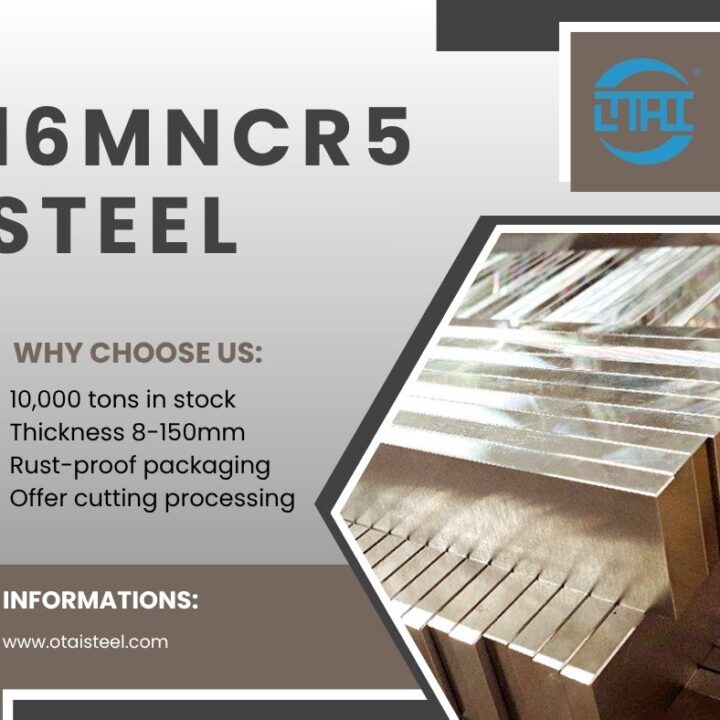
For Otai’s stated 16MnCr5 steel plate range, the thickness range is 8–150 mm. This range provides a starting point for enquiries, but it does not guarantee that every thickness, width, length, quantity, or delivery condition is available for immediate shipment. Confirm current inventory and the required specification before placing an order.
Provide a complete dimension request
When contacting a 16MnCr5 steel manufacturer or supplier, specify the following information:
- Thickness: The required nominal thickness and any permitted tolerance.
- Width and length: Standard plate dimensions or the dimensions of each finished blank.
- Quantity: Total weight, number of plates, or number of cut pieces.
- Cutting requirements: Saw-cut dimensions, machining allowance, and acceptable dimensional variation.
- Delivery condition: The condition required by the applicable specification or manufacturing route.
- Inspection requirements: Any specified dimensional checks, ultrasonic testing, or third-party inspection.
Stock size versus finished size
Buyers should distinguish between the dimensions of the original plate and those of the finished blank. If a component needs extensive machining, ordering a suitable oversize blank may be appropriate. If the supplier offers precision cutting, it may be possible to reduce material waste and handling at the buyer’s facility.
However, cutting tolerance is not the same as the final machining tolerance. State clearly whether the dimensions refer to the as-cut blank or the finished component. The supplier can then confirm whether the requested tolerance is achievable through its available processing route.
Before approving a quotation, request written confirmation of the dimensions, quantity, condition, and expected delivery date. This simple step helps align purchasing, production, and quality teams.
🧪 Verify Chemical Composition and Material Certification
Chemical composition is a central part of 16MnCr5 material verification. As a case-hardening steel, the grade is designed for applications in which a suitable heat-treatment process produces a hardened surface while retaining appropriate core properties. Its chemistry must meet the applicable specification, but a grade name alone does not prove that a supplied heat complies.
When reviewing supplier information, distinguish between standard composition limits, a mill’s typical analysis, and the actual chemistry reported for the supplied heat. These are three different types of information and should not be used interchangeably.
| Document or data type | Purpose | Buyer action |
|---|---|---|
| Applicable standard | Defines the grade requirements and permitted limits | Confirm the standard and edition required by the drawing or purchase order |
| Typical analysis | Illustrates a producer’s representative chemistry | Use as background information, not as proof of a specific heat’s compliance |
| Mill test certificate (MTC) | Records material-specific results and traceability information | Check the actual results against the required specification |
What should buyers check on the MTC?
Review the grade designation, applicable standard, heat or batch number, chemical analysis, delivery condition, and reported test results. Confirm that the material identification on the certificate corresponds to the physical material supplied. If your order requires a specific certificate type or independent inspection, state that requirement before the supplier issues its quotation.
Do not assume that a supplier’s online chemistry table represents every batch it sells. Actual results may vary within the permitted limits, and acceptance depends on the specified standard and any additional requirements in the purchase order.
Confirm traceability before processing
Traceability becomes particularly important when the steel will be cut into multiple blanks. Agree on how the supplier will preserve or transfer material identification during cutting and how the cut pieces will be linked to the relevant certificate.
If the application requires additional testing, clarify the test method, acceptance criteria, inspection stage, and reporting format. These details should be agreed before production or shipment rather than negotiated after the material arrives.
⚙️ Evaluate Mechanical Properties and Case-Hardening Requirements
16MnCr5 is commonly used for case-hardened components. The process aims to develop a hard, wear-resistant surface while maintaining suitable core properties for the component’s service conditions. Typical applications include selected gears, shafts, pinions, and other mechanical parts where surface durability and core toughness are important.
Nevertheless, the final properties depend on the component design, steel chemistry, section size, heat-treatment process, and specified acceptance criteria. A supplier’s generic hardness value should not be treated as a guarantee of the final properties of a finished component.
Match the steel supply to the planned process
Before requesting a quotation, clarify whether the material will be supplied in an annealed, normalized, or other specified condition. Then identify the intended manufacturing sequence, including machining and subsequent case hardening. The starting condition affects machinability and can influence how the material fits into the production route.
For components with strict performance requirements, coordinate the material specification with the heat-treatment provider. The parties should agree on the required surface hardness, effective case depth where applicable, core properties, test method, and acceptance criteria. These requirements should come from the component design and applicable technical specification rather than a general supplier description.
Questions to ask before ordering
- Does the supplied grade and condition meet the component drawing?
- Are there specific requirements for hardenability, cleanliness, or material testing?
- Who will perform the case-hardening process?
- Which party is responsible for testing and documenting the final component properties?
- Are machining allowances and dimensional changes during heat treatment accounted for?
A clear division of responsibility helps avoid disputes if a finished component fails to achieve the required hardness or case depth. The steel supplier can verify the material supplied, while the heat-treatment provider and component manufacturer must address the processing requirements assigned to them.
Buyers should also avoid selecting 16MnCr5 solely because it is a familiar grade. If the design requires a different combination of core strength, wear resistance, corrosion resistance, or manufacturing characteristics, engineering should review the material choice before procurement proceeds.
✂️ Compare Cutting, Machining, and Quality-Control Services
For many industrial orders, material processing is just as important as the steel itself. A supplier that can cut plate to the requested blank dimensions may help reduce waste, handling, and the workload at the buyer’s facility. CNC machining or grinding may also be useful when the project requires additional preparation before the next production stage.
However, processing capabilities vary by supplier. Buyers should verify the available equipment, achievable tolerances, material-handling procedures, and inspection scope instead of assuming that every service is included in the base steel price.
Confirm the scope of cutting and machining
Provide a dimensioned drawing or cutting list when possible. Identify the required blank dimensions, tolerances, surface condition, and machining allowance. Ask the supplier to confirm whether it can meet the requirements and whether the quotation covers cutting, machining, deburring, inspection, and packaging.
If you only need rough blanks, precision machining may add unnecessary cost. Conversely, if the blanks must fit directly into a controlled production process, a clearly specified cutting tolerance may be essential. Choose the service level that matches the actual manufacturing requirement.
Decide which inspections are necessary
Inspection should reflect the risks and requirements of the application. Basic dimensional verification and material documentation may be sufficient for some orders. Other projects may require additional tests, such as ultrasonic testing or third-party inspection, when specified by the customer or agreed in the purchase order.
For any additional test, confirm the inspection standard, acceptance criteria, sampling plan, timing, and reporting format. The quotation should state whether the service is included or charged separately. This makes supplier offers easier to compare and reduces the risk of missing a mandatory inspection step.
Preserve identification after cutting
When a plate becomes several smaller pieces, ensure the material identification and certificate traceability remain clear. Agree on marking or documentation procedures before cutting begins. This is especially useful when different heats or grades are processed within the same facility.
A supplier that combines appropriate processing with clear traceability can simplify incoming inspection and reduce administrative work for the buyer.
🚢 Assess Lead Time, Packaging, and Export Capability
International steel purchasing involves more than confirming that the material is available. Buyers must also consider production or cutting lead time, export packaging, shipping arrangements, documentation, and the delivery terms stated in the contract.
A supplier may list 16MnCr5 as an available product but still need time to prepare the requested thickness, cut the plates, complete inspection, or arrange transport. Ask for a realistic delivery schedule based on the exact order instead of relying on a general statement about stock availability.
Confirm delivery dates and order milestones
Request an estimated schedule covering material allocation, cutting or processing, inspection, packing, and dispatch. If your production plan depends on a fixed arrival date, explain that requirement when requesting the quotation. The supplier can then identify any constraints before the purchase order is released.
For urgent orders, clarify whether the required dimensions and condition are available now or need additional processing. Also ask how the supplier will communicate delays or changes that could affect the agreed schedule.
Choose packaging for the shipping route
Steel plates intended for export may need anti-rust protection, secure strapping, protective separators, or wooden packaging, depending on the dimensions, transport method, and destination requirements. The packaging specification should protect the material during handling and transit while allowing efficient unloading at the receiving facility.
Confirm the package dimensions, gross weight, marking, and any destination-specific packaging requirements. If wooden packaging is used for international shipment, clarify the applicable treatment and documentation requirements for the destination and shipping route.
Review the commercial terms
Check the delivery term, shipping responsibilities, insurance arrangements where applicable, payment terms, and documents supplied with the shipment. Make sure the quotation identifies whether freight, export packing, inspection, and other services are included.
Reliable export coordination helps reduce avoidable delays, but the buyer should still verify the contractual responsibilities of each party. Written terms provide a clearer basis for resolving delivery or documentation issues if they arise.
💰 Compare Quotations Beyond the Steel Price
When two suppliers quote 16MnCr5 at different prices, the cheapest offer may not deliver the lowest total cost. The quotations may cover different dimensions, delivery conditions, cutting services, testing requirements, or packaging arrangements. A fair comparison begins by aligning the specifications.
| Cost factor | What to compare | Why it matters |
|---|---|---|
| Steel price | Grade, specification, dimensions, quantity, and condition | Ensures the offers cover comparable material |
| Cutting and machining | Included services, tolerances, and allowances | Reveals extra processing costs |
| Certification and testing | MTC, traceability, additional inspection, and reporting | Helps prevent compliance gaps |
| Packaging and freight | Packing method, delivery term, freight, and insurance responsibilities | Clarifies the delivered cost |
| Lead time | Stock status, processing schedule, and dispatch date | Reduces the risk of production delays |
Use a consistent request for quotation
Send every shortlisted supplier the same grade designation, standard, dimensions, quantity, delivery condition, inspection requirements, and delivery destination. Ask each company to identify deviations clearly. If a supplier proposes a different grade, condition, or certificate, evaluate that offer separately rather than comparing it directly with a fully compliant quotation.
Consider the cost of material rejection
Incorrect material can create expenses well beyond the original purchase price. Potential costs include reinspection, return freight, replacement stock, production interruption, and wasted machining. These risks are particularly significant when the material has already been cut or incorporated into a production batch.
To reduce this exposure, confirm the specification and acceptance requirements before placing the order. Request the agreed documents, retain traceability records, and establish a clear process for handling nonconforming material.
The most useful supplier comparison considers total delivered cost, technical compliance, processing needs, and supply reliability together. This approach helps purchasing teams avoid selecting a quotation that appears inexpensive but creates additional costs later.
🏢 Why Consider Otai for 16MnCr5 Steel Supply?
When sourcing 16MnCr5 steel plate, buyers need a supplier that can discuss dimensions, processing, documentation, and export requirements before confirming the order. Otai Special Steel supports international steel procurement with stockholding and processing capabilities designed for industrial customers.
Review the official Otai 16MnCr5 case-hardening steel product page for product information. For a specific project, provide the required standard, plate dimensions, quantity, delivery condition, and inspection requirements so the team can confirm the applicable supply options.
Company advantages
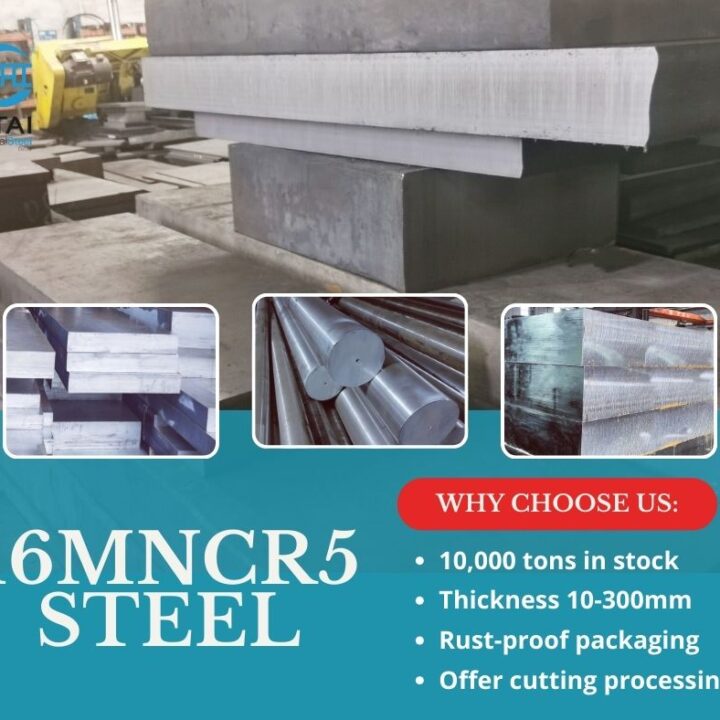
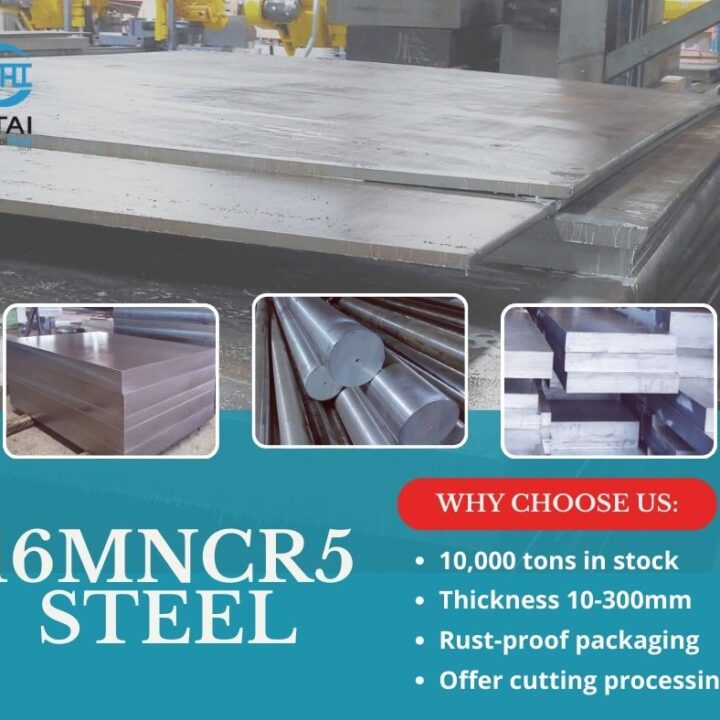
- 16MnCr5 steel plate thickness range: 8–150 mm. Confirm the current stock, quantity, dimensions, delivery condition, and lead time for your specific order.
- 10,000+ tons of steel inventory: A broad stockholding base supports enquiries across the company’s product range; availability of each grade and size must be confirmed separately.
- 20 saw-cutting machines: Cutting services can help prepare steel to dimensions suited to the buyer’s manufacturing requirements.
- CNC machining and grinding: Processing options support custom dimensions and agreed tolerances, subject to technical review.
- One-stop service: Material sourcing, cutting, machining coordination, packaging, and export support can be arranged according to order requirements.
- International supply experience: Otai has exported steel to more than 54 countries since 1999.
- Material documentation: Material certificates and traceability records can be provided according to the agreed specification and supply arrangement.
- Inspection support: Ultrasonic testing and third-party inspection can be discussed when required and agreed for the order.
- Export packaging: Anti-rust protection, strapping, bundling, and wooden packaging options can be coordinated according to shipping needs.
- Procurement-focused support: Buyers can submit drawings, specifications, and cutting lists for review before confirming the quotation.
For an accurate quotation, send the grade, required standard, plate thickness, width, length, quantity, delivery condition, and destination. Include any required certificate, inspection, or cutting tolerance. These details help the supplier assess the request and clarify the scope before the purchase order is finalized.
❓ Frequently Asked Questions
1. What should I look for in a 16MnCr5 steel manufacturer?
Check the supplier’s ability to meet the applicable material specification, provide traceable material documentation, confirm actual dimensions and availability, and support the required delivery condition. Also assess cutting services, inspection options, lead time, packaging, and export experience where relevant.
2. What is the available 16MnCr5 steel plate thickness range from Otai?
Otai’s stated 16MnCr5 steel plate thickness range is 8–150 mm. This is a reference range, not a guarantee that every size and quantity is immediately available. Confirm current inventory, delivery condition, and lead time for the required dimensions.
3. Is a steel manufacturer always better than a distributor?
Not necessarily. A mill may suit large production orders, while a stockholding supplier or distributor may offer flexible quantities, available inventory, cutting, and export coordination. Compare the actual specification, certification, services, lead time, and total delivered cost rather than relying on the company label alone.
4. What documents should I request when buying 16MnCr5 steel?
Request the material test certificate and verify the grade, applicable standard, heat or batch identification, chemical analysis, and relevant test results. Specify any additional inspection or certificate requirements in the purchase order and confirm that material markings remain traceable after cutting.
5. Can I order 16MnCr5 steel plate cut to size?
Cut-to-size supply may be possible depending on the required dimensions, tolerances, quantity, and supplier’s processing capability. Send a cutting list or drawing and clarify whether the dimensions refer to rough blanks or finished parts. Confirm cutting tolerance, machining allowance, inspection, and additional charges before approving the quotation.