42CrMo4 vs EN19: Are These Alloy Steel Grades Interchangeable?
📑 Table of Contents
- 🔍 42CrMo4 vs EN19: The Main Difference
- 🧪 Chemical Composition Comparison
- ⚙️ Mechanical Properties and Hardness
- 🔥 Heat Treatment and Delivery Condition
- 🏭 Applications and Material Selection
- 📋 How to Verify Grade Equivalence
- 💰 Procurement Risks and Cost Considerations
- 🤝 Why Work with an Alloy Steel Supplier?
- 🏢 Company Advantages
- ❓ Frequently Asked Questions
When comparing 42CrMo4 vs EN19, industrial buyers often want to know whether they can substitute one grade for the other without affecting component performance, quality approval, or delivery cost. Both are chromium-molybdenum alloy steels used for demanding mechanical applications, and technical references frequently list them as equivalent or closely related grades.
However, a familiar grade comparison does not automatically establish full compliance. The applicable standard, its edition, the product form, chemical composition, heat-treatment condition, and required mechanical properties all affect whether a substitution is acceptable. This distinction matters when purchasing alloy steel plate, machined blanks, or other components for production.
This article compares the two designations from a practical procurement perspective. It explains where they overlap, which technical details require verification, and how buyers can reduce the risk of receiving material that does not meet a drawing or purchase specification.
🔍 42CrMo4 vs EN19: The Main Difference
42CrMo4 and EN19 belong to the chromium-molybdenum alloy steel family. Both can provide a useful combination of strength, toughness, hardenability, and fatigue resistance when manufacturers select the appropriate material condition and heat treatment. Their shared alloy system explains why suppliers and engineering references often cross-reference them.
The names nevertheless come from different designation systems. 42CrMo4 is a European steel grade associated with material number 1.7225 and the EN 10083 series for steels used in quenched-and-tempered applications. EN19 is a historical British designation associated with BS 970. Later British specifications use designations such as 709M40 or related variants, depending on the standard edition and grade definition.
That historical distinction is important. An older drawing may specify EN19 without identifying the edition of BS 970. A modern quotation may instead list 42CrMo4, 1.7225, or another cross-reference. These names may indicate materials with broadly similar characteristics, but the buyer still needs to establish which chemical and mechanical requirements apply.
| Comparison point | 42CrMo4 | EN19 |
|---|---|---|
| Designation system | European EN designation | Historical British designation |
| Common reference | 1.7225 | 709M40 in later British designation systems; verify the specific grade |
| Alloy family | Chromium-molybdenum steel | Chromium-molybdenum steel |
| Typical engineering use | Strength-critical mechanical parts | Strength-critical mechanical parts |
| Automatic interchangeability | Not guaranteed by the grade name alone | Not guaranteed by the grade name alone |
What does equivalence mean in practice?
Equivalence means that two grades may be suitable alternatives for a defined application when they satisfy the same relevant requirements. It does not mean that every heat produced under one specification automatically complies with the other. A component drawing, customer-approved material list, or governing standard may impose limits that a general equivalence chart does not show.
Buyer takeaway: Treat EN19 as a potential alternative to 42CrMo4, not as an unconditional replacement. Confirm the applicable specifications before requesting a quotation or approving a material substitution.
🧪 Chemical Composition Comparison
Chemical composition is one of the first checks when comparing 42CrMo4 vs EN19. Both grades use chromium and molybdenum to improve hardenability and support strength after suitable heat treatment. Carbon contributes to hardness and strength, while manganese and silicon influence deoxidation and other metallurgical characteristics.
Although their composition ranges overlap, published limits can differ according to the EN19 designation, the edition of the British standard, and the 42CrMo4 specification being applied. In particular, manganese, molybdenum, chromium, phosphorus, and sulfur limits should not be assumed to match across every version.
| Element | Typical reference for 42CrMo4 | Typical reference for EN19 / 709M40 |
|---|---|---|
| Carbon (C) | About 0.38–0.45% | Often about 0.36–0.44% for 709M40; legacy EN19 references may differ |
| Silicon (Si) | Commonly up to 0.40% | Often about 0.10–0.35% |
| Manganese (Mn) | Commonly 0.60–0.90% | Often about 0.70–1.00% for 709M40 |
| Chromium (Cr) | Commonly 0.90–1.20% | Often about 0.90–1.20% for 709M40; some legacy EN19 references allow a wider range |
| Molybdenum (Mo) | Commonly 0.15–0.30% | Often about 0.25–0.35% for 709M40 |
| Phosphorus (P) and sulfur (S) | Limits specified by the applicable standard and product requirements | Limits can differ between historical and later specifications |
Important: These are representative published reference ranges, not a universal chemistry specification for every material sold as EN19 or 42CrMo4. The exact standard, edition, product form, and supplementary requirements govern acceptance. Use the relevant standard and the mill test certificate (MTC) for a purchasing decision.
Why phosphorus and sulfur deserve attention
Buyers sometimes focus on carbon, chromium, and molybdenum because these elements strongly influence hardenability and mechanical performance. However, phosphorus and sulfur limits can also determine whether a heat complies with a specified material standard. If a drawing requires a strict maximum, a material that meets the main alloying-element ranges may still fail the acceptance criteria.
Three types of chemistry data are not interchangeable
- Standard composition limits: The permitted ranges or maximum values defined by the specified standard.
- Typical analysis: An illustrative chemistry reported by a producer or supplier. It does not establish the limits for every mill or heat.
- Actual MTC chemistry: The reported chemical analysis for the supplied heat or batch, assessed against the required specification.
When comparing supplier quotations, ask for the actual MTC chemistry and the standard under which the material will be certified. If the application has tight composition limits, request written confirmation that the proposed grade satisfies every applicable requirement.
⚙️ Mechanical Properties and Hardness
Both 42CrMo4 and EN19 can support high-load mechanical components when the manufacturer chooses the correct delivery condition, heat treatment, and section size. Their chromium-molybdenum alloy systems provide hardenability, while quenching and tempering can produce a combination of strength and toughness suited to many engineering applications.
Nevertheless, the grade designation alone does not define the mechanical properties of the material arriving at your facility. The values depend on the governing specification, specimen location, product dimensions, heat-treatment condition, and any additional testing requirements.
| Property | What the buyer should verify |
|---|---|
| Tensile strength | Required minimum and maximum, test condition, and applicable size range |
| Yield strength | Specified yield or proof-strength requirement for the actual product dimensions |
| Hardness | Required scale, range, test method, and delivery condition |
| Elongation | Minimum value and specimen requirements |
| Impact properties | Test temperature, minimum absorbed energy, and whether testing is mandatory |
| Hardenability | Section size, required through-hardening performance, and heat-treatment process |
Why section size matters
A thick plate or large component cools differently from a small test specimen during quenching. That difference can affect the hardness and strength achieved through the cross-section. Therefore, a supplier should not use a mechanical-property figure from a small specimen as an unconditional guarantee for a much larger part.
The same issue applies when comparing EN19 and 42CrMo4. Even when their chemical compositions are close, different heat-treatment practices or product dimensions may lead to different actual results. Buyers should compare certified properties for the supplied dimensions rather than relying on a generic online table.
Do not compare hardness without checking the condition
Annealed, normalized, and quenched-and-tempered material can show substantially different hardness values. If one quotation covers annealed stock and another covers quenched-and-tempered material, their prices and machinability may differ even when both suppliers describe the product using a familiar grade name.
Procurement rule: Write the required hardness or mechanical-property range, test method, and delivery condition into the purchase specification. Ask the supplier to identify any deviation before approving the material.
🔥 Heat Treatment and Delivery Condition
Heat treatment has a major influence on the performance of both grades. Depending on the component design, a manufacturer may select annealed material for easier machining, normalized material for a particular processing route, or quenched-and-tempered material when the component needs a defined balance of strength and toughness.
Even if the grade names appear equivalent, the delivered conditions may not match. One supplier might quote material in an annealed condition, while another quotes pre-hardened or quenched-and-tempered stock. These products are not automatically interchangeable for machining, forming, or final assembly.
Match the condition to the manufacturing route
- Annealed: May support easier machining, depending on the specified hardness and material size.
- Normalized: Can provide a different starting microstructure and mechanical-property profile from annealed material.
- Quenched and tempered: Provides a specified combination of strength, hardness, and toughness when processed to the applicable requirements.
- Further heat-treated: Induction hardening, nitriding, or other surface treatments may be required for particular wear or fatigue demands. Their suitability depends on the component design and process specification.
What should appear in the purchase order?
Specify the required delivery condition directly instead of relying on the grade name alone. Include the target hardness or mechanical properties, dimensional tolerances, testing requirements, and whether the supplier must provide the material ready for machining or for further heat treatment.
Where the component is safety-critical or operates under cyclic loading, confirm that the proposed material and heat-treatment route meet the engineering specification. A substitute should not be approved solely because its nominal alloy composition is similar.
Also consider machining allowances and distortion. Heat treatment can affect dimensional stability, so the supplier and machining team should agree on whether the final dimensions apply before or after heat treatment. This step helps prevent unexpected rework and scrap.
🏭 Applications and Material Selection
42CrMo4 and EN19 are used in engineering applications that need more strength and hardenability than many plain-carbon steels can provide. The most suitable grade depends on the design loads, component geometry, manufacturing process, final properties, and applicable industry requirements.
| Application | Material-selection priority | Key verification |
|---|---|---|
| Shafts and axles | Strength, fatigue resistance, and toughness | Mechanical properties and heat-treatment condition |
| Gears and transmission parts | Core strength and required surface performance | Hardening route, hardness, and dimensional stability |
| Hydraulic components | Strength, integrity, and machining accuracy | Material condition, tolerances, and inspection requirements |
| High-load mechanical parts | Strength and resistance to service loads | Design specification, test results, and traceability |
| Machined industrial blanks | Machinability, stock dimensions, and material consistency | Starting hardness, cutting allowance, and final condition |
When 42CrMo4 may be the more practical choice
42CrMo4 can be the practical choice when the engineering documentation already specifies the European designation and the supplier can provide the required certification. Its material number, 1.7225, also helps buyers identify the intended grade in drawings and purchasing records. However, the buyer must still confirm the applicable standard and product requirements.
When EN19 may be appropriate
EN19 may be appropriate when the original drawing, customer specification, or established manufacturing process uses the British designation. If the procurement team wants to buy 42CrMo4 instead, it should submit the proposed substitution for approval and compare the relevant requirements. This is particularly important when an older drawing does not identify the standard edition.
How to avoid a specification mismatch
Start with the component’s technical requirements rather than choosing the grade with the lowest quoted price. Check the load case, required properties, section size, machining route, and any customer-specific restrictions. Then compare the available material against those requirements.
For plate purchases, buyers should also verify thickness, width, length, flatness, cutting allowance, and any ultrasonic or third-party inspection requirements. Similar grade names do not guarantee identical dimensional availability or inspection scope.
📋 How to Verify Grade Equivalence
A reliable 42CrMo4 vs EN19 comparison uses documents and measurable acceptance criteria. A generic equivalent-grade chart is useful for screening possible alternatives, but it cannot replace the governing standard or the approval process required by the buyer’s quality system.
Step 1: Identify the exact grade designation
Check whether the drawing specifies EN19, a later British designation such as 709M40, or 42CrMo4 / 1.7225. Record the standard number and edition wherever available. If the drawing only states EN19, ask the engineering team or customer to clarify the intended specification before authorizing a substitution.
Step 2: Compare the required chemistry
Use the relevant standard limits as the comparison baseline. Check carbon, manganese, silicon, chromium, molybdenum, phosphorus, and sulfur, along with any supplementary requirements. Do not compare a standard range for one grade with a supplier’s typical analysis for the other and treat the result as proof of compliance.
Step 3: Review the MTC
Request the material test certificate for the actual supplied heat or batch. Check the stated grade, standard, heat number, chemical analysis, mechanical properties, heat-treatment condition, and any additional inspection results. Ensure the material identification on the certificate matches the markings and traceability documents supplied with the shipment.
Step 4: Confirm the mechanical requirements
Compare the required tensile strength, yield or proof strength, elongation, hardness, and impact properties where specified. Confirm that the values apply to the relevant product form and dimensions. If the material will undergo additional heat treatment, agree on the expected final properties and who is responsible for achieving them.
Step 5: Obtain approval before substitution
When a drawing or customer specification names one grade, ask the responsible engineer or customer to approve the alternative in writing. This record should identify the accepted grade, applicable standard, required condition, and any additional acceptance criteria.
- Do not approve a substitute based only on a supplier’s verbal assurance.
- Do not assume that matching hardness proves matching chemical compliance.
- Do not accept an MTC that lacks the information required by the purchase specification.
- Keep the approval and certificate with the purchase and inspection records.
This workflow helps prevent disputes after delivery and reduces the chance of discovering a material mismatch only after machining or assembly.
💰 Procurement Risks and Cost Considerations
When comparing quotations for EN19 and 42CrMo4, the lowest unit price may not represent the lowest total purchasing cost. Differences in delivery condition, available dimensions, certification, machining allowance, inspection, and lead time can change the final cost of a component.
Compare like-for-like quotations
Ask each supplier to quote against the same specification. State the grade and standard, plate dimensions, quantity, delivery condition, dimensional tolerances, required documents, inspection level, packaging, and destination. If you are open to a substitute, request a separate quotation that clearly identifies the alternative rather than allowing the supplier to change the grade without notice.
| Cost factor | Question for the supplier |
|---|---|
| Material price | Does the quote cover the specified grade and standard? |
| Delivery condition | Is the material annealed, normalized, or quenched and tempered? |
| Cutting and machining | Are cut-to-size dimensions, machining allowances, and tolerances included? |
| Certification and testing | Are MTCs, ultrasonic testing, or third-party inspections included or charged separately? |
| Delivery and packaging | What are the lead time, export packaging method, and freight terms? |
| Substitution risk | Will the supplier obtain written approval before changing the specified grade? |
Consider the cost of a rejected batch
A material that fails the specification can create additional expenses beyond the original purchase price. These may include return freight, reinspection, production delays, replacement material, remachining, and administrative work. The impact can be greater when the steel has already been cut or machined into a custom component.
For that reason, buyers should confirm documentation and acceptance criteria before production begins. If an alternative grade is commercially attractive, calculate the potential savings only after engineering approval and quality requirements are clear.
Use supplier questions to close the gaps
Before issuing a purchase order, ask the supplier to confirm the exact grade designation, standard and edition, actual product dimensions, delivery condition, certificate type, testing scope, and expected delivery date. Also clarify whether the supplier can provide cut-to-size material and export packaging that suits your receiving process.
A supplier who answers these questions clearly can help reduce procurement uncertainty, even when the final decision is to retain the original grade rather than substitute it.
🤝 Why Work with an Alloy Steel Supplier?
For international buyers, sourcing 42CrMo4 or an approved EN19 alternative involves more than locating a similar grade. The supplier needs to understand the material specification, confirm the available dimensions and condition, provide the required documentation, and coordinate cutting, inspection, and shipping.
A capable supplier should be able to explain the distinction between grade equivalence and specification compliance. If the customer needs 42CrMo4 under a specific standard, the quotation and material documents should identify that requirement clearly. If EN19 is proposed as an alternative, the supplier should disclose the substitution and allow the buyer to obtain approval before shipment.
Check stock and processing capability
Stock availability matters when production schedules are tight. Ask whether the required thickness and quantity are available for immediate supply or require replenishment. Confirm the actual delivery condition rather than assuming that all stock in a grade is supplied in the same state.
Cutting and machining services can also help buyers reduce handling and material waste. For plate purchases, provide the finished blank dimensions, required tolerances, machining allowance, and any surface or inspection requirements. A supplier can then quote the material and processing scope more accurately.
Use verified product information
For product-specific information, review Otai’s official pages for 42CrMo4 steel and EN19 steel. Use these pages as starting points for a quotation, then confirm the exact standard, dimensions, condition, and documentation required for your order.
The best purchasing decision is the one that meets the engineering specification, fits the production schedule, and provides clear traceability from the supplied material to the finished component.
🏢 Company Advantages
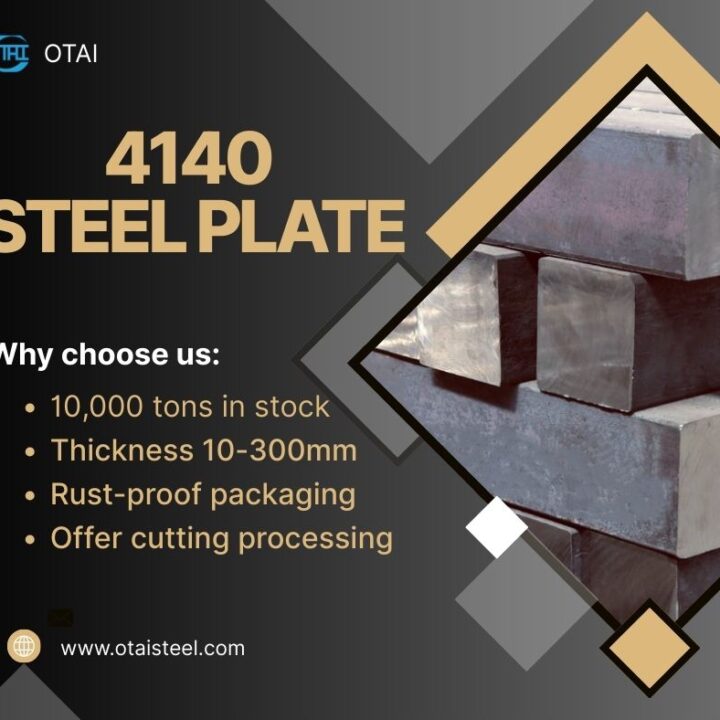
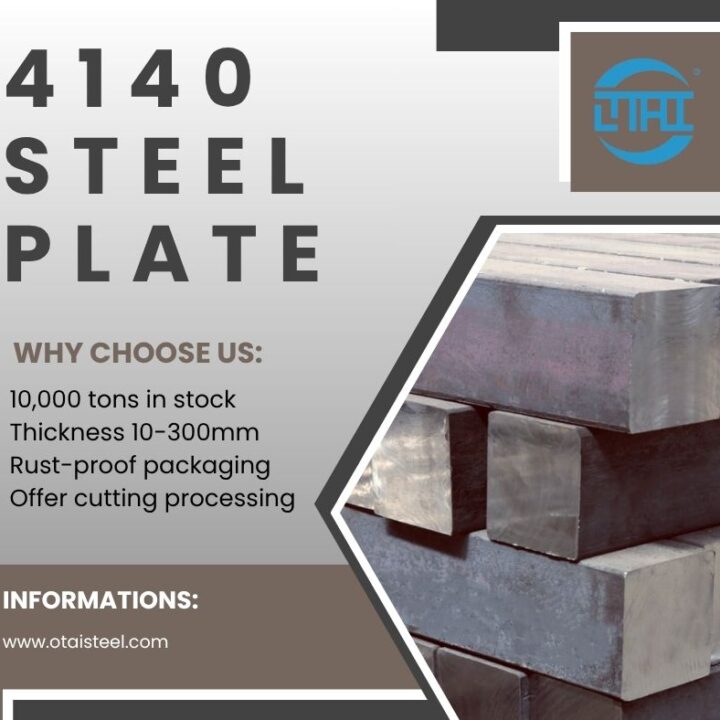
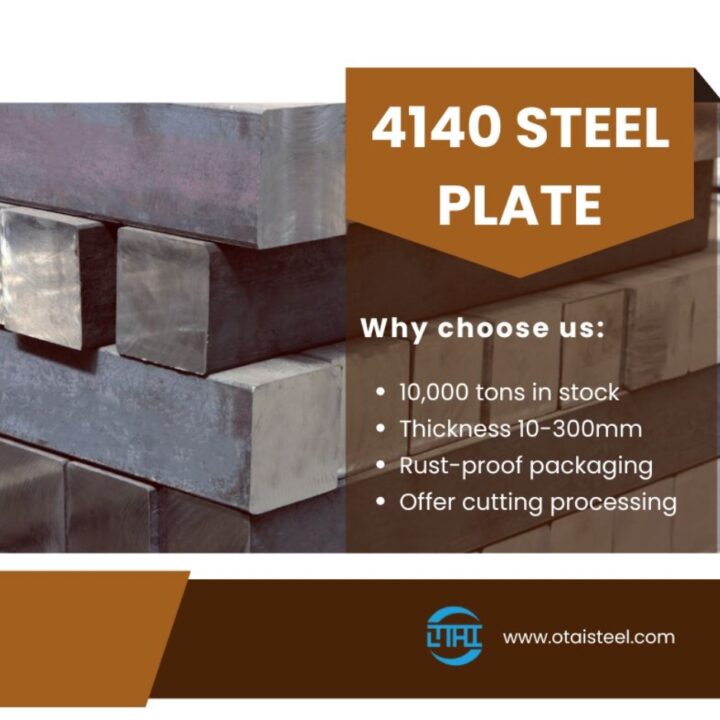
- 42CrMo4 steel plate thickness range: 4–380 mm. Confirm the required dimensions, quantity, delivery condition, and current availability before placing an order.
- 10,000+ tons of steel inventory: Stock availability depends on the grade, size, condition, and current warehouse allocation.
- 20 saw-cutting machines: Cutting services help buyers source material in dimensions suited to their production requirements.
- CNC machining and grinding: Processing options support custom dimensions and specified tolerances, subject to technical review.
- One-stop service: Material sourcing, cutting, machining coordination, packaging, and export support can simplify procurement.
- Export experience since 1999: Otai has supplied customers in more than 54 countries, supporting international steel procurement and shipment coordination.
- Quality documentation: Material certificates and traceability documents can be arranged according to the agreed supply requirements.
- Additional inspection support: Ultrasonic testing and third-party inspection can be discussed when required and agreed for the order.
- Export packaging: Anti-rust protection, strapping, bundling, and wooden packaging options can be coordinated according to shipment needs.
- Technical purchasing support: Buyers can provide drawings, standards, dimensions, and required properties so the team can clarify material and processing requirements before quotation.
❓ Frequently Asked Questions
1. Are 42CrMo4 and EN19 the same steel?
They are closely related chromium-molybdenum alloy steel designations and are often listed as equivalent grades. However, their governing standards and composition limits may differ. Confirm the precise EN19 designation, standard edition, product form, and acceptance requirements before treating them as interchangeable.
2. Can I replace EN19 with 42CrMo4?
Possibly, if 42CrMo4 meets the drawing, customer specification, chemical limits, mechanical properties, and delivery-condition requirements. Obtain engineering or customer approval when the original specification names EN19 and does not explicitly permit alternatives.
3. Is the chemical composition of 42CrMo4 identical to EN19?
No. Their composition ranges can overlap, but they are not necessarily identical. Published values for legacy EN19 and later British designations such as 709M40 may also differ. Use the applicable standards and the supplied heat’s MTC rather than relying on a general cross-reference chart.
4. Do 42CrMo4 and EN19 have the same hardness?
Not automatically. Hardness depends on the delivery condition, heat-treatment process, product dimensions, and specified acceptance range. Compare hardness values only when the test method and material condition are appropriate for both products.
5. What should buyers check before ordering 42CrMo4 or EN19?
Confirm the grade and standard, chemical composition limits, required mechanical properties, delivery condition, dimensions, tolerances, certificate requirements, and any additional inspection. If the proposed material differs from the drawing designation, obtain written approval before the supplier ships it.