4130 Steel Price: What Determines the Cost of 4130 Alloy Steel?
📑 Table of Contents
- 💰 1. Why 4130 Steel Price Varies Between Suppliers
- 📊 2. What Is the Current 4130 Steel Price?
- 📏 3. How Size, Thickness and Product Form Affect Price
- 🏭 4. Stock Material vs Custom Production
- 🔥 5. Heat Treatment and Processing Costs
- 📋 6. Specifications, Certification and Inspection Costs
- 🚢 7. Quantity, Cutting and Delivery: The Hidden Parts of a Quote
- 🧾 8. How Buyers Should Compare 4130 Steel Quotes
- 🏭 9. Otai 4130 Steel Stock and Supply Support
- ❓ FAQ About 4130 Steel Price
💰 1. Why 4130 Steel Price Varies Between Suppliers
There is no single worldwide price for 4130 alloy steel. Two suppliers can quote different prices for material that carries the same 4130 designation because the actual purchasing requirements may differ.
For an industrial buyer, the steel grade represents only one part of the quotation. The supplier also needs to consider the product form, dimensions, quantity, delivery condition, processing, inspection requirements and shipping destination.
4130 is a chromium-molybdenum alloy steel commonly selected when a project needs a useful combination of strength, toughness, weldability and heat-treatment response. ASTM reference data for 4130 show approximately 0.28–0.33% carbon, 0.80–1.10% chromium and 0.15–0.25% molybdenum. :contentReference[oaicite:1]{index=1}
Why the same grade can receive different quotes
Consider two hypothetical RFQs:
- Buyer A needs standard 4130 plate in a commonly available thickness and a relatively large quantity.
- Buyer B needs a small quantity of a non-standard thickness, cut into individual pieces, with additional inspection and export packaging.
Both buyers request 4130, but their final prices can differ substantially. Buyer A may receive a stock-based quotation, while Buyer B may pay for additional processing and lower material utilization.
Therefore, the useful question is not simply “What is the price of 4130 steel?” A better purchasing question is: “What factors are included in this 4130 quotation, and are suppliers quoting the same specification?”
Price should follow the technical specification
Before comparing suppliers, confirm the grade and standard first. ASTM A29/A29M provides general requirements for many hot-wrought and cold-finished carbon and alloy steel bars, including chemical and mechanical requirements that apply according to the individual material specification. :contentReference[oaicite:2]{index=2}
For plate, sheet or other product forms, the applicable specification may differ. Buyers should therefore avoid comparing two quotations simply because both suppliers write “4130 steel” on the offer.
For product information and supply details, see Otai’s 4130 steel product page.
📊 2. What Is the Current 4130 Steel Price?
Buyers often search for 4130 steel price per kg, per pound or per ton because these units make supplier quotations easier to compare. However, a public price benchmark should never replace a project-specific quotation.
Public market benchmarks
Recent public pricing data for 4130 hot-rolled round bar show approximately $1.78–$2.53 per lb across listed dimensions. Another Q1 2026 machining-industry reference places typical mid-quantity 4130 Chromoly material around $1.50–$3.00 per lb. These figures provide market context rather than a fixed international selling price. :contentReference[oaicite:3]{index=3}
In metric terms, $1.50–$3.00/lb corresponds to roughly $3.31–$6.61/kg before considering the differences between product forms, supplier margins, processing, freight, duties and project-specific requirements.
That conversion helps buyers establish a rough benchmark, but it does not mean that a 4130 plate quotation should automatically fall inside that range.
| Price Unit | Useful For | Buyer Caution |
|---|---|---|
| $/kg | International material comparison | Check whether processing and freight are included |
| $/lb | US material pricing | Confirm whether the figure represents stock or retail material |
| $/ton | Large-volume purchasing | Confirm metric ton or short ton |
| $/piece | Cut-to-size purchasing | Compare dimensions, cutting and material utilization |
Why one online price cannot represent every 4130 product
A thin 4130 sheet, a thick alloy steel plate and a large forged component do not follow the same cost structure. Their production routes, material utilization and processing requirements can differ significantly.
Retail suppliers can also quote small quantities at a much higher effective price than a distributor supplying several tons. Cut-to-size material adds another variable because the supplier must account for saw time, setup and offcut material.
For that reason, buyers should use online prices as a reference point and request a quotation based on the exact material specification.
📏 3. How Size, Thickness and Product Form Affect Price
Dimensions often have a direct effect on the final 4130 steel price. A supplier may have a competitive price for one thickness while charging more for another thickness that requires special sourcing or production.
Thickness
Thickness affects the production route, stock availability and weight of each piece. Common thicknesses may come directly from inventory, while unusual sizes can require additional production or processing.
For buyers, this creates an important distinction between material price and available-stock price. A supplier with suitable stock can sometimes offer a better total cost than a producer that needs to manufacture the material specifically for the order.
Width and length
Width and length also affect material utilization. If the customer requires several small pieces from a large plate, the supplier can calculate a cutting plan and determine how efficiently the plate can satisfy the order.
A quotation based only on theoretical weight may therefore differ from a quotation based on actual cut pieces.
Product form
4130 steel can appear in different product forms, including plate, sheet, bar, tube and other forms depending on the supplier and applicable specification. Each form has its own production and processing cost.
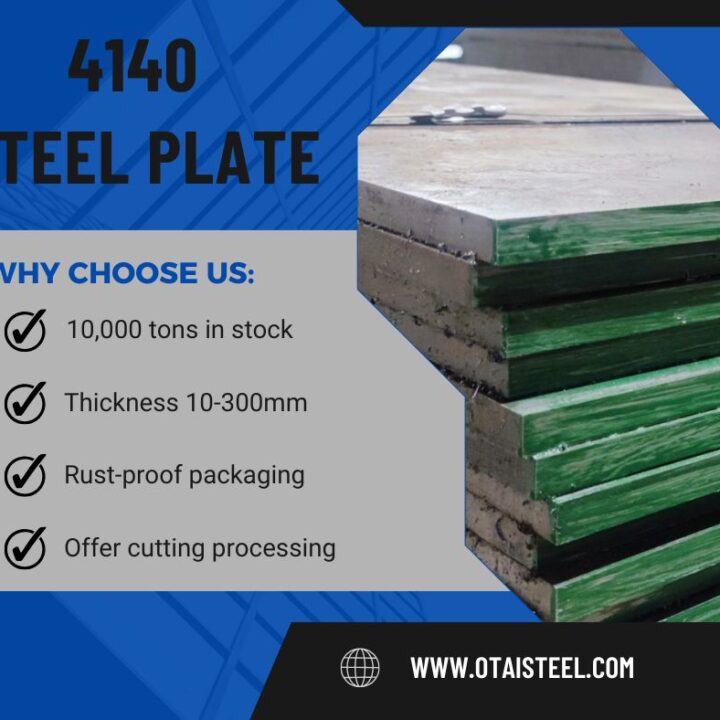
For the current Otai inventory relevant to this article, 4130 steel plate is available in 10–70 mm thickness. Buyers should confirm the exact width, length and quantity when requesting a current quotation.
| Specification Factor | Potential Price Effect | What Buyers Should Ask |
|---|---|---|
| Thickness | Can affect production and stock availability | Do you have the required thickness in stock? |
| Width | Can affect plate utilization | What standard plate size can supply my pieces? |
| Length | Affects cutting and handling | Is the quoted length standard or cut-to-size? |
| Product form | Different forms have different production costs | Are all suppliers quoting the same product form? |
Why buyers should provide exact dimensions
A request such as “Please quote 2 tons of 4130 steel” leaves too many variables open. A stronger RFQ would state the grade, standard, plate thickness, width, length, quantity, condition and inspection requirements.
This approach allows suppliers to check real inventory and calculate the most appropriate cutting method before issuing the quotation.
🏭 4. Stock Material vs Custom Production
Stock availability can have a major effect on the price and lead time of 4130 steel. When a supplier already holds suitable material, the buyer may avoid some production costs and reduce delivery time.
Why stock can lower the total purchasing cost
Stock material allows a supplier to respond to an order without starting a new production cycle. The buyer may only need cutting, inspection, packing and shipment.
This structure often works well for customers who need moderate quantities or specific cut pieces.
Custom production follows a different cost structure. The supplier may need to purchase raw material, arrange melting or rolling, schedule heat treatment, perform testing and reserve production capacity.
Minimum order quantity matters
Small orders can carry a higher unit price because fixed costs spread across fewer kilograms. Large orders usually allow better cost allocation, although the final price still depends on market conditions and specifications.
Buyers should therefore compare quotations at the same quantity. A $/kg price for 100 kg cannot automatically serve as a benchmark for a 10-ton industrial order.
Stock does not always mean the cheapest option
A stockist may hold a suitable size, but the stock could require additional cutting or surface processing. Another supplier may offer a lower base material price but require a longer production lead time.
The correct comparison should therefore consider material cost + processing + inspection + packaging + freight + lead time.
For procurement teams, the lowest material unit price does not always produce the lowest delivered cost.
🔥 5. Heat Treatment and Processing Costs
Heat treatment can significantly affect the final 4130 steel price. Buyers should identify the required delivery condition before comparing supplier quotations.
Annealed material
Annealed 4130 can provide a useful condition for machining and subsequent customer-controlled heat treatment. If the supplier quotes annealed stock directly from inventory, the buyer may avoid paying for a more advanced finished condition.
Quenched and tempered material
Quenched-and-tempered 4130 requires additional thermal processing and property verification. The supplier may need to control heating, soaking, quenching and tempering parameters before testing the final material.
The final price therefore reflects more than the raw alloy content.
Cutting and machining
Cutting also affects the quotation. Saw cutting a large plate into standard pieces usually costs less than producing numerous small pieces with tight dimensional tolerances.
Additional CNC machining or grinding can increase the final cost further. However, such processing can reduce the customer’s own machining workload and material waste.
| Processing | Possible Cost Impact | When It Makes Sense |
|---|---|---|
| Annealing | Adds heat-treatment cost | When machining or forming needs a softer condition |
| Quenching & tempering | Higher processing and testing cost | When the project requires defined mechanical properties |
| Saw cutting | Depends on piece count and dimensions | When customers need finished cut sizes |
| CNC / grinding | Adds processing cost | When tighter size or surface requirements apply |
When comparing suppliers, ask whether the quoted 4130 steel price includes the requested heat-treatment and processing condition. This simple question can prevent major differences between apparently similar quotations.
📋 6. Specifications, Certification and Inspection Costs
Technical documentation can also influence the final price. A basic material quotation and a fully documented industrial shipment do not necessarily carry the same cost.
Material Test Certificate
An MTC provides heat-level information such as chemical analysis and, where applicable, mechanical test results. For projects with traceability requirements, buyers should request the MTC as part of the quotation.
ASTM general requirements recognize heat and product analysis for applicable alloy steel products, reinforcing the importance of chemistry verification in material purchasing. :contentReference[oaicite:4]{index=4}
Ultrasonic testing
Some applications require additional internal-quality inspection. Ultrasonic testing can add cost because the supplier must arrange the inspection and provide the required report.
If UT is mandatory, state the applicable acceptance level in the RFQ. Simply writing “UT required” may not give the supplier enough information to calculate the correct quotation.
Third-party inspection
Third-party inspection can provide additional assurance for critical projects. The inspection company may review dimensions, marking, documentation, mechanical properties and other agreed requirements.
The buyer should clarify whether the inspection fee, inspector travel and testing charges appear separately or within the material quotation.
Certification can change the effective price
Two suppliers may quote the same 4130 grade at different prices because one quotation includes more documentation and inspection.
Therefore, buyers should compare quotations on an equal technical basis. A cheaper quote may simply exclude requirements that another supplier has already included.
🚢 7. Quantity, Cutting and Delivery: The Hidden Parts of a Quote
The material unit price does not represent the complete purchasing cost. Quantity, cutting, packaging and delivery can all change the final landed cost.
Order quantity
Large-volume purchasing usually gives suppliers more room to optimize production, stock allocation and logistics. Small quantities can carry higher unit costs because cutting, handling and documentation require fixed labor and equipment time.
When comparing supplier prices, use the same quantity and delivery condition for each quotation.
Cutting yield
Suppose a buyer needs ten pieces of a specific plate size. The supplier must determine how many parent plates can produce those pieces and how much material will remain as offcut.
Better material utilization can reduce the effective cost per finished piece. This explains why a cut-to-size quotation can differ from a simple price-per-kilogram calculation.
Packaging
International shipments require suitable packaging to protect steel during handling and ocean or air transport. Steel strapping, wooden cases and anti-rust protection can add cost, but they also reduce the risk of damage and corrosion during transit.
Freight and destination
Shipping costs depend on weight, volume, destination, transportation mode and current freight conditions. Import duties, local handling and customs charges can also affect the final landed cost.
| Cost Component | Typical Influence | Buyer Check |
|---|---|---|
| Material | Main steel cost | Compare the same grade and standard |
| Cutting | Depends on size and piece count | Ask for cut-piece pricing if required |
| Heat treatment | Depends on required condition | Confirm annealed, QT or other condition |
| Inspection | Depends on testing scope | Specify MTC, UT or third-party requirements |
| Packaging | Depends on shipment requirements | Confirm export packaging |
| Freight | Depends on destination and weight | Compare the same Incoterm |
For international procurement, comparing quotations under the same Incoterm can make the cost comparison much more meaningful.
🧾 8. How Buyers Should Compare 4130 Steel Quotes
The best way to compare 4130 steel prices is to place supplier quotations on the same technical and commercial basis.
Step 1: Compare the same grade and standard
Make sure every supplier quotes the same 4130 specification. Do not compare a general 4130 quotation with a quotation that includes a specific ASTM requirement, special chemistry or additional certification.
Step 2: Compare the same dimensions
State the exact thickness, width and length. For cut pieces, provide the finished dimensions and required quantity.
Step 3: Compare the same delivery condition
Annealed and quenched-and-tempered material can have different costs. The same principle applies to normalized, stress-relieved or specially processed material.
Step 4: Compare the same inspection package
If one supplier includes MTC, UT and third-party inspection while another provides only a basic certificate, their prices do not represent the same purchasing package.
Step 5: Compare delivered cost
Finally, add cutting, packaging, freight and other applicable charges. The supplier offering the lowest material price may not provide the lowest total delivered cost.
| Quotation Check | Question to Ask |
|---|---|
| Grade | Are all suppliers quoting the same 4130 specification? |
| Dimensions | Are thickness, width, length and tolerances identical? |
| Condition | Are all suppliers quoting the same heat-treatment condition? |
| Inspection | Does each quotation include the same MTC and testing requirements? |
| Cutting | Does the price include cut-to-size service? |
| Shipping | Are freight and Incoterms comparable? |
| Lead time | Does the quoted price reflect stock or new production? |
Price is only one part of supplier selection
For industrial applications, buyers should also consider material traceability, technical support, stock availability and the supplier’s ability to process the material correctly.
A slightly higher quotation may deliver better value if it includes the required certification, accurate cutting, shorter lead time and reliable export packaging.
🏭 9. Otai 4130 Steel Stock and Supply Support
For buyers looking for 4130 steel from an international supplier, Otai focuses on stock availability, customized cutting and supporting services rather than quoting material weight alone.
- Current 4130 steel plate stock: 10–70 mm thickness according to current inventory information.
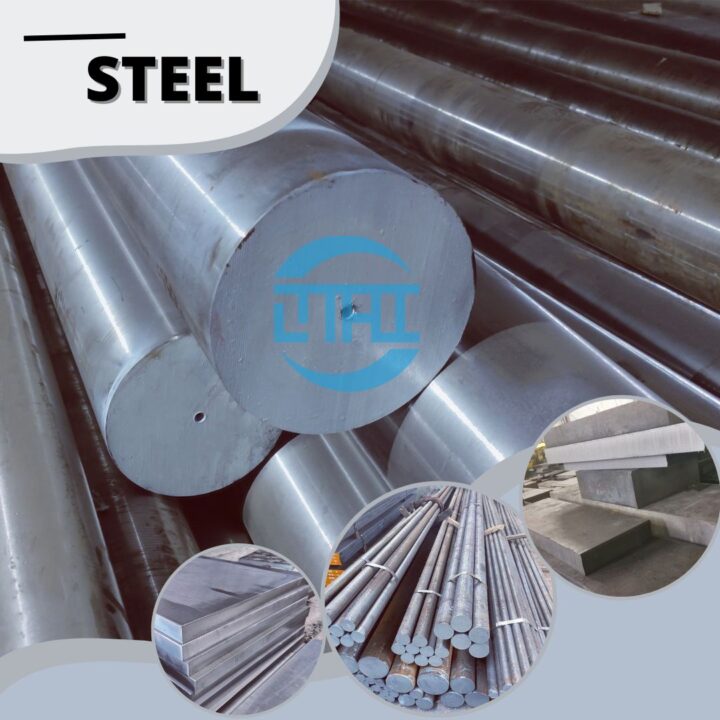
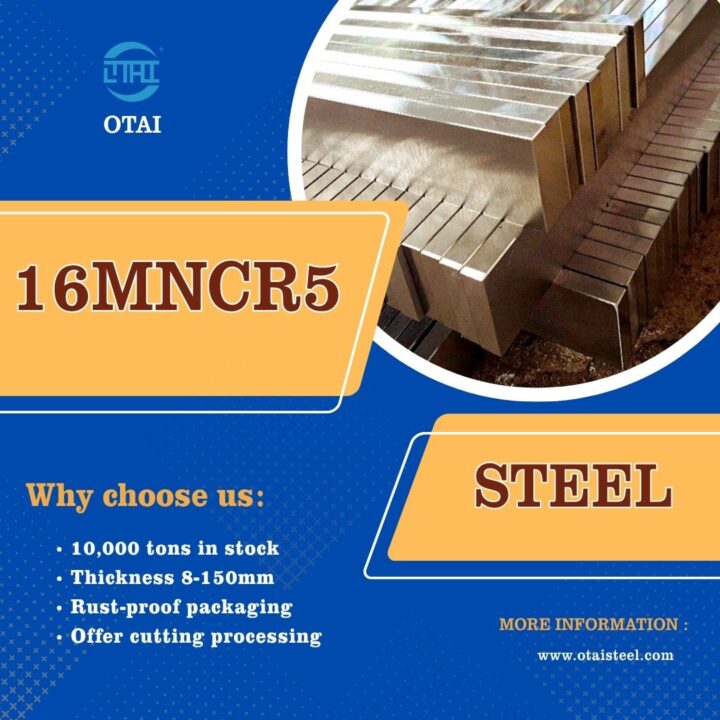
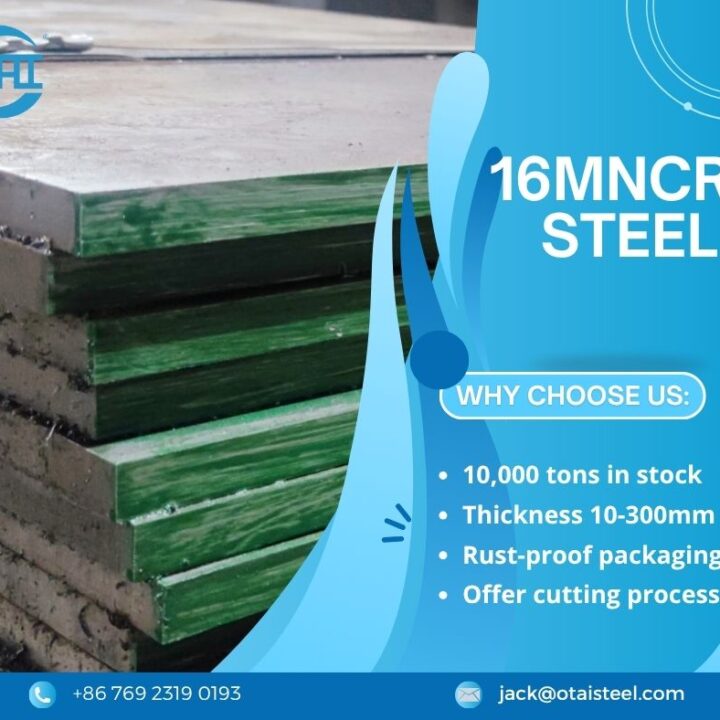
- 10,000+ tons of steel stock across Otai’s alloy steel and tool steel supply range.
- 20 saw cutting machines for customer-specific cutting requirements.
- Custom size and tolerance support for industrial purchasing projects.
- CNC and grinding services when customers require additional processing.
- Quality inspection support, including ultrasonic testing and third-party inspection coordination.
- Export experience since 1999 with customers in more than 54 countries.
- Export packaging including steel strapping, wooden cases and anti-rust protection.
- One-stop supply service from material sourcing and cutting through processing and shipment coordination.
The current 4130 stock range should not be confused with older supply-size ranges that may appear on a product page. For a live quotation, buyers should provide the required thickness, width, length, quantity and delivery condition so the supplier can check current availability.
When requesting a 4130 quotation from Otai, include the applicable standard, product form, dimensions, quantity, heat-treatment condition, inspection requirements and destination. This gives the sales and technical teams enough information to calculate a more meaningful total cost.
For customers who need cut-to-size plate, provide the finished dimensions at the quotation stage. Otai can then evaluate the cutting plan and discuss material utilization, processing requirements and shipment preparation.
❓ FAQ About 4130 Steel Price
1. What is the current price of 4130 steel?
Public market references currently show 4130 material prices in a broad range rather than one fixed value. Recent data list 4130 hot-rolled round bar around $1.78–$2.53 per lb, while another Q1 2026 industry reference places typical mid-quantity 4130 Chromoly material around $1.50–$3.00 per lb. These figures provide market context only; an actual supplier quotation depends on the specification, size, quantity, processing and delivery requirements.
2. What affects 4130 steel price the most?
The main factors include raw material market conditions, product form, thickness, dimensions, order quantity, stock availability, heat treatment, cutting, machining, inspection, certification, packaging and freight. For industrial orders, the delivered cost matters more than the basic material price per kilogram.
3. Is 4130 steel expensive compared with 4140?
The relative price depends on the product form, market conditions, dimensions and supplier. 4130 and 4140 also serve different engineering requirements, so buyers should not choose between them on price alone. Compare the required strength, weldability, heat treatment, specification and total purchasing cost.
4. Does buying 4130 steel from stock reduce the price?
It can. Stock material can reduce production lead time and avoid some custom-production costs. However, cutting, inspection, packaging and freight still affect the final quotation. The buyer should compare the complete delivered cost rather than only the stock material price.
5. What 4130 steel plate thickness does Otai currently stock?
Otai currently has 4130 steel plate in 10–70 mm thickness according to the current inventory information. Exact width, length, quantity, condition and availability should be confirmed for each quotation.