 16MnCr5 Grade – Specifications, Properties, and Applications
The 16MnCr5 grade is one of the most widely used low-carbon alloy steels in the engineering and automotive sectors. Known for its excellent case hardening properties, high fatigue strength, and balanced toughness, engineers use this grade to manufacture gears, shafts, pinions, and other high-stress mechanical components. Understanding its specifications, chemical composition, and mechanical properties helps engineers, buyers, and heat treatment specialists select the right material for demanding applications.
🔍 Standard Definition of 16MnCr5 Grade
The 16MnCr5 grade follows DIN / EN standards as a chromium-manganese low-carbon steel. Its designation ensures consistent properties across international suppliers, simplifying material selection and procurement.
| Standard | Grade | Steel Number |
|---|---|---|
| DIN / EN | 16MnCr5 | 1.7131 |
| GB (China) | 16CrMnH | — |
| JIS (Japan) | SCM420 | — |
| AISI / SAE (USA) | 5115 | — |
| AFNOR (France) | 16MC5 | — |
| BS (UK) | 817M40 | — |
Engineers primarily use this grade in carburizing and case hardening applications because it develops a hard surface while maintaining a tough core.
🧪 Chemical Composition of 16MnCr5 Grade
The chemical composition of the 16MnCr5 grade provides excellent hardenability, wear resistance, and core toughness.
| Element | Content (%) |
|---|---|
| Carbon (C) | 0.14 – 0.19 |
| Silicon (Si) | 0.17 – 0.37 |
| Manganese (Mn) | 1.00 – 1.30 |
| Chromium (Cr) | 0.80 – 1.10 |
| Phosphorus (P) | ≤ 0.025 |
| Sulfur (S) | ≤ 0.035 |
Chromium increases hardenability and surface wear resistance, while manganese enhances toughness and fatigue strength.
📊 Mechanical Properties
The 16MnCr5 grade delivers excellent performance depending on heat treatment and carburizing depth.
| Property | Typical Value |
|---|---|
| Tensile Strength | 800 – 1200 MPa |
| Yield Strength | 550 – 850 MPa |
| Elongation | 8 – 12% |
| Hardness (Normalized) | 160 – 220 HB |
| Surface Hardness (After Carburizing) | 58 – 62 HRC |
This combination of high surface hardness and a ductile core allows components to withstand cyclic loading, friction, and wear.
🔥 Heat Treatment Process
The 16MnCr5 grade responds extremely well to carburizing, quenching, and tempering.
| Process | Temperature |
|---|---|
| Forging | 850 – 1050°C |
| Normalizing | 870 – 900°C |
| Carburizing | 880 – 980°C |
| Hardening | 820 – 860°C |
| Tempering | 150 – 200°C |
Engineers typically achieve a case depth of 0.8 – 1.5 mm depending on component requirements. This process ensures high surface wear resistance and a tough core for gears, pinions, and shafts.
⚙️ Machining and Weldability
Machining
Engineers can machine 16MnCr5 grade easily in the normalized condition:
- CNC machines cut it stably
- Turning and drilling produce good surface finish
- Minimal dimensional distortion occurs after heat treatment
Welding
You can weld 16MnCr5 with proper precautions:
- Preheat at 150–250°C
- Control cooling during welding
- Temper critical components after welding
Avoid welding after carburizing to prevent hard brittle zones.
🌍 Applications of 16MnCr5 Grade
Industries worldwide use the 16MnCr5 grade in automotive, machinery, and industrial equipment applications.
Automotive Industry
- Transmission gears
- Differential pinions
- Shafts and camshafts
Heavy Machinery
- Gear reducers
- Industrial couplings
- Conveyor shafts
Precision Engineering
- CNC machined pinions
- Hardened bushings
- Mechanical drive components
This grade suits applications where surface hardness, core toughness, and fatigue resistance matter most.
⚖️ Comparison with 20MnCr5
| Property | 16MnCr5 | 20MnCr5 |
|---|---|---|
| Carbon Content | Lower | Higher |
| Core Toughness | Better | Slightly Lower |
| Surface Hardness | Excellent | Excellent |
| Machinability | Very Good | Good |
Engineers prefer 16MnCr5 when toughness and machinability are more important than maximum core strength.
🏭 Company Advantages
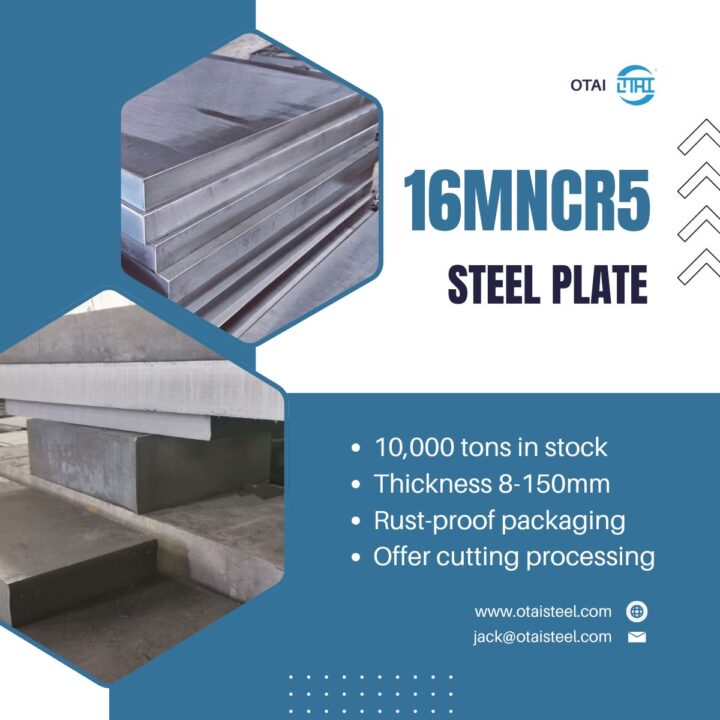
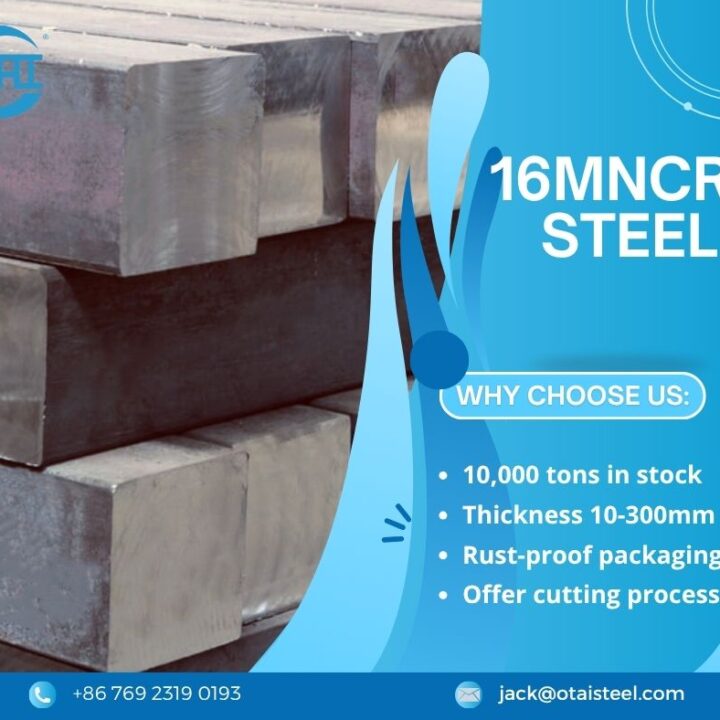
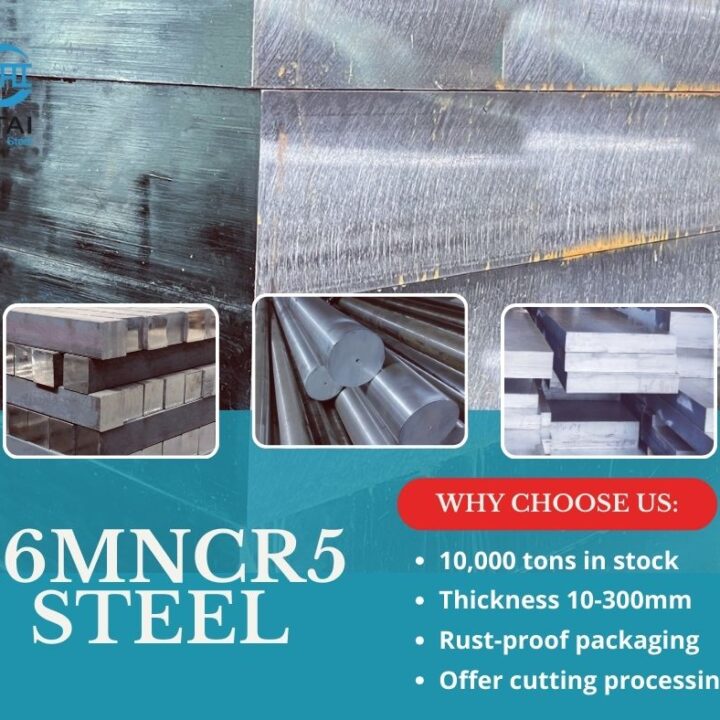
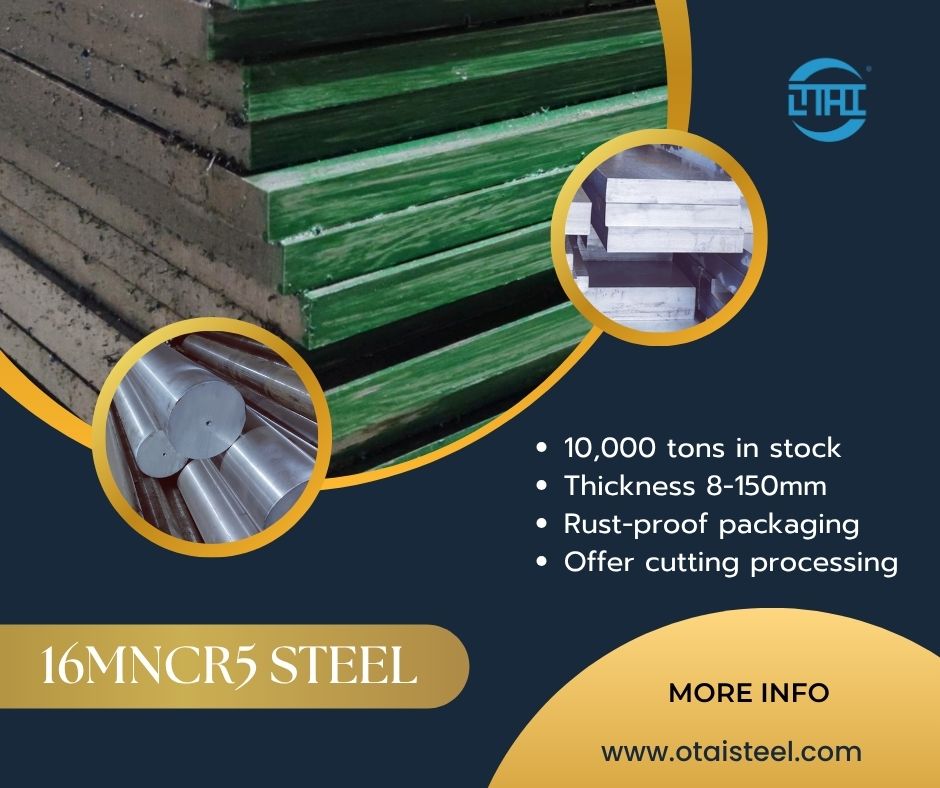
At Otai Special Steel, we supply high-quality 16MnCr5 grade alloy steel plates, rounds, and forged blocks for industrial applications.
Our advantages include:
- Large stock inventory available year-round
- 8–150mm thickness plates available in stock
- Customized cutting services
- Heat treatment support
- Ultrasonic testing (UT)
- Chemical composition verification
- Third-party inspection support such as SGS
- Reliable export packaging
- Fast global delivery
We serve clients in automotive, machinery, precision engineering, and industrial equipment sectors worldwide.
❓ FAQ
What is 16MnCr5 grade?
It is a low-carbon alloy steel designed for carburizing and case hardening applications.
What are the mechanical properties of 16MnCr5 grade?
After carburizing, it achieves 58–62 HRC surface hardness, 800–1200 MPa tensile strength, and maintains a ductile core.
Can 16MnCr5 grade be welded?
Yes, when engineers preheat and temper components after welding.
What is the difference between 16MnCr5 and 20MnCr5?
16MnCr5 has lower carbon content and better machinability, while 20MnCr5 provides higher core strength but slightly less toughness.
What are typical applications of 16MnCr5 grade?
Gears, pinions, shafts, bushings, and mechanical components that require high surface hardness and strong fatigue resistance.