 Shear Strength of 4140 Steel – Key Data, Testing, and Applications
Understanding the shear strength of 4140 steel is essential for engineers, designers, and machinists. Shear strength measures a material’s ability to resist forces that slide one part of the material over another. For 4140 steel, a chromium-molybdenum alloy, this property determines its performance under torsion, bending, and heavy load conditions, especially in critical automotive, industrial, and mechanical applications.
🔍 What Is 4140 Steel?
4140 steel is a medium-carbon alloy steel containing chromium and molybdenum. It combines high tensile strength, toughness, and wear resistance, making it ideal for components that operate under high stress. Engineers use 4140 steel in:
- Shafts and axles
- Gears and pinions
- Hydraulic spindles
- Drill collars and oilfield components
The alloying elements give 4140 steel excellent hardening capability, fatigue resistance, and dimensional stability during heat treatment, which directly impacts its shear strength.
🧪 Chemical Composition
The chemical composition affects shear strength, hardenability, and fatigue resistance.
| Element | Content (%) |
|---|---|
| Carbon (C) | 0.38 – 0.43 |
| Silicon (Si) | 0.15 – 0.35 |
| Manganese (Mn) | 0.75 – 1.00 |
| Chromium (Cr) | 0.80 – 1.10 |
| Molybdenum (Mo) | 0.15 – 0.25 |
| Phosphorus (P) | ≤ 0.035 |
| Sulfur (S) | ≤ 0.040 |
Chromium improves wear resistance and hardenability, while molybdenum enhances core toughness and resistance to brittle fracture. The balanced composition also ensures that the material maintains high shear strength even in complex, torsional loading conditions.
📊 Mechanical Properties
The mechanical properties of 4140 steel depend on heat treatment and section thickness. Shear strength correlates with tensile strength, fatigue resistance, and hardness.
| Property | Annealed | Pre-Hardened | Quenched & Tempered |
|---|---|---|---|
| Tensile Strength (MPa) | 655 – 895 | 745 – 930 | 850 – 1000 |
| Yield Strength (MPa) | 415 | 620 | 650 – 850 |
| Shear Strength (MPa) | 415 – 500 | 450 – 600 | 510 – 700 |
| Hardness (HRC) | 197 HB Max | 28 – 32 | 35 – 55 |
🔹 Interpretation
- In the quenched and tempered state, 4140 steel achieves 510–700 MPa shear strength, making it ideal for shafts, gears, and high-torsion components.
- The annealed condition allows easier machining but provides lower shear resistance.
- Pre-hardened 4140 steel balances machinability and moderate strength, useful for components where post-processing is required.
🔥 Heat Treatment Effects on Shear Strength
4140 steel responds well to heat treatment, which allows engineers to tailor shear strength to application requirements.
| Process | Temperature | Effect on Shear Strength |
|---|---|---|
| Normalizing | 870 – 900°C | Refines grain structure, improves toughness |
| Quenching | 820 – 860°C | Maximizes strength and hardness |
| Tempering | 540 – 680°C | Reduces brittleness while maintaining high shear strength |
Practical Tip: For shafts and drive components, a tempering temperature of 600°C after quenching offers a good balance between shear strength and ductility.
⚙️ Machining and Fabrication Considerations
Machining
- CNC milling and turning perform best when 4140 steel is annealed or pre-hardened.
- Use sharp carbide tools and moderate cutting speeds to prevent work hardening.
- Avoid machining fully hardened steel to minimize tool wear.
Welding
- Preheat components at 150–250°C to reduce thermal stress.
- Use controlled cooling and post-weld tempering to restore shear strength.
- Avoid welding after carburizing or surface hardening to prevent cracking.
🌍 Applications Related to Shear Stress
High shear strength makes 4140 steel suitable for components subjected to torsion, bending, and cyclic loading:
Automotive Industry
- Crankshafts and camshafts
- Drive shafts and axle shafts
- High-load gears
Industrial Machinery
- Hydraulic spindles and rollers
- Couplings and gear reducers
- Press and stamping machine parts
Oilfield and Heavy Equipment
- Drill collars and tool joints
- High-pressure connectors
- Structural components in mining and construction
By using 4140 steel, engineers ensure components resist shear failure, extending service life and safety.
⚖️ Shear Strength vs Tensile Strength
Although closely related, shear strength is generally 55–60% of tensile strength. For 4140 steel:
- Quenched & tempered tensile strength: 850–1000 MPa
- Quenched & tempered shear strength: 510–700 MPa
Understanding this ratio helps engineers calculate torque limits, select shafts, and design critical components.
🏭 Company Advantages
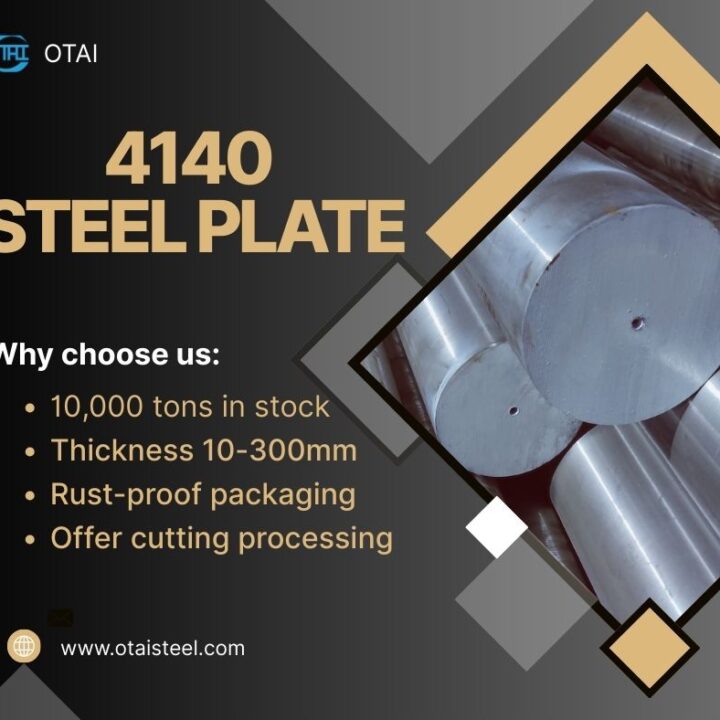
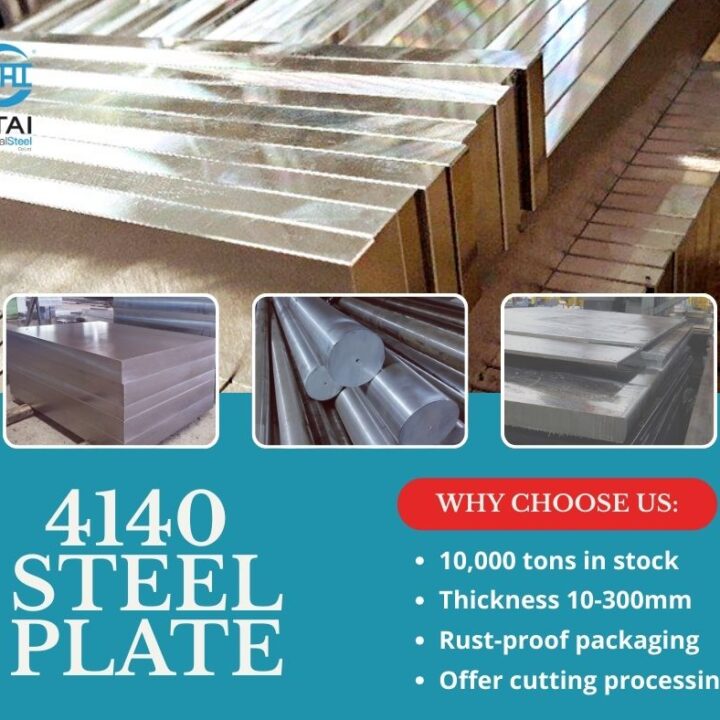
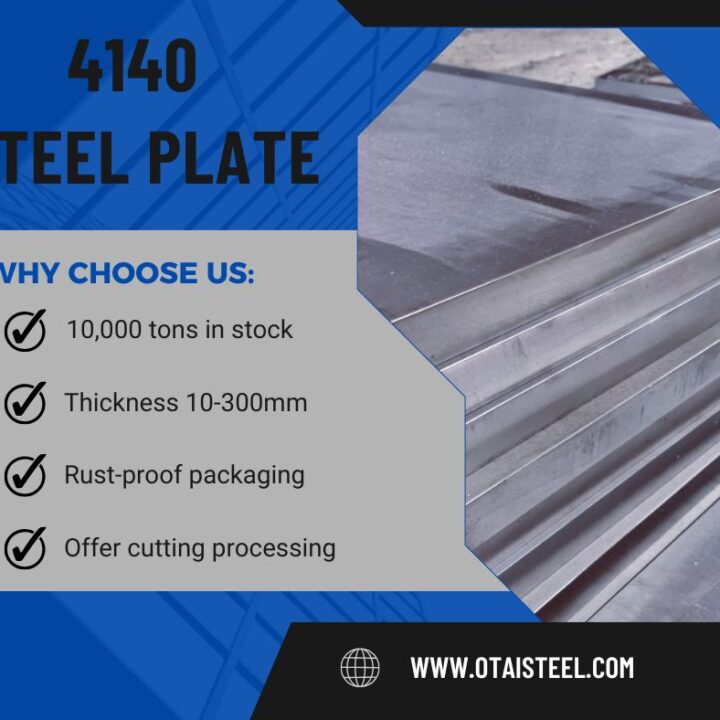
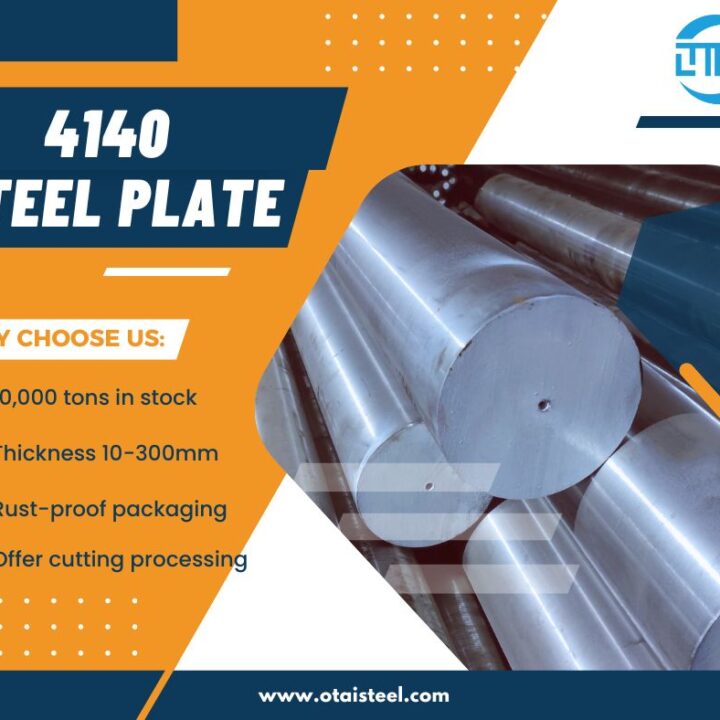
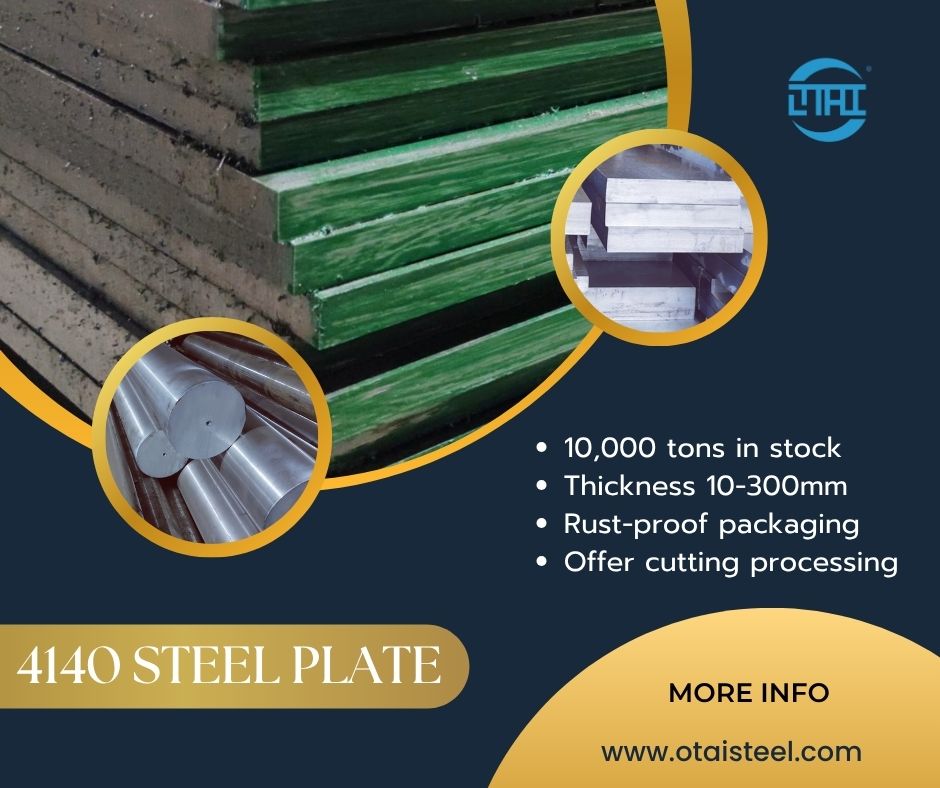
Otai Special Steel supplies high-quality 4140 steel plates, bars, and rounds suitable for shear-critical applications.
Our advantages include:
- Large inventory available year-round
- Multiple thicknesses and dimensions in stock
- Customized cutting and heat treatment services
- Ultrasonic testing (UT) and chemical composition verification
- Third-party inspection support such as SGS
- Professional export packaging and fast international delivery
We serve automotive, heavy machinery, industrial equipment, and oilfield sectors worldwide.
❓ FAQ
What is the shear strength of 4140 steel?
It ranges from 415–700 MPa, depending on heat treatment.
How does heat treatment affect shear strength?
Quenching increases strength, and tempering preserves ductility while maintaining high shear resistance.
Can 4140 steel withstand torsion?
Yes. Its high shear strength and fatigue resistance make it ideal for shafts, gears, and spindles.
Can I weld 4140 steel without reducing shear strength?
Yes, with preheating, controlled cooling, and post-weld tempering.
Which industries require high shear strength 4140 steel?
Automotive, industrial machinery, oilfield equipment, and heavy machinery frequently use it for torsion-loaded components.