 Difference Between 16MnCr5 and 20MnCr5: Composition and Properties
📑 Table of Contents
🔍 1. Overview of 16MnCr5 and 20MnCr5 Steel
⚙️ 2. Chemical Composition Difference Between 16MnCr5 and 20MnCr5
📊 3. Mechanical Properties Comparison Between 16MnCr5 and 20MnCr5
🔥 4. Heat Treatment Difference Between 16MnCr5 and 20MnCr5
⚙️ 5. 16MnCr5 vs 20MnCr5 for Gear Manufacturing
🏭 6. Industrial Applications of 16MnCr5 and 20MnCr5 Steel
⚖️ 7. How to Choose Between 16MnCr5 and 20MnCr5
📦 8. Otai Special Steel Advantages
❓ FAQ About Difference Between 16MnCr5 and 20MnCr5
🔍 1. Overview of 16MnCr5 and 20MnCr5 Steel
When engineers search for the difference between 16MnCr5 and 20MnCr5, they are usually comparing two popular European case hardening steels used for gears, shafts and mechanical transmission components.
Both materials belong to the EN/DIN carburizing steel family. They contain chromium as the main alloying element and are designed to achieve a hard wear-resistant surface with a tough internal core after carburizing treatment.
The main difference is the carbon content. 20MnCr5 contains more carbon than 16MnCr5, which generally provides higher core strength and improved hardenability after heat treatment.
However, 16MnCr5 offers excellent toughness and machinability, making it a preferred choice for many precision gear applications.
Basic Comparison of 16MnCr5 and 20MnCr5
| Property | 16MnCr5 | 20MnCr5 |
|---|---|---|
| Standard | EN 10084 / DIN | EN 10084 / DIN |
| Steel Type | Chromium-manganese carburizing steel | Chromium-manganese carburizing steel |
| Main Application | Gears, shafts, transmission parts | Heavy-duty gears and mechanical parts |
| Carbon Content | Approx. 0.14–0.19% | Approx. 0.17–0.22% |
| Surface Hardness After Carburizing | 58–62 HRC | 58–62 HRC |
| Main Difference | Better toughness and machinability | Higher core strength |
What Are Case Hardening Steels?
Both 16MnCr5 and 20MnCr5 are case hardening steels. This means the surface and core are designed to provide different properties.
- Surface layer: High carbon content after carburizing creates excellent hardness and wear resistance.
- Core structure: Lower carbon content maintains toughness and impact resistance.
This combination makes these steels ideal for gears and components that experience repeated contact stress.
⚙️ 2. Chemical Composition Difference Between 16MnCr5 and 20MnCr5
The most important 16MnCr5 and 20MnCr5 composition difference is the carbon level.
Although both grades contain manganese and chromium, the slightly higher carbon content of 20MnCr5 improves its strength potential after carburizing and quenching.
Chemical Composition Comparison
| Element | 16MnCr5 | 20MnCr5 |
|---|---|---|
| Carbon (C) | 0.14–0.19% | 0.17–0.22% |
| Silicon (Si) | ≤0.40% | ≤0.40% |
| Manganese (Mn) | 1.00–1.30% | 1.10–1.40% |
| Chromium (Cr) | 0.80–1.10% | 1.00–1.30% |
| Nickel (Ni) | Normally not added | Normally not added |
How Does Carbon Content Affect Performance?
Carbon content has a direct influence on hardness and strength.
Because 20MnCr5 contains slightly more carbon, it can achieve stronger core properties after heat treatment. This makes it suitable for components exposed to higher loads.
On the other hand, 16MnCr5 provides excellent balance between strength, toughness and machining performance.
| Feature | 16MnCr5 | 20MnCr5 |
|---|---|---|
| Carbon Level | Lower | Higher |
| Core Strength | Good | Slightly higher |
| Toughness | Excellent | Very good |
| Machinability | Excellent | Good |
📊 3. Mechanical Properties Comparison Between 16MnCr5 and 20MnCr5
The mechanical properties are one of the most important aspects when analyzing the difference between 16MnCr5 and 20MnCr5. Although both steels are designed for carburizing applications, their slightly different chemical compositions create different performance characteristics.
After carburizing and heat treatment, both grades can achieve a very hard surface layer. However, 20MnCr5 generally provides slightly higher core strength because of its higher carbon content.
Mechanical Properties Comparison
| Property | 16MnCr5 | 20MnCr5 |
|---|---|---|
| Tensile Strength | Approx. 800–1100 MPa after treatment | Approx. 850–1200 MPa after treatment |
| Yield Strength | Approx. 600–900 MPa | Approx. 650–950 MPa |
| Surface Hardness After Carburizing | 58–62 HRC | 58–62 HRC |
| Core Toughness | Excellent | Very good |
| Wear Resistance | Excellent | Excellent |
| Machinability | Better | Good |
Strength Difference Between 16MnCr5 and 20MnCr5
The main difference is not the surface hardness after carburizing. Both steels can achieve similar hardened surfaces.
The difference appears mainly in the core area. Since 20MnCr5 contains more carbon and slightly higher alloy content, it can provide better strength under heavy loading conditions.
Therefore:
- 16MnCr5: Better choice for components requiring excellent toughness and balanced performance.
- 20MnCr5: Better choice for components requiring higher core strength and load capacity.
Which Steel Has Better Toughness?
16MnCr5 is often selected when impact resistance and dimensional stability are important.
For precision gears and transmission parts, the balance between surface hardness and core toughness is critical. A material that is too hard may become brittle, while a material with insufficient hardness may wear faster.
Because of its balanced properties, 16MnCr5 remains a widely used carburizing steel in European mechanical manufacturing.
🔥 4. Heat Treatment Difference Between 16MnCr5 and 20MnCr5
Heat treatment is essential for both materials. The purpose is to create a hard wear-resistant surface while maintaining a tough internal core.
Both 16MnCr5 and 20MnCr5 usually undergo carburizing, quenching and tempering processes.
Typical Heat Treatment Process
| Process | Purpose | Effect |
|---|---|---|
| Carburizing | Increase surface carbon content | Creates hard surface layer |
| Quenching | Rapid cooling | Improves hardness |
| Tempering | Reduce brittleness | Improves toughness |
Heat Treatment Performance Comparison
| Feature | 16MnCr5 | 20MnCr5 |
|---|---|---|
| Carburizing Response | Excellent | Excellent |
| Surface Hardening Ability | High | High |
| Core Hardness | Good | Slightly higher |
| Risk of Brittleness | Lower | Slightly higher |
Why Is Heat Treatment Important for Gear Steel?
Gears experience repeated contact stress, friction and impact during operation. A suitable heat treatment process helps the material achieve:
- High contact fatigue resistance.
- Better wear resistance.
- Improved service life.
- Reduced risk of tooth surface damage.
⚙️ 5. 16MnCr5 vs 20MnCr5 for Gear Manufacturing
Both steels are commonly used as gear steels. The final choice depends on the operating conditions, gear size and required mechanical performance.
The keyword 16MnCr5 gear steel vs 20MnCr5 is frequently searched because manufacturers need to understand which material provides better performance for specific gear applications.
Gear Application Comparison
| Application | Recommended Grade | Reason |
|---|---|---|
| Precision transmission gears | 16MnCr5 | Excellent toughness and dimensional stability |
| Heavy-duty gears | 20MnCr5 | Higher core strength |
| Automotive gears | Both | Depends on load requirements |
| Industrial gearboxes | 16MnCr5 / 20MnCr5 | Both provide good wear resistance |
Advantages of 16MnCr5 in Gear Applications
- Excellent carburizing performance.
- Good machinability before heat treatment.
- Reliable toughness after hardening.
- Suitable for medium-load gears.
Advantages of 20MnCr5 in Gear Applications
- Higher core strength.
- Suitable for larger gears.
- Better performance under heavy loads.
- Good fatigue resistance.
In many European manufacturing industries, both materials remain popular choices. The decision between them should consider component design, working conditions and heat treatment requirements.
🏭 6. Industrial Applications of 16MnCr5 and 20MnCr5 Steel
Understanding the difference between 16MnCr5 and 20MnCr5 is important because both materials are widely used in mechanical engineering, especially for components requiring a hard surface and a tough core.
These steels are commonly selected for carburized components that experience high contact pressure, repeated loads and wear conditions.
Common Applications Comparison
| Industry | 16MnCr5 Applications | 20MnCr5 Applications |
|---|---|---|
| Automotive Industry | Transmission gears, shafts, drive components | Heavy-duty gears, high-load transmission parts |
| Gear Manufacturing | Precision gears, medium-load gear systems | Large gears and high-stress gear systems |
| Mechanical Engineering | Bearings, rollers, mechanical components | Heavy machinery parts |
| Agricultural Equipment | Small and medium gear components | High-load agricultural machinery gears |
| Industrial Machinery | General transmission components | Components requiring higher core strength |
Where Is 16MnCr5 Commonly Used?
16MnCr5 is one of the most popular European case hardening steels. It provides an excellent balance between surface hardness, toughness and machinability.
Typical applications include:
- Automotive transmission gears.
- Gear shafts.
- Bushings.
- Mechanical drive components.
- Precision machine parts.
Where Is 20MnCr5 Commonly Used?
20MnCr5 is often selected for components that require higher strength after carburizing treatment.
Typical applications include:
- Large industrial gears.
- Heavy-duty transmission systems.
- High-load mechanical components.
- Power transmission equipment.
⚖️ 7. How to Choose Between 16MnCr5 and 20MnCr5?
Choosing between these two carburizing steels depends on the actual working conditions. There is no universal answer because each grade offers different advantages.
Choose 16MnCr5 When:
- The component requires excellent toughness.
- Machining performance is important.
- The load level is medium.
- Dimensional stability is critical.
- The component requires reliable fatigue performance.
Choose 20MnCr5 When:
- Higher core strength is required.
- The component works under heavier loads.
- Large gears or shafts are involved.
- Higher resistance to mechanical stress is needed.
Simple Selection Guide
| Requirement | Recommended Material |
|---|---|
| Precision gears | 16MnCr5 |
| Heavy-duty gears | 20MnCr5 |
| Better machinability | 16MnCr5 |
| Higher core strength | 20MnCr5 |
| General carburized parts | Both grades are suitable |
📦 8. Otai Special Steel Advantages for 16MnCr5 Steel Supply
For customers searching for reliable 16MnCr5 steel and carburizing steel solutions, material availability, quality control and processing capability are important factors.
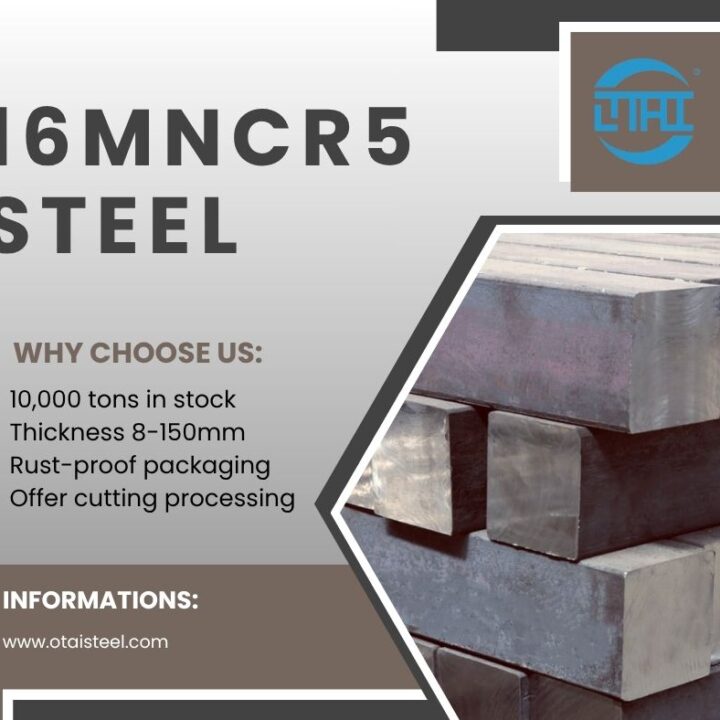
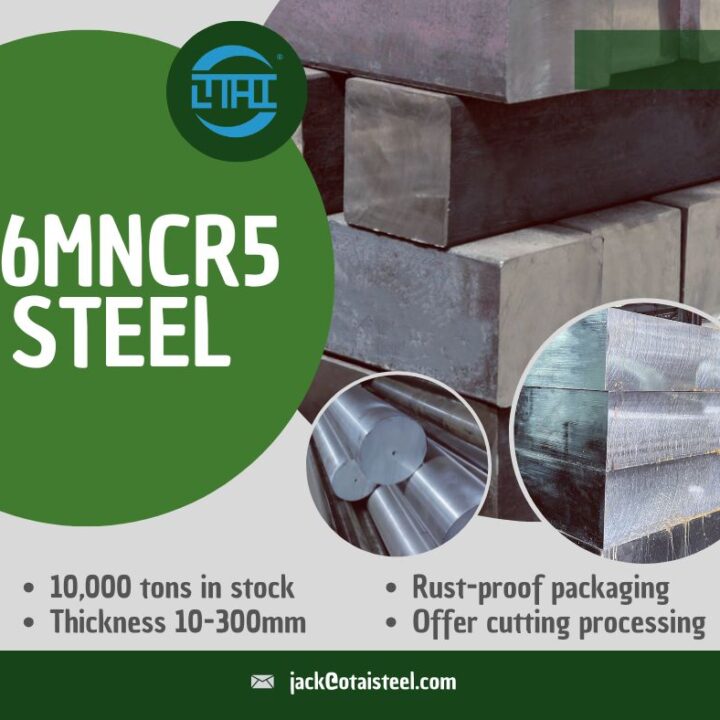
Otai Special Steel supplies 16MnCr5 steel plates and other special steels for international customers in automotive, gear manufacturing and mechanical industries.
Why Choose Otai Special Steel?
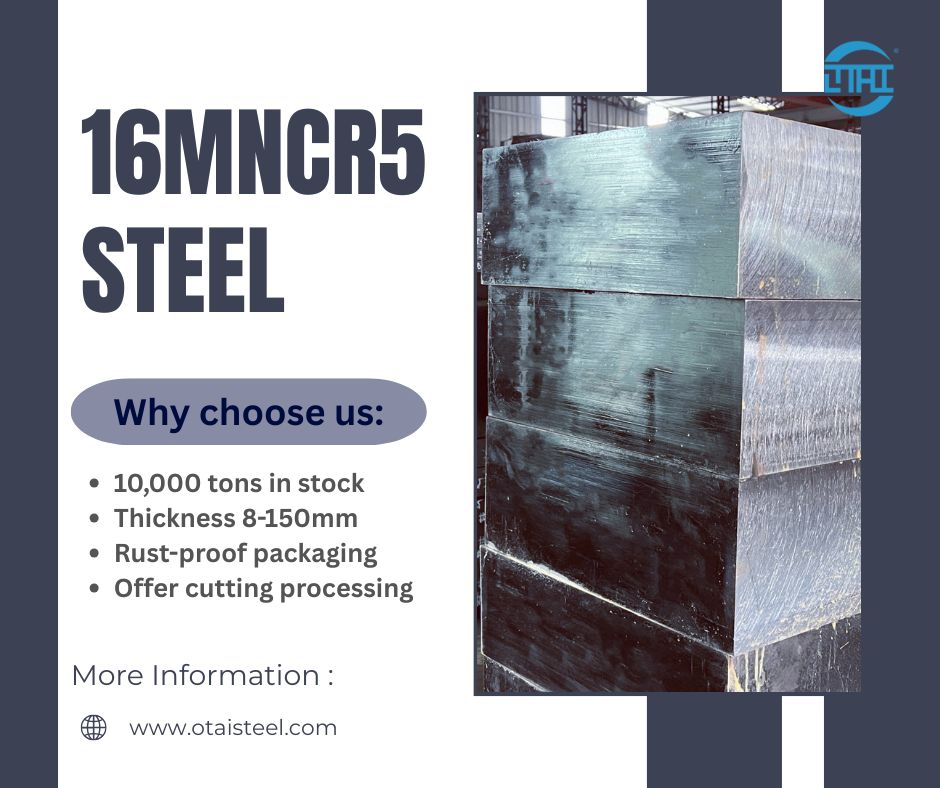
- Stable stock availability: Otai keeps 8–150mm thickness 16MnCr5 steel plates available in stock to support different machining and manufacturing requirements.
- Wide processing capability: Cutting services are available according to customer drawings and size requirements.
- Quality assurance: Ultrasonic testing and third-party inspection can be provided for critical projects.
- Heat treatment support: Professional heat treatment solutions help customers achieve required mechanical properties.
- Export experience: Otai has experience supplying special steel materials to international customers with strict technical requirements.
- Professional packaging: Anti-rust protection, steel strapping and wooden box packaging ensure safer transportation.
With professional knowledge of carburizing steels, Otai Special Steel helps customers select suitable materials between 16MnCr5 and 20MnCr5 according to strength requirements, gear design and operating conditions.
❓ FAQ
1. What is the main difference between 16MnCr5 and 20MnCr5?
The main difference is carbon content. 20MnCr5 contains slightly more carbon, which provides higher core strength after carburizing, while 16MnCr5 offers excellent toughness and machinability.
2. Is 20MnCr5 stronger than 16MnCr5?
Generally, yes. Because of its higher carbon content, 20MnCr5 can provide slightly higher core strength after heat treatment, making it suitable for heavier loads.
3. Which is better for gears, 16MnCr5 or 20MnCr5?
Both materials are suitable for gears. 16MnCr5 is commonly used for precision and medium-load gears, while 20MnCr5 is preferred for larger and higher-load gear applications.
4. Are 16MnCr5 and 20MnCr5 equivalent materials?
No. They belong to the same carburizing steel family but have different chemical compositions and mechanical characteristics.
5. Does Otai supply 16MnCr5 steel plates?
Yes. Otai supplies 16MnCr5 steel plates with 8–150mm thickness available in stock, along with cutting service, heat treatment support, ultrasonic testing and export packaging solutions.