42CrMo4 Mechanical Properties: What the Data Means for Industrial Buyers
📑 Table of Contents
- 🔍 42CrMo4 Mechanical Properties at a Glance
- 📊 Yield Strength and Tensile Strength: Reading the Numbers
- 📏 Why Section Size Changes Mechanical Properties
- ⚙️ Hardness, Toughness, and Ductility
- 🔥 How Heat Treatment Affects Performance
- 🧪 Standard Values, Typical Data, and MTC Results
- 🏭 Choosing 42CrMo4 for Industrial Applications
- 📝 What Buyers Should Specify When Requesting a Quote
- 🏢 Company Advantages
- ❓ Frequently Asked Questions
🔍 42CrMo4 Mechanical Properties at a Glance
42CrMo4 is a chromium-molybdenum alloy steel commonly selected for components that require high strength, good hardenability, and a balance between toughness and wear resistance. Its European material number is 1.7225, and engineers frequently specify it for shafts, gears, machine components, hydraulic parts, and other load-bearing applications.
However, the phrase 42CrMo4 mechanical properties does not describe one universal set of values. The results depend on the delivery condition, product form, section size, heat-treatment process, test direction, and applicable standard. Buyers should therefore evaluate the actual material specification instead of selecting steel based on a single strength figure found online.
Typical property ranges in the quenched-and-tempered condition
The following table summarizes representative values for 42CrMo4 in the quenched-and-tempered (+QT) condition under EN ISO 683-2. The standard groups products by reference diameter or corresponding flat-product thickness. These values are not guarantees for every commercial plate or bar; confirm the applicable product form, dimensional class, and contract requirements before using them for design or purchasing.
| Reference diameter, d / thickness, t | Tensile strength, Rm (MPa) | Minimum yield strength (MPa) | Minimum elongation (%) |
|---|---|---|---|
| d ≤ 16 mm / t ≤ 8 mm | 1100–1300 | 900 | 10 |
| 16 < d ≤ 40 mm / 8 < t ≤ 20 mm | 1000–1200 | 750 | 11 |
| 40 < d ≤ 100 mm / 20 < t ≤ 60 mm | 900–1100 | 650 | 12 |
| 100 < d ≤ 160 mm / 60 < t ≤ 100 mm | 800–950 | 550 | 13 |
| 160 < d ≤ 250 mm / 100 < t ≤ 160 mm | 750–900 | 500 | 14 |
Important: The dimensional classes above follow a standard-based reference table. Actual requirements may vary with the standard edition, product form, and agreed delivery conditions. In particular, do not apply bar values automatically to a thick steel plate without checking the relevant specification.
How buyers should use these figures
Use standard values to establish the minimum performance your project needs, then verify that the supplier can provide the requested material condition and test documentation. For example, a component that needs a minimum yield strength of 650 MPa may fit one dimensional class in the cited table, but the same requirement cannot be assumed for a thicker section. The purchase specification must connect the property requirement to the actual dimensions and test conditions.
📊 Yield Strength and Tensile Strength: Reading the Numbers
Yield strength and tensile strength describe different stages of a material’s response to loading. Both matter when buyers assess 42CrMo4, but neither number alone proves that a component will perform safely in service.
Yield strength: resistance to permanent deformation
Yield strength indicates the stress at which steel begins to deform permanently, according to the applicable test method. For many engineering components, this value helps designers assess whether a shaft, pin, support, or other part can withstand its expected load without retaining an unacceptable deformation after the load is removed.
For 42CrMo4 in +QT condition, the minimum yield strength in the standard-based table decreases as the reference section becomes larger. This does not mean that every large section will fail to meet a demanding requirement. Instead, it means buyers need to verify the property class and test evidence for the exact size being purchased. If the drawing specifies a minimum yield strength, communicate it directly rather than asking only for “42CrMo4 steel.”
Tensile strength: the maximum stress in a tensile test
Tensile strength (Rm) is the maximum engineering stress reached during a tensile test. It helps characterize the material’s strength, but it is not a substitute for yield strength, fatigue data, impact requirements, or a complete component design assessment.
For example, a datasheet may list a tensile strength range of 900–1100 MPa for one dimensional class. That range describes the specified tensile property for the relevant condition; it does not mean every test specimen will achieve the upper value. Buyers should compare the guaranteed range with the drawing and the service conditions rather than automatically choosing the highest published number.
What the difference means for procurement
When comparing two quotations, check whether both suppliers offer the same delivery condition and property requirements. One quotation may cover annealed material for machining, while another covers quenched-and-tempered steel with specified mechanical properties. Although both may carry the grade name 42CrMo4, their readiness for final use differs.
Likewise, do not compare a typical test result from one mill directly with a minimum requirement from a standard as if the figures represented the same thing. A typical result describes a particular sample or production experience; a minimum requirement establishes a threshold under defined conditions. The purchase order should state which requirements the supplier must guarantee.
📏 Why Section Size Changes Mechanical Properties
Section size is one of the most important factors when buyers evaluate 42CrMo4 mechanical properties. A material certificate for a small test specimen does not automatically establish the same properties throughout a much thicker component. The reason lies partly in the way heat moves through steel during quenching and tempering.
Cooling conditions affect the core
During quenching, the surface of a steel section generally cools faster than its core. A large cross-section retains heat longer, so its center may experience a different cooling rate and transformation history than the outer region. Chromium and molybdenum improve the hardenability of 42CrMo4, but they do not eliminate the influence of size, quench conditions, or equipment capacity.
Consequently, the strength that a mill can achieve in a small bar may not be achievable throughout a much thicker section under the same processing conditions. Tempering then adjusts the balance between strength and toughness, but the final result still depends on the material’s thermal history and the specified test location.
Plate thickness and bar diameter are not interchangeable measures
Standards may use a reference diameter for round products and a reference thickness for flat products. These dimensional categories help define property requirements, but the terms do not make the products geometrically or metallurgically identical. A thick plate and a round bar with a similar nominal dimension may respond differently during heat treatment.
For procurement, identify the exact product form and finished section size. If your component will be machined from a plate, include the starting thickness and the final component dimensions. If you plan to machine a bar, state its diameter and the required properties. These details help the supplier assess whether the requested material condition fits the application.
What to do when the component is thick
For thick or highly loaded components, ask the supplier to confirm the applicable standard and property class in writing. Where through-section performance matters, also discuss the test location, sampling direction, hardenability requirements, and whether the certificate represents the actual supplied heat and condition.
If the drawing requires properties beyond the standard’s usual dimensional class, do not assume a stock item will satisfy them. The supplier and buyer may need to agree on a special heat-treatment route, additional testing, or alternative material. Confirm those requirements before production, not after the component has been machined.
⚙️ Hardness, Toughness, and Ductility
Strength figures explain only part of 42CrMo4’s performance. Industrial buyers should also evaluate hardness, toughness, and ductility because each property addresses a different risk in service. The correct balance depends on the component’s loads, geometry, surface requirements, and operating environment.
Hardness: resistance to indentation and surface damage
Hardness indicates resistance to localized indentation. Suppliers commonly report hardness using Brinell (HBW), Rockwell (HRC), or another specified method. The method matters: conversion tables provide estimates, but they do not make results from different test methods perfectly interchangeable.
In the quenched-and-tempered condition, 42CrMo4 often falls around 280–320 HBW in general technical references, although the actual range depends on the section size, heat treatment, and specification. Treat this as an indicative range, not a universal acceptance limit. For purchasing, state the required hardness range and test method when hardness is part of the contract.
Higher hardness can support wear resistance, but it does not automatically provide the best overall performance. If the part must withstand shock or cyclic loads, an unnecessarily high hardness target may compromise the balance of properties or make machining more difficult.
Toughness: the ability to resist fracture
Toughness describes a material’s ability to absorb energy and resist fracture under particular loading conditions. Charpy V-notch impact testing often provides an impact-energy result in joules at a stated temperature. The result depends on the test temperature, specimen orientation, notch geometry, and test method.
For example, the standard-based +QT table includes a minimum impact value of 35 J for several dimensional classes, while the smallest class does not list the same requirement in that table. Buyers should not transfer the 35 J requirement to every product without checking the applicable standard and class. If low-temperature service or shock loading matters, specify the required test temperature and impact criterion explicitly.
Ductility: the capacity to deform before fracture
Elongation and reduction of area provide information about ductility. In general, ductility helps indicate how much deformation a tensile specimen undergoes before fracture. However, the reported values depend on specimen geometry, gauge length, orientation, and test conditions.
When comparing material certificates, check that the results use compatible test methods and sampling conditions. A hardness value alone cannot establish impact toughness, just as a tensile strength result cannot replace an elongation requirement. For critical parts, assess the full property set against the actual loading and failure risks.
🔥 How Heat Treatment Affects Performance
42CrMo4 is a heat-treatable alloy steel, so its delivery condition strongly influences its mechanical properties and suitability for manufacturing. When a buyer requests a quotation, the grade designation should therefore appear alongside the required condition, such as annealed or quenched and tempered, rather than standing alone.
Annealed condition: machining and further processing
Annealed 42CrMo4 generally offers lower hardness than a quenched-and-tempered product, which can make machining and subsequent processing more practical. However, annealed material should not automatically be treated as meeting the final strength requirements of a component designed around +QT properties.
This condition may suit buyers who plan to perform substantial machining and then arrange heat treatment. In that case, the manufacturing plan must account for heat-treatment distortion, dimensional allowances, possible surface changes, and the need for final inspection. Confirm who will perform the heat treatment and who will verify the final properties.
Quenched and tempered (+QT): a balance of strength and toughness
Quenching increases hardness and strength, while tempering adjusts the resulting properties to achieve a more useful balance between strength, toughness, and ductility. The final result depends on the steel chemistry, section size, quenching medium, process controls, and tempering parameters.
For many load-bearing components, +QT condition offers a practical combination of strength and toughness. Nevertheless, “quenched and tempered” is not a complete property guarantee by itself. The order should identify the applicable standard, required mechanical properties, dimensional class, and any hardness or impact requirements.
Additional surface treatment and machining considerations
Some components need induction hardening, flame hardening, nitriding, or another surface treatment after the main heat-treatment process. These operations serve different purposes and should not be treated as equivalent. Their suitability depends on the part geometry, required case depth, surface hardness, core properties, and final dimensional tolerances.
Before placing an order, explain the planned manufacturing sequence. If the supplier cuts the stock to size, leaves machining allowance, or provides a heat-treated condition, those choices can affect the downstream process. Agree on the delivery condition and acceptance criteria early so that the supplied steel fits the production plan rather than creating extra processing steps.
🧪 Standard Values, Typical Data, and MTC Results
One common source of confusion in steel procurement is the difference between standard-specified values, typical data, and the actual test results on a material test certificate (MTC). These forms of data serve different purposes. Buyers who distinguish them can compare quotations more accurately and reduce the risk of receiving material that does not meet the drawing.
Standard-specified values
A standard defines the technical requirements for a specified grade and condition within its scope. For 42CrMo4, EN ISO 683-2 covers alloy steels for quenching and tempering, including requirements associated with chemical composition, mechanical properties, and delivery conditions.
However, a standard value applies only when the product and order meet the relevant provisions. The edition, product form, dimensional class, sampling conditions, and specified delivery condition all matter. Buyers should cite the required standard in the purchase documents and ask the supplier to identify the exact edition or contractual specification used.
Typical data from a supplier or mill
Typical values describe results that a producer or supplier commonly observes. They can help with preliminary material selection, but they do not automatically represent a guaranteed minimum or maximum. A typical tensile strength of 980 MPa, for example, does not prove that every batch will meet a contract requirement of at least 980 MPa.
Use typical data as a reference during initial evaluation. Before purchase, convert the project’s needs into explicit acceptance criteria and ask the supplier to confirm whether the proposed material can meet them.
Actual MTC results
The MTC records the reported test results and material identification associated with the supplied batch or heat, according to the certificate type and contract. Buyers should verify the grade, heat or batch number, product dimensions, delivery condition, chemical analysis, and mechanical test results where applicable.
| Data type | Main purpose | What the buyer should check |
|---|---|---|
| Standard requirement | Defines the contractual technical benchmark | Standard edition, product form, condition, dimensional class |
| Typical data | Supports preliminary evaluation | Whether it is indicative or guaranteed |
| MTC results | Documents reported results for the supplied material | Traceability, test values, units, condition, and batch identity |
For critical applications, specify any additional inspection, impact testing, ultrasonic testing, or third-party verification requirements before production or shipment. Do not assume that an inspection service is included unless the supplier confirms it in the quotation.
🏭 Choosing 42CrMo4 for Industrial Applications
42CrMo4 can suit a broad range of mechanical components, but buyers should start with the operating requirements rather than the grade name alone. The right material specification must address load, geometry, fatigue exposure, wear, operating temperature, machining sequence, and any safety or regulatory requirements.
Applications that require strength and toughness
Engineers commonly consider 42CrMo4 for shafts, axles, gears, pins, connecting components, hydraulic parts, and heavy machinery components. Its chromium-molybdenum alloy system supports hardenability and enables a useful combination of strength and toughness after appropriate heat treatment.
Even so, a grade that works well for one shaft design may not be the best choice for another. A rotating component subjected to repeated bending may need fatigue data and careful surface-finish control. A component exposed to impact may need a defined Charpy requirement. A part with sliding contact may need a specified surface-hardening route rather than simply a higher core hardness.
Compare material options by specification, not name alone
Buyers may encounter AISI/SAE 4140, JIS SCM440, and Chinese 42CrMo when sourcing comparable chromium-molybdenum steels. These grades are commonly considered related, but they should not be treated as automatically interchangeable for every application. Their chemistry limits, product standards, delivery conditions, and guaranteed properties may differ.
If the drawing names 42CrMo4, request that grade first. If a supplier proposes another grade, ask for a documented comparison against the governing specification, including chemistry, mechanical properties, hardenability where relevant, and test requirements. Obtain engineering approval before accepting a substitution.
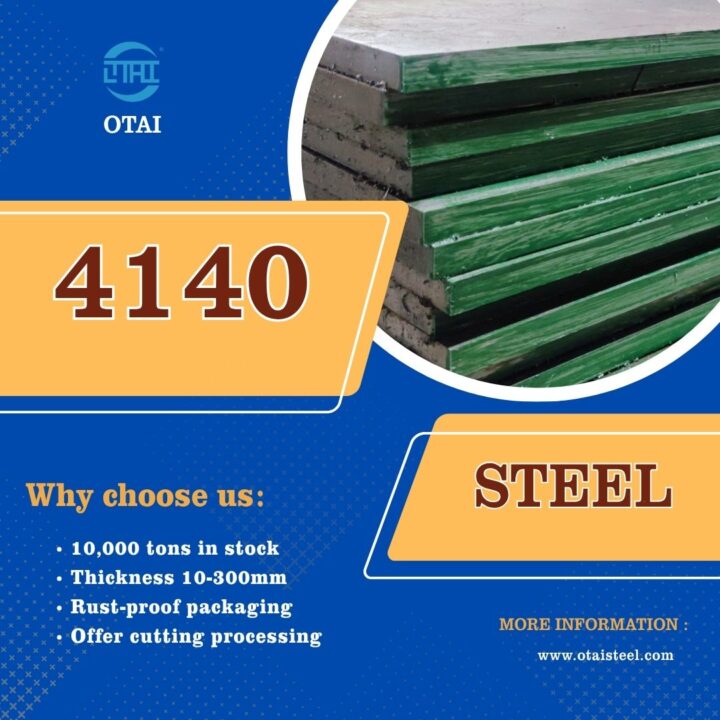
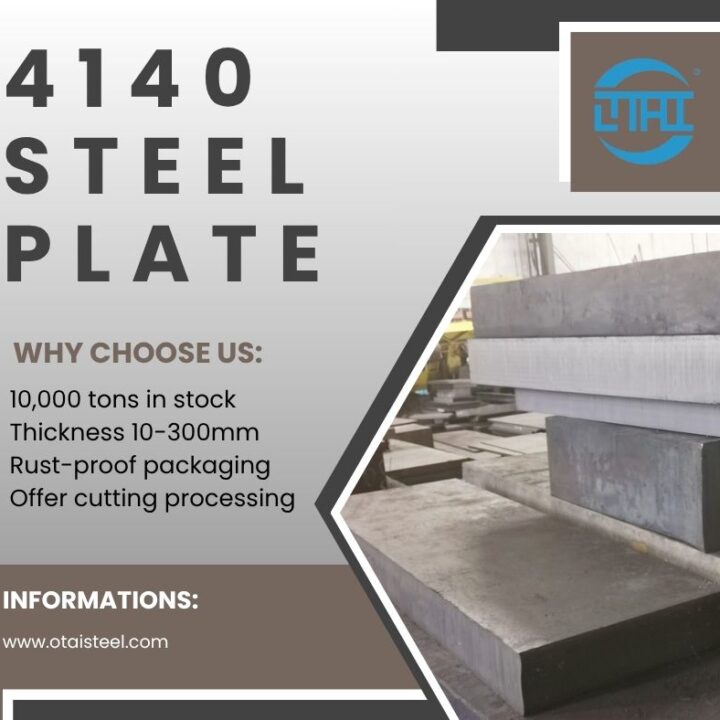
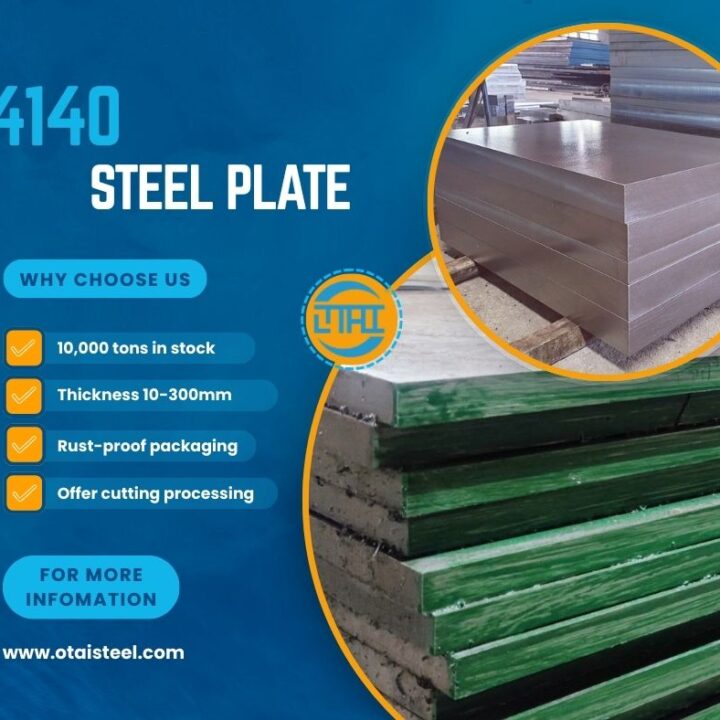
For related supply information, see Otai’s 4140 alloy steel plate product page. This page concerns a related grade, not automatic confirmation that every 4140 product meets a 42CrMo4 specification.
Consider the full delivered cost
The lowest price per ton does not always produce the lowest total project cost. A quotation that excludes cutting, machining allowance, inspection, special packaging, or required heat treatment may create extra work after delivery. Conversely, buying a more expensive pre-treated condition may reduce processing time when it matches the final part requirements.
Compare suppliers on the same basis: grade and standard, dimensions, delivery condition, quantity, tolerances, certification, inspection, packaging, and shipping terms. This makes the quotation more useful and helps purchasing teams identify cost differences that genuinely affect production.
📝 What Buyers Should Specify When Requesting a Quote
A clear inquiry helps the supplier identify suitable stock, confirm the delivery condition, and provide a quotation that matches the engineering requirement. Instead of requesting only “42CrMo4 steel,” send the key details that affect compliance, price, processing, and lead time.
Technical information to include
| Inquiry item | Information to provide | Why it matters |
|---|---|---|
| Grade and standard | 42CrMo4, applicable EN/ISO standard and edition if specified | Defines the material and acceptance requirements |
| Product form | Plate, round bar, or another required form | Affects availability, dimensions, and applicable property tables |
| Dimensions and quantity | Thickness or diameter, width, length, quantity, and cut sizes | Supports stock checks, cutting plans, and freight estimates |
| Delivery condition | Annealed, quenched and tempered, or another agreed condition | Determines hardness and mechanical-property expectations |
| Mechanical requirements | Yield strength, tensile strength, elongation, impact energy, hardness, as applicable | Allows a direct compliance check against the drawing |
| Documentation and inspection | MTC, traceability, ultrasonic testing, third-party inspection if required | Clarifies quality evidence and any extra costs |
| Processing and delivery | Cutting tolerance, machining allowance, packaging, destination, and Incoterms | Improves price accuracy and delivery planning |
Confirm stock and condition separately
Available dimensions do not necessarily mean that every size is available in every delivery condition. When checking stock, ask the supplier to confirm the exact grade, dimensions, quantity, and condition for the material offered. If your design requires specific mechanical properties, request evidence that applies to that material and dimensional class.
For cut-to-size orders, also clarify whether the quoted dimensions are nominal, saw-cut, or finished dimensions. If the component will undergo additional machining or heat treatment, agree on the required allowance and responsibility for final property verification.
Use the quotation to close technical gaps
Before placing the order, review the quotation against the drawing and purchase specification. Resolve any differences in grade designation, property guarantees, inspection scope, tolerances, and documentation. This process helps prevent a common purchasing problem: receiving a material with the correct grade label but an unsuitable condition or insufficient evidence for the intended application.
A technically complete inquiry allows the supplier to make a more meaningful recommendation and helps your team compare offers on an equivalent basis. It also reduces the risk of delays caused by additional testing, reprocessing, or material replacement.
🏢 Company Advantages
- Extensive steel inventory: More than 10,000 tons of stock across the company’s steel supply range. Confirm the exact 42CrMo4 grade, dimensions, condition, and quantity before ordering.
- Cutting capacity: 20 saw-cutting machines support cutting services for customer-specified sizes.
- Processing support: CNC machining, grinding, and customized dimensional and tolerance requirements help align material supply with production needs.
- One-stop service: Cutting, machining coordination, packaging, and export support can simplify procurement and delivery planning.
- Quality documentation: Material testing documentation, ultrasonic testing, and third-party inspection support can be discussed according to project requirements.
- Export experience: Supplying international customers since 1999, with exports to more than 54 countries.
- Export packaging: Bundling, strapping, anti-rust protection, and wooden-box packaging can be arranged according to the product and shipping requirements.
- Procurement-focused service: The team can help clarify grade, dimensions, delivery condition, cutting requirements, and inspection needs before quotation.
For an accurate quotation, provide the required 42CrMo4 dimensions, delivery condition, mechanical-property requirements, quantity, and destination. The team can then check the applicable supply options and confirm the documentation and processing services available for your project.
❓ Frequently Asked Questions
1. What are the mechanical properties of 42CrMo4 steel?
42CrMo4 properties depend on delivery condition and section size. In the quenched-and-tempered condition, standard-based tensile strength ranges can run from approximately 1100–1300 MPa for the smallest dimensional class to 750–900 MPa for the 160–250 mm reference class. Yield strength, elongation, and impact requirements also vary by class. Always confirm the applicable standard and supplied product condition.
2. What is the tensile strength of 42CrMo4?
Under the EN ISO 683-2 +QT reference table used in this article, tensile strength ranges from 1100–1300 MPa for d ≤ 16 mm or t ≤ 8 mm to 750–900 MPa for 160 < d ≤ 250 mm or 100 < t ≤ 160 mm. These values apply to defined dimensional classes and should not be treated as a universal guarantee for every product.
3. What is the hardness of 42CrMo4 in the quenched-and-tempered condition?
General technical references often report approximately 280–320 HBW for quenched-and-tempered 42CrMo4, but actual hardness varies with section size, heat treatment, and specification. If hardness is a purchasing requirement, state the required range and test method in the inquiry and verify the result against the material certificate or agreed inspection record.
4. Are 42CrMo4 and AISI 4140 mechanically equivalent?
42CrMo4 and AISI 4140 are commonly considered related chromium-molybdenum alloy steels, but they are not automatically interchangeable in every specification. Their chemical composition limits, product standards, dimensional classes, and delivery conditions may differ. Before substituting one for the other, compare the required properties and obtain approval from the responsible engineer or customer.
5. What documents should I request when buying 42CrMo4 steel?
Request the agreed material test certificate with traceability to the supplied material, along with any required chemical analysis and mechanical test results. Depending on the application, the purchase specification may also require hardness results, impact testing, ultrasonic testing, or third-party inspection. Define these requirements before ordering and confirm that the supplier has included them in the quotation.