SCM440 Chemical Composition: What Procurement Teams Should Check
📑 Table of Contents
- 🧪 SCM440 Chemical Composition at a Glance
- 🔬 What Each Alloying Element Does
- 📋 Standard Limits vs Typical Analysis vs MTC
- 🔎 How to Verify an SCM440 Material Certificate
- ⚙️ How Chemistry Affects Mechanical Performance
- ⚖️ SCM440 vs AISI 4140 and 42CrMo4
- 📦 What Buyers Should Specify When Requesting a Quote
- 🛠️ Processing, Inspection and Supply Considerations
- 🏭 Company Advantages
- ❓ Frequently Asked Questions
🧪 SCM440 Chemical Composition at a Glance
SCM440 is a chromium-molybdenum alloy steel specified under Japan’s JIS standards for machine structural steels. Manufacturers use it for components that require a combination of strength, toughness, hardenability and fatigue resistance. Typical applications include shafts, gears, connecting components, machine parts and other load-bearing engineering products.
For procurement teams, checking the chemical composition is an essential first step. However, a grade name alone does not prove that a delivered batch meets the project requirements. Buyers should confirm the applicable standard, review the specified element limits, and compare the actual heat analysis on the material test certificate (MTC) with the purchase specification.
The table below summarizes commonly published SCM440 composition requirements associated with JIS G 4053:2023. Confirm the applicable edition, product form and any additional purchaser or mill requirements before using these values in a contractual inspection.
| Element | Commonly Published Requirement (wt.%) | Procurement Significance |
|---|---|---|
| Carbon (C) | 0.38–0.43 | Strength, hardenability and heat-treatment response |
| Silicon (Si) | 0.15–0.35 | Deoxidation and contribution to strength |
| Manganese (Mn) | 0.60–0.90 | Hardenability and strength |
| Phosphorus (P) | Max. 0.030 | Residual element to control for toughness and quality |
| Sulfur (S) | Max. 0.030 | Cleanliness, machinability and transverse properties |
| Nickel (Ni) | Max. 0.25 | Residual-element control under the applicable specification |
| Chromium (Cr) | 0.90–1.20 | Hardenability, strength and wear-related performance |
| Copper (Cu) | Max. 0.30 | Residual-element control |
| Molybdenum (Mo) | 0.15–0.30 | Hardenability and resistance to tempering-related softening |
Important: These values are a reference for preliminary review, not a substitute for the governing standard or purchase specification. Published chemistry tables can differ by edition, product form and supplementary requirements. Some older references list a different manganese range, for example. When a contract specifies a particular JIS edition, use that edition rather than combining values from unrelated tables.
Buyers should also check whether the requirement applies to ladle or heat analysis, product analysis, or both. The acceptance limits and permitted deviations may differ according to the applicable standard and inspection agreement.
🔬 What Each Alloying Element Does
SCM440’s performance comes from the combined effect of its alloying elements, not from any single percentage. Understanding the main elements helps purchasing teams evaluate certificates and discuss material requirements with engineering, quality and suppliers.
Carbon: the foundation of strength and hardenability
Carbon is one of the main factors governing SCM440’s response to quenching and tempering. Its specified range supports the development of strength and hardness after suitable heat treatment. However, a higher carbon value does not automatically make one delivered plate or bar better for every application. The required balance between strength, ductility, toughness and machinability matters more than simply seeking a number near the top of the range.
For a component that will undergo heat treatment, buyers should confirm the required final properties and treatment condition instead of judging suitability from carbon content alone.
Chromium and molybdenum: the core alloying combination
Molybdenum and Chromium help SCM440 achieve useful hardenability. Chromium supports hardening response, while molybdenum improves hardenability and helps reduce susceptibility to tempering-related softening. Together, these elements make SCM440 suitable for many engineering components that require strength through a meaningful section thickness.
Even so, chemistry does not guarantee uniform hardness across every cross-section. Cooling conditions, component geometry, starting microstructure and heat-treatment practice also affect the result. A buyer specifying a large section should therefore verify both the chemistry and the mechanical requirements for the actual size.
Manganese and silicon: supporting strength and steelmaking
Manganese contributes to hardenability and strength, while silicon commonly serves as a deoxidizing element and can contribute to strength. Their specified ranges help maintain the intended material characteristics. When reviewing an MTC, check that the actual values fall within the limits for the relevant standard and that the certificate identifies the correct grade and heat number.
Phosphorus, sulfur and residual elements
Phosphorus and sulfur are controlled because excessive levels can negatively affect certain mechanical properties and processing performance. Sulfur can improve machinability in some steelmaking contexts, but SCM440 should not be treated as a free-machining grade simply because its certificate lists a measurable sulfur content.
Nickel and copper may appear as residual elements in the certificate. Buyers should compare them with the applicable limits rather than assume that every reported value must be zero. If a project has stricter cleanliness or residual-element requirements, state them in the purchase specification and confirm the supplier can document compliance.
📋 Standard Limits vs Typical Analysis vs MTC
One common purchasing mistake is treating every chemical composition table as if it serves the same purpose. In practice, three types of data appear frequently in steel sourcing: standard limits, mill typical analysis and the actual heat analysis on the MTC. They answer different questions.
| Data Type | What It Tells You | How Buyers Should Use It |
|---|---|---|
| Standard composition limits | The chemical requirements established by the specified standard, subject to its scope and notes. | Use them to define contractual acceptance criteria. |
| Mill typical analysis | An illustrative or representative chemistry reported by a particular producer. | Use it for preliminary technical understanding, not as proof of the delivered batch. |
| Actual heat analysis on the MTC | The reported chemical analysis for the identified steel heat. | Compare it with the purchase specification and applicable acceptance rules. |
Why typical analysis is not a universal SCM440 formula
A supplier may publish a typical chemistry with carbon, chromium and molybdenum values close to the middle of their respective ranges. Another producer may report different typical values while still manufacturing compliant SCM440. Both figures can be reasonable for their stated purpose, but neither should replace the governing standard or the actual heat certificate.
This distinction becomes especially important when comparing quotations. If one supplier provides a typical composition table and another provides a batch-specific MTC, the documents do not provide the same level of evidence. Ask both suppliers to clarify what their figures represent before making a technical comparison.
Which document should govern acceptance?
The purchase order and agreed material specification should define the standard, edition, product form, testing requirements and acceptance criteria. The MTC then provides batch-specific evidence for the supplied material. If the customer requires a special chemistry limit, product analysis or independent verification, make that requirement explicit before production or dispatch.
For a practical review of SCM440 supply documentation, buyers can also consult Otai’s SCM440 steel plate information and request the certificate applicable to the specific material being quoted. Do not assume that a general web table or sample certificate represents every available heat.
🔎 How to Verify an SCM440 Material Certificate
A material test certificate is useful only when buyers can connect the document to the actual shipment and check it against the agreed requirements. Chemical values alone are not enough; the grade, heat identity, product details and delivery condition must also match.
Check the grade, standard and heat number
Start by confirming that the certificate identifies SCM440 and names the relevant specification. Check the standard edition where the contract requires one. Next, identify the heat number or other traceability reference. The supplier’s bundle labels, product markings and shipping records should allow the supplied material to be linked to that heat, subject to the traceability system agreed for the order.
If the quotation says SCM440 but the certificate names another grade, do not assume the difference is harmless. Ask the supplier to clarify the material designation and obtain written approval from the responsible engineering or quality authority before accepting a substitution.
Compare every reported element with the correct limits
Review the reported carbon, silicon, manganese, phosphorus, sulfur, chromium and molybdenum values. Check nickel and copper where the specification controls them. Use the correct limits for the agreed standard and product form, and consider any contractual requirements that are stricter than the standard’s general provisions.
Do not reject or accept a result solely by comparing it with a table copied from an unrelated website. If a value appears outside the range, first confirm the specification edition, whether the document reports heat or product analysis, the units and the applicable tolerance rules. Then request clarification or corrective evidence from the supplier.
Confirm that the certificate matches the delivered material
Cross-check the heat number, size, quantity, delivery condition and product description. Where the order requires tensile tests, hardness results, ultrasonic testing or third-party inspection, verify that the required results and reports are included or otherwise supplied as agreed.
| Certificate Check | Question to Ask | Potential Risk if Unclear |
|---|---|---|
| Grade and standard | Does the document identify the specified SCM440 standard? | Material substitution or specification mismatch |
| Heat number | Can the certificate be linked to the shipment? | Weak traceability |
| Chemical analysis | Do actual values comply with the applicable limits? | Nonconforming chemistry |
| Delivery condition | Does the condition match the purchase order? | Unexpected hardness or processing requirements |
| Mechanical and inspection results | Are all contractually required tests documented? | Insufficient evidence for acceptance |
Procurement tip: Complete the document review before dispatch when possible. Resolving a certificate discrepancy before shipment is usually easier than addressing a traceability or acceptance problem after the material reaches the machining facility.
⚙️ How Chemistry Affects Mechanical Performance
SCM440 chemical composition establishes an important part of the material’s potential performance. However, the composition table does not directly specify the final tensile strength, yield strength, hardness or impact toughness of every product. Those properties also depend on manufacturing history, section size, heat treatment and the test requirements in the order.
Heat treatment changes the final properties
SCM440 may be supplied in different conditions, depending on the product and supplier. Annealed material, for example, has a different property profile from material that has undergone quenching and tempering. The latter process can produce a useful combination of strength and toughness when the treatment cycle suits the grade and section.
As a result, buyers should not compare the hardness of two SCM440 quotations unless they have confirmed the delivery condition and the measurement requirements. A chemistry certificate cannot replace a hardness report when the purchase order specifies a hardness range.
Section size and cooling conditions matter
Hardenability describes a steel’s ability to develop hardness through a section under suitable heat-treatment conditions. Chromium and molybdenum help SCM440 achieve its hardening response, but a thick section may not develop the same properties throughout as a smaller section under identical processing conditions.
For heavy plates or large machined components, communicate the finished dimensions and critical mechanical requirements to the supplier. Where the component requires a specific through-section performance, engineering may need to define sampling positions, heat-treatment conditions and test methods. Do not assume that a small test specimen automatically proves uniform performance throughout a large component.
Match the inspection to the application
For general machinery, the purchase specification may focus on chemistry, delivery condition and agreed mechanical properties. For safety-critical or heavily loaded components, the customer may also require impact testing, ultrasonic inspection, dimensional controls or independent verification.
These requirements should reflect the application and the governing drawing or standard. Adding tests without defining acceptance criteria can create uncertainty, while omitting required tests can delay approval. A clear inspection plan helps the buyer, supplier and end user agree on what evidence will demonstrate compliance.
⚖️ SCM440 vs AISI 4140 and 42CrMo4
SCM440 is often compared with AISI 4140 and EN 42CrMo4 because these grades belong to a related chromium-molybdenum alloy steel family. They can serve similar engineering applications, but buyers should not treat the designations as automatic proof of interchangeability.
Each grade belongs to a different standards system. The chemical limits, residual-element requirements, mechanical-property rules, product-form provisions and testing conditions may differ. Even when two certificates show similar chromium and molybdenum values, the complete purchase requirements still need to match.
| Comparison Point | SCM440 | AISI 4140 / 42CrMo4 |
|---|---|---|
| Standards family | JIS | SAE/AISI or EN, respectively |
| Steel family | Chromium-molybdenum alloy steel | Related chromium-molybdenum alloy steels |
| Chemical requirements | Use the applicable JIS grade and edition | Use the relevant SAE/AISI or EN specification |
| Mechanical properties | Depend on product, size, condition and requirements | Also depend on product, size, condition and requirements |
| Substitution decision | Requires review against the original specification | Requires engineering or customer approval where applicable |
When a substitute may be considered
If SCM440 is unavailable or a buyer wants to compare sourcing options, 4140 or 42CrMo4 may be worth evaluating. The responsible engineer should compare the applicable chemical limits, mechanical requirements, product dimensions, heat-treatment condition, test requirements and any customer-specific restrictions.
Do not approve a substitution based only on a supplier’s equivalence chart. For example, a project that requires a particular JIS specification may not accept a material supplied under an EN specification without documented approval, even when the grades are commonly considered related.
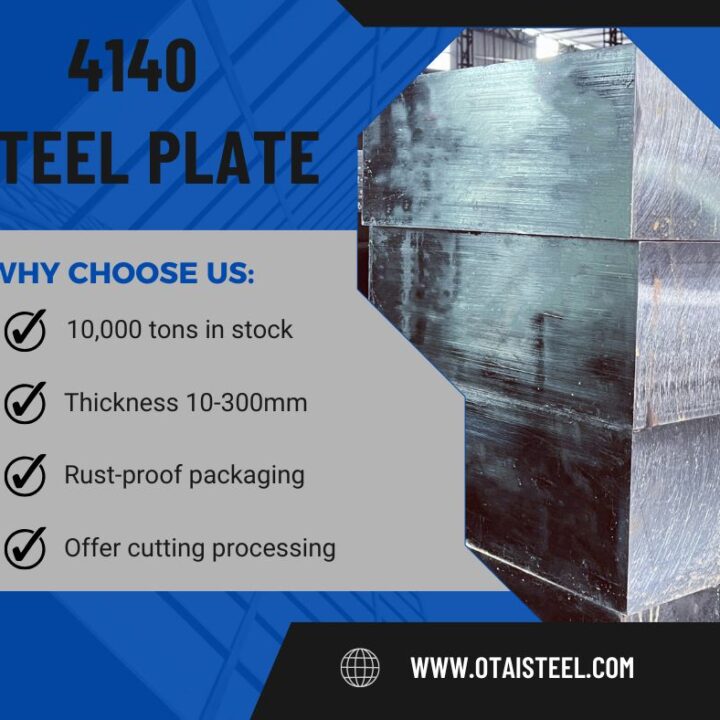
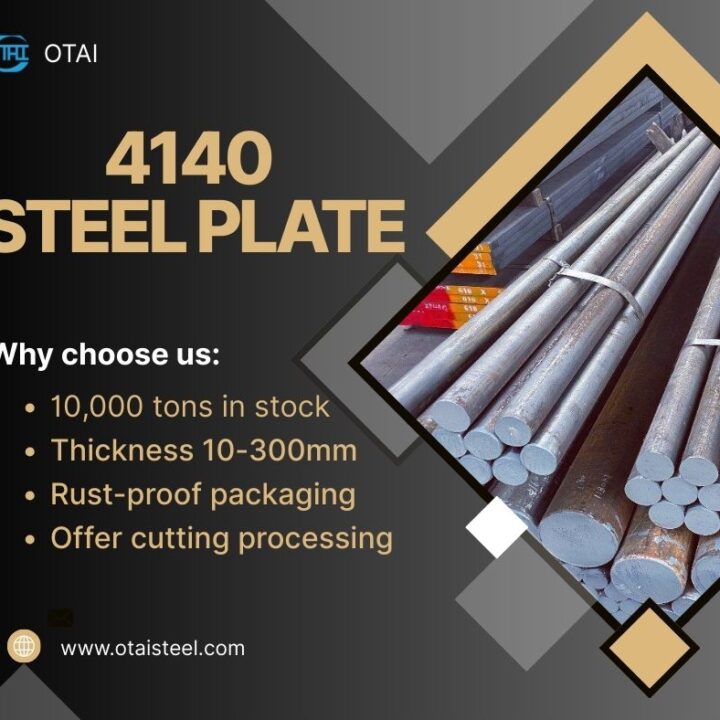
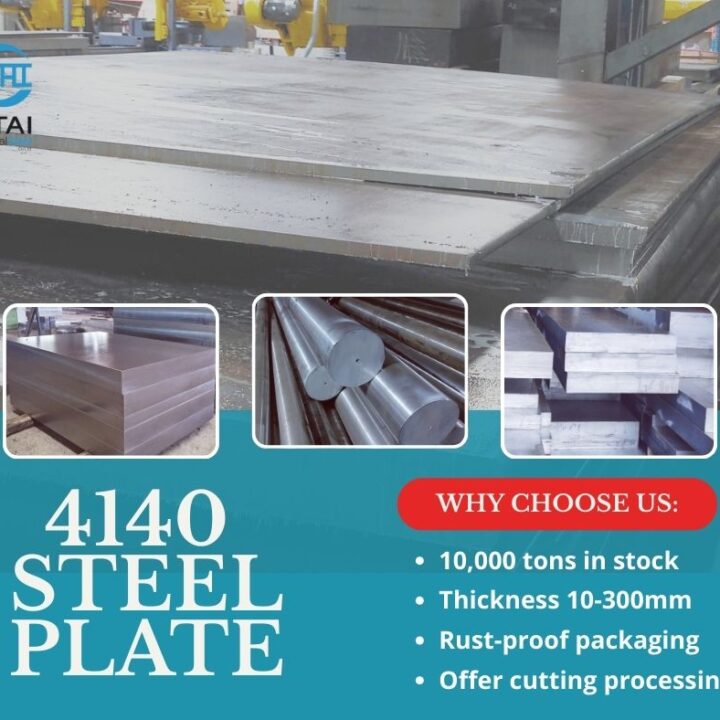
For buyers sourcing related alloy steels, Otai provides information about its 4140 alloy steel plate. Use that product information as a sourcing reference, then confirm the exact grade and specification required for your project.
📦 What Buyers Should Specify When Requesting a Quote
A complete inquiry helps a steel supplier identify suitable stock, assess processing needs and provide a quotation that matches the application. If the inquiry only states “SCM440,” the supplier may still need to clarify the dimensions, delivery condition, tolerance and inspection requirements before confirming a price.
Build a clear material specification
Start with the grade and standard. State whether the project requires SCM440 to a particular JIS edition or permits an approved alternative. Next, provide the product form, dimensions and quantity. For plates, include thickness, width and length; for bars or other forms, specify the relevant dimensions and tolerances.
Then identify the required delivery condition and any mechanical-property or hardness limits. If the material will undergo further heat treatment, machining or welding, share the relevant process requirements so the supplier can flag potential issues before dispatch.
Define documentation and inspection requirements
State whether you need an MTC, particular test results, ultrasonic testing, third-party inspection, traceability markings or special packaging. Buyers should also specify whether the documentation must follow a customer template or include additional identification details.
| Inquiry Item | Information to Provide |
|---|---|
| Material grade | SCM440 and the required standard or approved specification |
| Product form and size | Plate, bar or other form; thickness or diameter; width and length as applicable |
| Quantity | Total quantity, unit, delivery batches and any minimum-piece constraints |
| Delivery condition | As-rolled, annealed, quenched and tempered or another agreed condition |
| Mechanical requirements | Hardness, tensile properties, impact requirements or other specified criteria |
| Inspection documents | MTC, testing, traceability, UT or third-party inspection requirements |
| Processing and delivery | Cutting, machining, tolerance, packaging, destination and required delivery date |
Compare quotations on the same basis
The lowest unit price may not represent the lowest total procurement cost. One quotation may include cut-to-size material, tighter dimensional tolerances or additional inspection, while another may quote standard stock without those services. Differences in delivery condition and documentation can also affect the final cost and lead time.
Ask each supplier to quote against the same specification. If a supplier proposes a different grade, dimension or delivery condition, request a clearly documented deviation rather than allowing the difference to remain implicit. This makes technical and commercial comparisons more reliable.
🛠️ Processing, Inspection and Supply Considerations
Chemical composition is only one part of an SCM440 purchasing decision. The material must also arrive in the required form, condition and dimensions, with documentation that supports acceptance. A capable supplier should help the buyer connect these requirements before the order enters processing and shipping.
Cutting and dimensional accuracy
When a project requires cut plates or machined blanks, provide the finished or intermediate dimensions, allowable tolerances and any machining allowance. Cutting plans can affect material yield and the quantity of stock needed. For repeat orders, consistent sizing and clear identification also help reduce receiving and production delays.
Buyers should confirm whether the quotation includes cutting, grinding or CNC machining, and whether the specified tolerance applies before or after processing. This avoids comparing a finished-size quotation with a standard-stock quotation as if they were identical.
Inspection and traceability
For orders that require material verification, agree on the inspection scope in advance. Depending on the project, this may include certificate review, dimensional inspection, hardness testing, ultrasonic testing or third-party inspection. Each test should have a defined scope and acceptance criterion.
Traceability deserves particular attention when material is cut into multiple pieces. Ask how heat numbers and identification are retained through processing, packing and dispatch. If your receiving procedure requires individual piece marking or bundle-level identification, state that requirement before confirming the order.
Packaging and export delivery
Steel packaging should suit the product dimensions, transport route, handling method and destination requirements. Anti-rust protection, strapping, bundling and wooden cases may be appropriate depending on the material and shipping arrangement. The buyer should specify any special export packaging or labeling requirements in the inquiry.
For international orders, align the quotation with the destination, shipping terms, document requirements and requested delivery schedule. Early clarification helps suppliers plan stock allocation, cutting, inspection and packing without unnecessary last-minute changes.
For SCM440 procurement, the most dependable approach combines a clearly defined grade, verified chemistry, suitable delivery condition, traceable certification and practical supply planning. That combination gives buyers a stronger basis for evaluating both technical compliance and total order value.
🏭 Company Advantages
- Established export experience: Otai Special Steel has supplied international customers since 1999 and has exported steel to more than 54 countries.
- Broad inventory capacity: More than 10,000 tons of steel stock supports sourcing and supply planning across applicable grades and product forms.
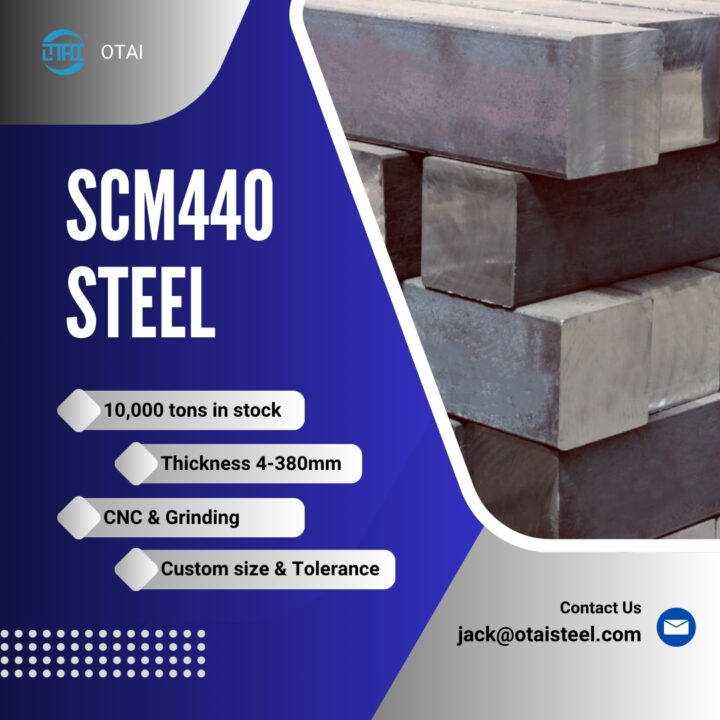
- SCM440-related supply: SCM440 belongs to the chromium-molybdenum alloy steel family. Buyers should confirm the specific grade, product form, dimensions and delivery condition when requesting current availability.
- Cutting and processing: 20 saw-cutting machines, CNC machining and grinding capabilities support cut-to-size and processing requirements where available for the specified material.
- Custom dimensions: The team can discuss size, tolerance and processing requirements to help buyers reduce unnecessary material removal and surplus stock.
- Quality documentation: Material test certificates and agreed inspection arrangements help buyers verify chemical composition and traceability. Ultrasonic testing and third-party inspection can be discussed when required by the order.
- One-stop service: Cutting, machining coordination, heat-treatment requirements, export packaging and shipping arrangements can be discussed within the scope of the project.
- International order support: Experience serving global industrial customers helps the team coordinate technical specifications, documentation and delivery requirements.
When requesting an SCM440 quotation, send the required standard, dimensions, quantity, delivery condition, mechanical-property requirements and inspection scope. This allows the supply team to check the material against your actual purchasing specification instead of relying on the grade name alone.
❓ Frequently Asked Questions
1. What is the chemical composition of SCM440 steel?
SCM440 is a chromium-molybdenum alloy steel. Commonly published JIS G 4053:2023 requirements include carbon at 0.38–0.43%, silicon at 0.15–0.35%, manganese at 0.60–0.90%, chromium at 0.90–1.20% and molybdenum at 0.15–0.30%. Phosphorus and sulfur are commonly limited to 0.030% maximum, while nickel and copper have specified residual-element limits. Always verify the applicable standard edition and product-form requirements.
2. Why can SCM440 chemical composition tables show different values?
Tables may refer to different editions of a standard, different product forms, manufacturer-specific requirements or typical analysis rather than standard limits. Some sources also omit residual elements. For purchasing acceptance, use the specification named in the contract and compare it with the actual heat analysis on the MTC.
3. Is SCM440 the same as AISI 4140 or EN 42CrMo4?
These are related chromium-molybdenum alloy steels that may serve similar applications, but their designations do not establish automatic interchangeability. Buyers should compare the applicable chemical limits, mechanical properties, delivery condition, dimensions and testing requirements. Obtain engineering or customer approval before making a substitution where the original grade is mandatory.
4. Can chemical composition alone confirm SCM440 steel quality?
No. Chemical composition confirms only part of the material requirements. Buyers may also need to verify heat-number traceability, delivery condition, hardness, tensile properties, dimensions and other specified inspection results. The required evidence depends on the purchase order, governing standard and application.
5. What should I request from a supplier when buying SCM440 steel?
Specify the grade and standard, product form, dimensions, quantity, delivery condition, tolerances, required mechanical properties and inspection scope. Request the applicable MTC and confirm how the certificate links to the supplied heat. If you require cutting, machining, ultrasonic testing, third-party inspection or special packaging, include those requirements in the inquiry before comparing quotations.