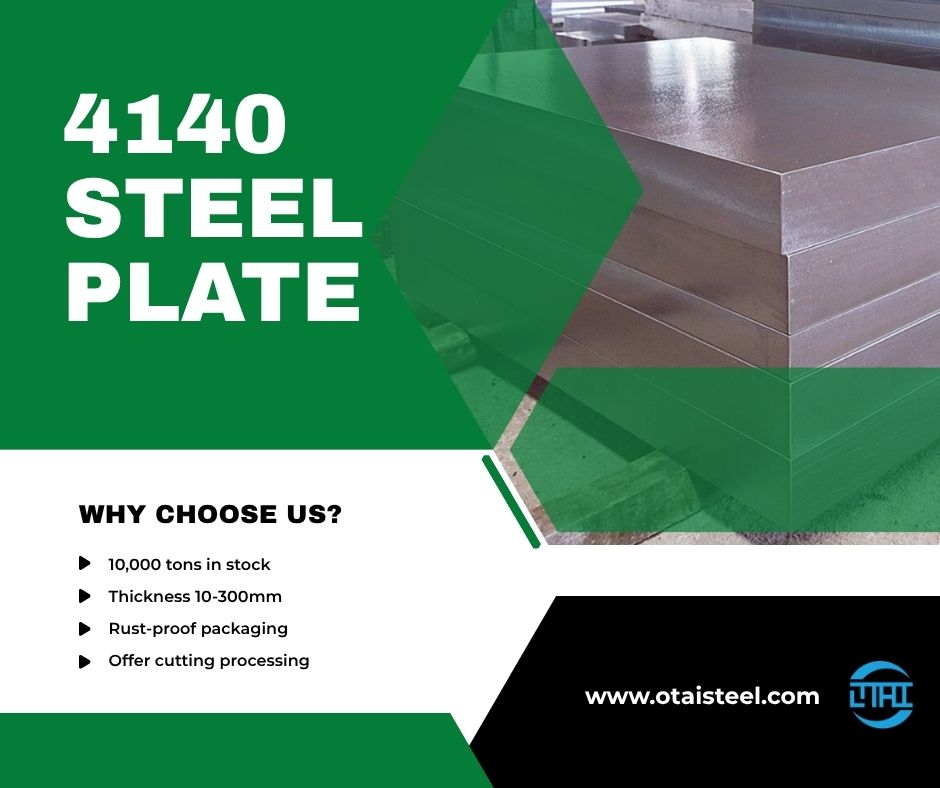
 4140 Steel European Equivalent: Understanding the Comparison
🔍 Introduction
4140 steel is a widely used alloy steel known for its strength, toughness, and versatility in various industries. While it is popular worldwide, it is crucial to understand its European equivalents to ensure compatibility and consistency in international projects. This article explores the European equivalent of 4140 steel, its chemical composition, mechanical properties, and how it compares to other steel grades commonly used in Europe.
🛠️ What is 4140 Steel?
4140 steel is a chromium-molybdenum alloy steel that offers a balanced combination of high strength, toughness, and wear resistance. Industries that demand durability and resilience—such as the automotive, aerospace, oil and gas, and heavy machinery sectors—widely use it.
Chemical Composition of 4140 Steel:
- Carbon (C): 0.38% – 0.43%
- Manganese (Mn): 0.75% – 1.00%
- Chromium (Cr): 0.80% – 1.10%
- Molybdenum (Mo): 0.15% – 0.25%
- Silicon (Si): 0.20% – 0.35%
This composition grants the steel hardness, toughness, and fatigue resistance, making it ideal for applications requiring strength and long-term performance.
🌍 4140 Steel European Equivalent
When working in European markets, knowing the European equivalent of 4140 steel ensures that you meet both material standards and mechanical properties. In Europe, 4140 steel goes by the EN (European Norm) standard.
European Equivalent to 4140 Steel
The European equivalent of 4140 steel is 42CrMo4. This grade follows the EN 10083-3 standard and is commonly used for quenching and tempering applications.
42CrMo4 Steel Properties:
- Carbon (C): 0.38% – 0.45%
- Manganese (Mn): 0.60% – 0.90%
- Chromium (Cr): 0.90% – 1.20%
- Molybdenum (Mo): 0.15% – 0.30%
- Silicon (Si): 0.20% – 0.35%
Like 4140 steel, 42CrMo4 offers an excellent balance of strength, toughness, and wear resistance. It’s a preferred choice for components subjected to high stresses and fatigue, such as gears, shafts, crankshafts, and axles.
⚙️ Mechanical Properties Comparison: 4140 Steel vs. 42CrMo4
Although 4140 steel and 42CrMo4 share similar chemical compositions, they have some differences in their mechanical properties. Let’s compare some key properties:
| Property | 4140 Steel | 42CrMo4 Steel |
|---|---|---|
| Tensile Strength | 850 – 1000 MPa | 850 – 1000 MPa |
| Yield Strength | 450 – 600 MPa | 450 – 600 MPa |
| Hardness (HB) | 180 – 250 HB | 180 – 250 HB |
| Impact Toughness | High | High |
| Fatigue Strength | Excellent | Excellent |
| Machinability | Moderate to Good | Moderate |
Both materials have similar tensile strength, yield strength, and hardness. However, 42CrMo4 may have slightly better fatigue strength due to its specific heat treatment processes.
🏗️ Applications of 4140 Steel and 42CrMo4 Steel
Manufacturers use both 4140 steel and 42CrMo4 steel in similar applications, particularly for parts requiring high strength, wear resistance, and fatigue resistance. Some common uses include:
1. Automotive Components
Both steels are used in automotive manufacturing for parts like gears, axles, crankshafts, and connecting rods, all of which must endure high stresses and maintain their mechanical properties over time.
2. Aerospace Applications
In aerospace, 4140 steel and 42CrMo4 steel are used for components that face high mechanical loads and temperature fluctuations. Examples include landing gears, engine components, and turbine shafts.
3. Oil and Gas Industry
Both grades are used in the oil and gas industry for components like drill pipes, valves, and pressure vessels, which must endure extreme conditions, including high pressure and corrosive environments.
4. Heavy Machinery
42CrMo4 is especially popular in heavy machinery for components such as crankshafts, gears, and shafts, which experience continuous mechanical loading. 4140 steel, with similar properties, also excels in these applications.
⚙️ Other European Equivalent Grades
Besides 42CrMo4, several other steel grades in the EN series may be considered equivalent to 4140 steel in certain applications. These include:
- 35CrMo: A slightly lower alloy steel with comparable properties to 4140 for applications that don’t require as high wear resistance.
- 50CrMo4: A stronger variant that contains more chromium and molybdenum, offering improved strength and wear resistance compared to 4140 steel.
Each of these grades may be more suitable for specific uses depending on the application’s requirements.
🏆 Advantages of 42CrMo4 Steel (European Equivalent)
42CrMo4 steel offers several advantages that make it a popular choice in Europe and internationally:
1. High Strength and Toughness
Both 4140 steel and 42CrMo4 steel offer a balanced combination of strength and toughness, making them ideal for applications that require fatigue resistance and the ability to endure high mechanical loads.
2. Versatility in Applications
42CrMo4 performs well in both dynamic and static loading conditions, making it suitable for a wide range of engineering applications, from automotive to aerospace and heavy machinery.
3. Durability and Wear Resistance
42CrMo4 excels in wear resistance, which is crucial for components exposed to high friction and abrasion, such as gears, shafts, and bearings.
🏆 Company Advantages
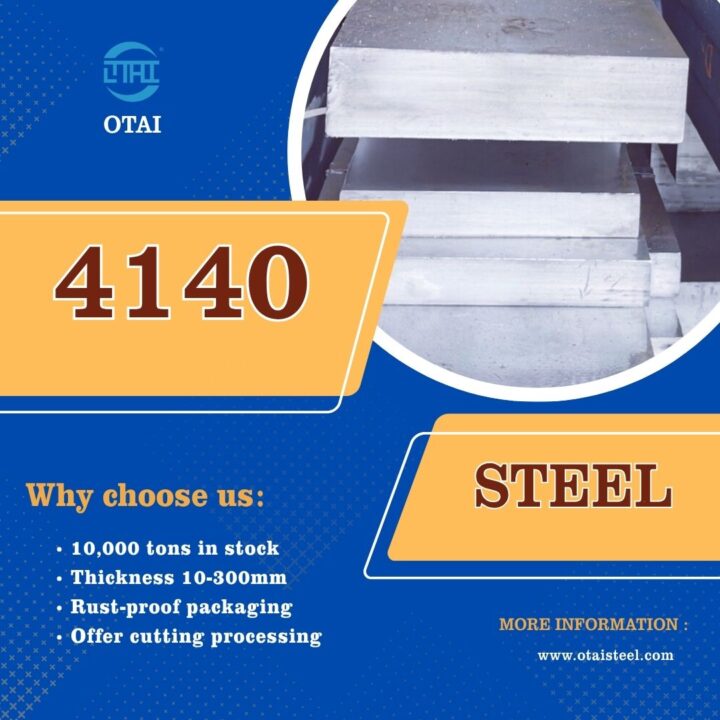
At Otai Special Steel, we provide high-quality 4140 steel and 42CrMo4 steel products tailored to meet your specific needs. Our services include:
- Custom Cutting: We offer precise cutting services for 4140 and 42CrMo4 plates to meet your specifications.
- Heat Treatment: We perform treatments like carburizing, tempering, and quenching to optimize the material’s properties.
- Quality Assurance: We perform chemical analysis, ultrasonic testing, and visual inspections to ensure that our products meet the highest quality standards.
❓ Frequently Asked Questions
1. What is the European equivalent of 4140 steel?
The EN 10083-3 standard recognizes 42CrMo4 as the European equivalent of 4140 steel.
2. Is 42CrMo4 the same as 4140 steel?
Yes, 42CrMo4 and 4140 steel are nearly identical in terms of chemical composition, mechanical properties, and applications, with only minor regional naming differences.
3. What are the applications of 4140 steel and 42CrMo4?
Manufacturers use both steels in applications such as automotive components, aerospace parts, oil and gas equipment, and heavy machinery, where high strength, fatigue resistance, and wear resistance are essential.