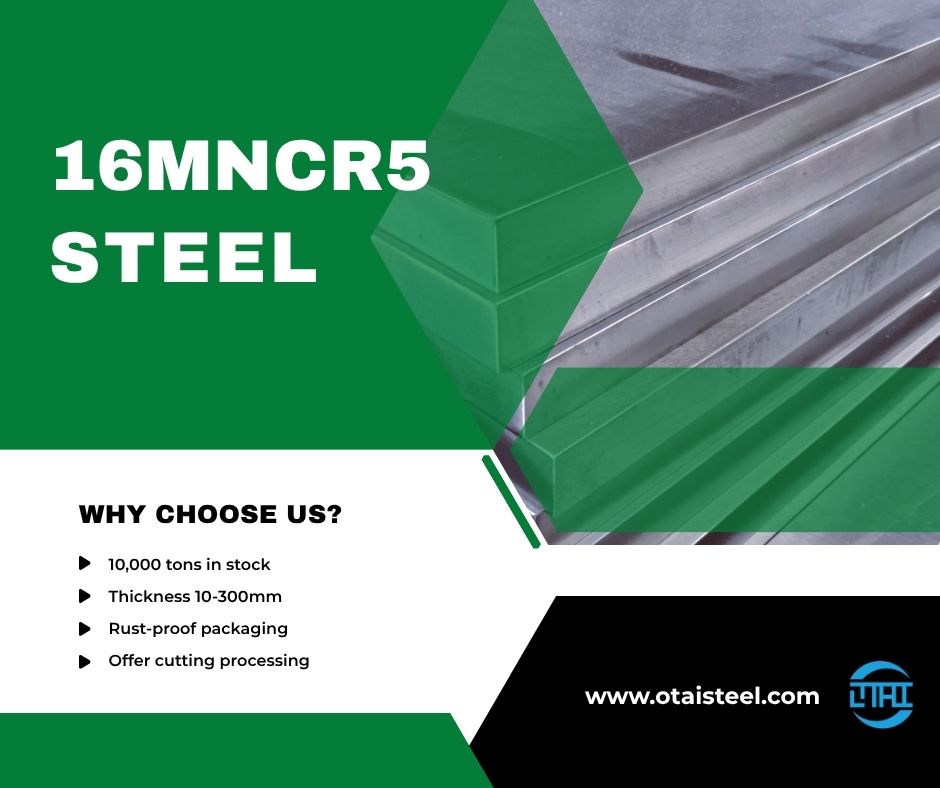
 Steel Grade 16MnCr5: Properties, Applications, and Benefits
🔍 Introduction to 16MnCr5 Steel
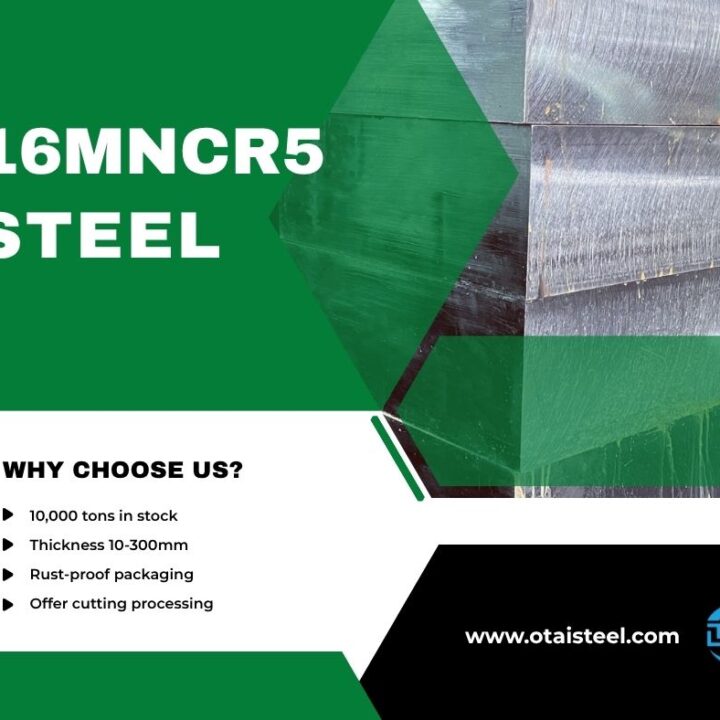
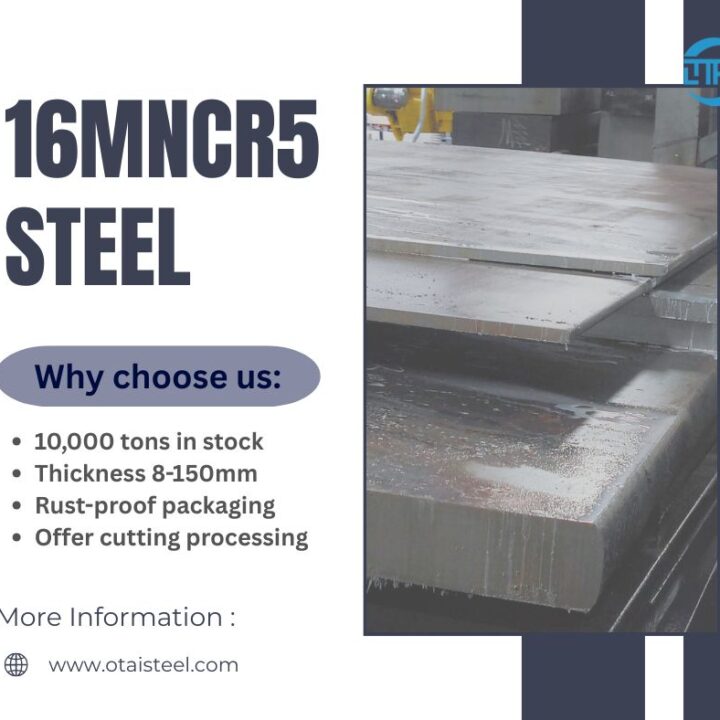
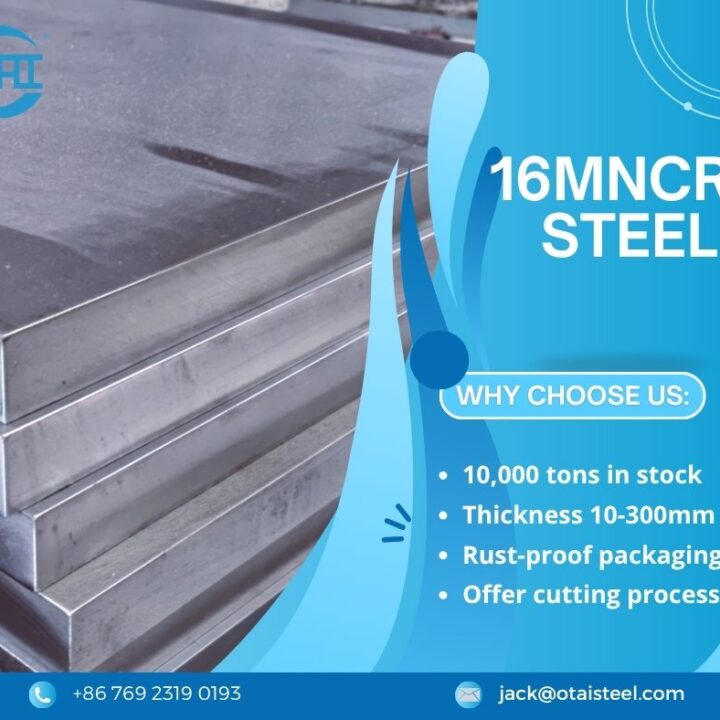
16MnCr5 steel is a high-quality alloy steel that engineers commonly use in various engineering applications. It offers high strength, good hardenability, and excellent wear resistance. Manufacturers often utilize it in the manufacturing of gears, shafts, and other high-stress components. This steel grade offers a balanced combination of strength, toughness, and machinability, making it suitable for numerous industrial applications.
In this article, we will dive into the key features of 16MnCr5 steel, its chemical composition, heat treatment process, and the industries that benefit from its use.
🛠️ What is 16MnCr5 Steel?
16MnCr5 is a medium-carbon chromium-manganese steel. The steel’s composition includes manganese and chromium, which provide improved strength, hardness, and wear resistance. The “16” in the name refers to the carbon content (approximately 0.16%), while Mn stands for manganese and Cr stands for chromium.
Chemical Composition of 16MnCr5 Steel:
- Carbon (C): 0.14% – 0.20%
- Manganese (Mn): 0.70% – 1.00%
- Chromium (Cr): 0.80% – 1.10%
- Silicon (Si): 0.10% – 0.35%
- Phosphorus (P): ≤ 0.035%
- Sulfur (S): ≤ 0.035%
The manganese helps improve the steel’s toughness and hardenability, while chromium enhances corrosion resistance and contributes to overall hardness.
🔥 Heat Treatment of 16MnCr5 Steel
One of the key features of 16MnCr5 steel is its ability to undergo heat treatment processes such as carburizing, quenching, and tempering. These treatments help increase the material’s hardness, wear resistance, and strength, making it ideal for high-performance components.
1. Carburizing
- Carburizing is a heat treatment process that introduces carbon to the surface of 16MnCr5 steel to increase its surface hardness. This is especially useful for components like gears, shafts, and bearings, which need high wear resistance on their surfaces.
- The carbon content in the outer layer of the material can reach up to 0.9% after carburizing, which results in a high hardness layer.
2. Quenching and Tempering
- Quenching involves heating the steel to a high temperature and then rapidly cooling it, which increases its hardness.
- Tempering follows quenching to relieve stress and reduce brittleness, making the steel more durable without losing its strength. This process gives 16MnCr5 steel a balance between high hardness and toughness.
- After quenching and tempering, 16MnCr5 achieves a hardness range of HRC 58-62, which is ideal for highly stressed components like gears and crankshafts.
⚙️ Applications of 16MnCr5 Steel
Due to its excellent hardness, wear resistance, and toughness, 16MnCr5 steel is used in a wide range of applications where durability and high performance are crucial. Here are some key industries that benefit from 16MnCr5 steel:
1. Automotive Industry
16MnCr5 steel is frequently used in the automotive industry for parts like gears, shafts, and crankshafts. These components need to endure high stresses and wear, making 16MnCr5 an ideal choice due to its combination of strength, hardness, and toughness.
- Example: Drive shafts made from 16MnCr5 steel offer a good balance between durability and wear resistance under high loads.
2. Manufacturing and Engineering
In manufacturing and engineering, 16MnCr5 steel is used for gears, sprockets, and bearings that operate under high loads and need high wear resistance. This steel grade can withstand significant mechanical stresses and harsh operating conditions.
- Example: Industrial gears made from 16MnCr5 can withstand heavy-duty use and provide extended service life.
3. Aerospace and Defense
In the aerospace and defense sectors, 16MnCr5 steel is utilized for components that require high strength and toughness, such as engine parts, actuators, and landing gear.
- Example: Landing gear components made from 16MnCr5 steel provide the necessary strength and durability to support aircraft during take-off and landing.
4. Heavy Machinery and Oil & Gas
16MnCr5 steel is also commonly used in heavy machinery and oil & gas industries for parts that experience high wear, abrasion, and fatigue. Examples include gears, shafts, and crankshafts.
- Example: Drill bits made from 16MnCr5 steel can withstand the tough conditions found in oil exploration, where high strength and durability are essential.
🏆 Advantages of 16MnCr5 Steel
The high hardness, strength, and wear resistance of 16MnCr5 steel offer several benefits for applications in demanding environments:
1. Excellent Wear Resistance
The high carbon content and the ability to undergo carburizing treatment provide 16MnCr5 steel with exceptional wear resistance. This makes it ideal for components subjected to continuous friction, such as gears, bearings, and sprockets.
2. High Strength and Toughness
16MnCr5 steel retains high strength even at elevated temperatures and under heavy mechanical loads. Its toughness ensures that components are resistant to cracking and fatigue over long periods.
3. Good Hardenability
With the right heat treatment, 16MnCr5 steel can achieve a high surface hardness, making it perfect for parts that need to maintain their integrity under extreme conditions, such as crankshafts and gears.
4. Improved Fatigue Resistance
Due to its excellent toughness and high strength, 16MnCr5 steel exhibits great fatigue resistance, making it suitable for high-stress components that undergo repeated cycles of load.
🏆 Company Advantages
At Otai Special Steel, we offer 16MnCr5 steel in a variety of heat-treated conditions to meet your specifications. Our services include:
- Custom Cutting: We provide precise cutting services for 16MnCr5 steel in various thicknesses and dimensions.
- Heat Treatment: We offer carburizing, quenching, and tempering to optimize the hardness and mechanical properties of 16MnCr5 steel.
- Quality Assurance: Our products undergo rigorous chemical analysis, hardness testing, and ultrasonic testing to ensure that they meet the highest standards.
❓ Frequently Asked Questions
1. What is 16MnCr5 steel used for?
Manufacturers commonly use 16MnCr5 steel to manufacture parts like gears, shafts, crankshafts, and bearings, particularly in the automotive, aerospace, and manufacturing industries.
2. How does heat treatment affect 16MnCr5 steel?
Heat treatment processes such as carburizing, quenching, and tempering increase the hardness, strength, and wear resistance of 16MnCr5 steel, making it ideal for high-stress applications.
3. What is the chemical composition of 16MnCr5 steel?
The chemical composition of 16MnCr5 steel includes carbon (0.14% – 0.20%), manganese (0.70% – 1.00%), and chromium (0.80% – 1.10%), contributing to its excellent strength, toughness, and wear resistance.