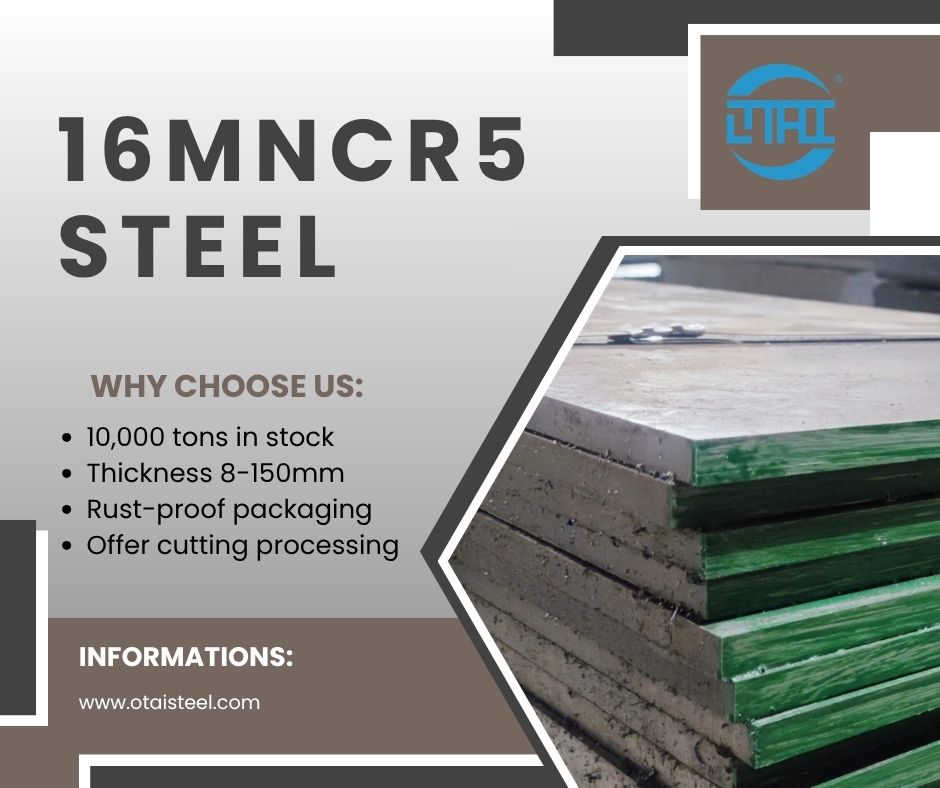
 Mechanical Properties of 16MnCr5 – Engineering Performance
Understanding the mechanical properties of 16MnCr5 is essential for engineers, heat treatment specialists, and industrial buyers who require a steel grade that combines excellent core toughness with a hard, wear-resistant surface. As one of the most widely used case-hardening steels in Europe, 16MnCr5 offers an outstanding balance of strength, durability, machinability, and carburizing performance.
The popularity of mechanical properties of 16MnCr5 comes from its ability to develop a very hard surface layer after carburizing while maintaining a tough and ductile core. This combination allows manufacturers to produce gears, shafts, sprockets, pinions, and transmission components that withstand heavy loads and repeated contact stresses.
Many buyers searching for mechanical properties of 16MnCr5 also want information about 16MnCr5 hardness, 16MnCr5 tensile strength, 16MnCr5 carburized hardness, 16MnCr5 heat treatment properties, and 16MnCr5 steel applications. Understanding these characteristics helps engineers select the right material and heat treatment process for demanding mechanical systems.
🔵 What Is 16MnCr5 Steel?
16MnCr5 is a low-carbon alloy carburizing steel defined under the EN 10084 standard. The steel contains manganese and chromium, which improve hardenability and enhance mechanical performance after heat treatment.
Manufacturers typically use 16MnCr5 for parts that require a hard wear-resistant surface and a strong, impact-resistant core. Unlike through-hardening steels, 16MnCr5 achieves its best performance after carburizing, quenching, and tempering.
Because of this unique property combination, engineers frequently specify 16MnCr5 for automotive transmission systems, industrial gearboxes, agricultural machinery, and heavy equipment.
| Property Category | Performance Level |
|---|---|
| Core Toughness | High |
| Surface Hardness | Excellent |
| Wear Resistance | Excellent |
| Machinability | Good |
| Carburizing Response | Excellent |
🟢 Chemical Composition and Its Effect on Mechanical Properties
The excellent mechanical properties of 16MnCr5 originate from its carefully controlled alloy composition. Carbon contributes to hardness after carburizing, while chromium and manganese improve hardenability and wear resistance.
| Element | Content (%) | Function |
|---|---|---|
| Carbon (C) | 0.14–0.19 | Case hardening capability |
| Manganese (Mn) | 1.00–1.30 | Improves hardenability |
| Chromium (Cr) | 0.80–1.10 | Wear resistance |
| Silicon (Si) | ≤0.40 | Strength enhancement |
This alloy combination creates a steel grade that responds exceptionally well to carburizing and develops excellent fatigue resistance under cyclic loading conditions.
🟠 Mechanical Properties in the Annealed Condition
Before heat treatment, the mechanical properties of 16MnCr5 provide good machinability and formability. Manufacturers often machine complex parts in the annealed condition before carburizing and final hardening.
The relatively low hardness of annealed 16MnCr5 allows efficient machining while maintaining dimensional stability. This characteristic reduces manufacturing costs and improves productivity during large-scale production.
| Property | Typical Value |
|---|---|
| Tensile Strength | 600–800 MPa |
| Yield Strength | 350–500 MPa |
| Elongation | 15–20% |
| Hardness | 170–220 HB |
🟣 Mechanical Properties After Carburizing
Most engineers evaluate the mechanical properties of 16MnCr5 after carburizing because this condition represents the steel’s primary service state. During carburizing, carbon diffuses into the surface layer and significantly increases potential hardness after quenching.
The hardened case provides excellent wear resistance, while the low-carbon core maintains toughness and impact resistance. This combination allows gears and shafts to resist both surface wear and internal fracture.
| Property | Typical Value |
|---|---|
| Surface Hardness | 58–62 HRC |
| Core Hardness | 30–45 HRC |
| Wear Resistance | Excellent |
| Contact Fatigue Resistance | High |
🔷 Heat Treatment and Its Influence on Mechanical Properties of 16MnCr5
Heat treatment plays the most important role in developing the final mechanical properties of 16MnCr5. Although the steel offers reasonable strength in the annealed condition, carburizing, quenching, and tempering transform it into a high-performance engineering material suitable for demanding power transmission applications.
During carburizing, carbon atoms penetrate the surface layer and create a carbon-rich case. After quenching, this layer transforms into hard martensite, while the core remains comparatively tougher because of its lower carbon content. Tempering then reduces internal stresses and improves dimensional stability without significantly reducing surface hardness.
This treatment sequence enables manufacturers to achieve exceptional wear resistance and contact fatigue strength while maintaining sufficient core toughness to absorb shock loads.
| Heat Treatment Stage | Purpose | Result |
|---|---|---|
| Carburizing | Increase surface carbon | Hard case formation |
| Quenching | Transform microstructure | High hardness |
| Tempering | Reduce stress | Improved toughness |
| Final Inspection | Verify properties | Quality assurance |
🔴 Hardness and Strength Characteristics
Among all the mechanical properties of 16MnCr5, hardness receives the most attention because it directly influences wear resistance and service life. After proper carburizing treatment, the steel develops a very hard outer layer that withstands friction, rolling contact, and abrasive wear.
At the same time, the tougher core prevents brittle fracture when components encounter impact loads. This dual-property structure makes 16MnCr5 one of the preferred materials for heavily loaded gears and shafts.
The combination of a hard surface and tough core often outperforms many through-hardened steels in applications involving continuous cyclic loading.
| Mechanical Characteristic | Performance Level |
|---|---|
| Surface Hardness | Excellent |
| Core Toughness | High |
| Wear Resistance | Excellent |
| Fatigue Strength | High |
| Impact Resistance | Good |
⚙️ Industrial Applications of 16MnCr5
The excellent mechanical properties of 16MnCr5 make the steel suitable for numerous engineering applications. Automotive manufacturers use it extensively for transmission gears, differential gears, synchronizer hubs, and pinion shafts. These components require high contact fatigue resistance and outstanding wear performance.
Industrial gearbox manufacturers also rely on 16MnCr5 because the material maintains dimensional stability and mechanical reliability under heavy loads. Agricultural machinery producers use the steel for sprockets, shafts, and transmission parts that operate in abrasive environments.
In addition, mining equipment, construction machinery, and power transmission systems frequently utilize 16MnCr5 components because they combine durability with long service life.
| Industry | Typical Components |
|---|---|
| Automotive | Gears, pinions, shafts |
| Industrial Gearboxes | Transmission gears |
| Agricultural Machinery | Sprockets and drive shafts |
| Mining Equipment | Wear-resistant components |
| Construction Machinery | Transmission systems |
📈 16MnCr5 vs 20MnCr5 Mechanical Properties
Engineers often compare 16MnCr5 and 20MnCr5 because both materials belong to the carburizing steel family. Although they share many similarities, differences in carbon content create subtle variations in mechanical performance.
16MnCr5 generally offers excellent toughness and dimensional stability, while 20MnCr5 can achieve slightly higher strength after heat treatment. The final choice depends on application requirements, component size, and heat treatment conditions.
| Property | 16MnCr5 | 20MnCr5 |
|---|---|---|
| Carbon Content | 0.14–0.19% | 0.17–0.22% |
| Case Hardening Ability | Excellent | Excellent |
| Core Toughness | Higher | Good |
| Wear Resistance | Excellent | Excellent |
| Gear Applications | Widely Used | Widely Used |
🛠️ Why Engineers Choose 16MnCr5
Engineers continue to specify 16MnCr5 because the material delivers an outstanding balance of manufacturing efficiency and operational performance. The steel machines easily before heat treatment, responds consistently to carburizing, and develops excellent surface hardness after quenching.
Another major advantage involves fatigue performance. Gears and transmission components experience millions of stress cycles during operation. The superior contact fatigue resistance associated with the mechanical properties of 16MnCr5 helps extend service life and reduce maintenance costs.
For these reasons, 16MnCr5 remains one of the most trusted case-hardening steels in modern engineering.
🏭 Company Advantages – Otai Special Steel
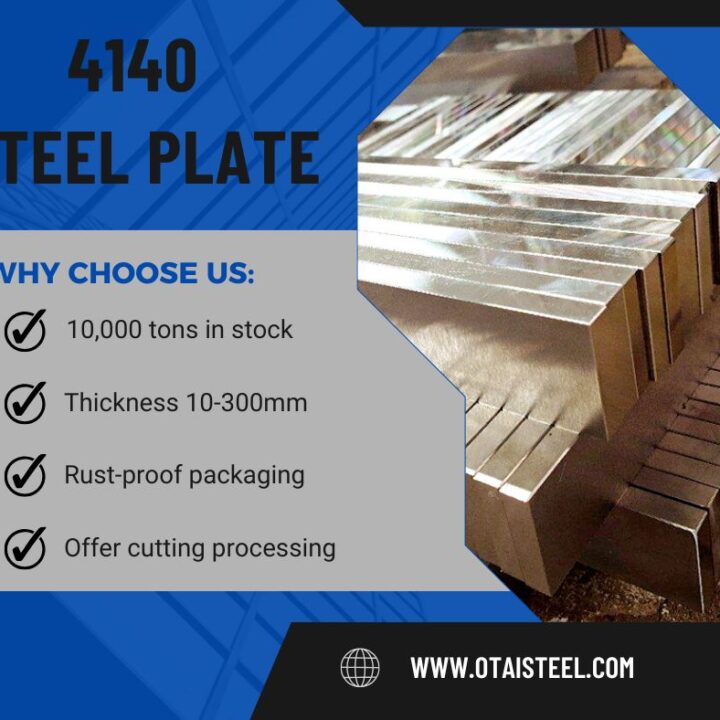
- 📏 16MnCr5 steel plate thickness range: 8–150mm in stock
- 📦 Large inventory available for immediate shipment
- ✂️ Precision cutting, machining, and heat treatment services
- 🔬 Ultrasonic testing and third-party inspection support
- 📦 Anti-rust packaging, strap packaging, and wooden box packaging available
- 🌍 Extensive experience supplying global industrial customers
❓ FAQ – Mechanical Properties of 16MnCr5
1. What are the key mechanical properties of 16MnCr5?
The key properties include high surface hardness after carburizing, excellent wear resistance, strong fatigue performance, and a tough core structure.
2. What hardness can 16MnCr5 achieve after carburizing?
The surface hardness typically reaches 58–62 HRC after proper carburizing, quenching, and tempering.
3. Is 16MnCr5 suitable for gears?
Yes. Its combination of wear resistance and core toughness makes it one of the most widely used gear steels in automotive and industrial applications.
4. What industries commonly use 16MnCr5 steel?
Automotive, industrial gearbox, mining, agricultural machinery, and construction equipment manufacturers frequently use 16MnCr5.
5. How does 16MnCr5 compare with 20MnCr5?
Both steels offer excellent carburizing performance, but 16MnCr5 often provides slightly better toughness while maintaining excellent wear resistance.
🏁 Conclusion
The outstanding mechanical properties of 16MnCr5 make this steel one of the most popular carburizing grades for gears, shafts, and power transmission components. Its ability to develop a hard wear-resistant case while maintaining a strong and tough core provides an excellent balance of performance and reliability.
Whether used in automotive transmissions, industrial gearboxes, or heavy machinery, 16MnCr5 continues to deliver exceptional durability, fatigue resistance, and long-term value. With proper heat treatment, this versatile steel meets the demanding requirements of modern engineering applications around the world.