 Grade 16MnCr5: Meaning, Properties, Equivalent and Applications
📑 Table of Contents
🧪 2. Grade 16MnCr5 Chemical Composition
⚙️ 3. Grade 16MnCr5 Properties
🔥 4. Grade 16MnCr5 Heat Treatment
🏭 5. Grade 16MnCr5 Applications
🔄 6. Grade 16MnCr5 Equivalent Grades
📦 7. Otai Special Steel Advantages
🔍 1. What Is Grade 16MnCr5?
Grade 16MnCr5 is a low-carbon manganese-chromium case-hardening steel widely used in automotive and mechanical engineering. Its European material number is 1.7131. The grade belongs to the case-hardening steel family covered by European standards such as EN 10084 and EN ISO 683-3.
The main feature of grade 16MnCr5 is its ability to develop a hard, wear-resistant surface while retaining a relatively tough core. Manufacturers achieve this performance through carburizing, hardening and tempering.
This combination makes 16MnCr5 particularly useful for components that experience repeated contact, friction and mechanical loads. Typical examples include gears, pinions, shafts, camshafts and piston pins.
Unlike medium-carbon steels such as 42CrMo4, 16MnCr5 does not primarily rely on through-hardening. Instead, engineers select it when the component needs a strong hardened surface with a tougher interior.
Basic Identification of 16MnCr5
| Item | Information |
|---|---|
| Steel Grade | 16MnCr5 |
| Material Number | 1.7131 |
| Steel Type | Low-carbon case-hardening alloy steel |
| Principal Alloying Elements | Manganese and chromium |
| Typical Heat Treatment | Carburizing + hardening + tempering |
| Typical Applications | Gears, pinions, shafts, camshafts and piston pins |
What Does the Name 16MnCr5 Mean?
The European designation provides useful information about the steel. The number “16” relates to the nominal carbon level, which is approximately 0.16%. “MnCr” indicates manganese and chromium as the main alloying elements.
The final number forms part of the European steel designation system. It should not be interpreted simply as 5% chromium. In fact, the chromium content of 16MnCr5 is normally around 0.80–1.10% under commonly referenced EN specifications.
Therefore, understanding the designation helps buyers distinguish 16MnCr5 from other alloy steels. It also explains why the grade is well suited to carburizing and case hardening.
Why Is 16MnCr5 a Case-Hardening Steel?
The relatively low carbon content allows the core to retain useful toughness after surface hardening. During carburizing, manufacturers add carbon to the outer layer at high temperature.
The enriched surface can then transform into a hard martensitic layer during quenching. The result is a component with two important characteristics: a wear-resistant surface and a tougher core.
This structure gives grade 16MnCr5 an important advantage in gear and transmission applications. The teeth need high surface hardness to resist contact wear, while the core needs sufficient toughness to withstand bending and impact.
🧪 2. Grade 16MnCr5 Chemical Composition
The chemical composition determines how 16MnCr5 responds to carburizing, hardening and machining. A commonly referenced EN specification gives carbon at approximately 0.14–0.19%, manganese at 1.00–1.30% and chromium at 0.80–1.10%.
Silicon, phosphorus and sulfur also have controlled limits. However, buyers should always check the exact product standard because chemical requirements can vary between specifications and product forms.
| Element | Typical EN Range / Limit | Function |
|---|---|---|
| Carbon (C) | 0.14–0.19% | Supports carburizing and surface hardening |
| Silicon (Si) | Max. 0.40% | Supports strength and deoxidation |
| Manganese (Mn) | 1.00–1.30% | Improves hardenability and core strength |
| Phosphorus (P) | Max. 0.025% | Controlled to maintain toughness and steel quality |
| Sulfur (S) | Max. 0.035% | Controlled for cleanliness and machinability |
| Chromium (Cr) | 0.80–1.10% | Improves hardenability and wear resistance |
How Carbon Affects 16MnCr5
Carbon plays a particularly important role in this steel. The original low-carbon composition provides a suitable core structure. During carburizing, the manufacturer increases carbon concentration near the surface.
This difference between the original chemistry and the carburized layer allows engineers to obtain different properties within the same component. The outer surface becomes hard, while the core remains more resistant to impact.
Role of Manganese and Chromium
Manganese improves hardenability and contributes to the strength of the core. Chromium also improves hardenability and supports wear resistance.
Together, these alloying elements help 16MnCr5 achieve the performance required for case-hardened components. This is one reason why the grade remains popular for mechanical power transmission.
For buyers comparing 16MnCr5 chemical composition with another steel, it is important to compare the full composition rather than one element alone.
⚙️ 3. Grade 16MnCr5 Properties
The properties of grade 16MnCr5 depend strongly on its delivery condition and heat treatment. The material behaves differently in soft-annealed condition than after carburizing and hardening.
In the soft-annealed condition, 16MnCr5 normally offers relatively low hardness and good machinability. After case hardening, the surface hardness increases dramatically.
| Property | Typical Information |
|---|---|
| Material Number | 1.7131 |
| Soft-Annealed Hardness | Up to approximately 207 HBW |
| Steel Classification | Case-hardening alloy steel |
| Core Performance | Good toughness and strength after appropriate treatment |
| Surface Performance | High hardness and wear resistance after carburizing and hardening |
| Fatigue Performance | Good for appropriately designed and treated components |
Hardness of 16MnCr5
Hardness values require careful interpretation. A supplier may quote hardness for the raw delivery condition, while an engineering drawing may specify surface hardness after carburizing and hardening.
These are not the same measurement. For example, soft-annealed material can have a hardness below approximately 207 HBW, while the finished case-hardened component can have a much harder surface.
Therefore, when purchasing 16MnCr5, customers should specify whether the required hardness applies to the supplied material or the finished component.
Machinability
Soft-annealed 16MnCr5 provides suitable machinability for manufacturing gears, shafts and other components before carburizing. Manufacturers can machine the component close to its final dimensions before the hardening process.
After carburizing and hardening, the surface becomes much harder. Therefore, manufacturers usually complete most conventional machining operations before final case hardening.
Dimensional Stability
Heat treatment can cause dimensional changes. Component geometry, carburizing temperature, quenching conditions and material section size all influence the final result.
For precision gears and similar parts, manufacturers normally leave suitable machining allowance before heat treatment. They then perform finishing operations after hardening when necessary.
🔥 4. Grade 16MnCr5 Heat Treatment
Heat treatment determines the final performance of grade 16MnCr5. The most common route is carburizing followed by hardening and tempering.
| Process | Typical Purpose |
|---|---|
| Soft Annealing | Reduce hardness and improve machinability |
| Carburizing | Increase carbon concentration at the surface |
| Hardening | Create a hard martensitic surface layer |
| Tempering | Reduce internal stress and balance hardness and toughness |
The exact heat-treatment temperatures should follow the applicable standard and the heat-treatment supplier’s qualified procedure. Component dimensions and required case depth can significantly affect the final parameters.
Carburizing
Carburizing introduces additional carbon into the surface of the steel at elevated temperature. The longer the carburizing cycle and the greater the process intensity, the deeper the carbon-enriched layer can become.
After carburizing, quenching produces the high-hardness case required for wear-resistant components. Low-temperature tempering then helps reduce residual stresses.
The final case depth should match the application. Gears exposed to high contact loads may require different case-hardening requirements from smaller or less heavily loaded components.
For this reason, a professional specification should state the required case depth and surface hardness instead of simply requesting “heat-treated 16MnCr5.”
🏭 5. Grade 16MnCr5 Applications
The most important grade 16MnCr5 applications involve mechanical components that require a wear-resistant surface and a tough supporting core.
| Application | Industry | Reason for Selection |
|---|---|---|
| Gears | Automotive and industrial machinery | Hard case and tough core |
| Pinions | Power transmission | Good contact and wear resistance |
| Camshafts | Automotive | Suitable for hardened working surfaces |
| Piston Pins | Automotive engines | Good balance of surface hardness and core toughness |
| Shafts | Mechanical engineering | Good fatigue and load performance |
| Levers | Industrial machinery | Suitable for loaded mechanical components |
Gears remain one of the best examples. Gear teeth experience repeated contact pressure and sliding. A properly carburized and hardened surface can resist wear and contact fatigue, while the tougher core helps the tooth withstand bending loads.
For this reason, 16MnCr5 gear steel remains a practical choice for automotive transmissions and industrial power-transmission systems.
🔄 6. Grade 16MnCr5 Equivalent Grades
When buyers search for a 16MnCr5 equivalent, they often compare the grade with other case-hardening steels. However, an equivalent grade does not always provide exactly identical chemistry, hardenability or heat-treatment behavior.
| Standard / Designation | Grade | Relationship |
|---|---|---|
| EN | 16MnCr5 | European steel grade |
| EN Material Number | 1.7131 | Material number for 16MnCr5 |
| EN | 16MnCrS5 | Sulfur-modified related grade |
| International Comparison | Various case-hardening grades | Must be checked by chemistry and hardenability |
The safest approach is to compare chemical composition, mechanical requirements, hardenability, case-hardening response and applicable standards before substituting another steel.
In other words, 16MnCr5 1.7131 identifies the same European grade and material number relationship, but another country’s grade should not automatically replace it without technical confirmation.
📦 7. Otai Special Steel Advantages
Finding the right grade 16MnCr5 is only the first step. For production projects, buyers also need reliable stock, accurate dimensions, quality inspection and suitable export packaging. Otai Special Steel supplies 16MnCr5 / 1.7131 for customers in automotive, machinery and other industrial sectors.
Our stock and processing services help customers reduce preparation time and simplify international steel purchasing. We can supply material according to the required grade, dimensions, delivery condition and inspection requirements.
Why Choose Otai for 16MnCr5?
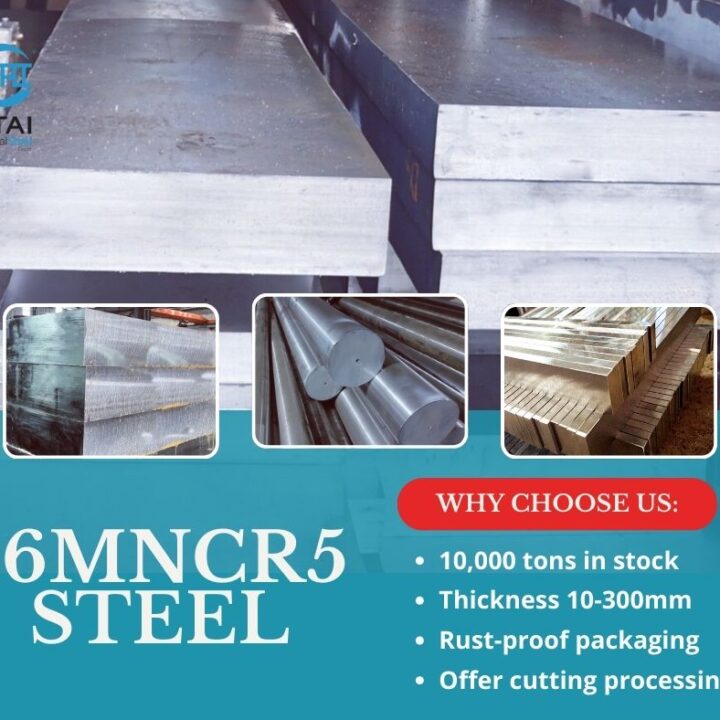
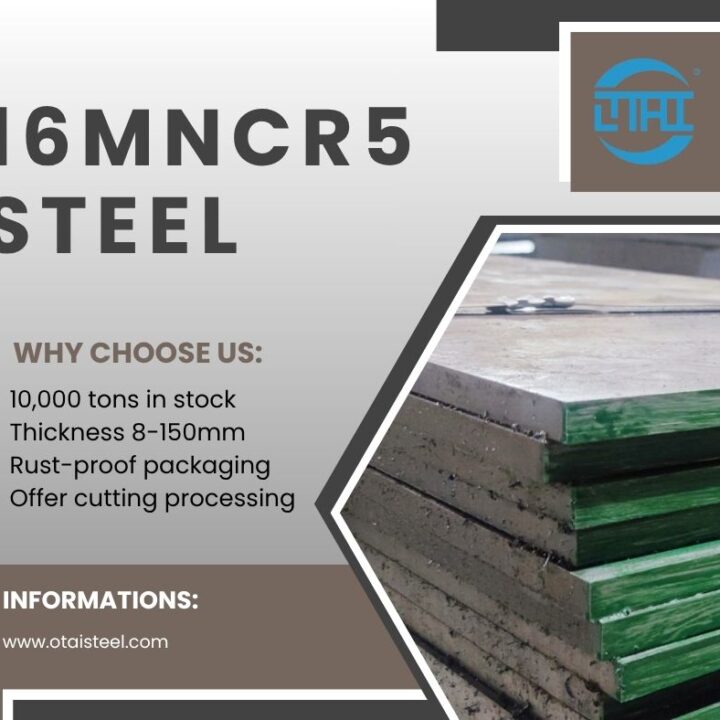
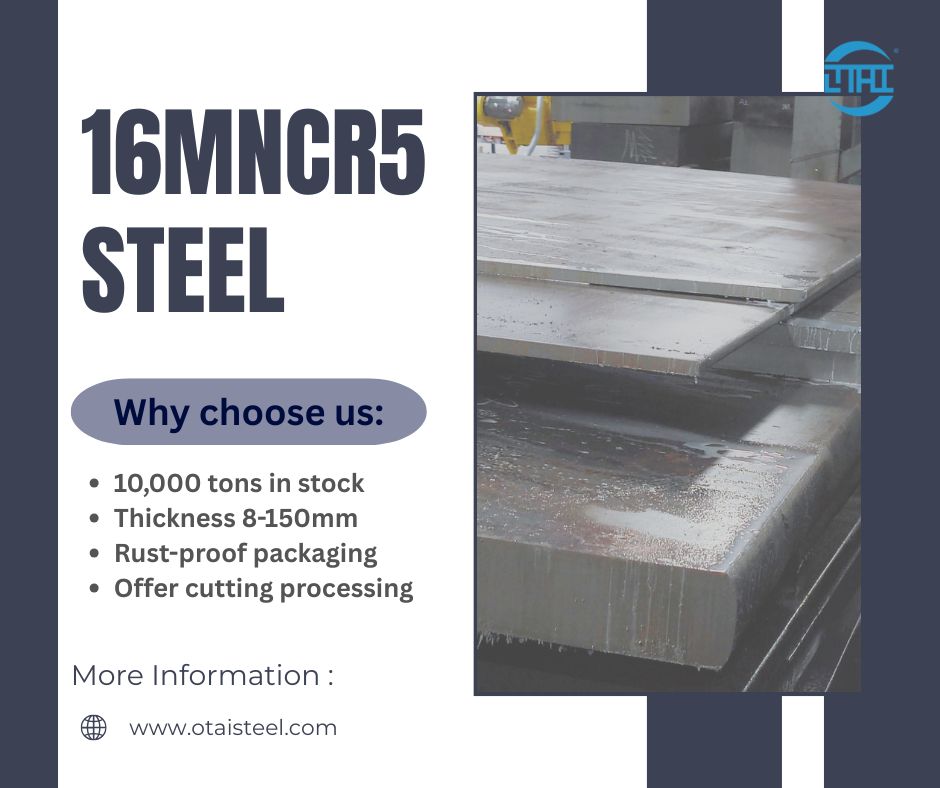
- 8–150 mm stock availability: Otai keeps 16MnCr5 steel plates in 8–150 mm thicknesses available in stock, providing flexible options for different machining and fabrication requirements.
- Professional special steel supply: We supply 16MnCr5 / 1.7131 and other alloy steels according to customer specifications.
- Custom cutting service: We can cut plates according to required length, width, thickness and project drawings.
- Heat treatment support: We can arrange suitable heat-treatment services according to the customer’s application and technical requirements.
- Quality inspection: Ultrasonic testing and third-party inspection are available for projects requiring additional quality verification.
- Anti-rust packaging: We provide anti-rust packaging to reduce corrosion risks during storage and international transportation.
- Export packaging: Steel strapping and wooden box packaging can be arranged according to product type and transportation requirements.
Otai 16MnCr5 Supply Services
| Service | Details |
|---|---|
| Material | 16MnCr5 / 1.7131 |
| Stock Thickness | 8–150 mm plates available in stock |
| Cutting | Customized cutting according to customer dimensions |
| Inspection | Ultrasonic testing and third-party inspection |
| Packaging | Anti-rust packaging, steel strapping and wooden boxes |
| Heat Treatment | Available according to project requirements |
For buyers comparing 16MnCr5 steel suppliers, stock availability can make a significant difference when production schedules are tight. Ready stock also allows customers to select dimensions more efficiently instead of waiting for every order to be produced from scratch.
Before placing an order, customers should provide the required thickness, width, length, standard, delivery condition and inspection requirements. Otai can then confirm the available material and suitable processing solution.
❓ 8. FAQ
1. What is grade 16MnCr5?
16MnCr5 is a low-carbon manganese-chromium case-hardening steel. It is commonly used for gears, pinions, shafts, camshafts and piston pins. Its European material number is 1.7131.
2. What is the material number of 16MnCr5?
The material number of 16MnCr5 is 1.7131. When purchasing the material, buyers should still confirm the applicable standard, product form and delivery condition.
3. Is 16MnCr5 suitable for gears?
Yes. 16MnCr5 is widely used for gears because carburizing and hardening can produce a hard, wear-resistant surface while the core retains useful toughness. This makes the grade suitable for repeated contact and bending loads.
4. What is the main heat treatment for 16MnCr5?
The typical process is carburizing followed by hardening and tempering. The exact temperature, carburizing time and case depth depend on component geometry and the required final properties.
5. Is 16MnCr5 the same as 1.7131?
Yes. 16MnCr5 is the steel grade designation, while 1.7131 is its European material number. However, buyers should always check the complete specification before accepting a substitute grade.