SCM440 Standard: What Should Buyers Verify Before Purchasing?
📑 Table of Contents
- 📘 What Is the SCM440 Standard?
- 🧪 SCM440 Chemical Composition Requirements
- 📊 SCM440 Mechanical Properties and Hardness
- 🔥 Heat Treatment and Delivery Conditions
- 📋 What Should Buyers Check on the MTC?
- 🔍 SCM440 vs. SCM440H: What Is the Difference?
- 🌍 SCM440 and International Equivalent Grades
- 🏭 How to Verify a Supplier’s SCM440 Quality
- 📦 What to Confirm Before Placing an SCM440 Order
- ⭐ Company Advantages
- ❓ Frequently Asked Questions
📘 What Is the SCM440 Standard?
SCM440 is a chromium-molybdenum alloy steel widely used in mechanical engineering, automotive components, machinery manufacturing, and heavy-duty industrial equipment. Buyers often encounter this grade when sourcing alloy steel plates, round bars, forged materials, and quenched and tempered steel products.
However, identifying a material as SCM440 does not automatically confirm that it meets every requirement of the applicable Japanese Industrial Standard (JIS). Buyers must also consider the standard edition, product form, manufacturing route, delivery condition, and inspection requirements.
JIS G 4053: The Main Standard for SCM440
SCM440 is classified under JIS G 4053, titled Low-Alloyed Steels for Machine Structural Use. This standard covers alloy steel products primarily manufactured through hot rolling, hot forging, and hot extrusion. These materials generally undergo further processing, such as machining, forging, or heat treatment, before entering service.
One important point concerns the standard edition. JIS G 4053:2026 was published on May 20, 2026, and is listed as the current edition by the Japanese Standards Association. It supersedes JIS G 4053:2023.
Consequently, buyers preparing new purchase specifications should identify which edition their project requires. They should not automatically assume that a previous edition remains acceptable for every new order.
Does Every SCM440 Product Follow the Same Requirements?
Not necessarily. The standard covers several product forms, but product-specific requirements and supplementary agreements can affect acceptance.
For example, a buyer ordering hot-rolled SCM440 plate may need to specify dimensions, thickness tolerances, ultrasonic testing, and delivery condition. A round bar order may require different dimensional tolerances and inspection arrangements.
Therefore, the material designation should always appear together with the applicable standard and product requirements.
Buyer tip: Request the supplier to identify the applicable JIS edition and confirm the product’s compliance before issuing a purchase order.
🧪 SCM440 Chemical Composition Requirements
Chemical composition is one of the first technical characteristics buyers should verify when purchasing SCM440. Its chromium and molybdenum additions improve hardenability and help the steel achieve useful strength and toughness after appropriate heat treatment.
A material certificate should provide actual chemical analysis results rather than simply stating that the material complies with SCM440.
Reference Chemical Composition of SCM440
The following table presents the commonly published JIS G 4053:2023 composition limits for SCM440. These figures are useful as a reference for understanding the grade, but buyers must check the corresponding requirements in the applicable 2026 edition before using them as contractual acceptance limits.
| Element | Reference Content (%) | Purpose |
|---|---|---|
| Carbon (C) | 0.38–0.43 | Strength and hardenability |
| Silicon (Si) | 0.15–0.35 | Deoxidation and strength |
| Manganese (Mn) | 0.60–0.90 | Hardenability and strength |
| Phosphorus (P) | ≤0.030 | Controlled impurity |
| Sulfur (S) | ≤0.030 | Controlled impurity |
| Nickel (Ni) | ≤0.25 | Residual element control |
| Chromium (Cr) | 0.90–1.20 | Hardenability and wear resistance |
| Molybdenum (Mo) | 0.15–0.30 | Hardenability and temper resistance |
| Copper (Cu) | ≤0.30 | Residual element control |
Why Should Buyers Pay Attention to Chromium and Molybdenum?
Chromium and molybdenum contribute to the performance of SCM440 during heat treatment. Chromium improves hardenability and contributes to wear resistance, while molybdenum helps maintain strength during tempering and reduces certain risks associated with heat treatment.
Carbon content also deserves attention because it directly influences the steel’s achievable hardness and strength.
Nevertheless, chemical composition alone cannot determine the final mechanical performance. Buyers should evaluate it together with heat treatment, section size, and mechanical test results.
Standard Limits, Typical Analysis, and Actual MTC Results
These three types of chemical data serve different purposes:
- Standard limits: The permitted composition ranges or maximum values defined by the applicable JIS edition.
- Typical analysis: Representative chemical values supplied by a steel mill. They are not universal requirements for every SCM440 heat.
- Actual MTC results: The measured chemical composition of the specific production heat or supplied material.
Buyers should compare actual MTC values against the correct standard edition and any additional purchase requirements. A supplier’s typical analysis cannot replace a heat-specific inspection certificate.
📊 SCM440 Mechanical Properties and Hardness
Chemical composition confirms the material’s grade-related chemistry, but mechanical properties determine whether SCM440 can satisfy the operating requirements of a component.
For procurement teams, tensile strength, yield strength, elongation, impact performance, and hardness are important evaluation points.
Mechanical Properties Depend on Delivery Condition
SCM440 does not have one universal set of mechanical properties that applies to every product. Its performance depends on several factors:
- Whether the material is supplied in an annealed, normalized, or quenched and tempered condition.
- The thickness or diameter of the product.
- The heat treatment parameters and cooling method.
- The sampling position and direction used for mechanical testing.
- The applicable standard edition and additional contractual requirements.
For example, quenched and tempered SCM440 generally offers higher strength and hardness than annealed SCM440. However, higher hardness does not automatically mean better performance in every application.
A component exposed to impact loading may require a balanced combination of strength and toughness rather than maximum hardness.
Which Mechanical Test Results Should Buyers Request?
| Test | What It Indicates | Buyer Concern |
|---|---|---|
| Tensile strength | Resistance to tensile failure | Load-bearing capacity |
| Yield strength | Resistance to permanent deformation | Working stress requirements |
| Elongation | Ductility before fracture | Deformation capability |
| Impact test | Resistance to impact loading | Toughness requirements |
| Hardness test | Resistance to indentation | Machining and service performance |
How Should Buyers Evaluate SCM440 Hardness?
Rockwell hardness (HRC), Brinell hardness (HBW), and other hardness measurements may appear on inspection documents.
However, buyers should first confirm the specified hardness scale and delivery condition. Hardness results from different scales should not be compared directly without an appropriate conversion reference.
For quenched and tempered SCM440, buyers should request the agreed hardness range and confirm whether the inspection results represent the actual supplied material.
Most importantly, the acceptance criteria should match the intended application rather than rely on a general online hardness value.
🔥 Heat Treatment and Delivery Conditions
Heat treatment has a major influence on SCM440 performance. Even when two materials share the same chemical composition, different heat treatment conditions can produce significantly different mechanical properties.
Buyers should therefore confirm the delivery condition before comparing quotations from different suppliers.
Common SCM440 Heat Treatment Conditions
| Condition | Main Characteristics | Typical Consideration |
|---|---|---|
| Annealed | Reduced hardness and improved machinability | Further machining |
| Normalized | Refined microstructure and improved uniformity | Intermediate processing |
| Quenched and tempered (QT) | Higher strength with controlled toughness | Loaded mechanical components |
Why Is QT Condition Important?
Quenching increases hardness and strength by forming a hardened microstructure. Tempering then adjusts the properties to achieve a more suitable balance between strength, hardness, and toughness.
SCM440 is frequently selected for components such as shafts, gears, bolts, connecting rods, and other mechanical parts because of its response to appropriate heat treatment.
Nevertheless, the final properties depend on section size, furnace conditions, quenching medium, and tempering parameters.
Confirm the Delivery Condition in the Purchase Order
A quotation for annealed SCM440 should not be directly compared with a quotation for quenched and tempered SCM440 without considering the additional processing and performance differences.
Specify the required condition clearly, together with hardness or mechanical property targets where applicable.
If the supplier offers additional heat treatment, request details of the process, inspection arrangements, and relevant test documentation.
📋 What Should Buyers Check on the MTC?
A Mill Test Certificate (MTC) is one of the most important documents in steel procurement. It provides traceable information about the supplied material and its inspection results.
However, receiving an MTC does not automatically prove that the material meets every purchase requirement. Buyers must review the document carefully and compare its information with the purchase order.
Essential Information on an SCM440 MTC
| MTC Item | What Buyers Should Verify |
|---|---|
| Material grade | SCM440 designation and applicable standard |
| Standard edition | Correct JIS edition and contractual requirements |
| Heat number | Traceability to the production heat |
| Chemical analysis | Actual element values and permitted limits |
| Mechanical testing | Required test results and acceptance criteria |
| Heat treatment | Agreed delivery condition |
| Dimensions | Thickness, diameter, width, and length |
| Inspection identification | Inspection date, issuing organization, and authorization |
Check Heat Number Traceability
Heat number traceability connects the inspection certificate with the actual steel supplied. This connection is particularly important when purchasing multiple batches or materials from different production heats.
Buyers should check whether the heat number on the MTC matches the identification marks on the material or the supplier’s traceability records.
If the supplier cuts a large plate or round bar into smaller pieces, the original heat number should remain traceable throughout cutting, processing, and packaging.
Do Not Rely on a Generic Certificate
A generic SCM440 test report may describe typical properties, but it cannot replace an actual certificate for the supplied batch.
Ask for the relevant MTC before shipment whenever possible. If the purchase requires third-party inspection, clarify the inspection scope and acceptance criteria before production or dispatch.
These checks help prevent material identification errors and reduce the risk of receiving steel that does not match the agreed specification.
🔍 SCM440 vs. SCM440H: What Is the Difference?
SCM440 and SCM440H are closely related chromium-molybdenum alloy steels, but buyers should not treat them as identical designations.
The most important difference concerns their applicable standards and hardenability requirements.
Different JIS Standards
SCM440 is covered by JIS G 4053, which specifies low-alloy steels for machine structural use.
SCM440H belongs to the JIS G 4052 category of steels with guaranteed hardenability. The H designation indicates additional hardenability-related requirements.
This distinction matters when a component has a relatively large cross-section or requires predictable hardening performance throughout its section.
Comparison of SCM440 and SCM440H
| Item | SCM440 | SCM440H |
|---|---|---|
| Main standard | JIS G 4053 | JIS G 4052 |
| Material category | Machine structural alloy steel | Guaranteed-hardenability steel |
| Main focus | Chemical and specified product requirements | Composition and hardenability requirements |
| Hardenability guarantee | Not implied by the grade designation | Specified under the H-steel requirements |
Which Grade Should Buyers Choose?
For general mechanical components, SCM440 may be suitable when its specified properties meet the design requirements.
For components where hardening performance and its consistency across different sections are critical, SCM440H may be worth considering.
However, the correct choice depends on the component design, heat treatment process, required hardness distribution, and applicable technical specification.
**Important:** A supplier should not substitute SCM440H for SCM440, or the reverse, without the buyer’s approval. A similar chemical composition does not make two standard designations interchangeable.
🌍 SCM440 and International Equivalent Grades
International buyers often compare SCM440 with alloy steel grades from other national standards. This comparison helps procurement teams identify alternative sourcing options and communicate material requirements with overseas manufacturers.
AISI 4140, SAE 4140, and EN 42CrMo4 are commonly considered when evaluating SCM440 alternatives.
Commonly Compared Alloy Steel Grades
| Standard System | Grade | Material Family |
|---|---|---|
| JIS | SCM440 | Chromium-molybdenum steel |
| AISI / SAE | 4140 | Chromium-molybdenum steel |
| EN | 42CrMo4 | Chromium-molybdenum steel |
| GB | 42CrMo | Chromium-molybdenum steel |
These grades belong to a similar alloy steel family and are frequently used for comparable engineering applications. Nevertheless, their chemical composition limits, mechanical property requirements, product standards, and delivery conditions may differ.
Why Are Equivalent Grades Not Always Interchangeable?
A material may appear equivalent based on its alloy system but fail to meet a particular project’s acceptance requirements.
For example, two grades may have similar carbon, chromium, and molybdenum contents but different limits for residual elements, mechanical properties, or hardenability.
Furthermore, a buyer may require a specific standard certification that an alternative grade cannot provide.
Before accepting an equivalent grade, compare:
- Chemical composition requirements.
- Tensile strength, yield strength, and elongation.
- Hardness and heat treatment condition.
- Product dimensions and manufacturing route.
- Inspection documents and certification requirements.
For buyers sourcing both Japanese and international materials, comparing the complete specifications is more reliable than relying on a simple equivalence chart.
🏭 How to Verify a Supplier’s SCM440 Quality
Selecting an SCM440 supplier involves more than checking the quoted price. A reliable supplier should demonstrate material traceability, stable inventory, appropriate processing capabilities, and the ability to meet the buyer’s technical requirements.
For international procurement, these factors also influence delivery reliability and the risk of disputes.
Evaluate the Supplier’s Material Sourcing
First, ask where the SCM440 originates and whether the supplier can provide the original mill certificate or an appropriate traceable inspection document.
A supplier should clearly explain whether it sells mill-direct material, distributor stock, or processed material from another source.
This information helps buyers understand the supply chain and determine which party is responsible for material quality and documentation.
Check Cutting and Processing Capabilities
Many buyers do not require full-size steel plates or bars. They need materials cut to specific dimensions for subsequent machining or manufacturing.
In this situation, the supplier’s processing capabilities become an important purchasing consideration.
Check whether the supplier can provide:
- Precision saw cutting to the required dimensions.
- CNC machining and surface grinding when needed.
- Custom thickness, width, and length.
- Additional heat treatment arrangements.
- Protective packaging for international transportation.
A supplier offering several of these services can reduce the number of subcontractors involved in the purchasing process.
Confirm Inspection and Quality Control
Depending on the application, buyers may require additional quality checks beyond chemical and mechanical testing.
These can include ultrasonic testing, dimensional inspection, surface inspection, hardness testing, and third-party inspection.
However, buyers should specify the applicable testing standard, inspection coverage, acceptance level, and reporting requirements. Simply requesting ultrasonic testing without defining its scope may lead to different interpretations between the buyer and supplier.
Assess Export Experience and Delivery Reliability
International steel orders require suitable packaging, export documentation, transportation arrangements, and clear communication.
For example, steel plates may require anti-rust protection and wooden case packaging, while round bars may need suitable bundling and protective measures.
A supplier with established export experience can help coordinate these requirements and reduce unnecessary communication during order execution.
📦 What to Confirm Before Placing an SCM440 Order
Before issuing a purchase order, buyers should convert the technical requirements into clear commercial and inspection terms.
Even experienced procurement teams can encounter problems when a quotation only specifies SCM440 without describing the product condition, dimensions, and documentation requirements.
SCM440 Purchasing Checklist
The following checklist can help buyers review quotations and avoid common misunderstandings.
| Purchasing Item | Information to Confirm |
|---|---|
| Grade | SCM440, not an unapproved substitute |
| Standard | Applicable JIS edition and supplementary requirements |
| Product form | Plate, round bar, or other required form |
| Dimensions | Thickness, diameter, width, and length |
| Tolerance | Dimensional and machining allowances |
| Delivery condition | Annealed, normalized, or QT |
| Inspection | MTC, hardness, UT, and third-party inspection if required |
| Quantity | Required weight or number of pieces |
| Packaging | Bundling, anti-rust protection, or wooden cases |
| Delivery | Lead time, shipping terms, and destination |
How Does Stock Availability Affect Purchasing Decisions?
Stock availability can significantly affect lead time and total procurement cost. Buyers should confirm whether the supplier has the required dimensions in stock or needs to arrange new production.
For example, purchasing a standard stock size may be more economical than ordering a specially produced dimension. However, the buyer should also consider cutting losses, machining allowances, and the amount of usable material.
When comparing quotations, evaluate the total delivered cost rather than focusing only on the price per ton.
Why Should Buyers Confirm Everything in Writing?
A detailed purchase specification reduces the risk of disagreements about material grade, inspection results, delivery condition, and packaging.
It also gives both parties a clear reference when reviewing the MTC and checking the delivered products.
**A good SCM440 purchasing decision starts with a clear technical specification, a traceable material certificate, and a supplier capable of meeting the agreed requirements.**
⭐ Company Advantages
OTAI Special Steel supplies SCM440 and other alloy structural steels to international industrial buyers. With extensive inventory and processing capabilities, we support customers who need reliable material sourcing and customized steel solutions.
- 📦 Large Inventory: More than 10,000 tons of steel stock available for different industrial requirements.
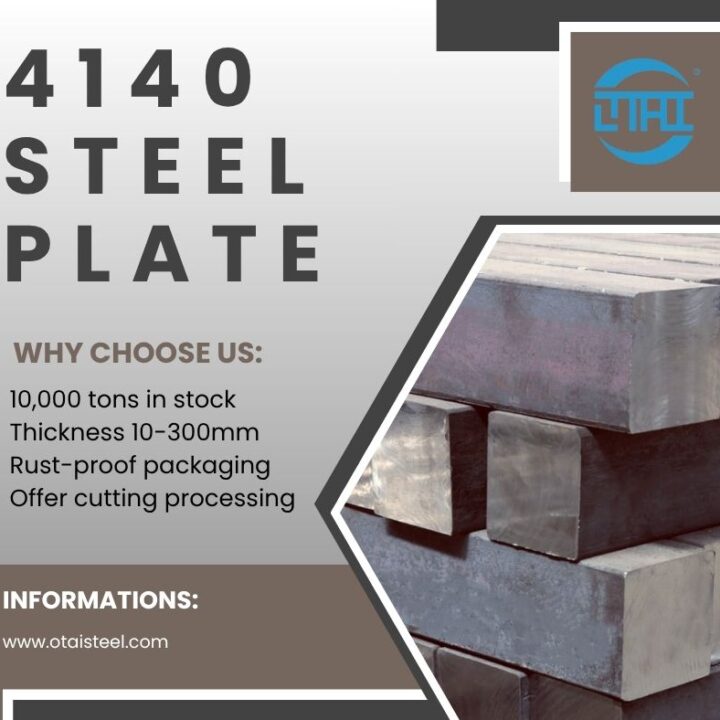
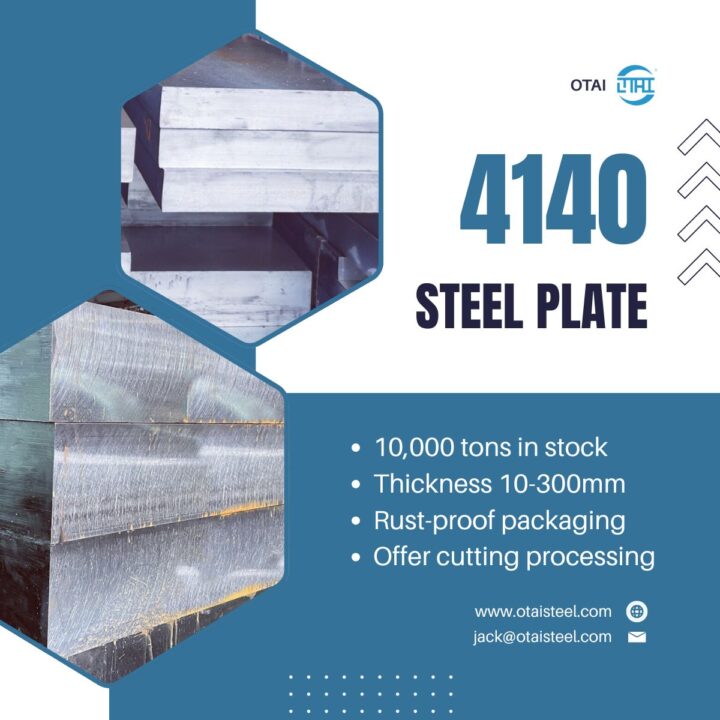
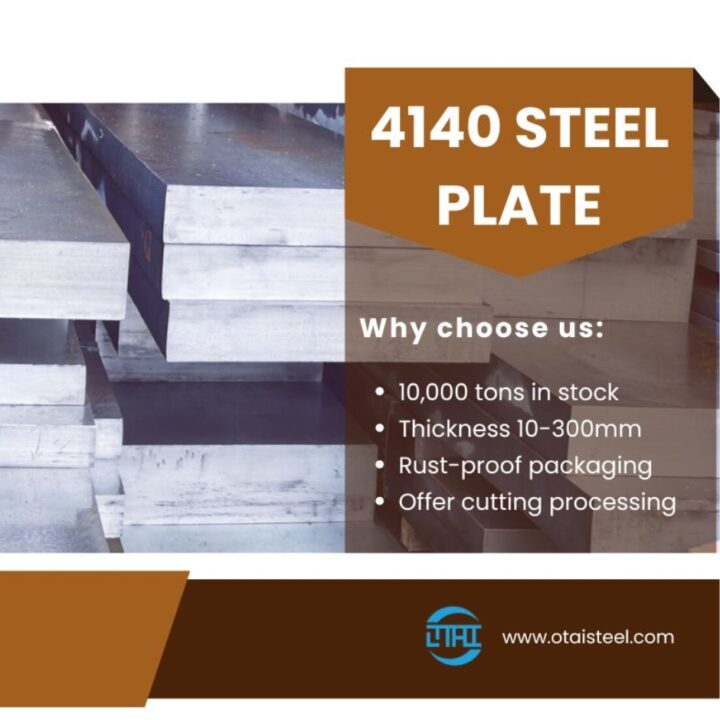
- 📏 SCM440 Stock Sizes: SCM440 / 4140 / 42CrMo4 plate thickness from 4–380 mm, quenched and tempered plate from 13–200 mm, and round bars with diameters from 14–500 mm.
- ⚙️ Cutting and Processing: 20 saw cutting machines, CNC machining, and grinding facilities support customized dimensions and tolerances.
- 🔬 Quality Inspection: Chemical analysis, mechanical testing, dimensional inspection, ultrasonic testing, and third-party inspection support according to agreed requirements.
- 🌍 International Supply Experience: Export experience serving customers in more than 54 countries since 1999.
- 📋 Complete Service: Material sourcing, precision cutting, machining, heat treatment arrangements, inspection, and export packaging.
- 🛡️ Export Packaging: Anti-rust protection, steel strapping, bundling, and wooden case packaging according to transportation requirements.
- 🤝 Stable B2B Supply: Competitive pricing, technical communication, and customized solutions for international distributors, manufacturers, and procurement teams.
If you are looking for SCM440 alloy steel plate or round bar, contact OTAI to discuss your required dimensions, delivery condition, inspection documents, and order quantity.
You can also explore our SCM440 / EN19 alloy steel product information for further details.
❓ Frequently Asked Questions
1. What is the standard for SCM440 steel?
SCM440 is specified under JIS G 4053, which covers low-alloyed steels for machine structural use. Buyers should identify the applicable edition in their purchase specifications. JIS G 4053:2026 is the current edition published on May 20, 2026.
2. Is SCM440 equivalent to AISI 4140?
SCM440 and AISI 4140 are commonly considered comparable chromium-molybdenum alloy steels. However, their chemical composition limits and other technical requirements are not necessarily identical. Buyers should compare the applicable standards and actual inspection results before approving substitution.
3. What is the difference between SCM440 and SCM440H?
SCM440 follows JIS G 4053, while SCM440H follows JIS G 4052 for steels with guaranteed hardenability. The H designation introduces additional hardenability requirements. They should not be treated as interchangeable without technical approval.
4. What documents should I request when purchasing SCM440?
Buyers should request a material inspection certificate containing the grade designation, applicable standard, heat number, actual chemical composition, and relevant mechanical test results. Additional documents, such as ultrasonic inspection reports and third-party inspection certificates, may be required depending on the application.
5. Can SCM440 be supplied in quenched and tempered condition?
Yes. SCM440 is commonly supplied in quenched and tempered condition for applications requiring higher strength and controlled toughness. Buyers should specify the required hardness or mechanical properties and confirm the delivery condition before ordering.