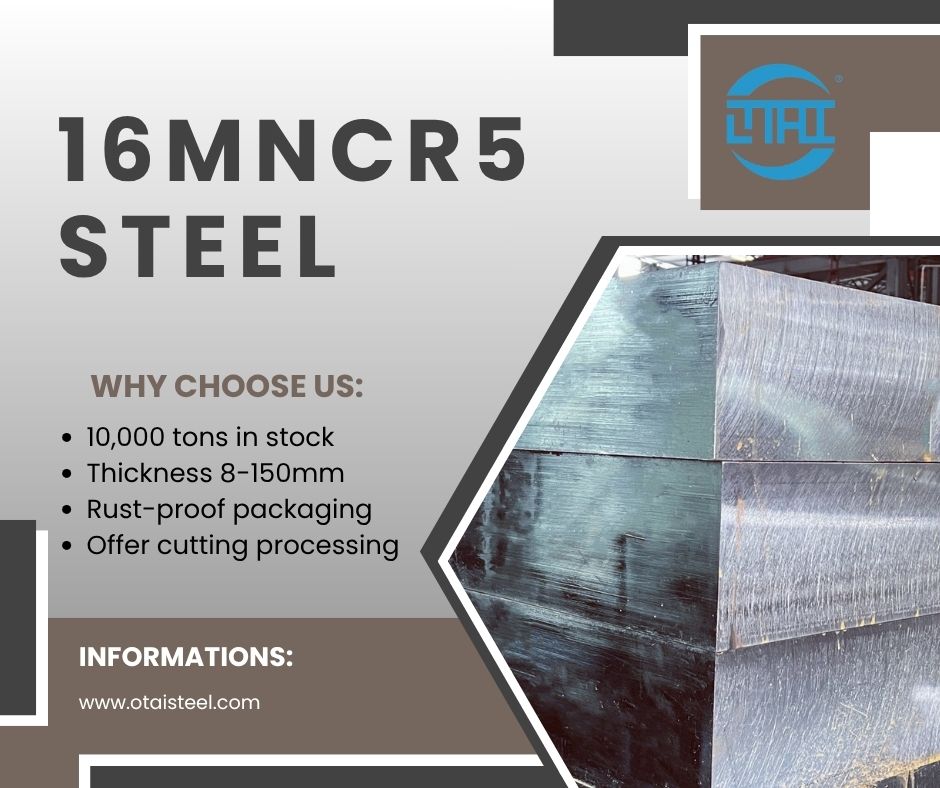
 16MnCr5 Material Standard – Specifications and Purchasing Requirements
Understanding the 16MnCr5 material standard is essential for engineers, purchasing managers, gear manufacturers, and industrial buyers who need reliable case-hardening steel for demanding mechanical applications. While many buyers focus on price and availability, the material standard determines whether the steel can deliver the required hardness, wear resistance, fatigue strength, and service life.
16MnCr5 is one of the most widely used European carburizing steels. EN 10084 specifies the grade as 16MnCr5. Manufacturers commonly use it for gears, shafts, pinions, sprockets, and transmission components that require a hard wear-resistant surface combined with a tough and durable core.
For international projects, buyers often need to compare standards, verify certifications, and ensure material compliance before placing orders. This article explains the key requirements of the 16MnCr5 steel standard, including chemical composition, mechanical requirements, international equivalents, inspection requirements, and purchasing considerations.
📘 What Is the 16MnCr5 Material Standard?
16MnCr5 is a low-carbon chromium alloy steel primarily designed for carburizing applications. Under European standards, it is classified as a case-hardening steel and is governed by EN 10084.
| Item | Specification |
|---|---|
| Steel Grade | 16MnCr5 |
| Material Number | 1.7131 |
| Standard | EN 10084 |
| Steel Type | Case Hardening Steel |
| Typical Supply Forms | Plate, Round Bar, Forging Block |
The primary purpose of the standard is to ensure consistent material quality, predictable heat treatment response, and reliable mechanical performance after carburizing.
For gear manufacturers, compliance with the 16MnCr5 material specification is critical because even small deviations in chemistry can significantly affect surface hardness and fatigue life.
🧪 Chemical Composition Requirements
The 16MnCr5 chemical composition standard defines the allowable range for each alloying element.
| Element | Content (%) |
|---|---|
| Carbon (C) | 0.14–0.19 |
| Silicon (Si) | ≤0.40 |
| Manganese (Mn) | 1.00–1.30 |
| Chromium (Cr) | 0.80–1.10 |
| Phosphorus (P) | ≤0.025 |
| Sulfur (S) | ≤0.035 |
Each element serves a specific purpose. Carbon controls hardness potential, manganese improves hardenability, and chromium enhances wear resistance after heat treatment.
For buyers sourcing critical transmission components, chemical analysis reports should always be reviewed before shipment to ensure compliance with the standard.
⚙️ Mechanical Property Requirements
The 16MnCr5 mechanical properties standard depends on the supplied condition and the final heat treatment process. Most customers purchase the steel in the annealed or normalized condition before machining and carburizing.
| Property | Typical Value |
|---|---|
| Tensile Strength | 650–900 MPa |
| Yield Strength | 400–650 MPa |
| Elongation | 10–16% |
| Surface Hardness After Carburizing | 58–62 HRC |
| Core Hardness | 30–45 HRC |
For gear applications, the final performance depends more on heat treatment quality than on the supplied hardness. A properly carburized gear can achieve excellent contact fatigue resistance and long service life under cyclic loading conditions.
🌍 International Equivalent Standards
Many international buyers search for equivalent grades when sourcing materials from different countries. Although the designation may vary, several steel grades offer similar performance and are often compared with 16MnCr5.
| Country/Standard | Equivalent Grade | Remarks |
|---|---|---|
| EN | 16MnCr5 (1.7131) | Original European grade |
| SAE/AISI | 5115 | Closest American equivalent |
| JIS | SCR420 | Japanese carburizing steel |
| GB | 16CrMnH | Chinese equivalent grade |
Although these grades are often considered substitutes, buyers should always verify chemical composition, hardenability, and final heat treatment requirements before approving a replacement.
⚖️ 16MnCr5 vs 20MnCr5 – Which Should You Choose?
One of the most common questions from gear manufacturers is whether to choose 16MnCr5 or 20MnCr5. Both are case-hardening steels, but they serve slightly different purposes.
| Property | 16MnCr5 | 20MnCr5 |
|---|---|---|
| Carbon Content | 0.14–0.19% | 0.17–0.22% |
| Core Toughness | Excellent | Very Good |
| Surface Hardness | 58–62 HRC | 58–62 HRC |
| Heavy Impact Resistance | Better | Good |
| Gear Applications | Excellent | Excellent |
For applications requiring higher core toughness and impact resistance, many manufacturers prefer 16MnCr5. For applications emphasizing maximum case strength, 20MnCr5 may be selected.
⚙️ Why Material Standards Matter for Gear Manufacturing
Many buyers focus only on chemical composition, but professional gear manufacturers know that the material standard affects much more than chemistry.
A gear made from steel that does not fully comply with EN 10084 may experience:
- Poor carburizing response
- Uneven hardness distribution
- Reduced fatigue life
- Excessive tooth wear
- Unexpected cracking during service
- Heat treatment distortion
For automotive transmission gears, industrial gearboxes, and heavy-duty reducers, maintaining compliance with the 16MnCr5 material standard helps ensure consistent performance and reliability.
🏭 Real Application Examples
Automotive Transmission Gears
One of the largest applications for 16MnCr5 is automotive transmission systems. After carburizing and hardening, the gear teeth achieve excellent wear resistance while maintaining a tough core capable of absorbing shock loads.
This combination significantly improves service life in manual and automatic transmissions.
Differential Gears
Differential gears operate under continuous cyclic loading. The high contact fatigue resistance of properly heat-treated 16MnCr5 helps reduce pitting and surface damage.
Industrial Gearboxes
Industrial gearboxes used in mining equipment, steel mills, and conveyor systems often utilize 16MnCr5 because of its reliable performance under heavy loads and long operating cycles.
Transmission Shafts and Pinions
The material is also widely used for transmission shafts, splined shafts, and pinions. The carburized surface resists wear while the core remains sufficiently ductile to handle torsional stresses.
🔍 What Should Buyers Check Before Ordering 16MnCr5?
When purchasing materials based on the 16MnCr5 material standard, buyers should not only focus on price but also ensure full compliance with technical and quality requirements.
- Confirm EN 10084 compliance on mill certificate
- Check chemical composition report (C, Mn, Cr content)
- Verify heat number traceability
- Request EN10204 3.1 certification
- Inspect surface quality and dimensional tolerance
- Confirm heat treatment condition (annealed / normalized)
- Check ultrasonic testing (UT) results for internal defects
- Ensure packaging meets export requirements
For critical applications such as automotive gears and industrial transmission systems, skipping these checks may lead to performance failure or premature wear.
📄 Inspection Standards and Certification Requirements
Reliable suppliers of 16MnCr5 must provide proper documentation to prove material conformity.
| Document Type | Purpose |
|---|---|
| EN10204 3.1 Certificate | Confirms chemical and mechanical compliance |
| Chemical Analysis Report | Verifies alloy composition |
| UT Testing Report | Detects internal defects |
| Hardness Test Report | Confirms heat treatment quality |
| Dimensional Inspection Report | Ensures machining accuracy |
These documents are essential for ensuring that the delivered material meets the required 16MnCr5 material specification and performs correctly in final applications.
⚠️ Common Supplier Issues to Avoid
In global steel sourcing, buyers often encounter inconsistent quality from unverified suppliers. Common issues include:
- Incorrect grade labeling or mixed materials
- Missing or incomplete certification documents
- Inconsistent hardness after heat treatment
- Poor surface finish or scale issues
- Lack of traceability for production heat numbers
Working with a reliable supplier ensures that the 16MnCr5 steel standard is fully respected from raw material production to final delivery.
🏭 Company Advantages – Otai Special Steel
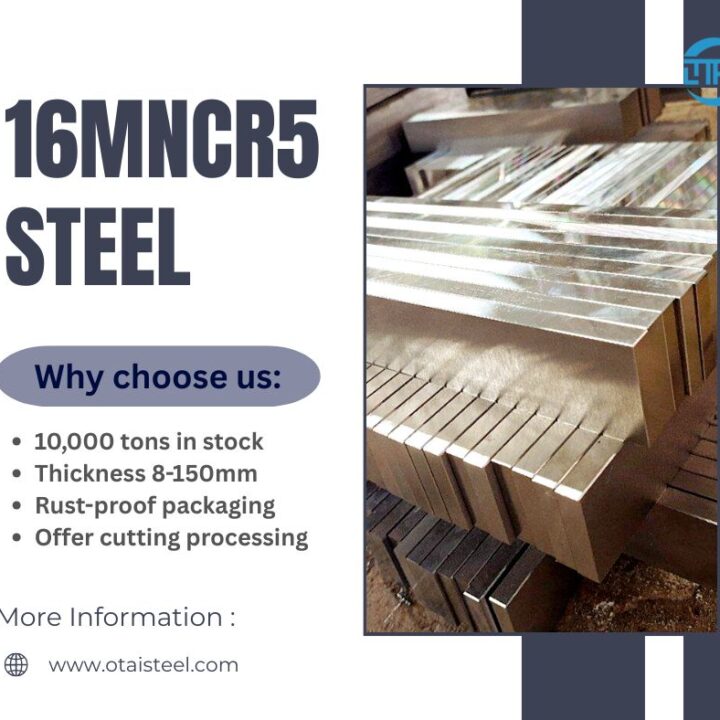
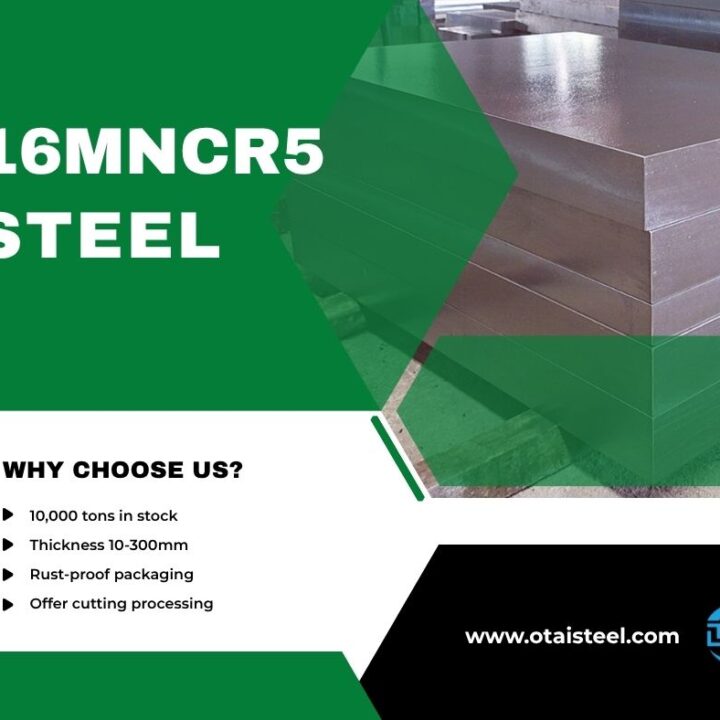
Otai Special Steel provides high-quality 16MnCr5 materials to global customers in automotive, machinery, and engineering industries.
- Large stock availability of alloy steels year-round
- Plate thickness range from 8mm to 150mm
- Custom cutting and machining services
- Heat treatment support for carburizing applications
- Strict quality control system (chemical + mechanical testing)
- Ultrasonic testing (UT) for internal quality assurance
- Third-party inspection support (SGS, BV, etc.)
- Stable supply chain for long-term contracts
- Export packaging suitable for sea freight
📌 FAQ – 16MnCr5 Material Standard
Q1: What is the 16MnCr5 material standard?
A1: It is a European case-hardening steel standard defined under EN 10084 for carburizing applications.
Q2: Is 16MnCr5 suitable for gears?
A2: Yes, it is widely used for automotive and industrial gears due to its excellent surface hardness and core toughness after carburizing.
Q3: What certificate should be provided?
A3: EN10204 3.1 inspection certificate is the standard requirement for international trade.
Q4: What is the equivalent of 16MnCr5?
A4: Common equivalents include 20MnCr5, SAE 5115, SCR420, and GB 16CrMnH.
Q5: Why is standard compliance important?
A5: Because deviations in chemistry or heat treatment can significantly reduce fatigue life and gear performance.