5140 Steel Uses: How to Select the Right Alloy Steel for Industrial Parts
📑 Table of Contents
- ⚙️ What Is 5140 Steel Used For?
- 🏭 Common Industrial Applications of 5140 Steel
- 📊 How 5140 Steel Properties Affect Part Selection
- 🔥 Heat Treatment and Application Performance
- 🔍 When Is 5140 Steel the Right Choice?
- ⚖️ 5140 Steel vs. Other Alloy Steels
- 🧾 What Buyers Should Check Before Purchasing 5140 Steel
- 📦 5140 Steel Plate Supply and Processing from Otai
- 🏢 Company Advantages
- ❓ Frequently Asked Questions
Choosing steel for a shaft, gear, axle, pin, or other machine component involves more than identifying a grade. The material must match the part’s loading conditions, required hardness, manufacturing process, and expected service life. 5140 steel uses are closely associated with mechanical components that need a combination of strength, hardenability, and wear resistance after suitable heat treatment.
For industrial buyers, the key question is not simply whether 5140 steel is suitable for machinery. It is whether the grade, delivery condition, section size, and final properties fit the actual application. This article explains common uses of 5140 alloy steel, its limitations, how it compares with other grades, and what to verify when purchasing material for production.
⚙️ What Is 5140 Steel Used For?
AISI 5140 is a chromium-alloyed medium-carbon steel commonly considered for mechanical parts that require useful strength and hardenability. Its performance depends on the steel’s chemical composition, section size, heat treatment, and final manufacturing condition. Engineers therefore select 5140 based on the complete component specification rather than the grade name alone.
Why manufacturers consider 5140 alloy steel
Chromium improves hardenability, helping the steel develop a hardened structure during appropriate heat treatment. Its medium carbon content also allows the material to achieve useful hardness and strength when the processing route is properly controlled. These characteristics make 5140 a candidate for shafts, gears, axles, pins, and other load-bearing mechanical components.
However, 5140 is not automatically suitable for every high-load application. A small component and a large-section component may respond differently to the same heat-treatment cycle. Surface hardness alone also cannot establish whether a finished part has sufficient core strength, toughness, or fatigue resistance.
Typical applications at a glance
| Application | Main requirement | Important consideration |
|---|---|---|
| Shafts and axles | Strength and fatigue performance | Section size, stress concentrations, and heat treatment |
| Gears and drive components | Load capacity and wear resistance | Contact stress, tooth design, and surface hardness |
| Pins and mechanical joints | Shear strength and toughness | Impact loading and dimensional tolerances |
| Machine components | A balance of strength and machinability | Machining condition and service environment |
These examples describe potential applications, not guaranteed performance. The final specification should define the required properties and verify that the supplied material can achieve them.
🏭 Common Industrial Applications of 5140 Steel
1. Shafts and axles
Shafts transmit torque and may experience bending, cyclic loading, and stress concentrations around shoulders, keyways, or splines. 5140 steel can be considered for these components when its achievable strength and toughness meet the design requirements.
Before selecting the grade, engineers should assess the shaft diameter, operating speed, loading pattern, surface finish, and fatigue requirements. A heat-treated material may offer a useful strength balance, but an unsuitable hardness level or poorly designed transition can still lead to premature failure.
2. Gears and power-transmission components
Gears experience repeated contact stresses and may also carry bending loads at the tooth root. 5140 may suit certain gears and transmission components when the selected heat treatment provides adequate hardness and strength throughout the required section.
For heavily loaded gears, the design team should compare 5140 with grades specifically selected for carburizing or other surface-hardening processes. A gear requiring a very hard wear-resistant case and a tough core may need a different material and treatment route from a component that receives through-hardening and tempering.
3. Pins, bolts, and connecting components
Industrial pins, connecting elements, and some higher-strength fastener components may use 5140 when their mechanical requirements align with the material’s achievable properties. The selection should consider tensile loading, shear loading, impact, thread geometry, and fatigue exposure.
For safety-critical fasteners, buyers should not substitute 5140 for a specified fastener grade without engineering approval. The applicable product standard, strength class, manufacturing process, and testing requirements must all remain satisfied.
4. Pumps, fittings, and general machinery
Some pump components, machine fittings, and structural mechanical parts can benefit from the strength and hardenability available in 5140. Suitability depends on the design and the operating environment. For example, parts exposed to corrosive media may require corrosion-resistant materials or protective measures rather than relying on 5140’s mechanical properties alone.
In procurement, it is useful to start with the component drawing and performance specification. This helps determine whether 5140 provides the necessary properties or whether another alloy steel would deliver a better combination of cost, manufacturing efficiency, and service reliability.
📊 How 5140 Steel Properties Affect Part Selection
The grade designation is only the starting point. Buyers and engineers should evaluate the chemistry, delivery condition, hardness, tensile properties, and response to heat treatment together. A material that meets a chemical composition requirement may still fail to meet the mechanical properties required for a finished component.
Chemical composition and its role
The following ranges are commonly associated with AISI 5140 material specifications, but the applicable standard and product specification must be confirmed for each order. Different standards or supply specifications may impose different limits. The actual heat analysis on the mill test certificate (MTC) is the evidence for the supplied batch.
| Element | Commonly referenced range or limit (wt.%) | General contribution |
|---|---|---|
| Carbon (C) | 0.38–0.43 | Supports hardness and strength after suitable heat treatment. |
| Silicon (Si) | 0.15–0.35 | Contributes to deoxidation and strength. |
| Manganese (Mn) | 0.70–0.90 | Contributes to hardenability and strength. |
| Chromium (Cr) | 0.70–0.90 | Improves hardenability and wear-related performance through suitable processing. |
| Phosphorus (P) | Maximum commonly specified: 0.025 | Controlled as an impurity. |
| Sulfur (S) | Maximum commonly specified: 0.040 | Controlled because it can affect toughness and machinability. |
These figures are reference values, not a replacement for the agreed standard. Always distinguish standard limits from a supplier’s typical analysis and from the actual MTC results. If a project requires a particular specification, use that specification to determine acceptance.
Mechanical properties depend on condition
Strength, elongation, impact toughness, and hardness are not fixed by the 5140 grade name alone. Annealed, normalized, quenched-and-tempered, and other processed conditions can produce different results. Section thickness and heat-treatment control also affect the properties that a finished part can achieve.
When reviewing a supplier’s data, check whether the stated mechanical properties apply to the actual delivery condition and test specimen size. Do not use a value from an unrelated heat-treatment condition as a guaranteed value for the material being purchased.
🔥 Heat Treatment and Application Performance
Heat treatment is a major factor in determining how 5140 steel performs in service. The appropriate route depends on the component’s geometry, required hardness, core properties, distortion allowance, and manufacturing sequence. Buyers should therefore confirm the delivery condition before comparing quotations.
Annealed condition for machining
Annealed 5140 is often considered when machining operations must remove substantial material. The softer condition can make cutting and shaping more practical than machining a fully hardened component. The buyer should still confirm the supplied hardness and the machining allowance needed to achieve the final dimensions.
After machining, the part may undergo a specified hardening and tempering process. Designers should allow for dimensional changes, distortion, and possible finishing operations. If the component has tight tolerances, discuss the sequence of rough machining, heat treatment, and final machining with the manufacturer or heat-treatment provider.
Quenching and tempering for strength and toughness
Quenching can develop a hardened structure, while tempering adjusts the balance between hardness, strength, and toughness. The final properties depend on the chosen temperatures, holding time, cooling method, section size, and the material’s response to the process.
There is no single heat-treatment recipe that guarantees the same results for every 5140 component. A small part may respond differently from a thick section, and a component with demanding impact or fatigue requirements may need a different target hardness from a wear-focused part.
Surface hardening and wear requirements
Some components require improved surface wear resistance while retaining a tougher interior. The appropriate surface-hardening method depends on the component design and specification. Buyers should not assume that 5140 automatically provides the same case-hardening performance as a dedicated carburizing steel such as 16MnCr5.
When surface hardness is important, specify the required hardness scale, measurement location, effective hardened depth if applicable, and acceptance criteria. If the part will be ground after heat treatment, include the expected material removal in the process plan.
| Requirement | What to define |
|---|---|
| Machining before hardening | Delivery hardness, machining allowance, and final treatment route |
| Strength and toughness | Required mechanical properties, test condition, and specimen location |
| Wear resistance | Target hardness, treatment method, and any hardened-depth requirement |
| Tight dimensional tolerance | Distortion allowance, grinding needs, and inspection method |
🔍 When Is 5140 Steel the Right Choice?
5140 can be a practical candidate when a component needs a combination of strength, hardenability, and machinability appropriate to its manufacturing route. The best choice, however, depends on what the part must do—not simply which alloy steel has the highest nominal strength.
Use the operating conditions to guide selection
Start with the load type. Continuous torque, repeated bending, impact, and contact stress place different demands on a component. A shaft under cyclic bending needs attention to fatigue performance, while a gear tooth may be governed by contact stress and surface condition. The grade must work alongside the part’s geometry, finish, and treatment.
Next, consider the component’s size. A thick section can develop a different hardness profile from a thin section during quenching. If the part has a critical core property, confirm that the proposed grade and treatment can meet it at the relevant section size.
Consider manufacturing and total cost
The purchase price per kilogram is only one part of the cost. Machining time, cutting waste, heat treatment, grinding, inspection, rejection risk, and lead time can affect the total cost of a component. A slightly more expensive material may be economical if it arrives in the right condition and reduces downstream processing. Conversely, paying for a higher-performance grade adds little value if the application does not require those properties.
Before approving a substitution, compare the relevant standards, chemical composition, mechanical requirements, heat-treatment response, and supply condition. A similar grade designation does not establish complete interchangeability. For critical parts, engineering approval and validation testing may be necessary.
Quick decision checklist
- Define the service loads, operating temperature, and environment.
- Specify required hardness, strength, toughness, and fatigue performance.
- Confirm the section size and whether the chosen treatment can achieve the target properties.
- Determine whether the part needs through-hardening, surface hardening, or a different treatment route.
- Compare total manufacturing cost rather than material price alone.
- Verify that the supplied standard and MTC satisfy the approved specification.
If these requirements remain undefined, selecting 5140 solely because it is a familiar alloy steel can create avoidable production and service risks.
⚖️ 5140 Steel vs. Other Alloy Steels
Comparing 5140 with other grades helps buyers identify whether the material offers the right balance of performance and cost. The comparison must consider the applicable standards and actual heat-treatment requirements because grades with similar chemistry may still have different acceptance limits or mechanical-property guarantees.
| Grade | General selection context | What to compare |
|---|---|---|
| 5140 | Medium-carbon chromium alloy steel for suitable mechanical components | Hardness, strength, section size, and treatment route |
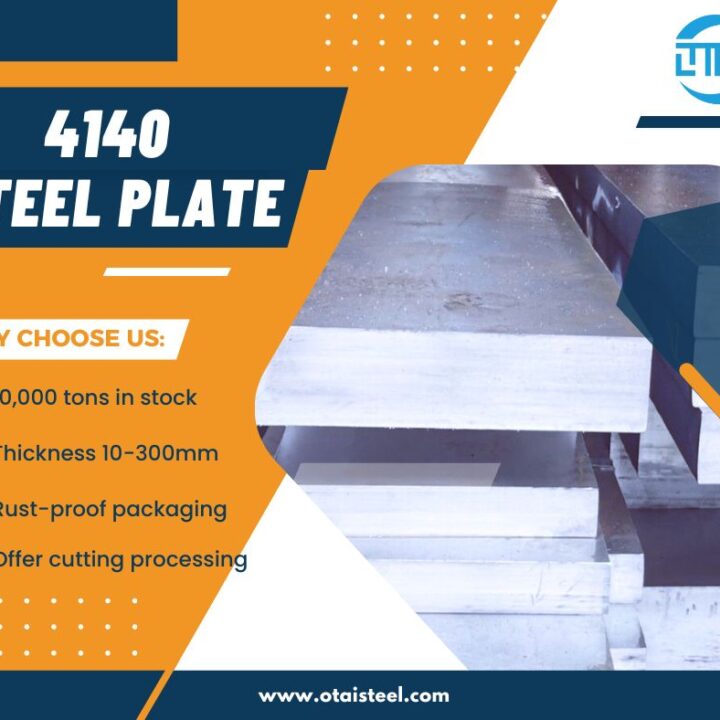
| 4140 | Chromium-molybdenum alloy steel used for a wide range of strength-demanding components | Molybdenum content, hardenability, toughness, and required properties |
| 4340 | Nickel-chromium-molybdenum alloy steel considered for demanding strength and toughness requirements | Required strength level, toughness, section size, and cost |
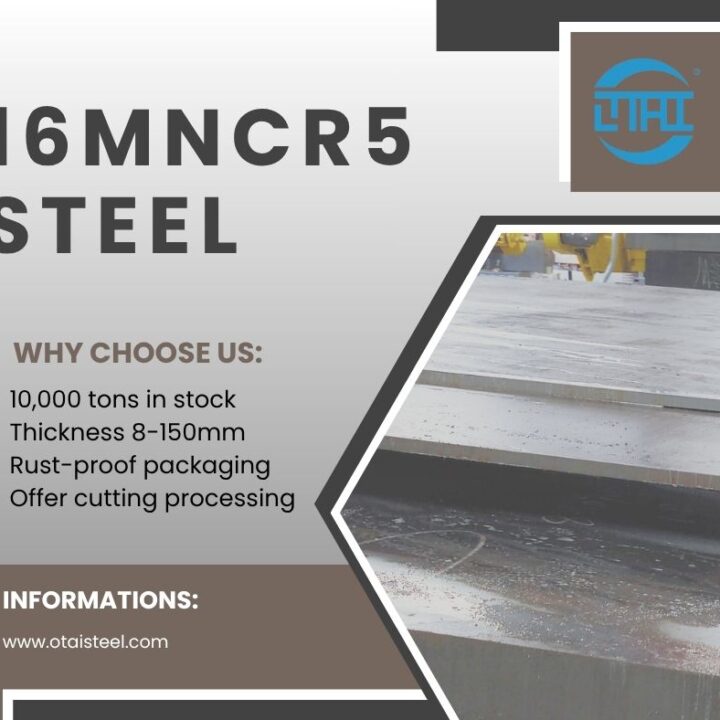
| 16MnCr5 | Case-hardening steel for components designed for a hard case and tougher core | Carburizing requirements, case depth, core properties, and finished geometry |
5140 vs. 4140
Both grades are used in mechanical engineering, but their alloying systems differ. 4140 contains chromium and molybdenum, while 5140 is generally a chromium steel with different specified chemistry. Their hardenability, achievable properties, and response to heat treatment are therefore not identical. A substitution should be based on the relevant standard and component requirements rather than a broad claim that one grade is always stronger.
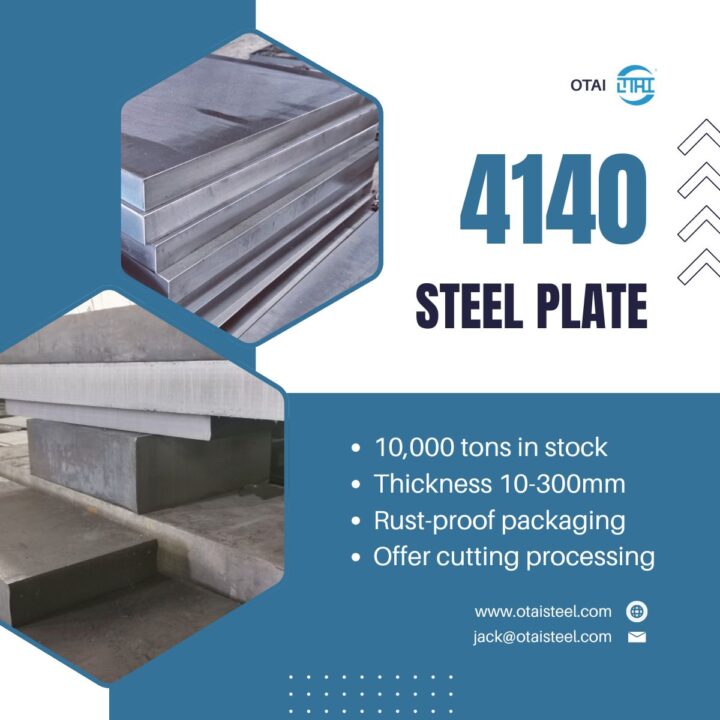
For a project considering 4140, review the product details at Otai 4140 alloy steel and compare the material condition and requirements with the proposed 5140 specification.
5140 vs. 16MnCr5
These grades often serve different design purposes. 16MnCr5 is commonly selected for carburized components that require a hard surface case and a comparatively tough core. 5140 may be suitable for components using a different hardening route. The required surface properties, core strength, wear pattern, and fatigue demands should determine the choice.
Where a case-hardening route is under consideration, review Otai 16MnCr5 case-hardening steel as a reference. Neither grade should be substituted for the other without checking the component specification.
🧾 What Buyers Should Check Before Purchasing 5140 Steel
Procurement teams can reduce material and production risks by turning the component requirements into a clear purchase specification. A quotation should identify the grade, standard, product form, dimensions, delivery condition, and inspection requirements. When these details remain ambiguous, different suppliers may quote materials that are not directly comparable.
1. Confirm the grade and applicable standard
Specify the exact grade designation and standard required by the drawing or engineering specification. A supplier may list multiple related standards on a product page, but that does not mean every material supplied under those standards has identical chemical limits or mechanical properties.
If the project permits alternatives, document the approved equivalent grades and the conditions under which substitution is acceptable. This is especially important for parts that affect safety, fatigue life, or critical equipment performance.
2. Confirm dimensions and delivery condition
State the required thickness, width, length, quantity, and dimensional tolerance. For plate procurement, include any cutting allowance and specify whether the material will be supplied as standard plate or cut-to-size pieces.
Delivery condition should be explicit. If the part will be machined before heat treatment, annealed material may be appropriate; if the specification requires a particular pre-hardened condition, request the corresponding evidence. Do not assume that a material is quenched and tempered simply because the supplier lists heat-treatment information on its website.
3. Review the mill test certificate
The MTC should identify the supplied material and report the relevant heat chemistry and test results required by the purchase specification. Check that the grade, standard, heat or batch identification, dimensions, and delivery condition match the order. If hardness or tensile properties are acceptance requirements, confirm that the certificate reports the applicable results and test condition.
4. Agree on inspection and traceability
For demanding applications, buyers may require additional inspection, traceability, or third-party verification. Specify any ultrasonic testing requirement, inspection standard, acceptance level, and reporting format in advance. Such services should be agreed with the supplier rather than assumed to be included in every quotation.
5. Compare quotations on the same basis
Before awarding the order, compare more than the unit price. Review cutting fees, machining allowances, inspection costs, packaging, delivery terms, lead time, and documentation. A lower material price may not represent a lower delivered cost if it requires extra processing or creates delays.
- Grade and standard: written clearly in the quotation.
- Size and tolerance: matched to the drawing and machining plan.
- Delivery condition: stated and supported by documentation.
- Quality documents: MTC and agreed inspection reports.
- Processing scope: cutting, machining, or other services defined.
- Delivery and packaging: suitable for the destination and handling route.
📦 5140 Steel Plate Supply and Processing from Otai
For buyers sourcing 5140 steel plate, the available thickness range and processing options can affect how efficiently the material fits a production plan. Otai Special Steel supplies alloy steels for industrial and international customers and offers cutting and related processing services according to the agreed requirements.
5140 steel plate thickness range
📏 5140 steel plate thickness range: 4–300 mm. This is the supplied stock-range information provided for Otai’s 5140 plate offering. Actual stock, quantity, dimensions, delivery condition, and lead time must be confirmed for the specific inquiry.
Buyers can review the official Otai AISI 5140 alloy steel product page for product information and contact the supplier to confirm the requirements for a particular project.
Cutting and dimensional requirements
Cut-to-size supply can reduce the need for buyers to process oversized stock themselves. Before requesting a quotation, provide the finished or rough-cut dimensions, quantity per size, tolerance requirements, and intended machining operations. If the part will undergo heat treatment after cutting, explain the manufacturing sequence so that the supplier can quote the appropriate scope of work.
Documentation and export preparation
International buyers should agree on the required material certificate, marking and traceability, inspection scope, and packaging before placing the order. Anti-rust protection, bundled packing, or wooden-crate packaging may be arranged according to the shipment and handling requirements. Confirm the final packaging method and shipping terms in the quotation or order confirmation.
Providing a complete specification at the inquiry stage helps the supplier evaluate availability and processing needs more accurately. It also gives procurement teams a clearer basis for comparing quotations, checking compliance, and planning production.
🏢 Company Advantages
- 5140 steel plate stock range: thickness 4–300 mm, subject to confirmation of current stock, quantity, dimensions, and delivery condition.
- 10,000+ tons of steel inventory: broad stock resources to support industrial sourcing requirements across multiple steel grades.
- 20 saw-cutting machines: cutting services for agreed dimensions and order quantities.
- Processing support: CNC machining, grinding, and custom sizing can be discussed according to drawing and tolerance requirements.
- One-stop service: support for material sourcing, cutting, processing coordination, documentation, and export preparation.
- International supply experience: exporting to more than 54 countries since 1999.
- Quality documentation: material certificates and traceability documentation according to the agreed order requirements.
- Inspection options: ultrasonic testing and third-party inspection can be discussed when required and agreed.
- Export packaging: bundled, anti-rust, or wooden-crate packaging options can be arranged according to shipment requirements.
- Buyer-focused quotations: support for comparing dimensions, processing scope, inspection requirements, and delivery arrangements to help control total procurement cost.
❓ Frequently Asked Questions
1. What is 5140 steel commonly used for?
5140 steel is considered for shafts, axles, gears, pins, and other mechanical components that need an appropriate combination of strength and hardenability. Its suitability depends on the component’s loading conditions, section size, heat treatment, and required mechanical properties.
2. Is 5140 steel suitable for gears?
It may be suitable for certain gears and power-transmission components when the material and heat treatment meet the design requirements. For gears requiring a specified hard case and tough core, compare 5140 with a dedicated case-hardening steel and confirm the required surface hardness, case depth, and core properties.
3. Can 5140 steel be heat treated?
Yes. 5140 can undergo heat-treatment processes such as hardening and tempering when appropriate for the grade and component. The final properties depend on the process parameters, section size, and material condition. Use a qualified procedure that meets the engineering specification rather than relying on a generic temperature range alone.
4. Is 5140 steel equivalent to 4140 steel?
No, they should not be treated as automatically interchangeable. Their alloying systems and specified properties differ. Any substitution should be evaluated against the applicable standards, actual chemical composition, mechanical requirements, heat-treatment response, and component design. Obtain engineering approval where required.
5. What 5140 steel plate thickness can Otai supply?
Otai’s stated 5140 steel plate thickness range is 4–300 mm. Actual availability, quantity, dimensions, delivery condition, and lead time need confirmation for each inquiry. Buyers can use the official AISI 5140 product page to review the product information and contact Otai with their specifications.